В “Музите са чути” се усеща силно така характерното за Капоти тънко чувство за хумор. Капоти казва, че с написването на Музите са чути най-после е намерил отговора на нещо което е било най-голямата му творческа главоблъсканица.
Librarian Note: There is more than one author by this name in the Goodreads database.
Truman Capote was an American writer whose non-fiction, stories, novels and plays are recognised literary classics, including the novella Breakfast at Tiffany's (1958) and In Cold Blood (1965), which he labeled a "non-fiction novel." At least 20 films and TV dramas have been produced from Capote novels, stories and screenplays.
He was born as Truman Streckfus Persons to a salesman Archulus Persons and young Lillie Mae. His parents divorced when he was four and he went to live with his mother's relatives in Monroeville, Alabama. He was a lonely child who learned to read and write by himself before entering school. In 1933, he moved to New York City to live with his mother and her new husband, Joseph Capote, a Cuban-born businessman. Mr. Capote adopted Truman, legally changing his last name to Capote and enrolling him in private school. After graduating from high school in 1942, Truman Capote began his regular job as a copy boy at The New Yorker. During this time, he also began his career as a writer, publishing many short stories which introduced him into a circle of literary critics. His first novel, Other Voices, Other Rooms, published in 1948, stayed on The New York Times bestseller list for nine weeks and became controversial because of the photograph of Capote used to promote the novel, posing seductively and gazing into the camera.
In the 1950s and 1960s, Capote remained prolific producing both fiction and non-fiction. His masterpiece, In Cold Blood, a story about the murder of the Clutter family in Holcomb, Kansas, was published in 1966 in book form by Random House, became a worldwide success and brought Capote much praise from the literary community. After this success he published rarely and suffered from alcohol addiction. He died in 1984 at age 59.
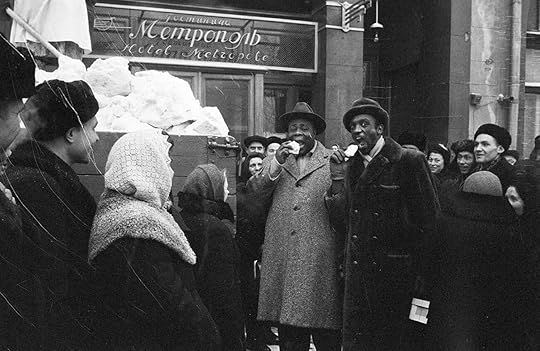
In 1955, with the Cold War well in force, an American impresario arranged for his all-black theater troupe to visit Moscow and Leningrad to present PORGY AND BESS. Author Truman Capote attached himself to the company and the results are here in the wonderful nonfictional account he called THE MUSES ARE HEARD (1956).
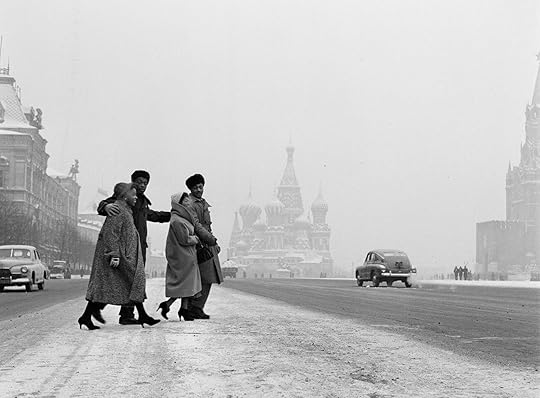
When dealing with the twig-snapping severity of Russian winter, Capote could be lyrical. When confronted with the curlicues of Soviet society, he could be much more arch. For example, in an allegedly classless society there could be no talk of "First" or "Second" class on trains; travelers could, however, avail themselves of "hard" (seat) or "soft" (bed) comfort, making it the same experience as the West except for semantics.
Capote is perhaps at his funniest when discussing the PORGY AND BESS performers and various hangers-on, such as Mrs. Ira (Leonore) Gershwin's yearning for "cavy" (caviar) on the train, when raspberry yogurt was more the norm. The author observes sympathetically but sharply the curiosity Russian citizens showed the troupe when their train pulled into Moscow: PRAVDA spun it as mass appreciation for culture when it fact it was a matter of racial curiosity, most Russians of the time having never seen a person of African origin, much less a trainload of them.
Capote fans can see very well the kind of stylized but lean prose, eagle-eyed observation and sense of irony that would, ten years later, distinguish his masterpiece, the nonfiction IN COLD BLOOD. THE MUSES ARE HEARD is a similar treat, although, to borrow a line from Jack Dunphy, much too brief of one.
While this minor classic is not always easy to find used, the interested can seek out the more recent of the two Capote anthologies that have been released in the last fifteen years, PORTRAITS AND OBSERVATIONS (Violet cover) -- this is the one that includes THE MUSES ARE HEARD.
It’s December, 1955, and Truman Capote is traveling with the Porgy and Bess production company to Russia for its premier in Leningrad. It’s a wild and wooly cultural event that wasn’t easy to get off the ground. “The people who didn’t want this to happen!”
It’s a very dishy and entertaining tale, beginning with the perspective from the Gershwin’s, particularly composer Ira’s wife Leonore (who is a crack-up) and producer Robert Breen and his wife Wilva. And of course there’s the talented cast, the crew, and the various members of the press who are along for the ride.
How refreshing Capote’s prose is! How long has it been since I read description like this? In this day when news stories are mostly video clips, and you can see almost anything for yourself on YouTube, the words added are so often commentary and opinion. It felt wonderful to read this. Capote brings the scene to life, but not from a point of view--just reportage.
We travel along on the train from Berlin to Leningrad, where Truman shares a Hershey bar with the conductor and gets him to open-up about the everyday life of Russian people.
We see the culture shock when they all arrive, and his description of their hotel rooms: “For the average Astoria abode is like the annex in a Victorian attic where some poor relation lives buried among the family discards.”
In one of my favorite parts, he takes a walk in shockingly bitter cold with production assistant Miss Ryan. They get lost, and are rescued by a generous Russian with some sharp opinions about American correspondents, but who later takes Capote out drinking and confesses he is sweet on Miss Ryan, while trying to get Truman to drink more vodka. It reads like a Russian novel.
The much anticipated opening night comes, and Capote gives us a play-by-play that reveals all of the distortion and spin along with what really happened.
But the night before the opening was the culmination of the story for me, where we get to experience a fabulous, one-of-a-kind Christmas party attended by everyone, Russian and American, who worked to make this happen.
“Even the aloof Savchenko, a dour, glacial Santa Claus, or Father Frost, as the fellow is known in Russia, seemed after a while willing to forget his dignity, at any rate was unprotesting when a girl in the cast plumped herself on his lap, threw her arms around him, and between kisses, told him, ‘How come you want to look like a grumpy old bear when you’re just a doll? A living doll, that’s what you are, Mr. Savchenko’ … Savchenko, wiping away lipstick, responded by proposing another toast. ‘To the free exchange of culture between the artists of our countries. When the cannons are heard, the muses are silent,’ he continued quoting his favorite maxim. ‘When the cannons are silent, the muses are heard.’”
Well, this book really disappointed me … I found it to be dry and dull … here we have an unbelievably historic event, and the author misses the true story inherent in this event and concentrates on people who are background characters and barely worthy of attention …
This story follows an African American theatre troupe performing Porgy and Bess in the Soviet Union in 1955 … considering both the state of racial affairs in the United States at this time, and the beginning of the Cold War with the Soviet Union, this event was rife with the potential of a groundbreaking historical performance … my interest was how the cast of Porgy and Bess experienced the performances and their treatment by the Russians … Capote mentions cast members as an afterthought and instead writes about ancillary “characters” such as Miss Ryan, the director’s secretary, and Mrs. Ira Gershwin, as well as a Norwegian salesman who speaks English and is smitten with Miss Ryan …
Typically, I’m enthralled with the author’s ability to develop well-rounded characters and his signature wit … but frankly, I was bored by this book … I feel let down …
„…онези американци, които ги приближаваха и ги зяпаха, като че ли учудени и доста подразнени да открият, че руснаците имат две разположени съвършено точно и на място очи.“
Както мислех, че съм прочела почти всичко преведено от Труман Капоти, се оказа, че дори не съм знаела за тази книга. Като си я купих, пак не знаех за какво е (просто нова книга на Капоти – значи купувам). А тя била нещо като книгата на Маркес, която четох съвсем наскоро – „Пътешествие по Източна Европа“. В случая на Капоти – само в СССР (придружава като журналист турне на „Порги и Бес“ през 50-те). По-рано от двамата СССР посещава и Джон Стайнбек.
Книгата на Капоти все пак се оказа различна от тази на Маркес. Колумбиецът ни представя по-скоро репортаж, а и 160 стр. общо за няколко държави. Пак си е ценно и краткото, особено за да се види как Маркес възприема различните соц страни. Но Капоти! Сякаш „Музите се чуват“ е роман. Участниците са и герои, всичко е толкова цветущо и живо. Капоти не може да пише не-литературно. Много имам да си спомням за смехориите в СССР, но преди това – пътешествието от Източен Берлин до Ленинград с влак – това си е чиста новела. Наистина не мога да възприема героите като действително съществуващи личности и събитията каро реално случили се.
„Косата си с цвят на клен тя носеше високо вдигната и хваната от огромни фиби, които биха могли да послужат за оръжие.“
„Сега Уотсън беше напът да достави оркестрациите в съветското посолство. – Не се тревожи – промълви Уотсън, като попи капките влага върху горната си устна. – Аз не се тревожа. Ние ще овладеем положението. – Отпусни се – прошепна д-р Шупър.“
Полската и руската зима е описана от Капоти с пищен език, но и с хумор (присъстващ почти през цялото време… щях да кажа в романа).
„Отворих очи вече в десет. Вече бяхме в един див, кристален свят от заледени реки и заснежени полета. Тук-там групички от елхови дървета прекъсваха белотата. Ята от врани като че ли се пързаляха по твърдото лъскаво небе. – Човече – обади се Ърл Брус Джаксън, събудил се току-що и сънено се почесваше, докато гледаше през прозореца. – Казвам ти. Тия тук не отглеждат портокали.“
Усеща се духът на пътуването. С всяка най-малка подробност си представих всичко и всеки. Наближаването на Ленинград – няма как и читателят да не изпита превъзбудеността на артистите. Аз лично бях там и също всеки момент щях да пристигна на това непознато и любопитно място.
Безпощаден към СССР-ския соц е Капоти. Определено Маркес и Стайнбек са по-меки, може би заради социалистическите си наклонности (но разбира се също виждат безспорната сивота и абсурда). В „Музите се чуват“ цялостно се усеща чувството за превъзходство на Капоти и американците (успоредно с любопитство и опити за разбиране на хората там). Може би има значение и това, че Капоти пътува с „хайлайф“ среда (вкл. посланици и подобни по време на престоя), самият той е в такава среда в САЩ (когато пусне възрастния Капоти на показ и скрие душата си – милото дете от Юга). Аз все пак леко злорадствах, че Капоти открито описва всичко жалко в СССР.
„ – Ние чухме, че ще ни следят и ще ни отварят пощата. – […] Нещо, което трябва да приемете като даденост. Аз винаги допускам, че пощата ми е била отваряна.“
Това, което изброените писатели от Америките отбелязват, неизбежно е облеклото. Видяно от Капоти не само като цвят и „стил“, а като по-цялостно отражение на обстановката в СССР:
„Ама наистина, какво да облечем? – заоглежда се тя, сякаш търсеше модни тенденции сред меланхоличното и безформено облекло на публиката. Не съм взела нищо, което да не е красиво!“
Същото е положението и със сградите, явно панелки, макар и в случая в Полша на границата с СССР:
„Провинциалните, осветен с лампи къщи, отстъпиха пред циментовите блокове от безнадеждни, еднакви апартаментни обиталища.“
За магазините си знаем:
„Озадачаващо бе да открием, че във всяка от будките продаваха едни и същи продукти: консерви от сьомга „Красная звезда“, сардини „Красная звезда“, прашни бутилки с парфюм „Кремъл“, прашни кутии с бонбони „Кремъл“, туршия от домати, космати парчета суров бекон между дебели филии хляб с мръсен цвят, странни ликьори, кръгли кифли, които, кой знае защо, навеждаха на мисълта, че са печени миналия юли.“
За правилата и планирането още повече:
„Това е система с правила и наредби, с каквито вие никога преди не сте се сблъсквали.“
В края на краищата винаги в такива случаи следва да мислим донякъде отделно за „народа“ и управлението. Така е и когато големият екип на „Порги и Бес“ получава предварителен инструктаж от посолството на САЩ в Москва:
„Да, има и някои симпатични руснаци. Много мили хора. Но те имат лошо правителство – изрече той със забавен и силно подчертан тон.“
Изненадващо, първата част на книгата ми хареса повече – пътуването към Ленинград. Самият престой и няколкото страници за премиерата вече не ми бяха толкова интересни. Все още не мога да си обясня точно защо (може би защото вече наистина се изтъкваше повече „хайлайф“ страната на участниците, намесват се и повече журналисти, а тези два аспекта не са ми от най-любимите). Пак следях всяка дума и буква (нищо няма да кажа за превода…), но за мен липсваше тръпката от пътуването в първата част.
Вече в самия СССР Капоти и американците (предимно чернокожи изпълнители, считани от руснаците за потискани) виждат как ресторантите са „уютни колкото самолетен хангар“, асансьорите са „древна клетка за птици със скърцащи кабели“; на премиерата става ясно откъде произхожда традицията изпълнители (и не само) да бъдат отрупвани с цветя. А хората наистина има защо да бъдат питани това (и Капоти да ни предаде отговора в свой стил):
„Попитах го дали би искал да пътува. Отговорът му започна като физическо действие – една странна поредица от свиване на рамене, пърхане, свиване навътре в дебеланковския си костюм, което като че ли означаваше и да, и не, и може би.“
Сега тепърва ще прочета повече за турнето и самата постановка, акцентът на Капоти за мен се оказа на друго място. Според Капоти ленинградските вестници са със смесени отзиви, включително: „Поразителната еротична окраска на някои от танцовите сцени е неприятна.“
А за мен жив остава всеки останал миг, описан от несравнимия Труман Капоти.
„Тази вечер прозорците на „Астория“ останаха да светят до късно. До премиерата оставаха по-малко от двайсет и четири часа. Цяла нощ по коридорите се чуваха стъпки, блъскаха се врати, звъняха телефони, сякаш се бе случило някакво бедствие.“
„От другата страна на града, край Двореца на културата, покрити със сняг тълпи се трупаха, за да гледат пристигането на притежателите на билети, а вътре в театъра значителен брой зрители вече бяха насядали под ослепителните изгарящи светлини на прожекторите и на лампите на телевизионните и филмовите камери. Кошници с цветя, бели и жълти, украсяваха фланговете на сцената, а кръстосаните знамена – едно преплитане на райетата и звездите със сърпа и чука, украсяваха авансцената. Зад кулисите, където чуруликането на флейтите и стенанията на обоите от настройващия се оркестър звучаха като ехо от горски звуци, Марта Флауърс – костюмирана и напълно спокойна независимо от нарастващия шум на далечната публика – седеше, както беше предсказала, в дълго очакване.“ (безкрайни официални речи)
За истинското въздействие от представлението върху младите хора в СССР – прочетете сами.:) Нека музите се чуват.
Capote's writing itself is beautiful and engaging as ever, but his choice of topics throughout this piece confuses me — instead of focusing on the actors of Porgy and Bess (and the historic event of the show being performed in the USSR) we read about a cast of characters who should be relegated to the background and stories that could have been used for filler detail or excluded altogether.
"When the cannons are heard, the muses are silent, but when the cannons are silent, the muses are heard." That is the quote that gave this book its title; it's Truman Capote's account of a trip he made behind the Iron Curtain with a theater company performing "Porgy and Bess." The show was meant as a cultural exchange and step toward peace, but I read the book in hopes of a slice of history. I suppose it was that, but it was a rather narrow one. Capote gave a clear enough picture of the Soviet propaganda machine and the reception the theater company got, but it wasn't nearly as clear a picture as we got of Holcomb in In Cold Blood. It was interesting and sometimes funny, but it's easy to see why this remained one of Capote's lesser known works.
I think I need to include this in my top ten favorite books of all time.
Reminiscent of Durrell's Esprit de Corps, Capote's coverage of Porgy and Bess in Russia is sublimely witty and surprisingly perceptive. His seemingly effortless command of the English language is really on display here. Perfect diction, syntax, and imagery. Read it.
I began reading this story by capote for my class on the Cold War, as the novel deals with the cultural exchange of a n American opera going to be performed in the USSR. Combined with a recent viewing of Phillip Seymour Hoffmanns biopic of the author, it had a much larger effect on me than just another class reading. I feel awoken to the fact that my passion in life might be reading and writing- that a half decade of little reading besides that for classes may have left me with a very bad view as to what literature can be. Essay: “Porgy and Bess in Russia”:Truman Capote's Cultural Exchange Among the key places of contention of the Cold War was a battle of Culture between east and west: “who lives better?”; morally, financially, in their lifestyles, or otherwise. As time moved away from World War Two and tensions cooled, a series of cultural exchanges took place which eventually led to the fall of the Soviet Union: among the first was a journey by the opera Porgy and Bess to perform throughout Russia. Among those who traveled with the company was Truman Capote who wrote about the trip, which to a world that believed nuclear decimation could still be around the corner, was existentially important. Unique to the piece is the lack of depth in its characterization, especially in the narrator (presumably Capote). Although many characters moved in and out of the narrative, their personalities never moved past the titles that attached them to the opera group. They behave true to the stereotypes held by both Americans and Russians for their positions: the performers are kind and at times break out into music at parties, the rich women act entitled and excitedly observe the pearls and riches of the museums, and the men worry about politics and formalities. We see all this through the viewpoint of Capote’s narrator, yet he is the least clear character of all. Never behaving uniquely (and never being quoted in the article’s slim dialogue), all we can truly infer about him is that he is a social person due to his seeming close relationships with many of the aforementioned characters, particularly the women. By doing this, keeping the characters and especially performers at a distance, Capote keeps the attention of the piece on its point: the cultural exchange between the American group and the Russian nation they are surrounded by. Instead of readers focusing on the story of the American people, many of whom were notable names at the time, we are placed as observers of the interactions between two conflicting cultures, with names and faces only serving as figureheads in a story bigger than just them. In fact, there is no scene not dealing with this existentially important cultural exchange. Every moment depicted by Capote focuses on the Americans reacting to some strange element of Russian culture they meet, the Russians doing the same vice versa, or people of the two nations interacting. Thus, for his American audience Capote fleshes out some of the recurring Russian characters slightly more, showing their hopes, fears, and personalities more vividly as their thoughts of the American characters become clear. There is the woman hoping to buy some of the niceties the Opera group has brought with them, the man who Capote goes to the bars with who has a crush on Mrs.Ryan, and their various guides and chaperones, all of whom are personified and depicted as complex people. This is very important for one of the first stories published by a prominent American depicting life behind the iron curtain: the Russians are real people, some of whom like their political regime and some who dont, but all just as relatable, if not more so, than the Americans. With his depiction of the climactic opening performance, Capote brings this culture shock to a head. The whole performance, which spans about the last third of the article, is a series of reactions by one group to the other, as they try to reconcile and learn through their encounter. Capote builds in some sense of irony through their various reactions, almost as if the idea that the Russians are so different from everyday Americans is laughable. The Americans are surprised when the Russian crowd is bored after an hour of political speeches, as if an American one would be enthralled; surprised when they are taken aback by the morality of sex and drugs shown in the opera, as if American audiences wouldnt have similar reactions to subjects still very taboo at the time; surprised when they are unsure of a performance that was viewed by American audiences as something very new and different musically when it premiered too. Altogether, Capote shows that these countries can coexist; that at the human level they are all not so different, just of different cultures.
През 1955 година, в разгара на Студената война, Труман Капоти пътува до Ленинград, съпровождайки състава на "Евримен Опера". Трупата, която се състои от около 100 души, предимно чернокожи, обикаля вече четвърта година света с операта "Порги и Бес", скандална за времето си постановка дори в С��Щ. Очеркът, който писателят пише за това пътуване, излиза на две части в "Ню Йоркър". Заглавието, "Музите се чуват", е заето от коронната фраза на чиновника от съветското Министерство на културата: "Когато говорят оръдията, музите мълчат. Когато оръдията мълчат, музите се чуват.". Този текст, обаче, надхвърля многократно типичния журналистически репортаж за културно събитие, превръщайки се в романизиран пътепис, разказ за една страна, която често е представена за дивашка и враждебна, за сблъсъка на две диаметрално противоположни култури. Авторът описва забавни случки, като пътешествието с влак през Източна Германия, Полша и Съветския съюз; твърде усложнената процедура за пазаруване в голям магазин в СССР (която всички, които сме живели в комунизма, вероятно все още си спомняме); настаняването в хотела, при което сценичните работници и масовката получават най-добрите стаи, а ВИП-овете остават ненастанени и т.н. Прави остроумни психологически портрети и на трупата, и на руснаците, които среща. Има и няколко разкошни душевни момента, в които острият му език си почива и разбираш, защо въпреки недостатъците си, е бил всеобщ любимец: Коледата в хотел Астория, където трупата изземва функциите на оркестъра в ресторанта и забавлява гостите с автентичен джаз, посещението в Ермитаж, където чернокожите артисти и войничетата заедно занемяват пред скъпоценния механичен часовник на Екатерина II и особено младежите на улицата, които си напяват мелодиите от операта, докато се прибират след представлението. Като човек, искрено вярващ, че музиката може да промени света, последното ми беше особено на сърце! Бегло е спомената една необичайна колекция на руски музикант от джазови плочи, записани върху рентгенови снимки (поради невъзможност да се набавят оригинални записи) и цените на билетите за "Порги и Бес". Ситият на гладния не вярва! Авторът едва ли е осъзнал какво е да си почитател на музика, която не само няма как да си набавиш, но и за притежанието на която можеш да бъдеш подведен под отговорност и че тези 60 рубли за билет, всъщност са половин заплата. Гладът за култура на тези диви, зле облечени и груби руснаци е бил такъв, че те са късали от залъка си, за да видят невижданото - американска трупа чернокожи певци. След Ленинград "Евримен Опера" продължава към Москва. Там Труман Капоте се среща със "златната младеж", привилигерованите деца на партийци и културни дейци, за които е възнамерявал да напише отделна книга - "Децата на революцията". След още две посещения в СССР, в края на 50-те години той изоставя тази идея, като заявява на редактора си, че героите му са твърде разпознаваеми и проследими и се бои, че ще бъдат преследвани, ако подобно произведение види бял свят. Минусите на изданието са критика към издателството: българският превод е доста тромав, принудих се да я намеря и дочета на руски.
Race as a pawn in international/global politics, you don't say?? Or how we (continually) use art as nationalistic propaganda.
But anyway, Capote is as clear-eyed, direct, and entertaining as ever. Curiously, though, it must be said that his priority seems less to be giving insight into the inner life of the all-Black cast in Soviet Russia than to the white financiers and production admin, which is fascinating as Capote is as much an outsider (small, effeminate, Southern—queer) as the castmates.
Not that I necessarily expected him to, but it would've been nice if Capote took more of an interest in the cast than with the pencil-pushers. Not for any solidarity reasons, but because it would've made for a more interesting book 🤷🏾♂️ So many nuances and certain insider knowledge were missed, I think, when Capote tries to recount the cast's speech, impressions, or general side-eyed-ness about the whole enterprise.
While I enjoyed this in some ways, I'm just imagining what a Ralph Ellison or a James Baldwin "The Muses are Heard" would've revealed...
I enjoyed it for the show biz opera gossip and also for the peek into Russia, the government and the people. Truman Capote wrote this in 1956 -- before Breakfast at Tiffany's or In Cold Blood. Truman goes on a trip to Russia with a production of Porgy and Bess. He describes the cast, traveling by train to Leningrad, and the Russians they encounter. Truman's prose style is witty and at this point unspoiled by later success where he rested on his laurels while dining out on the promise of manuscripts to come. I read 30 pages a day and I enjoyed Capote's prose style and the way he would describe people without making blunt judgements or insults but nevertheless you were aware of where they stood on the bell or bella curve. This was before In Cold Blood and Breakfast At Tiffany's so he wasn't spoiled by too much fame and acclaim, not to mention champagne. He had fewer laurels to rest on, and couldn't just coast.
This was the first writing of his that I have read. I enjoyed it for the historical value and I appreciated his vivd descriptions. I could easily imagine the entire escapade.
In 1956 Truman Capote wrote an account of a trip he took to Russia with the wife of Ira Gershwin and a touring company of "Porgy and Bess." A more motely crew of diplomats and thespians had never made their way behind the iron curtain, in fact this was the first cultural exchange between the two super powers.
"Oh what a circus, oh what a show...." I know those lyrics aren't from "Porgy and Bess." However, they are apropos of the events documented in this savagely witty travelogue, and though adjectives such as "amusing," "delightful" and "whimsical" spring to mind, they seem altogether inadequate to describe this unique work of comedic reportage. Capote was a true American original, and "The Muses Are Heard" finds him at the very height of his literary powers.
Oh, this was just so-so. I do like the nonchalant way that Capote has a tendency to write; however, there could have been more excitement. I have enjoyed his other works more-so than I did this, but I think this was also important; however, I am not sure how much of this was fluff and how much may have been factual. Nonetheless, the effect of diplomacy was what drew me to this piece in the first place. If you are looking for a short story that bridges the gap in between multiple cultures, then you may enjoy this.
Capote went along for the ride in 1955 when "Porgy and Bess" was taken to Leningrad through a crack in the Cold War curtain for some Christmas-time performances. Mrs.Ira Gershwin was another of the non-cast members in the traveling company of nearly a hundred people and two dogs. Part of this book was in The New Yorker near that time, but I missed seeing it there. It's a sharp, shrewd, entertaining look at how the U.S. and Russia were doing a propaganda dance in the mid-1950's.
Even knowing how appreciated Truman Capote is, especially within certain circles, I still say he is the most under appreciated American writer. I love Hemingway and Steinbeck and Twain and Faulkner and Hawthorne and all the others (okay maybe not really Hawthorne), but Capote is better.
Also - how much different would things have been if he'd been born in 1974 instead of 1924?
One of, perhaps, Truman Capote's lesser known works, this narrative recounts an 8 day venture of an American production company which aims to perform Porgy and Bess to a Russian audience in Leningrad in 1955. Capote's outsized personality does not get in the way of the writing, and his command is excellent: an amusing, seemingly reliable, lengthy vignette.
Capote's account of the Soviet Ministry of Culture footing the bill to bring the entire American cast of Porgy and Bess to perform behind the iron cutain. It is so succinctly written.