A personal journey through the groves and thickets of the English language, this title combines personal reflections, historical allusions and travel observations to create a mesmerising account of David Crystal's encounters with the language throughout the world. Accessible, highly engaging and in a style similiar to Bill Bryson, 'By Hook or By Crook' will not only appeal to linguists and scholars but to the bigger broad market.
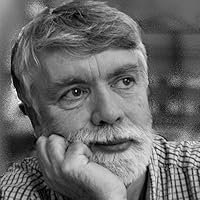
David Crystal works from his home in Holyhead, North Wales, as a writer, editor, lecturer, and broadcaster. Born in Lisburn, Northern Ireland in 1941, he spent his early years in Holyhead. His family moved to Liverpool in 1951, and he received his secondary schooling at St Mary's College. He read English at University College London (1959-62), specialised in English language studies, did some research there at the Survey of English Usage under Randolph Quirk (1962-3), then joined academic life as a lecturer in linguistics, first at Bangor, then at Reading. He published the first of his 100 or so books in 1964, and became known chiefly for his research work in English language studies, in such fields as intonation and stylistics, and in the application of linguistics to religious, educational and clinical contexts, notably in the development of a range of linguistic profiling techniques for diagnostic and therapeutic purposes. He held a chair at the University of Reading for 10 years, and is now Honorary Professor of Linguistics at the University of Wales, Bangor. These days he divides his time between work on language and work on internet applications.
By Crystal’s own admission, By Hook or by Crook is a linguistic travelogue. Normally a writer of textbooks and dictionaries—utterly self-contained literary worlds—this book takes a meandering path through the Welsh countryside while observing and commenting on the road signs leading to contemporary standard English.
Welsh itself is enough to make one wonder about maps and ancestry. Take the name of this rail stop between Chester and Holyhead: Llanfairpwllgwyngyllgogerychwyndrobwll-llantysiliogogogoch. Crystal takes it apart to show the meaning:
Llan fair pwll gwyn gyll
Church (of) Mary (in the) hollow (of the) white hazel
goger y chwyrn drobwll llan tysilio gogo goch
near the rapid whirlpool (and) church of (St) Tysilio (by the) red cave.
Don’t worry: “Locals never use the long name,” Crystal reports. “Life is too short.”
But linguistic calisthenics and world-record recording is not at all what this book is about. Rather, Crystal’s chapters are like dinner conversations: first, we’re talking about travel, then movies, then an Anglo-Saxon king of Mercia, then a shepherd in Welshpool who curls his Rs. Back to movies (who was the model for the Henry Higgins in My Fair Lady?), some discussion of food and wine, the Hay Festival, famously clueless famous authors, and on, and on, deliciously. Of course, all revolving around, or poking at the edges of, English.
Crystal was born in Northern Ireland, but grew up in North Wales and Liverpool. Author or co-author of more than one hundred books, he is known for his enthusiasm for linguistic diversity, and famously wrote in Language Death (Cambridge) that “All the big trouble spots of the world in recent decades have been monolingual countries—Cambodia, Vietnam, Rwanda, Burundi, Yugoslavia, Northern Ireland.” Crystal’s delight in differences is evident on every page of this new book, and both natives and tourists will find the conversation witty and wise. (ForeWord Magazine)
A hugely entertaining read. If you love words, etymology, philology, linguistics, phonetics, whatever, you'll love this book. The author travels through Wales and its borderlands with England, to Stratford and Lichfield, to India and to San Francisco, investigating accents, dialects, place names and history. The serendipity of the author's reflections on Shakespeare, Johnson, etc., together with the randomness of his diversions, makes this a fascinating and hugely enjoyable journey.
I learned a valuable lesson from this pitiful,unfortunate, and ghastly book: being an esteemed linguist who has studied all varieties of the English language does not equate to being an author who can use it to inform and entertain a general audience. The sentences were choppy and simplistic to the extent that they became a distraction. Either Crystal patronizes his readers and believes they're wholly incapable of reading complex, or even compound, sentences about the varieties of the English language, or he hasn't quite grasped the alchemy of junior high grammar that lies behind subordinate clauses combined with independent clauses and so on...The writing is prosaic and blase´, though the author makes some attempts at humour. Sadly, anyone under 45 would stiffly chuckle out of politeness and embarassment for Crystal. (For example, he can't write the word "cunt" out of fear of offending readers, instead settling for a lame joke using the town name "Scunthorpe." Furthermore, he seems to think it's funny to imagine sheep with welsh bleats or to imagine Shakespeare forgetting his 'get thee to a nunnery' line).
The book was billed as a "journey in search of the English language," but there is no real, unifying subject. This is, essentially, a trivia book and probably would have been better if the author had simply given up any pretense of a cogent organizational scheme and simply enumarated the facts he wanted to expound on. Professors digress in the course of lectures, but this entire published work of nonfiction digressions is inexcusable.
I've found Crystal's books to be hit-or-miss over the years. Reviewers are right to compare this to Bill Bryson's works. This is Crystal driving around Wales, pontificating about whatever comes across his mind. And the book isn't even about Welsh place-names. He'll mention a place in Wales for a paragraph, then he'll be reminded of something else totally unrelated. Which leads to the next unrelated thing, which leads to the next. Until you've come to the end of the chapter, where he mentions Wales again, finally.
I feel sorry for his wife. She has to hear this every day, all day. When you can get Crystal to focus on something (like his Encyclopedia, I loved that book in college), then he's a brilliant writer. When he is given free rein to say whatever he wants, he chases any rabbit that jumps across his vision. Thankfully the book is an easy read, and mercifully short, hence why I finished.
A truly enjoyable read. It wanders and rambles it's way around Wales and wider and roams all around the world. I have never enjoyed looking into the origin of names and accents and speech patterns so much. Almost got me excite about linguistics, and that is because the author David Crystal is obviously brimming with passion for his chosen field. In the chapter Book-Browser Syndrome he writes "In another Francis Edward catalogue, in the travel section, I encountered one of the best travel titles ever. The book was called "Because I Haven't Been There Before". It might have been the title of this book too, for most of my stories are the result of travelling down linguistic side-roads, that I've never previously explored". I found many little bits of information that delighted and struck a chord with my thinking. The portions on accents were fabulous and affirming. Having lived a large portion of my life in places where the remnants of my accent of origin are not the native accent, I am familiar with people feeling they are original in letting you know you sound a bit different. There are times that becomes somewhat of a drag, and it was nice to read along with an expert who revels I every nuance of the use of the English language around the world. I loved his description of English. "English has always been a vacuum-cleaner of a language, sucking in new words from whatever languages it happens to make contact with" I would suggest if you love reading, the sound of words, and the beauty of the countryside, chances are you will enjoy this delightful ramble.
This book wasn't quite what I was expecting. It was one of the most odd language books I've ever write--Crystal explains in the foreword that it was "stream of consciousness linguistics" and that's probably the best way to describe it. Ostensibly it covers a few days as he travels through Wales and Warwickshire, ruminating on the accents of those he meets and the place names of the towns he drives through, but he also tells stories about language happenings from as long ago as the 1960s, in places as diverse as San Francisco, India, and Poland. It was interesting enough, I liked learning more about the history behind British place names, and it was occasionally funny, but it hopped around too much for me. He'd go from an accent, to sheep, to The Prisoner, to British history, and back again in about six paragraphs.
I have this on my bedside table & am reading it slowly & savoring it. Makes me want to (a) go back to Wales and (b) take a linguistics course. Lovely writer!
DNF at 20%. I thought this should be right up my alley: a travelogue around the UK which is also a look at regional accents and dialect use. But it's just not good. The author seems to just want to throw in random pieces of information in random order - when exploring Wales and its regional accents, he goes through Portmeirion, and tells us about The Prisoner being filmed there, and tells us about communication in bees, and railway bridges. Which would be ok - not the first successful travelogue that meanders around the intellectual landscape - but Crystal isn't funny, like Bill Bryson (which the blurb to this book outrageously compares him to); he isn't a luminous writer like Robert Macfarlane; he isn't heartfelt and empathic, like Peter Ross - and those only happen to be the last three writers of this type I have read. He's not even profound in his own subject. By the time Crystal was earnestly telling me that speakers of other languages in diverse communities mean that the English they speak is different (gosh, really?) I gave up.
This is a delightful book. It's rather like being on a car journey with a witty companion whose erudition enhances the journey (rather than boring you to tears.) Since its publication it's interesting to note how the Birmingham accent is now seen as more dangerous and sexy than stupid thanks to the success of Peaky Blinders. (Such can be the influence of TV in a connected age.) Interesting too is the idea of Euro-English, a soft power which the English nation seems to have decided to jettison in favour of a nostalgic nationalism. Accents are fascinating and because I travel about the UK a lot I find myself picking up odd bits of pronunciation. Though my 'base' accent is a London-Safrican hybrid, I pronounce words like bus and pass with Northern vowels.
A discursive linguistic and geographical ramble through Wales, and bits of England bordering on Wales, with occasional excursions to other parts of the world.
I really enjoyed it as a bit of bed-time reading on nights when I wasn't too tired, which is why it took me a long time to get through it. But then I have worked as a proofreader and editor, and so there is a sense in which words are my business. Others might not have the same interest in such things.
I found some bits more interesting than others. One that was most fascinating to me was the story of John Bradburne, who was probably the most prolific poet in the English language. Shakespeare wrote about 84000 lines, Wordsworth about 54000, and Bradburne at least 170 000.
I had never heard of John Bradburne before, and pictured him as some kind of recluse, sitting in rural England, doing nothing else but writing poetry. Surely one would have no time for anything else?
But I was wrong.
He lived a varied and interesting life. He joined the Roman Catholic Church in 1947, spent some time with various religious orders, travelled to various countries, and eventually decided he wanted to be a hermit, and pray. He had three wishes: to to serve leprosy patients, to die a martyr, and to be buried in a Franciscan habit. He achieved all three, and on the twentieth anniversary of his death in 1999 some 15000 pilgrims visited the scene of his death at Mutemwa in Zimbabwe.
If you want more details, perhaps you should read the book, though you could probably Google for them.
That forms part of Crystal's chapter on Southern African varieties of English, headed "the robot's not working". A nice pun, because "robot" is derived from the Slavic word for work, or worker.
I was a bit disappointed that Crystal did not even speculate on its origin, and to make up for his deficiency, I'll put forward my own theory. For those who don't know, "robot" is the South African term for what, in most other English-speaking countries, are called traffic lights. How did it get to be called that? My theory is that since, in the early days, the flow of traffic at intersections (British English = "junctions") was controlled by policemen, when the policemen were replaced by a pole surmounted by coloured lights, some wag may have referred to it as a "robot policeman", and the name stuck. After all, in Britain traffic-calming humps are sometimes called "sleeping policemen". And when the robot's not working, sometimes flesh-and-blood traffic cops step in to take over.
Crystal started off investigating Welsh accents when Welsh people were speaking English, but he covers a lot more than that. Some may find his discursiveness distracting, but I enjoyed it. He discusses Indian English, and American English, and European English, all of which affect spoken and written English.
If you find words, meanings, accents, names and their history, interesting, then you'll probably enjoy this book.
When I saw this recently released book on sale at the University Bookstore a week or so back, I nearly jumped up and down with excitement. (“Happy! Happy! Joy! Joy!” as Ren and Stimpy would gleefully sing.) Crystal, a Brit-born linguist and specialist on the English language, has fast become my favorite verbivore since I discovered his book "Words, Words, Words" as an Amazon bargain. Although I did try shortly thereafter his rather staid "How Language Works" – a tome of a book that doesn’t really cover any new linguistic ground, and which is still sitting high atop a shelf partially read – I’m back in love with this my favorite English prof.
By Hook or By Crook takes the “scenic route” through the English language as Crystal literally travels from Wales, to England, and up through Scotland. In between, he regales use readers with etymological histories of place names and current words in the various dialects of English (including American, Canadian, and Australian, as well as the “creoles” in Asian, India, Europe, and elsewhere). And don’t miss his discursive and whimsical commentaries on J.R.R. Tolkien’s philological obsessions (including his coining of the word “hobbit”), English history (Lady Godiva and Shakespeare, in particular), and the famous Hay Literary Festival (imagine 10 days of book browsing thirty-some bookstores).
By book’s end, I’m ready to hit the road myself. England, anyone?
The thesis of this book can be best summed up as "Here are some things I've thought, learned, and/or observed about language." Though some of them are interesting, the scattered nature of the narrative means the book is doing a remarkably accurate impression of the person you get seated next to at a dinner party who is only capable of conversing about one topic and doesn't care what your thoughts are on the matter. Disappointing.
OH! And he also took a dig at TV. Why do people insist on putting down an entire medium because they don't like some of the things produced through it? TV can be bad, yes, but it can also be transcendent -- and both of the above apply to books equally.
When I first picked up this book, I expected it to be a history of English, a record of the way the language started out and how it evolved into what we speak now. And there is some of that--and those parts are a great deal more fascinating than I would have expected them to be--but for the most part, it is a "linguistic travelogue," as it says on the front flap. A renowned linguist travels the world and reports his encounters with English. However interesting that might sound to you, I promise it is more so. I really enjoyed his anecdotes and bits of trivia, and learned a lot about English.
I am a sucker for clever books about words and travel books about Great Britain, and this one's both. Also, Crystal quotes HV Morton in the preface, which won me over quickly. This book is fun and funny and light, and I am very glad Megan spotted it at the library and told me to read it.
What a delightful walk through the garden of English with a master guide. I thoroughly enjoyed it. His narrative style reminded me of a fine jazz instrumentalist weaving back to a theme and then improvising on it again.
As someone who greatly enjoys reading about the origins and the tortured history of the English language [1] and languages in general, I found this book to be delightful if somewhat intentionally scattered. Being a somewhat scatter-brained person myself, I can hardly object to a book that is delightfully random, though. To be sure, this author does not take a different approach to language than most others in the field--he is describing language as it is or was, and not as it should be, and he seems to think that it is possible that the adherents of Standard English overstated the rules of spelling and grammar and included details that were sometimes irrelevant in conveying meaning in our written communication. The fact that the author praises bloggers consistently is something that is well-calculated to obtain the goodwill of a prolific blogger like myself, though. When all else fails in seeking a sympathetic hearing, an author can always appeal to the self-interest of the people reading and reviewing such a book, after all. In reading this book, one gets a sense of the sort of person that the author is, and in general the author comes off as friendly and likable, the sort of chap that one would enjoy having a meal with or engaging in conversation while browsing large collections of used books.
In a bit under 300 pages, the author goes on a journey to see how English is spoken all over the world. As a Brit, it is not too surprising that most of the places the author explores are in the British Isles, including a few locations in Wales (most of them in Gwynedd), the West Midlands of England as well as East Anglia, and a few places of interest in Europe, Africa, and the United States. We read the author browsing for books, trying to determine if there is an official Euro-English or Canadian English dialect forming, and enjoying his communication with people with as diverse speaking habits of English as possible. There is a clear love of language and of the people who speak them in this book, and that makes this a far less heavy-handed book than many linguistics books happen to be. The author does not rant and generally portrays himself as being occasionally clueless and generally well-meaning, and the book sparkles with encounters between the author and ordinary people, where there are many questions about background and the complexity of dialect and accent. Overall, it makes for an immensely enjoyable and often light-hearted read.
One of the areas of particular interest for the writer, and the subject of many of its chapters, is the origin of particular words and phrases and the ways that people shape a language through their own use of it. Beyond the journeys of the author himself in terms of place, the journey through time of words and expressions as discussed here is quite entertaining as well. This is a book that is full of useful knowledge and certainly an instructive book, but it is never pedantic or boring, rather focusing on providing learning through stories and also asking questions as to why some words catch on and others do not, or why some phrases and expressions are continually reinvented by those who fancy themselves original, or why some archaic aspects of grammar become new again and are viewed as new errors rather than old accepted forms returning to the language after a long absence. One of the more entertaining aspects of this is the plural informations, which many speakers of Preferred American or Standard English tend to think of as entirely a singular word, but which was once plural. If you enjoy an odd but pleasant excursion through the random expanse of the English language, this is definitely a book to enjoy.
I loved this book, I am a big fan of David Crystal. It's a gentle ramble through linguistics and etymology, a book to be enjoyed, rather than used as reference for academics. I think it's aimed at interested lay people, not experts.
Some of the scathing reviews on here remind me of a character in Catch 22 who "knew everything about literature, apart from how to enjoy it."
The main thing I take away from David Crystal is that there's no such thing as correct and incorrect English, because correct English is defined by usage, so if people are using it that way, then that's the right way to use it. Sure, there's standard English, and it can be elegant or ugly, but there is no wrong. For example, the non standard word order, and 'mistake' pluralisation and even gendered nouns, German, French, Spanish etc people who speak English as a second language have all been part of standard, or 'correct' English at some point. David Crystal is endlessly interested an amused by new usages of English, and never, like the pedant in Love's Labour's Lost, who complains about people failing to pronounce the B in debt, pontificates about correctness. No one is better or worse in the way they use language, it belongs to them so they can do what they want with it.
This applies to accents too. People's pre conceptions about them are anything but objective, our ideas about the meaning of accents have their own kind of etymology. For example, the Birmingham accent is commonly thought of as sounding stupid, but there is nothing stupid about it, it's a lovely accent, in fact a study showed that people not from England constantly rated it as one of the more melodious and beautiful English accents. So why do people think it sounds stupid? Possibly because London industrialists were jealous of Birmingham'spower, so they mocked Brummies.
We are taken on one 'which reminds me of...' tangent after another which, makes it seem like David is making it up as he goes along, actually always skilfully leads us along, demonstrates points and links everything together. So maybe his meandering is better planned than it seems.
David Crystal is a wonderful, funny, entertaining and interesting writer. I love his egalitarian approach to language, he seems like a nice bloke too. I once wrote to him about a theory I had about a word, he took the time to write back, politely explaining why I was wrong, and put it on his blog.
If you are interested in language, you'll love this book.
This is going to come across as being overly-harsh criticism, but here goes...
1. The subtitle of this book has no right to be there. 'In Search of English' - the majority of the text concerns one small corner of England, close to the border between England and Wales, and there's no sense of Crystal truly 'searching' for English along his meandering travels. 2. The book itself is disjointed, a bit of a mess. Crystal allows his thoughts to wander, leaping from one topic to another, with barely a cohesive conjunction to help you from one to the other. You could say that the writing is poor-man's-Bryson or something like that (after all, Bryson himself is a fan of leaping about) but it lacks control, and the digressions seem to pad out the book as much as add to it. 3. A lot of what Crystal has to say about word origins, spelling rules, local variations, and the culture of linguistics as a whole, is fascinating; but it gets so hard to stay with him that you'll find yourself reading a few pages, wondering about what you've been told (and sometimes why), and then putting the book down to go in search of an alternative. I've frankly never felt that way with Bryson.
So I've got a few negative thoughts about this book, but I did read it from cover to cover (well, I skimmed through the sections on tech etymology - words and expressions that have come to us through computers and the online world - Crystal has never lived up to his name with his predictions of what will and what won't survive the test of time, and so much of what he reports here will strike you as anachronistic). Crystal's writerly voice rarely grates; if you can put up with the scatter-gun approach (I would have loved the application of Foster Wallace's footnote system here!) you might actually get some real enjoyment from this volume.
So, okay. I saw this book for a buck at the county library, and I was immediately interested. As an ELL (English Language Learner) teacher of Social Studies, I thought it would be an interesting read about how and why American English looks and sounds like it does. Had I read the jacket cover I would have known not to expect that. David Crystal is a learned linguistic expert, and his "Journey in Search of English" is a journey IN ENGLAND. It is no less enlightening or engaging; in fact it was profoundly interesting to hear and learn about the evolution of language in such a "confined" space as the UK is. He was traveling as a correspondent of sorts for a "Voices" project to determine and investigate language evolution; accents and usages and dialects where, seemingly, they differ across not just counties but county LINES. A cheery jaunt through England and its history, heritage, and culture using language as the guide. A very entertaining read!
An eclectic collection of musings on the English language, its past, present, and future... this book is about everything and nothing in a way so it may be sometimes diffcult to orient oneself in the prose that is, I guess, as near the stream of consciousness style as a pop-sci book can be. The author readily admits that 'By Hook or by Crook' lacks the structure and focus on his other texts but I think that's the beauty of it. If you have a deep interest in languages, you'll find here a myriad of fascinating facts and opinions. But I wouldn't recommend it as your first text in pop-linguistics ;)
What a delightful book: the author wanders around England and Wales with lots of side steps and does the same with his thoughts on the English language. It is very whimsical and very readable. If you want a more serious study of the English language then read "English - its life & times" by Robert Clairborne or the heavier standard work "The History of the English Language" by Albert C Baugh. If you want to be entertained, amused and learn a little at the same time read :By Hook Or By Crook: A Journey In Search Of English".
This book was exactly what I wanted: breezy, full of humour and history and interesting facts. Crystal was right to call it "stream-of-consciousness linguistics." If you like learning about silly etymologies, idioms, how pronunciation is so wildly variable across space and time, and don't mind a healthy dose of English history thrown in, you'll probably appreciate this book. The chapter on the internet felt dated, but that's to be expected considering the book is almost 15 years old.
Interesting trivia --fascinating, sometimes-- but a little too stream-of-consciousness for me. Still, I think he is an obviously brilliant linguist, it's just that this volume felt more informal than I would have liked.
A pleasant enough ramble through some of the idiosyncrasies of the English language. The author is a genial companion on a tour through Wales and the English Midlands, with flashback excursions elsewhere. Not a deep book, but readable and interesting.
We follow linguist, David Crystal's on a trip through Wales, recording accents for a BBC Voices project. He describes a potpourri of reminiscences with intriguing examples. A highly readable and amusing trip.