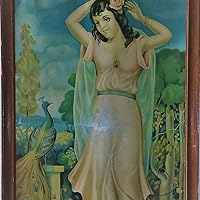
"Racconti del mistero e dell’orrore" è un’antologia di Rudyard Kipling, curata da Malcolm Skey ed edita per Bompiani nel 1990 dopo la prima uscita nel 1985, a cura delle gloriose edizioni Theoria. Qui è l’India dell’Ottocento a essere oltre che cornice parte stessa delle vicenda narrata. Un’ambientazione ideale per raccontare oscure vicende cariche del maleficio della jadoo – la magia – di incantesimi e sortilegi, di vendette fatali e dell’onnipresente superstizione che finisce per colorare ogni minimo aspetto del reale.
Si tratta di tredici racconti, pubblicati in Gran Bretagna tra il 1884 e il 1893:
- La legione perduta (The Lost Legion, 1893) - La Strada del Pozzo Gorgogliante (Bubbling Well Road, 1888) - Il sogno di Duncan Parennes (The Dream of Duncan Parennes, 1884) - Il marchio della bestia (The Mark of the Beast, 1890) - L'uomo che volle essere re (The Man Who Would Be King) - Il ritorno di Imray (The Return of Imray, 1958) - Nell'ora del trapasso (At the End of Passage, 1890) - Il risciò fantasma (The Phantom 'Rickshaw', 1885) - Nella casa di Suddho (In the House of Suddhoo, 1886) - La mia storia vera di fantasmi (My Own True Ghost Story, 1888) - A viva voce (By Word of Mouth, 1887) - Il Bisara di Pooree (The Bisara of Poree, 1887) - La strana cavalcata di Morrowbie Jukes (The Strange Raid of Morrowbie Jukes, 1885)
Joseph Rudyard Kipling was a journalist, short-story writer, poet, and novelist.
Kipling's works of fiction include The Jungle Book (1894), Kim (1901), and many short stories, including The Man Who Would Be King (1888). His poems include Mandalay (1890), Gunga Din (1890), The Gods of the Copybook Headings (1919), The White Man's Burden (1899), and If— (1910). He is regarded as a major innovator in the art of the short story; his children's books are classics of children's literature; and one critic described his work as exhibiting "a versatile and luminous narrative gift".
Kipling was one of the most popular writers in the United Kingdom, in both prose and verse, in the late 19th and early 20th centuries. Henry James said: "Kipling strikes me personally as the most complete man of genius (as distinct from fine intelligence) that I have ever known." In 1907, at the age of 41, he was awarded the Nobel Prize in Literature, making him the first English-language writer to receive the prize, and its youngest recipient to date. He was also sounded out for the British Poet Laureateship and on several occasions for a knighthood, both of which he declined.
Awarded the Nobel Prize in Literature in 1907 "in consideration of the power of observation, originality of imagination, virility of ideas and remarkable talent for narration which characterize the creations of this world-famous author."
Kipling kept writing until the early 1930s, but at a slower pace and with much less success than before. On the night of 12 January 1936, Kipling suffered a haemorrhage in his small intestine. He underwent surgery, but died less than a week later on 18 January 1936 at the age of 70 of a perforated duodenal ulcer. Kipling's death had in fact previously been incorrectly announced in a magazine, to which he wrote, "I've just read that I am dead. Don't forget to delete me from your list of subscribers."
I was presented with the 1937 edition of Tales of India as a gift when I visited Sterling Publishing in October of 2010. I'm excited to finally get started reading it. The pages are old and crack easily so I'll have to be careful.
It took me forever to get through this book partly because I was being extra careful with the pages but mostly because it took me a long time to figure out the dialogue with the accents written in. Not exactly what I expected. I thought that it would be more about India but mostly it was about British soldiers in India. I had to figure out what some of the words meant since I'm not British, a soldier, Indian, or lived 100 years ago. Still, its a fascinating glimpse into a different time and now I know the real story of Gunga Din.
You can only imagine how the book went overall if this was my feeling at the end. It literally lost me at about 70% when I started skimming through the stories so much and was just counting pages till the end. 😬
This book is a collection of more than 35 short stories. But they were not short in any sense to read through! Most stories in this book are so painfully detailed that the gist seems lost in the unnecessary detailings. 4-5 of them I had to DNF because of their writing style. And the worst is that most of the stories are forgettable which made the tedious task of reading them almost not worth it! I don't have a single favorite story.. 😐 Should have stuck to Tagore's collections only.. 😬
Kipling's greatest strength really was as a short story writer. And this thematic collection of stories centered on the British Raj is one of the better efforts at bringing some of his very best works together. It includes "The Man Who Would be King," "The Phantom Rickshaw," and many other favorites. But most of all, it is strung together with several of Kipling's shorter short stories about three army enlisted men, Mulvaney, Learoyd, and Otheris. Some of the Mulvaney stories are certainly stronger than others--I'm thinking of the palanquin caper. But taken together, they give a unique perspective to a social class serving in India not much mentioned in most fiction of the era.
When you read these stories, you also realize Kipling's great strength. It was his ironic voice. He could meld together romantic idealism with realistic atmospheres. But what always set things off was the use of irony.
Too bad that Kipling had to be a racist. May be that came with the times that he lived in. But all said and done, one can't argue about his calibre as a writer. He's simply in a class of his own. One almost feels that the author personally lived through every incident he wrote about. There is a first person narrative feel to his stories that almost reads like a journalist's eye-witness account. And that is amazing, for as a journalist he probably would have been an absolute gem. I feel nowhere competent enough to review his work except to say that it was immensely enjoyable. The sensuousness of it all was incredible.
Hardly intriguing. I felt like pulling my hair out at stages. I'll give Kipling one more chance, else this is the end of the road with my journey with him.
A bit of racism, a bit of sexism, a bit of colonialism, it has it all. Not all of it is bad. There are some parts in between that catch the reader's attention but overall it drags on and just doesn't get to the point. Sometimes there are recurring characters - fun to look out for them yet a bit difficult finding them, considering most characters aren't very memorable. Then there is the issue with the endings that don't always end in a satisfying concluding manner. I had high hopes considering he has also written the jungle book but I must say it qas quite a let down. Two stars is actually very generous.
Kipling az emberarcú imperializmus zászlóshajója. Nem vitás, hogy embernek tekinti az indiaiakat, és szigorúan meghatározza, milyen kötelességeik vannak az európaiaknak velük szemben: együttérzés, tapintat, segítségnyújtás. Nem szűnik meg ostorozni azokat a gyarmati hivatalnokokat, akik lenézően viselkednek a bennszülöttekkel, és lusták ahhoz, hogy megismerjék azok életkörülményeit és kultúráját, mégis dönteni merészelnek az őket érintő kérdésekben. Ugyanakkor az sem vitás, hogy azért annyira nem tartja embernek őket, mintha mondjuk fehérek volnának. Valahogy úgy gondol rájuk, mint a gyerekekre, akik képtelenek az önkormányzásra, és a brit gyámkodás nélkül visszazuhannának valamiféle őskáoszba. Az pedig, hogy ez a két nép elkeveredjen egymással – hát az egy kiplingi agyban fel sem merül*. Krédóját legtisztábban a Pagett képviselő megvilágosodása c. opuszban tárja elénk – nem is novella ez, inkább programbeszéd, de ha valakit érdekel a művelt kolonalizmus érvrendszere, ezt muszáj elolvasnia. A tipikus Kipling-hőst pedig működés közben talán legjobban az Ősei sírjá-ban tanulmányozhatjuk: itt ifjabb Chinn, az angol altiszt megérkezik családja hagyományos indiai állomáshelyére, ahol (nagyapai örökség) a bennszülött csoport úgy tekint rá, mint egy istenre, ő pedig azon van, hogy ennek a képnek megfeleljen. Ez sikerül is neki, mert Chinn (mint oly sok Férfi** az életműben) szinte az eszementségig bátor és kemény, és ezen felül még elég ravasz is ahhoz, hogy folyamatos nyomás alatt tartsa a törzset, valamiféle uralkodói igazságosság és atyai szigor kettős kalapácsával formálva őket olyanra, amilyennek az író szerint az eszményi gyarmatosítottnak lennie kell. És ha ez a kettős kalapács nem lenne elég, hát szimplán átveri őket***.
Ugyanakkor az a sajnálatos helyzet, hogy közben meg Kipling az egyik legnagyszerűbb novellista, aki valaha élt. A viktoriánus prózai hagyományból őrzi azt a vonzó szokást, hogy hajlamos megszólítani az olvasót, az emberi viszonyok, emberi egymásra hatások terén pedig szerintem megelőzi korát. (Feltéve persze, hogy fehér emberek közötti viszonyokról van szó.) Bármilyen témához biztos kézzel nyúl, hol szellemes, hol misztikus, egy pöttyet filozofál, ha kell, és ha úgy tartja kedve, akkor megrázó végkifejletet kerekít. És ráadásul ott van minden sora mögött az az elképesztő tudás az ő Indiájáról, ami még a felejthetőbb elbeszéléseket valami párás fénybe vonja. És nem puszta tudás ez, hanem szerelem. Még ha ambivalens is.
* A rácson túl c. elbeszélésben egy hivatalnok összeszűri a levet egy gyermeközveggyel, majd miután az eseménysor tragédiába torkollik, szinte megőrül a bűntudattól és a fájdalomtól. (Azért nem kétséges számomra, hogy ez a szinte megőrülés elmúlik hamar.) Ám az fel sem vetődik eme hivatalnok agyában, hogy akár magához emelhette, vagy meg is szöktethette volna a leanyzót, emígyen szentesítve kapcsolatukat. Na ja, a haverok megvetően néztek volna rá… A hölgyek meg meg se hívják többet vacsorálni… ** Így, nagy „F” betűvel. Kipling imádja a nagy „F” betűs férfiakat. *** Vagy kedvenc kiplingi figurám****, Strickland rendőr, az univerzum vissza-visszatérő alakja: magányos zseni, aki többet tud a bennszülöttekről, mint azok magukról. Ha kell, imámnak öltözik, ha kell, hindu koldusnak, amit felettesei fejcsóválva konstatálnak, de egy igazi Férfi jobban ragaszkodik az elveihez, mint a felettesei jóindulatához. A bennszülöttek pedig – naná! – rettegig és tisztelik egyszerre, mert Kipling szerint ez az elképzelhető legkívánatosabb érzés, amit egy indiai a fehérek iránt érezhet. Biztos az indiaiak is szeretik ezt érezni. **** De tényleg ő a kedvencem.
Segunda recopilación de los cuentos de las colinas, el primer libro de Kipling, uno de los libros favoritos de Borges... Cuentos de apenas 6 páginas, con un dibujo certero de personajes, tramas en las que está excluido lo "plano", una mirada abierta al mundo mestizo de la India, donde el inglés se convierte en seres anodinos, que intentan mantener trazas de su cultura sin un contexto claro o que se vuelven más indios que los propios indios, donde el indio siempre es más sabio que el civilizado occidental, donde la mezcla, el mestizaje, es la seña característica del país. Y un narrador con una mirada abierta a todo ello y una gran carga de ironía y de humanidad, que mezcla lo moral, lo amoral y lo inmoral en sus justas medidas.
Not a proud time of occupation and maltreatment of an empirical abuse of a race of people ... but stories do arise of and with mutual respect of those on the ground and in the midsts of those days and activities in history. The language is rough and rude, but reflects the world that it was. Stories told by the indigenous as well as the tourists/invaders. The tales of the occupied, likewise of those soldiers imprisoned by the charge of those acts of occupation and the comeraderie and loyalty of three such comerads.
I racconti del terrore di Kipling sono testi anomali. Abituati ai classici occidentali, con atmosfere scure e gelide, l'autore invece ci trasporta in un mondo di luce, sotto il sole cocente e imperante dell'India. Ma non è un sole che guarisce quello dipinto da Kipling, ma fonte di dolore, né siamo di fronte ad una natura buona. L'India qui fa ancora parte dell'impero britannico e i protagonisti, i bianchi colonizzatori, sono sempre allo stremo delle forze a causa di un eccessivo calore. Una perenne afa permea le storie e toglie il respiro anche al lettore. Improvvisi giungono i temporali, ma non per alleviare i corpi e gli animi dalla calura, poiché, infiniti e pesanti, sembrano quasi soccombere gli uomini sotto le gocce di pioggia, che appaiono qui dure come sassi. L'India superstiziosa e magica viene resa attraverso un ritratto a tinte fosche, qualche volta crudeli, ma mai benevole. I fantasmi del libro sono reminiscenze della miseria, uomini morti senza identità, poco importa se a causa di malattie, della povertà o della guerra, perché sono l'indifferenza e la cupidigia qui i veri nemici dell'essere umano. Anche il tipo di scrittura di Kipling non è quello che ci si aspetterebbe da chi racconta storie misteriose. Nessun tentativo di creare suspense, né incutere paura era il fine ultimo dello scrittore, piuttosto è la condizione umana, nei suoi aspetti più bassi, che gli premeva rappresentare. Lo stile è fluente, elegante e molto dettagliato, preciso e logico, quasi scientifico. Sembra la compilazione di un diario di viaggio di un aristocratico colto, o una cronaca scritta da un giornalista di fatti realmente accaduti, come se ne fosse stato lui stesso protagonista. Gli inglesi dominatori, o Sahib, come gli indiani chiamavano gli europei, sono uomini che fanno fatica a capire e ad accettare che, una volta messo piede in India, non esiste nessuna garanzia che eviti loro di soccombere alla stessa sorte dei locali. Tutti i loro tentativi di atteggiarsi ad essere superiori, razionali e più intelligenti, gettando il discredito sulle tradizioni e sul modo di vivere degli indigeni, non solo sono vani, ma li rendono figure tristi e alienate. E' certamente uno scontro tra due civiltà che non si sono mai capite. Tuttavia Kipling mostra di aver ben compreso un qualcosa che per i suoi connazionali all'epoca poteva essere ancora un segreto, o un'onta da nascondere a tutti i costi: l'India, colonia di sua maestà inglese, solo sulla carta, ma non nella realtà.
The stories, characters, situations, portrayals, dialogues are fresh, rich and funny, even though they were written almost a 100 years ago. The language was very Victorian so I had a tough time occasionally when my understanding and interest hit roadblocks of heavy and cursive words of Victorian times. But the stories probably would not have been so funny if not in such a honorary language justifying the colonial times the stories are based on. The most light and funny situations are explained in such a rich language that they seem not so ordinary and indeed exceptional. It beautifully highlights the eccentricities of the so to believe rich, cultured and polished British class in India and their funny interactions with the native population. The hope, beliefs, simplicity, faith and superstitions of the natives coupled with brute, cluelessness, straight jacket, heavy handedness of the British creates tongue in cheek humour – guarantee to generate a lot of wonder, sighs, laughs and giggles on narration back home in England.
Tales from India presents the very best of Kipling's short stories. His vignettes of life in British India give vivid insights into Anglo-India at work and play, and into the character of the Indians themselves. Witty, wry, sometimes cynical, these tales with their brevity and concentration of effect are landmarks in the history of the short story as an art-form. Politics, the Raj, and the life of the common soldier are some of the familiar themes associated with Kipling, but these stories also reflect the more unexpected aspects of Kipling's character and the different influences of the contrasting countries--India, America and England--in which he lived. His progressive portrayal of women, his interest in supernatural and religious experiences, his understanding of the processes of mental and spiritual breakdown, and the curative powers of art, are all revealed in this fascinating perspective of a great writer
My first ever attempt at reading an e-book, with thanks to my dear friend Moiez that I got hold of an old Kobo reader.
The book, Tales from India was written by famous and controversial Rudyard Kipling. I don't know whether to be angry at the writer for portraying the treatment of natives during British Raj in an almost glorifying manner OR be angry at him about turning the beautiful stories that start great but turn into tales of despair, illness, death, abuse, war and suffering.
Its one of his works from later in life - after he had gone through the tragedy of losing his children, and it shows while you read them.
Nevertheless a very deep and insightful read. Conversations... man Conversations between his characters are simply absorbing.
Since the author had written the Jungle Book, I had high hopes with this one. Turns out, instead of "Indian Tales", these are a bunch of stories (some half-cooked) primarily featuring British soldiers who happened to be in India. A few stories are good, but most of them don't make sense to me, especially the ones written in quasi-English, which to me seems how Irish would sound like. But the biggest let-down was how many stories just ended abruptly quite vaguely.
When I was a little child I enjoyed "The Jungle Book", now I a appreciate Kipling for a lot more than that. And I just started to discover the universe created by Kipling, other books are on my future reading list. The "Indian Tales" is a collection of short novels centered on british life in colonies. As all books on this topic I enjoyed it. My copy of this book is in romanian.
I actually found a hard copy of this book at the library (first checked out in 1940!). The cover fell off in my hands.
Enjoyed most of the stories (especially the creepy, scary ones) but I must admit that I skimmed over a few that were mostly just soldiers telling yarns in camp.
Thick accents rendered phonetically are a little difficult to follow and that slowed me down and made me not enjoy some of his army stories as much as if they were easier to follow. On the upside, this collection contains 'The Phantom Rickshaw' which is one of my all time favorite Kipling short stories.
This book obtaining a two ok star rating is 'generous' to say the least. You had the occasional good or passable book to save the least. The overwhelming vast majority of this book was pretty terrible. The stories Kipling was so fond to revisit of Mulvaney, Ortheris and Learoyd, where overall quite shockingly terrible. I could not believe an author like Kipling could create such works.
Abandoning this one as I'm not finding it sufficiently engaging. From what I've read others say about it, it's not the best introduction to Kipling's work so maybe I'll try something else of his at a later date.
Some stories were great. Some I could not understand because they were written in the same manner in which the characters spoke. A typical British ascent which was hard to comprehend. A good read if you want to understand the India under the British rule through a Englishman's perspective.
Read a good bit of this on my phone(ebook), but had to set it aside to make room for another ebook on my phone. Will come back to it though, as it was getting interesting.
Too much casual racism and too many stereotypes for my taste. I got through this book with extreme difficulty, and the only story I liked was the very first one, 'The Finest Story in the World'.