

What do you think?
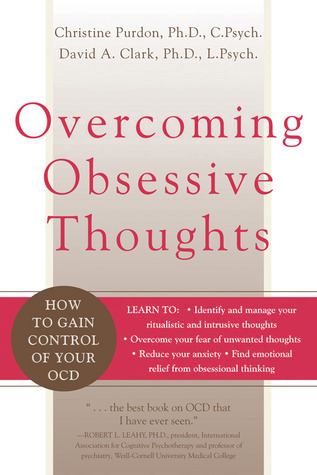
Overcoming Obsessive Thoughts: How to Gain Control of Your OCD
Although once thought to be a rare and unusual condition, obsessive-compulsive disorder (OCD) has become increasingly a part of everyday discourse as it has gathered more and more media attention. News magazines and programs have done features on the disorder and its range of symptoms, and popular culture has depicted characters suffering from OCD, such as the eponymous detective in the UPN television program, Monk.
One facet of OCD that is just beginning to be widely known is that people with the disorder can present a wide range of symptoms. Some people with OCD wash compulsively, others hoard objects, while still others-the audience of this book-struggle with obsessive thoughts. The most effective treatment techniques vary from symptom to symptom. This is why New Harbinger launched, with the publication of Overcoming Compulsive Hoarding, a series of books designed to bring the latest coping strategies for specific OCD symptoms to the people who need them most. Since that first book, we have brought readers two more titles: Overcoming Compulsive Washing and Overcoming Compulsive Checking. The professional community and OCD sufferers alike have warmly received all three books.
This fourth book in the series addresses the needs of those who struggle with obsessive thoughts they perceive as violent, disgusting, or blasphemous. Psychologists estimate that more than 50 percent of OCD sufferers experience aggressive, religious, or sexual thoughts. The goal of this book is to help people understand the impact of their control efforts on their obsessional thoughts. It works to help them recognize that thoughts, in themselves, are not threatening, dangerous, or harmful. Rather, it is the compulsive strategies they develop for coping that make the thoughts seem so harmful. The book offers safe and effective exposure exercises readers can use to limit the effect obsessive thoughts have on their lives. In addition to self-care strategies, the book includes information about choosing and making the most of professional care.
One facet of OCD that is just beginning to be widely known is that people with the disorder can present a wide range of symptoms. Some people with OCD wash compulsively, others hoard objects, while still others-the audience of this book-struggle with obsessive thoughts. The most effective treatment techniques vary from symptom to symptom. This is why New Harbinger launched, with the publication of Overcoming Compulsive Hoarding, a series of books designed to bring the latest coping strategies for specific OCD symptoms to the people who need them most. Since that first book, we have brought readers two more titles: Overcoming Compulsive Washing and Overcoming Compulsive Checking. The professional community and OCD sufferers alike have warmly received all three books.
This fourth book in the series addresses the needs of those who struggle with obsessive thoughts they perceive as violent, disgusting, or blasphemous. Psychologists estimate that more than 50 percent of OCD sufferers experience aggressive, religious, or sexual thoughts. The goal of this book is to help people understand the impact of their control efforts on their obsessional thoughts. It works to help them recognize that thoughts, in themselves, are not threatening, dangerous, or harmful. Rather, it is the compulsive strategies they develop for coping that make the thoughts seem so harmful. The book offers safe and effective exposure exercises readers can use to limit the effect obsessive thoughts have on their lives. In addition to self-care strategies, the book includes information about choosing and making the most of professional care.
176 pages, Paperback
First published January 1, 2005
Ratings & Reviews
Friends & Following
Create a free account to discover what your friends think of this book!
Community Reviews
Displaying 1 - 22 of 22 reviews

September 10, 2023
September means we’re back to work. Reading reading reading, so I won’t complain.
This is a great first step book for OCD. Well-written, elucidating, paced properly.
This is a great first step book for OCD. Well-written, elucidating, paced properly.

May 20, 2018
OKB ve anksiyete için bir başlangıç kitabı olabilir ancak çok teknik. Bilişsel Davranışçı Terapi metodları, okuyanlar kullansın diye verilmiş, adım adım uygulanırsa kişideki OKB nedenleri-döngüsü-düşüncedeki değişimler üzerine çok şey bulabilir. Ben daha psikodinamik açıklamaları olan kitapları sevdiğimden etkileyici bulmadım.

Read
September 24, 2023Kurgu dışı kitapları puanlamayı pek sevmiyorum. Fakat öte yandan bir fikir belirtmesi açısından kısaca bir şeyler yazabilirim diye düşündüm.
*tamamen kişisel bir deneyime ilişkindir.
Yer yer hayatı bana zindan eden bir OKB hastalığı ile yüzleşiyorum.
Terapi aldığım uzun bir dönem oldu.
İlaç da kullanıyorum.
Bu kitabı da psikiyatristimin konuya ilişkin kitaplar okuma tavsiyesi ve arkadaşımın önerisiyle okudum.
Açıkçası ilginç bir şekilde terapiden daha çok faydası dokundu bana. Bazı sahip olduğum takıntıların açıkça ve net bir şekilde yazılı olarak karşıma çıkması, garip bir şekilde olumlu bir etki bıraktı bende.
Kitaptaki alıştırmaları yapmadım. Yapmayacağım da. Fakat ana fikri ve "yüzleşme"yi hayatıma radikal bir şekilde entegre ettim.
Biraz daha iyi ve kontrollü hissediyorum. Zamanla daha iyiye gideceğimden de eminim.
*tamamen kişisel bir deneyime ilişkindir.
Yer yer hayatı bana zindan eden bir OKB hastalığı ile yüzleşiyorum.
Terapi aldığım uzun bir dönem oldu.
İlaç da kullanıyorum.
Bu kitabı da psikiyatristimin konuya ilişkin kitaplar okuma tavsiyesi ve arkadaşımın önerisiyle okudum.
Açıkçası ilginç bir şekilde terapiden daha çok faydası dokundu bana. Bazı sahip olduğum takıntıların açıkça ve net bir şekilde yazılı olarak karşıma çıkması, garip bir şekilde olumlu bir etki bıraktı bende.
Kitaptaki alıştırmaları yapmadım. Yapmayacağım da. Fakat ana fikri ve "yüzleşme"yi hayatıma radikal bir şekilde entegre ettim.
Biraz daha iyi ve kontrollü hissediyorum. Zamanla daha iyiye gideceğimden de eminim.

October 6, 2025
What the book does well
Clear, accessible introduction to intrusive thoughts & OCD — The book does a good job of explaining that many people with OCD don’t struggle with outward rituals (washing, checking) but rather with “obsessive thoughts”: disturbing, unwanted mental content that feels violent, immoral, or blasphemous.
Normalizing distressing thoughts — A strong and compassionate message: having intrusive thoughts doesn’t mean you’re a bad or dangerous person. The authors emphasize that thoughts alone aren’t harmful, and that the distress comes mostly from how we react.
Practical, evidence‑based tools — The book offers step‑by‑step guidance, including exposure exercises (a core therapeutic technique), that readers can apply at their own pace.
Helpful for a variety of intrusive thoughts — The text doesn’t just touch on “classic” OCD compulsions. It explicitly addresses aggressive, religious, sexual, or morally troubling thoughts — often topics many people feel too ashamed to share.
Empowerment & self‑help orientation — For many readers, the book can be a first step toward regaining a sense of control. It frames OCD as treatable, not as a personal moral failing, and offers both self‑help strategies and guidance on when to seek professional support.
Some readers echo this in reviews: one commented that seeing their “obsessions” described on paper, clearly and directly, had a surprisingly positive effect — more so than therapy at certain moments.
Limitations & What to Watch Out For
Can feel “technical” or clinical — Because the approach is based on cognitive‑behavioral therapy (CBT), some readers may find the style somewhat detached or “therapeutic manual”‑like rather than psychologically “deep.” As one reviewer wrote: “very mechanical,” especially if you were hoping for more psychodynamic or holistic framing.
Requires active work and commitment — The exercises and exposure techniques in the book demand time, willingness to confront discomfort, and regular practice — not a quick read or escape.
Not a one‑size‑fits‑all cure — As with many self‑help or psychotherapy‑based books: it doesn’t guarantee a permanent cure. Some readers felt the promises of “getting better” might be optimistic if the techniques aren’t applied fully or over long periods.
Less suited for non‑intrusive symptoms — If someone’s OCD is more about compulsive behaviors (like checking, washing, hoarding), or about “pure compulsions,” this book might feel less relevant. Several reviewers noted that the focus is very much on intrusive thoughts.
Who This Book Is Best For
People whose OCD manifests primarily as intrusive, disturbing thoughts — religious guilt, aggression, taboo ideas, or moral scrupulosity — rather than outward compulsions or rituals.
Those who want a practical, CBT-based self‑help resource to complement therapy (or even get started on managing their OCD on their own).
Readers who value normalization and reassurance: understanding that intrusive thoughts don’t define you, and that you are not alone.
Individuals ready to put in consistent effort — doing exposure exercises and confronting discomfort, rather than expecting easy fixes.
My Verdict
“Overcoming Obsessive Thoughts” stands out as one of the clearest, most compassionate, and practical guides for people whose OCD shows up as intrusive mental content. It breaks down the shame and fear often associated with taboo thoughts, reframes them as unwanted mental phenomena rather than moral failings, and gives tangible tools rooted in psychological research.
That said — it’s not a quick fix, and it may feel dry or clinical. Its strength lies in doing the work: if you engage with its exercises sincerely and consistently, it has the potential to bring significant relief and real change.
Clear, accessible introduction to intrusive thoughts & OCD — The book does a good job of explaining that many people with OCD don’t struggle with outward rituals (washing, checking) but rather with “obsessive thoughts”: disturbing, unwanted mental content that feels violent, immoral, or blasphemous.
Normalizing distressing thoughts — A strong and compassionate message: having intrusive thoughts doesn’t mean you’re a bad or dangerous person. The authors emphasize that thoughts alone aren’t harmful, and that the distress comes mostly from how we react.
Practical, evidence‑based tools — The book offers step‑by‑step guidance, including exposure exercises (a core therapeutic technique), that readers can apply at their own pace.
Helpful for a variety of intrusive thoughts — The text doesn’t just touch on “classic” OCD compulsions. It explicitly addresses aggressive, religious, sexual, or morally troubling thoughts — often topics many people feel too ashamed to share.
Empowerment & self‑help orientation — For many readers, the book can be a first step toward regaining a sense of control. It frames OCD as treatable, not as a personal moral failing, and offers both self‑help strategies and guidance on when to seek professional support.
Some readers echo this in reviews: one commented that seeing their “obsessions” described on paper, clearly and directly, had a surprisingly positive effect — more so than therapy at certain moments.
Limitations & What to Watch Out For
Can feel “technical” or clinical — Because the approach is based on cognitive‑behavioral therapy (CBT), some readers may find the style somewhat detached or “therapeutic manual”‑like rather than psychologically “deep.” As one reviewer wrote: “very mechanical,” especially if you were hoping for more psychodynamic or holistic framing.
Requires active work and commitment — The exercises and exposure techniques in the book demand time, willingness to confront discomfort, and regular practice — not a quick read or escape.
Not a one‑size‑fits‑all cure — As with many self‑help or psychotherapy‑based books: it doesn’t guarantee a permanent cure. Some readers felt the promises of “getting better” might be optimistic if the techniques aren’t applied fully or over long periods.
Less suited for non‑intrusive symptoms — If someone’s OCD is more about compulsive behaviors (like checking, washing, hoarding), or about “pure compulsions,” this book might feel less relevant. Several reviewers noted that the focus is very much on intrusive thoughts.
Who This Book Is Best For
People whose OCD manifests primarily as intrusive, disturbing thoughts — religious guilt, aggression, taboo ideas, or moral scrupulosity — rather than outward compulsions or rituals.
Those who want a practical, CBT-based self‑help resource to complement therapy (or even get started on managing their OCD on their own).
Readers who value normalization and reassurance: understanding that intrusive thoughts don’t define you, and that you are not alone.
Individuals ready to put in consistent effort — doing exposure exercises and confronting discomfort, rather than expecting easy fixes.
My Verdict
“Overcoming Obsessive Thoughts” stands out as one of the clearest, most compassionate, and practical guides for people whose OCD shows up as intrusive mental content. It breaks down the shame and fear often associated with taboo thoughts, reframes them as unwanted mental phenomena rather than moral failings, and gives tangible tools rooted in psychological research.
That said — it’s not a quick fix, and it may feel dry or clinical. Its strength lies in doing the work: if you engage with its exercises sincerely and consistently, it has the potential to bring significant relief and real change.

February 28, 2013
Since most of us have OCD in some capacity, it was really interesting to read this book. It's one of the best I have found on the topic and had wonderful insight. I wish it wasn't targeted to specific types of OCD, but it was generalized enough that it was worthwhile.

Read
September 8, 2023OKBli insanlara bu hastalığın ilk evrelerindeyseler (hastalık ve sebepleri hakkında pek bilgileri yoksa) çok faydalı olacak bir kitap.

December 27, 2007
A primer on anxiety caused by OCD.

August 29, 2023
Understanding obsessive or intrusive thoughts can be very challenging. Many new parents especially experience intrusive thoughts, which can be disturbing and difficult to manage if you've never experienced it before. For many people brushing off the occasional intrusive thought or two is manageable but sometimes we get caught up in the cycle mentioned in the first quote below.
Having very high anxiety or obsessive compulsive disorder can mean obsessive thoughts become more frequent, and continue to be very disturbing. One tip to remember is that intrusive thoughts tend to attack our values (otherwise why would those thoughts bother us in the first place?) And reassuring ourselves of our values rather than repeating the obsession can calm our brains. This is very hard to do on our own but a therapist who specializes in OCD can be incredibly helpful. A good follow for understanding OCD better is @kimberleyquinlan
"One thing is clear; a vicious cycle can develop in which the person tries harder and harder to control the obsession because of concerns over the consequences of failing to control it but only ends up creating conditions that further reduce the chance of successful mental control."
"No doubt your goal in reading this book is to find out how to reduce, if not eliminate, the suffering you experience from repetitive obsessions. That is, your goal is to get rid of obsessions. Yet we are telling you that trying to get rid of them actually makes the problem worse. How can you get rid of obsessional thinking, then? The key to overcoming the obsession is to abandon the belief that it has to be controlled. That is, the key is to begin to understand that the obsession is benign. There are three routes to this: delete its significance, exposure, and reduce stress."
Having very high anxiety or obsessive compulsive disorder can mean obsessive thoughts become more frequent, and continue to be very disturbing. One tip to remember is that intrusive thoughts tend to attack our values (otherwise why would those thoughts bother us in the first place?) And reassuring ourselves of our values rather than repeating the obsession can calm our brains. This is very hard to do on our own but a therapist who specializes in OCD can be incredibly helpful. A good follow for understanding OCD better is @kimberleyquinlan
"One thing is clear; a vicious cycle can develop in which the person tries harder and harder to control the obsession because of concerns over the consequences of failing to control it but only ends up creating conditions that further reduce the chance of successful mental control."
"No doubt your goal in reading this book is to find out how to reduce, if not eliminate, the suffering you experience from repetitive obsessions. That is, your goal is to get rid of obsessions. Yet we are telling you that trying to get rid of them actually makes the problem worse. How can you get rid of obsessional thinking, then? The key to overcoming the obsession is to abandon the belief that it has to be controlled. That is, the key is to begin to understand that the obsession is benign. There are three routes to this: delete its significance, exposure, and reduce stress."
Read
October 1, 2026Son zamanlarda sebepsiz veya sebebi belirsiz bir şekilde artan düzen ihtiyacı, düzensizliğin hizasızlığın verdiği rahatsızlık önce yakın çevrem olmak üzere "obsesif misin kardeşim" teşhisinin koyulmasına yol açtığından dolayı "acaba olabilir miyim bilemedim ki" diyerekten okumaya başladım bu kitabı.
Benim de kendimde farkettiğim bu rahatsız durumu varsa bir sıkıntı çözelim diyen yazar efendi başarıyla sonlandıramadı. Ya da ben okb değilmişim. Çünkü kitapta anlatılanlarla kendimde hiç yakınlık bulamadığım gibi bunu yapan da zaten hastadır diye yorumladım çoğu cümleyi.
Sonuç olarak aşırı bilimsel olmayan bir yöntemle okb olmadığımı anlamış artan düzen ihtiyacının ilerleyen yaştan ve yaşadığımız konjonktürden kaynaklandığına kani olarak bitirdim bu kitabı.
Öneri kısmında ise zaten bu kitapta anlatılanlara benzer rahatsızlıklar çekiyorsanız hastaneye filan gidin. Yok çekmiyorsanız da tedbirden zarar gelmez düsturuyla okumakta fayda olabilir.
İyi okumalar.
Benim de kendimde farkettiğim bu rahatsız durumu varsa bir sıkıntı çözelim diyen yazar efendi başarıyla sonlandıramadı. Ya da ben okb değilmişim. Çünkü kitapta anlatılanlarla kendimde hiç yakınlık bulamadığım gibi bunu yapan da zaten hastadır diye yorumladım çoğu cümleyi.
Sonuç olarak aşırı bilimsel olmayan bir yöntemle okb olmadığımı anlamış artan düzen ihtiyacının ilerleyen yaştan ve yaşadığımız konjonktürden kaynaklandığına kani olarak bitirdim bu kitabı.
Öneri kısmında ise zaten bu kitapta anlatılanlara benzer rahatsızlıklar çekiyorsanız hastaneye filan gidin. Yok çekmiyorsanız da tedbirden zarar gelmez düsturuyla okumakta fayda olabilir.
İyi okumalar.
Read
March 16, 2021Kitap takıntıları olanlara yönelik bir yönerge şeklinde yazılmış. Kendi içinde bir terapi süreci gibi ilerliyor, ödevler veriliyor, ne zaman ve ne kadar süre boyunca yapmanız gerektiğinden bahsediyor. BDT temelli ilerliyor. Bu anlamda mekanik bir kitap. Daha çok obsesyonlara eğilmiş. Bu konularsa sıkıntısı olanların okuması gerektiğini düşünüyorum.
May 31, 2017
Good book that gives you a great insight of the OCD and the things that happen to those who suffer it. Gives alternatives and many methods of control. Just be sure to take a notebook to make all the exercises that are suggested.

April 5, 2021
Only four stars, because it felt like the typical over-promising of permanent long-term solutions by accepting the perspectives and using the techniques described. But, that's par for course for most OCD books. Worth reading to figure out more pieces of the puzzle and use as a reference.

September 14, 2019
Not too useful for pure-o, especially if you don't feel fear/guilt because of the thoughts, but rather are just annoyed by them.
October 25, 2019
I noticed that I dont suffer OKB. The book may be useful for people literally suffer from OKB. The description of OKB signs dont match the problems I deal.

Read
March 19, 2021Okb konusunda okuma yapmak isteyenler için başlangıç kitabı olarak düşünülebilir ama benim açımdan faydalı bir okuma olmadı.

Read
May 7, 2021مفیدبود

January 29, 2022
Useful basic techniques and information to manage OCD and start an exposure programme.

September 29, 2022
بزودی نظرم رو درباره این کتاب مینویسم
February 15, 2024
Read this for work - great resource for OCD! ☺️

September 8, 2024
Dar kapsamlı.

December 12, 2016
"Overcoming Obsessive Thoughts" is a great practical guide for anyone looking to recover from obsessive compulsive disorder. Purdon and Clark have done a really good job simplifying the cognitive behavioural approach to dealing with obsessions, without trivialising OCD (something a lot of guides seem to get wrong). While it doesn't deal specifically with all categories of obsessional thought, it has some really good activities and advice for dealing with OCD and I would recommend it to anyone looking to challenge their own obsessional behaviours.

May 2, 2017
It is hard to find a book on OCD which is appealing to everyone. This is a reasonable effort.
Displaying 1 - 22 of 22 reviews