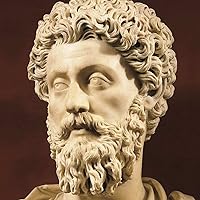
Shakespeare invented characters in a new kind of way. He not only gave them personality and depth, he gave them life. Not a life that went simply from point to point, but one that developed rather than unfolded. In so doing, Shakespeare created characters with whom everyone can identify, whether the characters were kings and queens or fools and merchants. Renowned Shakespearian scholar Professor Harold Bloom presents Shakespeare's seven major tragedies with a unique and exciting viewpoint.
Harold Bloom was an American literary critic and the Sterling Professor of Humanities at Yale University. In 2017, Bloom was called "probably the most famous literary critic in the English-speaking world." After publishing his first book in 1959, Bloom wrote more than 50 books, including over 40 books of literary criticism, several books discussing religion, and one novel. He edited hundreds of anthologies concerning numerous literary and philosophical figures for the Chelsea House publishing firm. Bloom's books have been translated into more than 40 languages. He was elected to the American Philosophical Society in 1995. Bloom was a defender of the traditional Western canon at a time when literature departments were focusing on what he derided as the "school of resentment" (multiculturalists, feminists, Marxists, and others). He was educated at Yale University, the University of Cambridge, and Cornell University.
Although some reviewers seem to have been caught up in Bloom's way of speaking, the bottom line is that this man loves the english language and Shakespeare. That is very clear when a key scene in Hamlet was played offstage and he walked out. I've listened to this four times; each time I either bring away something new or see greater depth in what I've heard before. One of the fascinating observations was on Shakespeare's being "elliptical"; allowing some things to remain unknown as to heighten the viewer's questioning or suspense. Finally, Bloom highlights Shakespeare's brilliance in creating three-dimensional, complex humans for the stage. As a psychologist, I was far less appreciative of his representation of human nature while studying in high school or college. Now, I relish the fathomless depths and complexity of Hamlet, the ruthlessness of MacBeth and his wife, living in the twilight between imagination and reality, the sexual jealousy of the brilliant, Moorish military officer, Othello, and the purity and wisdom in Juliet's loving nature as played against the naivete of Romeo's youthful misunderstanding her her words.
3.5 Very nice commentary. I loved Bloom reading certain passages out loud. I was a little disheartened seeing that he spends just 30 ish minutes on Julius Cesear and nearly double on Antony and Cleopatra. Nevertheless, it was some wonderful commentary and I will be returning to these lectures on my future rereads of these plays. Highly recommend it as a reading companion.
I'm not a big fan of Shakespeare, but I'm an educator at heart and a part-time children's entertainer (professional balloon twister). Every year for the past 4 years I've worked a Shakespeare festival twisting balloons. Every year, I have wanted to be able to talk to the kids about Shakespeare while I twist balloons. I've incorporated my love of history into my banter elsewhere.
So, this is the first of the "books" I've tackled to that end. It is really a lecture provided by a Yale Professor.
The lecture came close to making me like Shakespeare, which is why I'm giving it 4 stars. It doesn't quite get 5 stars because Professor Bloom's cadence is a cross between that of a Shakespearean actor and a graduate of the James T Kirk School of Oration. While you grow used to his manner of speaking, there were times where it was annoying.
farewell harold bloom … devastated at our parting … i will miss your musings on that which “cannot be overpraised” and the pavlovian dopamine surge i got every time you said “and in perhaps the most [adjective] moment in all of [shakespeare / english literature / literary history in any language i am able to read] …. your bounty is as boundless as the sea fr
Harold Bloom is a consummate authority on the subject. I appreciate his insight and passion for the material. As a storyteller, I’m always learning from the masters— and Bloom made Shakespeare come alive for me.
had to vomit lecture notes quick for fear that i’d never get to them. still gotta shorten, tighten, and do lear, tony + cleo.
one of my favorite pieces of literary commentary (Hamlet lect. i):
13. Samuel Taylor Coleridge said that “This is the tragedy of a man who thought too much”. Nietzsche responded by saying that “No that is wrong. This is the tragedy of a man who thinks much too well. And he thinks his way to the truth. And all you can do in relation to the truth is die of it.” While Bloom prefers the German’s quote to the Englishman’s, he goes a little further to say “Hamlet is not so much what Nietzsche calls a Dionesiac man (an archaic ecstatic spirit), but a new kind of man. One who incarnates the truth in himself. Hamlet like Kind David, and Jesus of Nazareth incarnates the truth and comes to recognize that he is the truth. And if you are the truth, only self-annihilation is appropriate for you. A terrible and nihilistic conclusion. But there is a strong nihilistic element in this great drama.”
Now the provisional lecture notes (lots of it is bloom verbatim. othello is just interview transcript i found online)
Shakespeare’s The Seven Major Tragedies
Lecture 1 - Romeo & Juliet
1. Bloom’s favorite passage in all of Romeo & Juliet. Show’s the brilliance and purity of Juliet’s love. It shows Shakespeare’s belief in the categorical superiority of women over men. For they can more completely embody the primary human emotions/states of love & selflessness. Juliet is the aspirational character in the story. There is an element of Juliet in all of us, albeit imperfect. Just like is an element of Hamlet in us, albeit less tragic. Act II Scene II
JULIET I gave thee mine before thou didst request it, 135 And yet I would it were to give again. I pledged my love before you even requested it. But now I wish I could take that promise back to give it again. ROMEO Wouldst thou withdraw it? For what purpose, love? You’d take back your vow? Why, my love? JULIET But to be frank, and give it thee again. And yet I wish but for the thing I have. My bounty is as boundless as the sea, 140 My love as deep. The more I give to thee, The more I have, for both are infinite. In order to generously give it to you again. But I’m wishing for something I have already. My generosity to you is as endless as the sea, my love as deep as the sea. The more love I give you, the more I have. Both are infinite.
2. Aristotle's six elements of tragedy include plot, characters, diction, thought, music, and spectacle. Shakespeare seems to focus less on plot and more on characters, even more on personality. 3. Shakespeare is unique in his mastery of both comedy and tragedy. Bloom thinks that very few authors can rival him in mastery of both. Still, Shakespeare is a greater comedian than he is a tragedian.
4. Romeo and Juliette, Act III Scene II, further admonishment of the inadequate and irredeemable men.
NURSE: There's no trust, No faith, no honesty in men;all perjured, All forsworn, all naught , all dissemblers. Ah, where's my man? give me some aqua vitae: These griefs, these woes, these sorrows make me old. Shame come to Romeo!
JULIET: Blister'd be thy tongue For such a wish! he was not born to shame: Upon his brow shame is ashamed to sit; For 'tis a throne where honour may be crown'd Sole monarch of the universal earth. O, what a beast was I to chide at him
5. Shakespeare brilliantly makes the tragedy of Juliette arise not from a flaw (i.e., a tragic flaw), but from her remarkability/distinctiveness—her ability to love purely, love wholly. 6. “The constant generosity of Juliette’s nature…he teaches us I think a wisdom that no one has surpassed throughout the western tradition” Wittgenstein has an aphorism that states: “Love is not a feeling. Love unlike pain is put to the test. One does not say: that was not a true pain because it passed away so quickly.” Juliette’s love was not a feeling, it was an high-sense commitment that was put to the test. 7. There is no figure in western literature that would have taught him how to create a juliette, a generous, kind, all-loving character like Juliette. With Juliette he takes a quantum leap—give us a character that he claims has not been surpassed ever since. 8. Before Shakespeare, moral fiber/ character and personality are separate entities. Allude to his previous book, Shakespeare: the Invention of the Human. Before Shakespeare, no one so handled reality, found different ways and modes and means to interact with reality. He enabled us to see things that were always there that we would never have been able to see without him. There are doubtless many women that were as magnificent as Juliette, generous, absolutely capable of falling completely in love with the right person. Perhaps Shakespeare had met such a person. We do know if he did. He brings Juliette to our collective spotlight of human attention. Perhaps on Austen and Dickens, in the english language, are the only ones which have created as vivid and intense human personalities as Shakespeare. It is the rarest of human gifts.
9. Shakespeare’s art is most certainly an art of language. The largest vocabulary of any of the english writers who have lived. Of that vocabulary, he has created around 1800 words, many of which are still in common usage. Certainly his enormous control of language, his ability to reinvent it, is an enormous element in his art. But there are two more important aspects. These go beyond what Aristotle prescribed as the necessary elements of tragedy. 1) The creation of personality added to the representation of character. Personality in our sense, is a shakespearean invention. 2) Cognitive power. Capacity for thinking. He thinks more powerfully and more inventively than any authors that Bloom has read. In giving us Juliet he has not only given us a way of integrating a superb personality with a deep and immensely moving character. He has not only found language of absolute beauty and memorability. But mostly he has found a way to get into her mind. He has found a way to become Juliette. Just like it is said “ It is we who are hamlet.” Bloom says that in a similar sense, though we cannot live up to Juliette. In on sense, there is something in every one of us, male or female, that is Juliette.”
Lecture 2 - Julius Caesar
1. This play could have very well been written as Brutus, or Cassius, but it wasn’t and that’s probably because of Caesar’s heft and superiority in military rank. 2. The play is cold—unlike Romeo and Juliette. No one is written as beautifully as Juliette is here. They all have flaws in their personality. Caesar, for all his brilliance, begins to become too full of himself. Brutus, for all is love and honesty, cannot see himself accurately (due his his being self-involved) and does not afford Caesar the loyalty which he so praises as a virtue. Cassius hates Caesar and cannot stand bowing down to anyone. Marc Antony is loyal, but not yet likeable as he is in Shakespeare’s later play about him says Bloom. 3. James Joyce was once asked the desert island question—what book would you take with you to a desert island if you could only take one: “I should like to answer Dante, but I have to take the Englishman because he is richer”. 4. There is an extraordinary elliptical element to the play. The elliptical element here is the question, what is the full relationship between Caesar and Brutus? This is a hidden relationship, that sits at the heart of this political tragedy. That Caesar is Brutus’ father, and that Brutus has the oedipal complex of simultaneous love and hatred for the great Caesar. What are Brutus’ motives in not only joining the conspiracy but leading it, and in striking the particular blow (some traditions according to Plutarch claim that Brutus stabbed Caesar in the genitals). 5. Brutus’ great soliloquy Act II Scene I Line 10: It must be by his death and for my part I know no personal cause to spurn at him but for the general. He would be crowned how that might change his nature there is the question? It is the bright day that brings forth the adder, and that craves wary walking. Crown him? That, and then I grant we put a sting in him. That at his will, he may do danger with. The abuse of greatness is when it disjoins remorse from power. And to speak truth of Caesar, I have not known when his affections swayed more than his reason. (He has never abused power) But tis a common proof that lowliness is young ambitions ladder, were to the climber upward turns his face but when he ones attains the utmost round he then unto the ladder turns his back, looks in the clouds, scorning the base degrees by which he did ascend. So Caesar may, then lest he may prevent, and since the quarrel will bear no color for the thing he is, fashion it thus. 6. We are seeing Julius Caesar not in his full greatness, but in his clear decline. He is starting to become inconsistent—though not in letting his passion govern his reason as Brutus tries to fashion it—but still, he is strange mixture of bravado and courage, of wisdom and self-deception. Act II Scene II, Caesar says to Calpurnia and his servants and retainers on the day they beg him not to go to the senate hearing. Caesar cries out: “The gods do this in shame of cowardice. Caesar should be a beast without a heart. If he should stay at home today for fear, no Caesar shall not. Danger knows full well that Caesar is more dangerous than he, we are two lions littered in one day, and I am the elder and more terrible and Caesar shall go forth.” Speaks in third person which is a weakness on his part. How is it that Caesar who is already absolute dictator, killed so easily? Where is Marcus Antonius? Where is the praetorian guard? Because perhaps on some level, conscious or unconscious, he desires martyrdom. He understand with his deep intellect that if he is cut down by the conspirators, he will be avenged, and indeed his great nephew and heir Octavian, will become, at the close of the last of the 7 great tragedies (Antony & Cleopatra), the Emperor Augustus and fully found the roman empire. And each emperor in turn will be called Caesar. So that hidden elliptical element is whether or not Caesar sees himself as a sacrifice to his own greatness. He will become some kind of god through this assassination and the empire will be firmly founded in his name. 7. Act II Scene II. Caesar sees Brutus: “What Brutus are you steered so early to? What is it o’clock?” Brutus says very gently “Caesar’s tis strucken 8” Caesar very formally with a beautiful gravity replies “I thank you for your pains and courtesy” Too dignified a tone for the occasion. The only exchange between them until they cut him down and he says the famous “Et tu, Brute?” 8. Act III Scene I—the grandest scene of Shakespeare’s up to this point. Caesar says” I could be well moved if I were as you. If I could pray to move, prayers would move me. But I am constant as the northern star, of whose true fixed and resting quality there is no fellow in the firmament. The skies are painted with unnumbered sparks, they are all fire and everyone doth shine, but one doth hold his place so in the world. I am that northern star, I will remain constant…Does not Brutus who is so dear to me, Bootless kneel?” They all cry out “Speak hands for me” and they all stab Caesar, and the final blow is delivered by Brutus, and Caesar says “And thou, my sun?”. And Caesar is overthrown and the great murder is accomplished. Then Brutus leads the conspirators in dipping their hands in the blood of Caesar. A moment they know is gory, but still a symbol of their taking responsibility for the tragic act they commit “for the sake of liberty”. 9. Afterwards, every-time there is a disagreement between the leaders of the conspirators, Cassius is right and Brutus is invariably wrong. Brutus’ bad judgement leads to the defeat of the rebels, the death of Cassius and the suicide of Brutus. 10. Brutus is a superb stoic, a man of great enterprise. A man almost wholly admirable except for an extraordinary blindness towards himself and his own motivations.
Lecture 3 Hamlet
1. Hamlet is the prince of Denmark? I definitely did not know that. 2. The unique and central work of the english language—and of western literature. 3. There is a unique relationship between Shakespeare and the play. Though this is only surmised. 4. Written first when he was 35 yrs old. 5. Subtle family background to this play. Shakespeare had one son, Hamnet. In those days, elizabethan spelling was by no means regular, there would’ve been very little difference between Hamlet & Hamnet. Hamnet died at age of 11, three years before the play was written. Furthermroe, the year of the play’s revision, Shakespeare’s father died. So we generally speculate that the play has something to do with Shakespeare’s intimate relationship with his son & father. 6. Above all else, it’s the extraordinary intelligence of the play’s hero, Hamlet, that makes this such a unique work. To Bloom, Hamlet is the most brilliant mind in literature. 7. A new kind of man: In the renaissance, Hamlet is a new kind of man. As much a new kind of man as King David is in the Hebrew bible (2nd book of Samuel), or as Jesus of Nazareth is in the Gospel of Mark. An absolute individual. A total original. He does not resemble any figures before or after him in Shakespeare’s work. But we do find imitations of him today. 8. Traditional reading: Hamlet is a man that could not make up his mind to do what his father ordered him to do. Which is to avenge his father’s murder at the hand of his uncle, Claudius, and wedded his mother (queen Gertrude [who doesn’t know that her new husband killed the former kind]). 9. We don’t know how far this relationship between Gertrude and Claudius started. Hamlet grimly suspects and so do we, that Claudius (whom he deeply dislikes) could be his father. 10. No one has succeeded in creating a character whose consciousness is extremely capacious. A character whose self-awareness is so intense that it results in a kind of theatricality. Since he is in every point aware that in some sense, he is acting in a play. And a play that he doesn’t seem to care for. 11. Hamlet somehow seems to us as a kind of real person that has been plugged into the play where no one else seems real. He comes off as a real person surrounded by puppets. Some quite impressive like his beloved Ophelia, but not with the “reality quotient” that Hamlet himself has. 12. Longest single speaking part that any actor can attempt in any of the world’s dramas. His range of interests is so extraordinary. His immense wisdom seems to be perpetually exfoliating so that we find that we want to hear his take on every subject under the sun. 13. Samuel Taylor Coleridge said that “This is the tragedy of a man who thought too much”. Nietzsche responded by saying that “No that is wrong. This is the tragedy of a man who thinks much too well. And he thinks his way to the truth. And all you can do in relation to the truth is die of it.” While Bloom prefers the German’s quote to the Englishman’s, he goes a little further to say “Hamlet is not so much what Nietzsche calls a Dionesiac man (an archaic ecstatic spirit), but a new kind of man. One who incarnates the truth in himself. Hamlet like Kind David, and Jesus of Nazareth incarnates the truth and comes to recognize that he is the truth. And if you are the truth, only self-annihilation is appropriate for you. A terrible and nihilistic conclusion. But there is a strong nihilistic element in this great drama.” 14. In the tragic tradition from Aristotle onwards, the hero is supposed to exhibit a hamartia (a fatal flaw). Hamlet has no tragic flaw. Hamlet is not always a kind human being and he is absolutely not a loving human being. 15. Freud thought that Hamlet suffered from the Oedipus complex. Hamlet had an ambivalence to his father King Hamlet, according to Freud. But that is wrong according to Bloom. 16. Playfulness with timelines and consistency. Hamlet is a student at university when his father dies. Hamlet at the opening cannot be older than 19. At the beginning of the play, it is said it is 23 years since Uric the jester died. Additionally, we know that Hamlet was 7 when Uric died. Furthermore, Hamlet is 30 years old, the 5th act. You cannot have someone age 11 yrs in the span of 6 weeks. The timelines don’t match and this is not a mistake, but rather Shakespearean deliberation. He wants a smart student at the beginning of the play and a wiser aged man after. He is unbothered by the contradiction. Ben Johnson was so angered at Shakespeare’s liberties. Walt Whitman said “Do I contradict myself? Very well then I contradict myself, (I am large, I contain multitudes.” Well, says Bloom, no one contains as many multitudes as Shakespeare. More than 100 major characters who are remarkably unique, who speak in ways of their own. 1000 minor characters that are sharply differentiated as well. 17. Hamlet & Shakespeare share an immense distrust of motives. They even mistrust themselves to a certain extent. 18. Hamlet is his own Falstaff, and he is his own Iago (not evil but is responsible for evil). By the end of the play he is responsible for 8 deaths including his own. Still Hamlet stops his friend Horatio from killing himself when he realizes his friend Hamlet is dying. 19. Hamlet remains the most experimental stage drama ever written. Test consciousness and theatricality to its limit. No one. Not Pirandello, not Beckett, not Brecht, not Inesco or Artaut. No one, even today is able to get beyond Hamlet. It is the most alarming kind of play. Everything about it is unexpected. 20. How did Hamlet first become Hamlet? The extraordinary individual who is deeply ambivalent, deeply ironic, the most adept at hearing himself. Perhaps because he is self-fathered and mothered. Sure he is nurtured by Uric. But he is a changeling from the start. He is an actor-dramatist from the beginning. 21. It is not we who are Hamlet, but it is we who are Horatio. Horatio mediates Hamlet for us. Without Horatio, Hamlet’s brilliance would be inescapable to us. 22. Melancholia is what Hamlet is famous for. It is not grief at the death of his father, nor the enormous shock from the swift remarriage of his mother. But that he has always been, except for Uric, an unloved child. Notice the ghost never tells him he is loved, but guilts him into doing its bidding by appealing to fealty and paternal love (If ever thou didst thy father love”) Gertrude is represented as a sexual magnet and not s motherly figure. 23. With extraordinary ambivalence about the entire human situation, Hamlet cries out “What piece of work is a man, how noble in reason, how infinite in faculties, in form and moving, how express and admirable in action, how like an angel in apprehension, how like a god! The beauty of the world. The paragon of animals. And yet, to me, what is this quintessence of dust? Man delights not me, nor woman neither. Though by your smiling you seem to say so” 24. Hamlet carries with him an intense consciousness of death. His consciousness is so enormous that it penetrates that question of existence and mortality. Hamlet is death’s ambassador to us. He conveys to us the embassy of death...
This entire review has been hidden because of spoilers.
The only Harold Bloom audiobook narrated by the author. A sublime introduction to the complexity and literary genius of Shakespeare
Harold Bloom remains the greatest contemporary literary critic whose books provide unique insights into classical literature with a specific focus on Shakespeare.
This work builds on his concept that Shakespeare invented the human. He regards Juliet as a remarkable figure. The picture of a wise 14-year-old young woman reminds us how adolescence was a 20th-century invention. She was a character for whom there was no template, and one that introduced the literary concept of true love, romantic love. A concept that would not become widely spoken of until late 18th century France.
Moreover, Bloom shows us the complexity of the human characters in King Leer, Orthello, and of course the great Hamlet. Each time explaining how The Bard was able to weave greater depth and complexity into his characters and his prose than anyone had done previously.
What stays with the listener is how Shakespeare's creations are not only complex but real people. They act and react as if they were you or I. They think as humans think and not as a cartoonish representation of humanity. Hamlet is famously not structured in any way positive or negative. It is just a literary tragedy that follows this young man as he grows into himself.
Bloom also takes the time to debunk many myths and alternative views of Shakespeare and to underscore the deep level of thought behind them. He worked through the gruesome murder of Desdemona, the madness and rage of King Leer, as well proving that Hamlet is in no way an oedipal storyline.
Who is this for?
Whether you are a student or a seeker of literary beauty this audiobook is something that you will treasure. As a fan of Harold Bloom and his analyses, I enjoyed listening to him narrate his own essays. When others try to narrate his books they read them as you would any other non-fiction book. They don't know the authors or the characters, and they often miss the emphasis the great critic placed on many small inflections and even singular words.
This will teach you a lot about Shakespeare whether you are just beginning, have already worked your way through a printed version of one of the tragedies, or attended a performance.
Listened to this in the background while gardening, so it wasn't too taxing. But general it was a series of lectures the author gave with his strong (and presumable learned and well founded) positions on issues and themes from the tragedies. I connected more with the plays I have already studied/seen/know well, and less with the ones he was just introducing me to. The parts I didn't care for was that he didn't leave much room for discussion, but rather told you how to see things, and his tone came off a bit superior. Perhaps he has earned that as a Yale lecturer of many years and a specialist in this area. But I found it a pretty amusing (ah... here he goes again) when he would start reciting lines, as it then sort of felt like the lectures were just a pretext to get to jump into acting, but maybe that is because he jumped into the performing with gusto.
Quotes “One element, most certainly, is the creation of personality added to the representation of character. We do not find that before Shakespeare. Personality, in our sense, tho he does not use the word, is a Shakespearean invention…Shakespeare thinks more originally and more inventively than any writer before him or since-- he is unique among the world authors in that regard.”
“[Shakespeare’s roles in scripts/plays]…to an amazing extent they have usurped reality itself.”
“Things that were always there but that we never would have been able to see without him”
This was a hard audiobook to listen to - the author really gave a lecture with long passages from the plays...
This series of 14 lectures gives nice insights to the major tragedies of Shakespeare and highlights different points and key portions of each. After a while, I did notice Bloom's heavy use of "in all of Shakespeare" or "in all of literature" as in "this is the most theatrical scene in all of Shakespeare". He says it about everything and the hyperbole does make it a little harder to accept everything he says. But there is no question that he is enthusiastic about the topic.
These lectures—in which he covers the major tragedies of Shakespeare, including Hamlet, Macbeth, Othello, King Lear, and Romeo and Juliet—present Bloom at his analytical best.
Bloom provides fantastic insights on broad themes and small scenes through a close, line-by-line review. While you may not agree with all of his conclusions, Bloom’s infectious joy for, and deep understanding of, Shakespeare makes these lectures well worth the price of admission for any lover of the Bard.
Learned from this to use "magnificent" and "magnificently" more often, and that Harold Bloom had trouble pronouncing words like "fool." Otherwise, enjoyed listening to this, albeit in a neutral fashion.
An interesting nonfiction lecture series on the Seven Major Tragedies of Shakespeare. Thought provoking and well worth the time it takes to listen to them carefully.
The way Bloom preambulates every little quote with "the greatest line of all time in the history of humanity and every other planet and galaxy" is risible.
Excellent Lecture, Bloom's use of superlatives becomes almost a joke at times, but hey, everything was actually the most extraordinary and superb in all of Shakespeare, and signified nothing.
I borrowed this course from the library many years ago intending to listen to it with my kids when we were driving around, but the professor's manner of speech, which seemed filled with affectation, put us all off in just a few minutes.
I returned to it a couple of weeks ago. Bloom grows on you as you listen to the course and realize just how intoxicated with the language and the creative process of Shakespeare he is. It's obvious that he could spend an entire course on each of these plays. His method does not actually discuss much of the plots - the basic outline of the action is assumed - but he focuses in on specific scenes and passages that illustrate superlative achievements of Shakespeare; whether in brevity, ferocity, beauty, the demonstration of intellect, stagecraft, or sheer expressive power. He also is quite good at finding excerpts that illustrate how Shakespeare gives each character his or her own voice and personhood.
So, I would recommend it for adults who have some patience and want to get fired up about reading or seeing one of these plays. For kids, not so much.
Slightly disappointed because it sometimes feels like Bloom mailed it in. He spends a lot of time giving basic information like plot summaries and reading or reciting favorite passages. As much as I like rhapsodic Bloom I was hoping for more Bloomian insights, along the lines of Invention of the Human. I'm also disappointed that this seems to be the only production Bloom did for Modern Scholar ("...and the portions are so small."). When I discovered this I figured he might also have done some of the histories and comedies too.
I have read a couple of Professor Bloom's books and found them to be absolutely wonderful. This audiobook course is no different. His insights into Shakespeare are unrivaled. I particularly enjoyed his takes and explorations into Antony and Cleopatra and Julius Caesar, two plays that I am not as well acquainted with as the others. Every now and then, if you're lucky, you encounter something that reawakens your curiosity and passion for a subject. This has done it!
utterly persuasive human beings, complex Hamlet 15 of 40K lines unloved child let it be what said and not said play within play w/play, comedy and tragedy, as boundless as sea, the more you love the more you have to give, largest vocabulary, unpacking your heart with words, Jane Austin and Lickens, as easy as lying.
Little by way of new or surprising insights, but I’m always happy to listen to Professor Bloom Stanning the Bard, even if everything is: ‘extraordinary, unsurpassed, impossible to overpraise, perhaps the most remarkable passage in Shakespeare/literature/world culture/the cosmos …’. I love these plays and am inspired to reread and rewatch, so thanks, Professor, and rest in peace.
Bloom provides a lot of insight into these works. His enthusiasm shines through. With Shakespeare, we read the plays and perhaps settle into our own understanding of them. Hence, it's good to incorporate other views. I really enjoyed the R&J lectures, as well as Othello.