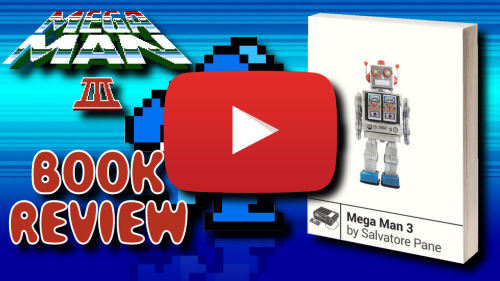
Capcom's Keiji Inafune followed the unexpected success of Mega Man 2 with a "kitchen sink" sequel that included eight new robot masters, a canine companion, a mysterious new frenemy, and a melancholy tone that runs through the game from its soft opening notes. Mega Man 3 was the biggest, messiest, and most ambitious Mega Man game yet.
But why do we hunger for twitchy, difficult platformers like Mega Man 3 decades later when the developers, the franchise, and the Blue Bomber himself have all moved on? Investigating the development of the Mega Man series alongside the rise of video game emulation, the YouTube retrogaming scene, and the soaring price of NES carts, novelist Salvatore Pane takes a close and compelling look at the lost power-ups of our youth that we collect in our attempts to become complete again.
Salvatore Pane was born and raised in Scranton, Pennsylvania. He is the author of two novels, Last Call in the City of Bridges and The Theory of Almost Everything, in addition to a nonfiction book about video games, Mega Man 3, published by Boss Fight Books. He is currently co-writing a textbook about writing video games for Bloomsbury with Julialicia Case and Eric Freeze. He was awarded the 2022 Autumn House Fiction Prize, and his winning short story collection, The Neorealist in Winter: Stories, is forthcoming in October 2023.
He is the writer/narrative designer of RetroMania Wrestling on Steam, PlayStation, Nintendo Switch, and Xbox and has written and designed many other video games. He served as a Freelance Localization Editor for NIS America on Trails to Azure and is currently an Associate Professor at the University of St. Thomas where he teaches creative writing, video games, and Italian film. He lives with his wife and Martin Scorsese the Cat in St. Paul and can be reached via Twitter.
His short fiction has been nominated or shortlisted for the Pushcart Prize, Best of the Web, Best of the Net, and Wigleaf’s Top 50 [Very] Short Fictions. He won the Turow-Kinder Award in Fiction judged by Stewart O’ Nan, and his work has appeared in Prairie Schooner, Indiana Review, Story Magazine, American Short Fiction, Paste, Kotaku, BOMB, The Rumpus, The American Book Review, and many other venues. He is the co-creator of the graphic novel, The Black List, and co-hosts The Jabsteps, a podcast about the NBA. His video games have been exhibited at WordPlay and BAR SK, and he has presented his work in Italy, Iceland, and elsewhere internationally.
Visit his LinkedIn or get in touch at salpane@gmail.com. His work is represented by Andrianna deLone at CAA.
This is a fantastic book for anyone who is interested in the history of Mega Man, Nintendo in general, video game design, the Japanese gaming industry, nostalgia, and excellent writing. I learned quite a few new things, and the author really nails the draw of retro games and collecting for people of my generation — 30-somethings looking to recapture and revisit some of the joys and discoveries of childhood.
As usual for this series, it's a combination of a history of the game covered and an autobiography of author. Although I never played Megaman 3 (or played very little of it) I did own Megaman 2 and so it was great that the author touched on the entire series and the spinoffs.
A nice hit of nostalgia from another gamer who grew up in the NES era.
I’m reviewing all of the Boss Fight Books releases, so subscribe to my YouTube channel to be sure you don’t miss future reviews.
I’m thinking what you’re thinking: Why Mega Man 3 as the topic of a book? Thankfully, Salvatore Pane anticipates this question. In short, it’s because he likes that one. And simple personal connection is part of the appeal of this, and many other Boss Fight Books. It’s why I read them.
There’s a part of me that reads every Boss Fight Books release as a mystery novel, despite them all being not mysteries and not fiction. But I do. I read the title—which is always the subject game—and wonder why that game is deserving of a book. Some are obvious, but I actually look forward more to the books about the games I’m not familiar with, like Mega Man 3, the subject of Salvatore Pane’s book. For me, the Mega Man chronology is sparse. Mega Man 2 is number one. Mega Man’s appearance in the cartoon Captain N the Game Master is number two. Numbers three and four are probably Mega Man X and Mega Man 11, and the final game in the series is Mega Man: The Power Battle, an arcade cabinet only game released in 1995 which I got to play in Chicago’s amazing Galloping Ghosts arcade a couple years ago. Sure, my chronology is nonsensical, but with a series that notoriously doesn’t change much from entry to entry and whose thru-narrative is weak at best, my haphazard chronology is just as valid as any other, dammit.
So I approached Pane’s book with questions, but not enough questions to be defensive. I was willing to be taught. Pane spends some of the book justifying his decision to write about Mega Man 3—as opposed to the much more well-known Mega Man 2—with some historical notes and quips about the vocal fan bases in favor of #3, but honestly the reader gets the sense that those justifications are largely subservient to Pane’s simple love of #3 over all of the other entries. And that’s absolutely valid.
The history of the entire Mega Man franchise is explored to some degree here, with no one entry—even the titular #3—receiving a comprehensive exploration. We get some Mega Man 3 level-by-level descriptions and a lot of great history regarding the creators of the game, especially the roles that series originator Akira Kitamarua and series adoptive father Kenji Inafune played, but beyond that this book treats the series as a whole, with a focus on the NES entries. Which I think is absolutely valid. When dealing with a series where many entries can be fairly interchangeable, it’s warranted to use one entry as a catalyst to explore the entire series. So people wanting a book dedicated 100% to just Mega Man 3 will be disappointed. But I’d argue that those people are probably used to disappointment (even many fans of Mega Man 3 agree that it’s not a technically great game).
What I wasn’t expecting was for this book to spend so much time not only outside Mega Man 3 but outside the series altogether. Pane steps away from the series many times to explore the retro gaming scene beginning with the mid 2000s. He writes about how he came across the Angry Video Game Nerd, RetrowareTV, and NintendoAge, all personalities and communities that thrive because of the same nostalgia that brought Pane himself back to the retro video games and the Mega Man series. The inclusion of these elements could be seen as a way to stretch the book beyond its focus. That would be fair, as these retro gaming celebrities and fan communities aren’t unique to Mega Man at all, and therefore could support any of the Boss Fight Books released to date. The danger is, of course, permissing every Boss Fight Book to feel like it has to include these references lest they be considered faulty, and in doing so the unique angles writers could bring to the games and their stories is compromised. But Pane doesn’t just report as an outsider. These communities were integral to his reintroduction to Mega Man 3. Though he discusses them as entities whose historical connections to Mega Man 3 are essentially nonexistent, the personal connection is enough for me to forgive how much page space he gives to these non-Mega Man 3 elements. In fact, I enjoyed these aspects so much that I’d love to read an entire book from Pane about retro gaming and the surrounding communities.
Overall, Mega Man 3 by Salvatore Pane is a great book and a fitting part of the Boss Fight Books catalog. It dovetails a game’s history with the author’s own personal stories in an engaging way. Though the book may deviate more than expected from the subject game, the deviations turn out to be my favorite parts of the book, so I cannot complain.
If you enjoyed Last Call in the City of Bridges as much as I did, this is a perfect follow-up. It almost reads like extensive footnotes to that novel. But because I know little about Mega Men (outside of watching a friend play it for about two months when I was crashing with him after I'd been kicked out of my apartment by an angry roommate, long story...) I mostly skipped all the background and history of the game, but you probably shouldn't do that. I have no doubt this information is endlessly fascinating, but I liked reading about the author's life, which (up until the home stretch of the book) are alternating chapters between the nuts and bolts game stuff, game history, and probably a very helpful strategy guide to life, Mega or otherwise. The author is like a more thoughtful/nostalgia-soaked version of the Angry Video Game Nerd (who is interviewed here), but once I saw the author carefully clean the beer out of a Nintendo game with the dexterity of a surgeon. Top that, nerds! I was on the edge of my seat until the operation was over. So is this really half a review? I don't know. Don't worry about it! Worry about yourself.
Like other books from Boss Fight Books that I've read, this is a combination of an expository story of the history, development, and influence of a video game (the 1990 NES game Mega Man 3), but it's also the author's personal story about his childhood introduction to this game (and video games as a whole) and how it shaped the course of his life to the present day. For me, the book skirts that edge between trying to inform someone who has limited exposure to the Mega Man franchise and its tentpole games, and providing details that ultimately would only be interesting to someone who has their own experiences having played it. As a lifelong lover of the Mega Man franchise and MM3 in particular, I was left unsatisfied by the rather cursory and uninspired walkthrough of the game's play and design. However, everything else is excellent. The background and history is well researched and told economically for maximum interest. And the personal journey Pane takes to adulthood through the lens of video game collecting and scholarship is engaging. If you have a passing familiarity or interest in Mega Man or the NES, this will be a great way to spend an evening. For someone less familiar with games of the era, but interested in video game history, there's plenty of treasure to unearth and value. Beyond that, I'm not sure to whom I would recommend this book.
What an incredible disappointment. There are four different threads in this short book, each of which contains as much information as a Wikipedia entry. There is a history of the Mega Man franchise, which discusses MM3 for less time than it does MM1 and 2; there is a completely unnecessary play-by-play of MM3, as if I couldn't just play it myself; a history of internet commentary on retro video games; and the author's personal biography, from before he got his first NES through college and beyond.
What IS this book? Barely any of it is about MM3, apart from the awful descriptions of gameplay. The author quotes interviews with Inafune, one of the creators of Mega Man, just as much as he quotes the Youtuber Angry Video Game Nerd. And his personal story? Why print this stuff? There is so much to say about this game, and all we get are a few notes on the creators and a history of retro games funded by kickstarter. This game deserves more. ANY topic would deserve more.
Excellent book, I think it reached a good balance between the development information of the first games of the franchise, the description of the game itself and the personal experience of the writer with both the title in question and the NES collection scene in general
This was a quick read and very enjoyable. It's a smart blend of personal memoir and game study of the original NES game by Capcom, Mega Man 3. This will only be interesting to die-hard retro gamers, collectors or those interested in video game studies, but I found it to be a satisfying, light, and intriguing return to one of the great games of that console.
Salvatore Pane, you had me at hello—and when you said you preferred Mega Man 3 to 2. MM3 was my gateway drug into Capcom's venerable (now moldy from disuse) franchise. Pane's book, MEGA MAN 3, couldn't have resonated with me any deeper had I figured out a way to liquify it and absorb it intravenously.
Pane divides his book into three parts: a scenic tour of Mega Man 3's levels and game design choices; a well-research account of the development of key titles in and designers on the series; and a personal narrative that recounts his history with MM3 and, more broadly, retro games and what drives Pane and other collectors to hold so tightly to their childhoods.
All portions are well-written and engaging, but I was more impressed with how deftly Pane wove them together. Each account is one part of a larger scene that comes together beautifully in the end. Pane's metaphor of Mega Man gathering weapons and feeling more complete, more secure, more able, runs in parallel to his honest account of how classic games serve as balms to his worries. I relate to that, and even though I haven't met him, I relate to Pane—through his writing, through what I (hopefully correctly!) perceive to be our similar personalities, ambitions, and anxieties, and our shared passion for both Mega Man and frills-free gaming escapism.
All that, and Mega Man 3 really is the best classic Mega Man game.
Boss Fight Books are great: they generally take a nostalgic stroll down memory lane mixed with introspection and anecdotes from the author. Mega Man 3 was an easy and engaging read for me despite the fact I have extremely limited experience with the series (a brief tryst with Mega Man Battle Network). The book alternates between the author's experiences tackling each stage of the game and the history (and mysteries) of the series and the people behind it. A no-brainer if you're a fan of the series, very much worth reading if you have an interest in classic games of that era.
By the premise I hoped for industry stories, from the development teams and the challenges they faced through the creationd and release of this third important instalment.
It has some of that, but mroe than third parts of the book is about the author experience with videogames trhough his life. Not even about his experience with Mega Man 3, but about his life. Then another third of the book is the author narrating the levels, not with significant commentary about level or game design, or characters development decisions, it's just him playing an narrating what happened on screen.
The info in develpoment and industry and the creators of megam man, was great. The rest felt like a massive filler. Since the author experience with games was pretty much not related to mega man...
Mega Man 3 is one of my favorite games of all time, so it's a shame this book only talks about it AT MOST 1/3 of the time. Most of it is the author waxing nostalgic about his childhood, or his adulthood (?), or reminding us that he is in academia, or getting James Rolfe to wax nostalgic instead, and only occasionally remembering he is supposed to be talking about Mega Man, so he rambles about his preferred boss order. There are a couple of actually interesting facts about the game in this book, but you have to slog through a LOT of nonsense to find them. Oh, and the book is almost comedically short.
This was my first Boss Fight Book, and I've heard a lot of good things about the series, so this was a huge disappointment.
I'm a big fan of this book series. Personally, as is the case with most people, a book about Mega Man 2 would seem to be more in order to me than part 3. Being the most-remembered, the one often cited as the best. But I also loved 3, so I wasn't dismissive of this book. After reading it, the author makes a fairly compelling argument as to why this game deserves recognition as the most important in the series. Thoroughly researched, engagingly written, and splicing the history of the game's creation with the author's preferred playing strategy makes this a book worth reading for any fan of this game or Mega Man in general.
I love Mega Man 3. It's my favorite of the original series. I also just read the Spelunky book by Derek Yu, so I had high hopes for this.
I usually like New Games Journalism, but Pane's personal history didn't add much here, and the continual hot takes seemed forced. There was some interesting background info about Kitamura and Inafune, but the different narratives of the book are choppily arranged. It's as if there's supposed to be some sort of metaphorical thread connecting them, but I sure didn't see it.
No more Boss Fight books for me. Looks like Yu is the only creator who wrote about his own game.
Pane bounces a few different narratives, his own personal relationship with Megaman 3 and retro games at large, the narrative of Megaman 3 itself and the story of Megaman 3's development, to synthesize on the game's position as the less-loved sequel to the series' most beloved entry and why people who grew up on the series remain fixated on the games of their childhood.
If there was an issue I had here, it was that some of the narrative threads are more interesting than others, and the way the narratives cut between each other is a fun device for a nonfiction piece, but starts to get a bit tiring. To be honest, I was not really interested in the parts writing about the game itself and found that Pane did a much better job when he was focusing on the other aspects. By the end of the book, Pane has a thesis on what draws people to retro games themselves, but it feels a bit unearned by the scattered writing that proceeded it, much of which does not manage to come to a real conclusion.
All of this is to say is that I appreciate the work and the way it educates on multiple lanes, I felt it was also a bit scattershot. I'm not sure how much the advent of Kickstarter and crowdfunding has to do with Megaman 3, or why it would deepen my appreciation or understanding of it. I'm also not sure why the only person who appears to have been interviewed for this book was James Rolfe, the Angry Video Game Nerd. Rolfe is an important figure in retro games for sure, but in an academic book I was hoping we could hear from a deeper bench of people in this, especially given that Rolfe is frankly not the most introspective person when he is quoted.
Probably most interesting is the narrative about the development of the original Megaman titles, which were initially company side projects that were disliked by much of the management at Capcom. It's very cool to learn about the internal politics that led to the games being made and the creative figures who stuck with the series for decades, and those who did not.
Overall, this is absolutely something I would recommend reading especially if you are a fan of the subject, but I think I expected to leave this book with a bit more than I got out of it, and it seems like it could have used more revisions.
HUGE fan of the Mega Man franchise right here. Can't be overstated, and this is the first book I've read that ever had "Mega Man" right there in the title. So... bam! there's bias.
The first game I had ever played was Mega Man 2, the first cheat I ever remember using was the red password dots in Mega Man 2, which I had collected meticulously after beating any of the robot masters. I remember asking my dad for help in certain parts of levels. So it was extremely easy to empathize with the author and all of the nostalgia and memories he evoked.
The book jumps in between telling several different stories and histories: The creation and concept of Mega Man and the people who fathered (whether 'biologically' or 'adoptive') him, a novelization of the gameplay of Mega Man 3, as told through the eyes of the author (and the Nintendo Power issue mapping the path), and then back into the world to discuss how the NES and other retrogames have had a resurgence in popularity, especially among those with personal emotional ties from back in the day.
I learned a lot of new stuff--mostly about the creation and creative process of making the games. And the writing was really accessible; super easy to read, and very clear.
I knocked off a star for some very small issues I had with minor specifics regarding Mega Man 3's portrayal. And this might not have been completely fair, but I couldn't get over them; how I remembered and, in some cases, how the game actually is was described too differently.
Also, I wasn't expecting so much not-Mega Man stuff, and I wanted more of the Mega Man story.
So yeah, I'm going to read more from this series, because this one was done so well. I'm just a little critical about the things I really like.
Mega Man 3 is part history lesson, part memoir, and part strategy guide, and somehow this trifold narrative doesn't feel cramped in these 140-odd pages. I will admit that, initially, I found myself asking why I was reading about this guy reading Nintendo Power, or how he discovered the joy of collecting games in college, but as I read on, I realized: that's the point. Well, maybe not the point per se, but it's what gives this book a soul.
All of us who care about gaming culture, old or new, have stories as to why we're so passionate about it. Those stories are the glue that binds us all together. While I wouldn't have minded more time devoted purely to the history of Mega Man 3, Capcom, et al, the inclusion of Pane's personal slant gave this book a more conversational, comfortable tone. Though I've never met the guy, reading this felt like I was commiserating with an old friend, and that was kinda nice.
And really, while only 1/3 of the book is devoted to exploring the people behind the scenes of the game, and its development process and whatnot, that section was still quite informative. The same goes for the step-by-step strategy guide portion--even though I admit I've never actually beaten the game myself, I felt like I was along for every step of the journey.
Ultimately, your enjoyment of Mega Man 3 will depend on how much you take to the split narrative. I personally found it to be a very fine experience, but if you're looking for raw facts from start to finish, you might find the author's personal touches distracting. I'd still recommend it, but just know what you're getting into.
Mega Man 2 got all the attention. It was the most colorful, most rocking (pun intended) and by far the easiest of the games. But then Mega Man 3 came out 2 years later and was a mess, loaded with bugs, cutscenes missing (FACT: you don't get any story until right before the Wily stages, this includes the title screen which never got an intro story like the rest of the series has) and yet is still considered the best game in the series by hard core gamers, despite being abandoned as a loss by the creators. This mini book goes into what happened....at least somewhat...
It's divided into 3 separate stories which rotate by chapter.
1. A narrative walk through and analysis of the game. The best part of this book. Why does Top Man live in a greenhouse of all places anyway?
2. A history of the Mega Man series. A lot of good stuff here but I wish it would have gone into better detail about why 3 got released in such an unfinished state. Need more details than just "time constraints"
3. The authors history. Sure, Mega Man 3 was his first NES game, but he keeps trying to build up why it was such an influencial game on his life and the conclusion is just (spoilers) that it led him to teaching a college course on video game writing. Nobody except for him cares!
This entire review has been hidden because of spoilers.
There were three interwoven narratives here that had varying levels of success: the story of the creators of the Mega Man series, including a more in-depth dive into the development of the first three games, was the most interesting. The textual walkthrough of Mega Man 3 itself was essential for a book like this, but it's hard to really punch of the narrative of a walkthrough of a 1990 straightforward platformer, so breaking it up into chunks between the other narratives was a successful decision. The story of the author's journey from 5-year-old renting Mega Man 3 from Blockbuster brought back memories (I had a similar story, although I was 11 at the time) but was a mixed bag in terms of interest.
This book probably won't appeal to you if you aren't me: someone who played through and beat this game over a weekend when I was 11 with an old friend who I had moved away from 2 years earlier. This being the pre-internet era, I believe this was either the last or next-to-last time I ever saw him.
Again, this title stands out in the Boss Fight Series through its incorporation of personal narrative. The author does a great job conveying his subjective experience playing the game as a kid and returning to it as an adult through emulators. He also reflects with humor and insight on his obsessive collecting of classic games and the longing that motivates this collection.
When I first learned about this book, I was a little disappointed it wasn't Mega Man 2, a game which for many years stood as the critical darling of the Mega Man series and which was the ultimate VIP (very important platformer) in my and many other readers' estimation. I still feel this disappointment a little; this book gives Mega Man 2 its due and does a great job discussing the series broadly while keeping the focus on No. 3. Still, I want nothing more than a book-length deep-dive on the title that precedes this book's subject.
It was fun. I enjoyed the story on how the whole Mega Man series came to be, and how Mega Man 2 really saved the franchise. The author loves Mega Man 3 better and posits that this was really the game that saved the series since it was two popular games in a row.
There are are fun facts about the whole Mega Man series, Nintendo corporation culture, specific designers both credited and uncredited, including delving deep into specific designers and composers in Japan who don't want to be profiled. Fans of these games will like it.
The author is a little annoying at times, in awe of how hard Nintendo games and Mega Man 3 in general are, which I didn't find completely accurate. He gets very specific about levels in Mega Man 3 which was interesting to me (I don't agree but like his specifically contrary-to-Nintendo-Power preferred boss order), but may be too much detail for non-fans of the game. Some random swearing to make his point at times.
Este libro mezcla en capítulos intercalados una descripción de una partida completa de Mega Man 3, la historia del desarrollo del juego (y de la franquicia Mega Man en general) y detalles de la vida del autor en contexto de su amor por este juego y la librería de NES en general.
Es una lectura corta e informativa. Yo, que me describo como fan de Mega Man, aprendí muchas cosas que no sabía sobre el desarrollo de la saga. Pero en general no es el mejor de los libros de Boss Fights. Tiene algunos errores y exageraciones que me molestaron un poco, pero sigo animado a leer más libros de esta serie.
Certainly worthwhile if you’re a fan of the franchise. It covers what most in the community know, its rushed development cycle and the ideas left on the cutting room floor.The more interesting part was the reflection on it and whilst it was certainly interesting some aspects such as the game’s difficulty felt highly misinformed. Can guarantee that part was informed by nostalgia that I think, having played it doesn’t really hold true. I also would have love more material on how 3 impacted the gameplay of future games since it is arguably the starting point for many core staple mechanics of the series.
Ultimately the book strays too far in referencing too many other prexisting works in what makes it feel more like a collection of essays with just some thoughts by the author along with anecdotal prefaces. I did like the history revolving the anonymity of developers back in the day and the mystery behind Kitamura along with Kurakawa.
En realidad se convierte en 2 (o 3?) relatos separados dentro del mismo libro. Es un poco molesto porque estás muy entrado leyendo sobre needle man y de pronto te cambia a una parte que habla de su vida (del autor) o de lo que engloba a megaman (no a megaman 3) y corta el ritmo.
A good, though typical for boss fight books, combination of game history, personal history and game play description. In this one, the personal history worked pretty well in dovetaling into the phenomna of collecting old video games. Pretty good read.
This book actually did a fairly good job of weaving the personal history with the game under consideration and the history of the series and the developers as a whole. It was definitely better written than many of the others, which makes sense given the author is an English professor. I enjoyed it.
It's weird that the industry leaders behind one of the most popular games in one of the most popular franchises of all time have all disappeared from the Earth.