

What do you think?

Die Abwicklung: Eine innere Geschichte des neuen Amerika
Goodreads Choice Award
Nominee for Readers' Favorite History & Biography (2013)Niemand kann mit Sicherheit sagen, wann die Abwicklung begann – wann die Bürger Amerikas zum ersten Mal spürten, dass die Bande sich lösten. Dass der Glaube an die gemeinsame Zukunft nicht mehr gültig ist. Doch irgendwann bemerkten es alle: Tammy, Fabrikarbeiterin, Dean Price, gläubiger Kleinunternehmer, Matt, Irak-Kriegsveteran, aber auch die vermeintlichen Gewinner wie Oprah Winfrey, Rapper Jay-Z oder der PayPal-Gründer Peter Thiel.
Das große Versprechen von Glück und Wohlstand für alle gilt nicht mehr. Institutionen und Werte sind ausgehöhlt. Es zählt nur noch eine Macht: das organisierte Geld.
Mittels eindringlicher Portraits schafft der preisgekrönte Autor George Packer eine einzigartige literarische Collage, die eine Nation in Auflösung zeigt. Das große Sachbuch, das über Amerika hinaus auch uns die wesentliche Frage stellt: In welcher Welt wollen wir leben?
Das große Versprechen von Glück und Wohlstand für alle gilt nicht mehr. Institutionen und Werte sind ausgehöhlt. Es zählt nur noch eine Macht: das organisierte Geld.
Mittels eindringlicher Portraits schafft der preisgekrönte Autor George Packer eine einzigartige literarische Collage, die eine Nation in Auflösung zeigt. Das große Sachbuch, das über Amerika hinaus auch uns die wesentliche Frage stellt: In welcher Welt wollen wir leben?
512 pages, Paperback
First published May 21, 2013
Ratings & Reviews
Friends & Following
Create a free account to discover what your friends think of this book!
Community Reviews
Displaying 1 - 30 of 1,552 reviews

May 25, 2013
After hearing about this book on NPR's Morning Edition and Tom Ashbrook's On-Point, I decided it sounded like a book I needed to read. I tried to approach it with the caution that a possibly over-hyped new book about current events deserves. As I am not a journalist, historian, or economist, I'm not exactly qualified to criticize this kind of book, but I did my best to read it carefully, scrutinizing the text to the best of my ability. And aside from the occasional awkward sentence, I found very little to complain about.
Packer has produced a fascinating and complex web of narratives that, taken together, form a grim tapestry of the last few decades of American life. He follows all kinds of Americans, from the most powerful and successful to some of the most downtrodden and unfortunate. Contrasting stories of individuals who achieved staggering wealth and influence with heart-wrenching accounts of folks who lost it all in the Great Recession, Packer strikes at the very heart of the problem that is tearing modern America apart: that level playing field, the one we all heard so much about growing up––well, if it was ever there to begin with, it's gone now. Packer convincingly argues that the erosion of our financial, corporate, and political infrastructures began in the early '70s and spent several decades snowballing into the shitstorm of inequality and unrest we have today.
There are a lot of books that address similar topics, and I often avoid them because I'm wary of people who talk about the "end of America" or the "coming financial/environmental/cultural apocalypse." It's not that I don't believe these things might occur, but that such ideas often seem more effective for selling books than producing intelligent, useful dialogue about difficult problems. Packer's book may just be the new kid on that already worn out block, but I'm not convinced that's the case. Packer truly comes off as a writer whose only concern is for the welfare of average American citizens; he's more humanist than ideologue. Though he occasionally inserts a personal opinion, Packer spends very little time on the soapbox here. He masterfully allows a diverse cast of Americans to do the talking for him. Each new character puts a human face on a particular American problem: unrestrained lobbying, socially irresponsible entrepreneurship, political corruption, the insane practices of our turgid financial institutions, the decline of the rust belt, Occupy Wall Street, the housing bubble, etc. As someone who often has trouble understanding economics and finance, I found that Packer's approach made these topics not only intellectually accessible, but emotionally visceral. It's striking how well many of Packer's subjects come to symbolize the very problems in which they are embroiled. The overall narrative hinges on a sinister transformation: events that are nauseating and deplorable in isolation meld into a remarkably beautiful piece of nonfiction.
It's been a long time since a book made me both angry and sad at once. It made me feel ashamed of my country's inability to agree on enough basic principles to provide reliable, sustained aid to the weakest and most vulnerable members of our society. If I hadn't already abandoned the desire to have any positive effect on the world outside my immediate environment, this could very well be the kind of book that would move me to political action. As it is, I will try to heed the many warnings here and put them to use in my daily life.
This book isn't enough to make me give up on my basic optimism about the future, but it definitely threw a wrench into some of my rosier thinking. I don't think the US has to continue being a place where those willing to gain from the losses of others always come out on top, but it's tough to argue that this isn't the dominant thread in contemporary American life. We spend a remarkable amount of time and untold resources figuring out how we can defeat one another, from the sweeping financial stakes of Washington and Wall Street to the piddly corners of fast food joints. It's like the zero-sum game is a drug we just can't quit. But if insightful writers like George Packer keep providing us with keen and heartfelt cultural criticism, maybe we'll eventually come around and learn to work together and take care of each other.
Packer has produced a fascinating and complex web of narratives that, taken together, form a grim tapestry of the last few decades of American life. He follows all kinds of Americans, from the most powerful and successful to some of the most downtrodden and unfortunate. Contrasting stories of individuals who achieved staggering wealth and influence with heart-wrenching accounts of folks who lost it all in the Great Recession, Packer strikes at the very heart of the problem that is tearing modern America apart: that level playing field, the one we all heard so much about growing up––well, if it was ever there to begin with, it's gone now. Packer convincingly argues that the erosion of our financial, corporate, and political infrastructures began in the early '70s and spent several decades snowballing into the shitstorm of inequality and unrest we have today.
There are a lot of books that address similar topics, and I often avoid them because I'm wary of people who talk about the "end of America" or the "coming financial/environmental/cultural apocalypse." It's not that I don't believe these things might occur, but that such ideas often seem more effective for selling books than producing intelligent, useful dialogue about difficult problems. Packer's book may just be the new kid on that already worn out block, but I'm not convinced that's the case. Packer truly comes off as a writer whose only concern is for the welfare of average American citizens; he's more humanist than ideologue. Though he occasionally inserts a personal opinion, Packer spends very little time on the soapbox here. He masterfully allows a diverse cast of Americans to do the talking for him. Each new character puts a human face on a particular American problem: unrestrained lobbying, socially irresponsible entrepreneurship, political corruption, the insane practices of our turgid financial institutions, the decline of the rust belt, Occupy Wall Street, the housing bubble, etc. As someone who often has trouble understanding economics and finance, I found that Packer's approach made these topics not only intellectually accessible, but emotionally visceral. It's striking how well many of Packer's subjects come to symbolize the very problems in which they are embroiled. The overall narrative hinges on a sinister transformation: events that are nauseating and deplorable in isolation meld into a remarkably beautiful piece of nonfiction.
It's been a long time since a book made me both angry and sad at once. It made me feel ashamed of my country's inability to agree on enough basic principles to provide reliable, sustained aid to the weakest and most vulnerable members of our society. If I hadn't already abandoned the desire to have any positive effect on the world outside my immediate environment, this could very well be the kind of book that would move me to political action. As it is, I will try to heed the many warnings here and put them to use in my daily life.
This book isn't enough to make me give up on my basic optimism about the future, but it definitely threw a wrench into some of my rosier thinking. I don't think the US has to continue being a place where those willing to gain from the losses of others always come out on top, but it's tough to argue that this isn't the dominant thread in contemporary American life. We spend a remarkable amount of time and untold resources figuring out how we can defeat one another, from the sweeping financial stakes of Washington and Wall Street to the piddly corners of fast food joints. It's like the zero-sum game is a drug we just can't quit. But if insightful writers like George Packer keep providing us with keen and heartfelt cultural criticism, maybe we'll eventually come around and learn to work together and take care of each other.

January 17, 2013
A superb piece of journalism.
Packer writes like a dream and those who know him from his articles in The New Yorker will find more of his astute eye and ability to conjure character in a handful of details in this thrilling series of portraits of Americans over the past four decades.
Through the trajectories of this century's new brand of evangelists (Oprah Winfrey, Jay-Z, Colin Powell, Peter Thiel) and the unsung lives of ordinary people like Dean Price, Tammy Thomas and Jeff Connaughton, Packer manages to create a dizzying picture of everything that is inherently wrong in American society today.
While Packer never passes judgement (though you can feel his left-to-center allegiance throughout) and doesn't offer solutions to counter the devastating erosion of the middle class, his moving and vivid descriptions of individuals are an essential indictment in themselves.
The Norwegian writer Karl Ove Knausgaard wrote that we were never born equal. We are born unequal, and it is mainly the role of society to equalize our chances and give us the ability to actualize our potential.
If those structures fail to do that (public vs private schools, access to education, access to healthcare, access to financing that is not fraudulent, access to housing), then equality doesn't stand a chance and the social contract evaporates.
While the book's raison d'être is dark and depressing, what seemed to shine through at every turn was the inherent grittiness and deep stubbornness of Americans. If my head was spinning with a sense of despair and helplessness at the end of the book, it was also rejoicing in the fact that there was a fiery desire in all of the characters to push through and find ways to change.
A stunning piece of writing which fuses Bruce Springsteen's blue-collar narratives with Ken Burns' eloquence.
Packer writes like a dream and those who know him from his articles in The New Yorker will find more of his astute eye and ability to conjure character in a handful of details in this thrilling series of portraits of Americans over the past four decades.
Through the trajectories of this century's new brand of evangelists (Oprah Winfrey, Jay-Z, Colin Powell, Peter Thiel) and the unsung lives of ordinary people like Dean Price, Tammy Thomas and Jeff Connaughton, Packer manages to create a dizzying picture of everything that is inherently wrong in American society today.
While Packer never passes judgement (though you can feel his left-to-center allegiance throughout) and doesn't offer solutions to counter the devastating erosion of the middle class, his moving and vivid descriptions of individuals are an essential indictment in themselves.
The Norwegian writer Karl Ove Knausgaard wrote that we were never born equal. We are born unequal, and it is mainly the role of society to equalize our chances and give us the ability to actualize our potential.
If those structures fail to do that (public vs private schools, access to education, access to healthcare, access to financing that is not fraudulent, access to housing), then equality doesn't stand a chance and the social contract evaporates.
While the book's raison d'être is dark and depressing, what seemed to shine through at every turn was the inherent grittiness and deep stubbornness of Americans. If my head was spinning with a sense of despair and helplessness at the end of the book, it was also rejoicing in the fact that there was a fiery desire in all of the characters to push through and find ways to change.
A stunning piece of writing which fuses Bruce Springsteen's blue-collar narratives with Ken Burns' eloquence.

June 6, 2017
”No one can say when the unwinding began – when the coil that held Americans together in its secure and sometimes stifling grip first gave way. Like any great change, the unwinding began at countless times, in countless ways – and at some moment the country, always the same country, crossed a line of history and became irretrievably different.”
The Unwinding is an interesting, revealing, thoughtful mosaic of America in the years 1978 – 2012.

from The Last American Vagabond
(The graphic fits; I make no comment about the web-site (www.thelastamericanvagabond.com) with which I am unfamiliar.)
George Packer has structured the book as a weave of several themes which he follows as the years roll by.
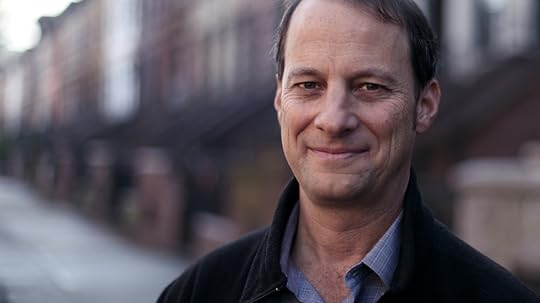
Some of the themes are embodied in the stories of three actual Americans, none of whom you’re likely to have heard of. (PS. I believe the pictures below show Packer's characters. Hard to track down, especially the picture of Ms. Thomas.)

Dean Price (biodiesel entrepreneur from North Carolina). A true believer in the American dream, one who, despite entrepreneurial failure over and over, marches resolutely on.
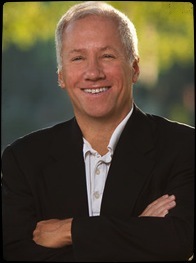
Jeff Connaughton (Washington lobbyist and Congressional staffer). Long time devotee of Joe Biden (from Jeff’s college days in Alabama), who ultimately tires of the cynical ways of Washington, Wall Street, and his one-time idol.
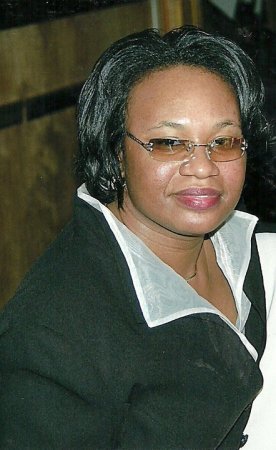
Tammy Thomas (Youngstown, Ohio factory worker turned community organizer). To me the most touching story, a woman raised by her great grandmother, first of her family to graduate high school, witnesses the devastating implosion of Youngstown Sheet and Tube which precipitated all the problems of that community, raised her kids into good people, and eventually becomes an activist/organizer.
Two themes relate primarily to places, but are again narrated by reference to real people, as well as to aspects of the place which help tell Packer’s story:
Tampa. This story touches several people involved in different ways in the housing boom and bust.
Silicon Valley. Here, often by writing of Peter Thiel (activist, venture capitalist, libertarian - the billionaire co-founder of PayPal), Packer tells the story of the .1%, the confident (over-confident? might I even say massively egotistical?) Valley gurus who see 21st century salvation in their technological visions of the future, unfettered by government regulation, human kinds’ heroes directing us forward into … whatever.
A final theme is personified by the famous, or at least modestly famous. Each character gets a single chapter, mini-biography, an (ironic?) narrative of the shape of their fame, and (not always) a final suggestion that their effect on the country was not quite what it first appeared. The parade:
Newt Gingrich
Oprah Winfrey
Raymond Carver
Sam Walton
Colin Powell
Alice Waters
Robert Rubin
Jay-Z
Andrew Breitbart
Elizabeth Warren
And interspersed into the weave are single page capsules of headline news events, quotations and other flotsam for individual years: 1978, ’84, ’87, ’94, ’99, ’03, ’08, ’10, ’12. An example, from a year of literary import – 1984:
To repeat: The Unwinding is an interesting, revealing, thoughtful mosaic of America in the years 1978 – 2012. But, while “enjoying” Packer’s narrative as I read it, I ultimately founding it profoundly dispiriting. Nevertheless, I highly recommend the book to U.S. readers. Packer's study is very up-to-date in its implications about contemporary America.
Other stuff (is that phrase copyrighted?).
Reviews:
https://www.goodreads.com/review/show...
https://www.goodreads.com/review/show...
The Wiki article https://en.wikipedia.org/wiki/The_Unw... gives more detail than I've cared to include here. A few words relating to characters have been lifted from Wiki.
- - - - - - - - - - - - - - - - - - - - - -
Previous review: Angle of Repose Wallace Stegner
Next review: Ready Player One
Older review: The Best of H.P. Lovecraft
Previous library review: Freedom From Fear The American People in Depression and War, 1929-1945
Next library review: Midnight in the Garden of Good and Evil
The Unwinding is an interesting, revealing, thoughtful mosaic of America in the years 1978 – 2012.
from The Last American Vagabond
(The graphic fits; I make no comment about the web-site (www.thelastamericanvagabond.com) with which I am unfamiliar.)
George Packer has structured the book as a weave of several themes which he follows as the years roll by.
Some of the themes are embodied in the stories of three actual Americans, none of whom you’re likely to have heard of. (PS. I believe the pictures below show Packer's characters. Hard to track down, especially the picture of Ms. Thomas.)
Dean Price (biodiesel entrepreneur from North Carolina). A true believer in the American dream, one who, despite entrepreneurial failure over and over, marches resolutely on.
Jeff Connaughton (Washington lobbyist and Congressional staffer). Long time devotee of Joe Biden (from Jeff’s college days in Alabama), who ultimately tires of the cynical ways of Washington, Wall Street, and his one-time idol.
Tammy Thomas (Youngstown, Ohio factory worker turned community organizer). To me the most touching story, a woman raised by her great grandmother, first of her family to graduate high school, witnesses the devastating implosion of Youngstown Sheet and Tube which precipitated all the problems of that community, raised her kids into good people, and eventually becomes an activist/organizer.
Two themes relate primarily to places, but are again narrated by reference to real people, as well as to aspects of the place which help tell Packer’s story:
Tampa. This story touches several people involved in different ways in the housing boom and bust.
Silicon Valley. Here, often by writing of Peter Thiel (activist, venture capitalist, libertarian - the billionaire co-founder of PayPal), Packer tells the story of the .1%, the confident (over-confident? might I even say massively egotistical?) Valley gurus who see 21st century salvation in their technological visions of the future, unfettered by government regulation, human kinds’ heroes directing us forward into … whatever.
A final theme is personified by the famous, or at least modestly famous. Each character gets a single chapter, mini-biography, an (ironic?) narrative of the shape of their fame, and (not always) a final suggestion that their effect on the country was not quite what it first appeared. The parade:
Newt Gingrich
Oprah Winfrey
Raymond Carver
Sam Walton
Colin Powell
Alice Waters
Robert Rubin
Jay-Z
Andrew Breitbart
Elizabeth Warren
And interspersed into the weave are single page capsules of headline news events, quotations and other flotsam for individual years: 1978, ’84, ’87, ’94, ’99, ’03, ’08, ’10, ’12. An example, from a year of literary import – 1984:
To repeat: The Unwinding is an interesting, revealing, thoughtful mosaic of America in the years 1978 – 2012. But, while “enjoying” Packer’s narrative as I read it, I ultimately founding it profoundly dispiriting. Nevertheless, I highly recommend the book to U.S. readers. Packer's study is very up-to-date in its implications about contemporary America.
Other stuff (is that phrase copyrighted?).
Reviews:
https://www.goodreads.com/review/show...
https://www.goodreads.com/review/show...
The Wiki article https://en.wikipedia.org/wiki/The_Unw... gives more detail than I've cared to include here. A few words relating to characters have been lifted from Wiki.
- - - - - - - - - - - - - - - - - - - - - -
Previous review: Angle of Repose Wallace Stegner
Next review: Ready Player One
Older review: The Best of H.P. Lovecraft
Previous library review: Freedom From Fear The American People in Depression and War, 1929-1945
Next library review: Midnight in the Garden of Good and Evil

November 21, 2013
George Packer returned from several years overseas writing about problems of the United States in the world, never imagining that the United States would become his next subject. But he was appalled with the condition of America when he returned and wondered what had happened to our forward momentum. In reading this book, you may feel the perplexity I had in the beginning, for his stories are wide-ranging and diverse and seem to bear no relation to one another. But slowly, the accretion of pages, stories, and facts begin to take their toll and we begin to glimpse the outlines of our recent past and possible reasons for it. And something akin to a slow-burning rage may take hold in your breast.
Packer might be flint to dry tinder—many of us know what we think might be wrong with governance, banks, farming, energy policy, education—Packer hits all the hot, dry, sore spots in his round-the-country assessment in the form of interviews. He does not paint a flattering picture of anyone, really, (which one of us is perfect?) but neither is he completely negative except for the portrait of Newt Gingrich. Newt looks and sounds like a megalomaniac on the level of Ron Hubbard and according to Packer may have been the beginning of Washington’s political dysfunction and discourtesy. If Newt had left Washington when he was thrown out of office, we may have been saved, but he stayed around tinkering with political leadership using money and words. But Newt is not single-handedly responsible. We have ourselves to thank.
Packer allows us to imagine our own choices, had we other people’s lives. He is explanatory rather than judgmental. He shows us the curve of the earth and allows us to use our experience and observation to draw our own conclusions. And he is radicalizing me. I realize my own collection of facts, tempered by my education and experience, have caused within me a slow-burning anger over the widening inequality and waste of our vast resources, both human and soil-based. I do not admire the men and women of our Congress and I do not admire the echelons of wealthy bankers and corporate executives. I do not aspire to, nor do I wish children to aspire to, their ranks. I want them to realize they are us, albeit with money they frankly do not deserve.
Packer is not prescriptive so the answers must come from within ourselves. But he does point out that the 99% have already staged a mass action in Occupy Wall Street. Deep feelings of injustice already roil through our cities and countryside. Now is the time to learn the skills you will need should your house be lost in a tornado, an earthquake, a flood, or a firestorm. Now is the time to be the leaders you wish your Congresspeople were. Now is the time to think for ourselves. Think. Soon, it will be time to short Wall Street.
Packer might be flint to dry tinder—many of us know what we think might be wrong with governance, banks, farming, energy policy, education—Packer hits all the hot, dry, sore spots in his round-the-country assessment in the form of interviews. He does not paint a flattering picture of anyone, really, (which one of us is perfect?) but neither is he completely negative except for the portrait of Newt Gingrich. Newt looks and sounds like a megalomaniac on the level of Ron Hubbard and according to Packer may have been the beginning of Washington’s political dysfunction and discourtesy. If Newt had left Washington when he was thrown out of office, we may have been saved, but he stayed around tinkering with political leadership using money and words. But Newt is not single-handedly responsible. We have ourselves to thank.
Packer allows us to imagine our own choices, had we other people’s lives. He is explanatory rather than judgmental. He shows us the curve of the earth and allows us to use our experience and observation to draw our own conclusions. And he is radicalizing me. I realize my own collection of facts, tempered by my education and experience, have caused within me a slow-burning anger over the widening inequality and waste of our vast resources, both human and soil-based. I do not admire the men and women of our Congress and I do not admire the echelons of wealthy bankers and corporate executives. I do not aspire to, nor do I wish children to aspire to, their ranks. I want them to realize they are us, albeit with money they frankly do not deserve.
Packer is not prescriptive so the answers must come from within ourselves. But he does point out that the 99% have already staged a mass action in Occupy Wall Street. Deep feelings of injustice already roil through our cities and countryside. Now is the time to learn the skills you will need should your house be lost in a tornado, an earthquake, a flood, or a firestorm. Now is the time to be the leaders you wish your Congresspeople were. Now is the time to think for ourselves. Think. Soon, it will be time to short Wall Street.

May 26, 2013
I never had an idea of what my life was supposed to be. I had dreams -- too vague to be ambitions -- but nobody ever handed me the keys to a life and told me to drive away into the future. So at some point I found myself in the future and, looking around, I had to ask how did I get here?
This book is about that question, and as Packer winds through the answers in the life of each subject he inscribes all our lives through these last forty years. We were all here, and even if we didn't know what we were seeing we all saw it: the way the life seemed to seep out of us; dollars out of our paychecks, jobs out of communities, hopes out of expectations. The Unwinding.
He gives a voice to their stories, and because their stories are our stories he voices us, too. And though it's a story of sad and regretful pieces, there's a lot of hope in it, and that hope becomes our hope. And so it feels good to read it.
This book is about that question, and as Packer winds through the answers in the life of each subject he inscribes all our lives through these last forty years. We were all here, and even if we didn't know what we were seeing we all saw it: the way the life seemed to seep out of us; dollars out of our paychecks, jobs out of communities, hopes out of expectations. The Unwinding.
He gives a voice to their stories, and because their stories are our stories he voices us, too. And though it's a story of sad and regretful pieces, there's a lot of hope in it, and that hope becomes our hope. And so it feels good to read it.

March 16, 2018
Packer follows the lives of three people from 1978 through 2012, filling in with many side vignettes to illustrate the dramatic changes in middle class life. We see how people lost their jobs and their homes caught up in the boom and bust cycles of the period. We see how powerful corporations and their political minions decimated the working class. To those who bought into the American dream of the 1950’s and 60’s there was a rude awakening. Sprinkled throughout are brief biographical sketches of influential people of the period such as Raymond Carver, Newt Gingrich, Sam Walton, Colin Powell, Oprah and Alice Waters. Packer is an engaging writer who lets personal stories make a much larger point. My notes follow.
Dean Price was raised in a dysfunctional poor farm family in the Piedmont of North Carolina. The decline of tobacco farming left many fields unplowed and poverty widespread. Despite an abusive father Dean was able to finish college and land a good job with Johnson & Johnson as a pharmaceutical rep. He found the job unsatisfying, the go to college get a good corporate job and be happy line to be a myth. Reading Napoleon Hill, he decided to become an entrepreneur. He opened a truck stop and manufactured his own biodiesel getting local farmers to grow canola he refined into biofuel. He was both a businessman and a visionary on sustainability. He became a millionaire then as the economic winds shifted and large oil industry competitors encroached he lost everything. His capacity for innovative ideas exceeded his capacity to navigate the cutthroat world of business. Trying to resurrect himself he relentlessly approached government officials at all levels to support local biofuel production but with only good words from Democrats and disdain from Republicans he got nowhere. By 2010 with the rise of the Tea Party, sustainability was a dirty word in the Piedmont. However Packer ends Dean Price’s story on a wisp of hope that with some tweaking he will build a new biofuel business.
Jeff Connaughton was a gifted young MBA who first worked for Smith Barney and E. F. Hutton before following his heart and joining the 1987 Joe Biden presidential campaign taking a junior position fundraising. The campaign fell apart when Biden was called out for plagiarizing a speech. Connaughton went on to a job on the staff of the Senate Judiciary Committee. He left to get a law degree and returned to Washington ending up with a West Wing job as an assistant to Clinton’s White House Counsel Abner Mikva. Following that, Connaughton “sold out” as they used to say or “cashed in” as they say today taking a job as a lobbyist. Packer notes that 42% of congressmen and senators leaving office from 1998 – 2004 became lobbyists. In 2007 Connaughton joined Biden’s second presidential bid which also failed, but when Biden became VP a new opportunity rose. Biden’s former chief of staff, Ted Kaufman, was appointed to replace Biden in the senate and he made Connaughton his chief of staff. The senator’s term was two years after which he would retire. Unfettered by reelection concerns there was no need for fundraising or kowtowing to lobbyists. Kaufman and Connaughton challenged special interests, confronting the lobbyists with little success. Even in the middle of the financial crisis, the financial reform measures that were introduced were substantially weakened by the time they passed. In short, Kaufman and Connaughton’s gallant efforts proved that lobbyists almost always win. Afterwards Connaughton moved far from the Washington melee to Savannah Georgia to write his memoirs. If Biden runs in 2020, I wonder if Connaughton will return to the fold.
Tammy Thomas was raised by her great-grandmother in Youngstown, Ohio. Her mother was an addict. Tammy through perseverance finished high school and got a two year degree from a technical college. Eventually she landed a good job at a local factory. But Youngstown was already on the decline. In the 1970s factories began closing and cutting back as the region quickly turned into the rust belt. With few jobs in town, housing values declined. Unable to pay bills people lost everything. Vacant houses littered the landscape and drug gangs infested them. Tammy, a union employee, took a buyout and gave up her job. As unions lost their power, new hires would be non-union and paid much less. Fortunately Tammy had an ability to connect with people. She found a position with a progressive organization as a community organizer. While rallying kindred spirits provided a renewed sense of community, little progress was made on bread and butter issues. I found it interesting that she and her organization prioritized tearing down all the vacant homes over building new decent housing.
Packer cuts away to side stories such as one about the brilliant ambitious politically conservative Peter Thiel. After Stanford Law School and a stint as a derivatives trader with Credit Suisse Thiel cofounded Pay Pal. He was an extremely successful Silicon Valley investor making hundreds of millions on companies like Facebook. He ended up moving his hedge fund to New York where he became a billionaire but lost most of it in 2008-9. He moved back to California then made billions again and currently is in the Forbes 400. Thiel finances far right conservative causes such as the ploy by video maker James O’Keefe that took down Acorn. More recently after Packer’s book was published (2013) Thiel became a noted benefactor of Donald Trump’s presidential campaign. Lately he has expressed some disappointment in Trump. An irreverent libertarian, Thiel believes the American system is broken and discourages innovation.
Another side story explores the pain of the housing debacle in 2007-8. Packer focuses on the Tampa area, where developers sold track homes far from town to purchasers who would soon lose their jobs. Developers also fed flippers a steady diet of homes they ultimately would not be able to sell. Packer chronicles the devastation of entire neighborhoods and details personal tragedies of families left on the edge as they lost their jobs and homes. Mortgage companies and banks often did not maintain accurate records or authentic documents, often using robo-signers. Yet the courts didn’t blink an eye quickly disposing of foreclosures cases. One regular court observer noted that it took her longer to get through the McDonald's drive thru line in the morning than for the court to throw a family out of their home. Packer also reports on how the banks sold sketchy mortgage backed derivatives fueling the financial crisis. But the banks, Lehman Brothers excepted, got bailed out, the homeowners strung out. Remarkably different citizen responses emerged to the financial crisis. Packer tells how some locals in the Tampa area became Tea Party activists in 2010. Then he goes on to recount the short lived Occupy Wall Street protests in 2011.
All of these stories are part of the unwinding of the American dream. Get an education, follow the rules, a satisfying job and a wonderful life awaits you. Many Americans who bought into this dream were sorely disappointed. Economic cycles spun by corporate greed and self-serving politics did them in. Packer does not consider other contributing factors such as automation and globalization. Against the Wall Street-Washington steamroller well-meaning politicians, innovative small business people, and social activists at best made small temporary gains. Packer’s picture of America gives us portraits of some inspiring people but it does not offer much hope for the future. I wonder how Packer would address the Trump era we are now in or what will follow when the current revved up economic boom ends in bust like the others. Packer’s writing flows and the pages are easy to turn. Adding in its human interest, relevance and thought provoking nature, this book is one just about everyone should be able to appreciate.
Dean Price was raised in a dysfunctional poor farm family in the Piedmont of North Carolina. The decline of tobacco farming left many fields unplowed and poverty widespread. Despite an abusive father Dean was able to finish college and land a good job with Johnson & Johnson as a pharmaceutical rep. He found the job unsatisfying, the go to college get a good corporate job and be happy line to be a myth. Reading Napoleon Hill, he decided to become an entrepreneur. He opened a truck stop and manufactured his own biodiesel getting local farmers to grow canola he refined into biofuel. He was both a businessman and a visionary on sustainability. He became a millionaire then as the economic winds shifted and large oil industry competitors encroached he lost everything. His capacity for innovative ideas exceeded his capacity to navigate the cutthroat world of business. Trying to resurrect himself he relentlessly approached government officials at all levels to support local biofuel production but with only good words from Democrats and disdain from Republicans he got nowhere. By 2010 with the rise of the Tea Party, sustainability was a dirty word in the Piedmont. However Packer ends Dean Price’s story on a wisp of hope that with some tweaking he will build a new biofuel business.
Jeff Connaughton was a gifted young MBA who first worked for Smith Barney and E. F. Hutton before following his heart and joining the 1987 Joe Biden presidential campaign taking a junior position fundraising. The campaign fell apart when Biden was called out for plagiarizing a speech. Connaughton went on to a job on the staff of the Senate Judiciary Committee. He left to get a law degree and returned to Washington ending up with a West Wing job as an assistant to Clinton’s White House Counsel Abner Mikva. Following that, Connaughton “sold out” as they used to say or “cashed in” as they say today taking a job as a lobbyist. Packer notes that 42% of congressmen and senators leaving office from 1998 – 2004 became lobbyists. In 2007 Connaughton joined Biden’s second presidential bid which also failed, but when Biden became VP a new opportunity rose. Biden’s former chief of staff, Ted Kaufman, was appointed to replace Biden in the senate and he made Connaughton his chief of staff. The senator’s term was two years after which he would retire. Unfettered by reelection concerns there was no need for fundraising or kowtowing to lobbyists. Kaufman and Connaughton challenged special interests, confronting the lobbyists with little success. Even in the middle of the financial crisis, the financial reform measures that were introduced were substantially weakened by the time they passed. In short, Kaufman and Connaughton’s gallant efforts proved that lobbyists almost always win. Afterwards Connaughton moved far from the Washington melee to Savannah Georgia to write his memoirs. If Biden runs in 2020, I wonder if Connaughton will return to the fold.
Tammy Thomas was raised by her great-grandmother in Youngstown, Ohio. Her mother was an addict. Tammy through perseverance finished high school and got a two year degree from a technical college. Eventually she landed a good job at a local factory. But Youngstown was already on the decline. In the 1970s factories began closing and cutting back as the region quickly turned into the rust belt. With few jobs in town, housing values declined. Unable to pay bills people lost everything. Vacant houses littered the landscape and drug gangs infested them. Tammy, a union employee, took a buyout and gave up her job. As unions lost their power, new hires would be non-union and paid much less. Fortunately Tammy had an ability to connect with people. She found a position with a progressive organization as a community organizer. While rallying kindred spirits provided a renewed sense of community, little progress was made on bread and butter issues. I found it interesting that she and her organization prioritized tearing down all the vacant homes over building new decent housing.
Packer cuts away to side stories such as one about the brilliant ambitious politically conservative Peter Thiel. After Stanford Law School and a stint as a derivatives trader with Credit Suisse Thiel cofounded Pay Pal. He was an extremely successful Silicon Valley investor making hundreds of millions on companies like Facebook. He ended up moving his hedge fund to New York where he became a billionaire but lost most of it in 2008-9. He moved back to California then made billions again and currently is in the Forbes 400. Thiel finances far right conservative causes such as the ploy by video maker James O’Keefe that took down Acorn. More recently after Packer’s book was published (2013) Thiel became a noted benefactor of Donald Trump’s presidential campaign. Lately he has expressed some disappointment in Trump. An irreverent libertarian, Thiel believes the American system is broken and discourages innovation.
Another side story explores the pain of the housing debacle in 2007-8. Packer focuses on the Tampa area, where developers sold track homes far from town to purchasers who would soon lose their jobs. Developers also fed flippers a steady diet of homes they ultimately would not be able to sell. Packer chronicles the devastation of entire neighborhoods and details personal tragedies of families left on the edge as they lost their jobs and homes. Mortgage companies and banks often did not maintain accurate records or authentic documents, often using robo-signers. Yet the courts didn’t blink an eye quickly disposing of foreclosures cases. One regular court observer noted that it took her longer to get through the McDonald's drive thru line in the morning than for the court to throw a family out of their home. Packer also reports on how the banks sold sketchy mortgage backed derivatives fueling the financial crisis. But the banks, Lehman Brothers excepted, got bailed out, the homeowners strung out. Remarkably different citizen responses emerged to the financial crisis. Packer tells how some locals in the Tampa area became Tea Party activists in 2010. Then he goes on to recount the short lived Occupy Wall Street protests in 2011.
All of these stories are part of the unwinding of the American dream. Get an education, follow the rules, a satisfying job and a wonderful life awaits you. Many Americans who bought into this dream were sorely disappointed. Economic cycles spun by corporate greed and self-serving politics did them in. Packer does not consider other contributing factors such as automation and globalization. Against the Wall Street-Washington steamroller well-meaning politicians, innovative small business people, and social activists at best made small temporary gains. Packer’s picture of America gives us portraits of some inspiring people but it does not offer much hope for the future. I wonder how Packer would address the Trump era we are now in or what will follow when the current revved up economic boom ends in bust like the others. Packer’s writing flows and the pages are easy to turn. Adding in its human interest, relevance and thought provoking nature, this book is one just about everyone should be able to appreciate.

July 22, 2013
This so depressing (7/13/14):
http://www.alternet.org/some-point-pr...
Maybe some positive news (5/8/14):
http://www.alternet.org/economy/rober...
If you're trying to figure out what happened to "Yes we can!" Barack Obama's winning motto in the 2008 presidential campaign, you might want to take a peek at George Packer's 2013 National Book Award Winner, The Great Unwinding: An Inner History of the New America. It is a sobering look at the American experience for the last four decades. He focuses on the lives of average men and women whose lives have been turned upside down by forces beyond their control that have swept across the US since the turbulence of the 1960's. He argues persuasively that our representative democracy has been usurped by a Washington-Wall Street nexus and he traces the origins of the Great Recession to political decisions made solely to benefit the super rich: not the 1 percenters but the 0.01 percenters, whose share of the national wealth has exploded.
He weaves his narrative around the lives of average folks, with some celebrity profiles of leaders from the worlds of politics, finance, the media, the military and Silicon Valley, thrown in. The successes of Oprah Winfrey, Sam Walton and Robert Rubin stand in sharp contrast to the plight of factory workers from Youngstown, Ohio and tobacco farmers in North Carolina. Packer has a progressive point-of-view and he isn't the first person to connect the dots between populist movements on both sides of the political spectrum - just imagine the power of an Occupy Wall Street Tea Party coalition - but he does a terrific job of explaining complicated economic, political, and social realities and pinpointing their historical antecedents.
I came away with the depressing conclusion that it was inevitable that Mr. Obama's hope and change rhetoric from 2008 would ring so hollow in 2013. While the status quo largely benefits only a small minority, they can afford to buy off anybody who might challenge their hold on real power. Collectively they have convinced themselves that they represent the true American experience and their refrain has become, "Don't blame us!" It's sad that Mr. Obama has joined that chorus and deeply disturbing that Mrs. Clinton is warming up in the wings for her solo.

Some support for Packer's premise:
http://www.salon.com/2014/01/22/rober...
http://www.salon.com/2014/02/10/5_ent...
http://www.alternet.org/economy/7-num...
http://www.alternet.org/some-point-pr...
Maybe some positive news (5/8/14):
http://www.alternet.org/economy/rober...
If you're trying to figure out what happened to "Yes we can!" Barack Obama's winning motto in the 2008 presidential campaign, you might want to take a peek at George Packer's 2013 National Book Award Winner, The Great Unwinding: An Inner History of the New America. It is a sobering look at the American experience for the last four decades. He focuses on the lives of average men and women whose lives have been turned upside down by forces beyond their control that have swept across the US since the turbulence of the 1960's. He argues persuasively that our representative democracy has been usurped by a Washington-Wall Street nexus and he traces the origins of the Great Recession to political decisions made solely to benefit the super rich: not the 1 percenters but the 0.01 percenters, whose share of the national wealth has exploded.
He weaves his narrative around the lives of average folks, with some celebrity profiles of leaders from the worlds of politics, finance, the media, the military and Silicon Valley, thrown in. The successes of Oprah Winfrey, Sam Walton and Robert Rubin stand in sharp contrast to the plight of factory workers from Youngstown, Ohio and tobacco farmers in North Carolina. Packer has a progressive point-of-view and he isn't the first person to connect the dots between populist movements on both sides of the political spectrum - just imagine the power of an Occupy Wall Street Tea Party coalition - but he does a terrific job of explaining complicated economic, political, and social realities and pinpointing their historical antecedents.
I came away with the depressing conclusion that it was inevitable that Mr. Obama's hope and change rhetoric from 2008 would ring so hollow in 2013. While the status quo largely benefits only a small minority, they can afford to buy off anybody who might challenge their hold on real power. Collectively they have convinced themselves that they represent the true American experience and their refrain has become, "Don't blame us!" It's sad that Mr. Obama has joined that chorus and deeply disturbing that Mrs. Clinton is warming up in the wings for her solo.

Some support for Packer's premise:
http://www.salon.com/2014/01/22/rober...
http://www.salon.com/2014/02/10/5_ent...
http://www.alternet.org/economy/7-num...

August 27, 2021
A stroll down memory lane. Really strange to view just 8 years ago as a different era, but that is where we are. This book centered around from the 1980's to 2012. Interesting to listen to this now with a President Biden. It's clear Packer was not a fan back then. And frankly if this is the normal folks want to get back to... I'm going to have to say nah. This is a historic memory hole. Have you forgotten about Occupy Wallstreet? Or the way that Walmart almost single-handedly put small businesses out business in rural areas. How about the death of the unions? It really wasn't that long ago. How about the need to get off fossil fuels and climate change. That has been in the ether far longer than people remember. I thought this was a very well-done book reminiscent of Stand on Zanzibar for me because of the way he told the story. Replete with a spew of headlines for one or two pages to set the scene for the story. A story in which he follows a small number of people within a range of class, education, occupations, gender, and race. With vignettes of current prominent figures to set the story. He had short chapters on Newt Gingrich, Elizabeth Warren, Jay Z, Oprah Winfrey, Robert Rubin, Colin Powell to name a few. Glad I finally got to this one!!
4+ Stars
Listened to the audio book. Robert Fass was excellent as the narrator.
4+ Stars
Listened to the audio book. Robert Fass was excellent as the narrator.

Read
August 2, 2014The front of this book describes it as "complex", but actually it's as straightforward as walking, remember that? One foot in front of t'other. Unsurprisingly, since George Packer is a staff writer for the New Yorker, he uses that favourite journalistic technique of taking the individual to represent the general. One person per phenomenon that he sees as destructive of America The Great: deindustrialization and the concomitant leaking away of jobs and community, a distinct lack of support for alternative, sustainable, green technology, big money politics, corporate greed. These four individuals are then followed from 1978 to 2012, in a straight chronological line, you know, not taxing or tricky to follow in any way. In between he inserts skilful set pieces on certain key personalities who illustrate a shift in culture in various ways, or places that were the scene of lines drawn in preparation for conflict, such as Wall Street or the housing bubble in Tampa. Silicon Valley. (Conflict in Silicon Valley?? Yes: arguments about deregulation.)
It's competently done; he does have some neat little techniques to remind the reader of what was going on in those years he steps into along the way: there is a compilation of mini sound-bites taken from the media at the beginning of the each new year's section, which is quite effective in jogging the memory, and his portraits are warm and amusing and entertaining, never dull.
And it certainly is complex in the sense that he traces a great number of elements in the mix that has seen inequality in the USA grow to a point where, by 2007, the top 1% owned 40% of the nation's wealth, the bottom four-fifths just 7%, "inequality beyond anything the country had seen since the 19th Century."
I can't fault it really, it's just that there is an awful lot of it. Not so much complex as inflated. A mismatch between the number of pages to work through and the amount of information that can be distilled from them. And apart from the section on the Occupy movement where passions bubble up, it doesn't (and why should it indeed?) offer any of the emotional pull of a novel.
The sort of book you read in order to be able to keep up with the chattering classes.
One thing I'm inordinately grateful for: I got a lot of mileage for my TESL conversation classes out of his piece on Oprah Winfrey. Chattering classes of my own.
It's competently done; he does have some neat little techniques to remind the reader of what was going on in those years he steps into along the way: there is a compilation of mini sound-bites taken from the media at the beginning of the each new year's section, which is quite effective in jogging the memory, and his portraits are warm and amusing and entertaining, never dull.
And it certainly is complex in the sense that he traces a great number of elements in the mix that has seen inequality in the USA grow to a point where, by 2007, the top 1% owned 40% of the nation's wealth, the bottom four-fifths just 7%, "inequality beyond anything the country had seen since the 19th Century."
I can't fault it really, it's just that there is an awful lot of it. Not so much complex as inflated. A mismatch between the number of pages to work through and the amount of information that can be distilled from them. And apart from the section on the Occupy movement where passions bubble up, it doesn't (and why should it indeed?) offer any of the emotional pull of a novel.
The sort of book you read in order to be able to keep up with the chattering classes.
One thing I'm inordinately grateful for: I got a lot of mileage for my TESL conversation classes out of his piece on Oprah Winfrey. Chattering classes of my own.

May 26, 2013
Let me tell you a story: after World War II, the United States--having survived the world's bloodiest conflict largely unscathed--began an economic Golden Age. While taxes were high (91% top marginal rate in the 1950s), America was thriving. Our standard of living became the envy of the world. Our infrastructure and education system were second to none. We did Big Things, and had one of, if not the, highest standards of living in human history. While this prosperity was not as widely shared as it should have been (women and minorities were largely left out), and while nothing is ever perfect, things in America were going along very, very well. We made things that the rest of the world wanted to buy. We sent men to the moon, dealt with the legacy of slavery, and created technological inventions that were the stuff of science fiction. I have often told my friend that, if I were to build a time machine, I would go back to 1946 then hit 're-send' right around 1966. These were good times. We will not see these days again.
George Packer, the author of this well-written, troubling, and painfully truthful book, takes a long and piercing look at America in our day and age. At first, I found the book's structure to be a bit distracting: the author follows the lives of three wildly different Americans over the past decade or so, while mixing in chapters on Tampa, FL, Silicon Valley, and Wall Street, as well brief biographies of prominent Americans (like Oprah, Colin Powell, Jay-Z, and Raymond Carver) and one page mini-year in reviews that highlight song lyrics, news paper headlines, and quotes from politicians. If it sounds busy, it is, but Mr. Packer makes it work, flawlessly, in my opinion.
Considering were we were as a country at the time of my birth in 1969, and comparing it to where we are today in 2013, you can't help but ask yourself, "how the fuck did we get here?" Was it culture? Was it politics? Was it the economy? The government? Corporations? The welfare state? The rich? All of these things? None? It's difficult to name one root cause of our American decline, but the author doesn't attempt to place the blame on any one thing. Instead, he allows the subjects--a green-energy pioneer in North Carolina, a former factory worker in Ohio, the creator of Pay Pal, and an insider in the Democratic Party--speak for themselves. Their stories, along with the stories of Newt Gingrich, Elizabeth Warren, and other prominent Americans--lays out a narrative of decay, of shrinking, of fading away. It was difficult to read, all while being incredibly compelling.
When my grandfather was my age, he raised a family of five on one paycheck and managed to buy as small, but beloved, house near the beach for all of us to enjoy. Today, with four college degrees between us, my wife and I both work and manage to get by, but it is never easy, and we can't take anything for granted. I can't help but wonder what sort of world my little girls will face, but if anything gives me hope against the gathering gloom, it is what my grandfather used to say to me when I was a boy. "I can't imagine the world you will one day live in," he used to tell me. Now I look at my own children and think the same thing.
With the exception of expanding rights and acceptance for gay and lesbian people, I can't think of a single positive trend in America today. We have, at last, run out of the fumes of America's Golden Age, and are now facing a very bleak, scary future.
George Packer, the author of this well-written, troubling, and painfully truthful book, takes a long and piercing look at America in our day and age. At first, I found the book's structure to be a bit distracting: the author follows the lives of three wildly different Americans over the past decade or so, while mixing in chapters on Tampa, FL, Silicon Valley, and Wall Street, as well brief biographies of prominent Americans (like Oprah, Colin Powell, Jay-Z, and Raymond Carver) and one page mini-year in reviews that highlight song lyrics, news paper headlines, and quotes from politicians. If it sounds busy, it is, but Mr. Packer makes it work, flawlessly, in my opinion.
Considering were we were as a country at the time of my birth in 1969, and comparing it to where we are today in 2013, you can't help but ask yourself, "how the fuck did we get here?" Was it culture? Was it politics? Was it the economy? The government? Corporations? The welfare state? The rich? All of these things? None? It's difficult to name one root cause of our American decline, but the author doesn't attempt to place the blame on any one thing. Instead, he allows the subjects--a green-energy pioneer in North Carolina, a former factory worker in Ohio, the creator of Pay Pal, and an insider in the Democratic Party--speak for themselves. Their stories, along with the stories of Newt Gingrich, Elizabeth Warren, and other prominent Americans--lays out a narrative of decay, of shrinking, of fading away. It was difficult to read, all while being incredibly compelling.
When my grandfather was my age, he raised a family of five on one paycheck and managed to buy as small, but beloved, house near the beach for all of us to enjoy. Today, with four college degrees between us, my wife and I both work and manage to get by, but it is never easy, and we can't take anything for granted. I can't help but wonder what sort of world my little girls will face, but if anything gives me hope against the gathering gloom, it is what my grandfather used to say to me when I was a boy. "I can't imagine the world you will one day live in," he used to tell me. Now I look at my own children and think the same thing.
With the exception of expanding rights and acceptance for gay and lesbian people, I can't think of a single positive trend in America today. We have, at last, run out of the fumes of America's Golden Age, and are now facing a very bleak, scary future.

July 7, 2013
Parts of The Unwinding I enjoyed (the account of the Occupy Wall St movement through the perspective of one organizer and one participant, and the Elizabeth Warren portrait, for example); other parts bored me nearly to tears (please not Jeff Connaugton again); and one section actually did bring me to tears of frustration and despair (the story of the impoverished Hartsell family of Tampa). And the chapter epigraphs were pretty entertaining in the audio book context - disjointed and unidentified snippets from the media of each year. These reminded me of my obsession with reading the year-in-pictures and quotes issues of Rolling Stone and Life Magazine when I was a teenager in the 1980s. But the short portraits of public figures appear to have been written without doing interviews - kind of a Wikipedia-level of information there (Oprah, Alice Waters, Raymond Carver, Jay-Z [not a flattering portrayal, FWIW], Newt Gingrich etc.).
Also, the entire book is presented without analysis, interpretation, authorial commentary (and there is only a cursory introduction and no epilogue, postscript, or afterword). Yet any savvy reader knows that Packer's opinions are embedded in every sentence he chose to write and every portrait he chose to include/ exclude. But Packer never offers an overarching narrative to tie this all together, instead, he's left it to readers to write their own meaning on all of it. In fiction and other sorts of nonfiction narratives that can be generative, but here I thought more was needed.
I do retract my complaint about gender representation - there were plenty of women in the second half of the book, but then I could ask: why weren't there more African Americans, more Hispanics, more immigrants of any national origin; what about children and young adults, the elderly and aging; what about a discussion of education, or climate change, or celebrity, or religious culture; or arts and entertainment culture, or any of a thousand issues that have changed America over the last generation? I can't name them all and Packer wouldn't have been able to write them all, of course. But a book like this raises these objections because its tone and authority make its subjects normative - and as many reviewers have mentioned, it could be on reading lists twenty years from now. Even now I predict it'll be on the big newspapers' best-of-2013 lists, because it's just the sort of book that appeals to editors of the NY Times and the like.
---------
(From earlier)
One question so far about this "must-read" book of summer 2013: Where are the WOMEN? I've listened to 40% and all Packer has offered to represent American women's lives of the last 35 years is the story of an underprivileged crack addict named Tammy Thomas, who will likely remain impoverished her entire life, and a snide and uncharitable portrait of Oprah Winfrey that focuses on her superficiality and her hypocrisy vis-à-vis the "average" American woman. Since it's audio I don't know where this is going, but I am getting a little pissed.
Also, the entire book is presented without analysis, interpretation, authorial commentary (and there is only a cursory introduction and no epilogue, postscript, or afterword). Yet any savvy reader knows that Packer's opinions are embedded in every sentence he chose to write and every portrait he chose to include/ exclude. But Packer never offers an overarching narrative to tie this all together, instead, he's left it to readers to write their own meaning on all of it. In fiction and other sorts of nonfiction narratives that can be generative, but here I thought more was needed.
I do retract my complaint about gender representation - there were plenty of women in the second half of the book, but then I could ask: why weren't there more African Americans, more Hispanics, more immigrants of any national origin; what about children and young adults, the elderly and aging; what about a discussion of education, or climate change, or celebrity, or religious culture; or arts and entertainment culture, or any of a thousand issues that have changed America over the last generation? I can't name them all and Packer wouldn't have been able to write them all, of course. But a book like this raises these objections because its tone and authority make its subjects normative - and as many reviewers have mentioned, it could be on reading lists twenty years from now. Even now I predict it'll be on the big newspapers' best-of-2013 lists, because it's just the sort of book that appeals to editors of the NY Times and the like.
---------
(From earlier)
One question so far about this "must-read" book of summer 2013: Where are the WOMEN? I've listened to 40% and all Packer has offered to represent American women's lives of the last 35 years is the story of an underprivileged crack addict named Tammy Thomas, who will likely remain impoverished her entire life, and a snide and uncharitable portrait of Oprah Winfrey that focuses on her superficiality and her hypocrisy vis-à-vis the "average" American woman. Since it's audio I don't know where this is going, but I am getting a little pissed.

October 7, 2024
I have once again decided to embark on a mission to read a number of books on subjects that will be of great importance to the upcoming 2024 US Presidential Election. This was a great success as I prepared for 2020, with an outcome at the polls (and antics by both candidates up to Inauguration Day) that only a fiction writer might have come up with at the time! Many of these will focus on actors and events intricately involved in the US political system over the last few years, in hopes that I can understand them better and, perhaps, educate others with the power to cast a ballot. I am, as always, open to serious recommendations from anyone who has a book I might like to include in the process.
With the events of July 21, 2024, when Joe Biden chose not to seek re-election, the challenge has become harder to properly reflect the Democratic side. I will do the best I can to properly prepare and offer up books that can explore the Biden Administration, as well as whomever takes the helm into November.
This is Book #39 in my 2024 US Election Preparation Challenge.
American democracy has become filled with issues over the last three decades. It has nothing to do with Donald rump, Kamala Harris, or even Joe Biden. However, as George Packer illustrates in this book, it is prevalent and will only further erode support for the system over time. Packer uses a unique writing style to show just how and where things have begun to pull apart, as well as how things are likely pushing further from the centre (not ideologically) and left to wither on the vine. Is there hope? Likely, given the time and effort to do something. Are either of the candidates running for president in 2024 the solution? I’d say no, based on the themes presented herein. Packer delivers a great piece that is highly entertaining for the attentive reader.
Rather than bemoan the state of the American democratic system in a traditional tome, George Packer seeks to illustrate it by using a number of vignettes with individuals—both everyday Americans and those in the limelight—to show the slide. Packer seeks to pinpoint many of the events that have taken place over time and how they help grease the wheels to ensure the democratic system is slipping away from the core of American beliefs and values. One might also say that there is a push away from traditional views and into a new world where nothing can be said that might offend anyone. On the other hand, some wish to mock those who try to pry traditions away from the public. Either way, Packer speaks of this move away from American strength and int o a system where division and playing one against the other is weakening the centre in ways that cannot help build a strong America for all.
These vignettes offer real views and progress (or regression) of a number of people as time marches on, seemingly since the Reagan Revolution through to the 2012 presidential election, where new factions emerged and business took it upon themselves to use their power to steer things away from the individual. The American individual’s needs are no longer key, as long as the large machine can crush those under them. Some political and social figures sought to fight against this, while others basked in the wealth they found and used this wedge to keep people under their proverbial shoes. Packer pulls no punches, but does so in a subtle way, so as to leave the reader wondering for themselves, while also offering the pencil to connect the dots.
Packer is sharp in his delivery and helps weave things together with ease. He is critical of all, leaving the reader (read: the everyday American) to se where things went off course and what needs to be pulled back into line. I can only hope that others will take something away from this book, as I did. Strong chapters, each their own vignette, help illustrate the point, as some individuals get their single time in the spotlight, while others are returned to over time for personal progress or regression as the times got harder. This was not the book I expected it to be, but I liked it... so much so that I hope George Packer has other pieces like this that pack as much punch. It was effective and not preachy, while personalising the journey and keeping the reader in the driver’s seat.
Kudos, Mr. Packer, for this educationally entertaining read!
Love/hate the review? An ever-growing collection of others appears at:
http://pecheyponderings.wordpress.com/
With the events of July 21, 2024, when Joe Biden chose not to seek re-election, the challenge has become harder to properly reflect the Democratic side. I will do the best I can to properly prepare and offer up books that can explore the Biden Administration, as well as whomever takes the helm into November.
This is Book #39 in my 2024 US Election Preparation Challenge.
American democracy has become filled with issues over the last three decades. It has nothing to do with Donald rump, Kamala Harris, or even Joe Biden. However, as George Packer illustrates in this book, it is prevalent and will only further erode support for the system over time. Packer uses a unique writing style to show just how and where things have begun to pull apart, as well as how things are likely pushing further from the centre (not ideologically) and left to wither on the vine. Is there hope? Likely, given the time and effort to do something. Are either of the candidates running for president in 2024 the solution? I’d say no, based on the themes presented herein. Packer delivers a great piece that is highly entertaining for the attentive reader.
Rather than bemoan the state of the American democratic system in a traditional tome, George Packer seeks to illustrate it by using a number of vignettes with individuals—both everyday Americans and those in the limelight—to show the slide. Packer seeks to pinpoint many of the events that have taken place over time and how they help grease the wheels to ensure the democratic system is slipping away from the core of American beliefs and values. One might also say that there is a push away from traditional views and into a new world where nothing can be said that might offend anyone. On the other hand, some wish to mock those who try to pry traditions away from the public. Either way, Packer speaks of this move away from American strength and int o a system where division and playing one against the other is weakening the centre in ways that cannot help build a strong America for all.
These vignettes offer real views and progress (or regression) of a number of people as time marches on, seemingly since the Reagan Revolution through to the 2012 presidential election, where new factions emerged and business took it upon themselves to use their power to steer things away from the individual. The American individual’s needs are no longer key, as long as the large machine can crush those under them. Some political and social figures sought to fight against this, while others basked in the wealth they found and used this wedge to keep people under their proverbial shoes. Packer pulls no punches, but does so in a subtle way, so as to leave the reader wondering for themselves, while also offering the pencil to connect the dots.
Packer is sharp in his delivery and helps weave things together with ease. He is critical of all, leaving the reader (read: the everyday American) to se where things went off course and what needs to be pulled back into line. I can only hope that others will take something away from this book, as I did. Strong chapters, each their own vignette, help illustrate the point, as some individuals get their single time in the spotlight, while others are returned to over time for personal progress or regression as the times got harder. This was not the book I expected it to be, but I liked it... so much so that I hope George Packer has other pieces like this that pack as much punch. It was effective and not preachy, while personalising the journey and keeping the reader in the driver’s seat.
Kudos, Mr. Packer, for this educationally entertaining read!
Love/hate the review? An ever-growing collection of others appears at:
http://pecheyponderings.wordpress.com/

March 9, 2016
The American author John Roderigo Dos Passos, early in his career in the 1930s, wrote a pro-socialist series of popular novels. Known collectively as The U.S.A. Trilogy, the three novels are considered by many critics to be three of the best novels written in the 20th-century. Dos Passos and his novels, unfortunately, are rarely lauded today and even rarely mentioned outside of literary circles, perhaps---and most likely---due to his socialist/communist leanings.
Having read the books (in college, which is already 20+ years ago for me, so forgive me if my memory of them is lacking), I don’t recall the books being heavy-handed in their political proselytizing. I don’t recall any blatant socialist flag-waving in the books. They were, in fact, as I recall, beautifully written, dreamy stream-of-consciousness prose-poems that alternated between an ensemble cast of characters from all walks of life: rich, poor, migrant farmer, big-city tycoon, housewife, soldier, servant, clergyman, newspaper reporter, etc. They were, if anything, an attempt to capture, in literary form, the tapestry of the American people.
George Packer is the contemporary equivalent of Dos Passos. Packer’s book, “The Unwinding: An Inner History of the New America” is stylistically and substantively attempting to do what Dos Passos did in The U.S.A.Trilogy, and he does it brilliantly. The primary difference is that Packer’s book is nonfiction.
“The Unwinding” is one of the most brilliant pieces of contemporary American journalistic writing I have encountered in years. Packer, a staff writer for The New Yorker magazine, is a journalist with that rarest of combinations of raw talent, keen observation, and compassion.
Spanning the last 30 years of American history, Packer follows the lives of numerous Americans---some of them well-known “celebrities” and some of them every-day people---and documents the impact that various events in recent history has had upon them.
Packer contends, accurately, that the American tapestry has, over the past fifty years, gradually and irreparably unravelled. Our once-great nation is heading into a downward spiral that seems to have no end in sight. He calls this the “unwinding”.
“If you were born around 1960 or afterward, you have spent your adult life in the vertigo of that unwinding. You watched structures that had been in place before your birth collapse like pillars of salt across the vast visible landscape---the farms of the Carolina Piedmont, the factories of the Mahoning Valley, Florida subdivisions, California schools And other things, harder to see but no less vital in supporting the order of everyday life, changed beyond recognition---ways and means in Washington caucus rooms, taboos on New York trading desks, manners and morals everywhere. When the norms that made the old institutions useful began to unwind, and the leaders abandoned their posts, the Roosevelt Republic that had reigned for almost half a century came undone. The void was filled by the default force in American life, organized money. (p.3)”
Packer looks at the many manifestations that organized money has altered the American landscape, from the disastrous job losses and closings of factories nation-wide due to globalization to the corruption and rampant greed of Wall Street and the long-term effects of the 2008 housing market crash from which we are all still reeling.
What makes Packer’s book so entertainingly enjoyable rather than simply palatable and not just a reportage of gloom and doom in the 21st century is his sense of hope for the country, a hope wrapped up in the promise of innovative individuals with revolutionary ideas.
“The Unwinding” is, hands-down, the best nonfiction book I have read in a long time, and it is a must-read for anybody who loves this country, regardless of how messed-up it is. It’s also a must-read for anybody who loves great writing, specifically great journalistic writing.
I daresay “The Unwinding” is one of my personal Top Ten best nonfiction books ever.
Having read the books (in college, which is already 20+ years ago for me, so forgive me if my memory of them is lacking), I don’t recall the books being heavy-handed in their political proselytizing. I don’t recall any blatant socialist flag-waving in the books. They were, in fact, as I recall, beautifully written, dreamy stream-of-consciousness prose-poems that alternated between an ensemble cast of characters from all walks of life: rich, poor, migrant farmer, big-city tycoon, housewife, soldier, servant, clergyman, newspaper reporter, etc. They were, if anything, an attempt to capture, in literary form, the tapestry of the American people.
George Packer is the contemporary equivalent of Dos Passos. Packer’s book, “The Unwinding: An Inner History of the New America” is stylistically and substantively attempting to do what Dos Passos did in The U.S.A.Trilogy, and he does it brilliantly. The primary difference is that Packer’s book is nonfiction.
“The Unwinding” is one of the most brilliant pieces of contemporary American journalistic writing I have encountered in years. Packer, a staff writer for The New Yorker magazine, is a journalist with that rarest of combinations of raw talent, keen observation, and compassion.
Spanning the last 30 years of American history, Packer follows the lives of numerous Americans---some of them well-known “celebrities” and some of them every-day people---and documents the impact that various events in recent history has had upon them.
Packer contends, accurately, that the American tapestry has, over the past fifty years, gradually and irreparably unravelled. Our once-great nation is heading into a downward spiral that seems to have no end in sight. He calls this the “unwinding”.
“If you were born around 1960 or afterward, you have spent your adult life in the vertigo of that unwinding. You watched structures that had been in place before your birth collapse like pillars of salt across the vast visible landscape---the farms of the Carolina Piedmont, the factories of the Mahoning Valley, Florida subdivisions, California schools And other things, harder to see but no less vital in supporting the order of everyday life, changed beyond recognition---ways and means in Washington caucus rooms, taboos on New York trading desks, manners and morals everywhere. When the norms that made the old institutions useful began to unwind, and the leaders abandoned their posts, the Roosevelt Republic that had reigned for almost half a century came undone. The void was filled by the default force in American life, organized money. (p.3)”
Packer looks at the many manifestations that organized money has altered the American landscape, from the disastrous job losses and closings of factories nation-wide due to globalization to the corruption and rampant greed of Wall Street and the long-term effects of the 2008 housing market crash from which we are all still reeling.
What makes Packer’s book so entertainingly enjoyable rather than simply palatable and not just a reportage of gloom and doom in the 21st century is his sense of hope for the country, a hope wrapped up in the promise of innovative individuals with revolutionary ideas.
“The Unwinding” is, hands-down, the best nonfiction book I have read in a long time, and it is a must-read for anybody who loves this country, regardless of how messed-up it is. It’s also a must-read for anybody who loves great writing, specifically great journalistic writing.
I daresay “The Unwinding” is one of my personal Top Ten best nonfiction books ever.

December 20, 2014
I just don't understand why I hate George Packer so much. I mean, I'm as liberal as the next person. I think the government should help poor people out. I think everyone should have care in their old age. Yet whenever I read George Packer, I just end up wanting to punch him in the face, again and again!
For one thing, he has no imagination at all. He only takes the cheapest shots possible, and all his enemies are the usual suspects. I mean, who needs another attack on Newt Gingrich? There is one very interesting moment, however, a revealing slip where Packer quotes Newt as saying something like, "people don't want to discuss policy in a rational manner. They want emotion. They want symbols." Jesus no! What's revealing is that Packer doesn't really disagree. He's full of prissy disdain for all emotion in any context, public or private. And in the passage in question, Packer's contempt isn't really directed towards Gingrich, it's directed towards the American people.
Because he's emotionally closed off, with no imagination and no sense of humor, Packer reduces all human needs to materialistic things. Racism isn't a moral problem, it's an economic problem. All violence everywhere can be reduced to market forces. To Packer there's no such thing as justice, right and wrong, or God. There's just efficient government policies. And he writes about policies instead of people, in an incredibly dry and boring way. Moreover, even when he "profiles" regular folks, his tone is so insufferably condescending that he just ends up sounding more heartless than the conservatives he's pretending to attack.
He also has a tendency to trash celebrities, (especially black celebrities) in really cheap ways. I almost fell on the floor when he wrote a nasty little profile on Oprah and made some crack about her "eating lavishly." As if anyone who writes for THE NEW YORKER ever goes hungry! What is this guy's problem? Was his grandfather some kind of redneck Congressman from Alabama?
Oh, yeah. He was!
For one thing, he has no imagination at all. He only takes the cheapest shots possible, and all his enemies are the usual suspects. I mean, who needs another attack on Newt Gingrich? There is one very interesting moment, however, a revealing slip where Packer quotes Newt as saying something like, "people don't want to discuss policy in a rational manner. They want emotion. They want symbols." Jesus no! What's revealing is that Packer doesn't really disagree. He's full of prissy disdain for all emotion in any context, public or private. And in the passage in question, Packer's contempt isn't really directed towards Gingrich, it's directed towards the American people.
Because he's emotionally closed off, with no imagination and no sense of humor, Packer reduces all human needs to materialistic things. Racism isn't a moral problem, it's an economic problem. All violence everywhere can be reduced to market forces. To Packer there's no such thing as justice, right and wrong, or God. There's just efficient government policies. And he writes about policies instead of people, in an incredibly dry and boring way. Moreover, even when he "profiles" regular folks, his tone is so insufferably condescending that he just ends up sounding more heartless than the conservatives he's pretending to attack.
He also has a tendency to trash celebrities, (especially black celebrities) in really cheap ways. I almost fell on the floor when he wrote a nasty little profile on Oprah and made some crack about her "eating lavishly." As if anyone who writes for THE NEW YORKER ever goes hungry! What is this guy's problem? Was his grandfather some kind of redneck Congressman from Alabama?
Oh, yeah. He was!

June 15, 2023
A fascinating, powerful book, that attempts to explore the post 2008 financial crash America via the story of various citizens of various backgrounds. Some of them are poor, some of them are rich. Some of them conservative, some liberal, but they all paint an enormous portrait of a country that is fundamentally at odds with itself. To be clear, I also consider my country, Canada, to be equally apart of what John Ralston Saul termed the "Corporate coup d'etat" that has infected the United States.
Jeff Connaughtons part takes up a huge amount of the book and is, in my opinion, really confusing and full of confusing economic jargon and gobbledygook. I ended up skipping the last couple pages because I had no idea what the hell was going on.
I didn't understand the relevance of some stories, as well. As fascinating as it was to read, what exactly does Jay Z have to do with the theme of this book? A man who grew up poor, worshipped money and fame, and was lucky enough to attain it is only the narrative of millions of celebrities, so what's special about him? Not staying it has NO relevance, just that I'm not smart enough to understand it.
The story of Dean Price is particularly fascinating and moving, and illustrates what's pernicious about the whole system we live in - that dramatic, positive change comes from regular people because they actually understand what regular people need, and have a direct stake in the planet and their communities, unlike rich dirtbags who insulate themselves from the worlds problems and indulge in fantasies about the free market and immortality.
Jeff Connaughtons part takes up a huge amount of the book and is, in my opinion, really confusing and full of confusing economic jargon and gobbledygook. I ended up skipping the last couple pages because I had no idea what the hell was going on.
I didn't understand the relevance of some stories, as well. As fascinating as it was to read, what exactly does Jay Z have to do with the theme of this book? A man who grew up poor, worshipped money and fame, and was lucky enough to attain it is only the narrative of millions of celebrities, so what's special about him? Not staying it has NO relevance, just that I'm not smart enough to understand it.
The story of Dean Price is particularly fascinating and moving, and illustrates what's pernicious about the whole system we live in - that dramatic, positive change comes from regular people because they actually understand what regular people need, and have a direct stake in the planet and their communities, unlike rich dirtbags who insulate themselves from the worlds problems and indulge in fantasies about the free market and immortality.

June 28, 2013
This is a high-quality book that would undoubtedly be more interesting to read twenty years from now. Packer intersperses capsule portraits of the rich and powerful (Peter Thiel, Newt Gingrich, Jay-Z) with longer narratives about ordinary people in Youngstown, OH; North Carolina; Tampa; and even Washington D.C. as they struggle to find work, meaning, and community while their connections and assumptions crumble around them.
"He had always thought of himself as middle-class, and it amazed him to come so close to living in a homeless shelter" (205). This line may be the crux of the book. It is a detailed and artful chronicle of America's malaise, where frustrated citizens feel themselves falling and can't seem to get a foothold. All the way through the book, I felt as though Packer were singing a pretty song to the converted. I already believe in the existence and importance of the problems he is forcing the reader to see and acknowledge. I am interested in solutions, but this book is for documentation, not analysis, and I find myself without much to say about it despite being generally passionate about politics and the future of America. The tone is poignant, but to what end? Twenty years from now, it might be possible to read this and see it as the starting point of a catastrophic decline, or a turning point. But since I don't yet know the ending, this read left me feeling enervated.
P.S. Another passage to remember: "By the thousands the foreclosures came. ... like visitations from that laconic process server, the angel of death" (259).
"He had always thought of himself as middle-class, and it amazed him to come so close to living in a homeless shelter" (205). This line may be the crux of the book. It is a detailed and artful chronicle of America's malaise, where frustrated citizens feel themselves falling and can't seem to get a foothold. All the way through the book, I felt as though Packer were singing a pretty song to the converted. I already believe in the existence and importance of the problems he is forcing the reader to see and acknowledge. I am interested in solutions, but this book is for documentation, not analysis, and I find myself without much to say about it despite being generally passionate about politics and the future of America. The tone is poignant, but to what end? Twenty years from now, it might be possible to read this and see it as the starting point of a catastrophic decline, or a turning point. But since I don't yet know the ending, this read left me feeling enervated.
P.S. Another passage to remember: "By the thousands the foreclosures came. ... like visitations from that laconic process server, the angel of death" (259).

July 9, 2014
"Unwinding" is an interesting way to describe the cultural shifts occurring in America, which I think most of us might feel should be more aptly called "collapsing." But I get it. A collapse is so sudden, while unwinding is a much slower process - like "the long emergency" described by James Howard Kunstler who writes the blog Clusterfuck Nation. Oh yeah. Now there's an accurate title.
I found the whole of Packer's book fascinating and sad. The threads of American life are represented by people of every class. The famous: Peter Thiel, Oprah Winfrey, Sam Walton, Jay-Z, Newt Gingrich, Elon Musk, Alice Waters, Elizabeth Warren. The Not-So-Famous and the Not-Famous: Dean Price (biodiesel entrepreneur), Jeff Connaughton (political aide, lobbyist, writer), Tammy Thomas (community activist), Mike Van Sickler (Tampa journalist), Karen Jaroch (Tea Party activist), and the Hartzell family (poor, homeless, in need of medical and dental care). There are many more.
The chapters move back and forth between Packer's subjects, the warp and woof of Ye Olde Stars and Stripes. Every single person's life depressed me - but all for different reasons. If you deposited all these chapters, all these lives, into an American centrifuge and pushed the button, what would rise to the top? Money. Most of it belonging to Thiel - but it would also include the Hartzell's last four dollars. Who would be there to scoop it up? Wall Street and their corporate buddies. Where are the politicians? Hmmm. Good question. If there's one notion I can take from this book it's that our politicians cannot do anything but fail us. "Change wasn't going to come from new laws. It wasn't going to come from Washington, or Raleigh. It might come from Stokesdale. The country was stuck and no politician could fix that. It was going to take an entrepreneur." (This quote makes me shudder just a little, given the success of Trump's presidential reality show, but damn me if it's not prescient).
The libertarians in the book don't seem to have an answer to the problems posed by the poor. Dean Price (democrat) said it best: "Once it happened to you, it was almost impossible to get out." So you can be self-reliant all day and still get screwed. Still (I hope I don't get skewered for this), so many of the people in this book made supremely bad choices - multiple children without the resources to afford them or quitting a job out of anger or pride. I understand it - but then there's that horrible phrase: personal accountability.
The most interesting sections for me involved taking a look at the experiences of Wall Street's "unchecked fraud" and the "dismantling of the rules" that guided the banking and corporate systems. As clearly as George Packer writes about what happened, I am still left confused. I know I'm not alone in this - and in fact, the author suggests that most bankers remain confused. The whole country is blind because there's not just one thing to see and blame; there are too many factors that have contributed to America's "unwinding." All these conditions do have one commonality though: greed.
This is my favorite quote about Dean Price, a man who NEVER gives up on his quest for biofuel and enough money to bring his personal dreams to fruition:
Some nights he sat up late on his front porch with a glass of Jack and listened to the trucks heading south on 220, carrying crates of live chickens to the slaughterhouses--always under cover of darkness, like a vast and shameful trafficking--chickens pumped full of hormones that left them too big to walk--and he thought how these same chickens might return from their destination as pieces of meat to the floodlit Bojangles' up the hill from his house, and that meat would be drowned in the bubbling fryers by employees whose hatred of the job would leak into the cooked food, and that food would be served up and eaten by customers who would grow obese and end up in the hospital in Greensboro with diabetes or heart failure, a burden to the public, and later Dean would see them riding around the Mayodan Wal-Mart in electric carts because they were too heavy to walk the aisles of a Supercenter, just like hormone-fed chickens.
This is not what Disney meant in the Lion King's song called "The Circle of Life," but you should check out the lyrics! "It's the Circle of Life / And it moves us all / Through despair and hope / Through faith and love / Till we find our place / On the path unwinding / In the Circle / The Circle of Life."
Coincidence? Absolutely.
I found the whole of Packer's book fascinating and sad. The threads of American life are represented by people of every class. The famous: Peter Thiel, Oprah Winfrey, Sam Walton, Jay-Z, Newt Gingrich, Elon Musk, Alice Waters, Elizabeth Warren. The Not-So-Famous and the Not-Famous: Dean Price (biodiesel entrepreneur), Jeff Connaughton (political aide, lobbyist, writer), Tammy Thomas (community activist), Mike Van Sickler (Tampa journalist), Karen Jaroch (Tea Party activist), and the Hartzell family (poor, homeless, in need of medical and dental care). There are many more.
The chapters move back and forth between Packer's subjects, the warp and woof of Ye Olde Stars and Stripes. Every single person's life depressed me - but all for different reasons. If you deposited all these chapters, all these lives, into an American centrifuge and pushed the button, what would rise to the top? Money. Most of it belonging to Thiel - but it would also include the Hartzell's last four dollars. Who would be there to scoop it up? Wall Street and their corporate buddies. Where are the politicians? Hmmm. Good question. If there's one notion I can take from this book it's that our politicians cannot do anything but fail us. "Change wasn't going to come from new laws. It wasn't going to come from Washington, or Raleigh. It might come from Stokesdale. The country was stuck and no politician could fix that. It was going to take an entrepreneur." (This quote makes me shudder just a little, given the success of Trump's presidential reality show, but damn me if it's not prescient).
The libertarians in the book don't seem to have an answer to the problems posed by the poor. Dean Price (democrat) said it best: "Once it happened to you, it was almost impossible to get out." So you can be self-reliant all day and still get screwed. Still (I hope I don't get skewered for this), so many of the people in this book made supremely bad choices - multiple children without the resources to afford them or quitting a job out of anger or pride. I understand it - but then there's that horrible phrase: personal accountability.
The most interesting sections for me involved taking a look at the experiences of Wall Street's "unchecked fraud" and the "dismantling of the rules" that guided the banking and corporate systems. As clearly as George Packer writes about what happened, I am still left confused. I know I'm not alone in this - and in fact, the author suggests that most bankers remain confused. The whole country is blind because there's not just one thing to see and blame; there are too many factors that have contributed to America's "unwinding." All these conditions do have one commonality though: greed.
This is my favorite quote about Dean Price, a man who NEVER gives up on his quest for biofuel and enough money to bring his personal dreams to fruition:
Some nights he sat up late on his front porch with a glass of Jack and listened to the trucks heading south on 220, carrying crates of live chickens to the slaughterhouses--always under cover of darkness, like a vast and shameful trafficking--chickens pumped full of hormones that left them too big to walk--and he thought how these same chickens might return from their destination as pieces of meat to the floodlit Bojangles' up the hill from his house, and that meat would be drowned in the bubbling fryers by employees whose hatred of the job would leak into the cooked food, and that food would be served up and eaten by customers who would grow obese and end up in the hospital in Greensboro with diabetes or heart failure, a burden to the public, and later Dean would see them riding around the Mayodan Wal-Mart in electric carts because they were too heavy to walk the aisles of a Supercenter, just like hormone-fed chickens.
This is not what Disney meant in the Lion King's song called "The Circle of Life," but you should check out the lyrics! "It's the Circle of Life / And it moves us all / Through despair and hope / Through faith and love / Till we find our place / On the path unwinding / In the Circle / The Circle of Life."
Coincidence? Absolutely.

July 31, 2013
I heard Packer give a talk about his book in Raleigh. In his talk he featured mostly North Carolinian Dean Price who is one of persons whose stories is told at length. The Unwinding uses stories of non-notable people, like Price, to describe the downward trajectory of our country over the past few decades. Dean Price is from the Piedmont who is attempting to overcome the economic downturn of the region through various business ventures. His initial efforts are traditional -- truck stops, fast food franchises -- and they mostly are stagnant or fail. He becomes intrigued with the idea that hydrocarbon fuels are at the brink of scarcity and he tries to promote the manufacture of biofuels through Canola processing and, later, waste cooking fats. He does not prosper (bankruptcies, liens, etc.) largely due to mega-economic countervailing forces and reactionary political precepts that stymie getting responses to his proposals.
Tammy Thomas is an African-American woman from Youngstown, Ohio and through her life we see the devastating decline of this once flourishing industrial city. Tammy and her fellow citizens are made poor by the exit of steel and auto manufacturers from the 1970's on. What little work left is at wages not even a third of what was formerly the norm. Youngstown shrinks drastically and is an urban wasteland at the new century. Tammy becomes a community organizer who is trying to motivate the citizens of the region into revitalizing the area. Will these efforts be successful? Hopefully, but questionable.
Jeff Connaughton is a political operative, but one with a sense of ethics and hope that politics can bring about societal good. He was associated with Joe Biden and, although clinging to the good he sees in Biden, paints overall a cynical picture of the political process. He is especially aware of the huge influence the special interest money has on the political discourse in our country. Jeff at one point was a lobbyist where he made big money, but he is drawn constantly to the hope that politics can address the overall good of society instead catering to the greed driven special interests that seem to dominate today.
Tampa is its own character in the narrative. Its utter economic dependence on the insane housing bubble results in catastrophe when the bubble bursts in 2007. Tampa becomes the foreclosure capital of the nation and the impact on ordinary people is heartbreaking. They were foolish in their expectation of non-ceasing growth in real estate values, but they were lured into this by the practices of the mortgage and financial industries who pursued speculative gains over sensible long-term values.
Interspersed with these longer stories are short vignettes of notable Americans like Oprah Winfrey, Colin Powell, Jay-Z, Elizabeth Warren and more. I didn't find these as interesting or pertinent to the themes as the real person stories.
Packer's stories pose some deeply worrisome trends of our economy's structure in the 21st century. The rise of corporate control over economic life, the depressing impacts of globalization on economic opportunity for Americans, the huge and growing income inequality in force and the near complete lock that special interests have on political processes are part of the "unwinding" of institutions and social norms that formerly provided meaningful chances for the middle class to grow and make a good living. The callousness and utter lack of empathy of the "haves" for the "have-nots" is appalling and morally reprehensible. Have we returned to the exploitive features of capitalism that we thought were overcome by the early 20th century? How can the hegemony of the greedy class be overcome to enable everyone to have a fair chance reasonable rewards for their earnest, good faith participation in economic life? Packer's book is not prescriptive; he doesn't propose solutions to these deep problems. Are there solutions?
Tammy Thomas is an African-American woman from Youngstown, Ohio and through her life we see the devastating decline of this once flourishing industrial city. Tammy and her fellow citizens are made poor by the exit of steel and auto manufacturers from the 1970's on. What little work left is at wages not even a third of what was formerly the norm. Youngstown shrinks drastically and is an urban wasteland at the new century. Tammy becomes a community organizer who is trying to motivate the citizens of the region into revitalizing the area. Will these efforts be successful? Hopefully, but questionable.
Jeff Connaughton is a political operative, but one with a sense of ethics and hope that politics can bring about societal good. He was associated with Joe Biden and, although clinging to the good he sees in Biden, paints overall a cynical picture of the political process. He is especially aware of the huge influence the special interest money has on the political discourse in our country. Jeff at one point was a lobbyist where he made big money, but he is drawn constantly to the hope that politics can address the overall good of society instead catering to the greed driven special interests that seem to dominate today.
Tampa is its own character in the narrative. Its utter economic dependence on the insane housing bubble results in catastrophe when the bubble bursts in 2007. Tampa becomes the foreclosure capital of the nation and the impact on ordinary people is heartbreaking. They were foolish in their expectation of non-ceasing growth in real estate values, but they were lured into this by the practices of the mortgage and financial industries who pursued speculative gains over sensible long-term values.
Interspersed with these longer stories are short vignettes of notable Americans like Oprah Winfrey, Colin Powell, Jay-Z, Elizabeth Warren and more. I didn't find these as interesting or pertinent to the themes as the real person stories.
Packer's stories pose some deeply worrisome trends of our economy's structure in the 21st century. The rise of corporate control over economic life, the depressing impacts of globalization on economic opportunity for Americans, the huge and growing income inequality in force and the near complete lock that special interests have on political processes are part of the "unwinding" of institutions and social norms that formerly provided meaningful chances for the middle class to grow and make a good living. The callousness and utter lack of empathy of the "haves" for the "have-nots" is appalling and morally reprehensible. Have we returned to the exploitive features of capitalism that we thought were overcome by the early 20th century? How can the hegemony of the greedy class be overcome to enable everyone to have a fair chance reasonable rewards for their earnest, good faith participation in economic life? Packer's book is not prescriptive; he doesn't propose solutions to these deep problems. Are there solutions?

September 27, 2015
I've finally unwound myself from "The Unwinding." This was my second attempt; I tried it back in 2013 and then set it aside. (And maybe that's the best approach to this book: Put it on a shelf and read it 20, 30 or 40 years from now and see what stuck -- see if it really is a solid chronicle of the undoing/unwinding of the so-called American Dream.) I think it's a great book that's somewhat burdened by its own sense of portent and concept. There's a lot here and getting through it feels like one too many trips back to the buffet. And, to be honest, I've read better narratives of the modern struggle Americans are having when trying to piece together what's left of the dream -- usually in long feature stories in the Washington Post or New York Times.
I admit to skimming whole chunks once I was halfway through. I never felt the attachment to most of the main subjects that the author means for the reader to feel, but one cannot deny the level of care and reporting that went into the book.
I admit to skimming whole chunks once I was halfway through. I never felt the attachment to most of the main subjects that the author means for the reader to feel, but one cannot deny the level of care and reporting that went into the book.

April 15, 2014
I just picked this book up on a whim after seeing it in a used bookstore and reading the book jacket, and I'm certainly glad I did. It is a superb piece of journalism, documenting the "unwinding" of America's institutions through biographical sketches of both ordinary Americans, politicians and celebrities.
The writing is so good, and the book achieves the most sublime goal of journalism: giving you a window into other peoples lives. From Washington lobbyists to Ohio factory workers to tech billionaires, Carolina tobacco farmers and Wall Street bankers - and even to famous figures as varied as Newt Gingrich and Jay Z, the book documents lives against the background of an American system which is destroying itself but perhaps with the suggestion of a new rebirth to come.
Very impressively written and captivating storytelling by the author, highly recommended.
The writing is so good, and the book achieves the most sublime goal of journalism: giving you a window into other peoples lives. From Washington lobbyists to Ohio factory workers to tech billionaires, Carolina tobacco farmers and Wall Street bankers - and even to famous figures as varied as Newt Gingrich and Jay Z, the book documents lives against the background of an American system which is destroying itself but perhaps with the suggestion of a new rebirth to come.
Very impressively written and captivating storytelling by the author, highly recommended.

August 22, 2019
This did not get off on the right foot with me. It started off in Stokes County, which is one county over from where I was born and raised. When the tone got under my skin in record time—condescension, cliches, the usual—I went to the non-Stokes chapters, and they were worse.
I just can’t do that subtle NPR signaling of “us” and “them” without any attempt at real understanding. Sorry. By zip code alone, I’m one of the “them,” and there are too many writers that do justice to the complexities, hypocrisies, and plight of the region to put up with the ones full of their own agenda. This book exists to reinforce the echo chambers, and I don’t want any part of it.
I’m not sure whether it was better or worse than Hillbilly Elegy, though, so there’s that.
I just can’t do that subtle NPR signaling of “us” and “them” without any attempt at real understanding. Sorry. By zip code alone, I’m one of the “them,” and there are too many writers that do justice to the complexities, hypocrisies, and plight of the region to put up with the ones full of their own agenda. This book exists to reinforce the echo chambers, and I don’t want any part of it.
I’m not sure whether it was better or worse than Hillbilly Elegy, though, so there’s that.

February 4, 2017
6. The Unwinding : An Inner History of the New America (audio) by George Packer
reader Robert Fass
published: 2013
format: audio CD 19:00
acquired: Library
read: Jan 9-31
rating: 4
Packer writes a history through biographies of the changes in the United from 1973 to right about 2013. He mixes in mini biographies of Newt Gingrich, Sam Walton, Oprah Winfrey, Robert Rubin, Peter Thiel, Elizabeth Warren, etc with biographies of lesser known figures who are difficult to summarize. They are, shall we say, representatives of a changing country, experiencing and suffering from the industrial collapse of Youngstown, OH, or the housing market collapse of Tampa Bay, FL. One becomes a successful proprietor and then a failed prophet of bio-fuels. Another spends a long career of disappointments in politics.
The main theme eludes any certain statement. Packer really doesn't say. There is an brief introduction, but little explanation as to what he is doing or why chose the stories he did or avoided so many others. He has interesting insights into Clinton (garroting his administration for its chaos and careless financial deregulation) and Obama (who didn't understand finances that well, and never got what Elizabeth Warren was trying to preach). But, apparently at random, has nothing on the George W. Bush administration. The introduction implies a changing of the rules that were taken for granted in 1973 and that simply don't apply in 2013. But which rules? The focus tends towards financials. And one can track loss of jobs, Wall Street greed, screwing of investors, accumulations of wealth, inadequacy in the WH and at times I was tempted to say that is the real theme. But, ultimately, all I can say is that the messages are many, provided in different lenses from different perspectives, and the conclusions are inconclusive. A kaleidoscope of ideas, a partial history where there missing parts seems striking. And yet an important story lies in here.
My only really positive thing I took home from this is the story of Elizabeth Warren, who is now my hero in the world of politics. Packer captures where she comes from and the knowledge she brings into her position and I was really impressed. But mostly this is a disappointing story and it's so painful to listen to now, after Jan 20, 2017. Sometimes I would get out of the car, where I listened, utterly crushed inside. The most difficult stories where those of people who had comfortably locked themselves into a right-wing world, where they only listened to news organizations and leaders who were friendly to how they already felt. The popular outrage on the Tampa rail system, which was funded and then ultimately defeated (the federal funds were sent to another project) stands out. That lack of logic, the feeling of victory of those who were against it for reasons that did not make sense was so hard to take in. One leader against the rails had an out-of-work engineer husband in a city that desperately needed jobs, and she is furiously working against this rail system that will obviously create engineering jobs and she was even confronted with this logic. Where does one go with stuff like that, in the now darkened world?
I think in 2013 I would l have loved this. Now, in 2017, it's just hard to stand up again after having been hit hard over the head with this. I need to go find the next Warren speech, something inspiring.
reader Robert Fass
published: 2013
format: audio CD 19:00
acquired: Library
read: Jan 9-31
rating: 4
Packer writes a history through biographies of the changes in the United from 1973 to right about 2013. He mixes in mini biographies of Newt Gingrich, Sam Walton, Oprah Winfrey, Robert Rubin, Peter Thiel, Elizabeth Warren, etc with biographies of lesser known figures who are difficult to summarize. They are, shall we say, representatives of a changing country, experiencing and suffering from the industrial collapse of Youngstown, OH, or the housing market collapse of Tampa Bay, FL. One becomes a successful proprietor and then a failed prophet of bio-fuels. Another spends a long career of disappointments in politics.
The main theme eludes any certain statement. Packer really doesn't say. There is an brief introduction, but little explanation as to what he is doing or why chose the stories he did or avoided so many others. He has interesting insights into Clinton (garroting his administration for its chaos and careless financial deregulation) and Obama (who didn't understand finances that well, and never got what Elizabeth Warren was trying to preach). But, apparently at random, has nothing on the George W. Bush administration. The introduction implies a changing of the rules that were taken for granted in 1973 and that simply don't apply in 2013. But which rules? The focus tends towards financials. And one can track loss of jobs, Wall Street greed, screwing of investors, accumulations of wealth, inadequacy in the WH and at times I was tempted to say that is the real theme. But, ultimately, all I can say is that the messages are many, provided in different lenses from different perspectives, and the conclusions are inconclusive. A kaleidoscope of ideas, a partial history where there missing parts seems striking. And yet an important story lies in here.
My only really positive thing I took home from this is the story of Elizabeth Warren, who is now my hero in the world of politics. Packer captures where she comes from and the knowledge she brings into her position and I was really impressed. But mostly this is a disappointing story and it's so painful to listen to now, after Jan 20, 2017. Sometimes I would get out of the car, where I listened, utterly crushed inside. The most difficult stories where those of people who had comfortably locked themselves into a right-wing world, where they only listened to news organizations and leaders who were friendly to how they already felt. The popular outrage on the Tampa rail system, which was funded and then ultimately defeated (the federal funds were sent to another project) stands out. That lack of logic, the feeling of victory of those who were against it for reasons that did not make sense was so hard to take in. One leader against the rails had an out-of-work engineer husband in a city that desperately needed jobs, and she is furiously working against this rail system that will obviously create engineering jobs and she was even confronted with this logic. Where does one go with stuff like that, in the now darkened world?
I think in 2013 I would l have loved this. Now, in 2017, it's just hard to stand up again after having been hit hard over the head with this. I need to go find the next Warren speech, something inspiring.


August 9, 2013
It’s fitting that a sequel to John Dos Passos’s renowned USA trilogy is a non-fiction book. Dos Passos’s work is a mix of brilliance and overreach, the newsreel, camera eye, and bio segments read as well as if they were written yesterday, but some of the fictional arcs drag which cannot be said for Packer’s continuation of it. The original trilogy covers the three decades in which America moved from a developing country towards empire, and Packer covers the three decades were America seems to be attempting to reverse this process. I am sure there is a collection of writers and journalists kicking themselves for letting Packer beat them to this idea, but one wonders who else could pull it off. This book I found at a luck day (2 hard to get titles for three weeks) rack at my library, and decided if I was bored once I would return it, needless to say I did not find myself bored for even a minute. His short bio pieces and newsreels are well handled but where succeeds the Dos Passos doesn’t cut it anymore is in the key stories, he finds fascinating characters whose transformations and tragedies bring home the broad sweep of his portrait. We get to see the rise of Silicon Valley, the foreclosure crisis (his surreal descriptions of the failed suburban ghost towns of Tampa resembles Ballard more than Dos Passos), tea party movement, the occupy movement (providing great reporting on this showing starkly how Hedge’s and Sacco’s recent book failed in this regard), the scary divisions in our society, and the collapse of our industrial sector. Libertarian computer nerds, conservative movements that destroy infrastructure in their own communities(with money provided by rich industrialists), community organizers, dreamers and conmen, billionaires and people left with five dollars after bills for a whole month are among the cast that Packer humanizes in these pages. I am intrigued how this book intersects with Simon Reynold’s Retromania and what many in the science fiction community having been harping about for a while is our mass inability to visualize any kind of a future anymore. I have had many bones to pick with Packer on issues in the past but have always respected him on his thinking even if I find some of his conclusions jarring, here his love for portraying complex characters and for wrestling with his beliefs in regards to the realities of our situation, and his rage at how deeply we have been cheated by the current system all serve to make this a remarkable summary of this nation’s current crisis. I fear the future will require a sequel.
June 16, 2013
Even though I am not an American, I found this book engrossing and moving. As another review said, it is a book to make you sad and angry in equal measure. What I found most surprising was how inspiring the stories of some of the people who suffered; I am in awe of the grit, dignity, perseverance of Dean and Tammy in particular.
[Plot spoilers ahead !!]
Most, if not all of the famous people in it do not come out very well from Packer's profiles. But I found the story of Peter Theil, one of the founders of Facebook, the most ambiguous. Packer, I think, shows some sympathy for this billionaire who himself seems to be asking serious questions of himself about what he has achieved and whether it was of any value. However as we end the book we see Theil searching for his next big idea; struggling between more stupid social apps, and a firm looking at enabling the rich to extend their lives through cryogenics .... but this story is contrasted against the story of one of my heroes in the book, Dean Price ... who doesn't have millions to invest ... but scrapes and saves and suffers but perseveres to bring to life an idea to about biofuels, and finally succeeding in the last pages of coming up with a business plan that raises money for schools, converts waste cooking oil into biodiesel. I loved the contrast between this great guy who had suffered so many set-backs, striving to make a socially beneficial idea come to life ... against Theils search for an idea to make him his next billion.
[Plot spoilers ahead !!]
Most, if not all of the famous people in it do not come out very well from Packer's profiles. But I found the story of Peter Theil, one of the founders of Facebook, the most ambiguous. Packer, I think, shows some sympathy for this billionaire who himself seems to be asking serious questions of himself about what he has achieved and whether it was of any value. However as we end the book we see Theil searching for his next big idea; struggling between more stupid social apps, and a firm looking at enabling the rich to extend their lives through cryogenics .... but this story is contrasted against the story of one of my heroes in the book, Dean Price ... who doesn't have millions to invest ... but scrapes and saves and suffers but perseveres to bring to life an idea to about biofuels, and finally succeeding in the last pages of coming up with a business plan that raises money for schools, converts waste cooking oil into biodiesel. I loved the contrast between this great guy who had suffered so many set-backs, striving to make a socially beneficial idea come to life ... against Theils search for an idea to make him his next billion.

June 11, 2013
I'm amused by the comments here alternately praising and bemoaning the dispassionate tone of the book. I thought Packer's populist, anti-establishment perspective was more than a bit heavy-handed. The lower-middle class protagonists are held up as paragons of virtue, victims of the machine. The success stories are included mainly to point out the pernicious effects and hypocrisy inherent in their success. Thiel is about as repugnant as they come, but he is a straw man villain, apparently lacking even a modicum of empathy for regular folks. The rest of the cast is almost uniformly frustrating, consistently making dreadful choices and failing to understand the risks they take on.
There are obviously no easy answers to the increasing levels of insecurity in modern America and the erosion/obsolescence of the historical institutions that allowed a blue collar middle class to flourish in the middle of the 20th century. The world is constantly changing, but Packer seems to imply that people shouldn't have to adapt. I wanted to shake some of the people in the book: Finish high school! Stop having babies you can't afford! Don't drink Dr Pepper till your teeth fall out! Stop buying houses! Evaluate investments rationally! If your city is broken, move!
I generally like Packer's writing - Assassins at the Gate was terrific - but there's something about the whole theme of this book that just kind of rubs me the wrong way.
There are obviously no easy answers to the increasing levels of insecurity in modern America and the erosion/obsolescence of the historical institutions that allowed a blue collar middle class to flourish in the middle of the 20th century. The world is constantly changing, but Packer seems to imply that people shouldn't have to adapt. I wanted to shake some of the people in the book: Finish high school! Stop having babies you can't afford! Don't drink Dr Pepper till your teeth fall out! Stop buying houses! Evaluate investments rationally! If your city is broken, move!
I generally like Packer's writing - Assassins at the Gate was terrific - but there's something about the whole theme of this book that just kind of rubs me the wrong way.

April 3, 2017
I wish I had read this pre-Trump. The book provides amazing context for the last 18 months. That can be gained in Packer's definition of "unwinding"..."a contract that said if you work hard, if you essentially are a good citizen, there will be a place for you, not only an economic place, you will have a secure life, your kids will have a chance to have a better life, but you will sort of be recognized as part of the national fabric."
Through biographies of a few Americans he proves the downside of this thesis. The "stories" run from 1978 to 2012 covering the mortgage crisis, the decline of manufacturing, and money in politics. He believes that the unwinding is a natural occurrence and has happened before. It signifies a decline in trust and belief in traditional institutions that Packer believes underpinned 'the American contract'. This void has now been filled solely by money. It is easy to see Trump's success in this theory.
On a positive note, the theory continues by suggesting good things come out of these unwindings. They eventually bring new energy and cohesion. The downside is they grant greater individual freedom. That freedom makes people more untethered because institutions are in flux. In this flux Packer says the winners win bigger and the losers fall farther.
For the sake of America let's hope the unwinding leads rapidly to cohesion.
Through biographies of a few Americans he proves the downside of this thesis. The "stories" run from 1978 to 2012 covering the mortgage crisis, the decline of manufacturing, and money in politics. He believes that the unwinding is a natural occurrence and has happened before. It signifies a decline in trust and belief in traditional institutions that Packer believes underpinned 'the American contract'. This void has now been filled solely by money. It is easy to see Trump's success in this theory.
On a positive note, the theory continues by suggesting good things come out of these unwindings. They eventually bring new energy and cohesion. The downside is they grant greater individual freedom. That freedom makes people more untethered because institutions are in flux. In this flux Packer says the winners win bigger and the losers fall farther.
For the sake of America let's hope the unwinding leads rapidly to cohesion.

July 14, 2013
I got this (audio) book because it was recommended on a blog or other website I follow. (Can't remember which.) I thought it would be an analytical observation of the decline of the United States economy and culture. I suppose it was, in a very roundabout way. When I finished the book, my first reaction was, "Why?" I am still trying to figure out any useful meaning or purpose in the book. It is simply a mass of personal vignettes, usually where the author pretends to write in the voice of the subject. And so, I am still trying to figure out what the author's voice was in this book. I don't know if it was a failed attempt at being Studs Terkel (these stories were not presented as oral histories), but I don't really see any point in the book. Yes, you can make your own conclusions and observations on the state of things from the stories presented, but I could do that just as well without reading the book.
I had originally planned to give the book three stars -- the writing is okay, and there are some interesting stories -- but it just left me feeling too disappointed.
I had originally planned to give the book three stars -- the writing is okay, and there are some interesting stories -- but it just left me feeling too disappointed.

September 21, 2017
Packer's well-done narrative about the working lives of ordinary Americans, interspersed with brief sketches of celebrities, felt familiar to me, with hints of Studs Terkel's Working. In the last few years, I've read so many books and articles about the sad unwinding of the American dream that I have become somewhat numb.

June 13, 2013
i bought this book because a quick read of the flaps promised me perspective: what the changes in my country have been and how they worked out (or not) in individual lives from the 1970s to the present. since that's the lifespan of my awareness of the larger national life, i was hooked.
it's a brilliant book.
when i was a kid, america made certain promises: that if i got an education, worked hard, and did my best to be a decent citizen, my country would be sure i had a job, and thereby could feed and house myself, and any theoretical kids i had--launched properly--would have a better life than my own.
it's quite astonishing now how antiquated all those notions sound. i have watched institutions and the social compact crumble over my life so far, one by one. watergate killed the first one: that politicians put the needs and promises of the country first, before their own scaly hides. that loyalty to a business would engender loyalty to the employee. that we were one way or another all in it together.
and so i read the book wanting to understand how we got from the possibly naive but genuinely felt beliefs of my youth to my current state of rather horrified disillusionment at what my country has become, and what our (shared, whether we like it or not) future portends.
Packer disinters the history carefully. each chapter begins with references to the news & pop culture "events" of the year he's working with--for those of us who were there, it's an excellent memory jog. and then he takes the reader through an individual's story--an eternal optimist businessman's serial failures, the hardscrabble of a working single mom's efforts to stay afloat in a dying city, a lawyer/lobbyist riding the high and low tides of local and national politics, the turbulence of Silicon Valley and boom-town Tampa. each individual's story is fully felt and beautifully drawn, with empathy and compassion, and not without a hard eye for individual errors and failings.
the book also examines the by-now indissoluble stranglehold that money has on politics, and therefore on governance, and places the weight of responsibility on corporate greed. this makes me a tad uncomfortable, but i nevertheless believe it to be true.
Packer ends on two notes of optimism--a genuinely brilliant idea by our ever-questing businessman (which i would love to see adopted nationwide) and an organizer's journey to belief that we have the power to change the nation in whatever way we are willing to work toward. i appreciate his effort to end on an up note, but it feels a little hollow.
i hope there's a sequel coming that will help us figure a way out of this mess.
it's a brilliant book.
when i was a kid, america made certain promises: that if i got an education, worked hard, and did my best to be a decent citizen, my country would be sure i had a job, and thereby could feed and house myself, and any theoretical kids i had--launched properly--would have a better life than my own.
it's quite astonishing now how antiquated all those notions sound. i have watched institutions and the social compact crumble over my life so far, one by one. watergate killed the first one: that politicians put the needs and promises of the country first, before their own scaly hides. that loyalty to a business would engender loyalty to the employee. that we were one way or another all in it together.
and so i read the book wanting to understand how we got from the possibly naive but genuinely felt beliefs of my youth to my current state of rather horrified disillusionment at what my country has become, and what our (shared, whether we like it or not) future portends.
Packer disinters the history carefully. each chapter begins with references to the news & pop culture "events" of the year he's working with--for those of us who were there, it's an excellent memory jog. and then he takes the reader through an individual's story--an eternal optimist businessman's serial failures, the hardscrabble of a working single mom's efforts to stay afloat in a dying city, a lawyer/lobbyist riding the high and low tides of local and national politics, the turbulence of Silicon Valley and boom-town Tampa. each individual's story is fully felt and beautifully drawn, with empathy and compassion, and not without a hard eye for individual errors and failings.
the book also examines the by-now indissoluble stranglehold that money has on politics, and therefore on governance, and places the weight of responsibility on corporate greed. this makes me a tad uncomfortable, but i nevertheless believe it to be true.
Packer ends on two notes of optimism--a genuinely brilliant idea by our ever-questing businessman (which i would love to see adopted nationwide) and an organizer's journey to belief that we have the power to change the nation in whatever way we are willing to work toward. i appreciate his effort to end on an up note, but it feels a little hollow.
i hope there's a sequel coming that will help us figure a way out of this mess.
Displaying 1 - 30 of 1,552 reviews