

What do you think?

Escaping the Nazis on the Kindertransport
Tells the stories--in their own words--of several of the thousands of Jewish children rescued from Nazi Germany between 1938 and 1940 and brought to new homes in the United Kingdom. Memoir pieces, poems, photographs, and other primary sources bring their stories to life.
128 pages, Paperback
First published January 1, 2017
About the author
Emma Carlson Berne
349 books149 followersEmma Carlson Berne is the author of the YA thrillers STILL WATERS and NEVER LET YOU GO (coming Fall 2012 from Simon & Schuster). She has also written the thrillers FIGMENT and CHOKER under the pen name Elizabeth Woods. She lives and writes in Cincinnati. Learn more about Emma and contact her directly at her website, www.emmacarlsonberne.com. Or check out Emma Carlson Berne Books on http://www.facebook.com/EmmaCarlsonBe... or follow her on Twitter.
Ratings & Reviews
Friends & Following
Create a free account to discover what your friends think of this book!
Community Reviews
Displaying 1 - 30 of 89 reviews

January 25, 2017
Please visit my blog www.readrantrockandroll.com for reviews on children's books like this regarding the Holocaust and WWII
Escaping the Nazis on the Kindertransport is the true story of some 10,000 children and their departure from their parents into an unknown future. 7 different children's stories are brought to life along with their fate. There are pictures, poems, and letters along with descriptions of the frightening journey away from their parents. The end of the book explains whether or not their parents survived and how the children's lives unfolded. It contains a glossary, discussion questions, and a timeline at the end.
The book is written for middle grade ages. I highly recommend this book for schools, parents, and anyone who has an interest in learning about the Holocaust.
When reading books about WWII and the Holocaust, I always find myself getting emotional, and very angry. When I was in school, in my opinion, we didn't learn enough about it. It wasn't until I went to college that I wanted to learn more, and started to understand how important it was to remember and educate others. Kids need to read these books! We must never forget this.
Thanks to Netgalley for a copy in exchange for an honest review.
Escaping the Nazis on the Kindertransport is the true story of some 10,000 children and their departure from their parents into an unknown future. 7 different children's stories are brought to life along with their fate. There are pictures, poems, and letters along with descriptions of the frightening journey away from their parents. The end of the book explains whether or not their parents survived and how the children's lives unfolded. It contains a glossary, discussion questions, and a timeline at the end.
The book is written for middle grade ages. I highly recommend this book for schools, parents, and anyone who has an interest in learning about the Holocaust.
When reading books about WWII and the Holocaust, I always find myself getting emotional, and very angry. When I was in school, in my opinion, we didn't learn enough about it. It wasn't until I went to college that I wanted to learn more, and started to understand how important it was to remember and educate others. Kids need to read these books! We must never forget this.
Thanks to Netgalley for a copy in exchange for an honest review.

September 30, 2017

Jewish people were afraid. ... But where could they go? All over the world, countries had closed their doors to refugees. ... No country wanted to be stuck with thousands of poor, frightened people who were fleeing persecution.
This book is a children's book that explains the kindertransport. This was a desperate attempt to save Jewish children. Great Britain's government was pressured by the British Committee for the Jews of Germany, and the Movement for the Care of Children from Germany, the Quakers, and other small groups to take in Jewish children as refugees.
Great Britain would only allow in children under the age of 17. No parents would be permitted. ... The government was wary of adults entering Great Britain with their children, then staying and trying to become residents. The parents might try and take jobs from British citizens... The government itself would not contribute money toward the children's care.
Trains and occasionally airplanes were used to move 10,000 Jewish children out of Germany, Austria, and Czechoslovakia and into England. Priority was given to orphans.
This book explains Kristallnacht to children and helps them understand the situation in Europe in WWII. It describes how Jews could not live safely in Germany or other countries under Nazi rule. Not only does it use facts of what happened, but it also uses first-person narratives from survivors of kindertransport, focusing on seven individuals and their specific stories. What happened to them? Did they ever see their parents again? What was their life like under Nazi rule and how did it compare to living in England?
Rudolf shouted to his son to smile. Kurt managed to, though most likely he wanted to cry. At the sight of the smile, the Nazi soldier who was supervising said to Kurt's parents, "So young and already a hero." These were strangely kind words from a Nazi to a Jew.
PROS
- Amazing pictures.
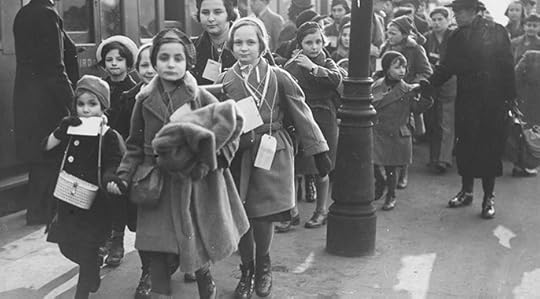
- Teaches children about the Holocaust, Nazis, Kristallnacht, and WWII.
- Uses a human touch by personally introducing seven individuals and walking you through their life stories, often using their own personal quotes.
"Our school happened to be just opposite on the street where the synagogue was. I was dragged out with a stream of children. Everybody went to the playground to watch these flames. And suddenly, someone said, "Oh there's a Jew, let's throw her on the fire as well." I don't know how I got home that day. I still don't know how I got home. And when I got home, my mother was absolutely shocked. My father had been arrested. My father was quite an outspoken person and so when they came to Buch[en]wald and when they took away all the men's braces and shoelaces, he protested and said "You can't treat these old people like this." So they made an example of him and they beat him to death in front of everybody to instill terror and obedience. They offered us my father's ashes in return for money. And eventually the urn came and we buried it in the Jewish cemetery but of course whether it was his ashes, no one knows."
- Ursula Rosenfeld
Some of the children are never reunited with their families because their families are murdered by the Nazis.
- The book does not shy away from using words that you might have to explain to your children. Also, it has a glossary in the back that defines words such as pogrom and charnel house.
- The book tells about the elderly 'kinder' - where are they now? Who did they become? Are they still alive (upon publication)? You see pictures of the seven as babies, as teens, and then as elderly adults.
- Discusses some of the more complex ideas of WWII, beyond the simple 'Nazis are evil.' You can discuss with your child(ren) why Britain did not allow parents to travel with the children. Why did the government insist on having a child sponsored, refusing to pay any money itself? Why did some children on the kindertransport end up in internment camps in Britain? How was Kristallnacht a turning point for Jews who lived in Germany and Austria? Why was Hitler and the Nazi party murdering Jews, gay people, people with disabilities, Jehovah's Witnesses, and gypsies? This book does cover that Jews were not the only ones targeted by the Nazis.
The Nazis had taken over Austria. Hitler was in power, and now just being a Jew was a crime. Rudolf lost his job. His boss explained to him that he, Rudolf, had a 'birth defect.' The birth defect? Rudolf was a Jew.
- People who can talk about the Holocaust firsthand are dying out. It is important to put their stories to paper (the cloud?) before it is too late.
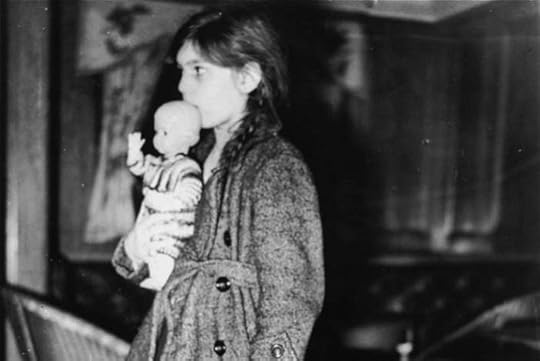
Tl;dr - I can't really think of any cons to this book. It is very important to teach your children about the Holocaust. Adults/parents might even learn something they didn't know from this book. I certainly did! The pictures are wonderful and the whole book is designed to look like an old document. No need to only consult this if there is a school project - children are fascinated with history and will be interested in this without any prompting. It's very engaging.
Ages: 8-12. The older age range might be a stretch - the book is fairly simple.
*Pictures not the exact ones from the book, I couldn't find the exact ones.

November 5, 2016
Escaping the Nazis on the Kindertransport by Emma Carlson Berne is a book made for middle grade kids but adults will find this book wonderful also. There are pictures of the children, their stories in their own words, poems, pictures of them as adults, follow ups on those in the story, and a timeline in the back of the book. The writing reads so descriptively..
"Inside the train car, children leaned against each other in the seats, sleeping, mouths open, curled like shrimp in the laps of older brothers and sisters." The story is so touching and moving from the parents view, which you read through their letters, and from the children's. The book takes you through the history, the society, and events in a way that children can understand, how we all can understand, how this could happen and could happen again if we are not careful without hate.
Of Hitler the author writes,
"He had been legally voted in by the German people. But gradually, he had become a dictator."
"Adolf Hitler and the Nazis believed that some groups of people should not live in Germany: mainly, Jews but also gay people, people with disabilities, Jehovah's Witnesses, and people who disagreed with Hitler's policies, among others."
This book was truly amazing in showing the strength and fortitude these children had to go alone, no parents allowed, to not know if they would ever see their family again, and move forward, be brave, and fight on. The courage and heroism of those helping the children was amazing also, thank those souls that fought hard for those 10,000 kids! Loved this book and I think children will learn love, caring, kindness, and courage from this wonderfully written book. Thank you NetGalley for this suggesting!
"Inside the train car, children leaned against each other in the seats, sleeping, mouths open, curled like shrimp in the laps of older brothers and sisters." The story is so touching and moving from the parents view, which you read through their letters, and from the children's. The book takes you through the history, the society, and events in a way that children can understand, how we all can understand, how this could happen and could happen again if we are not careful without hate.
Of Hitler the author writes,
"He had been legally voted in by the German people. But gradually, he had become a dictator."
"Adolf Hitler and the Nazis believed that some groups of people should not live in Germany: mainly, Jews but also gay people, people with disabilities, Jehovah's Witnesses, and people who disagreed with Hitler's policies, among others."
This book was truly amazing in showing the strength and fortitude these children had to go alone, no parents allowed, to not know if they would ever see their family again, and move forward, be brave, and fight on. The courage and heroism of those helping the children was amazing also, thank those souls that fought hard for those 10,000 kids! Loved this book and I think children will learn love, caring, kindness, and courage from this wonderfully written book. Thank you NetGalley for this suggesting!

August 20, 2016
This book, written for 8-12 year olds, contains stories of seven children who escaped Nazi Germany on Kindertransports funded by humanitarian groups in the years 1938 through 1940. Each of the stories has what I'm assuming are actual pictures of the children and their parents and it is heartbreaking to think of parents who had to make the incredibly difficult decision to send their beloved children alone on transports with perhaps a handful of family pictures or a beloved teddy bear - whatever would fit into a small leather suitcase. Each child has a numbered tag around their neck and the corresponding number was written on their suitcase.
The stories are simply told, but are not simplistic. We read of the emotions of children recalling the last time they saw their parent's faces or who suffered bullying and abuse at the hands of classmates who hated them solely because they were Jewish. Each story also has a bit of history about the time leading up to the Holocaust and together they depict the growing horror of what the Nazis were capable of.
We also learn what happened to the children after the war and the memories they carried and what they did in their lives to honor their parents and remember the Holocaust. The book has an impressive bibliography and questions at the end suitable for classroom discussion. I was very moved by this book as an adult, and I think it would be a very powerful book for children and young adults.
I received an ARC of this book from the Publisher, via NetGalley, in exchange for an honest review.
The stories are simply told, but are not simplistic. We read of the emotions of children recalling the last time they saw their parent's faces or who suffered bullying and abuse at the hands of classmates who hated them solely because they were Jewish. Each story also has a bit of history about the time leading up to the Holocaust and together they depict the growing horror of what the Nazis were capable of.
We also learn what happened to the children after the war and the memories they carried and what they did in their lives to honor their parents and remember the Holocaust. The book has an impressive bibliography and questions at the end suitable for classroom discussion. I was very moved by this book as an adult, and I think it would be a very powerful book for children and young adults.
I received an ARC of this book from the Publisher, via NetGalley, in exchange for an honest review.

February 1, 2017
This is a very important, and strangely, topical book for today. As I was reading it, I kept thinking, "History is repeating, history is repeating, why does no one DO something about it?!?" Ever feel like Cassandra? This book, so is.
It's geared towards a younger reader, not nearly as meaty as I would like it to be for me. For younger children, a good introduction to the horrors of the Holocaust. It's not overwhelming, but it is powerful and doesn't shy away from what the people interviewed in this book went through. A very respectable bibliography and notes section. The pictures of the children in happier times before they had to leave on the Kindertransport are heartbreaking in their innocence and everyday normal-ness.
Good book. Great for middle grade I would say. I wanted a bit more to it, so 4 solid stars. I do recommend this book to all ages though. History needs to be LEARNED from. From the sad state of affairs the world is in right now, I would say we still haven't learned this lesson yet. I am sorry to say we probably never will.
My thanks to NetGalley and Capstone Press for and eARC copy of this book to read and review.
It's geared towards a younger reader, not nearly as meaty as I would like it to be for me. For younger children, a good introduction to the horrors of the Holocaust. It's not overwhelming, but it is powerful and doesn't shy away from what the people interviewed in this book went through. A very respectable bibliography and notes section. The pictures of the children in happier times before they had to leave on the Kindertransport are heartbreaking in their innocence and everyday normal-ness.
Good book. Great for middle grade I would say. I wanted a bit more to it, so 4 solid stars. I do recommend this book to all ages though. History needs to be LEARNED from. From the sad state of affairs the world is in right now, I would say we still haven't learned this lesson yet. I am sorry to say we probably never will.
My thanks to NetGalley and Capstone Press for and eARC copy of this book to read and review.

August 11, 2016
The thing about World War II, and the Holocaust is that the survivors of both are dying off. We are probably the last generation that will hear first hand what happened directly from the sources, the people who survived. And each survivor who dies, who leaves this world, leaves behind stories untold.
And we as adults have heard these stories, but what of the generation coming after us, children born at the turn of the 20th century, and later, who are being taught about these things, that to them, are ancient history.
Now, granted, it is history to me as well. My mother was alive in WWII, as a teenager, but in the United State, where the worst thing that happened to her was that butter was rationed.
But for children studying World War II now, those who have to learn the stories we were taught, to k now that it should never happen again, what better way to teach them, than through the voices of former children, and that is why this book is important. It is not that it is one more story of WWII, but that it is the story not often heard, of the 10,000 children who were able to escape to the UK, on the eve of war, in the Kinderstransport. The book, told in the survivors words, as they remember it happening, as well as simple language, beyond the quotes, is easy to read, to sympathize with, and understand. For example, here is the quote from Ursula, as she is leaving to get ont he KInderstransprot.
"The parting was terrible. That's the one thing I've never forgotten in all my life. And [my mother] had been so controlled. She'd always been a sort of solid support for us, and suddenly she showed her feelings and it was terrifying, really terrifying. You saw this face that showed all the just and agony she'd been through...I would have liked to have had a happier image of my mother. That's the only image, this contorted face, full of agony. It's very sad."
There are 8 stories, one for each chapter, plus a 9th chapter to tell what happened to the children at the end of the war, and what happened to them in later life. There is also a time line, a Glossary, information about the kindertransport association, discussion questions and source notes.
This would be an excellent book to have in the classroom or library, to put a more human face on the war, and the children who suffered. There are photos of Kristallnacht (Night of Broken Glass), as well as the children whose stories are included.
Thanks to Netgally for making this book available for an honest review.
And we as adults have heard these stories, but what of the generation coming after us, children born at the turn of the 20th century, and later, who are being taught about these things, that to them, are ancient history.
Now, granted, it is history to me as well. My mother was alive in WWII, as a teenager, but in the United State, where the worst thing that happened to her was that butter was rationed.
But for children studying World War II now, those who have to learn the stories we were taught, to k now that it should never happen again, what better way to teach them, than through the voices of former children, and that is why this book is important. It is not that it is one more story of WWII, but that it is the story not often heard, of the 10,000 children who were able to escape to the UK, on the eve of war, in the Kinderstransport. The book, told in the survivors words, as they remember it happening, as well as simple language, beyond the quotes, is easy to read, to sympathize with, and understand. For example, here is the quote from Ursula, as she is leaving to get ont he KInderstransprot.
"The parting was terrible. That's the one thing I've never forgotten in all my life. And [my mother] had been so controlled. She'd always been a sort of solid support for us, and suddenly she showed her feelings and it was terrifying, really terrifying. You saw this face that showed all the just and agony she'd been through...I would have liked to have had a happier image of my mother. That's the only image, this contorted face, full of agony. It's very sad."
There are 8 stories, one for each chapter, plus a 9th chapter to tell what happened to the children at the end of the war, and what happened to them in later life. There is also a time line, a Glossary, information about the kindertransport association, discussion questions and source notes.
This would be an excellent book to have in the classroom or library, to put a more human face on the war, and the children who suffered. There are photos of Kristallnacht (Night of Broken Glass), as well as the children whose stories are included.
Thanks to Netgally for making this book available for an honest review.

May 15, 2019
This is very well written and a wonderful way to share the stories of people who lived the Kindertransport. Emma Carlson Berne uses her own words to retell the stories, pictures that the Kindertransport "children" still had from when they were younger, and some quotes from those that own the stories. Yes, this may be a difficult read for a middle grader. The author writes clearly, in language that a middle grader can understand, and includes photos, a glossary, and some resources. Due to the possibility of a kid being sensitive to this subject, or may have questions upon finishing the book, this is something that I believe would work with classroom discussion or parental discussion after it's read. Overall a great source of information about the preWWll and during WWII time frame. Something that will make you think.

February 4, 2017
The Kindertransport was a short-lived program that rescued approximately 10,000 Jewish children in Nazi occupied Germany, Austria and Poland and Czechoslovakia between December 1938 (just three weeks after Kristallnacht, and May 1940. The children were sent to live with families in Great Britain. I have reviewed a number of books about the Kindertransport before, but most of them were novels.
In her new book, Emma Carlson Berne introduces readers to the program through the true stories of seven former Kindertransport survivors, including a detailed explanation of what was happening in Europe, especially after Kristallnacht, and how the Kindertransport program worked. The program was the brain child of British Jews and Quakers and only worked because at that time, Hitler wanted to get all Jews out of Europe. Still, It's hard to imagine parents willingly surrendering their children to strangers in the hope that they would be safe, but it just shows how dangerous Europe had become under the Nazis. It was up to the families to get their children to the transport train that would take them to the ships traveling to England, an expense difficult for Jewish parents to afford by 1938, having lost their jobs and most of their money having been confiscated by the Nazis. To make it more difficult, no parents or other family were allowed to travel with their children. For many, Berne points out, the train station would be that last time parents and children would ever see each other.
Berne than recounts the experiences of the seven children and how they became Kindertransport children. Her writing style is very interesting. She invites the reader into the book with sentences like: "We can imagine the train whistle blowing. 'All aboard,' the conductor might have yelled in German over the crowd of frightened children and weeping parents." (pg 62) Each persons recollections are told in their own words, as well, taken from interviews done when they were adults, and adding a sense of authenticity that these are true stories and not the stuff of imagination.
In addition to each person's story, Berne has included archival photographs of what Jewish life looked like in Europe before and under the Nazis and a collection of family photos each child must have taken to England with them. The whole book is set up like an old family album, including chipped, aged-looking pages.
There is extensive back matter, including a timeline, a Glossary, information about The Kindertransport Association, which you might want to check for additional information, suggestions for further reading, discussion questions, and and extensive Bibliography.
Escaping the Nazis on the Kindertransport is a well done, very well researched book. The seven stories included in it are poignant, and really bring home the feelings of desperation parents were feeling, but also the fear of the child suddenly being separated from their family, and not always being old enough to understand what was happening.
This is a valuable teaching resource for classes studying the WWII and Holocaust. Pair it with some of the excellent novels that have been written about the Kindertransport for a really in-depth, well- rounded sense of how the events of the time impacted children.
This book is recommended for readers age 8+
This book was an EARC received from NetGalley
This review was originally posted on The Children's War
In her new book, Emma Carlson Berne introduces readers to the program through the true stories of seven former Kindertransport survivors, including a detailed explanation of what was happening in Europe, especially after Kristallnacht, and how the Kindertransport program worked. The program was the brain child of British Jews and Quakers and only worked because at that time, Hitler wanted to get all Jews out of Europe. Still, It's hard to imagine parents willingly surrendering their children to strangers in the hope that they would be safe, but it just shows how dangerous Europe had become under the Nazis. It was up to the families to get their children to the transport train that would take them to the ships traveling to England, an expense difficult for Jewish parents to afford by 1938, having lost their jobs and most of their money having been confiscated by the Nazis. To make it more difficult, no parents or other family were allowed to travel with their children. For many, Berne points out, the train station would be that last time parents and children would ever see each other.
Berne than recounts the experiences of the seven children and how they became Kindertransport children. Her writing style is very interesting. She invites the reader into the book with sentences like: "We can imagine the train whistle blowing. 'All aboard,' the conductor might have yelled in German over the crowd of frightened children and weeping parents." (pg 62) Each persons recollections are told in their own words, as well, taken from interviews done when they were adults, and adding a sense of authenticity that these are true stories and not the stuff of imagination.
In addition to each person's story, Berne has included archival photographs of what Jewish life looked like in Europe before and under the Nazis and a collection of family photos each child must have taken to England with them. The whole book is set up like an old family album, including chipped, aged-looking pages.
There is extensive back matter, including a timeline, a Glossary, information about The Kindertransport Association, which you might want to check for additional information, suggestions for further reading, discussion questions, and and extensive Bibliography.
Escaping the Nazis on the Kindertransport is a well done, very well researched book. The seven stories included in it are poignant, and really bring home the feelings of desperation parents were feeling, but also the fear of the child suddenly being separated from their family, and not always being old enough to understand what was happening.
This is a valuable teaching resource for classes studying the WWII and Holocaust. Pair it with some of the excellent novels that have been written about the Kindertransport for a really in-depth, well- rounded sense of how the events of the time impacted children.
This book is recommended for readers age 8+
This book was an EARC received from NetGalley
This review was originally posted on The Children's War

August 18, 2016
It is difficult to decide at what age and how children should have certain horrific subjects explained to them. Learning about horrible things that have happened centuries ago (and thus dulled by the passage of time and lack of first person accounts) is easier than learning about the recent past and present day cruelties committed by humans. It is difficult, but that education needs to be done. It is important that we understand from an early age what has happened before, and how people were affected.
This book is an excellent introduction to the events in the late 1930s Europe, specifically the Kindertransport and the beginning of the Holocaust. It does not describe the horror of the Holocaust graphically, yet it pulls few punches. Told from the points of view of Irene, Kurt, Ursula, Tom, Harry and Jack, all children who were evacuated to England on the Kindertransport in 1939. Each section describes life with their families before their escape, the trip itself, and a summary of their life afterwards. Read their honest, straightforward words describing the events. Everyone should.
While the accounts of the children involved are meant to cover their entire life, this book leaves questions unanswered, in a way that will likely encourage readers to seek out more information on their own.
Also, a timeline, excellent glossary, suggested further readings, and thorough bibliography are included. And notes on the Kindertransport association, which still operates today, that "unites these child Holocaust refugees and their descendants" and "shares their stories, honors those who made the Kindertransport possible, and supports charitable work that aids children in need."
Highly recommended.
**eARC Netgalley**
This book is an excellent introduction to the events in the late 1930s Europe, specifically the Kindertransport and the beginning of the Holocaust. It does not describe the horror of the Holocaust graphically, yet it pulls few punches. Told from the points of view of Irene, Kurt, Ursula, Tom, Harry and Jack, all children who were evacuated to England on the Kindertransport in 1939. Each section describes life with their families before their escape, the trip itself, and a summary of their life afterwards. Read their honest, straightforward words describing the events. Everyone should.
While the accounts of the children involved are meant to cover their entire life, this book leaves questions unanswered, in a way that will likely encourage readers to seek out more information on their own.
Also, a timeline, excellent glossary, suggested further readings, and thorough bibliography are included. And notes on the Kindertransport association, which still operates today, that "unites these child Holocaust refugees and their descendants" and "shares their stories, honors those who made the Kindertransport possible, and supports charitable work that aids children in need."
Highly recommended.
**eARC Netgalley**

August 2, 2016
In 1938, after the devastation of Kristallnacht and before the outbreak of the Second World War, the United Kingdom government organised a rescue effort who saved nearly 10,000 children from the Nazis. The first Kindertransport left on December 2, 1938 and the last one left from Netherlands on May 14, 1940, as Dutch forces fell to the Nazi German forces.
This is a touching book, that collects memoir pieces, poems, photographs and other sources to tell the stories of seven of these children who escaped the Nazis on the Kindertransport. It is an heart-breaking journey — these children, travelling toward an unknown country, who did not know if they would have seen their parents again and what the future held for them and if they would have returned to their own homes. In the last chapter we are told what happened to these children after their arrival in the United Kingdom and after the war — I cried so much.
The book combines memories and history notions in a smart way. It is supposed to be a children’s non-fiction book, but it is well worth reading, no matter how old you are. I am sure that the experiences of these young refugees will help many of us to understand how it felt to lose one’s home and family in World War II, and how it might feel for today’s refugees.
Thanks to Netgally and Capstone for making this book available for an honest review.
This is a touching book, that collects memoir pieces, poems, photographs and other sources to tell the stories of seven of these children who escaped the Nazis on the Kindertransport. It is an heart-breaking journey — these children, travelling toward an unknown country, who did not know if they would have seen their parents again and what the future held for them and if they would have returned to their own homes. In the last chapter we are told what happened to these children after their arrival in the United Kingdom and after the war — I cried so much.
The book combines memories and history notions in a smart way. It is supposed to be a children’s non-fiction book, but it is well worth reading, no matter how old you are. I am sure that the experiences of these young refugees will help many of us to understand how it felt to lose one’s home and family in World War II, and how it might feel for today’s refugees.
Thanks to Netgally and Capstone for making this book available for an honest review.

February 11, 2018
The story of the Kindertransport is a truly awesome and horrible one. The fact that 10,000 children were saved from the Nazis is amazing and wonderful. The fact that they had to be separated from their families and sent across the continent to be saved is horrible. This books follows the story of several different children on the Kindertransport. They were different ages and of different social standings, but they were all Jewish children in danger. Some of their families survived and some did not. But all the kids made it to England and safety. It is truly a story we should never forget and seems to ring so true in today's anti-refugee climate.
March 4, 2024
I’d really like to watch the movie now . Very touching and harrowing stories of the escaping children and then an update of some of their lives

August 2, 2016
I got an ARC of this book through NetGalley. Thank you Capstone!
I didn't know what to expect when I went into this book. It's such a serious subject to be brought up for children aged 8-12. In school we didn't cover World War II until I was about 12 or 13 years old. But I have to say this book does a great job in telling this story.
You got to see the reasons behind why the children had to flee, and in a very private manner. The usage of photographs, poems and the survivors' own writing made it feel real. This has happened. It isn't just a story.
On the last pages you get to know what happened to the children you've read about after they arrived in England. This left a feeling of hope even though the author made it clear how few they were. 10 000 children on the Kindretransport. 6 million Jews killed only in concentration camps.
If you want to read this as an adult, remember it is written for children. It doesn't go deep but gives a easy look at what happened. If you're interested in the children's story, then don't let the fact that this is a children's book keep you from picking it up.
I didn't know what to expect when I went into this book. It's such a serious subject to be brought up for children aged 8-12. In school we didn't cover World War II until I was about 12 or 13 years old. But I have to say this book does a great job in telling this story.
You got to see the reasons behind why the children had to flee, and in a very private manner. The usage of photographs, poems and the survivors' own writing made it feel real. This has happened. It isn't just a story.
On the last pages you get to know what happened to the children you've read about after they arrived in England. This left a feeling of hope even though the author made it clear how few they were. 10 000 children on the Kindretransport. 6 million Jews killed only in concentration camps.
If you want to read this as an adult, remember it is written for children. It doesn't go deep but gives a easy look at what happened. If you're interested in the children's story, then don't let the fact that this is a children's book keep you from picking it up.

August 3, 2016
GNab I received a free electronic copy of this work from Netgalley, Emma Carlson Berne, and Capstone, Capstone Press in exchange for an honest review. Thank you, for sharing your work with me.
This is an excellent book for tweenies and teens - possibly even younger children. It explains the kindertransport and the reasons behind it and the night of breaking glass without graphic details. The photos of the children and their parents that were packed in their suitcases before they were placed on the train are exquisite. The fact that they never got to see their parents again is heartbreaking.
pub date Jan 1, 2017
Capstone, Capstone Press
This is an excellent book for tweenies and teens - possibly even younger children. It explains the kindertransport and the reasons behind it and the night of breaking glass without graphic details. The photos of the children and their parents that were packed in their suitcases before they were placed on the train are exquisite. The fact that they never got to see their parents again is heartbreaking.
pub date Jan 1, 2017
Capstone, Capstone Press

March 23, 2024
Gentle and easy to read introduction to the Sho'ah. Depending on the maturity of your child, I would recommend for ages 10/11 and up. This does mention a suicide by a gun shot to the head, but all other traumas are kept vague and general. There are a few common core discussion questions in the back.

April 20, 2019
Interesting, with a nice mix of personal stories and facts. A great book for kids as an introduction to some of the more personal stories to come out of the Holocaust.

January 26, 2017
Check out my review! https://youtu.be/RTrsB0U-XU8
February 18, 2023
This short book explains the Holocaust to younger readers (ages 9 - 12) through the eyes of the children who were put on trains to escape the Nazis. They ran from 1938 - 1940 (depending on their location in Europe). About 10,000 children were relocated to Great Britain. It was stunning to read how reluctant the British were to take the children, demanding they leave immediately after the war's end.
The first chapter explains that a five-year-old boy must board the train, not knowing if he'd ever see his parents again. The second chapter explains why the parents were so concerned about their children's safety with the increasing persecution of Jews. As a result, Jewish children were banned from school and went to a teacher's home to continue their studies.
I question the wisdom of just handing this book to children; adults should offer some context for the short stories within its pages. For some children, these stories will speak to them on a very emotional level. In addition, they may raise the fears of insecure children. The book makes it clear that the Jewish refugees had difficulty finding a European country to accept them. This is a powerful story, well worth a young reader's time. However, adults should be involved in answering questions.
The last chapter informs readers about the children mentioned in this book. September 4, 2009, there was a 75-year remembrance of the Kindertransport. The author reports that over 2000 children emigrated to the US after the war. Most of the 10,000 children who escaped never saw their parents again. One and one-half million children died in the Holocaust, but strangers' kindness saved these 10,000.
Two of the 10,000 refugees eventually won Nobel Prizes. In addition, many of the children refugees entered the helping professions. The final explanation of the children's outcomes is reassuring that so many were saved by kindness.
There is a timeline and glossary included. Also, there were sites for further reading.
The first chapter explains that a five-year-old boy must board the train, not knowing if he'd ever see his parents again. The second chapter explains why the parents were so concerned about their children's safety with the increasing persecution of Jews. As a result, Jewish children were banned from school and went to a teacher's home to continue their studies.
I question the wisdom of just handing this book to children; adults should offer some context for the short stories within its pages. For some children, these stories will speak to them on a very emotional level. In addition, they may raise the fears of insecure children. The book makes it clear that the Jewish refugees had difficulty finding a European country to accept them. This is a powerful story, well worth a young reader's time. However, adults should be involved in answering questions.
The last chapter informs readers about the children mentioned in this book. September 4, 2009, there was a 75-year remembrance of the Kindertransport. The author reports that over 2000 children emigrated to the US after the war. Most of the 10,000 children who escaped never saw their parents again. One and one-half million children died in the Holocaust, but strangers' kindness saved these 10,000.
Two of the 10,000 refugees eventually won Nobel Prizes. In addition, many of the children refugees entered the helping professions. The final explanation of the children's outcomes is reassuring that so many were saved by kindness.
There is a timeline and glossary included. Also, there were sites for further reading.

January 26, 2017
Thanks to Capstone Press, NetGalley, and the amazing Emma Carlson Bernes for the digital ARC in exchange for an honest review.
Escape the Nazis on the Kindertransport
★★★★☆
Expected Publication: 02/01/17
Between 1938 and 1940, right before the beginning of WWII and right after the famous Kristallnacht, The first Kindertransport left Germany to the United Kingdom.
In this book, Emma Barnes writes about the war from the perspective of the journey of a small group of Jewish children rescued from Nazi Germany to seek asylum in Britain. As the war was heating up in Germany, other European countries made an agreement to allow only the children of Jewish parents temporary asylum in their country. These are the stories of some of the few remaining survivors who were on the transport during the late 1930's.
Told through gripping first-hand accounts, photographs, memoirs, and poetry, the readers get a glimpse into this more-or-less unknown side of WWII. These children survived, but the journey to asylum and what happened once they got there, is an inspiring tale. They faced hardships of being refugees and watching from afar the death of loved ones thrown into concentration camps. These children did not have a home and never got to say goodbye, but they went on to be award-winning authors and famous professors who gave back to the world that gave them the chance to live.
This is definitively a good read for ages 11+ as they begin to learn about WWII in school, it's a good introduction to this period of history. The books is easy and fun to read, I sat down with the intention to read a chapter or two before bed, but ended up reading and looking through all the photos from the Kindertransport. The 10,000 who survived are the reasons over 60,000 relatives being alive today i.e children, parents, grandparents. It’s important that everyone's story has a chance to be heard.
Escape the Nazis on the Kindertransport
★★★★☆
Expected Publication: 02/01/17
Between 1938 and 1940, right before the beginning of WWII and right after the famous Kristallnacht, The first Kindertransport left Germany to the United Kingdom.
In this book, Emma Barnes writes about the war from the perspective of the journey of a small group of Jewish children rescued from Nazi Germany to seek asylum in Britain. As the war was heating up in Germany, other European countries made an agreement to allow only the children of Jewish parents temporary asylum in their country. These are the stories of some of the few remaining survivors who were on the transport during the late 1930's.
Told through gripping first-hand accounts, photographs, memoirs, and poetry, the readers get a glimpse into this more-or-less unknown side of WWII. These children survived, but the journey to asylum and what happened once they got there, is an inspiring tale. They faced hardships of being refugees and watching from afar the death of loved ones thrown into concentration camps. These children did not have a home and never got to say goodbye, but they went on to be award-winning authors and famous professors who gave back to the world that gave them the chance to live.
This is definitively a good read for ages 11+ as they begin to learn about WWII in school, it's a good introduction to this period of history. The books is easy and fun to read, I sat down with the intention to read a chapter or two before bed, but ended up reading and looking through all the photos from the Kindertransport. The 10,000 who survived are the reasons over 60,000 relatives being alive today i.e children, parents, grandparents. It’s important that everyone's story has a chance to be heard.

October 25, 2016
Great introductory book for youth on the Holocaust, WWII and specifically the children that escaped. This book featured 8 stories of children and social workers that participated in the events and share their photos, poems and memories of the events. The events are simply written with lots of big picture ideas and background information for kids to understand what is happening and why. Thought some details were a bit incomplete, like what happened to some of the kids families, though we do find out about some of them in chapter 9. I thought the wording was a bit presumptuous however with phrases like "Tom might have...he had almost certainly never...Tom must have...Tom perhaps...". I would have much rather them stuck to what they knew or stated what they thought to be true as facts overall. Clearly not all the kids were scared because the picture of kids were smiling in transport. Maybe say some would have been scared and some excited? It sounded presumptuous.
Beautiful photos and real life stories. Lovely layout, aged look for the pages, pretty font for accents. Overall worthwhile book, just could have been better.
Beautiful photos and real life stories. Lovely layout, aged look for the pages, pretty font for accents. Overall worthwhile book, just could have been better.

February 20, 2017
Stories about the Kindertransport, the trains that took children to freedom and away from the clutches of the Nazis during the Holocaust, are all-too-rare. Although I wish the stories had contained more details and the narrative voice that tied them all together had been stronger, I was still moved by the experiences of seven very different youngsters, one as young as five, as they left behind them all that was familiar to them. The author includes poems, brief memoirs, and snippets of their recollections of those dangerous times and the aftermath as well as photographs. She also details the events that led up to their departure, and points out that while some of the children came from wealthy families, that wasn't always the case. Often, poignantly, many of the travelers never saw their families again. Although it might seem like a small number against the more than one million children who died during the Holocaust, at least these 10,000 survived, thanks to the kindness of strangers who wanted to help in some small way. Readers will surely be compelled to learn more while also pondering the enormous losses associated with this period of history.

December 14, 2019
I purchased this book at our Scholastic Book Fair at the school in which I teach. It is less the 100 pages, a quick read, and published for upper elementary-middle school-aged children.
I originally gave it two stars because I felt the short chapters didn't elaborate or go into enough detail about the actual travel or what it was like for the children before and after their escape. It was almost like each chapter was a synopsis of a chapter that should've been written but wasn't.
I changed my rating to three stars because of the teachable qualities within the book.
The photographs are wonderful, and the timeline in the back in a great teaching tool and reference for students.
I also think it would be a good research and writing activity/project to assign each student a different chapter, and have them expand on the chapters, since they are so short and lack detail. Perhaps something like a cultural or ethnography project using this book would be of interest to social studies or history teachers who teach this as part of their curriculum.
I originally gave it two stars because I felt the short chapters didn't elaborate or go into enough detail about the actual travel or what it was like for the children before and after their escape. It was almost like each chapter was a synopsis of a chapter that should've been written but wasn't.
I changed my rating to three stars because of the teachable qualities within the book.
The photographs are wonderful, and the timeline in the back in a great teaching tool and reference for students.
I also think it would be a good research and writing activity/project to assign each student a different chapter, and have them expand on the chapters, since they are so short and lack detail. Perhaps something like a cultural or ethnography project using this book would be of interest to social studies or history teachers who teach this as part of their curriculum.

January 13, 2020
This is a short book which gives an introduction to the Holocaust in context of the Kindertransport. It's perfect for 4th graders, but 5th grade and up will probably want something more in depth. It's hard to imagine how bad things must have gotten for Jews in occupied countries to send their children away to live with strangers in Great Britain. 10,000 Jewish children in all were saved through the kindness of British citizens. This book is the result of interviews that were conducted years later. Every single person who got out on the Kindertransport knows the odds. If not for that one year in 1938-1939 when the Germans still behaved with a semblance of sanity, most of those children would have died. It's one more amazing piece of the devastating puzzle and Berne brings it to a level younger children can understand.

November 22, 2017
I've read many books on the holocaust that were written for children, but two things that really stand out to me about this one are that it makes the subject approachable without many horrifying details that sometimes are included, and that real people rescued by the kindertransport were written about and contributed poems, diary entries, and memories making the book more alive and touching than fiction that sometimes can make us forget that the holocaust happened to real people. the kindertransport saved the lives of 10, 000 children and I am glad it is memorialized for children through this book.

September 22, 2017
3.5 stars I admit I knew nothing about the Kindertransport. However, his book left me wanting. I know it is for 4-6th Graders and it will probably satisfy their curiosity but.. I wanted to more details. As I have stated before a good non-fiction book teaches you something and makes you want to learn more. I want to learn more, and it gives refences to Facthound.com etc but I needed a little more detail in the book. For me, it is not a book award winner. It was interesting, heart breaking and informative but not winner!

January 18, 2018
Escaping the Nazis on the Kindertransport is a good book. It is historical non-fiction about the Kindertransport, a train that saved a lot of people during the years leading up to World War 2. It is short but well written and has many pictures. The book tells the stories of many people who survived on the Kindertransport and then tells about what happened to them after the war. One of them wrote a poem about the Kindertransport. There are also some quotes from the survivors. I would suggest this book for ages 8 to 13 as it is dark but short. 4 stars out of 5.
Joshua B, age 14, GLAAM
Joshua B, age 14, GLAAM

July 10, 2025
Despite my previous extensive reading of books about the Holocaust, I had not heard of the Kindertransport. So finding this book, meant for middle schoolers, was wonderful. The stories are heart felt, and the book is a good introduction for students/kids who want to start learning a bit about this tragedy. There is not much detail about the concentration camps, but just enough info (not graphic) to give an age-appropriate idea of what went on. I was particularly pleased that there was a chapter detailing what happened to those highlighted within the book.

November 8, 2016
**I received a free copy of this book from Netgalley in exchange for an honest review*
This was a good glimpse into the proceedings that became known as Kindertransport. Children were evacuated from Germany and the surrounding countries just before WWII broke out. This book focuses mainly on the children. Poems, pictures and stories are taken from the records of the now-grown children as they look back on that time of their lives with mixed emotions.
This was a good glimpse into the proceedings that became known as Kindertransport. Children were evacuated from Germany and the surrounding countries just before WWII broke out. This book focuses mainly on the children. Poems, pictures and stories are taken from the records of the now-grown children as they look back on that time of their lives with mixed emotions.

March 26, 2017
I had no idea that the Kindertransport involved travel by not just train, but by plane, and boat. I also had no idea that ten thousand children were saved because of the Kindertransport. I enjoyed reading each child's story and learning what happened to them afterward. This book is geared toward children but is inspiring reading for all ages.
*Thank you to NetGalley, the author, and publisher, for allowing me to read this book in exchange for an honest review*
*Thank you to NetGalley, the author, and publisher, for allowing me to read this book in exchange for an honest review*
August 16, 2017
Excellent first person accounts of six children who rode the Kindertransport between 1938-1939. Opening the book with poems from one man who rode the trains is compelling, and it is wise to follow up with each rider's life post-WWII. The book would benefit from more photos of the children as adults, and maps of the train routes to "place" the action in the world. A nice introduction for upper elementary or reluctant middle school readers.
Displaying 1 - 30 of 89 reviews