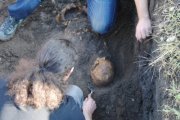
Modern research methods - archaeological, historical, forensic - have transformed our view of the past. This is especially true of the history of the Great War. In this, the first comprehensive survey of this exciting new field, Andrew Robertshaw and David Kenyon introduce the reader to the techniques that are employed and record, in vivid detail, many of the remarkable projects that have been undertaken. They show how archaeology can be used to reveal the position of trenches, dugouts and other battlefield features and to rediscover what life on the Western Front was really like. And they show how individual soldiers are themselves part of the story, for forensic investigation of the war dead is now so highly developed that individuals can be identified and their fate discovered.
This is the perfect "starter's" book for anyone interested in Great War archaeology. I have skimmed through several similar books reccomended by my teachers (such as "Digging up Plugstreet") but decided to start with this one. It has a number of advantages : Firstly, it has a visual companion in the shape of the TV series "Trench Detectives/Finding the Fallen" and one can simply read a couple of pages then fire up the DVD, ensuring the information is clearly imprinted into the reader's brain. Secondly, the authors make references throughout the book to a number of very useful works for the archaeologist, military manuals which can be mostly found in the public domain, such as Engineers' manuals, Infantry manuals or military handbooks. Thirdly (and that can also be seen in the TV series), the authors and the team have gone to great lengths to finding the actual names of some of the soldiers they found, wherever the data was sufficient; relatives of the deceased that never knew about each other have met and started great friendships. It's archaeology bringing people together. In terms of digging technique, there is not much to be said. The differences between "conventional" archaeology and World War archaeology are quite clearly stated : The emphasis is put on the careful preservation of each and every piece that could help identifying the body in the ground and exercising great care, as there can be unexploded ordnance lying around. That was quite long. I'll hide it because of spoilers, but I don't think it should strip you of the pleasure of reading this book. In short, it's great.
This entire review has been hidden because of spoilers.
Easy to.read. if you have an interest in archeology and the great war. You will like this. I like they looked at the personal.side. like looking an not only objects. But the soldiers.who sacrificed how they lived and died