Applies recent developments in astronomy, biology, and psychology to the mysteries of memory, dreams, visions, UFOs, gods and devils, hypnosis, ghosts, ESP, creativity, and consciousness, recognizing natural bases for paranormal occurrences
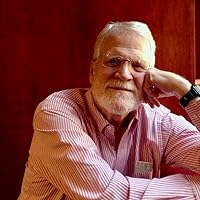
Lyall Watson was a South African botanist, zoologist, biologist, anthropologist, ethologist, and author of many new age books, among the most popular of which is the best seller Supernature. Lyall Watson tried to make sense of natural and supernatural phenomena in biological terms. He is credited with the first published use of the term "hundredth monkey" in his 1979 book, Lifetide. It is a hypothesis that aroused both interest and ire in the scientific community and continues to be a topic of discussion over a quarter century later.
He was born in Johannesburg as Malcolm Lyall-Watson. He had an early fascination for nature in the surrounding bush, learning from Zulu and !Kung bushmen. Watson attended boarding school at Rondebosch Boys' High School in Cape Town, completing his studies in 1955. He enrolled at Witwatersrand University in 1956, where he earned degrees in botany and zoology, before securing an apprenticeship in palaentology under Raymond Dart, leading on to anthropological studies in Germany and the Netherlands. Later he earned degrees in geology, chemistry, marine biology, ecology and anthropology. He completed a doctorate of ethology at the University of London, under Desmond Morris. He also worked at the BBC writing and producing nature documentaries.
Around this time he shortened his name to Lyall Watson. He served as director of the Johannesburg Zoo, an expedition leader to various locales, and Seychelles commissioner for the International Whaling Commission.
In the late 1980s he presented Channel 4's coverage of sumo tournaments.
Lyall Watson began writing his first book, Omnivore during the early 1960s while under the supervision of Desmond Morris, and wrote more than 20 others.
Άλλο ένα ξεχασμένο διαμάντι από τις (επίσης ξεχασμένες) εκδόσεις Ωρόρα. Ο Lyall Watson καταφέρνει, από τη σκοπιά του βιολόγου/ζωολόγο/φυσιογνώστη/ανθρωπολόγου/εθνολόγου, να δώσει μία εκπληκτική περιγραφή των λειτουργιών της συνείδησης. Τις απόψεις του (ακόμα και κάποιες που ίσως ξενίσουν πολλούς) τις παρουσιάζει με τόσο κομψό τρόπο και γοητευτικό τρόπο, που είναι απίστευτα δύσκολο να τις αντισταθείς.
Είμαι σκεπτικιστής από τη φύση μου (και λόγω της φύσης του επαγγέλματος), παρόλα αυτά με συνεπήρε η συλλογιστική του συγγραφέα, ακόμα και για τα πιο αμφιλεγόμενα θέματα, που βρίσκονται στα όρια της μεταφυσικής.
Το μόνο μειονέκτημα του βιβλίου, αφορά την συγκεκριμένη έκδοσή του : δεν περιέχεται η βιβλιογραφία! Υπάρχουν μόνο οι αριθμοί των αναφορών, αλλά οι ίδιες οι αναφορές δεν υπάρχουν πουθενά. Αυτό όμως είναι πρόβλημα μόνο της συγκεκριμένης έκδοσης, οπότε τα πέντε αστέρια στη βαθμολογία παραμένουν.
The underlying theme was ‘everything is connected and reality is not what we think’. Watson covers a lot of different topics which get less mainstream as the book goes on.
DNA was created in interstellar clouds and washed earth with primitive life. Viruses transfer DNA between species, blurring the lines amongst all lifeforms on earth. Jung’s theory of the collective unconscious is interpreted on a more metaphysical level. There is no such thing as objective reality and everything is a mental construct. UFOs are physical manifestations of the current psychological state of humanity.
The ‘lifetide’ is explained through an example of how the ocean’s tides cannot be learned by taking a sample of ocean water. The entirety of the ocean water however still has unique behaviors are caused by the moon. That would never be learned by looking at water molecules. Similarly, life and consciousness are not found in organic molecules. There is something else there that we have not yet found.
This book blew my mind repeatedly with the sheer volume of knowledge. Never mind that it was published in 1979; i learned more than i did in all my science classes combined. No, i didnt pay much attention in class, but this book is phenomenal! Must read more of his work.
It’s one thing to have and utilize the scientific method; it’s quite another to admit that n a lot of our scientific inquiry, is not discernably conclusive. It s therefore, science’s limitation. However having said that, we deduce what we learn and use it for good or ill.
Nevertheless, Watson’s book explores the changing life tide in that we as humanity focus on things, situations, ideals based upon our cultures and what we perceive to be true … and what we perceive is always at some point, challenged and therefore, subject to change in the face of new information. The question s will we continue to find a(nother) scapegoat to not change, or face the fact that we need to change, for our own benefit?
Moreover, we cannot deny that a lot of our innovation came from people who challenged the status quo in terms of what is perceived to be possible or the only way to perceive/look/deal with things, concepts, nature, and situations. Therefore, innovation is not possible without imagination … imagination that is in some instances, regarded to be fantasy, as it is intangible by nature. However, there is no conclusive, traceable chain, mechanics toward how we derive what we call imagination: is it divinely inspired, invoked via a connection to a force or energy beyond what we can tangibly perceive, let alone measure, or from insight from a previous life? Nevertheless, we cannot ignore the effect of innovation, inspiration, creativity and a bass that there s more to matter than what we can measure or quantify.
If there is any criticism about the book, it lies in the biology being a bit boring, but that is indicative of what one learns in school, and how we derive what we know about biology thus far. However, it also indicates just how much we just still don’t know, i.e., how does a cell ‘know’ to become a complex organ and further, how does that organ regulate itself?
Still, the book has so much to offer in terms of how we come to know what we know and most tellingly, what we are willing to explore despite our social conditioning.
This book combines scientific findings from multiple disciplines to illustrate the seeding of life from meteors, showing how cell walls first developed for example, how mobility in muscles developed, and all kinds of other basic biological systems that we call life. It does a deep analysis, accessible in "layman's terms" of the process that brought the beginning of Life on Earth, and how it evolves continuously.
The initial blurb for the book at the top is completely inaccurate. There is nothing about ESP, UFOs, or much else that is mentioned. The reviews didn't seem much better. Perhaps Creationists are brigading the book because it debunks the "6 day creation" myth, without even mentioning it.
I couldn't finish the first chapter. Lyall claims to know a young girl in the 1970s who could turn tennis balls inside out with her mind. She demonstrated it for him and he had the ball as a souvenir. He claims things like this simply can't be proven. It's 2022 now and we have the internet. That girl is probably still alive somewhere. What happened to the ball and the girl?
An unimaginable array of information presented in a torrential flow keeping the reader engaged and glued to the end. A must read for all who practice science and those interested in science.
A fascinating and thought-provoking book about consciousness. Although the book was published in 1979, it does not feel dated as he is exploring consciousness from every aspect - from its cellular origins, its presence in different species, how it influences our perceptions and communications with other people, etc. He cites many interesting studies in both humans and animals dealing with normal and extra-sensory perceptions. He questions what he sees without being skeptical and he is open-minded about ideas that go against the norm which is refreshing.
Loads of interesting stuff, but I found it a bit dry and heavy going at times. Even so, it was still easy enough to pick up and read, and I finished it, no problem.
I read several Lyall Watson books back in the 70s & 80s. I recall really liking this one, although this type of "supernatural nature-ism" writing has little appeal to me now.