Jump to ratings and reviews
Rate this book

Zen budizam i psihoanaliza

Rate this book
«Дзен-буддизм и психоанализ» – оригинальная попытка сопоставления наиболее интересных философских систем Востока и Запада, в полной мере отражающих специфику европейского и азиатского менталитетов – и имеющих, как доказывает Фромм, между собой гораздо больше общего, чем это кажется на первый взгляд.

270 pages, Paperback

First published January 1, 1960

283 people are currently reading
3435 people want to read

About the author

D.T. Suzuki

325 books452 followers
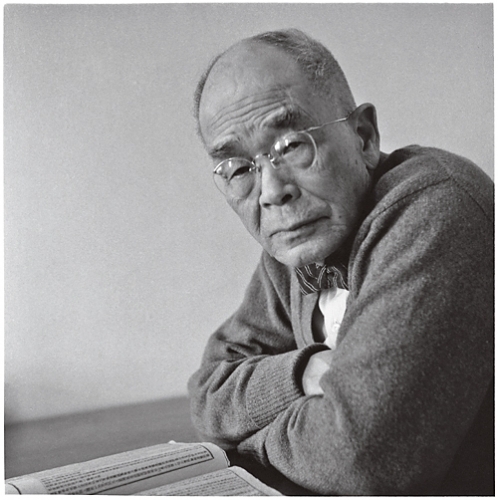
Daisetsu Teitaro Suzuki (鈴木 大拙 貞太郎 Suzuki Daisetsu Teitarō; rendered "Daisetz" after 1893) was Professor of Buddhist philosophies at Ōtani University. As a translator and writer on Buddhism and Eastern philosophy, he greatly helped to popularize Japanese Zen in the West.

Ratings & Reviews

What do you think?
Rate this book

Friends & Following

Create a free account to discover what your friends think of this book!

Community Reviews

5 stars
521 (32%)
4 stars
643 (39%)
3 stars
356 (22%)
2 stars
75 (4%)
1 star
14 (<1%)
Displaying 1 - 30 of 120 reviews
Profile Image for Owlseyes .
1,805 reviews303 followers
May 13, 2024
"La clarificación analítica podría ayudar al estudioso del Zen a evitar ilusiones cuya ausencia es la condicion misma de la iluminacion*"

Erich Fromm.


I was expecting a kind of dialogue, with bridges being made, between the two extremes: Psychoanalysis and Buddhism. Yet, by the end of the book, it was very clear in my mind: Susuki almost ruled out any bridges. Not quite the same with Erich Fromm.


The book is the output of a seminar held in Cuernavaca, Mexico, in 1957. The first part belongs to Susuki; the second, to Fromm.


Scott Sensei said once about D.T. Susuki that he was too an “intellectual”, viewed from Japan. To Scott, Susuki was a “well-read” person, fluent in English, quite familiar with the West writings. On a personal level, Scott found Susuki “always incredibly natural”, putting great emphasis on “compassion”.


When I look carefully
I see the nazuna blooming
by the hedge!


[Yoku mireba
Nazuna hana saku
Kakine kana]


The part belonging to Susuki starts with dichotomy, on poetry. He introduces his first part (called “Orient and Occident”) with a 17th century poem (Basho poetry). A simple poem, yet with plenty of subjectivity, flower-contemplation, almost passivity. And then he proceeds into a poem by Tennyson in which the author has plucked a whole plant…as a means to know himself, and much more.


Flower in the crannied wall,
I pluck you out of the crannies;-
Hold you here, root and all, in my hand.
Little flower-but if I could understand
What you are, root and all, and all in all
I should know what God and man is


“Basho accepts”. Tennyson “resists”. Two very different attitudes towards an object. Whereas the westerner talks about the object, describes it, surrounds it,…the easterner approaches the object “from the inside”.

While Tennyson dismantles in order to know, the easterner aims at knowing the flower by “becoming it”… “blossoming like it,...enjoying the sun” …like it.

Basho, inactive. Tennyson, active and analytical. You almost conclude these views are irreconcilable.

Well, the main point of Susaki, I have understood, is that Psychoanalysis being a scientific method, and antireligious, cannot partake of this Buddhist attitude: ”when I do that, the flower talks to me and I know its secrets”. “By knowing it, I know myself”.

“The field of absolute subjectivity is where the self abides”.

The Buddhist attitude is pre-scientific, meta-scientific or even anti-scientific. It aims at preserving life. No surgical tools being used.

Life should be ego-less.

Science aims at synthetizing formulas and abstractions regarding objects. That’s not the Buddhist way.

The only bridge I devised in Susuki’s words were these referring to the Unconscious: you should feel it. It signals the age of innocence.

Some lines are dedicated to the Koan: a problem the master formulates for his/her disciple to solve. Most of times it takes an absurd form, looks incoherent and incomprehensible.


As I said, affinities and bridges were to be found more on the side of Erich Fromm. He’d seen at least 3 common features: (1) a common ethical orientation; (2) the independence of Buddhism and Psychoanalysis regarding any type of authority ; and finally (3) Psychoanalysis should do the same as when the Buddhist disciple faces the koan and he cannot use “intellectual thought”; Psychoanalysis should strive to eliminate “rationalization”.

Corroborating the ideas of Susuki, that the goal of Zen is satori/illumination, Fromm agrees that the concept is not convertible, or cannot be expressed intellectually.

“Satori cannot be scientific knowledge”. Yet, again Fromm tries some bridging; speculating: the psychoanalytical “amplification of consciousness, the awakening”,…”could that be the same experience Zen Buddhists call illumination?”

Fromm’s perspective is a very cultural one, starting with his recognition that back then (late 1950’s and 1960) it was solid the so-called “today’s spiritual crisis “. It was evident: man had renounced “the illusion of a paternal God. Call it “male du siècle” or “ennui”.

Psychoanalysis was at its height, de-repression was on Fromm’s agenda. Freud’s attempt had been to “where the Id was should be the Ego”/”turn conscious what is unconscious”. His method was free association. Yet, as Erich From wrote: Zen’s method was totally different.

And, as Susuki pointed: the way of the Buddha, the way of illumination was: “doing the good, avoid the evil, purification of man’s heart”.

You’ll always find that the two fields are really DISTINCT; no matter how many bridges you try to build in between. No matter what the side at stake, you’re on.

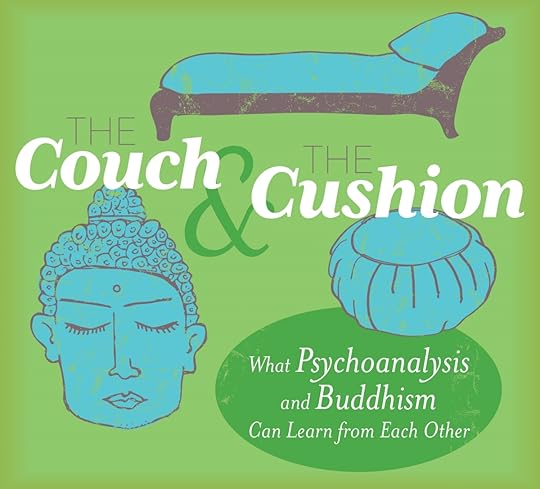
Psychoanalysis or Buddhism? couch or cushion?

*The analytical clarification might help the student of Zen in avoiding illusions, whose absence is the very condition for illumination"
Profile Image for Frona.
27 reviews42 followers
November 27, 2016
If you can guess that what Zen and Psychoanalysis have in common is their aspiration towards fuller awareness, you might as well pick a more thorough book. However, if all you need is a straightforward introduction to philosophy, or more specifically, a simple sketch of Western and Eastern forms of humanism, this paper can aid you in this task. With slow, undemanding progression that underlines the crucial aspects repeatedly, it tells us the familiar story about why all modes of being, without proper guidance of trained healers, are left in a state of lower consciousness or if one is particularly unlucky, in madness.

Though I think the focus on the differences rather than the similarities between these distant forms of thought would make the book much more substantial, the author doesn't want to enlarge the gap between them even further and contrasts them only with the aim of moving them closer. In the more rewarding end, the asymmetry finally outshines his aim – what psychoanalysis or Western thought lacks is awareness that in order to become a united, fulfilled person doesn't simply mean to dig for one's faults and traumas and make them productive, but a deeper, positive change of personality, where these faults don't need a special treatment, but a general one with the rest of one's traits. Fromm's vision of psychoanalysis being the basis for further Zen trainings seems a bit far-fetched in this regard, since Zen's interpretations of human's shortcomings are entirely different.
Profile Image for A. Raca.
768 reviews171 followers
September 7, 2020
"İnsanlar tıpkı anaları babalarıymışçasına onlara her işlerinde yardımcı olacak bir Tanrı yanılgısını gerilerde bıraktılar, ama onunla birlikte bütün insancı dinlerin gerçek hedeflerinden de vazgeçmiş oldular."

💫
Profile Image for Amrane Mickpop.
33 reviews25 followers
June 22, 2017
ما هو اللاوعي؟ .. ما هي الذات؟
ان الجواب مدفون في أعماق كينونتنا،
واخراجه الى السطح يقتضي رعشة الإرادة الأشدّ!

كتاب قمة في الروعة والبساطة عن :
الفلسفة البوذية وأحكام زن .. وعلاقتهما بالتحليل النفسي.
Profile Image for Evan Micheals.
679 reviews20 followers
June 30, 2020
This book was definitely of its time (published in 1974) given that a lot of contemporary psychologists are reclaiming what is good about the Western Traditions. I thought Fromm lionised Eastern Philosophy and degenerates Western Tradition (materialism and objectification). His description of the results of psychoanalysis (an altered state of consciousness) is almost psychedelic (I believe psychedelics were popular at the time).

Fromm describes an idealised Eastern Esoteric Utopia of thought. This was likely much easier to do when the East was more exotic, and less known in the West. As we now know not every Eastern person is a good Buddhist, Confucianist, or Taoist (not even close to the majority), just as every Western person is not a good Christian, Jew, or Secularist (nor even close to the majority). Fromm idolises Zen and Zen Masters in the same way we used to idolise Martial Arts Masters. The testing environment of the UFC has shown that a more cosmopolitan outlook is most effective in mixed martial arts (or in Bruce Lee's words, the style of no style). I am sure the same cosmopolitan outlook is can be most successful in Psychotherapy, where a number of different experts can teach you a little, and you fuse them into your own style.

Fromm shows how language is important in thought (how can we think things we have no words for), this is timeless. As I learn and work towards becoming a Psychotherapist this was not wasted, and I plan to spend more time on Fromm’s work. I choose this because it was mercifully short. I found a lot wrong and dated within the book, but more than enough that is timeless to recommend it.
Profile Image for Mahmoud.
12 reviews
April 18, 2013
من الكتب العميقة جدًا، والتي تسلط الضوء على زاويا غير تقليدية تتناول فهم النفس والعالم ومحاولات فهم طبيعة الحياة.
الكثير من المشتغلين بعلم النفس، بحاجة للاطلاع على وجهات نظر مثل هذه، علّها ترشد هوسهم "بالعلم" و"العقلنة" و"المنطقة" الزائدة عن الحد، والتي دعت بعضهم للتطرف في ذلك، لدرجة مثيرة للاستغراب أحيانا، حيث أن ذلك الغموض العتيم في النفس البشرية، يستدعي حتمًا وجوب فهمها بطرق حدسية بحتة تتناقض مع منهجية المنطق والعقل.

بقي أن أقول بأنه ما يعيب هذه النسخة، هو سوء الترجمة، ووجود أخطاء إملائية في بعض المواضع.

Profile Image for فؤاد.
1,127 reviews2,357 followers
Read
January 27, 2018
فقط نصف کتاب که خطابه های سوزوکی بود رو خوندم.
و دیگه حوصله م نکشید که باقی کتاب رو بخونم. نمی دونم از خوندن راجع به ذن خسته شدم، یا این کتاب خوب نبود.
Profile Image for Swathi Muthu.
74 reviews
July 6, 2021
I have to admit that I didn't entirely grasp all the concepts Fromm was discussing in this book. Comparing psychoanalysis to zen buddhism seems like an ambitious project. While I do know few things about psychoanalysis, I am entirely new to zen buddhism. Hence, I cannot decipher whether this book contains an in-depth analysis of its concepts. Fromm himself admits that his knowledge of zen buddhism is only tangential. A seasoned expert on these topics might have been able to find the limitations of this book. I, however, didn't find any.
What could be said common to both psychoanalysis and zen buddhism is self awareness, while the methods may vary, the ultimate aim of both these practices seem to be to make the unconscious, conscious. Fromm is wary of this distinction between unconsciousness and consciousness. He says that peeking into the unconsciousness is just an increased awareness of the self. With an increased awareness of the self, the human is newly born and realizes all their potential for love and kindness. This is the opposite of regression (that tries to go back to the animal self). A similar undertaking is also practiced in zen buddhism as a path towards enlightenment (satori).
The next similarity that Fromm talks about is knowing through experience. He argues that self awareness is not an intellectual, scientific process of studying oneself like an outsider, rather it is being open to the complete experience of the inner world. Knowledge of the self can only be fully grasped through experiencing the self with all the sensual faculties one has. This experience, Fromm suggests enables in the realization of a cosmic consciousness - a state of being open to experience of both the self and the external reality. At this state, normal human processes are viewed as unique and creative.
While these are the things I think I understood from the book, I might be entirely wrong. I think my opinions on the books and its contents will change further with more reading in the future.
Profile Image for Adil.
104 reviews19 followers
January 22, 2013
This is a review of a Turkish edition and might be different in that it only includes the writing of Erich Fromm (and not of Suzuki or others). Erich Fromm was ahead of his time in some ways; in pioneering the cross-talk of Psychoanalysis and Zen. One encounters writings on this intersection much more in modern times (21st century), after Zen has settled in the U.S. So Fromm's vision here was cutting-edge at his time. He writes in a mostly non-technical way. His aim is to emphasize what is useful in Freud's original ideas, take the good stuff from psychoanalysis, and explore how it maps onto and can be enriched by Zen Buddhism. It turns out that Zen and Psychoanalysis share more than might be obvious to the lay person at first glance. Fromm claims that Freud might have had a deeper aim that even he himself had trouble becoming aware of, let alone verbalizing, that ties into the core aim of Zen. Thus, Psychoanalysis, at least in theory, is much more than the treatment of neurosis. So what is the deeper potential of Psychoanalysis and how is it similar to and different from Zen? The book gives you a good idea.
Profile Image for Ali.
Author 17 books676 followers
February 27, 2008
ذن بودیسم
کتاب شامل سه فصل، با سه نویسنده ی مختلف است، و تنها فصل میانی را اریش فروم نوشته، که در ارتباط "ذن بودیسم" و روانشناسی ست، به نوعی رابطه ی فلسفه ی عرفانی و اشراق در چین و هند و شرق آسیا با علم مدرن روان شناسی در غرب، که با عنوان "روانکاوی و ذن بودیسم"، توسط نصرالله غفاری به فارسی برگردانده شده و در 1362 توسط انتشارات کتابخانه ی بهجت منتشر شده است.

در مورد اریش فروم، این مطلب کوتاه را هم بخوانید؛
http://www.goodreads.com/author_blog_...
Profile Image for Andrew Noselli.
698 reviews78 followers
May 7, 2024
According to Erich Fromm, the growing number of psychoanalysts who are exposed to the practices of Zen Buddhism are different from those who do not have a similar exposure. He says they have a greater ability to rid their patients from symptoms of mental illness due to the fact that Buddhistic knowledge brings a greater awareness of one's ability to take part in the world by existing in the present moment. Because of our society's capitalist mindset, including an incessant greed for activity and a basic dissatisfaction with the way things are, the typical person does not really know how to eat when he is eating or sleep when he is sleeping, but is continually cutting himself off mentally and physically at a primary level from this type of self-awareness. In this way, the psychoanalytic patient has come to lack a foundational sense of reality where he or she can respond to the exigencies of the world in a way that promotes full consciousness, which Fromm sees as the most genuine way to live and resist alienation. The reason for this state of affairs is due to the fact that the Freudian framework that structures the psychologist's view of the human personality is one which fundamentally misrepresents the idea of pleasure, seeing it as a process which is only fit to accommodate the false consciousness imbibed in the release of nervous tension; rather, it is more fitting to unveil the nature of pleasure as the experience of joy, which is to be observed in the simple consciousness prescribed in a Zen-like fashion by "letting things be" in their givenness which, Fromm suggests, is the better way of providing humankind with the security and stability they require for psychological and emotional health. Three stars.
Profile Image for Alex.
21 reviews2 followers
April 25, 2022
this was a great little read, very eloquently pieced together the key ideas
200 reviews4 followers
July 27, 2023
Veoma lepo i pristupačno objašnjen Zen Budizam. Gledaću da pročitam još neka Suzukijeva dela. Što se tiče psihoanalize.. Nije povučeno ni mnogo paralela ni mnogo kontradikcija sa zen budizmom.. Ne osećam se kao da je lepo zaokružena celina, nije dovoljno rečeno. Nemam više šta pametno reći bez da ulazim u dubinu zen filozofije..Ok knjiga ako vas zanima zen budizam.
Profile Image for Uğur.
472 reviews
January 14, 2023
How do you live this short life that you are spending?
When you look at the general, what exactly do you see in yourself?
To put it more clearly, what is the main determining factor of your moments?

In today's world (we call the system, it would be correct), people captured moments and working conditions, personal development books that determines the moment to any action or event, it is a very wide range of human besieged. When an intense rationalist point of view and way of thinking models are raining down in a bombardment, there is a situation when a person is not affected by them, or even affected so much that he cannot notice the effect. Therefore, the fact that western civilization, which gathers people in a certain pattern and has a uniformizing chemistry while allowing freedom and liberty, has now become a global world civilization has caused two types of people to remain in the middle. The first of these two types of people is the one who lives with the possession motive, which holds a part of 99.9 percent, and the other part is the one who lives to be*. It was at this point that Erich Fromm intervened and published a tremendous book Deciphering Zen Buddhism, one of the most ancient traditions of his philosophy. In this book, which we can interpret as a critique of rational reason, we Decry western rationalism from Freudian psychoanalysis (By the way, I think that the problem stems from Kant as well as Freud.) offers an alternative psychoanalytic analysis. He also does this with Zen Buddhism. When we consider Spinoza's research on Buddhism, Nietzsche's praises of Buddhism, and the attitudes of the dissident philosophers of the western world such as Fromm's Zen psychoanalysis on this issue in general, it will be possible to see that they have launched a great war against the rationality-centered model of life. This book is also one of the biggest fronts of that war. Because it is the first and most important work that appeared at the point of psychoanalysis.

So what is described by this being*? Let me touch on that a little too. This is a topic to which we are not too unfamiliar. Especially the Sufism, Yesevism, Bektashism movements in Anatolia, the Western philosophical view represented by Yunus Emre, Haci Bektash-i Veli, Ahmet Yesevi has a meaning and depth of meaning exactly equivalent to Zen Buddhism. Zen Buddhism is a human-centered spiritual interpretation and has a potential that offers well-equipped solutions and interpretations to everyday and personal problems. So we can also call it the psychoanalysis of its era. At this point, Fromm has produced a very beautiful work by putting Zen Buddhism in front of rationality in order for the western world to discover itself as well. If anyone hasn't read it yet, my advice is. Stay with the book.
Profile Image for Shane Avery.
161 reviews46 followers
April 8, 2008
It's hard to sum this one up. It's my first foray into Zen, and I'm very glad of it. The book consists of a collection of lectures given by Drs D.T. Suzuki, who introduced Zen Buddhism to the West with a series of books in the 1950s, and Erich Fromm, one of the most important social psychologists of the twentieth century. Suzuki outlines the basic precepts of Zen thought -- though even the term "thought" becomes problematic in this sense. The Zen man/woman is not concerned with thought, but with being and living and experiencing -- as opposed to awareness, intellect, and cerebration. Fromm is interested in relating Zen principles to the practise of psychoanalysis. Zen Buddhism is all about cultivating "the art of living." Psychoanalysis ought to be about that, too, according to Fromm. Psychoanalysis ought to concern itself not with curing symptoms, but with encouraging and defining the totality of the human experience. Most symptoms associated with mental illness are not the root of one's problem, but simply manifestations of deeper emotional maladjustment. This maladjustment might be defined as the complete alienation of one from his or her true Self, alienation of one's Self from others, and one's Self from Nature. The goal of psychology ought to be humanistic, as opposed to the mainstream orthodox aim to arrive at the therapeutic "adjustment" of the patient. The standards of a given society may or may not be healthy, in terms of human values. Buddhism is concerned with Enlightenment, and psychology with de-repression, both of which really aim at the same thing -- the overcoming of greed in all forms, whether it is greed for possession, for fame, or for affection; a "cure" in this sense implies overcoming narcissistic self-glorification and the illusion of omnipotence. It implies, furthermore, the overcoming of the desire to submit to an authority who solves one's own problem of existence. The person who wants to use Enlightenment, or "de-repression" to simply cure a "sickness" will never achieve either. Psychology thus needs to liberate itself from any contemporary social pathologies by adopting a technique and philosophy of ethics conducive to a truly healthy way of life.

Very highly recommended to anyone interested in cultivating the "art of living." While this particular book might be a bit hard to get a hold of, Suzuki is widely available, as is Fromm. I'd be happy to recommend titles to anyone interested...
Profile Image for Aart.
58 reviews
September 25, 2021
I love the way knowledge was shared between D.T. Suziki and Erich Fromm. I am currently reading more about psychotherapy written around this time. Like Carl Rogers, Fromm writes about the therapist relating to the cliend beyond empathy. Empathy implies an observer, but seen from zen, client and therapist are one. This does not mean that the therapist puts him or herself completely aside, nor that he or she dissolves, to Fromm it means taking your natural role, being part of it all. Allowing the client to do their part, because they are the only ones that can live their life.

From that position, according to Fromm, the process is about making the client (and the therapist) aware of things that they were unaware of. In the now. In this way Fromm links the psychotherapeutic process to the process of zen. Both make you aware of what you were unware of. Until you become fully human, naturally connected to everything, which includes the ego, percieving life not from within the ego. For this, Fromm kills the notion of 'the' subconscious and 'the' conscious. Neither are parts of 'you'. 'You' are not just what you are aware of, nor the set of 'your' consciousness plus you subconsciousness, 'you' are all that you are aware of and unaware of. And I believe Fromm operates from the knowledged that we can encompass more of it all when we realise fully what it is to be alive, to be human. And with his approach I feel he might have added valuable 'upāya' or 'skillfull means' to many paths towards a lighter life, including zen paths.

Fromm's words gave me an extra layer of clarity on how to incorporate my zen traingin in my work with people. He helped paving my way, without defining it for me. I feel that this work is fair, respectful and above all: loving.
922 reviews2 followers
December 1, 2023
Fromm's thesis is that the goals of undergoing psychoanalysis and seeking enlightenment through the study of Zen Buddhism have much in common. I felt that the author was twisting himself in knots to support this thesis. Much of the reasoning seemed circular in that he tried to say that the goal of psychoanalysis was to achieve some sort of merge of different parts of the self into a "whole" (enlightened) man. (I cut him some slack here and assume that women were included. Although given his frequent references to Freud I may be wrong). Since the goal of psychoanalysis is to achieve enlightenment it (psychoanalysis) must be like Buddhism.

He spent a lot of time playing with clarification of the ideas of (the) conscious and unconscious. Sentences like this abound: "Neither the unconscious nor the conscious need to be trained (since there is neither a conscious nor and unconscious)" He also spent many pages trying to explain enlightenment while also saying that enlightenment couldn't be explained in words.

I came away from this book with two impressions. First I was confused by the convoluted definitions and language. Second I thought perhaps Fromm was attempting to cash in on the interest in Buddhism that was prevalent at the time. The Beatles did it better ten years later.
Profile Image for D U N Y A.
222 reviews50 followers
Read
April 17, 2016
"تضيع سذاجة التجربة الحسية حين يحدث التطور الفكري"
Profile Image for Fadwa!.
423 reviews1 follower
August 22, 2018
كنتُ متحفّزة للكتاب وأظنه سيكون رائعًا ..
ولكن يا للأسف, كنت أظن وكنت أظن .. وخاب ظني.
أغبى كتاب قرأته في هذه السنة, أظن أن الخلل في الترجمة.
Profile Image for Santiago Arizti.
127 reviews1 follower
January 17, 2023
Bueno, no soy psicólogo, ni estudié ninguna licenciatura afin a la psicología o el psicoanálisis. Ni tampoco había antes leído sobre el Budismo Zen. Soy ingeniero mecatrónico y con una visión muy cuadrada del mundo.

Este libro creo que no es para gente como yo. Creo que es para gente que ya conoce algo de sicología, seguramente mejor aún si estudió psicología y tiene un título.

Erich Fromm es muy citado en tema de administración y dirección de empresas, seguido lo escuché durante mi maestría en la UP de Guadalajara y un diplomado de aptitudes gerenciales que tomé en el TEC de monterrey. En parte por eso me animé a leerlo.

Pero principalmente porque le pedí a mi terapeuta (psicólogo) que me recomendara un libro y me prestó este de su librero. Se lo devolví sin leerlo y ahora lo compré para terminarlo.

Sin duda me llevo muchísimo conocimiento nuevo acerca de estos temas. El budismo zen, qué bonita filosofía del mundo y de la vida. El psicoanálisis, qué razón tienen los conceptos explicados una vez que los piensas con detenimiento. Y qué interesante ver cómo Fromm encuentra similitudes en dos disciplinas que nunca habría pensado escuchar en la misma oración.
Profile Image for Hamêd.
41 reviews85 followers
January 2, 2020
According to Eric Fromm, parallels can be drawn between psychoanalysis and Zen Buddhism in that both of them concern with the liberation of man. The aim of psychoanalysis is "to make the unconscious conscious." That is, to enlarge the domain of consciousness and free oneself from the chains of fictitious mental content. Similarly, the goal of Zen Buddhism is to grasp one's being and pave the way for attaining enlightenment. It is a way of relating to one's being. To put it another way, both psychoanalysis and Zen try to achieve freedom through understanding the truth.

Being a renown psychoanalyst and social psychologist, Fromm writes with authority about psychoanalysis in this book. He emphasizes the social dimension of the unconscious. He holds that social norms are, to a large extent, responsible for determining the content of consciousness and which facts are allowed to enter the realm of awareness. Thus, knowing social structures that condition man in a specific society is necessary to deepen one's consciousness. In fact actualizing one's being is not possible without broadening one's awareness.

Broadening awareness is a life-long project by which man transcends tribalism, overcomes identifying merely with his group, and moves toward Universalism and becoming a citizen of the universe. For these lofty aims, both Zen Buddhism and psychoanalysis are of great help.

Profile Image for Sadegh.
29 reviews6 followers
September 21, 2020
Exquisitely written and an enjoyable read. My (very) major gripe is that the author presents enlightenment/satori/whatever-the-psychoanalytic-equivalent-is as something desirable and to be desired and the improvement of man somehow being an ``aim" of Zen (or more generally Zen having any aim whatsoever or there being anything to be gained from Zen). The thread of the nonsensical assumption that there is or can be something wrong with people runs too prominently through the book. This is no surprise however given that the author is a psychoanalyst and such assumptions are inherent in and essential to the profession.

To quote Watts:

...Zen begins at the point where there is nothing further to seek, nothing to be gained. Zen is most emphatically not to be regarded as a system of self-improvement, or a way of becoming a Buddha. In the words of Lin-chi, ``if a man seeks the Buddha, that man loses the Buddha."

Or as the Buddha himself said:

I obtained not the least thing from unexcelled, complete awakening, and for this very reason it is called ``unexcelled, complete awakening."
Profile Image for Melisa Parlak.
Author 11 books30 followers
December 23, 2020
Kitabın ilk kısmında psikanalizin amacını ve elbette öncesinde onun da detaylı ve anlaşılabilir bir değerlendirmesini sunuyor Erich Fromm. Bir sonraki kısımda ise Zen Budizmin psikanalizle bağlayacağı kadar genel bir kısmını inceleyerek amacını aktarıyor yine. Son aşamada Psikanaliz ve Zen Budizmin amaçlarını keyifli ve sade anlatımıyla tek bir yolda buluşturup toparlıyor. Sorular soruyor, yanıtlıyor, başka psikiyatr ve filozofların da tespit ve araştırmalarını dahil ederek bu kavramlar arası çalışmayı ortaya koyuyor. Okuruna Zen’e tutulacak ışığın psikanalizi de aydınlatacağı yönünde mütevazi bir arayış sunuyor.
Profile Image for C.E. Case.
Author 6 books17 followers
January 20, 2022
Excellent and understandable book about psychoanalysis. Goes a bit off the rails with the Zen Buddhism part, Fromm's understanding/grasping of it is not very good. But a worthy, enjoyable book. Meditation has been a useful tool in the arsenal of therapy and on better living in general.
Profile Image for Budiko Dati.
7 reviews
January 21, 2023
ერიხას ეტყობა რომ დასავლელია, თავის ბაბლში აქცევს ძენ ბოდიზმს, ფსიქოანალიზში, გამოდის რომ მანამდე რამოდენიმე ათასი წლის წინ იყო ფსიქოანალიზი, მაგრამ სხვა სიტყვებით. კიდევ ერთხელ დავწრმუნდი რომ აღმოსავლეთი ბევრად წინ არის ვიდრე დასავლეთი. დადგება დრო რომ მოუწევთ ევროპელებს აღიარება აღმოსავლეთის...
Profile Image for Kamakana.
Author 2 books415 followers
February 6, 2023
if you like this review, i now have website: www.michaelkamakana.com

230201: as artefact of its time (midcentury western culture), this remind me of the rather simplified poetics of The Beats, though it feels quaint. neither psychoanalysis nor zen is viewed in quite the same way now. this is gentle book, short, clear, no complicated ideas. this is an easy borrow from the library, not demanding: rewarding way to pass few hours...
Profile Image for Magda Solari.
36 reviews2 followers
November 10, 2017
En Budismo Zen y Psicoanálisis (1960, primera edición), el Dr. Suzuki y Erich Fromm se unen para analizar las diferencias y similitudes entre dos sistemas que estudian la naturaleza del hombre y tienen por objetivo lograr su bienestar y su transformación. Mientras que en la primera parte D.T. Suzuki nos presenta el budismo zen y sus métodos, en la segunda parte Erich Fromm analiza la problemática del hombre occidental moderno y rescata los aportes que el budismo zen puede hacerle al psicoanálisis.

Daisetz Teitaro Suzuki compara los modos de ser y sentir de Oriente y Occidente, y explica la manera en que el budismo zen entiende algunos conceptos importantes para el psicoanálisis como el Yo y el Inconsciente. Para nosotros, occidentales, su lectura no es fácil porque implica vaciarnos de nuestra forma de ver y entender el mundo, dejar en suspenso toda nuestra estructura de pensamiento y quedarnos en cierta forma sin referencias ni apoyos.

Suzuki comienza comparando dos poemas sobre una flor: un haiku de Basho (1644-1694) y un poema de Tennyson (1809- 1892), y se sirve de esta comparación para dar cuenta de las diferencias entre la actitud de los orientales y los occidentales. Basho mira la flor y la admira. Tennyson la arranca, quiere tenerla, analizarla. Basho siente el misterio de la flor y se maravilla en silencio. Tennyson quiere “entender”. Basho acepta, Tennyson resiste. En Tennyson no hay sentimiento sino intelecto. Tiene que decir algo sobre ello, tiene que intelectualizar la experiencia.

Hay aquí dos puntos de vista que expresan distintas tradiciones. El método occidental es científico: disecciona para analizar, pero la realidad no puede ser alcanzada mediante la disección. Si al estudiar un objeto, cada científico lo estudia desde la óptica particular de la ciencia que estudia, al final: ¿podemos decir que la ciencia captó el objeto en su totalidad? No, dice Suzuki, porque el objeto no es la suma de sus partes. Hay algo que queda fuera de ese estudio y es el objeto mismo.

El método zen en cambio consiste en penetrar directamente en el objeto y verlo desde adentro. El enfoque zen es pre-científico y a veces anti-científico, porque sostiene que nada se puede conocer desde afuera y que hay que identificarse con el objeto y convertirse en él para conocerlo. “Todo lo que está afuera le dice al individuo que no es nada, mientras que todo lo que está adentro lo convence de que es todo”. El conocimiento del Yo en el zen es un conocimiento no intelectual, no enajenado y en el que conocedor y conocido se vuelven uno solo. El método zen es la contemplación y el fin es alcanzar la iluminación: el pleno despertar de la personalidad total a la realidad.

Erich Fromm, por su parte, analiza la crisis espiritual del hombre moderno occidental. La primacía de la racionalidad absoluta ha enajenado al hombre, causando una separación entre lo racional y lo afectivo —que por su naturaleza es irracional—. El control de la naturaleza y la producción de bienes se han convertido en los fines de la vida y, en el proceso, el hombre se ha transformado en una cosa. La vida ha quedado subordinada a la propiedad: “el ser”, dominado por “el tener”. Incapacitado para sentir afecto el hombre se angustia, se deprime y no sabe para qué vive. El psicoanálisis surge como un intento por encontrar una solución a esa crisis espiritual.

Para seguir leyendo: https://blogelestante.wordpress.com/2...
Profile Image for Mohamed Karaly.
306 reviews56 followers
August 27, 2019
الكتاب هو تدوين لمحاضرات لسوزوكى فى مؤتمر للمحللين النفسيين يقاربون فيه بين بوذية الزن والتحليل النفسى، ويتناول سوزوكى ما يسميه المقاربة الزنّية للعالم، فى مقابل المقاربة العلمية، فالزنّى يتأمل الموضوع حتى يتماهى معه وتتلاشى الحواجز ما بينهما، وهو شىء يتجاوز النظرة الع��مية التى تنفصل عن موضوعها. ويتناول كذلك ما يسميه باللاوعى الكونى فى الزن، فى مقابل اللاوعى السيكولوجى. اللا وعى الكونى هو شىء كونى فى طبقة عميقة فى النفس البشرية، يقوم بدور مراقب ومشاهد ويظهر باعتباره البوذا أو الرجل أو الهو، وهو ظهور متجاوز للعقل، حر، لا يعتمد على شىء، ومهمة المتأمل الزنى أن يصل لهذا "الرجل" الذى لا يعتمد على شىء. ويتناول سوزوكى فى فصل شيق عن الذات فى الزن، أفكار المعلم الزنى الصينى "رينزاى" الذى تكلم عن الرجل بدون مكانة ولا جاه، والذى هو ظهور للاوعى الكونى "وهو لا وعى واحد ومطلق ومتجاوز لنسبية اللاوعى السيكولوجى"، ويمثل ينبوعا للساتورى، التنور اليومى الحاضر لدى الراهب والإنسان العادى على السواء. وأكد رينزاى بصورة حاسمة على ظهور رجل الطريق هذا فى كل أطوار النشاط الإنسانى، فيقول، مثلا، عنه " يا أتباع الطريق، إن الواحد الذى هو فى هذه اللحظة قدامنا تماما يصغى مشرقا ومتوحدا وببصيرة نافذة، هذا "الرجل" لا يمكث فى أى مكان، بل يعبر الجهات العشر، وهو سيد نفسه، وإذ يدخل كل المواقف، ويميز كل الأشياء، فإنه ينبغى ألا يطرد. .. إنه ليخترق عالم "الدهارما" بلحظة واحدة، وحين يلاقى بوذا يتكلم بطريقة بوذا، وعندما يلاقى بطريركا يتكلم بطريقة بطريرك، وحين يلاقى أرهتا يتكلم بطريقة أرهت، وحين يلاقى شبحا جائعا يتكلم بطريقة شبح جائع. .. إنه ليجتاز كل الأماكن، متنقلا فى كل مكان، وينهمك فى تعليم كل الكائنات. وحيثما يذهب يبقى نقيا طاهرا، بلا حدود، نوره يخترق الجهات العشر، وتكون العشرة آلاف شىء مثل الشىء الواحد". وهذا الرجل الموجود فى كل مكان وكل شخص، حر ومتجاور للاثنينية والجدل ولا يعتمد على شىء، وكل كلمات البشر وعقائدهم المصاغة فى كلمات وإرشادات هى محاولة ناقصة بالنسبة له، أو ادعاءات. يقول رينزاى : "إننى أقف هنا غير محترم للرهبان أو البشر العاديين. وكائنا من يكون الذى يحضر امامى، فإننى أعرف من أين يأتى. ومهما يحاول الادعاء، فإننى أعرف أنه مستند دوما إلى كلمات وإيماءات وحروف وعبارات ليس كل منها سوى حلم. وأنا لا أرى سوى الرجل الذى يظهر متغلبا على كل المواقف التى قد تنشأ، فهو الفكرة الغامضة لدى كل بوذا"..0
ودور المتأمل الزنى أن يجعل اللاوعى ينفذ من خلاله ويتحرك هو، كالمسايف فى لعبة المسايفة ، الذى يتدرب لتكون حركاته آلية وتلقائية، بحيث تكون تجسيدا مباشرا للاوعيه.0
Displaying 1 - 30 of 120 reviews

Join the discussion

Can't find what you're looking for?

Get help and learn more about the design.