Not since Merrill Peterson's Thomas Jefferson and the New Nation has a scholar attempted to write a comprehensive biography of the most complex Founding Father. In Jefferson, John B. Boles plumbs every facet of Thomas Jefferson's life, all while situating him amid the sweeping upheaval of his times. We meet Jefferson the politician and political thinker—as well as Jefferson the architect, scientist, bibliophile, paleontologist, musician, and gourmet. We witness him drafting of the Declaration of Independence, negotiating the Louisiana Purchase, and inventing a politics that emphasized the states over the federal government—a political philosophy that shapes our national life to this day.
Boles offers new insight into Jefferson's actions and thinking on race. His Jefferson is not a hypocrite, but a tragic figure—a man who could not hold simultaneously to his views on abolition, democracy, and patriarchal responsibility. Yet despite his flaws, Jefferson's ideas would outlive him and make him into nothing less than the architect of American liberty.
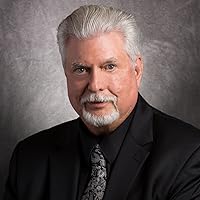
John B. Boles is an American historian who retired as the William P. Hobby Professor of American History at Rice University in 2019. Born in Houston, Texas, he grew up in a rural, racially segregated Bible Belt town where his family farmed cotton and later raised chickens. Raised in a staunchly Baptist household, Boles’ early experiences shaped his later research in Southern social history. He earned a Bachelor of Arts from Rice University in 1965 and a PhD from the University of Virginia in 1969. Boles began his academic career at Towson State University, later teaching at Tulane University before joining Rice University in 1981, where he held prominent chairs and contributed extensively to scholarship. He authored numerous books on the social history of the Southern United States, including religious, black, and women’s history, and edited multiple volumes. Boles served as editor of the Journal of Southern History for over 30 years and was president of the Southern Historical Association in 2017-18. His 2017 biography Jefferson: Architect of American Liberty is widely regarded as a definitive one-volume study of Thomas Jefferson.
“Jefferson puzzles us…because he does not fit neatly into modern categories. Although he spent almost four decades in appointed or elected government positions, he did not identify himself as a career politician. He made signal contributions to the craft of architecture but was never a professional architect. Devoted to science and claiming it as his first love, he lived in an era before “scientist” was an occupation. His reading was varied and idiosyncratic. He imbibed philosophy, starting with the ancients, but never worked out a philosophical system of his own. He long pondered religion but never found systematic theology attractive and attempted instead to simplify his religious beliefs and rejected proselytization of any form. He claimed as his home a tobacco plantation and loved gardening but never became a skilled or profitable planter. He enjoyed the study of the law but found legal practice unfulfilling. Despite his enormous learning and curiosity about practically every single thing in the world…he was not a match for any available vocation. He was at once an anomaly and a representative figure of his age. Jefferson happened to live at a moment in history when societies across the globe were undergoing fundamental changes in governance, and the resulting challenge attracted his energies and interests as did nothing else. This scholarly introvert found himself drawn onto the world’s stage, where he helped shape a new nation that he hoped would become a model for all others…” - John Boles, Jefferson: Architect of American Liberty
American history is full of tension, a struggle between the better and lesser angels of our nature that began from the moment of conception. Perhaps no one person embodies this tension quite as well as Thomas Jefferson, the third President of the United States. As the “Pen of the American Revolution,” he gave the world stirring words of equality, of liberty, and of freedom; he also owned slaves, profited from slaves, carried on a longtime affair with an enslaved woman, and failed to free his human property upon his death. He was antimonarchical and a democrat, yet seemed to distrust the common man, and saw democracy as a preserve for elites. He took a strict view of the Constitution and presidential powers, yet when the time came to purchase the Louisiana Territory for a song, he decided it was better to ask forgiveness than permission.
His contradictions are American contradictions. Like America, he was not one thing or the other. He was both. It all adds up to Thomas Jefferson being at once one of our most consequential and most disappointing presidents.
In Jefferson: Architect of American Liberty, John Boles attempts “to present Jefferson in all of his guises: politician, diplomat, party leader, executive; architect, musician, oenophile, gourmand, traveler; inventor, historian, political theorist; land owner, farmer, slaveholder; and son, father, grandfather.”
The result is an ambitious biography that, at 520 pages of text, nevertheless feels cramped. Boles touches every topic, but with so many topics, he is often only scratching one surface before hopping to the next.
The pace can be dizzying (or at least as dizzying as scholarly historical tomes can be), and there were more than a few instances in which I wished for less breadth and more depth. This is like an appetizer sampler split between a large group of people. You get a lot of options as to what to eat, yet you never quite feel satisfied.
As a lawyer, a revolutionary philosopher, a delegate to the Continental Congress, a governor, a minister to France, the Secretary of State, the Vice President, and finally, the President of the United States, there is a lot of ground to cover. As such, I can understand why there is only five pages on the writing of the Declaration of Independence. I would have liked more, but I can live it. Within that span, Boles is able to hit the highlights of the philosophical underpinnings, the drafting process, and the editorial changes.
But when the Declaration of Independence is getting only five pages, you know that a lot is getting left on the cutting room floor.
For example, in his introduction, Boles promises to discuss Jefferson the gourmand. That discussion never goes beyond Jefferson liked food. Fair enough, I like food too. I bet you also like food. That hardly makes him unique, much less a gourmand. He never quite gets around to describing this aspect of Jefferson, beyond his affinity for French cuisine (never defined) or the “simple” meals he served at the White House (no menu examples given).
On the one hand, this is a really petty thing to point out. On the other hand, it’s such a simple thing, and an author’s failure to do the simple things can be very frustrating.
I’m not entirely sure this is Boles’ fault. In his acknowledgements, he mentions how his editor urged him to pare this down from a “much longer manuscript.” I fully understand the importance of a good editor. Still, as most of you know – based on the length of my reviews – I am entirely opposed to concision for concision’s sake. There are times when a shorter book feels long because it doesn’t flow, and it doesn’t flow because important parts have been excised or hacked away. Addition by subtraction is not a given in the world of publishing.
Here, all the highlights are dutifully included within the text. But the little things are missing – a telling factoid, an illuminating biographical sketch of a secondary character, the broader context of Jefferson’s world – and these are often the things that made a good biography into a great one. These extras are even more important when dealing with a man like Thomas Jefferson, who kept no diary and whose inner life can be elusive.
(One thing I did appreciate: learning that Jefferson liked to water down his wine. Me too! But whereas Jefferson probably used tepid well water, I prefer my chardonnay over ice and mixed with club soda. It’s delicious! Try it – you’ll thank me!)
In terms of style, this tends more towards an academic, rather than a popular history. By no means is this a dry and pedantic slog. To the contrary, it is solid and sturdy and I finished it rather quickly (and entirely painlessly!). Still, the book lacks any flashes of literary verve or flair. It is a book to be respected rather than loved.
Boles presents his portrait of Jefferson almost entirely in chronological fashion. The upside to this approach is that it provides a clarity of progression. You never get confused where you are, because Boles is not jumping back and forth in time. The drawback, though, is that certain topics probably are better presented thematically, rather than discussed as they arise during the course of Jefferson’s life. Indeed, some of the most engrossing parts of Architect of American Liberty occur when Boles really focuses on one aspect of Jefferson’s wildly multifaceted existence. For instance, there are a couple extended sections (without cutaways) on Jefferson’s ever-evolving religious views which make for some very good insights into his beliefs. (As the coiner of “separation of church and state,” Jefferson’s theological viewpoints comprise more than a passing concern).
The big elephant in the room of Jefferson’s life is slavery. There is no escaping that, because to call yourself a lover of liberty while also enslaving human beings tends to leave one open to charges of cloudy thinking, if not utter hypocrisy.
Early on, I was given pause as to how Boles would deal with slavery. He states that we should not expect Jefferson “to have embraced the values of a cosmopolitan, progressive person of the twenty-first century.” This, of course, is the classic dodge of a historian attempting to protect his hero. It’s also a ridiculous fallacy. The wrongness and evil of slavery is not something discovered by hippie liberals on the Berkley campus in the 1960s. Jefferson himself knew it, wrote about it, and was clearly troubled by it. When we judge Jefferson, then, we are not judging him based on a twenty-first century progressive; we are judging him against his own ideals.
To Boles’ credit, he does not double-down on this notion, and discussions of slavery are scattered throughout the book. Despite his efforts, though, I feel like Boles shied away from attempting any penetrating insights. His portrayal of the relationship between Jefferson and Sally Hemings is rather bland and cursory. In fact, it seemed like he was afraid to say anything about it, mainly taking cover behind the work of Annette Gordon-Reed. Boles does not do anything so bold as to present a theory as to why Jefferson’s practices and ideals lived on separate sides of an unbridgeable gulf. We are left to assume, based on his post-mortem unwillingness to free the men and women he owned, that it came down to money. That is, he believed people should be free, but putting that into practice would have hurt his already shaky bank account.
Part of understanding America is knowing the lives of the faces on Mount Rushmore. Jefferson is especially important, if only because his soaring rhetoric spurred the efforts of others, including Abraham Lincoln.
Ultimately, we are left with the somewhat discomfiting conclusion that Jefferson was a man of principles, not a man of action. He excelled in the abstract, not in the practical. He may be the “architect” of American liberty, but not the builder.
Professor Boles's biography of Thomas Jefferson is uncommonly thoughtful, thorough and well organized. Boles is extremely familiar with the cross-currents of Jefferson's era and exhibits admirable dexterity in distilling and conveying the most important bits of wisdom to the reader.
Boles spends much of the book portraying Jefferson as a complex man of perplexing contradictions and investigating his ideology versus his actions. Boles does not forgive him simply as a "man of his times" so much as he attempts to understand and describe Jefferson's flaws within the context of his times and against his own ideals. Boles is also careful to describe Jefferson in all his forms: as a politician, diplomat, architect, inventor, farmer, slave-owner and patriarch.
There is much to be admired about this biography beyond its deliberate and reasoned approach, however. Boles's dissection of Jefferson's "Notes on the State of Virginia" proves compelling, his methodical exploration of Jefferson's long-standing interest in religious freedom is fabulous and the chapter devoted to his founding of the University of Virginia is invaluable.
But the book is probably at its best when humanizing Jefferson, placing the reader squarely in his world or pondering his inscrutable persona. A chapter exploring the major paradoxes of his life (his attitude and actions with respect to slavery...and his relationship with Sally Hemings) is excellent. And chapters exploring his non-political interests (in farming, the outdoors and in art and music) and his relationships (particularly with his grandchildren) are wonderfully revealing.
But Boles is a better historian than author and his writing style can be dry and a bit flat. Although the narrative occasionally exhibits brilliant flashes of texture and vibrancy, more often it is a crisp, analytical and business-like history of Jefferson's life. Boles is not quite one of the rare authors who can seamlessly combine brilliantly-condensed history with uncommonly eloquent scene-setting.
Also disappointing is that this biography often fails to deeply explore Jefferson's most important relationships - such as those with Lafayette and James Madison. Important ancillary characters tend to appear only as needed to support whatever historical analysis is being examined at the moment. As a result, the full flavor of Jefferson's life is never fully accessed.
By many accounts the most remarkable, interesting and important of Jefferson's relationships was with John Adams. But only toward the end of this biography does Boles really begin to unravel their incredibly unique, decades-long friendship - one that was of such consequence it is the subject of its very own book.
Overall, however, John Boles has written an extremely articulate, thoughtful and dispassionate study of the life of Thomas Jefferson. This biography will serve as an excellent introduction to Jefferson's life and times for most readers. But seasoned Jefferson enthusiasts will continue dreaming of the even better Jefferson biography yet to be written which combines Boles's keen insight and perspective with the artfully engaging style of Jon Meacham.
I love discovering books like this—a history professor at Rice comes out of nowhere and delivers an eminently readable cradle-to-grave biography of a world-shaping man who is notoriously difficult to sort out.
In somewhat of a surprise, the parts of the book that I enjoyed most had nothing to do with politics. Jefferson's fascination with art and music and architecture was itself endlessly fascinating, and his charm with his wife and children and grandchildren was completely charming.
Jefferson's two inescapable taboos are of course Sally Hemings and slavery. Boles covers both these topics extensively and, I think, fairly.
There are times the narrative lacks a bit of splash, a bit of color, a bit of texture, a bit of dimension. Maybe it's a bit of voice? Whatever you want to call it. It's that dynamism in writing that carries the work to a higher plane (rare to find and difficult to achieve, no doubt). Boles does however conclude with two absolutely brilliant lines describing Jefferson and his legacy—I would quote them, but then that robs you of all the fun!
― “Thomas Jefferson puzzles us. By birth, education, and demeanor an aristocrat, he was the most thoroughgoing democrat of the Founding Fathers. As learned and bookish a man as any other of his era, he himself only wrote one book (accidentally) and merely attempted, half-heartedly, to write an autobiography. The most widely traveled and cosmopolitan of the Founders, he never journeyed south of his home state of Virginia or farther than fifty miles west of Monticello. A hesitant, ineffective orator, he was a sensational conversationalist. Known around the world for penning the words “all men are created equal,” he was a lifelong slaveholder.” ― John B. Boles, Jefferson: Architect of American Liberty
Thomas Jefferson, the third President of the United States, is widely considered an enigma and the most complex Founding Father. As much as has been written about Jefferson, many still find that aspects of his character, personality, and beliefs remain inscrutable. After reading multiple biographies of Jefferson, some readers still feel they know Jefferson less well than many other revolutionary-era figures. Even the most dedicated Jefferson scholars have admitted difficulty in getting to know our third president on a personal level. The new DNA evidence presented in 1998 that Thomas Jefferson fathered at least one child by his slave Sally Hemings simply deepened the mystery of the man and set off a new wave of scholarly and popular reappraisals. Author John B. Boles, an American historian and renowned expert on Southern history, believes an interpretive middle ground is possible, if not necessary.
― “If we are to hope to understand the enigma that is Thomas Jefferson, we must view him holistically and within the rich context of his time and place.” ― John B. Boles, Jefferson: Architect of American Liberty
One of the reasons Jefferson puzzles us, according to Boles, is that he does not fit neatly into modern categories. He maintains we must “humanize and contextualize” Jefferson. We should try to understand the constraints—legal, financial, personal, intellectual—under which he lived. We should not expect him to have embraced the values of a multicultural, progressive person of the twenty-first century. Boles maintains that Jefferson’s society was, compared to today, “remarkably undemocratic, even though it was more democratic than any other society of the time. Women, blacks and propertyless white males could not vote."
Thomas Jefferson was a remarkable man, but there simply isn’t room in this review to mention all of his many accomplishments. Here are some of the many things he did accomplish:
• He was the principal author of the Declaration of Independence. • He served as the third President of the United States from 1801 to 1809. • He drafted the Virginia Statute for Religious Freedom which disestablished the Church of England in Virginia and guaranteed freedom of religion to people of all religious faiths. It was a precursor to the clause in the First Amendment to the US Constitution which prohibited any impediment to the free exercise of religion. • As President, Jefferson made an arrangement for the purchase of the entire Louisiana territory. The Louisiana Purchase doubled the size of the United States—by far the largest territorial gain in U.S. history. • After the Louisiana Purchase, Jefferson made sure that the US presence in the Louisiana territory was established, resulting in the Corps of Discovery Expedition led by Meriwether Lewis and William Clark. • He abolished the slave trade. In his annual message to Congress on December 2, 1806, President Jefferson called for the criminalization of international slave trade. The Act, signed into law on March 2, 1807 prohibited the importation of any new slaves into the United States. • President Jefferson directed that plans be set in motion to establish the United States Military Academy at West Point. • President Jefferson played an important role in establishing the structure of the Library of Congress. • He founded the University of Virginia, the first educational institution in the U.S. to be free of church influences.
While most readers will readily admit that Thomas Jefferson was quite a remarkable man, many may still be bothered by the fact that Thomas Jefferson never manumitted his slaves. Boles provides ample information for the reader to draw their own conclusions. I came away convinced that Jefferson was a staunch opponent of slavery who made a serious effort to abolish slavery in the United States.
― “Jefferson wrote that “the abolition of domestic slavery is the great object of desire in those colonies where it was unhappily introduced in their infant state.” ― John B. Boles, Jefferson: Architect of American Liberty
The inability to abolish slavery was due to others, not to Jefferson. After election to the Virginia House of Burgesses, Jefferson made an effort in that body “for the permission of the emancipation of slaves, which was rejected.” Why didn’t he just set his slaves free? There are several reasons I gleaned from the book. For one, a 1723 Virginia statute stated that “no negro, mullato, or Indian slaves shall be set free upon any pretense whatsoever, except by some meritorious services, to be adjudged and allowed by the governor and council.” This law led Jefferson to persuade his cousin, Colonel Richard Bland, “one of the oldest, ablest and most respected members” of the House, to introduce a bill to liberalize manumission procedures. In Jefferson’s words, Bland was “denounced as an enemy of the country.”
― “Not a single Founder—not Washington, Jefferson, Madison, Adams, Hamilton, Benjamin Franklin, or even the most radical thinker of them all, Thomas Paine—risked his career to end slavery.” ― John B. Boles, Jefferson: Architect of American Liberty
Calling the transportation of human beings from Africa to the colonies a “cruel war against human nature itself,” Jefferson called for a ban on new slave imports, especially in new western territories. This was only accomplished after he became President. The ending of the importation of slaves was clearly an idea far in advance of public opinion, which explains in part why Jefferson wrote “it was found that the public mind would not yet bear the proposition.” He admitted that in much of the South that few were “disposed to emancipate.”
― As he wrote in 1808, “There is a snail-paced gait for the advance of new ideas on the general mind, under which we must acquiesce…. If too hard pushed, they baulk & the machine retrogrades.” ― John B. Boles, Jefferson: Architect of American Liberty
Still, “he believed that the liberal principles of the revolution would eventually destroy slavery.” Ultimately, Jefferson believed that educating the American public about the injustice of slavery would help bring about emancipation, but he did not expect much from his own generation. He knew that it takes time to persuade men to make these kinds of changes.
― Nothing about Jefferson upsets modern readers more than his failure to emancipate his own slaves or work actively to end slavery completely. How can we explain these failures? As he saw it, the law and his personal finances limited his range of action. ― John B. Boles, Jefferson: Architect of American Liberty
Most likely, Jefferson’s financial situation was a significant factor keeping him from manumitting his slaves. Jefferson was almost bankrupt. He still shouldered the obligations inherited from his father-in-law, John Wayles. A 1792 Virginia law allowing creditors to confiscate slaves freed by their debtors, limited Jefferson’s ability to free his slaves. Any slaves Jefferson would have freed would have been at risk of capture and immediate re-enslavement by his creditors. Jefferson also believed that it was morally irresponsible to free slaves without giving them land, tools, draft animals, and enough financial backing to sustain themselves for the first year or two. To emancipate his slaves, he would have to help almost all of them leave the state and purchase land elsewhere, for an 1806 Virginia law required freed slaves to leave the state.
Regarding his relationship with his slave Sally Hemings, there are some important points to keep in mind. Jefferson’s wife, Martha, had died years before his relationship with Hemings began. Jefferson was just thirty-nine years of age when Martha died, yet he had promised his wife that he would never remarry. This had to be a challenge for such a young man, especially one who found adulterous dalliances wrong. What I found interesting is that Sally Hemings was the daughter of his father-in-law, John Wayles; so she was his wife’s half-sister. Since the overwhelming majority of cases of interracial sex in the South at this time consisted of white slaveholders raping enslaved women who were usually incapable of resisting, I don’t find Jefferson’s relationship with Sally Hemings very troubling, especially since their relationship seems to have been consensual. Another factor to consider is that, by law, such couples could not marry.
While John Boles’ book is a sympathetic biography, it does not whitewash Jefferson’s history. He provides important insights into Jefferson’s views on slavery in light of his views on human liberty, which helps address concerns about Jefferson’s failure to emancipate his own slaves. Boles makes it easy for the reader to process these apparent contradictions. The book is detailed but entertaining. It brings the complex human being that was Jefferson into clear focus. In my opinion, it’s a thoughtful analysis of a complex person. What’s more, it’s very engagingly written. This book ranks among my favorite Presidential biographies.
A simply marvelous biography! I went into this biography hoping I would get a sense of the span of Thomas Jefferson's personal life and the span of his political career without it feeling dry and daunting. I loved John B. Boles writing and the enthusiasm which he wrote this book with.
Jefferson is a complicated founding father and Boles is able to demonstrate this showing the humanity of the man. Amongst the founding fathers there was much kicking the can down the road with the abolishment of slavery. Many of them would say on paper that they disagreed with it but their lives demonstrated otherwise.
Jefferson was a lifelong learner and we learn about the schedule of study he had in his youth - Science, Religion, and Ethics from dawn until 8 am. From 8 am until noon reading foundational books in law, Noon to 1 politics, the afternoon devoted to history and after dinner reading various genres of literature. Quite the student!
Several amusing anecdotes: Once when Jefferson and John Adams visited the home of William Shakespeare they made sure to take a piece of the wood from Shakespeare's chair. This was apparently customary for that time period.
Jefferson was gifted a 1,200 pound wheel of cheese by the men and women farmers of Berkshire County, Massachusetts. Portions of the cheese were still around 3 years later.
His library consisted of 6,487 volumes and was eventually sold to the Library of Congress for $23,950.
I really don't feel adequately equipped to give this book due justice. It's quite the tome and it never felt overwhelmingly long to me. If you are able to make Jefferson's Embargo Act of 1807 fascinating to me than you are doing something right.
A well thought-out and academically considered look at the third President. I was pleased to see that Boles didn't write this with the sole aim of putting Jefferson on a pedestal as people seem increasingly to want to do these days. Rather, this came off as a deep and endearing exploration of a complicated man who's convictions were often starkly contrasted against his means. The tone of the book felt restrained and respectful, and it didn't allow itself to slip too far into melodramatic and filiopietistic overtones.
I will say, however, that the section about his activities and experiences during the Revolutionary War felt disproportionately brief. I'm not sure what I was expecting, except that I was expecting that section to be longer and more explored. That's really my only gripe, however, and overall I found this to be an illuminating account of a President that is so often adopted by the agendas of others in the modern day. He was a gifted and enlightened man, perhaps one of the most enlightened of his age, but has justifiably been known, also, for his many faults, contradictions, and hypocrisies, and though Boles doesn't try to explain them away, he does dive into the circumstances that may truly have forced his hands in one direction or another.
Overall this felt a fair and balanced book that did well to inform me as to the character of the man, and though I still have reservations about revering him to the depths that some do today, I nonetheless feel I came away with a deeper appreciation for the Sage of Monticello, and I'm grateful for that.
I've never read political history or biographies before and was surprised by how much I enjoyed this. A very well written view of a great man. While certainly not flawless, Jefferson is a hugely inspirational character. A deep and clear thinker, a family man, a public servant, a philosopher, a scientist, a legislator. He saw far and played the long game with discipline and principle.
Other takeaways - It's crazy to think that 250 years ago you could essentially read every great book in human history. The world is so much bigger now (and particularly the educated world). - Notably, while the world is very different, human nature hasn't changed much. The rank partisanship of the 1790s echoes a lot of the dynamics going on today. Mistrust and an inability to engage in dialogue on both sides. Positions written by politicians and put out pseudonymously by partisan publications. Baldly partisan moves like setting the Alien & Sedition acts to expire on the last day of John Adams' presidency (in case the other party won!), or outright trying to steal a presidentual election on a technicality (Jefferson and Burr getting equal numbers of votes as President/VP). Rogue schmucks like Burr and that French emissary running around mucking things up. - The survival of the union was top of mind for all over the first few decades... It's potential to fall apart was a real and everpresent danger. - Jefferson was insanely disciplined. I don't have his schedule in front of me, but he certainly put in the hours. - Jefferson also kept trying to get out of politics, threatening to resign as secretary of state multiple times, then essentially getting elected VP while retired, without his involvement. - Crazy to think after multiple decades running the country, Jefferson was deeply in debt and had to go home and see if he could turn Monticello into a profitable Enterprise. He didn't and ended up passing on deep debts to his family.
This book does give a thorough account of Jefferson's life. The author is a history professor and it shows in his writing which is mostly dry and academical. The author spends a lot of time covering the fact that at times Jefferson made attempts to end slavery while being a slave holder himself. There is also an interesting chapter about Jefferson's involvement with the creation of the University of Virginia. Very little time is given to Jefferson's relationship with Sally Hemings. The author at wast admit they did have children together but he continually stated it was a love match between them with no factual basis and is something I find to be highly unlikely. The author also doesn't spend much time on Jefferson's relationships with Adams, Monroe or Madison.
Over the past 5 years I've been reading biographies of US Presidents. Bole's Jefferson is among the best of them. It goes right up there with works from McCullough and Chernow in terms of quality. Jefferson is an especially tricky subject and Boles does an awesome job: he highlights and focuses on the best of Jefferson while not hiding the bad, all while writing in an entertaining, "not dry", style.
4.5 stars: An easy to ready bio that guides you through a long an important life in the foundation of America. Slightly repetitive in the final chapters as the author attempts to analyze a complex man with some contradictions.
Continuing my quest to read a biography of every president, I’ve finished number 3 right before the new year. Jefferson provides a nice counterweight to his depiction in the previous two biographies I read and I think does the best job of describing his time as president and the issues of the day. The author is also pretty fair in pointing out his contradictions when it comes to slavery.
My biggest disappointment is his treatment of Sally Hemings. This book was written in 2017 so it at least is recent enough to acknowledge he fathered children with an enslaved girl, but still white washes their relationship as consensual and even hypothesized they may have been in love. Really disappointed in this take, the fact of the matter is Sally was enslaved and has no written record of her thoughts or feelings and because of her legal status had no agency to reject any Jefferson advances, so to speculate on their relationship in a way that only serves to excuse Jefferson is disrespectful to the Hemings legacy.
On the whole what I gleaned from this biography was that Thomas Jefferson was a great president, one of the smartest men in our American pantheon, and wrote the most important and powerful words in American history. Yet on a personal level he refused to use his power and influence to slow the spread of slavery (which he personally claimed to abhor), fathered children with an enslaved woman, and benefited from the institution his entire life. Both these simultaneous and contradictory truths are what make American history so difficult and something to continually wrestle with.
A wonderful biography of Thomas Jefferson! I have read quite a bit about Jefferson but this book ranks as one of my favorite dealing with his life. I particularly enjoyed the long passages dealing with his personal life and habits that were sprinkled throughout the book. I think the author was fair, but as he admitted in the introduction, he definitely erred on the side of giving Jefferson credit in more areas than other historians might. Highly recommended.
Interesting biography of a very interesting man. I've read several biographies recently that remind me that, while times were different, that "golden age" probably never existed. Certainly, education has changed. Jefferson went to William and Mary, where "Admission was hardly stiff, requiring only proficiency in Greek and Latin." And, of course, it was only for white males. He was a complex man with many talents, interests and gifts. This biography does a good job of not ignoring his flaws but not judging him by today's standards. This country was blessed to have him as one of its founders.
Clocking in at a little over 156,000 words, the size of this book can make it appear to be a daunting read. However, at no point did I grow bored or tired of this book. The author does a wonderful job of bringing Thomas Jefferson to life. I thoroughly enjoyed this book and learned so much about Tommy J along the way. Highly recommend to anyone that loves the American Revolution period.
I had to give up half way through this book. It was a very unbiased, factual account of Jefferson's life and accomplishments. It was very interesting, but just read too much like a history textbook, and it's long. Finally decided to give up in favor of something lighter and more entertaining.
An excellent biography of the author of the Declaration of Independence and one of the preeminent founding fathers. This book addresses the controversy surrounding Jefferson and slavery head-on, and tells his story without glossing over the contradictions between Jefferson's philosophy and his life.
Honest, unbiased and easily digested this is one of the better books on Jefferson I’ve read. The good and the bad is in here (mostly good) and there is no judgement passed on Jefferson’s complexities. Really interesting read
jeff. a patient man. a man of words, wine, and salad oils. not an urgent man. prioritized working out his principles. comfortable in his contradictions. eccentric.
I got “Jefferson: Architect of American Liberty” by John B. Boles (2017) from the library and finished it yesterday. It follows Thomas Jefferson’s life from birth to death, 1743 to 1826, in various levels of detail. The most detailed parts were of his philosophical writings leading up to the Revolution to his time as United States Minister to France.
What I didn’t know about Jefferson was his level of knowledge about agriculture and architecture (the book’s title is a play on the latter); he apparently spent a great deal of time in Europe studying both and is responsible for a lot of the different crops grown in the early USA and he also designed a large number of important American buildings, including the original University of Virginia, the Virginia State Capitol, and his home, Monticello, in Virginia. He also offered suggestions to the architect of the White House, some of which were incorporated. Jefferson’s ideas about architecture heavily influenced many buildings that were built even after his death, contributing to our ideas of what truly ‘American’ architecture is.
One of the characters in the book that I want to read more about now is Alexander Hamilton. I always disliked him for being a proponent of big government but after reading this book I get the impression that his name should be reviled alongside Benedict Arnold’s. I think I need more detail about Hamilton to understand how he could provide aid and comfort to an enemy without being considered a traitor in popular culture. Ironically, I also came away with a similar feeling about Hamiton’s killer, Aaron Burr. While the two apparently didn’t get along, their political views seem to have been more alike than different.
Jefferson’s political views are broadly known but he was a lot more moderate than both his fans and his detractors would have you believe. While he was horrified by the Federalists’ plans for an American monarchy, wars of aggression, and increased state power at the expense of individuals’ rights, he was far from a minarchist who saw little role for the federal government, as the Louisiana Purchase demonstrates. While he was fighting back against the Federalists’ agenda as the first Secretary of State, the second Vice President, and the third President, he was also walking a line of not being too radical, especially since he had a reputation for extremism. Like Obama and Trump in recent years, the popular rhetoric didn’t match reality for the most part.
Perhaps the elephant in the room is Jefferson’s relationship with slavery. The 5-page introduction is largely devoted to saying “yes, I’m going to discuss that; please read the whole book before you make up your mind.” The undeniable facts that Jefferson did own slaves and that he could have not only manumitted them at any time but mostly didn’t, even after George Washington led by example and left freedom to his slaves in his will, seems to make the author of the Declaration of Independence seem rather hypocritical at first glance. On top of this, Jefferson was President of the United States for eight years where he surely could have taken a top-down approach to ending slavery, right? Finally, Jefferson fathered up to six children with Sally Hemings, one of his slaves, a classic example of sexual domination stemming from the white patriarchal power dynamic of the antebellum South. A damning list of facts indeed.
What is seldom discussed is that part of Jefferson’s reputation for being a dangerous radical was his various attempts to introduce anti-slavery bills as a Virginia Delegate, Virginia Governor, and President of the United States. One of his bills, a prohibition on the further importation of slaves, was passed in 1807. Jefferson was a proponent of keeping the USA as one nation and repeatedly spoke out against secession of states or regions. He had to work to keep states from leaving the Union and part of that came from moderating his more radical views. This resulted, unfortunately, in most of his anti-slavery bills being watered down or defeated altogether.
Another nuance that isn’t well-known today are state laws that made manumission troublesome for both slave owners as well as freed slaves. Virginia had a law that required freed slaves to leave the state within one year of manumission. In a piece of personal correspondence (side note: Jefferson wrote thousands of private letters in his life and many of them are reprinted in part in this book), a fellow Virginia slave owner wrote to Jefferson to lament that while he wanted to free his slaves, he would be putting them in a difficult position by doing so thanks to Virginia’s law. This slave owner would eventually sell his land in Virginia and move to Illinois where he would free his slaves.
One of Jefferson’s worries about freed slaves was whether they could survive as freedmen without a master to take care of them. Jefferson took pains to educate many of his slaves in topics ranging from reading, nail making, and French cooking. While the benefits to Jefferson personally of having skilled slaves are obvious, Jefferson repeatedly stated that slaves would need skills to thrive once manumitted. This was not a platitude designed to win cheap favor with the masses; in the era where he held this opinion, it only added to his disrepute as a radical.
The few modern apologists for the American slavery era like to point out that slaves were actually rarely mistreated by their masters. While this often smacks of hand-waving away the many instances of poor treatment of slaves, it does appear to be true in the case of Jefferson. He favored offering bonuses to slaves who performed well in lieu of doling out punishments for misbehavior. Jefferson took two of his slaves (including Sally Hemings) with him to France for about 3 ½ years where French law explicitly provided asylum for any slave who claimed it. Neither of Jefferson’s slaves did so in all of this time, though one of them did seem to use the threat of seeking asylum as leverage to get himself and his brother freed at a later date.
Finally, Jefferson’s relationship with Hemings seems to be something other than a cruel slave master raping his chattel. Firstly, Hemings was actually the half-sister to Martha Wayles, Jefferson’s wife; Jefferson’s father in law was apparently also fathering children with his slaves in addition to having his white family. When Martha died in 1782, she made a final plea on her deathbed to Jefferson that he never remarry. Jefferson technically adhered to this request, but he took up with her half-sister instead. This relationship was monogamous in spite of Jefferson having more than 200 slaves to “choose from” at one point. If a sexual relationship between a slave and master can be called consensual, then the relationship between Jefferson and Hemings seems, by all surviving accounts and anecdotal evidence, to be just that.
In this age of hyper-politicization of just about everything, the Founding Fathers are often dismissed as nothing more than rich, racist white guys who made sure to keep the black man down. This is part of the story, especially from the viewpoint of the ivory tower that is the 21st century, but to dismiss everything else that the Founders did for the sake of focusing in on their sins is a form of extremism and willful blindness too, to say nothing of a tiresome and unproductive complaint session. The author does a good enough job of being impartial that I finished the book without being sure of what political leanings, if any, he might have. This is a refreshing feeling in 2023.
If you know the broad strokes of Jefferson’s life but want to learn the gritty details, then “Jefferson: Architect of American Liberty” might be a good place to start. It seems to be free of political bias or revisionism and sticks to the facts, all while being well-written, interesting, and very easy to read.
An excellently crafted one volume biography on one of the more complicated figures in American history. Boles tries to walk the thin line between Jefferson the Founding Father and Jefferson the Slaveowner.
Jefferson was full of contradictions. He fancied himself as a Renaissance man, but his strengths lay mostly in writing and architecture. He was a man who knew a lot for people in his day. But most of us would likely be able to keep up with him.
Jefferson's career in politics, which was fueled by ambition, personal charm, and organizational skills has been overshadowed in recent times as more revelations about his slaveholding attitudes and long time relationship to Sally Hemings, one of his slaves.
Is Jefferson still worthy of any historical veneration? That depends upon what you think you can overlook about his extensive slave holdings. A slaveholder who wrote the Declaration of Independence.
Among biographers of Thomas Jefferson, John B. Boles delivers one of the most detailed and comprehensive accounts of Jefferson's life. Yet, he fails to offer any greater insight or analysis of the man, as has become expected since Thomas Jefferson: An Intimate History was published in 1974. Bolles is an attentive student of Jefferson, without question, unearthing unknown anecdotes and delving deeper into the daily stories of Jefferson's life than other biographers, even more so than the exhaustive Thomas Jefferson and the New Nation: A Biography. His treatment of Jefferson's faults and missteps, however, is almost too apologetic.
An enjoyable biography of Jefferson with recognizable shortcomings. For those seeking a Jefferson biography beyond the mere factual, I must suggest something with deeper character analysis, like American Sphinx: The Character of Thomas Jefferson.
Jefferson was my first hero among the founding fathers. He proclaimed and practiced liberty and democracy like no other, writing the Declaration with daring, constructing the principle of religious liberty, and immediately challenging emerging institutions of the federal state. As a teenager, I liked his brash style, unafraid of upending the status quo. Somehow, he faded in the background though over time as I started reading more on Madison, Hamilton, Washington, and Adams. So I was happy to revisit the man and see what has changed about myself as well as how we view Jefferson today. Boles is a serviceable historian for the task, with straightforward delivery, honest attention to the facts at hand, and clear respect for the subject. This is not revelatory reading though, perhaps due to available sources but more likely due to the author's lack of vision. Still, as a starting point for revisiting this critical man in American history, it suffices.
John Boles, Professor of History at Rice University, has written a highly readable, comprehensive, and balanced biography of our enigmatic Founder that treats him with fairness and properly places him in his historical context. Boles changed my opinion of him, favorably. I recommend it for those looking for a good introduction to the man and his times. What struck me most was the almost universal view (save, perhaps, for the likes of Hamilton and Burr) that Jefferson was not the distant, cerebral Jacobin intellectual schemer painted by his contemporary critics but a genuinely kind man who passionately loved his extended family and friends, as well as the Union (and I use that term intentionally), which he saw as the world's best hope for the rights of man. An enjoyable read and one that I recommend.
Highly informative and detailed single volume read. Might have earned a fifth star if boles had lingered a bit more on some key issues, and attempted to analyze a bit more the pro’s/con’s of certain viewpoints/decisions, and perhaps examined some of the conflicting historical sources. For the most part this felt like boles was laying out the facts and not editorializing too much, which has it’s plusses and minuses. Boles didn’t have much of anything to say about jefferson’s political influences or underpinnings as he was raised.
Boles did a good job laying out jefferson’s writings on the evils of slavery. Jefferson’s desire for colonization and failure to emancipate his slaves upon his death, because boles argues Jefferson wanted to give them enough of a financial footing which he could not provide due to his debts, seemed to me to be letting Jefferson off a bit too easily here. The final sales of the slaves post Jefferson death was a sad moment, as was the decline of Monticello which thankfully has been restored.
Early life in Virginia with varied intellectual pursuits (sciences, history, philosophy, land surveying), studying at college of William and mary in Williamsburg Life as lawyer in Virginia Elected as young representative of Albemarle county to Virginia house of burgesses Development of Monticello as permanent home Primary writer of declaration of independence (interesting that some of the terminology of the document which Jefferson is most famous for, appears in close form in earlier mason’s Virginia declaration of rights) Legislative work helping with viriginia constitution, religious freedom laws Governor of Virginia during revolutionary war, attempts to help british pow’s gain housing, hectic times during war when Cornwallis and others campaigning in Carolinas and Virginia Defending name against charges of negligence during revolutionary war (something I didn’t know about) 6 plus years in france as minister to france, notable presence of sally hemings there, possible romance with maria cosway, having eldest daughter there and later younger one, tours of Europe, travels on business Long details about jefferson’s views on race (Jefferson does not come off well with his views on race inferiority), religion, politics, agrarian society via his only written book, notes on the state of Virginia. Interesting to read about how colonization (which reads as shocking now) was proposed by others besides Jefferson. Interesting asides about Jefferson generally liking the articles of confederation, proposing small changes, in Europe during 1787 constitutional convention when constitution written, and initially being against the part of the new constitution with respect to president being able to being re-elected for life, but eventually being persuaded (in no small part due to Madison) of the benefits of the new constitution Jefferson in paris for initial relatively non violent portion of French revolution but misreading the tone and thinking it would stay non-violent, leaving before the Terror Return to U.S., desiring to retire but being picked to be first secretary of state Battles with Hamilton over national debt issues, national bank, and later factionalizing with republicans (Jefferson) vs. federalists (Hamilton) over what Jefferson sees as monarchical vs. republican tendencies, press battles by proxies or anonymous. French revolution and citizen genet (ambassador to u.s., taking advantage of good feeling toward French by trying to raise privateers in war vs. English). Jefferson ultimately turning away from genet Jefferson retiring in good standing in 1794 Life at Monticello from 1794 to 1796 working to keep farm solvent, investigating alternative industries (nailing), home family life with daughters nearby, sally hemings, continuing correspondence with james Madison, Adams, others Not desiring to run for office but being elected as vice president, hoping it will be an easy job that will allow him to remain at Monticello for long stretches Continued partisan posturing over monarchical issues vs. adams Philosophical and political battles with Hamilton/adams (to a lesser extent) over alien and sedition acts and Virginia and Kentucky resolutions Barely being elected president (which he wanted this time) over aaron burr and assuming presidency, removing of some of adams’s last minute judicial appointments Presidential style of inviting people to dinner, stable cabinet Helping in creation of west point military academy despite aversion to standing army Helping to eliminate threat of Barbary pirates Donating entire library to help create Library of Congress Interest in exploring west for territory, commerce, science, having personal aid lewis lead the lewis and clark expedition to pacific northwest Louisiana purchase, originally spain ceding Louisiana to france, napoleon not wanting to anger u.s. selling Louisiana (more than u.s. originally wanted, which was only part of florida? And new Orleans) via Monroe helping to purchase in france
Failure to acquire part of florida from Spanish in second term Jefferson thoughts on religion, Christianity but not believing in miracles, believing he was in a religion of ‘one Desiring end to Atlantic slave trade
Bringing treason trial against burr, burr getting off with help of chief justice john marshall, then burr fading away Negotiating impressment of us sailors during 1806-1807 war between England and France, initiating embargo of outgoing u.s. good which ultimately failed Retirement at Monticello, dealing with debt and family issues Helping to create university of Virginia
This book borders on hagiography. As someone who has read about the period, Boles doesn't even try to present an even handed account.
For example, consider the final line of the introduction: "Jefferson challenges us more thoroughly than any Founder, but in the end, he is the most attractive, most elusive, most complicated, most intellectual, most practical, most idealistic, most flexible, and most quintessentially American Founder of them all." How can this even be taken seriously? It goes beyond admiration and has no place in a scholarly biography.
Boles continues the extreme adulatory adjectives throughout the book, directing sympathy toward Jefferson and downplaying his flaws. Jefferson is "infinitely curious" and had "curiosity about practically every single thing in the world." He's even an "indefatigable" shopper! He "never sounded shrill, angry, or confrontational." Never? Everyone gets mad sometimes. "He seldom bluntly disagreed with anyone, and his dislike for contentiousness sometimes misled interlocutors into thinking he agreed with them when he was simply being polite." This one angers me. It's an attempt to describe Jefferson's duplicitousness as misapprehension in others and preempt later accusations. Multiple people believed Jefferson to be duplicitous during his life. One was George Washington. I'm supposed to believe George Washington, general and president, father of the country, was dumb enough to completely misread the situation? No, Washington had good reason for thinking so.
Jefferson's a "tender, considerate, and devoted father," yet he chose to take a diplomatic post in Paris leaving his daughter Polly in Virginia. Others could and did do the job. It was his choice. They were separated for so long that in Jefferson's own words, "she had totally forgotten her sister, but thought, on seeing me that she recollected something of me." Instead of analyzing these situations, Boles starts with the praise and uses it to present Jefferson in the best possible light. Yet his opponents are presented negatively. George Nicholas is "naive" and "in over his head." John Adams is "prickly and vain." Hamilton is "aggressive and imperial," while Jefferson is "conciliatory and respectful of limits." What nonsense! In June 1793, Jefferson had written a letter to introduce Andre Michaux to the givernor of Kentucky to advance a naturalist mission west. In July 1793, Jefferson met with Citizen Genet and learned the Michaux was a French agent, secretly planning to recruit Americans in Kentucky to attack Spanish Louisiana. He did not tell Washington! Instead, at Genet's request, he amended his letter to include that Michaux held the esteem of Genet, aiding the plot. He kept it secret until late August 1793 when Spanish representatives had heard of the plot and wrote Jefferson a letter. Only then did he forward it to Washington, not mentioning he knew earlier. Jefferson, the Secretary of State, knew of a plot to recruit Americans to join a foreign nation in attacking another foreign nation against the US neutrality policy, which would possibly have sparked a war, and kept it to himself! It was disloyal to the neutrality policy and an abuse of office! So much for being respectful of limits.
Boles gives Jefferson credit for a policy of delay during Nootka Sound crisis of 1790: "Jefferson's policy if studied delay had worked." That was Washington's policy. Jefferson advised Washington as did others. And the crisis came to an end due to the actions of foreign governments. Yet Jefferson gets credit for everything in this book.
It becomes tiresome, each page is filled with these over the top adjectives and slanted versions of history, turning Jefferson into superman. It makes Boles untrustworthy.
Consider the account of Benedict Arnold's Richmond raid: "For two days and nights, in unrelenting cold rain, [Jefferson] moved incessantly about the capital city. At one point his horse collapsed under him, and he had to hoist his saddle on his shoulder and find a nearby farm to supply him with another one." This is written like a heroic narrative, when in actuality Jefferson has been criticized for his managment skills during the crisis. Boles mentions that in one parenthetical sentence, sweeping it away quickly: "Later Jefferson would be charged with negligence in not more promptly calling forth the militia, but it's very likely, given their normal delay in mobilizing, that even an immediate alert would not have resulted in an effective defense." He doesn't even question Jefferson's decisions.
Later in 1781 the British again approached Monticello. Two of Jeffersons slaves remained behind and stayed loyal, refusing to tell the British where he went. However, Boles then says, "Not all of Jefferson's slaves were as loyal as Caesar or [Martin] Hemings. Twenty-seven or so ran away to join the British forces, although more than half soon died of disease." Boles presents slaves wanting freedom as disloyalty to Jefferson! Their enslaver! This is morally abhorrent framing.
Boles also downplays Jefferson's relationship with his slave Sally Hemings, which began when she was 14-16 and he was in his forties, going as far as to speculate they may have been in love!
"It seems probable that genuine affection - if not love itself - arose between them. Many more educated, older, and more experienced women in Paris found Jefferson attractive and charming; why would Sally be immune from such feelings, particularly after she came to know him? The overwhelming majority of cases of interracial sex in the South at this time were white slave holders raping enslaved women who were usually incapable of resisting, but that horrendous fact does not preclude the possibility of an exception. Mutual attraction between people of unequal status can develop in certain circumstances. That appears to have happened between Jefferson and Sally Hemings." Despicable wording by Boles. She was a 14-16 year old slave. Instead of discussing the massive moral problems inherent in Jefferson's actions, Boles chooses to discuss how attractive Jefferson was to women. How could she resist?
This distorted framing goes on throughout the book. If you do not already have a solid background on Jefferson or the period, I cannot recommend this book. Boles includes the relevant events, but presents them with such a slant that you will be misled. I enjoyed reading the book, but for that reason, I can't give it more than 2 stars.
Wow. I happened across this biography as a result of a Wikipedia search. This was honestly the best biography I have read in quite some time. The author does a good job of holding the reader's attention. The narrative is well balanced and flows easily. I would recommend this book to anyone interested in TJ as well as the general reader.
John Boles is a historian who is inclined to give Jefferson the benefit of the doubt. While he makes no secret of hiding his admiration for the man, he states that his book is intended to offer a fresh take on Jefferson's life and to reevaluate the historical record where appropriate. But in the numerous instances where Jefferson's life allows for scrutiny, Boles gives him a pass or invents a fiction that can't be supported by the historical record itself, and this marred my overall enjoyment of the book.
The introduction is a powerful look at Jefferson's legacy and the challenges he poses for modern thought. How do you simultaneously praise and condemn a man for the beliefs that formed the bedrock of early America (a strong espousal of freedom AND a personal preservation of slavery)? Boles does effectively raise the conundrum that is Jefferson, and it was this introduction specifically that convinced me to read this particular book over other biographies.
The power of the introduction fizzles in the opening chapters, and it isn't until the Revolutionary Era that the story gains steam again. Part of it may be a lack of concrete detail, but Boles mostly presents us with a laundry list of acquaintances, and the foundations of Jefferson's character are left murky (He loves describing Jefferson's personality as 'irenic'). Jefferson seems to just suddenly have friends, connections, and influence, and Boles's handling of this leap could have been executed better. Boles does also infer the reader will have a foundational understanding of the times, making this book less ideal for a novice of the time period.
Time and again, Boles highlights character traits in Jefferson that hew to lofty idealism, meticulous study, and self-serving justification. For instance, Jefferson initially assumes the best outcomes for governance by citizen farmers, the French Revolution, and the students of the University of Virginia, only to be shaken to reality when things play out very differently. His passion projects of the Notes on the State of Virginia and the University of Virginia show a degree of care and attention to detail that are admirable from their inception to completion. And decisions made as president, from the Louisiana Purchase, to an undeclared war on the Barbary Pirates, and an about face on supporting the creation of West Point, show that he believed (paraphrasing Boles) in energetic government action just so long as he (Jefferson) was the one making the decision.
And of course, this last aspect, self-serving justification, extends to Jefferson as a slaveholder. In some ways, the scrutiny that Jefferson receives over the issue in today's society seems more damning than some of the other Founders, and I'm not personally in favor of disqualifying him from being honored in history classes just because of that. Maybe Jefferson himself invites more scrutiny because he grappled with slavery in his writings and correspondence, and brainstormed ways to end the practice. But Boles certainly devotes more time to the subject than other biographies I've read on other slaveholding presidents. Unfortunately, I wasn't impressed with his choice of embracing the narrative of Jefferson as a 'good' slaveholder. He holds up as evidence Jefferson's decision not to break up slave families, of giving Sundays off, and assumes genuine affection existed between Jefferson and Sally Hemings. While I understand that the dynamic between the two was not documented and that the only record that remains is the gossip and the children they had together, Boles reached farther in his conclusions than the evidence allowed.
Despite his centrality to the Revolution and early America, there are aspects to Jefferson's character and life that remain enigmatic to me. Boles is effective at fleshing out Jefferson's life, hobbies, and interests (the concrete things), but his persona remains elusive. I don't know if that's exclusive to Boles or a general problem with biographers of Jefferson (another biography is entitled 'American Sphinx'), but this book doesn't tread new ground or give new insights. A decent biography but doesn't live up to the claims in its introduction.
Jefferson: Architect of American Liberty: A Book Review By Dominick M Maino
Boles JB. Jefferson: Architect of American Liberty, Basic Books, NY;2017 ISBN:978-0-465-09468-4; 626 pages with Notes to Chapters, Jefferson’s Bibliographical Essay and index
If you’ve read any of the recent biographies of our Founding Fathers, you know that these great men (and the many incredible women behind them) did astounding things. However because they were men and women of their times, they often fell short of our current expectations when it comes to morality and ethics. The standing of these men rises and falls within our hearts and minds. As noted on the jacket of this book Jefferson is descending in public opinion for example while Alexander Hamilton is rising.
Thomas Jefferson’s current standing with the America people has fallen more than almost any other individual associated with our rise from colonialism to becoming an independent country. From time to time, Jefferson could be a most exasperating person to deal with. He was the ultimate passive aggressive personality and often gave the impression that he agreed with you, when his actions (or inaction) indicated just the opposite.
He and Hamilton started the two-party system without intentionally meaning to do so. Hamilton, the icon of what was to become the Federalist Party and Jefferson the symbol of the Republicans, seldom saw eye to eye. Hamilton and Washington wanted a strong central government while Jefferson and the Republicans did not. This divide also separated the north from the south; the slave states from the free states and the agricultural from the industrial, commerce-oriented lands. These differences would eventually lead to the Civil War.
Thomas Jefferson was a major Architect of American Liberty and the primary author of the Declaration of Independence. He did not face muskets and cannon fire during the Revolutionary War nor in the War of 1812 (which his opponents frequently used against him politically). However, he did keep Virginia whole, fought the war with his ideas and ideals and never stopped believing we could be better than we were. He also knew that an educated citizen was needed to support our new country and constantly fought for education at all levels (he established the University of Virginia).
His major failing was Jefferson’s inability to stop the enslavement of others while at the same time being a slave holder. The text gave you the impression that he tried to stop slavery in a very patient, slow and deliberate manner. He believed that eventually slavery would come to an end given the time to do so. Yet, he needed his slaves to build his home and for economic solvency. He needed one specific enslaved person and her offspring for his personal comfort for many years to come.
Sally Hemmings and her children were intimately bound to Jefferson in many ways. According to this text, Jefferson took Sally to Paris with him and when offered the choice of freedom if she stayed in France versus enslavement back in the USA, she chose to stay with Jefferson. How much freedom a slave has to be able to choose in such a situation is very debatable. Even at the end of his life, with his estate in financial ruin, he freed few of his slaves (mostly the Hemmings family) and ended up selling many.
As a 600+ page book, you might think that Jefferson’s biography could have been told with few words and less pages. I think this story, however, needed exactly the number of words and pages used by its author. John Bolles tells this tale with historical accuracy (he referenced many of his statements) and heartfelt sympathy towards a man of remarkable abilities, as well as incredible failings.
We should not judge Jefferson too harshly. He was a man who though forged in the mold of his times, but frequently broke that mold to become something different and unique. This difference and this uniqueness was what made him great. It was what made him the Architect of American Liberty. We are who we are, in large part do to Thomas Jefferson, his ideas and his perseverance and undying love for this country. The “Sage of Monticello” freely gave his life, his wisdom and yes even his failings; so that we could grow, learn and prosper individually and collectively.
I highly recommend this book. Learn more about who brought us to where we are and why we must still fight on the side of our better angels.
While John Boles does not produce a perfect biography in this look at our nation’s third president, it is nonetheless an excellent book.
The challenge for the Jefferson biographer is that he is a man of paradox. History is full of such people, of course, but they fit uneasily within the modern paradigm. What makes Boles’ contribution so helpful is that he seeks to help the reader understand Jefferson, not as an object of hagiographic glorification, but as an indispensable part of the American story—a story that, like Jefferson’s own, is full of paradox.
Where Boles is strongest is in drawing out these paradoxes. Nowhere is this paradox more clear than on the issue of slavery. On one hand, he was a slaveowner who carried on a decades-long sexual relationship with his slave, Sally Hemings. (Boles spends considerable time in his book giving insight into this relationship.) On the other hand, Jefferson consistently opposed slavery as an institution and even played a role as president in ending the trans-Atlantic slave trade in the United States. (This did not, of course, end slavery as an institution—it would be nearly 60 years before that would happen—but it did help end the horrors of the Middle Passage.)
How, then, do we reconcile Jefferson the slaveowner with Jefferson the author of the famous words in the Declaration of Independence? “We hold these truths to be self-evident, that all men are created equal, that they are endowed by their Creator with certain unalienable rights, that among these are Life, Liberty and the Pursuit of happiness.” On one hand, we must understand the historical realities under which Jefferson lived. Boles is excellent in helping with this. On the other hand, we must be content with not demanding perfection of our founders, recognizing them as the flawed human beings that they were.
And yet that need not disparage the parts of their legacy that formed America into the unique nation it has become. The founding documents of the United States do not describe America as the nation it is, but as the nation it aspires to be. There are few people who capture this better than Thomas Jefferson.
If this book has one flaw, it is that it can be, at times, repetitive. There were points in the book that merely restated points made earlier in the book—something that perhaps could have been avoided with another round of editing. Despite that modest imperfection, however, Jefferson is a uniquely intriguing man, and Boles does an excellent job in bringing him to life.
Exceptional book. Boles did exhaustive research and gives the reader a vivid description of the man (Jefferson) himself.
The feud between Hamilton, Madison, John Adams and Jefferson was a complex story of cooperation and anger between parties that seems all necessary in forging our nation into a cohesive Republic.
I am now reading the Federalist Papers for further understanding our Constitution and its workings.
The slave matter with Jefferson is still a mystery to us all but I do have my own opinions now as to why he kept slaves while publicly proclaiming their right of emancipation.
His ideas of emancipation and sending the slaves to the Caribbean islands with provisions was his thought process and not felt my most other countrymen. Slavery was settled long before America with the Atlantic Slave Trade Agreement. brazil started it all in the 16th century capturing and sending slaves to Brazil and eventually England joining in within the Carribeans. So, it was a natural activity in process when America was first settled, and then firmly embedded by the time the Declaration of Independence was in the writing process by Jefferson in the later 1700s.
Due to Jefferson's lifelong financial misfortunes and his compassion for human rights among his own slaves he could not afford to set them free with provisions,paying for their passage to a slave free state or the Carribeans, breaking up families, and still trying to operate Monticello without adequate help.
In the end when Jefferson died, he inadvertently saddled his son Thomas with the estate's liabilities, and eventually he had to sell the slaves, breaking up families, and selling most of the other assets of Monticello just to keep his own finances in order. His son was burdened with the estate's debts the remainder of his life.
Like George Washington, he died a poor man, but left a rich heritage to all of us Americans. Declaration of Independence, the Louisiana Purchase, Lewis and Clark, West Points. Virginia State University, etc.