

What do you think?

The Wolf Hunt
Betrayal, love, and lycanthropy in the time of the Crusades
When Marie Penthièvre of Chalendrey is abducted from her Norman priory and taken to Brittany’s court, she vows never to dishonor her family’s ties by marrying a Breton brute. There is only one man who might change her mind: Tiarnán of Talensac, a handsome, skilled, and noble knight indeed. But Tiarnán does not love her, and when he marries a slip of a girl instead, Marie vows to become a nun as soon as she is able.
But Tiarnán has a secret, and that slip of a girl betrays him once she learns of it. When Tiarnán disappears and is presumed dead, his widow marries his one time rival and assumes title to his land, which steadily begins to decline under her unskilled, merciless rule. Marie knows something is wrong, and only she is clear headed enough to rescue Tiarnán and return him to his rightful status. But can she do so before it is too late?
Rich in romance, and intrigue, steeped in history and wonder, The Wolf Hunt is historical fiction at its best, by one of its most skilled practitioners.
Based on one of the Lais of Marie de France, The Wolf Hunt is a breathtaking adventure that showcases, once again, Gillian Bradshaw’s respectability as both a historian and as a novelist.
When Marie Penthièvre of Chalendrey is abducted from her Norman priory and taken to Brittany’s court, she vows never to dishonor her family’s ties by marrying a Breton brute. There is only one man who might change her mind: Tiarnán of Talensac, a handsome, skilled, and noble knight indeed. But Tiarnán does not love her, and when he marries a slip of a girl instead, Marie vows to become a nun as soon as she is able.
But Tiarnán has a secret, and that slip of a girl betrays him once she learns of it. When Tiarnán disappears and is presumed dead, his widow marries his one time rival and assumes title to his land, which steadily begins to decline under her unskilled, merciless rule. Marie knows something is wrong, and only she is clear headed enough to rescue Tiarnán and return him to his rightful status. But can she do so before it is too late?
Rich in romance, and intrigue, steeped in history and wonder, The Wolf Hunt is historical fiction at its best, by one of its most skilled practitioners.
Based on one of the Lais of Marie de France, The Wolf Hunt is a breathtaking adventure that showcases, once again, Gillian Bradshaw’s respectability as both a historian and as a novelist.
380 pages, Hardcover
First published January 1, 2001
About the author
Gillian Bradshaw
55 books340 followersBorn in Arlington, Virgina, Gillian Bradshaw grew up in Washington, Santiago, Chile and Michigan. She is a Classics graduate from Newnham College, Cambridge, and published her first novel, Hawk of May, just before her final term. A highly acclaimed historical novelist, Gillian Bradshaw has won the Hopwood Award for Fiction, among other prizes. She lives in Cambridge with her husband and their four children.
Ratings & Reviews
Friends & Following
Create a free account to discover what your friends think of this book!
Community Reviews
Displaying 1 - 30 of 95 reviews
August 11, 2021
A very satisfactory historical fantasy romance, set in (roughly) late 11th century Brittany, and based on the 12th-century Lay of Bisclavret by Marie de France (active ca. 1160 to 1215). Bradshaw's third novel, not so polished as some of her later ones, and a bit slow off the mark -- but once it gets going, I was fully caught up in the tale. Publisher's Weekly's short review is the one to start with, in preference to the garbled publisher's blurb above: https://www.publishersweekly.com/978-...
And if you prefer a fuller review, here's the best one I saw online: http://bookgrumps.blogspot.com/2014/0...
I was going to spoiler-protect the werewolf business until I realized that "Bisclavret" is medieval Breton for just that, https://en.wikipedia.org/wiki/Bisclavret . But the Wiki article points out that it's not so simple, and that explanation is just a bit spoilery. I'll leave this to your discretion as to when to read -- but rest assured, it's not a standard Gothic or Horror werewolf treatment! And very good character and friendship development: Bradshaw's novel really shines here. 4.5 stars, and I'm undecided between rounding up or down. (I rounded up.) Highly recommended, especially for Bradshaw and historical-fiction fans.
And if you prefer a fuller review, here's the best one I saw online: http://bookgrumps.blogspot.com/2014/0...
I was going to spoiler-protect the werewolf business until I realized that "Bisclavret" is medieval Breton for just that, https://en.wikipedia.org/wiki/Bisclavret . But the Wiki article points out that it's not so simple, and that explanation is just a bit spoilery. I'll leave this to your discretion as to when to read -- but rest assured, it's not a standard Gothic or Horror werewolf treatment! And very good character and friendship development: Bradshaw's novel really shines here. 4.5 stars, and I'm undecided between rounding up or down. (I rounded up.) Highly recommended, especially for Bradshaw and historical-fiction fans.

December 31, 2012
I was initially excited when I saw that this was based on the Breton lai 'Bisclaveret'. I studied that lai in my first year of university, and I've had cause to go back to it fairly often since, and I rather like it. Perhaps especially because of the inevitable LGBT reading of it: it's homosocial at the least, and then the other details make it very easy to read it as a homosexual love story. Bisclaveret is betrayed by his wife, and ultimately everything is set to rights by the king, who loves him very much -- and the story includes a scene where Bisclaveret sleeps in the king's bed... If you want to read more about that analysis, I suggest William Burgwinkle's Sodomy, Masculinity and Law in Medieval Literature.
Anyway, so I was very disappointed when I looked closer and found that this story de-queers the original lai. It invents a whole new character, Marie, to be Bisclaveret's 'real' love interest. I was much less inclined to let myself enjoy this, at that point.
But Gillian Bradshaw has a way of coaxing me along anyway, and I found myself reading big chunks at once. She really is a good writer, and ultimately I found it just as compelling as the other books I've read by her, despite my initial resistance. The lai still limits her, in some ways -- Marie Penthièvre would be a wonderful heroine, but often we're limited to Eline and her paramour Alain, neither of whom exactly fill me with warmth. I felt like there was an attempt to understand Eline, at times, but what she did just made it impossible to like her -- and Marie's understanding of her made Marie seem ridiculously saintly.
But for the most part I loved the characters: Marie, the duke, the duchess, Tiher... Even minor characters. Tiarnán, less so, because he makes a silly mistake of judgement when it comes to women. But he does learn from what happens to him, it seems.
Looking forward to the other Gillian Bradshaw books I've got on my to read pile.
Anyway, so I was very disappointed when I looked closer and found that this story de-queers the original lai. It invents a whole new character, Marie, to be Bisclaveret's 'real' love interest. I was much less inclined to let myself enjoy this, at that point.
But Gillian Bradshaw has a way of coaxing me along anyway, and I found myself reading big chunks at once. She really is a good writer, and ultimately I found it just as compelling as the other books I've read by her, despite my initial resistance. The lai still limits her, in some ways -- Marie Penthièvre would be a wonderful heroine, but often we're limited to Eline and her paramour Alain, neither of whom exactly fill me with warmth. I felt like there was an attempt to understand Eline, at times, but what she did just made it impossible to like her -- and Marie's understanding of her made Marie seem ridiculously saintly.
But for the most part I loved the characters: Marie, the duke, the duchess, Tiher... Even minor characters. Tiarnán, less so, because he makes a silly mistake of judgement when it comes to women. But he does learn from what happens to him, it seems.
Looking forward to the other Gillian Bradshaw books I've got on my to read pile.

May 17, 2020
It's been a while since I read a new Gillian Bradshaw book and I admit I've been rather holding off doing so since she's one of my favorite authors and I have so few left. Unless she publishes a new book (and it's been five years since her last one) I'll be done forever with nothing to do but reread old ones. And this is a different sort of book from most of her others, taking place not in the Classical Era with a historical-based premise but in the Middle Ages (1097 by my reckoning) and with a fantasy premise cribbed from a medieval poem. Authors of historical fiction often struggle when switching between the Ancient and Medieval world and her Classical works are so good (and her Fantasy generally so unimpressive to me) that I worried whether it would feel as real as her others.
Well yes. Yes it does. High Middle Age France leaps right off the page and provides an excellent backdrop to an unusual werewolf story. The original lay, Marie de France's Bisclavret, was one of the major influences on our werewolf myths, although it's substantially different and lacks elements like silver bullets (duh, this is the 13th century) and the involuntary transformation during the full moon. Instead, there's a lot of talk of fair folk and old pagan magic and a compulsion born of love of nature. As for the historical setting, the Breton vs. Norman conflict adds a cultural layer to the story. Marie is torn between the two as heir to a house currently answering to the Duke of Normandy but whose family is mainly serving the Duke of Brittany. I think that was a nice touch and lets Bradshaw play to her strengths, which are her depictions of outsider characters.
The characters are clearly drawn and largely likeable. Bradshaw does a very good job of making both sides sympathetic, even though one is clearly in the wrong. I wouldn't quite call it a case of misunderstandings but rather irreconcilable differences in how they view the world. That's actually surprisingly hard to do well. The romance here works better than in many of her other novels. Courtly love and the ideal of self-sacrifice for the sake of a chaste affair are genuine medieval ideals (even if they mostly postdate this point) and they work with the story being told. After all, it was always a romance.
So I really liked this book. A bit of history, a bit of fantasy, and some interesting character journeys make it a story worth reading. About the only complaint I have is that my version was riddled with spelling errors and other grammatical mistakes. I assume this was due to the ebook being a poorly-edited scan of the hardback? In any event, not a dealbreaker.
Well yes. Yes it does. High Middle Age France leaps right off the page and provides an excellent backdrop to an unusual werewolf story. The original lay, Marie de France's Bisclavret, was one of the major influences on our werewolf myths, although it's substantially different and lacks elements like silver bullets (duh, this is the 13th century) and the involuntary transformation during the full moon. Instead, there's a lot of talk of fair folk and old pagan magic and a compulsion born of love of nature. As for the historical setting, the Breton vs. Norman conflict adds a cultural layer to the story. Marie is torn between the two as heir to a house currently answering to the Duke of Normandy but whose family is mainly serving the Duke of Brittany. I think that was a nice touch and lets Bradshaw play to her strengths, which are her depictions of outsider characters.
The characters are clearly drawn and largely likeable. Bradshaw does a very good job of making both sides sympathetic, even though one is clearly in the wrong. I wouldn't quite call it a case of misunderstandings but rather irreconcilable differences in how they view the world. That's actually surprisingly hard to do well. The romance here works better than in many of her other novels. Courtly love and the ideal of self-sacrifice for the sake of a chaste affair are genuine medieval ideals (even if they mostly postdate this point) and they work with the story being told. After all, it was always a romance.
So I really liked this book. A bit of history, a bit of fantasy, and some interesting character journeys make it a story worth reading. About the only complaint I have is that my version was riddled with spelling errors and other grammatical mistakes. I assume this was due to the ebook being a poorly-edited scan of the hardback? In any event, not a dealbreaker.

September 17, 2007
I read this book because it was based on Marie de France's 13th century poem Lai de Bisclavret, and I have to say it was a pretty good retelling. Bradshaw's flaw tends to be an inability to keep the action moving simultaneously with character development, and that was not a concern for me with this story. I guessed the ending from looking at the cover, but I was interested enough in the development of the narrative that I kept reading.
Essentially the story revolves around a man who can transform at will into a werewolf. After much badgering from his new wife, he tells her his secret. Understandably horrified, she turns from him, and much drama and treachery ensue. I won't tell you anymore, but it's a pretty quick and interesting read.
One note: this is set in 11th century Brittany/Normandy (rather than the 13th century of Marie de France's work), which makes for some really interesting historical snippets.
Essentially the story revolves around a man who can transform at will into a werewolf. After much badgering from his new wife, he tells her his secret. Understandably horrified, she turns from him, and much drama and treachery ensue. I won't tell you anymore, but it's a pretty quick and interesting read.
One note: this is set in 11th century Brittany/Normandy (rather than the 13th century of Marie de France's work), which makes for some really interesting historical snippets.

November 26, 2016
Based on Marie de France's 13th century poem Lai de Bisclavret, I had previously taken this out of the library and not read it. Then I read another of Gillian Bradshaw's excellent HF novels and I got it out again and loved it. It is beautifully written and her characterisation is always compelling: a charming story.

April 1, 2017
**4.5**

May 1, 2019
This was my second foray into the work of Gillian Bradshaw, whose earlier novel,
Island of Ghosts
, has become one of my favorite works of historical fiction. Based upon The Lai of Bisclavret, one of a series of poems composed by Marie de France in the twelfth century, The Wolf Hunt follows the story of young Marie Penthieve de Chalandrey, who finds herself an unwilling participant in the conflict between Duke Hoel of Brittany and Duke Robert of Normandy.
As she struggles to make a place for herself in a world of divided loyalties, Marie must strike a balance between her sense of familial duty and her own heart. Her love for the Breton knight, Tiarnan of Talensac, seems destined to remain unrequited when he marries another. But nothing is as it seems, and a creature of legend - the bisclavret - will have a decisive role in deciding her destiny. Complete with kidnapping, escape, rescue, romance, and betrayal - this medieval swashbuckler provides an entertaining and enlightening read. Although more romantic than Island of Ghosts , it never descends into melodrama, and offers an intriguing glimpse of medieval Breton society.
As she struggles to make a place for herself in a world of divided loyalties, Marie must strike a balance between her sense of familial duty and her own heart. Her love for the Breton knight, Tiarnan of Talensac, seems destined to remain unrequited when he marries another. But nothing is as it seems, and a creature of legend - the bisclavret - will have a decisive role in deciding her destiny. Complete with kidnapping, escape, rescue, romance, and betrayal - this medieval swashbuckler provides an entertaining and enlightening read. Although more romantic than Island of Ghosts , it never descends into melodrama, and offers an intriguing glimpse of medieval Breton society.

Read
February 16, 2018This is really good. I don't know how to compare this with Beacon at Alexandria, which I finished yesterday, because the two are really different.
I enjoyed this because of the magical realism, and the strands of religion that are woven through it. Characters seeking solace from religion or wanting to understand religion are always really interesting to me. Also enjoyed the characters -- Bradshaw creates really enjoyable characters -- and I enjoyed the two main characters a lot. I liked their narrating chapters the most. Minor quibble: I wish there weren't so many narrating characters. I prefer one, at most two, narrating characters. Also liked the treatment of werewolves -- a non-romanticized look! -- and I liked the sense of community.
I enjoyed this because of the magical realism, and the strands of religion that are woven through it. Characters seeking solace from religion or wanting to understand religion are always really interesting to me. Also enjoyed the characters -- Bradshaw creates really enjoyable characters -- and I enjoyed the two main characters a lot. I liked their narrating chapters the most. Minor quibble: I wish there weren't so many narrating characters. I prefer one, at most two, narrating characters. Also liked the treatment of werewolves -- a non-romanticized look! -- and I liked the sense of community.

May 9, 2012
The book is written beautifully. The prose is luminous, the historical details, sprinkled though the narrative, make the times of the Crusades stand alive, and the descriptions are vivid. And the characters populating the story are diverse and reflective of the Renaissance. BUT…
The structure of this novel consists of two stories: the frame story and the inside story. I love the frame and its protagonists. I dislike the inner story and its main character intensely, and this dislike reflects on the entire novel.
The frame introduces Marie, the heiress, an extremely principal heroine, as only fictional people can be in our unprincipled age. The story starts excitingly enough with her getting abducted from a convent and brought into the household of a duke against her will. Unfortunately, almost immediately, Marie is relegated to the sidelines. Endowed with grace and compassion, she is a prim medieval maiden. She sits decorously at the ducal court and waits for the inner story to move forward. Perhaps, somewhere in the pages of the ending, the author would find a place for her again.
Then there is Tiarnan, a brave and noble knight who saved Marie from bandits in the beginning of the story. Afterwards, the frame flows into the story proper, and following a weird twist of the author’s imagination, Tiarnan marries another girl, beautiful slut Eline. When his wife betrays him, he begins roaming the pages as a wolf. At this point, he is almost as useless to the story momentum as Marie.
To my consternation, the bulk of the inner story is written from the POV of Eline. A pretty and petty young woman, she is self-absorbed and narrow-minded. She destroyed (or at least attempted to) her husband Tiarnan, a man who loved her dearly, just because he was different. Without a moment of hesitation, she sacrificed his life and sanity for her own creature comforts. She is the villain of the story; her motivations are base and totally comprehensible, but she is so sly and shallow, it feels wrong to give her the lead role.
There are people I know in real life who are exactly like her. In the day-to-day existence, they’re nice, upstanding citizens. But when a disaster strikes or an adversity calls for understanding and acceptance, they retreat behind their self-righteousness and their rigid ‘morals’ and plow ahead like blind tanks, demolishing anyone who dares to stand in their way, anyone who dares to be different. Jews, blacks, gays, and many others divergent from the white, Christian ‘norm’ have suffered from such people throughout the centuries of human history. She is much worse then a standard literary villain because she lives among us, breathes the same air, and nobody can guess that she is evil.
In Bradshaw’s novel, she gets her comeuppance in the end, but the entire tale left a bad taste in my mouth. Reading about Eline felt like being smeared with filth. I wanted to know more about the real protagonists, the ones I could sympathize with, Marie and Tiarnan, but for most of the novel they were simply two passive figures, immobilized in the frame. Eline was the one who propelled the plot forward. And I can’t forgive the author for giving the little bitch so much space between the covers. She is a monster; she doesn’t deserve the spotlight.
The question that plagues me the most is why Tiarnan chose pretty, empty-headed Eline instead of virtuous Marie in the first place? He seemed a smart guy. Did Eline’s gloriously blond beauty blind him to her ugly morals and absent conscience? Why did he think with his dick instead of his head? Almost he had brought his plight on himself by acting like a moonstruck idiot.
When the frame was finally reestablished by the end of the novel, Marie again stepped forward, and Tiarnan was restored to his human knightly splendor. But I was left to wonder: was his suffering a punishment for his bad judgment? Was it a morality tale after all?
According to blurb, the novel is based on a medieval manuscript. Maybe that fact alone could explain the frame structure of the novel (popular in the old times) and its characters’ depiction in black and white. They are not two-dimensional, oh no, they have depth to them, but they are all universally either goody-good or really bad. There is no gray area in any of the characters, and for a writer of Bradshaw’s caliber, that seems an odd flaw.
Overall a very-well written novel which I mostly disliked and had trouble finishing. A strange experience, although to be fair, I have to say that it does not reflect the novel’s quality but rather my personal taste.
The structure of this novel consists of two stories: the frame story and the inside story. I love the frame and its protagonists. I dislike the inner story and its main character intensely, and this dislike reflects on the entire novel.
The frame introduces Marie, the heiress, an extremely principal heroine, as only fictional people can be in our unprincipled age. The story starts excitingly enough with her getting abducted from a convent and brought into the household of a duke against her will. Unfortunately, almost immediately, Marie is relegated to the sidelines. Endowed with grace and compassion, she is a prim medieval maiden. She sits decorously at the ducal court and waits for the inner story to move forward. Perhaps, somewhere in the pages of the ending, the author would find a place for her again.
Then there is Tiarnan, a brave and noble knight who saved Marie from bandits in the beginning of the story. Afterwards, the frame flows into the story proper, and following a weird twist of the author’s imagination, Tiarnan marries another girl, beautiful slut Eline. When his wife betrays him, he begins roaming the pages as a wolf. At this point, he is almost as useless to the story momentum as Marie.
To my consternation, the bulk of the inner story is written from the POV of Eline. A pretty and petty young woman, she is self-absorbed and narrow-minded. She destroyed (or at least attempted to) her husband Tiarnan, a man who loved her dearly, just because he was different. Without a moment of hesitation, she sacrificed his life and sanity for her own creature comforts. She is the villain of the story; her motivations are base and totally comprehensible, but she is so sly and shallow, it feels wrong to give her the lead role.
There are people I know in real life who are exactly like her. In the day-to-day existence, they’re nice, upstanding citizens. But when a disaster strikes or an adversity calls for understanding and acceptance, they retreat behind their self-righteousness and their rigid ‘morals’ and plow ahead like blind tanks, demolishing anyone who dares to stand in their way, anyone who dares to be different. Jews, blacks, gays, and many others divergent from the white, Christian ‘norm’ have suffered from such people throughout the centuries of human history. She is much worse then a standard literary villain because she lives among us, breathes the same air, and nobody can guess that she is evil.
In Bradshaw’s novel, she gets her comeuppance in the end, but the entire tale left a bad taste in my mouth. Reading about Eline felt like being smeared with filth. I wanted to know more about the real protagonists, the ones I could sympathize with, Marie and Tiarnan, but for most of the novel they were simply two passive figures, immobilized in the frame. Eline was the one who propelled the plot forward. And I can’t forgive the author for giving the little bitch so much space between the covers. She is a monster; she doesn’t deserve the spotlight.
The question that plagues me the most is why Tiarnan chose pretty, empty-headed Eline instead of virtuous Marie in the first place? He seemed a smart guy. Did Eline’s gloriously blond beauty blind him to her ugly morals and absent conscience? Why did he think with his dick instead of his head? Almost he had brought his plight on himself by acting like a moonstruck idiot.
When the frame was finally reestablished by the end of the novel, Marie again stepped forward, and Tiarnan was restored to his human knightly splendor. But I was left to wonder: was his suffering a punishment for his bad judgment? Was it a morality tale after all?
According to blurb, the novel is based on a medieval manuscript. Maybe that fact alone could explain the frame structure of the novel (popular in the old times) and its characters’ depiction in black and white. They are not two-dimensional, oh no, they have depth to them, but they are all universally either goody-good or really bad. There is no gray area in any of the characters, and for a writer of Bradshaw’s caliber, that seems an odd flaw.
Overall a very-well written novel which I mostly disliked and had trouble finishing. A strange experience, although to be fair, I have to say that it does not reflect the novel’s quality but rather my personal taste.

May 15, 2012
Fun, but reads like a term paper on medieval French history that happens to have a novel in the middle.
July 10, 2014
Esta es una novelización de una canción del siglo 12 (creen) : Bisclavret, escrita por Marie de France (aunque con ese nombre sospecho que podria ser cualquiera, y que tal vez sea más antiguo y lo halla recopilado de los trovadores).
Confieso que las 2 estrellas pueden deberse a que me cansó leer por Open Library, tuve problemas con el sitio o no lo sé. Aunque más bien creo que se debió a la falta de tema histórico, que era lo que buscaba en una novela ejem HISTÓRICA. Asi que mejor dejemoslo como romance, o como es de un hombre lobo dejemos en romance paranormal con muy poco de histórico aparte de unas escasas menciones de nombres de nobles.
La historia es sencilla, aunque tiene varios cambios de puntos de vista. Marie es heredera de un lugar clave entre Bretaña y Normandia, ella vive en el convento porque su padre esta en las cruzadas, de alli la sacan con la noticia que su Duque la llama, pero es un engaño, ella escapa y llega al bosque donde la salva de un destino peor que la muerte un caballero Tiarnan. Tiarnan es el caballero por excelencia, pio, justo, feroz, y mano derecha del Duque de Bretaña. Marie por respeto a su padre dice que no se casará con nadie (por honor a su padre, leal a Normandia).
(El cuento es bretón asi que deja al duque de Bretaña como un ejemplo, y a los Normandos (franceses) como unos brutos.)
Bueno, Tiarnan esta comprometido con la bella Elise, y tienen su boda estelar.
Pero Tiarnan parece que se habia saltado la parte de Sanson y Dalila en las enseñanzas de su confesor, porque cae redondito contándole su 'gran secreto' a su amada. Ahora la amada, hay que entenderlo en el concepto de la época, ellas se casaban con títulos, con tierras, y el amor romántico de las cortes que justo se estaba poniendo en boga era platónico yeah, right. Bueno, en realidad no hay mucha diferencia si lo pensamos, añadase las enseñanas de la iglesia, y que luchan contra esas cosas paganas. Constantemente se enfrentan las ideas campesinas de 'la gente en las colinas huecas' y en la siguiente frase de San Michael. Asi que Tiarnan la ama, la ama, bueno apenas la conoce, y para ella es el tipo favorecido del rey con la gran mansion y una buena renta.
El secreto los destruye. Ella no ha firmado para casarse con un monstruo; varios comentan que ella es malvada, pero si piensan en una mujer criada en la iglesia en que las hadas son cosas diabólicas, y,como muchas veces se ha preguntado en la Fantasia Urbana ¿acostarse con un hombre lobo es bestialidad? Para Elise la respuesta es afirmativa y ella se siente horrorizada.
Hasta ahi la entendia. En una parte hasta da una racionalizacion de que porque no le da la nulidad cuando dice que entonces engañará a otra más. Además, nunca se aclara como pasó, asi que no sabe si esto pasará a sus hijos.
PERO como dice el rey, ella no quiere perder la casa.
Se ve que todo es muy machista, porque ya saben las mujeres sólo sirven para casarse y le dan la propiedad al marido, y si no al convento. (y el cura dice, que ella no puede acudir ni al tribunal).
Podia haber acusado a su esposo de hombrelobo y que lo quemaran como hechicero diabólico y toda la cosa ... o podia pedirle ayuda a un viejo amor y decirle deshagamonos de él, y nos quedamos con todo. Adivinen qué pasó.
Ahora va todo en plan fábula y moraleja porque no me creo para nada ese final. Sino en uno con todos muertos, y el rey se queda con todo.
Lo interesante (para mi) de este hombre lobo es que él se saca su piel de humano (la ropa) para convertirse y la esconde. Es como si él fuera siempre el lobo en el fondo, un animal noble y solitario, quitado de bulla, no es el monstruo que cree el resto. Y después es como 'castigado' por darse a estos impulsos por querer ser Él, la parte interior suya, todos sus problemas provienen de eso. Tiarnan no hacia daño a nadie (después dice hasta domado que jugaba a ser salvaje, porque después volvia a comer a su casa). Es como si Elise no aceptara al Tiarnan verdadero, pero sí el duque (despues de todo bajo cualquier forma le es leal), y claro cofñaniñabuenacoflapiadulceinocentehonorableniñacof.
Hum, se me hace conocido.
Confieso que las 2 estrellas pueden deberse a que me cansó leer por Open Library, tuve problemas con el sitio o no lo sé. Aunque más bien creo que se debió a la falta de tema histórico, que era lo que buscaba en una novela ejem HISTÓRICA. Asi que mejor dejemoslo como romance, o como es de un hombre lobo dejemos en romance paranormal con muy poco de histórico aparte de unas escasas menciones de nombres de nobles.
La historia es sencilla, aunque tiene varios cambios de puntos de vista. Marie es heredera de un lugar clave entre Bretaña y Normandia, ella vive en el convento porque su padre esta en las cruzadas, de alli la sacan con la noticia que su Duque la llama, pero es un engaño, ella escapa y llega al bosque donde la salva de un destino peor que la muerte un caballero Tiarnan. Tiarnan es el caballero por excelencia, pio, justo, feroz, y mano derecha del Duque de Bretaña. Marie por respeto a su padre dice que no se casará con nadie (por honor a su padre, leal a Normandia).
(El cuento es bretón asi que deja al duque de Bretaña como un ejemplo, y a los Normandos (franceses) como unos brutos.)
Bueno, Tiarnan esta comprometido con la bella Elise, y tienen su boda estelar.
Pero Tiarnan parece que se habia saltado la parte de Sanson y Dalila en las enseñanzas de su confesor, porque cae redondito contándole su 'gran secreto' a su amada. Ahora la amada, hay que entenderlo en el concepto de la época, ellas se casaban con títulos, con tierras, y el amor romántico de las cortes que justo se estaba poniendo en boga era platónico yeah, right. Bueno, en realidad no hay mucha diferencia si lo pensamos, añadase las enseñanas de la iglesia, y que luchan contra esas cosas paganas. Constantemente se enfrentan las ideas campesinas de 'la gente en las colinas huecas' y en la siguiente frase de San Michael. Asi que Tiarnan la ama, la ama, bueno apenas la conoce, y para ella es el tipo favorecido del rey con la gran mansion y una buena renta.
El secreto los destruye. Ella no ha firmado para casarse con un monstruo; varios comentan que ella es malvada, pero si piensan en una mujer criada en la iglesia en que las hadas son cosas diabólicas, y,como muchas veces se ha preguntado en la Fantasia Urbana ¿acostarse con un hombre lobo es bestialidad? Para Elise la respuesta es afirmativa y ella se siente horrorizada.
Hasta ahi la entendia. En una parte hasta da una racionalizacion de que porque no le da la nulidad cuando dice que entonces engañará a otra más. Además, nunca se aclara como pasó, asi que no sabe si esto pasará a sus hijos.
PERO como dice el rey, ella no quiere perder la casa.
Se ve que todo es muy machista, porque ya saben las mujeres sólo sirven para casarse y le dan la propiedad al marido, y si no al convento. (y el cura dice, que ella no puede acudir ni al tribunal).
Podia haber acusado a su esposo de hombrelobo y que lo quemaran como hechicero diabólico y toda la cosa ... o podia pedirle ayuda a un viejo amor y decirle deshagamonos de él, y nos quedamos con todo. Adivinen qué pasó.
Ahora va todo en plan fábula y moraleja porque no me creo para nada ese final. Sino en uno con todos muertos, y el rey se queda con todo.
Lo interesante (para mi) de este hombre lobo es que él se saca su piel de humano (la ropa) para convertirse y la esconde. Es como si él fuera siempre el lobo en el fondo, un animal noble y solitario, quitado de bulla, no es el monstruo que cree el resto. Y después es como 'castigado' por darse a estos impulsos por querer ser Él, la parte interior suya, todos sus problemas provienen de eso. Tiarnan no hacia daño a nadie (después dice hasta domado que jugaba a ser salvaje, porque después volvia a comer a su casa). Es como si Elise no aceptara al Tiarnan verdadero, pero sí el duque (despues de todo bajo cualquier forma le es leal), y claro cofñaniñabuenacoflapiadulceinocentehonorableniñacof.
Hum, se me hace conocido.

November 3, 2024
Reread. In this retelling of Bisclavret, twelfth century heiress Marie Penthievre is abducted from the priory where she means to take vows as a nun and taken to the court of Brittany. There, she is embroiled in a legal dispute over the disposition of her absent father's lands--and falls in love with a man with a mysterious secret.
Bradshaw is one of my favorite historical fiction authors, along with Dorothy Dunnett, both of whom have an excellent eye for depicting the historical past in a way that feels truly real, rather than modern characters larping in costumes. (and it's a great tragedy that both their books have a tendency to be lightly homophobic, alas). Bradshaw's a classicist by trade, but she does a great job with the twelfth century milieu, as well as meshing it with the dreamy fairy tale plot. I think the romance does suffer slightly from the love interest spending most of his time desperately in love with another woman, and rarely interacting with our valiant protagonist Marie.
A beautifully told historical romance. Recommended for fans of Dunnett who are looking for something a bit more dreamier and fairy tale.
Bradshaw is one of my favorite historical fiction authors, along with Dorothy Dunnett, both of whom have an excellent eye for depicting the historical past in a way that feels truly real, rather than modern characters larping in costumes. (and it's a great tragedy that both their books have a tendency to be lightly homophobic, alas). Bradshaw's a classicist by trade, but she does a great job with the twelfth century milieu, as well as meshing it with the dreamy fairy tale plot. I think the romance does suffer slightly from the love interest spending most of his time desperately in love with another woman, and rarely interacting with our valiant protagonist Marie.
A beautifully told historical romance. Recommended for fans of Dunnett who are looking for something a bit more dreamier and fairy tale.

November 27, 2011
Gillian Bradshaw is known for her beautifully detailed historical fiction, and this swerve into fantasy is no exception. Set in 12th century France, the book focuses on a strong female character, Marie Penthieve, who has been ordered to a convent after refusing to marry according to the royal decree. After being an attempt to flee and being attacked by outlaws, Marie is rescued by Tiarnan, a knight of Duke Hoel, who offers her temporary shelter.
Marie finds herself caught up in the snarls of courtly life, including the spoiled and beautiful Eline, to whom Tiarnan is engaged; Alain, who is hopelessly in love with Eline; and Tiher, Alain’s older cousin, who is always getting him out of trouble. Shortly after the marriage of Tiarnan and Eline, he goes missing on a hunting trip, and Eline, after a swift mourning period, hastily remarries Alain, much to the dismay of Marie and Tiher, who both cared deeply for Tiarnan. Meanwhile, a tame wolf has been disturbing the village, and is eventually captured by Duke Hoel to be kept as his pet. As Marie and Tiher continue to investigate their suspicions regarding Eline and Alain’s relationship, the reader is already aware of what has happened to Tiarnan, but is left wondering what exactly and how the characters will discover the truth.
This was the first of Bradshaw’s works that I read, and remains my favourite. It is well written, grounded in historical detail, and addresses issues of courtly and village life. The characters are well-developed and provoke a wide spectrum of emotions in the reader. This is one of the best werewolf novels I have read, and I would recommend it to readers who are willing to immerse themselves in the historical details for a rewarding read.
Marie finds herself caught up in the snarls of courtly life, including the spoiled and beautiful Eline, to whom Tiarnan is engaged; Alain, who is hopelessly in love with Eline; and Tiher, Alain’s older cousin, who is always getting him out of trouble. Shortly after the marriage of Tiarnan and Eline, he goes missing on a hunting trip, and Eline, after a swift mourning period, hastily remarries Alain, much to the dismay of Marie and Tiher, who both cared deeply for Tiarnan. Meanwhile, a tame wolf has been disturbing the village, and is eventually captured by Duke Hoel to be kept as his pet. As Marie and Tiher continue to investigate their suspicions regarding Eline and Alain’s relationship, the reader is already aware of what has happened to Tiarnan, but is left wondering what exactly and how the characters will discover the truth.
This was the first of Bradshaw’s works that I read, and remains my favourite. It is well written, grounded in historical detail, and addresses issues of courtly and village life. The characters are well-developed and provoke a wide spectrum of emotions in the reader. This is one of the best werewolf novels I have read, and I would recommend it to readers who are willing to immerse themselves in the historical details for a rewarding read.

September 20, 2012
This is the perfect book to read on a snowbound Buffalo holiday. My library has an unacceptably small number of Gillian Bradshaw books (it has four, and I've read all of them). So being stuck with no library books was the perfect excuse to choose a Kindle book of hers and downloaded this. I chose this one because it has "wolf" in the title, and I'm glad I read it as a Kindle book because goodness it has an awful-looking cover. Really.
This book reads like a grown-up Robin McKinley novel. Or maybe not even that grown-up. It's a wonderful well-told rendition of a Medieval story. One could not say that it keeps you guessing, but it's not the kind of book where that's the point. It's an enjoy-the-journey kind of story, and it does that perfectly. The characters are enjoyable and well-developed; even the "bad" ones. It's terrifically well-written and delicately told. Yet again, Bradshaw confidently transports the reader to another era, and does it calmly and competently enough that the historical details are braided into the narrative: fascinating, but unobtrusive.
A hugely enjoyable book, perfect for long mornings in bed with the dogs while it snows outside.
This book reads like a grown-up Robin McKinley novel. Or maybe not even that grown-up. It's a wonderful well-told rendition of a Medieval story. One could not say that it keeps you guessing, but it's not the kind of book where that's the point. It's an enjoy-the-journey kind of story, and it does that perfectly. The characters are enjoyable and well-developed; even the "bad" ones. It's terrifically well-written and delicately told. Yet again, Bradshaw confidently transports the reader to another era, and does it calmly and competently enough that the historical details are braided into the narrative: fascinating, but unobtrusive.
A hugely enjoyable book, perfect for long mornings in bed with the dogs while it snows outside.

March 16, 2009
I found this book on the Kindle 2 and I read the preview chapter and knew from that reading that I liked the writing style and it hooked me in so I purchased it. I was happy I did the other reviewers here give the bases for it, I only can add there were a few surprises to me as I read and I finishes it in two sittings. It was a fun book I really enjoyed it. Not your TYPICAL WEREWOLF story at all!
June 3, 2009
This novel is based on one of the lais of Marie de France, and captures some of the delicacy of the original. It is in bald terms a 'werewolf romance' and yet so thoroughly avoids the normal cliches that you forget this immediately. The characters are well-drawn and the detail about life in Brittany fascinating but not overloaded.

February 9, 2010
i love retellings of old stories, and this is one of the best i've come across in years. if you've read the lais of marie de france, or even if you just like historical fiction, you should read this book. it's a fast read and really enjoyable.
December 23, 2011
This is my favorite of Gillian Bradshaw's books. The premise is based on one of Marie de France's stories and pulled me along until the end.

September 11, 2022
The premise was very interesting but I felt that the lead characters were a bit under developed
May 31, 2024
This one is a very light-hearted historical romance based on one of the Breton lais (narrative rhymed tales of courtly love) written by Marie de France. It is set in the Duchy of Brittany, in the background of the medieval era when Brittany, Normandy, and the Kingdom of France existed together in that region and where the legend of Bisclavret (werewolf) was well known. The novel has many of Gillian Bradshaw’s writing styles such as interesting historical background, well-rounded characters, and long conversations between each character. As interesting as it was, I found the novel too light for my taste. The story isn’t as deep as Bradshaw’s other works but still entertaining enough.
Marie Penthièvre was abducted from her convent by the Duke of Brittany because she became the sole heiress of Chalandrey Manor after her father had been killed in the crusades. Loyal to her household, she—at first—tried to run away from her abductors but was set upon by a robber in the unfamiliar forest. Saved by a honourable Breton knight by the name of Tiarnan, Marie fell in love with her saviour. However, Tiarnan is already set to marry another lady with whom he is in love. Marie, being loyal and pious, accepted her fate and began to live in the court of Duke Hoel of Brittany. At the same time, Tiarnan and his wife, Eline went through a tragic marriage where Eline, upon finding out that her husband was a werewolf, worked together with her former lover to trick Tiarnan not to be able to change back to his human form, forever cursed to become a wolf.
The story ended happily for both Tiarnan and Marie and I felt a pity for what became of Eline at the end of the book. I think Bradshaw is always able to give humanity to all of her characters including the villainous ones. In Marie Penthièvre’s own word :
Marie Penthièvre was abducted from her convent by the Duke of Brittany because she became the sole heiress of Chalandrey Manor after her father had been killed in the crusades. Loyal to her household, she—at first—tried to run away from her abductors but was set upon by a robber in the unfamiliar forest. Saved by a honourable Breton knight by the name of Tiarnan, Marie fell in love with her saviour. However, Tiarnan is already set to marry another lady with whom he is in love. Marie, being loyal and pious, accepted her fate and began to live in the court of Duke Hoel of Brittany. At the same time, Tiarnan and his wife, Eline went through a tragic marriage where Eline, upon finding out that her husband was a werewolf, worked together with her former lover to trick Tiarnan not to be able to change back to his human form, forever cursed to become a wolf.
The story ended happily for both Tiarnan and Marie and I felt a pity for what became of Eline at the end of the book. I think Bradshaw is always able to give humanity to all of her characters including the villainous ones. In Marie Penthièvre’s own word :
“The world God created is not monstrous. And for what we are by nature, however we came to it, we cannot be blamed — our guilt lies only in the thoughts of our hearts and the actions that spring from them. So I think Tiarnán’s wife was afraid of shadows. . .” ~Chapter 17.
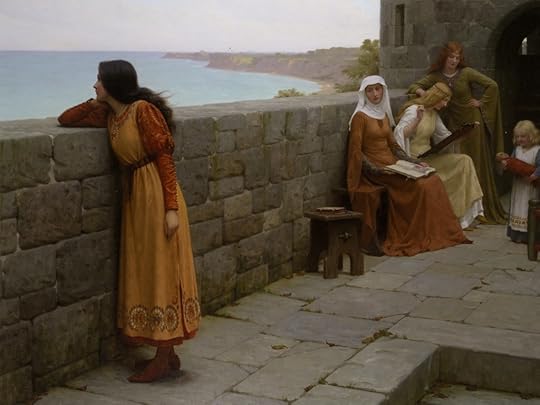
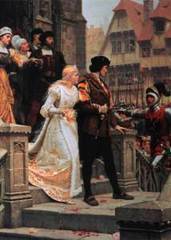
The Hostage by Edmund Blair Leighton. Imagining Marie Penthièvre as a hostage in the court of Brittany. Despite being a hostage, she was treated well by Duchess Havoise (Duke Hoel’s wife) who made Marie as one of her attendants.

February 14, 2026
I think I've officially run out of Gillian Bradshaw historical fiction novels to read. This wasn't the best of them, but it was still absolutely excellent. The plot summary is, as is so often the case, kind of terrible at describing what this book is like to read. Marie is kidnapped out of her convent by the Duke of Brittany as part of his feud with the Duke of Normandy. But instead of being raped or forcibly married as she expected, she's instead treated as an honored guest. As a member of the court, she gets involved in the odd and tragic affair of Tiarnan, Alain, and Eline.
The story plays out gradually, and from multiple points of view. There's a heavy thematic emphasis on the division between wilderness and civilization, fittingly for a story about a werewolf. The people in the setting live close to nature, which only intensifies their fear and hatred of the wild. The ancient forest is a dangerous place, full of wolves, bandits, and worse things. But even within the hearts of men is the same division. Knights aim to be courtly, honorable, and gallant, but when it comes down to it the purpose of their existence is violence, and those who excel at it are honored above all others. There's a kind of funny scene where the various noblemen discuss penances for killing; they admire Tiarnan's priest because he sets him to fast for two months for killing two bandits. But they admire Tiarnan more for all the lives he's taken in his Duke's service. That's their life: they kill because they know it is noble and just, and then they fast as penance because killing is wicked and sinful.
The story plays out gradually, and from multiple points of view. There's a heavy thematic emphasis on the division between wilderness and civilization, fittingly for a story about a werewolf. The people in the setting live close to nature, which only intensifies their fear and hatred of the wild. The ancient forest is a dangerous place, full of wolves, bandits, and worse things. But even within the hearts of men is the same division. Knights aim to be courtly, honorable, and gallant, but when it comes down to it the purpose of their existence is violence, and those who excel at it are honored above all others. There's a kind of funny scene where the various noblemen discuss penances for killing; they admire Tiarnan's priest because he sets him to fast for two months for killing two bandits. But they admire Tiarnan more for all the lives he's taken in his Duke's service. That's their life: they kill because they know it is noble and just, and then they fast as penance because killing is wicked and sinful.

January 9, 2023
There have only been two books in my reading life so far that I was loathe to put down and interrupt reading: "Das geheime Vermächtnis des Pan" by Sandra Regnier, and Gillian Bradshaw's "The Wolf Hunt".
I love how she has transformed the original lai by Marie de France to bring the story and the characters to life, and although I knew the story beforehand, it was exciting to see the whole plot unravel.
The only slight criticism I have is the dog fight towards the end, which I found unnecessary, albeit I can see the possible reason behind it.
Other than that, it was a very enjoyable read that I wholeheartedly recommend to lovers of Celtic stories and medieval historical novels.
I love how she has transformed the original lai by Marie de France to bring the story and the characters to life, and although I knew the story beforehand, it was exciting to see the whole plot unravel.
The only slight criticism I have is the dog fight towards the end, which I found unnecessary, albeit I can see the possible reason behind it.
Other than that, it was a very enjoyable read that I wholeheartedly recommend to lovers of Celtic stories and medieval historical novels.
April 8, 2025
absolutely fantastic. all the characters are extremely well developed. what really stood out for me is there is no character who is "good" or "bad", they are all complex and like humans , make mistakes , and make decisions which to them are correct but to others are heinous. their rationale and reasoning behind their decisions is always explained from their perspective also. for most characters in this book, I empathised, even Eline and Alain. tiher absolutely stole the show though!
one of the best books I've read in a while. my second Gillian Bradshaw book after reading "a beacon in Alexandria" - will definitely be reading more of her work.
one of the best books I've read in a while. my second Gillian Bradshaw book after reading "a beacon in Alexandria" - will definitely be reading more of her work.

July 10, 2026
Another re-read I forgot to log, whoops. Again, one of my mother’s favourites, so my judgement is biased. I have to say that it is, despite its title, barely about the crusades. As a laywoman with little knowledge about the myth it was based on, I liked how it was done, although I was disappointed to learn later that it could've been queerer. Ah well, still a good memory of holidays in France I spent reading with my mother.
Bradshaw is really good at writing strong, likable side characters and I did like also seeing the POV of the antagonists. It is a bit slow at times, making especially the climax feel rushed but I love the end!
Bradshaw is really good at writing strong, likable side characters and I did like also seeing the POV of the antagonists. It is a bit slow at times, making especially the climax feel rushed but I love the end!

September 14, 2018
Cela fait des années que j'ai ce livre sur ma PAL mais je lis quelques pages ... et puis mon esprit saute ailleurs et je passe à autre chose
Peut-être est ce du au fait de connaître le lai de Marie de France qui est une dénonciation de la condition de la femme à son époque vs celle des hommes qui avaient tout pouvoir et toute facilité pour assouvir leurs pulsions sexuelles
Mme Bradshaw en fait une romance sur fond de moyen-âge vaguement teintée de fantastique
Malgré plusieurs tentatives au fil des ans, je n'ai jamais accroché donc sans regret : out, direction boite à livre
Peut-être est ce du au fait de connaître le lai de Marie de France qui est une dénonciation de la condition de la femme à son époque vs celle des hommes qui avaient tout pouvoir et toute facilité pour assouvir leurs pulsions sexuelles
Mme Bradshaw en fait une romance sur fond de moyen-âge vaguement teintée de fantastique
Malgré plusieurs tentatives au fil des ans, je n'ai jamais accroché donc sans regret : out, direction boite à livre
August 4, 2023
I like Gillian Bradshaw. She writes well and really fills in the history. That being said, it just seemed to take forever to get hooked on this one. The main character is a young woman who has been living in a nunnery when her brother dies and she seems to be the person who will inherit her father’s lands. To make sure she is on the “right” side a local Duke has her kidnapped and brought to his court to marry one of his knights. Oh, and there’s a werewolf. Have fun.
April 6, 2021
This is a retelling of an old Breton legend. It is enjoyable light reading in the historical novel field, but I think not quite her best. I tend to think she is a bit more at home in the classical world than in Dark Ages Europe. Still, if you want a bit of enjoyable and believable literate light reading, you can hardly go wrong with this offering.
August 11, 2026
This book is in fact a romance, but it doesn't really read like any other romance that I've read (which is very few). The storyline is suspenseful and engaging, so much so that I read it in only a few days. Also, medieval werewolf romance really just checks all my boxes. I highly recommend checking this book out if any of those things appeal to you.

August 27, 2019
No snarling, hairy-knuckled Lon Chaney werewolf here - we'll have a sexy French noble werewolf, s'il vous plait. Reminiscent of that fabulously stylish movie, Brotherhood of the Wolf, starring (be still my heart) Vincent Cassel and Mark Dacascos.

September 7, 2017
Another fun, fine historical romance by Gillian Bradshaw!
Displaying 1 - 30 of 95 reviews