

What do you think?

The Vanishing
A story of intrigue and revenge, perfect for fans of Jane Eyre and Fingersmith and The Miniaturist.
On top of the Yorkshire Moors, in an isolated spot carved out of the barren landscape, lies White Windows, a house of shadows and secrets. Here lives Marcus Twentyman, a hard-drinking but sensitive man, and his sister, the brisk widow, Hester.
When Annaleigh, a foundling who has fled her home in London, finds herself at the remote house, in service to the Twentymans, she discovers all is not as it seems behind closed doors.
Isolated and lonely, Annaleigh is increasingly drawn to her master. And as their relationship intensifies, she soon realises that her movements are being controlled and her life is no longer her own. Slowly she is drawn into a web of intrigue and darkness, and soon she must face her fears if she is to save herself.
On top of the Yorkshire Moors, in an isolated spot carved out of the barren landscape, lies White Windows, a house of shadows and secrets. Here lives Marcus Twentyman, a hard-drinking but sensitive man, and his sister, the brisk widow, Hester.
When Annaleigh, a foundling who has fled her home in London, finds herself at the remote house, in service to the Twentymans, she discovers all is not as it seems behind closed doors.
Isolated and lonely, Annaleigh is increasingly drawn to her master. And as their relationship intensifies, she soon realises that her movements are being controlled and her life is no longer her own. Slowly she is drawn into a web of intrigue and darkness, and soon she must face her fears if she is to save herself.
400 pages, Hardcover
First published January 12, 2017
About the author
Sophia Tobin
8 books51 followersSophia Tobin was raised on the Isle of Thanet in Kent. Having graduated from the Open University, she moved to London to study History of Art, then worked for a Bond Street antique dealer for six years, specialising in silver and jewellery. Inspired by her research into a real eighteenth-century silversmith, Tobin began to write The Silversmith’s Wife, which was shortlisted for the Lucy Cavendish College Fiction Prize, judged by Sophie Hannah and Professor Janet Todd. It was published by Simon & Schuster in January 2014.
Tobin’s second novel, The Widow’s Confession, will be published in January 2015. She works in a library and lives in London with her husband.
Tobin’s second novel, The Widow’s Confession, will be published in January 2015. She works in a library and lives in London with her husband.
Ratings & Reviews
Friends & Following
Create a free account to discover what your friends think of this book!
Community Reviews
Displaying 1 - 30 of 120 reviews

October 19, 2018
When Annaleigh runs away from her home in London she meets Marcus Twentyman and he offers her a job as a servant as well as the lodging she desperately needs. Marcus lives in White Windows with his eccentric widowed sister, Hester. Upon arrival all seems well and she focuses her energy on being the best possible servant she can be. The longer she stays the stranger the dynamics become in the home until she doesn't even recognize herself anymore.
"Of course he knew I had nowhere to go. I had told him a thousand times - in my words, in my looks, in my need to belong. I felt I had been strong, but he had read a thousand secret signs of my weakness. And I would be punished for it."
I loved watching the transformation of Annaleigh from strong-willed yet naive, then battered and broken, to becoming the courageous and strong young woman I knew she could be. She was such a wonderful character to get to know. This wasn't quite the Halloween read that I was expecting but I have only myself to blame for that. The writing is gorgeous and atmospheric. I almost felt as if I was traveling with them through the Moors myself. In the end I have to say that this was definitely a satisfying reading experience.
Thank you to NetGalley and Simon Schuster UK for providing me with a digital ARC in exchange for my very late review.
"Of course he knew I had nowhere to go. I had told him a thousand times - in my words, in my looks, in my need to belong. I felt I had been strong, but he had read a thousand secret signs of my weakness. And I would be punished for it."
I loved watching the transformation of Annaleigh from strong-willed yet naive, then battered and broken, to becoming the courageous and strong young woman I knew she could be. She was such a wonderful character to get to know. This wasn't quite the Halloween read that I was expecting but I have only myself to blame for that. The writing is gorgeous and atmospheric. I almost felt as if I was traveling with them through the Moors myself. In the end I have to say that this was definitely a satisfying reading experience.
Thank you to NetGalley and Simon Schuster UK for providing me with a digital ARC in exchange for my very late review.

August 6, 2019
Definitely one of the worst books I've read so far this year. It’s just. so. messy.
The Vanishing incorporates quite a few elements of historical Gothic fiction I normally love (it's set in a gloomy remote mansion after all!) and starts out fairly well, but then becomes a chaotic jumble of overly dramatic twists and characters whose actions didn't make any sense whatsoever. Granted, even during its second half, it was still entertaining – but in a way that an over-the-top reality show or drama series is entertaining. The writing was pretty good throughout, but ultimately, I felt like the book's convoluted storyline became a caricature of itself and I just couldn't take it seriously anymore. Plus, the ending was pretty frustrating to say the least.
There are so many better historical novels with similar themes out there and I wouldn't recommend you go for this one.
The Vanishing incorporates quite a few elements of historical Gothic fiction I normally love (it's set in a gloomy remote mansion after all!) and starts out fairly well, but then becomes a chaotic jumble of overly dramatic twists and characters whose actions didn't make any sense whatsoever. Granted, even during its second half, it was still entertaining – but in a way that an over-the-top reality show or drama series is entertaining. The writing was pretty good throughout, but ultimately, I felt like the book's convoluted storyline became a caricature of itself and I just couldn't take it seriously anymore. Plus, the ending was pretty frustrating to say the least.
There are so many better historical novels with similar themes out there and I wouldn't recommend you go for this one.

December 19, 2020
This book had all the makings of a great Gothic novel. It began so well and the 3 stars are for the writing. It was good. But towards the middle of the book, the characters lost their common sense and started doing dumb things. Towards the end, the story was a disaster and the actions of the characters lacking any sense, this book ended in utter chaos. I was terribly disappointed. The journey of this book from a promising Gothic novel to an appalling tragedy was unexpected.
Annaleigh is a young woman from London who gets hired as the maid to the Twentymans. They are a brother and sistee Marcus and Hester respectively, living at a secluded mansion near the moors of Yorkshire. Initially she is eager to do the household chores at the mansion, but the strange behaviour of Marcus and the rumours about the disappearance of the previous maid, Kate puts Annaleigh at unease.
There are several strange things happening at the mansion. The setting of the story is perfect for a Gothic mystery. The bitter cold winds, the desolate moors, shady characters, and the mansion in the middle of nowhere..
I don't know if the story in this book would make any sense to the reader. Annaleigh, Marcus, Hester, Thomas and other characters all decide to do strange things which a normal person under similar circumstances would consider as the last thing. The writing is good, and in the beginning I was gripped by the setting and the mystery the book was pointing to. But the later half of the book was such a maddening experience.
Annaleigh is a young woman from London who gets hired as the maid to the Twentymans. They are a brother and sistee Marcus and Hester respectively, living at a secluded mansion near the moors of Yorkshire. Initially she is eager to do the household chores at the mansion, but the strange behaviour of Marcus and the rumours about the disappearance of the previous maid, Kate puts Annaleigh at unease.
There are several strange things happening at the mansion. The setting of the story is perfect for a Gothic mystery. The bitter cold winds, the desolate moors, shady characters, and the mansion in the middle of nowhere..
I don't know if the story in this book would make any sense to the reader. Annaleigh, Marcus, Hester, Thomas and other characters all decide to do strange things which a normal person under similar circumstances would consider as the last thing. The writing is good, and in the beginning I was gripped by the setting and the mystery the book was pointing to. But the later half of the book was such a maddening experience.

September 18, 2016
| | blog | tumblr | ko-fi | |
Rating: 2.5 Stars
I received this ARC in exchange for an honest review.
The Vanishing did manage to hold my interest for most of the time, however there were far too many things that kept me from ever truly enjoying it.
◊ THE STORY
While vaguely intriguing The Vanishing seemed pretty plot-less to me; underdeveloped characters do the story no favours; basically a mystery of sorts filled with lots cliches and 'doh' moments. While at times the story does seem to promise something more it never truly delivers. The end had me wondering: what was the point of it ? Which isn't what Iusually want from a book. Here and there The Vanishing seems to aspire to add a deeper and more meaningful layer to its story but it fails to do so and these attempts feel rather forced and unbelievable.
◊ THE CHARACTERS
Flat? Laughable? The male characters cracked me up for the wrong reasons; their 'motivations' and 'actions' felt borderline absurd to me. More importantly, the fact that the story wants to force you into believe them to be complex and elaborate people just makes them harder to believe. The main character? Poorly written? Devoid of any real emotions?
The interactions between Annaleigh and the other characters seemed awkward and rather -once again- unbelievable. It seemed that she formed various 'deep' relationship by just being in a room with someone.
◊ THE WRITING
Rather easy to read; there were a few slips here and there, and I did question the historical accuracy of a few choice of words and scenes.
Overall, it wasn't a bad book. I did read it, and it did amuse me, although perhaps for the wrong reasons. The mystery wasn't really a mystery and the bland characters irked me most of the time.
Rating: 2.5 Stars
I received this ARC in exchange for an honest review.
The Vanishing did manage to hold my interest for most of the time, however there were far too many things that kept me from ever truly enjoying it.
◊ THE STORY
While vaguely intriguing The Vanishing seemed pretty plot-less to me; underdeveloped characters do the story no favours; basically a mystery of sorts filled with lots cliches and 'doh' moments. While at times the story does seem to promise something more it never truly delivers. The end had me wondering: what was the point of it ? Which isn't what I
◊ THE CHARACTERS
Flat? Laughable? The male characters cracked me up for the wrong reasons; their 'motivations' and 'actions' felt borderline absurd to me. More importantly, the fact that the story wants to force you into believe them to be complex and elaborate people just makes them harder to believe. The main character? Poorly written? Devoid of any real emotions?
The interactions between Annaleigh and the other characters seemed awkward and rather -once again- unbelievable. It seemed that she formed various 'deep' relationship by just being in a room with someone.
◊ THE WRITING
Rather easy to read; there were a few slips here and there, and I did question the historical accuracy of a few choice of words and scenes.
Overall, it wasn't a bad book. I did read it, and it did amuse me, although perhaps for the wrong reasons. The mystery wasn't really a mystery and the bland characters irked me most of the time.

January 5, 2017
This started so well, what happened?? I got more annoyed and frustrated with it as I read on, and it's been a long time since a book made me feel that way.
By the time it was finished I wanted to do nothing more than throw it against the wall, but I settled on putting it straight on my books-to-donate pile. The characters had no morals, their motives were unbelievable, and the story went in a direction that I just hated. It made me uncomfortable at times to read on, leaving me frustrated and annoyed. No spoilers, but I most of the time wanted to do nothing more than teleport in to the story to kick most of the characters in the dick.
Nope, The Vanishing and I did not get on.
By the time it was finished I wanted to do nothing more than throw it against the wall, but I settled on putting it straight on my books-to-donate pile. The characters had no morals, their motives were unbelievable, and the story went in a direction that I just hated. It made me uncomfortable at times to read on, leaving me frustrated and annoyed. No spoilers, but I most of the time wanted to do nothing more than teleport in to the story to kick most of the characters in the dick.
Nope, The Vanishing and I did not get on.

April 26, 2019
I don’t normally read historical stories but I really enjoyed this story 😊

March 5, 2018
3 stars--I liked the book. This over-the-top story uses every gothic cliche there is--which is OK with me, since I love them all. The, however, ending seemed a bit lackluster.
The good:
*Take a look at that cover. Amazing. (Though I'm not a fan of the title. I would have preferred it named after one of the houses, perhaps.)
*Setting: The book really captures the isolated, desolate, wild beauty of the moors.
*Early in the book, Annaleigh describes her longing for freedom, and I thought these passages were quite vivid.
*This book gives nods to a lot of great influences: Jane Eyre, of course, but also "The Yellow Wallpaper," Fingersmith, and even Wilkie Collins.
The not-so-good:
*It's hard to like anyone here; the characters seem to lack motivation and/or morals.
*Marcus Twentymen was incredibly tedious, which ruined a lot of the book's appeal to me.
*There's a luridness to this book that lands in sleazy "penny dreadful" territory. This is OK (I love this genre too), but if you're expecting a classy gothic, you're not going to get it.
I received this review copy from the publisher on NetGalley. Thanks for the opportunity to read and review; I appreciate it!
The good:
*Take a look at that cover. Amazing. (Though I'm not a fan of the title. I would have preferred it named after one of the houses, perhaps.)
*Setting: The book really captures the isolated, desolate, wild beauty of the moors.
*Early in the book, Annaleigh describes her longing for freedom, and I thought these passages were quite vivid.
*This book gives nods to a lot of great influences: Jane Eyre, of course, but also "The Yellow Wallpaper," Fingersmith, and even Wilkie Collins.
The not-so-good:
*It's hard to like anyone here; the characters seem to lack motivation and/or morals.
*Marcus Twentymen was incredibly tedious, which ruined a lot of the book's appeal to me.
*There's a luridness to this book that lands in sleazy "penny dreadful" territory. This is OK (I love this genre too), but if you're expecting a classy gothic, you're not going to get it.
I received this review copy from the publisher on NetGalley. Thanks for the opportunity to read and review; I appreciate it!

September 14, 2016
I'm not generally in favour of writing negative reviews, let alone of books I couldn't finish, but when someone is an established author with positive reviews, it's perhaps worth flagging up that not everyone is going to like them. Plus I forced my way through a quarter of 'The Vanishing' (I was given an ARC) in the hope that it would improve. I have to warn you that it seems unlikely that it ever will.
The logic seems to be that if you like 'Fingersmith' and 'Jane Eyre' and 'Wuthering Heights' then you're going to love a jumble of all of them. I think it sees itself as homage, but it comes over more as pastiche. I loved 'Fingersmith' but this is no 'Fingersmith'. The heroine is a two dimensional cipher with a back story shamelessly cribbed from classic Victorian novels but with no wit or originality or clear characterisation to justify the theft. The story throws together every cliche of abandoned orphan and old house on the moors and handsome stranger and ... Oh I give up. Think of a cliche from mid-19th century literature and it seems to be in there somewhere and yet, strangely, with no proper sense of period. The odd flaws in descriptions are insignificant in themselves, but add to the feeling that nothing is quite right.
Overall, it seemed to me a paint-by-numbers mess. But perhaps after the first hundred pages it improves.
The logic seems to be that if you like 'Fingersmith' and 'Jane Eyre' and 'Wuthering Heights' then you're going to love a jumble of all of them. I think it sees itself as homage, but it comes over more as pastiche. I loved 'Fingersmith' but this is no 'Fingersmith'. The heroine is a two dimensional cipher with a back story shamelessly cribbed from classic Victorian novels but with no wit or originality or clear characterisation to justify the theft. The story throws together every cliche of abandoned orphan and old house on the moors and handsome stranger and ... Oh I give up. Think of a cliche from mid-19th century literature and it seems to be in there somewhere and yet, strangely, with no proper sense of period. The odd flaws in descriptions are insignificant in themselves, but add to the feeling that nothing is quite right.
Overall, it seemed to me a paint-by-numbers mess. But perhaps after the first hundred pages it improves.

September 21, 2016
I received this as a Good Reads give away and was so excited as it the first time I have managed to read a book 4 months prior to its release.
I was not disappointed. The Vanishing is touching, shocking and thought provoking.
I for the last few months have been in a real readers slump unable to find anything that makes me find the time to read which is a rare thing. The Vanishing has changed that, for the first few days I dipped in and out a few times but then last night I picked it up and very literally could not put it down.
The tittle has so many different meanings throughout the book from the vanishing of the person we once were to the vanishing of the people around us. I want to say more but also I don't as I think it is something only reading can tell you.
In all I feel this is the best book I have read in a very long time and I thank you Sophia Tobin for your story.
I was not disappointed. The Vanishing is touching, shocking and thought provoking.
I for the last few months have been in a real readers slump unable to find anything that makes me find the time to read which is a rare thing. The Vanishing has changed that, for the first few days I dipped in and out a few times but then last night I picked it up and very literally could not put it down.
The tittle has so many different meanings throughout the book from the vanishing of the person we once were to the vanishing of the people around us. I want to say more but also I don't as I think it is something only reading can tell you.
In all I feel this is the best book I have read in a very long time and I thank you Sophia Tobin for your story.

April 5, 2018
Inconsistent characterisation and a plodding, essentially meaningless plot made this a bit of a chore to read. It wasn't a terrible book, just not awfully interesting. The Gothic genre has been done to death, so it takes a special book to set itself apart. This was not one of them. The best way I can describe The Vanishing is that it was...ok.
December 22, 2017
3.5*
It seems that within the wide and varied genre of "historical fiction" there is an ever-increasing interest in Gothic romance and "sensation fiction". Many authors do not only set their stories in the 18th and 19th centuries, but also borrow from the genres popular in the period. Sophia Tobin's "The Vanishing" is a typical example. It follows the destiny of one Annaleigh, a foundling raised by a London artist named Jared. Annaleigh's adoptive parents disapprove of her budding relationship with Jared's stepson, and so she takes on the position of housekeeper at "White Windows", a remote house on the Yorkshire moors. The owners of the house - the dashing Marcus Twentyman and his eccentric sister Hester - are viewed with suspicion by the locals. However, despite dark warnings from several well-wishers not to become too "involved" with the Twentymans, Annaleigh is unexpectedly attracted to Marcus, with devastating consequences.
Some "neo-Gothic" writers try to subvert the genre but Tobin is happy to rely on the tropes of 19th century fiction to recreate the feel of a novel of the time, if with a less "coy" approach to scenes of sex and violence. The Yorkshire moors - bleak and dangerous and yet, like Marcus, strangely beguiling - will surely recall the novels of the Brontës. The dark mansion where the plot pans out, the shadows seemingly haunted by former occupiers, the galleries of ancient portraits, servants who know more than they will tell... this is Gothic at its typical and most gripping. And when the plot becomes more convoluted, secrets are uncovered and the action moves to London, one feels the marked influence of Wilkie Collins and 'sensation fiction'. In other words, this is a novel where you are expected to suspend your disbelief and enjoy the ride - and it's none the worse for that.
It seems that within the wide and varied genre of "historical fiction" there is an ever-increasing interest in Gothic romance and "sensation fiction". Many authors do not only set their stories in the 18th and 19th centuries, but also borrow from the genres popular in the period. Sophia Tobin's "The Vanishing" is a typical example. It follows the destiny of one Annaleigh, a foundling raised by a London artist named Jared. Annaleigh's adoptive parents disapprove of her budding relationship with Jared's stepson, and so she takes on the position of housekeeper at "White Windows", a remote house on the Yorkshire moors. The owners of the house - the dashing Marcus Twentyman and his eccentric sister Hester - are viewed with suspicion by the locals. However, despite dark warnings from several well-wishers not to become too "involved" with the Twentymans, Annaleigh is unexpectedly attracted to Marcus, with devastating consequences.
Some "neo-Gothic" writers try to subvert the genre but Tobin is happy to rely on the tropes of 19th century fiction to recreate the feel of a novel of the time, if with a less "coy" approach to scenes of sex and violence. The Yorkshire moors - bleak and dangerous and yet, like Marcus, strangely beguiling - will surely recall the novels of the Brontës. The dark mansion where the plot pans out, the shadows seemingly haunted by former occupiers, the galleries of ancient portraits, servants who know more than they will tell... this is Gothic at its typical and most gripping. And when the plot becomes more convoluted, secrets are uncovered and the action moves to London, one feels the marked influence of Wilkie Collins and 'sensation fiction'. In other words, this is a novel where you are expected to suspend your disbelief and enjoy the ride - and it's none the worse for that.

December 23, 2017
Reading this on the back of Tobin's The Widow's Confession which I loved, this is like a poor relation. Mashing up elements of the Brontes' Wuthering Heights, Jane Eyre and The Tenant of Wildfell Hall with du Maurier's Jamaica Inn sounds like a great premise: but sadly it doesn't work as well as it could. The narrative is confused, the characters flat, and the writing uninvolving. There are jarring elements like characters being introduced by their first names (it's 1815) and some wildly preposterous behaviour.
Tobin's richly descriptive prose makes the most of the atmospheric Yorkshire Moors setting - but a more vivid foreground, and emotional depth to the characters would have given the whole thing the body it needs. As it is, it's Gothic-lite.
Thanks to the publisher for an ARC via NetGalley.
Tobin's richly descriptive prose makes the most of the atmospheric Yorkshire Moors setting - but a more vivid foreground, and emotional depth to the characters would have given the whole thing the body it needs. As it is, it's Gothic-lite.
Thanks to the publisher for an ARC via NetGalley.

February 14, 2017
I would never liken this to my beloved Jane Eyre or Fingersmith. If you are expecting this, then you will be sorely disappointed, like I was.
The only 'vanishing' is paying good money to Amazon for this
The only 'vanishing' is paying good money to Amazon for this

January 10, 2017
When a book arrives with comparisons to ‘Jane Eyre’, ‘Fingersmith’, ‘The Miniaturist’ and ‘Burial Rites’, it is certain to grab my attention. Add in the deeply familiar landscape of the Yorkshire Moors and I’m sold before I’ve even cracked the spine. This is the first book of Sophia Tobin’s that I’ve come to, and I’m sure it won’t be my last.
The Vanishing is a Victorian Gothic tale of a woman held captive by her past, her position, and her duty. Even the Moors themselves add an ominous weight to her circumstance. Though she often feels naive, there is an intelligence to Annaleigh Calvert that cruelly makes her aware of the binds upon her. When she enters White Windows and life with the Twentymans, she’s looking to escape from her constraints, but it slowly becomes clear that she is more like a rabbit in a trap, and every move she makes is drawing those bindings tighter…
This is a tense and compelling read filled with interesting characters that sinks you slowly into madness, then speeds you breathless towards its conclusion. I very much enjoyed vanishing into it for a while. I think fans of Anna Hope’s ‘The Ballroom’ will love this, too.
The Vanishing is a Victorian Gothic tale of a woman held captive by her past, her position, and her duty. Even the Moors themselves add an ominous weight to her circumstance. Though she often feels naive, there is an intelligence to Annaleigh Calvert that cruelly makes her aware of the binds upon her. When she enters White Windows and life with the Twentymans, she’s looking to escape from her constraints, but it slowly becomes clear that she is more like a rabbit in a trap, and every move she makes is drawing those bindings tighter…
This is a tense and compelling read filled with interesting characters that sinks you slowly into madness, then speeds you breathless towards its conclusion. I very much enjoyed vanishing into it for a while. I think fans of Anna Hope’s ‘The Ballroom’ will love this, too.

March 8, 2026
In this crazy, disturbing, modern world, it was a pleasure to escape to the Yorkshire Moors in the time of candlelight and chamber pots. I appreciated the setting and the antiquated jargon that put me in mind of "Jane Eyre". It swept me away for a time.
Our protagonist, Annaleigh Calvert, was a foundling. She was rescued by a portrait artist who was a father figure in her life. As she reached her late teens, it was arranged for her to travel from her native London to the barren moors of Yorkshire. There, she was to work as housekeeper for Marcus Twentyman and his widowed sister, Hester. The remote house, charmingly named 'White Windows', was in a sad state. Unkempt and unclean. Annaleigh works wonders. Cleaning and cooking for her master and his sister.
Then, she realizes that their motives for hiring her were many layered, with their REAL reason revealing itself to Annaleigh's danger and eventual despair. She is made dependent on the opiate tincture Laudanum, and her life is manipulated out of her control.
When things seem at their very bleakest, she finds aid with the help of a neighbour man, Thomas Digby. The two have always been attracted to each other, but now, when things in Annaleigh's life could not be worse, they realize they love each other.
This does not bring much joy to their lives though, as Annaleigh's circumstances go from worse to worse. Her story is dark, devastating, and poignant. My only quibble is that Annaleigh's personality seemed to alter after her life turns tragic. Perhaps understandable, though I thought it was too drastic for absolute believability.
The ferocity of a mother's love and the strength of the blood bond are aptly described.
The author's command of the antiquated language coupled with her adept skilled writing, make this novel a joy to read. Atmospheric, with an outstanding sense of both time and place, this is an excellent example of gothic historical fiction. The denouement was not wholly satisfactory to me personally, though I could understand the author's motivations in ending it the way she did. The intriguing title was explained in the final pages.
Our protagonist, Annaleigh Calvert, was a foundling. She was rescued by a portrait artist who was a father figure in her life. As she reached her late teens, it was arranged for her to travel from her native London to the barren moors of Yorkshire. There, she was to work as housekeeper for Marcus Twentyman and his widowed sister, Hester. The remote house, charmingly named 'White Windows', was in a sad state. Unkempt and unclean. Annaleigh works wonders. Cleaning and cooking for her master and his sister.
Then, she realizes that their motives for hiring her were many layered, with their REAL reason revealing itself to Annaleigh's danger and eventual despair. She is made dependent on the opiate tincture Laudanum, and her life is manipulated out of her control.
When things seem at their very bleakest, she finds aid with the help of a neighbour man, Thomas Digby. The two have always been attracted to each other, but now, when things in Annaleigh's life could not be worse, they realize they love each other.
This does not bring much joy to their lives though, as Annaleigh's circumstances go from worse to worse. Her story is dark, devastating, and poignant. My only quibble is that Annaleigh's personality seemed to alter after her life turns tragic. Perhaps understandable, though I thought it was too drastic for absolute believability.
The ferocity of a mother's love and the strength of the blood bond are aptly described.
The author's command of the antiquated language coupled with her adept skilled writing, make this novel a joy to read. Atmospheric, with an outstanding sense of both time and place, this is an excellent example of gothic historical fiction. The denouement was not wholly satisfactory to me personally, though I could understand the author's motivations in ending it the way she did. The intriguing title was explained in the final pages.

June 10, 2019
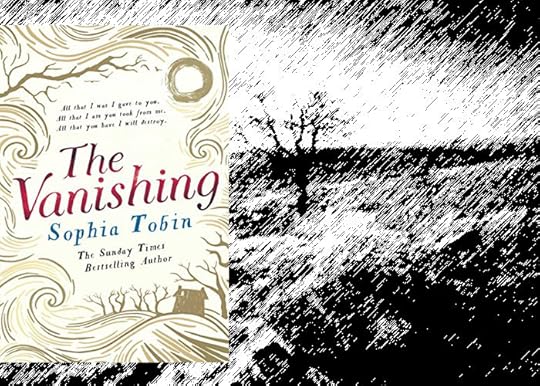
Visit the locations in the novel
Sophia Tobin writes a darn good gothic tale! If you read this on the Yorkshire moors where the book is set, in the middle of winter, you will chill yourself and you might even see White Windows, the house, as it seems so real.
It put me in mind of Wuthering Heights and Jane Eyre as it has that kind of chilling, remote, raw, wild feel to it all. Annaleigh comes from London to work at the gothic house there and to become its housekeeper. There’s the lonesome master and a sister there but they’re not what she is expecting and there’s something odd and strange about them and the house. Chill factor alert!
The moors and the gothic house really are the star of the show but the characters…oh let’s not forget them…so vividly drawn and dark…Annaleigh faces one challenge after another and has to decide how she will live at the house and how she will deal with those already there. But how will they deal with her? This is claustrophobic and ominous, with a sense of foreboding wrapping and whistling around the moors like the wind itself. The mysterious Twentymans are some of the most deliciously gothic creations I’ve read in some time.
Sophia Tobin weaves an intricate spell in these pages and it’s a delight to read although I may avoid a visit to the Yorkshire moors until the memories fade…..

May 31, 2018
I honestly cannot decide whether I enjoyed this story more than I didn't. I know, that probably doesn't make a whole lot of sense but it's the best way I can describe the feeling the book has left me with. There were parts that had me turn the pages happily but there were also parts in which I thought the story's pace was dragging and/or plodding. The writing style was fine but didn't help in the sense that it invoked a gothic atmosphere or in any other way made up for the things I felt it lacked. Also, the generous use of Christian names struck me as not belonging to this time period, but I'm not an expert on the matter.
I am disappointed to have to conclude this story isn't all that meaningful or maybe I should put that differently: it didn't have much of an emotional impact on me.
.
I am disappointed to have to conclude this story isn't all that meaningful or maybe I should put that differently: it didn't have much of an emotional impact on me.
.

October 18, 2024
Enjoyable story. Atmospheric and a good one for an Autumn/Winter read. Recommended.

January 14, 2018
Review copy courtesy of Simon & Schuster via NetGalley, many thanks.
I can’t decide if this book is supposed to be as humorous as it is. At first I thought it was a pastiche of Gothic melodrama along the lines of the Bronte sisters (as its blurb would suggest), but it is far more modern and explicit, and (I think) tongue-in-cheek. On several occasions, as I was silently screaming at our heroine, “Don’t go there, you can see what’s going to happen”, and thinking to myself that I might not bother reading any further as I knew what was going to happen, the plot would take me by surprise.
It is set in a remote location on the Yorkshire moors, they lurk in the background and we are frequently warned how treacherous they can be. At one point our heroine sees the noble Thomas ride off onto the moors with the words, ‘Thus I sent my only friend out into the wilderness’. The scene seems set for disaster. But does anyone stray off the path? Does anyone get lost on the moors? No, they do not and I had to laugh (at myself really for assuming they would).
I enjoyed the first half of the book well enough, though it seemed predictable. The second half becomes ever more complicated and unpredictable, and leads to a surprising but rather chaotic end. An entertaining read.
I can’t decide if this book is supposed to be as humorous as it is. At first I thought it was a pastiche of Gothic melodrama along the lines of the Bronte sisters (as its blurb would suggest), but it is far more modern and explicit, and (I think) tongue-in-cheek. On several occasions, as I was silently screaming at our heroine, “Don’t go there, you can see what’s going to happen”, and thinking to myself that I might not bother reading any further as I knew what was going to happen, the plot would take me by surprise.
It is set in a remote location on the Yorkshire moors, they lurk in the background and we are frequently warned how treacherous they can be. At one point our heroine sees the noble Thomas ride off onto the moors with the words, ‘Thus I sent my only friend out into the wilderness’. The scene seems set for disaster. But does anyone stray off the path? Does anyone get lost on the moors? No, they do not and I had to laugh (at myself really for assuming they would).
I enjoyed the first half of the book well enough, though it seemed predictable. The second half becomes ever more complicated and unpredictable, and leads to a surprising but rather chaotic end. An entertaining read.

April 5, 2017
The Vanishing is intense, atmospheric and savage. I was with Annaleigh every step of the way, my blood boiling, hoping she would escape and find what she was looking for.
Being honest, I didn't think I was going to see the end of this novel. The beginning of The Vanishing wasn't at all bad, it just didn't grip me the way I thought it might. Annaleigh is a strong main character and I didn't see how, being so switched on, she could be in danger. I feel that the first act didn't really set the novel up as well as it could of, but I appreciated what Tobin was doing. Building Annaleigh up so she could fall so much harder was a smart move. Annaleigh was an orphan, so I felt she should have been able to sense bad people from a mile away. Building up her hopes, abilities and sense of purpose allowed her to let her guard down, and then bad things happen...
The second and third acts of The Vanishing blew me away. So gritty, dark, atmospheric and outright chilling. It was the third act that really stood out in this novel for me. I could feel the intensity building up and Annaleigh's ferocity truly amazed me. I am trying to keep this as a spoiler free review. I will do my best. The blurb for The Vanishing is quite short and sweet. It doesn't give much away and that is a good thing. I got a sense from the tagline 'All that I was I gave to you. All that I am you took from me. All that you have I will destroy.' that plenty of bad things were going to happen, but Sophia Tobin managed to make it so much more meaningful and complex then it first seemed to be.
There is a decent balance between plot and characters. Events are described through the first person perspective of Annaleigh. This perspective was a good choice as it threw the reader off with her self-confidence and after things turn nasty, her inability to process certain events. The plot is paced well, with three distinct acts that dramatically change the tone of the book with each development. In terms of setting, the novel is set mostly on an estate named White Windows which is home to the Twentymans siblings. This is where Annaleigh takes a job as a housemaid as she feels she is no longer welcome with her family in London. The Yorkshire moors are sparsely populated, lonely, stormy and grey. This puts Annaleigh in edge and provides a great background atmosphere to the novel.
Tobin's writing came across a bit tame to begin with. There are a few creepy bits in the first act but nothing that really set me on edge. The rest of the book is a different matter. Tobin is graphic, detailed, dark and emotional. Being a parent myself, this book really affected me and I was glad to see a significant change in Annaleigh at a pinnacle moment in the book. The Vanishing is chilling, suspenseful and deeply moving at times. The standout aspect of the book has to be the characters.
Each person was versatile, purposeful and was hiding something from each other. Annaleigh was the star and Tobin did a superb job crafting her life and personality. Marcus and Hester were a tad cliche with their creepy, unhealthy and unclear sibling relationship but overall I was impressed with how they were written. There are many notable characters but talking about them could ruin the experience. Tobin's writing flows well, the dialogue is heated, engaging and meaningful and the plot design is just vague enough to keep the reader guessing all the way to the end.
Overall I was massively impressed with The Vanishing. A slow and uncertain start led to a truly horrific and moving novel that still haunts my thoughts so long after reading it. I have given the book 4.5/5 as it blew me away with intensity and meaning. There are flaws but my overall experience of the book was a memorable one so it deserves a high score. I seriously look forward to reading more of Sophia Tobin's work.
Being honest, I didn't think I was going to see the end of this novel. The beginning of The Vanishing wasn't at all bad, it just didn't grip me the way I thought it might. Annaleigh is a strong main character and I didn't see how, being so switched on, she could be in danger. I feel that the first act didn't really set the novel up as well as it could of, but I appreciated what Tobin was doing. Building Annaleigh up so she could fall so much harder was a smart move. Annaleigh was an orphan, so I felt she should have been able to sense bad people from a mile away. Building up her hopes, abilities and sense of purpose allowed her to let her guard down, and then bad things happen...
The second and third acts of The Vanishing blew me away. So gritty, dark, atmospheric and outright chilling. It was the third act that really stood out in this novel for me. I could feel the intensity building up and Annaleigh's ferocity truly amazed me. I am trying to keep this as a spoiler free review. I will do my best. The blurb for The Vanishing is quite short and sweet. It doesn't give much away and that is a good thing. I got a sense from the tagline 'All that I was I gave to you. All that I am you took from me. All that you have I will destroy.' that plenty of bad things were going to happen, but Sophia Tobin managed to make it so much more meaningful and complex then it first seemed to be.
There is a decent balance between plot and characters. Events are described through the first person perspective of Annaleigh. This perspective was a good choice as it threw the reader off with her self-confidence and after things turn nasty, her inability to process certain events. The plot is paced well, with three distinct acts that dramatically change the tone of the book with each development. In terms of setting, the novel is set mostly on an estate named White Windows which is home to the Twentymans siblings. This is where Annaleigh takes a job as a housemaid as she feels she is no longer welcome with her family in London. The Yorkshire moors are sparsely populated, lonely, stormy and grey. This puts Annaleigh in edge and provides a great background atmosphere to the novel.
Tobin's writing came across a bit tame to begin with. There are a few creepy bits in the first act but nothing that really set me on edge. The rest of the book is a different matter. Tobin is graphic, detailed, dark and emotional. Being a parent myself, this book really affected me and I was glad to see a significant change in Annaleigh at a pinnacle moment in the book. The Vanishing is chilling, suspenseful and deeply moving at times. The standout aspect of the book has to be the characters.
Each person was versatile, purposeful and was hiding something from each other. Annaleigh was the star and Tobin did a superb job crafting her life and personality. Marcus and Hester were a tad cliche with their creepy, unhealthy and unclear sibling relationship but overall I was impressed with how they were written. There are many notable characters but talking about them could ruin the experience. Tobin's writing flows well, the dialogue is heated, engaging and meaningful and the plot design is just vague enough to keep the reader guessing all the way to the end.
Overall I was massively impressed with The Vanishing. A slow and uncertain start led to a truly horrific and moving novel that still haunts my thoughts so long after reading it. I have given the book 4.5/5 as it blew me away with intensity and meaning. There are flaws but my overall experience of the book was a memorable one so it deserves a high score. I seriously look forward to reading more of Sophia Tobin's work.

June 20, 2017
As soon as I saw the press release for this I was so intrigued ... Images of the rolling Yorkshire Moors, my home, sprawling out around the grounds of country house, White Windows, had me desperate to read this and I was not disappointed ... Tobin is a fantastic writer.
The book starts with building up the characters, primarily the main character, Annaleigh, an orphan who manages to secure herself a job as the new housekeeper.
When she arrives at the house, she soon realises all is in not as it seems - the Twentymans have a strange brother/sister relationship, the staff warn not too close to anyone and the previous housekeeper, Kate, just disappeared. What has she let herself in for?
As the pace picks up during the second half of the book, Tobin's writing really starts to shine, reminiscent of a Bronte classic, the gothic noir really hits the pages and the intensity starts to build as twists and secrets start to come to the light.
It is a hard book to review in terms of discussing the plot, far too easy to fall in to the spoiler trap, so I wont.
What I will say is that this is one of the most atmospheric and compelling books I have read for a very long time. Graphic and chilling, Tobin pulls you in to the pages so that you are unable to put the book down and it is fantastic!!
If you like sweeping landscapes, dark secrets, twisted plot lines, and characters that you cannot help but love to hate, then The Vanishing is absolutely one you want to buy!
The book starts with building up the characters, primarily the main character, Annaleigh, an orphan who manages to secure herself a job as the new housekeeper.
When she arrives at the house, she soon realises all is in not as it seems - the Twentymans have a strange brother/sister relationship, the staff warn not too close to anyone and the previous housekeeper, Kate, just disappeared. What has she let herself in for?
As the pace picks up during the second half of the book, Tobin's writing really starts to shine, reminiscent of a Bronte classic, the gothic noir really hits the pages and the intensity starts to build as twists and secrets start to come to the light.
It is a hard book to review in terms of discussing the plot, far too easy to fall in to the spoiler trap, so I wont.
What I will say is that this is one of the most atmospheric and compelling books I have read for a very long time. Graphic and chilling, Tobin pulls you in to the pages so that you are unable to put the book down and it is fantastic!!
If you like sweeping landscapes, dark secrets, twisted plot lines, and characters that you cannot help but love to hate, then The Vanishing is absolutely one you want to buy!

May 20, 2021
Not a bad read but not what the cover blurb had to led me to believe I was getting...certainly not "..."Wuthering Heights" or "Jane Eyre", but ten times darker"!
Yes, basically it is "an atmospheric tale of betrayal & revenge", it's just not a wholly convincing one. It seemed to dither between wanting to be a gothic romance or a mystery tale but not quite hitting the mark for either.
There are one or two nice twists along the way but ultimately it wasn't as dark or as creepy as I felt it should, or even could, have been.
Yes, basically it is "an atmospheric tale of betrayal & revenge", it's just not a wholly convincing one. It seemed to dither between wanting to be a gothic romance or a mystery tale but not quite hitting the mark for either.
There are one or two nice twists along the way but ultimately it wasn't as dark or as creepy as I felt it should, or even could, have been.

February 14, 2018
2.5/5
I'm... not sure how to feel. This book took a lot of time building up tension and made me long for revenge, along with the main character, on those who had wronged her. And then after 400 pages I got a very rushed finale that was very different from what I had hoped for (and what the book, up to that point, seemed to be preparing me for). I get why the author chose to end things the way she did, but that did not make it any less unsatisfying.
I'm... not sure how to feel. This book took a lot of time building up tension and made me long for revenge, along with the main character, on those who had wronged her. And then after 400 pages I got a very rushed finale that was very different from what I had hoped for (and what the book, up to that point, seemed to be preparing me for). I get why the author chose to end things the way she did, but that did not make it any less unsatisfying.

June 7, 2018
: I’m going to be straight up and tell you right now that The Vanishing is dark and terrifying. I requested this novel to review based solely on the cover. It’s different, it grabbed my attention. I thought it might be a light historical romance. It is not! Be warned, it is full of triggers. There’s rape, drugs and the death of a child within these pages. It started out a little slow, but the description of the moors, and the isolation found there, drew me in. I’m immediately buying more books by Sophia Tobin and I highly recommend this novel to anyone who can deal with the aforementioned triggers.
****I was provided a free copy of this novel via NetGalley in exchange for an honest review.****
Visit my blog for more in depth reviews and recommendations:
http://www.bookgirlsbooknookblog.blog...
****I was provided a free copy of this novel via NetGalley in exchange for an honest review.****
Visit my blog for more in depth reviews and recommendations:
http://www.bookgirlsbooknookblog.blog...

January 11, 2017
3.5 stars.
"The Vanishing" is my first book by Sophia Tobin but I am sure it won't be the last! This novel has first caught my eye on Twitter, when I spotted the most gorgeous proofs with a key attached to them, and when one of them arrived at my doorstep I was more than over - excited. Yes. That's me. I know, I know, like a child at Christmas. Forgive me, but when it comes to books I am just like this.
So now. This book. "The Vanishing". Dark, tense, thought - provoking, full of suspense historical fiction. And while it did manage to hold me interested, I had some issues with it. The book was divided into three parts and for me personally it was the third and last one that kept me mostly glued to the pages. The first two were very descriptive and were like a long introduction to this what's going to happen. Than the characters. I had a feeling that I really don't know them as much as I'd like. They felt a little too underdeveloped, too superficial. The main character, Annaleigh, she just felt so cold and emotionless. But she was also strong - minded and she was not afraid to fight for the things she believed in. She was a servant but she also knew different life and you could have say that she's never been like a perfect servant, even being a perfect servant! She had her proud and will. She made me feel desperate with the number of times she wanted to left but still, she didn't. It just makes you want to tell her: see? Your own fault. I know, of course I know it was not as easy as it is now, women didn't have many choices then, but really, I though that when she says she wants to leave one more time than it will be also my sign to leave. The book. Fortunately, it didn't happen and I kept reading (not going to tell you if she's left or stopped talking about it, oh no!).
I am, however, not too sure what was the role of the male characters in this story, to be honest. Oh sure, of course, I know but they all just felt so flat, not too well rounded and I missed some more expressiveness in their personalities.
I also couldn't clock this attraction between Annalegih and Marcus Twentyman, and the blurb speaks about intensifying relationship - what relationship? It was not a relationship, guys! I've no idea what kind of things did Annaleigh imagine and why. And the end. I am really confused about the end because it made me think, and? The point?
I really liked the writing style, and the way the story was written, and I really appreciated how the author added so many phrases characteristics to those times. She could brilliantly describe the desolate landscape of the moors in Yorkshire and it, already at the beginning, set the tone of this story - gloom and bleak, totally appropriate to the drama that was developing before our eyes. The sense of isolation and loneliness was palpable through the pages, and this was one of the main players in this book, to be honest, and the dark atmosphere surrounding the house and its inhabitants jumped out of the pages.
Overall, it was a good book, and even though it didn't have me on my tenterhooks I was not disappointed! "The Vanishing" was atmospheric, touching and also a shocking book. I loved how symbolic the title of the novel is and how many different meanings of vanishing there were in it. A tale of love and hate, revenge and... yes, madness that made for a really great read for those few winter evenings and I'm truly happy that I was able to read it. There was a certain beauty to it and the writing style was really exceptional.
Copy provided by the publisher in return for an honest review.

December 7, 2016
Annaleigh Calvert has to leave behind all she has ever known in London and travel to Yorkshire. There, at White Windows, nestled on the Moors, she is to be the housekeeper to the Twentymans, Marcus, the lonesome master and his widow sister Hester. But Annaleigh soon realises that the inhabitants of White Windows are not as they first seem and White Windows may not be her escape after all.
Sophia Tobin has created a wonderfully compelling story, one that wraps itself around you much like a moorland mist. All the characters are well drawn, each adding a layer to the story. Annaleigh is the focus, a mix of a woman willing to work hard, to be subservient but with a will that is at odds with her place in society, who’s anger and strength lies barely dormant just under the surface. She finds herself faced with challenges, conflicted between her opinions of the Twentymans. By failing to take heed of her misconceptions she changes the course of her life for ever. Marcus Twentyman is a contradictory figure. Often fleeting, his presence felt rather than seen, he is outwardly charming but has a malevolent air, one that runs throughout the novel. Then there is Thomas. He was a wonderful character, a seemingly a minor character but one who is pivotal to the story who perfectly juxtaposes Marcus.
As for the moors, they are as central to the story as any character. Sophia Tobin vividly portrays the landscape, so easy was it to imagine White Windows, the village of Becket Bridge and the surrounding wilds of the moorland, with it’s beauty and danger being the perfect metaphor for the story of Annaleigh.
Sometimes a book works it’s magic on you in the first few pages. It’s voice resonates and appeals to the reader in a way that the story envelopes you, pulling you along until the last page. This is one of those books. I often say that stories have atmospheres, a world that the reader in drawn into, that is unique to the author. The atmosphere of The Vanishing is encompassing and compelling, drawing you in and meaning the reader is soon invested in Annaleigh’s story.
The book is described as perfect for fans of Jane Eyre and The Miniaturist. However in The Vanishing there are no friendly staff to befriend the new servant and the madness is not contained in the attic but walks freely amongst the moors. If you aren’t a fan of either of the previously mentioned novels don’t let that put you off. The Vanishing is a highly original tale, one which takes a surprising and dark turn.
This is an engrossing and wonderfully gothic tale, that soon works its magic on the reader, transporting them to another time and to a gripping story. This is the first novel by Sophia Tobin I have read. I will have to read her other novels soon.
A tale of madness, love and revenge, this is a perfect book for a long winter evening.
Sophia Tobin has created a wonderfully compelling story, one that wraps itself around you much like a moorland mist. All the characters are well drawn, each adding a layer to the story. Annaleigh is the focus, a mix of a woman willing to work hard, to be subservient but with a will that is at odds with her place in society, who’s anger and strength lies barely dormant just under the surface. She finds herself faced with challenges, conflicted between her opinions of the Twentymans. By failing to take heed of her misconceptions she changes the course of her life for ever. Marcus Twentyman is a contradictory figure. Often fleeting, his presence felt rather than seen, he is outwardly charming but has a malevolent air, one that runs throughout the novel. Then there is Thomas. He was a wonderful character, a seemingly a minor character but one who is pivotal to the story who perfectly juxtaposes Marcus.
As for the moors, they are as central to the story as any character. Sophia Tobin vividly portrays the landscape, so easy was it to imagine White Windows, the village of Becket Bridge and the surrounding wilds of the moorland, with it’s beauty and danger being the perfect metaphor for the story of Annaleigh.
Sometimes a book works it’s magic on you in the first few pages. It’s voice resonates and appeals to the reader in a way that the story envelopes you, pulling you along until the last page. This is one of those books. I often say that stories have atmospheres, a world that the reader in drawn into, that is unique to the author. The atmosphere of The Vanishing is encompassing and compelling, drawing you in and meaning the reader is soon invested in Annaleigh’s story.
The book is described as perfect for fans of Jane Eyre and The Miniaturist. However in The Vanishing there are no friendly staff to befriend the new servant and the madness is not contained in the attic but walks freely amongst the moors. If you aren’t a fan of either of the previously mentioned novels don’t let that put you off. The Vanishing is a highly original tale, one which takes a surprising and dark turn.
This is an engrossing and wonderfully gothic tale, that soon works its magic on the reader, transporting them to another time and to a gripping story. This is the first novel by Sophia Tobin I have read. I will have to read her other novels soon.
A tale of madness, love and revenge, this is a perfect book for a long winter evening.
May 13, 2018
I have a weakness for penny dreadful-esque nineteenth-century style Gothic books, but even so it was difficult for me to enjoy this one. Annaleigh, a foundling raised as an adopted daughter to a London based painter, after falling out with the family moves to the Yorkshire moors to become the servant of Marcus and Hester Twentyman, a wealthy brother and sister who live in a remote estate, White Windows. Annaleigh strikes up a friendship with Thomas Digby, a local man whom the Twentymans tell her has a womanizing reputation; she also feels compassion for Marcus Twentyman's tortured soul and his depression which she seems uniquely able to soothe.
The pacing is truly odd: as mentioned, the first 150 pages are really just setup (there's a twist midway through the book that makes it more interesting but alas, still not enough to make it enjoyable); important scenes are glossed over while there is endless time detailing laundry routines and cleaning schedules. The slow pacing is something I would find more forgivable if the writing was more enjoyable to spend time in. Unfortunately, it's stilted and not in a fun way; despite having the melodramatics and morality tale flare of Victorian literature it lacks charm or a distinct authorial voice. Similarly the characters seem like cardboard cut-outs with bizarre and ridiculous motivations and never seem able to transcend the tropes they're based upon.
The pacing is truly odd: as mentioned, the first 150 pages are really just setup (there's a twist midway through the book that makes it more interesting but alas, still not enough to make it enjoyable); important scenes are glossed over while there is endless time detailing laundry routines and cleaning schedules. The slow pacing is something I would find more forgivable if the writing was more enjoyable to spend time in. Unfortunately, it's stilted and not in a fun way; despite having the melodramatics and morality tale flare of Victorian literature it lacks charm or a distinct authorial voice. Similarly the characters seem like cardboard cut-outs with bizarre and ridiculous motivations and never seem able to transcend the tropes they're based upon.

April 18, 2018
Review to follow.

February 23, 2017
Annaleigh is sent from London to be a housekeeper for a brother and sister in a remote Yorkshire location. She finds that things are not all as they seem and becomes more involved with the family than she should. This was rather Bronte-esque with the bleak moors and men vying for the attention of the heroine.
Displaying 1 - 30 of 120 reviews