Nearly seven years ago, I reviewed David Hepworth's Never a Dull Moment: 1971, The Year That Rock Exploded. I chided Hepworth for trying to shoehorn events into existing capsules, particularly since 1971 can only be considered a gamechanging year if artificial guardrails are installed. I added how much I despised books whose titles began with a year, as though the flow of events could ever be adequately represented by a static calendar. Well. Never let it be said that there aren't occasional exceptions to the rule.
I'd been pondering how the truly revolutionary year for pop music of the 1960s was 1966, because the U.S. had absorbed the British Invasion and had moved on to garage bands, while the marketeers and tastemakers had not been able to characterize the blob of mercury that was 1966, while 1967 and 1968 were virtually pre-packaged as psychedelia and revolution years, respectively. If you are able to name and define an era, you were already late to the party. A random Amazon search turned up the fact that Jon Savage, author of books on Joy Division and the early British punk years, had written a book based on exactly the thesis I was looking for. (He's also written some yearbooks for succeeding years, which might be interesting to read soon, but which diverge from my primary interest here.)
Savage based his book on the primacy of the 45 rpm 7-inch single, perhaps one of the last years when singles ruled the game. Each chapter is a month of the year, and each focuses on one single in particular, with supporting-actor singles coming in to flesh out topics like Tamla Motown, the nascent movements for women and LGBTQ+ voices being heard, the way youth-culture marketeers demanded ever accelerating trends, etc. The method is highly effective, and Savage includes a 45rpm discography for aural deep dives.
The author offers as many inside stories as Hepworth does, but tells them with a more deft voice. We learn about Buffalo Springfield's role in the November 1966 Sunset Strip riots, Yoko Ono's early years in the U.S. prior to meeting John Lennon, Ferdinand Marcos's August 1966 intimidation of The Beatles during their Philippines visit, and plenty more forgotten stories. What Savage does far better than Hepworth, though, is to weave the stories of pop music into larger platforms of cultural and political trends in the society. And his views move way beyond the historical trend lines we might pick up from a Life magazine survey of the decade, or similar broad-based sources.
Savage is a Situationist and a student of marketing, and it's no surprise his book references people like Marshall McLuhan and Guy DeBord. The thesis here is that 1964-65 were years in which the marketed and self-aware "youth culture" could barely be contained enough to be packaged in a manner fitting for Madison Ave. In early 1966, the freedom of the Top 40 format was at its peak, though it had to be realized in the U.K. through pirate radio due to the conservatism of the BBC. It was during the first half of the year that the mainstream media realized that this freedom to experiment led to wild excursions like Andy Warhol's Exploding Plastic Inevitable, and the West Coast "trips" events sponsored by Ken Kesey and the Merry Pranksters. The U.S. press realized the central role of "Swinging London" in defining fashion and influencer prototypes. In both the U.S. and Europe, newscasters and market analysts became aware of younger teens' growing interest in politics and current events, including Vietnam but stretching much further afield. Savage cites the role played by the Provos in Amsterdam, protesting the marriage of Queen Beatrix, as creating the prototype for the later Diggers and Yippies movements.
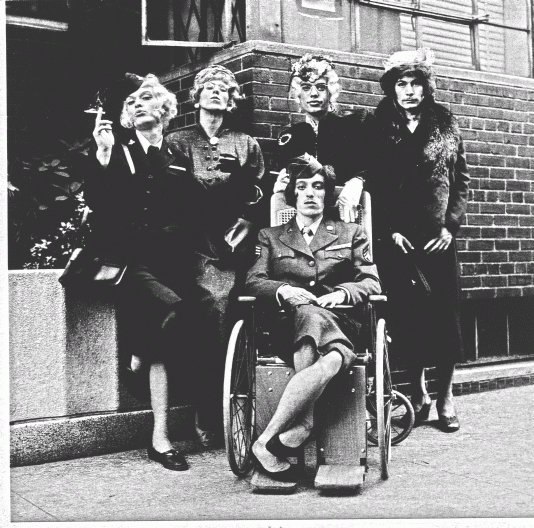
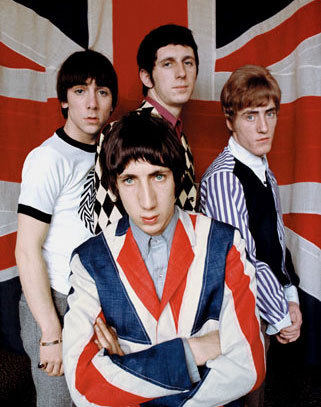
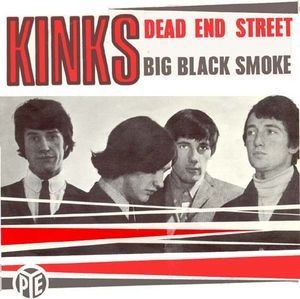
In the first half of the year, bands like Beatles, Rolling Stones, Kinks, Diana Ross & the Supremes, Yardbirds, Four Tops, and many more, were releasing new singles every four to six weeks. The elite leaders were joined by The Monkees after the fabricated four had their TV show launch in September 1966. The pace of new music being released was bound to cause burnout, and led to the dominance of amphetamines in early stages, and hallucinogens and marijuana later in the year.
Savage points to the late-summer era of The Lovin' Spoonful's "Summer in the City" as the time when the positive and unconstrained burst of 1966 pop made a distinct change. The top-tier bands began to develop more complex and sober (in both a sadness and anger sense) songs, while newcomers like 13th Floor Elevators blew the lid off the expectations for Top 40 singles. Since the late 1970s, music fans have been looking wistfully back to this garage-band era in the Nuggets and Pebbles series of music compilations, but Savage reminds us that there was as much an unmoored sense of confusion as there was excitement about the expansion of popular music styles.
In response to the "Republican reaction" movement that brought Ronald Reagan to the California governorship, more and more teens, Latinxs, Blacks were moving into a "we're not gonna take it" atmosphere of defiance. The cartoon "POW" and "BAM" of the Batman series became less an expression of pop art, and more a description of youth rebellion. The culmination of all this was the year of global revolution, 1968, but Savage reminds us that there were dozens of riots nationwide that followed the 1965 Watts uprising. (He mentioned two riots in 1966 in the area I grew up in, in Lansing and East Lansing in Michigan, events which I had no knowledge of whatsoever despite being a news junkie.)
As the year wound down, Savage saw soporific pop making a return to the Top 10, if only because artists like the Beatles and Stones needed a break before coming up with their 1967 psychedelic statements. Savage gives a fair nod to early (pre-1967) Grateful Dead and Jefferson Airplane, but he also shows that Haight-Ashbury culture was already being criticized pre-1967 by groups like the Diggers, who threw out heavy critiques of Bill Graham and Sam Yorty, among others. The summer of love was denounced as fake before it even began. Wear some flowers in your hair, indeed.
It will be interesting to catch up with Savage's later books, because he does not say that 1967 was a false era of psychedelia, nor that 1968 was a year of co-opted revolution worldwide. Rather, he said that the true year of social change and pop-culture upheaval was 1966, because a revolution had begun before anyone fully understood what it was. If there is any mild criticism to make of this book, it's that Savage occasionally inserts more drama and hidden meaning into events than may have been warranted. But more often than not, the gravitas was fully justified. Buffalo Springfield's release of "For What It's Worth" during the Sunset Strip riots was a perfect definition of a year that is given secondary status by many analysts. I'm glad Savage gets it.