A law criminalizing incitement to religious hatred has been high on the Labour Government's list of priorities. It is a law with wide-ranging implications for freedom of expression in Britain: it could be used to censor anyone - whether writer, comedian or person in the street - who wishes to make a statement about religion that others might find offensive. Free Expression is No Offence tackles the issue of free speech in the post-9/11 world from a variety of angles. Its authors draw on their wide-ranging experience to show just why it is that attempts to curtail our freedom must be vigorously resisted by anyone who wants all faiths and none to live peaceably side by side and our many cultures to thrive.
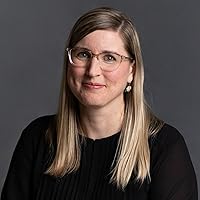
Elżbieta Borensztejn was born on 4 January 1946 in Łódź, Poland, the daughter of Hena and Aaron Borensztejn with Jewish origin. Following her birth, her parents moved to Paris, France, and in 1951 they emigrating to Canada. She grew up in the province of Quebec - first in a small Laurentian town, subsequently in Montreal.
She graduated from McGill University with a B.A. degree in 1966 and her M.A. the following year. During 1970-71 she was a staff writer for the Centre for Community Research in New York City and is a former University of Essex lecturer in European Studies. She was a founding member and editorial director of the Writers and Readers Publishing Cooperative. Through the eighties she was a Deputy Director of the Institute of Contemporary Arts in London, UK, for whom she also edited the seminal Documents Series and established ICA television and the video Writers in Conversation series.
She produced several made for television films and had written a number of books before devoting herself to writing fulltime in 1990. In recognition of her contribution to literature, Lisa Appignanesi has been honoured with a Chevalier of the Ordre des Arts et des Lettres from the French government. In 2004, she became Deputy President of English PEN and has run its highly successful 'Free Expression is No Offence Campaign' against the Racial and Religious Hatred Bill. In 2008 she became President of English PEN. She writes for The Guardian, The Independent and has made several series for BBC Radio 4, as well as frequently appearing as a cultural commentator.
In 1967, she married Richard Appignanesi, another writer, with whom she had one son in 1975, Josh Appignanesi, a film director. They divorced in 1984. With her life partner John Forrester, she had a daugther, Katrina Forrester, a Research Fellow in the history of modern political thought at St John's College, Cambridge. She lives in London.
Following demands that Salman Rushdie’s novel "The Satanic Verses" be banned, the storming of the stage of the play "Behzti" meaning dishonour by British Sikh playwright Gurpreet Kaur Bhatti that turned the spotlight on her own community and protests by some Christians to the BBC’s broadcasting of "Jerry Springer – The Opera", in 2005, the UK Labour government introduced legislation aiming "to make provision about offences involving stirring up hatred against persons on racial or religious grounds". Ostensibly, the legislation was intended to prevent the incitement of violence and hatred of religious groups but the motivation appeared to be to cultivate favour from the Moslem community for the then upcoming UK general election. The book is a collection of essays in defence of freedom of speech that this legislation had the potential to curtail. Following the introduction which sets out the situation as it then stood, the first eight odd essays, including one by Rowan Atkinson who led the political opposition to the then proposed legislation, addressed the core issues of freedom of expression in light of the recent protests and then proposed legislation and when I was getting toward the end of these, it struck me that they were largely making the same argument, albeit from different perspectives. Fortunately, I persisted.
In Art and Anathema, Howard Jacobson argues that art is inherently transgressive hence religion has always been uneasy with art including humour. Julian Evans presented the case of 15th century Renaissance humanist scholar and writer Rabelais who, following the Church’s discovery that, having learned by classical Greek which had then just been rediscovered in Western Europe and studying biblical texts in Greek, scholars began to offer their own interpretations of such texts, banned the learning of Greek, learned it anyways. In due course he wrote a number of satirical books attacking the abuses of the clergy from a humanistic and Protestant perspective but with a nod to wine, games and popular culture. The essay summarises his life, at time coming close to being burned at the stake, and writing which was, of course, banned by the Church but remain relevant today. In "God Save Us from Religion!", Moris Farhi provides an insightful examination of the inherent nature of religious institutions, their codification of doctrines, their tendency authoritarianism, their perpetual proselytising of their "truths", claims to be "chosen" or both and their inherent claims of exclusivity which will lead them to eternal bliss and everyone else to eternal damnation. Stressing that the opposition to religion comes from rational thought and not just from outside, this essay is one of the best on the topic I’ve read and it’s itself worth the purchase price of the book. In Ian Buruma’s "Final Cut" reflects on the murder of Dutch filmmaker Theo van Gogh who was murdered in Amsterdam for making, with Ayaan Hirsi Ali, the film "Submission" criticising the treatment of women by Islam. The last essay I’ll summarise is titled "Science and Islam" by Pervez Hoodbhoy, a professor of physics at Quaid-e-Azam University in Islamabad in Pakistan in which he presents the sorry state of the teaching of science in Moslem-majority countries, noting a few exceptions.
With a few exceptions, the essays are well written, insightful and thought-provoking and it’s a book to which I’ll return.
An anthology published by English PEN, including authors such as Salman Rushdie, Monica Ali, Rowan Atkinson and Philip Pullman, all writing on the topic of freedom of speech. Very interesting and thought-provoking, definitely recommended!
A very thought provoking book. Points out that the freedom of speech that we all so easily take for granted isn't as simple to exemplify. the best phrase I have read in a long time - Man thinks, god laughs.