

What do you think?

Equilibrium
Judge Afaa Michael Weaver had the following praise for Equilibrium:
Equilibrium searches for that point where there is a balance, even as the poems display a consciousness and self awareness that belie that balance. The poems negotiate the colossal movement of hearts figuring and being figured by history. This is a voice that knows the intelligence of passion, that moves through and inside the questioning of who we are in the structures of things we give the power to name us until a song sends us out to question the territory. The poet moves with the exactness of math or physics, with the fearful knowledge of careful imbalances that would have us believe in equilibrium, and with the assuredness of art that knows all is change, that the semblance of order is creation, something we are given the gift of imitating in some small way. The poems in this collection summon the largeness, the volume of a voice that disembodies itself in order to search for the love that made it whole.
Equilibrium searches for that point where there is a balance, even as the poems display a consciousness and self awareness that belie that balance. The poems negotiate the colossal movement of hearts figuring and being figured by history. This is a voice that knows the intelligence of passion, that moves through and inside the questioning of who we are in the structures of things we give the power to name us until a song sends us out to question the territory. The poet moves with the exactness of math or physics, with the fearful knowledge of careful imbalances that would have us believe in equilibrium, and with the assuredness of art that knows all is change, that the semblance of order is creation, something we are given the gift of imitating in some small way. The poems in this collection summon the largeness, the volume of a voice that disembodies itself in order to search for the love that made it whole.
- GenresPoetry
39 pages, Paperback
Published September 1, 2016
About the author
Tiana Clark
13 books90 followersTiana Clark is the author of the poetry collection, I Can’t Talk About the Trees Without the Blood (University of Pittsburgh Press, 2018), winner of the 2017 Agnes Lynch Starrett Prize, and Equilibrium (Bull City Press, 2016), selected by Afaa Michael Weaver for the 2016 Frost Place Chapbook Competition. Clark is a winner for the 2020 Kate Tufts Discovery Award (Claremont Graduate University), a 2019 National Endowment for the Arts Literature Fellow, and the 2015 Rattle Poetry Prize. She is a recipient of the 2021-2022 Amy Lowell Poetry Traveling Scholarship and 2019 Pushcart Prize. Clark is the 2017-2018 Jay C. and Ruth Halls Poetry Fellow at the Wisconsin Institute of Creative Writing. She is the recipient of scholarships and fellowships to the Bread Loaf Writers' Conference, Sewanee Writers' Conference, and Kenyon Review Writers Workshop. Clark is a graduate of Vanderbilt University (M.F.A) and Tennessee State University (B.A.) where she studied Africana and Women's studies.
Her writing has appeared in The New Yorker, Poetry Magazine, The Atlantic, The Washington Post, Virginia Quarterly Review, Tin House Online, Kenyon Review, BuzzFeed News, American Poetry Review, Oxford American, The Best American Poetry 2022, and elsewhere. She is currently the Grace Hazard Conkling Writer-in-Residence at Smith College.
Her second poetry collection, Scorched Earth, which moves between ruins and radical love will be published March 4, 2025. Clark is currently working on a memoir-in-essays, Begging to be Saved, reckoning with Black burnout, millennial divorce, faith, art making, and exploring historical methods of Black survival, which sold to Jenny Xu at Washington Square Press/Simon & Schuster.
Her writing has appeared in The New Yorker, Poetry Magazine, The Atlantic, The Washington Post, Virginia Quarterly Review, Tin House Online, Kenyon Review, BuzzFeed News, American Poetry Review, Oxford American, The Best American Poetry 2022, and elsewhere. She is currently the Grace Hazard Conkling Writer-in-Residence at Smith College.
Her second poetry collection, Scorched Earth, which moves between ruins and radical love will be published March 4, 2025. Clark is currently working on a memoir-in-essays, Begging to be Saved, reckoning with Black burnout, millennial divorce, faith, art making, and exploring historical methods of Black survival, which sold to Jenny Xu at Washington Square Press/Simon & Schuster.
Ratings & Reviews
Friends & Following
Create a free account to discover what your friends think of this book!
Community Reviews
Displaying 1 - 28 of 28 reviews

February 8, 2018
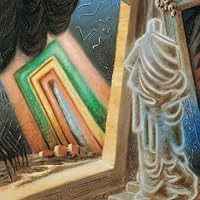
3.5 stars. How beauts is the cover art?!
Tiana has a beautiful way with words. Some poems are haunting; most are very honest and reflect her past & present life. I preferred a few of the poems to majority in this collection, especially the ones that take us back to Tiana’s childhood where she (beautifully) laments her father’s absence and her mother’s bravery. The church plays a big role in this collection and we get lots of Biblical references and Bible verses in the poems. Christianity seems to be a source of strength and skepticism for the persona of the poems. Race and self-hate are also strong players in this collection as well. I liked this collection overall, but from reviews, I thought I’d be blown away...
Tiana has a beautiful way with words. Some poems are haunting; most are very honest and reflect her past & present life. I preferred a few of the poems to majority in this collection, especially the ones that take us back to Tiana’s childhood where she (beautifully) laments her father’s absence and her mother’s bravery. The church plays a big role in this collection and we get lots of Biblical references and Bible verses in the poems. Christianity seems to be a source of strength and skepticism for the persona of the poems. Race and self-hate are also strong players in this collection as well. I liked this collection overall, but from reviews, I thought I’d be blown away...

November 13, 2018
this book has the pacing of a gospel song
the breath within the poems pushes the narrative as much as the words do
it belts and spits and begs and soothes and wails
it offers a view that complicates prescribed notions of rapture and predation
the breath within the poems pushes the narrative as much as the words do
it belts and spits and begs and soothes and wails
it offers a view that complicates prescribed notions of rapture and predation

October 13, 2017
I got to hear Tiana read her poetry as the moon rose. I get to read Tiana's poetry on my own. She is a gem, she is a gift. I love (reading/hearing) everything she writes.
January 7, 2020
Holy [redacted swear]. You MUST read this amazing book!

October 16, 2018
Tiana Clark’s poetry in this collection is a response to tensions present in 21st century American culture. The title poem “Equilibrium” sets the tone for what is to come, opposing forces that come together. In many of these poems, these forces are aspects of white and Black identity, but Clark’s work speaks to other tensions too. Tensions rooted in love, mental health, and parentage. That Clark now works at the university I’m at is amazing. I recommend this to anyone who enjoys Black feminism. I know this is a book of poetry that I will return to again.

October 31, 2022
This poetry collection didn't match my aesthetics, but there's definitely poems to love here.

June 1, 2019
Great read for black womxn raised Christian in America .

October 30, 2021
I want to write a happy word,
but every line jazzes elegy.
but every line jazzes elegy.

March 20, 2020
First, what a beautiful, striking cover. Second, Clark has a sharp eye for language that sizzles.
I was drawn to the poems about religion and the absent father, especially. Clark has cracked her church door open so readers get a peek into the ecstasy, the hypocrisy, and the exploitation (the theme of men of the church exploiting young women is a recurring theme) of the faith she belonged to. The last lines of Exorcism say it best, I think:
"She gave her body to greasy
boys--the way she gave her body, in that musty chapel
outside of the gold buckle of the Bible Belt, to all of us."
This girl (this girl who needed a "Jezebel spirit" cast out from her, per the pastor) giving her body to boys, to the pastor, and to the misled youth group was all the same.
I dig Clark's poems written "after" other poems, paying homage to writers and works that resonate with her, which always send me to discover or rediscover poems that widen the scope on the poems at hand. I appreciate her acknowledgments to the community that came before her, and love that she nods in so many directions: Terrance Hayes, Robert Hayden, Gwendolyn Brooks, Emily Dickinson, William Wordsworth, Shakespeare, Sylvia Plath, and others.
Favorite poems:
The Frequency of Goodnight
The Spot in Antioch
Exorcism
A Blue Note for Father's Day
{check out these beautiful lines:
"Because I don't know where you are--
I send you a letter of tree leaves
I heard this morning harmonizing
like emerald waves above a pond."
and later:
"We destroy ourselves for splendor--
emerging from the buried deep
like cicada song to mate & disappear again."}
How to Find the Center of a Circle
{these lines are killer:
"like white spiders
spun around me silking a carousel of hate"}
And, lastly, I love this image from Hair Relaxer: An Origin Story:
"Took my hair inch by inch like the yarn of Theseus to find my
way back to my little self, back to my baby pictures with a fro-pik
in my hair, to the bounce, the spring in every coil."
I was drawn to the poems about religion and the absent father, especially. Clark has cracked her church door open so readers get a peek into the ecstasy, the hypocrisy, and the exploitation (the theme of men of the church exploiting young women is a recurring theme) of the faith she belonged to. The last lines of Exorcism say it best, I think:
"She gave her body to greasy
boys--the way she gave her body, in that musty chapel
outside of the gold buckle of the Bible Belt, to all of us."
This girl (this girl who needed a "Jezebel spirit" cast out from her, per the pastor) giving her body to boys, to the pastor, and to the misled youth group was all the same.
I dig Clark's poems written "after" other poems, paying homage to writers and works that resonate with her, which always send me to discover or rediscover poems that widen the scope on the poems at hand. I appreciate her acknowledgments to the community that came before her, and love that she nods in so many directions: Terrance Hayes, Robert Hayden, Gwendolyn Brooks, Emily Dickinson, William Wordsworth, Shakespeare, Sylvia Plath, and others.
Favorite poems:
The Frequency of Goodnight
The Spot in Antioch
Exorcism
A Blue Note for Father's Day
{check out these beautiful lines:
"Because I don't know where you are--
I send you a letter of tree leaves
I heard this morning harmonizing
like emerald waves above a pond."
and later:
"We destroy ourselves for splendor--
emerging from the buried deep
like cicada song to mate & disappear again."}
How to Find the Center of a Circle
{these lines are killer:
"like white spiders
spun around me silking a carousel of hate"}
And, lastly, I love this image from Hair Relaxer: An Origin Story:
"Took my hair inch by inch like the yarn of Theseus to find my
way back to my little self, back to my baby pictures with a fro-pik
in my hair, to the bounce, the spring in every coil."

August 28, 2022
"I cried at the shampoo bowl, thought pain would make me / beautiful. Learned to suck it up, keep it in, tucked and folded / like origami."
"How we fake to feel the magic inside us. It took me a while to understand / that I didn't have to beg for it."
"She was like me: a girl with no father, a girl that / made God her father, a girl that wanted to be saved, / but mostly to be loved."
"I never sought to be like the stupid girls / but when he grabbed my crotch, I said -- Yes."
"We destroy ourselves for splendor -- / emerging from the buried deep / like cicada song to mate & disappear again."
"but she testifies in Death. / She says again, / You can't tell me God ain't good / & I want to believe her."
"I didn't know what the word meant / but my body blackened wrong with heat."
"I've been standing by water / my whole damn life / trying to get saved."
"every inky pen I pick up bleeds. / I want to write a happy word, / but every line jazzes elegy."
"In Tennessee, I live in a bowl of green suffocation -- / hillsides consume & and stack with bouquets of trees."
"The safe word is safe. / The safe word is torment. / The safe word is thief."
"How we fake to feel the magic inside us. It took me a while to understand / that I didn't have to beg for it."
"She was like me: a girl with no father, a girl that / made God her father, a girl that wanted to be saved, / but mostly to be loved."
"I never sought to be like the stupid girls / but when he grabbed my crotch, I said -- Yes."
"We destroy ourselves for splendor -- / emerging from the buried deep / like cicada song to mate & disappear again."
"but she testifies in Death. / She says again, / You can't tell me God ain't good / & I want to believe her."
"I didn't know what the word meant / but my body blackened wrong with heat."
"I've been standing by water / my whole damn life / trying to get saved."
"every inky pen I pick up bleeds. / I want to write a happy word, / but every line jazzes elegy."
"In Tennessee, I live in a bowl of green suffocation -- / hillsides consume & and stack with bouquets of trees."
"The safe word is safe. / The safe word is torment. / The safe word is thief."

December 6, 2017
This is a book that is concerned with economy, which is to say that it is constantly aware of finitude; material, spiritual, emotional, familial, the finitude of our lives themselves. The speaker describes growing up learning to navigate a world where balance is illusory and decisions must be made on where one should focus their limited amount of energies and care. Coming of age in an environment that predetermines so much about someone before they can have a say—religion, race, class—the speaker in Clark’s poems is learning on the fly, open to the small miracles of the world while discovering the need to protect oneself from a word, and a society, that is regularly unfair, and in these image-rich, musical poems the reader is brought along for the stunning journey.

July 8, 2019
Remixing and referencing and reclaiming, this book jumps right into the "murmuration of Mardi Gras with a thousand buzzing bee bodies" and the church "shaking too as the choir jerks & hollers, bends & snaps back their spines to surging piano glissandos." These poems stir with energy and ecstasy "lit with charge and wonder." Clark takes on the violence and sickness of "American eyeballs blinking & chewing the 24 hour news cycle." And she movingly writes in "A Blue Note for Father'd Day" "Please know--I've made good with my life." Looking forward to reading a full-length collection by this marvelous, miraculous writer.

May 15, 2018
Timely, and raw in the sense that the emotions are unfettered, but not raw as in uncrafted. The writing is tight, the images smack, the sense of justice sought and unrequited is as reeling as a youtube video on repeat. Daddy issues, hallelujah reckonings, homage to beacons. The speaker knows her voice and is not afraid to use it.

February 2, 2018
"Prometheia: Remixed" has got to be one of my favorite poems period.
Other favorites: "Equilibrium," "Black Champagne," "Exorcism," "The Spot in Antioch," "Broken Ghazal for Walter Scott," and "Bear Witness," which ends: "I've been standing by water / my whole damn life / trying to get saved."
Other favorites: "Equilibrium," "Black Champagne," "Exorcism," "The Spot in Antioch," "Broken Ghazal for Walter Scott," and "Bear Witness," which ends: "I've been standing by water / my whole damn life / trying to get saved."
May 12, 2021
3.5 stars. This collection is very good. The language is very thick. I might’ve bumped it up to 4 stars had Clark found a word other than “creamy” to describe things. So many creamy things in this collection. Why??

August 7, 2023
Tiana Clark does an amazing job of not just painting a picture with her words, but shows us an amazing story along the way. The way that she connects various thoughts and relates them is done with deliberate precision and balance.
March 13, 2024
this is the first chapbook i’ve ever read front to back. i never thought a poetry book could be a page turner but i couldn’t stop reading. loved the references to greek mythology & the criticism. the poems get stranger and trickier towards the end but definitely recommend
June 9, 2019
Loved the frequency of good night, video on dirge
September 25, 2019
Hard to know what actually is true, but ya know, that's poetry for ya.
August 27, 2020
This writing is majestic. Such intimate innovation. A poet to study.
August 13, 2021
Amazing!
July 5, 2022
Beautiful writing and rhythm. Haunting imagery and tough themes.
March 22, 2023
god. absolutely stunning & brilliant. books meant for you in the moment your in!!
February 13, 2024
inspiring and moving and strong
February 20, 2025
It didn't really strike me. I thought it was interesting that the title is a painting also named Equilibrium. The cover and its art are amalgamated into a single entity.

August 9, 2020
“I want to write a happy word, / but every line jazzes elegy.” Many riches here - densely allusive poems that engage with history, both personal and societal, religion, identity, the formal constraints (and freedoms) of poetry, always in conversation with the world around them.
May 3, 2020
A stunning chapbook. Clark is deft with language, line break, and image. Her poems sucker punch but leave one thoughtful as she weaves and re-weavs the intersections of race, gender, and class with family and history
Displaying 1 - 28 of 28 reviews