

What do you think?

Foster, You're Dead
'Foster, You're Dead' is a short story about a man who refuses to buy a bomb shelter during a war with the Soviet Union.
17 pages, ebook
First published January 1, 1955
About the author
Philip K. Dick
1,942 books23.3k followersPhilip Kindred Dick was a prolific American science fiction author whose work has had a lasting impact on literature, cinema, and popular culture. Known for his imaginative narratives and profound philosophical themes, Dick explored the nature of reality, the boundaries of human identity, and the impact of technology and authoritarianism on society. His stories often blurred the line between the real and the artificial, challenging readers to question their perceptions and beliefs.
Raised in California, Dick began writing professionally in the early 1950s, publishing short stories in various science fiction magazines. He quickly developed a distinctive voice within the genre, marked by a fusion of science fiction concepts with deep existential and psychological inquiry. Over his career, he authored 44 novels and more than 100 short stories, many of which have become classics in the field.
Recurring themes in Dick's work include alternate realities, simulations, corporate and government control, mental illness, and the nature of consciousness. His protagonists are frequently everyday individuals—often paranoid, uncertain, or troubled—caught in surreal and often dangerous circumstances that force them to question their environment and themselves. Works such as Ubik, The Three Stigmata of Palmer Eldritch, and A Scanner Darkly reflect his fascination with perception and altered states of consciousness, often drawing from his own experiences with mental health struggles and drug use.
One of Dick's most influential novels is Do Androids Dream of Electric Sheep?, which served as the basis for Ridley Scott's iconic film Blade Runner. The novel deals with the distinction between humans and artificial beings and asks profound questions about empathy, identity, and what it means to be alive. Other adaptations of his work include Total Recall, Minority Report, A Scanner Darkly, and The Man in the High Castle, each reflecting key elements of his storytelling—uncertain realities, oppressive systems, and the search for truth. These adaptations have introduced his complex ideas to audiences well beyond the traditional readership of science fiction.
In the 1970s, Dick underwent a series of visionary and mystical experiences that had a significant influence on his later writings. He described receiving profound knowledge from an external, possibly divine, source and documented these events extensively in what became known as The Exegesis, a massive and often fragmented journal. These experiences inspired his later novels, most notably the VALIS trilogy, which mixes autobiography, theology, and metaphysics in a narrative that defies conventional structure and genre boundaries.
Throughout his life, Dick faced financial instability, health issues, and periods of personal turmoil, yet he remained a dedicated and relentless writer. Despite limited commercial success during his lifetime, his reputation grew steadily, and he came to be regarded as one of the most original voices in speculative fiction. His work has been celebrated for its ability to fuse philosophical depth with gripping storytelling and has influenced not only science fiction writers but also philosophers, filmmakers, and futurists.
Dick's legacy continues to thrive in both literary and cinematic spheres. The themes he explored remain urgently relevant in the modern world, particularly as technology increasingly intersects with human identity and governance. The Philip K. Dick Award, named in his honor, is presented annually to distinguished works of science fiction published in paperback original form in the United States. His writings have also inspired television series, academic studies, and countless homages across media.
Through his vivid imagination and unflinching inquiry into the nature of existence, Philip K. Dick redefined what science fiction could achieve. His wor
Raised in California, Dick began writing professionally in the early 1950s, publishing short stories in various science fiction magazines. He quickly developed a distinctive voice within the genre, marked by a fusion of science fiction concepts with deep existential and psychological inquiry. Over his career, he authored 44 novels and more than 100 short stories, many of which have become classics in the field.
Recurring themes in Dick's work include alternate realities, simulations, corporate and government control, mental illness, and the nature of consciousness. His protagonists are frequently everyday individuals—often paranoid, uncertain, or troubled—caught in surreal and often dangerous circumstances that force them to question their environment and themselves. Works such as Ubik, The Three Stigmata of Palmer Eldritch, and A Scanner Darkly reflect his fascination with perception and altered states of consciousness, often drawing from his own experiences with mental health struggles and drug use.
One of Dick's most influential novels is Do Androids Dream of Electric Sheep?, which served as the basis for Ridley Scott's iconic film Blade Runner. The novel deals with the distinction between humans and artificial beings and asks profound questions about empathy, identity, and what it means to be alive. Other adaptations of his work include Total Recall, Minority Report, A Scanner Darkly, and The Man in the High Castle, each reflecting key elements of his storytelling—uncertain realities, oppressive systems, and the search for truth. These adaptations have introduced his complex ideas to audiences well beyond the traditional readership of science fiction.
In the 1970s, Dick underwent a series of visionary and mystical experiences that had a significant influence on his later writings. He described receiving profound knowledge from an external, possibly divine, source and documented these events extensively in what became known as The Exegesis, a massive and often fragmented journal. These experiences inspired his later novels, most notably the VALIS trilogy, which mixes autobiography, theology, and metaphysics in a narrative that defies conventional structure and genre boundaries.
Throughout his life, Dick faced financial instability, health issues, and periods of personal turmoil, yet he remained a dedicated and relentless writer. Despite limited commercial success during his lifetime, his reputation grew steadily, and he came to be regarded as one of the most original voices in speculative fiction. His work has been celebrated for its ability to fuse philosophical depth with gripping storytelling and has influenced not only science fiction writers but also philosophers, filmmakers, and futurists.
Dick's legacy continues to thrive in both literary and cinematic spheres. The themes he explored remain urgently relevant in the modern world, particularly as technology increasingly intersects with human identity and governance. The Philip K. Dick Award, named in his honor, is presented annually to distinguished works of science fiction published in paperback original form in the United States. His writings have also inspired television series, academic studies, and countless homages across media.
Through his vivid imagination and unflinching inquiry into the nature of existence, Philip K. Dick redefined what science fiction could achieve. His wor
Ratings & Reviews
Friends & Following
Create a free account to discover what your friends think of this book!
Community Reviews
Displaying 1 - 30 of 46 reviews

December 12, 2018
In “Foster, You’re Dead,” first published in Star Science Fiction Stories (1955), Dick demonstrates how a consumer society that is cynical enough to exploit our existential horror of nuclear holocaust with the crass calculations of planned product obsolescence can achieve an almost absolute power power over the behavior of its citizens. Even if you’re smart enough to see through the paranoia, to resist buying the newest and safest bomb shelter, the society will still win against you in the end, through the fear and shame of your beloved, innocent children..
This is the sad story of young Mike Foster, whose life is one humiliation and fear after another. His father Bob knows that this personal bomb shelter business is a racket, but that doesn’t help his son Mike, who feels the pressure each day, from his school and his peers, from the TV station and the radio, to embrace the personal bomb shelter, and be like everybody else.
It is a powerful, disturbing story, and, even though the notion of a bomb shelter is less powerful now than it was then, the central message of the tale still resonates: once we cease to be citizens, and become mere consumers, we have only ourselves to rely on.

October 25, 2020
Foster, You’re Dead is a science fiction short story by the American writer Philip K. Dick. It was first published in 1955, in “Star Science Fiction Stories” number 3. As often happens with Philip K. Dick’s stories, some of the superficial aspects of the story feel more historical, but the underlying message is still relevant, and disturbing.
Foster, You’re Dead was rewritten for the 2017 Channel 4 series “Philip K. Dick’s Electric Dreams”, and renamed “Safe and Sound”. However it has very little in common with the original short story.
This short story was written while the Second World War was a comparatively recent memory, and it was also written at the height of the cold war. Plans for building bomb shelters abounded, and articles about them were in every American popular magazine. The story takes place in an imagined future, 1971, where most people now own their own private bomb shelters, and are also expected to give financial support to the nuclear war preparations for their own town.
These private shelters have a built-in obsolescence, as new “improved” shelters are designed and sold every year. The theory is that new methods of attack on the earlier designs of shelters were continually being developed by the Soviet Union. We see from this, that Foster, You’re Dead is a cynical satire, another of this author’s examples of what happens when rampant consumerism is allowed to take over.
We begin the story with an adolescent boy:
“School was agony, as always. Only today it was worse. Mike Foster finished weaving his two watertight baskets and sat rigid, while all around him the other children worked.”
With its talk of school work consisting of constructing of intricate small-animal traps, and razor-edged knives shaped from discarded gasoline drums, this could be a post-nuclear war story. But we also read descriptions of futuristic concrete and steel buildings, and something called “NATS” flying in circles above the town.
What Mike and others are being taught, is survival and life skills for after a possible nuclear attack. But Mike Foster, as always, is suffering in school. He is alienated because the other children know that Mike’s father is “Anti-P”. He is not a member of the Civil Defence, and not contributing any money towards arming the community. And they have told the teacher.
We see the teachers’ various reactions, mostly verging on shocked disbelief. When he cannot hold his breath for very long, his athletics coach provides the derivation for the title of this story:
“‘Foster’, the coach said angrily, ‘you’re dead. You know that? If this had been a gas attack …’”
Mike miserably shuffles past the public bomb shelter on his way home. It has an admission fee of 50 cents, so this is another source of worry for him, as he might not have enough money when the time inevitably comes. He carries on walking:
“until he came to the brightest blotch of light, the great, gleaming showrooms of General Electronics, two blocks long, illuminated on all sides, a vast square of pure color and radiation. He halted and examined for the millionth time the fascinating shapes, the display that always drew him to a hypnotized stop whenever he passed,”
Mike enters, just to look at the latest state of the art model, and hopefully go inside. Next year’s model for 1972 costs a huge amount: $20,000, but it boasts “a hundred and one advantages”. It has everything a family would need, to be safe during a nuclear attack.
But the shop assistant recognises him as the kid who’s always pestering them. He suggests that Mike brings his father instead, and reminds him to tell his father about the store’s generous payment plans. When Mike explains about his father, we see what the salesman really thinks:
“The salesman swore under his breath. A coaster, sliding along, safe because the rest of the community was putting up thirty per cent of its income to keep a constant-defense system going. There were always a few of them, in every town.”
And we see the opposite view:
“He says they sold people as many cars and washing machines and television sets as they could use. He says NATS and bomb shelters aren’t good for anything, so people never get all they can use. He says factories can keep turning out guns and gas masks forever, and as long as people are afraid they’ll keep paying for them because they think if they don’t they might get killed, and maybe a man gets tired of paying for a new car every year and stops, but he’s never going to stop buying shelters to protect his children.”
So who’s right here? What do you think?
Mike is miserable, and terrified. And like all teenagers, he wants to fit in. Back at home, we see his father and mother. Ordinary folks, just trying to make ends meet. His father is just about at the end of his tether:
“This one’ll be obsolete as soon as people buy it. That’s what they want—they want you to keep buying. They keep putting out new ones as fast as they can. This isn’t 1972, it’s still 1971. What’s that thing doing out already? Can’t they wait?”
He knows that his furniture business, selling old wooden furniture that nobody wants any more, is in danger of going under. They haven’t the money for fancy gadgets. And his wife is equally frustrated; tired of the neighbours gossiping about them behind their backs:
“I can’t go anywhere or do anything without hearing about it. Ever since that day they put up the flag Anti-P. The last in the whole town. Those things circling around up there, and everybody paying for them but us.”
So how will this conflict be resolved? Will Mike’s father cave in, and get a shelter, so that the family will at last be classed as “prepared”? Will he begin to pay towards the town fund to support the NATS, and the public shelters?
Bob Foster remembers the early days, when individual responsibility for their own safety was just starting, and the US president came to their town, to award them the big green Preparedness Flag:
“he gave it to all us merchants. The Chamber of Commerce had it arranged. Competition between towns, see who can buy the most the soonest. Improve our town and at the same time stimulate business. Of course, the way they put it, the idea was if we had to buy our gas masks and bomb shelters we’d take better care of them. As if we ever damaged telephones and sidewalks. Or highways, because the whole state provided them. Or armies. Haven’t there always been armies? Hasn’t the government always organized its people for defense? I guess defense costs too much. I guess they save a lot of money, cut down the national debt by this.”
In the 1950s Philip K. Dick wrote several stories which are comments on the extremes of consumerism. I find Foster, You’re Dead effective mainly because of its main character, Mike Foster, the teenage kid who is desperate to be normal.
Yet we see that being normal in such a world of fear and conspiracy, is not as desirable as Mike thinks. Philip K. Dick excels here in showing us all the different points of view from those in Mike’s life, and therefore presenting all the arguments. Mike Foster suffers enormous mental stress throughout, from the education system, his peers, and the media environment, orchestrating a culture which everyone is sold on.
Not many people see this for what it is, but Bob Foster knows it is a game. Ruth probably secretly knows as well. But for a child, this society and culture is too sophisticated and
The story does have public shelters, with a nominal fee, but they seem to be a remnant of a time when security, or freedom from fear, was a concern of the government. Bob Foster believes that that the future of the world would be back to a primitive medieval state, which would lack any of the developments which the USA had made, both in useful technology and in communities. Philip K. Dick seems to be telling us that mass consumerism will eventually destroy any spirit of community, or sharing a common good.
From an individual case, we can extrapolate to the whole of society. Such a society built on consumerism as the be-all and end-all, is cynical enough to exploit our horror of a nuclear war by coldly calculating planned product obsolescence. Here it is shown to have achieved almost absolute power over the way people think and behave.
And whether you believe it as a religious parallel, or merely a cynical, ironic twist, the ending is superb.
Foster, You’re Dead was rewritten for the 2017 Channel 4 series “Philip K. Dick’s Electric Dreams”, and renamed “Safe and Sound”. However it has very little in common with the original short story.
This short story was written while the Second World War was a comparatively recent memory, and it was also written at the height of the cold war. Plans for building bomb shelters abounded, and articles about them were in every American popular magazine. The story takes place in an imagined future, 1971, where most people now own their own private bomb shelters, and are also expected to give financial support to the nuclear war preparations for their own town.
These private shelters have a built-in obsolescence, as new “improved” shelters are designed and sold every year. The theory is that new methods of attack on the earlier designs of shelters were continually being developed by the Soviet Union. We see from this, that Foster, You’re Dead is a cynical satire, another of this author’s examples of what happens when rampant consumerism is allowed to take over.
We begin the story with an adolescent boy:
“School was agony, as always. Only today it was worse. Mike Foster finished weaving his two watertight baskets and sat rigid, while all around him the other children worked.”
With its talk of school work consisting of constructing of intricate small-animal traps, and razor-edged knives shaped from discarded gasoline drums, this could be a post-nuclear war story. But we also read descriptions of futuristic concrete and steel buildings, and something called “NATS” flying in circles above the town.
What Mike and others are being taught, is survival and life skills for after a possible nuclear attack. But Mike Foster, as always, is suffering in school. He is alienated because the other children know that Mike’s father is “Anti-P”. He is not a member of the Civil Defence, and not contributing any money towards arming the community. And they have told the teacher.
We see the teachers’ various reactions, mostly verging on shocked disbelief. When he cannot hold his breath for very long, his athletics coach provides the derivation for the title of this story:
“‘Foster’, the coach said angrily, ‘you’re dead. You know that? If this had been a gas attack …’”
Mike miserably shuffles past the public bomb shelter on his way home. It has an admission fee of 50 cents, so this is another source of worry for him, as he might not have enough money when the time inevitably comes. He carries on walking:
“until he came to the brightest blotch of light, the great, gleaming showrooms of General Electronics, two blocks long, illuminated on all sides, a vast square of pure color and radiation. He halted and examined for the millionth time the fascinating shapes, the display that always drew him to a hypnotized stop whenever he passed,”
Mike enters, just to look at the latest state of the art model, and hopefully go inside. Next year’s model for 1972 costs a huge amount: $20,000, but it boasts “a hundred and one advantages”. It has everything a family would need, to be safe during a nuclear attack.
But the shop assistant recognises him as the kid who’s always pestering them. He suggests that Mike brings his father instead, and reminds him to tell his father about the store’s generous payment plans. When Mike explains about his father, we see what the salesman really thinks:
“The salesman swore under his breath. A coaster, sliding along, safe because the rest of the community was putting up thirty per cent of its income to keep a constant-defense system going. There were always a few of them, in every town.”
And we see the opposite view:
“He says they sold people as many cars and washing machines and television sets as they could use. He says NATS and bomb shelters aren’t good for anything, so people never get all they can use. He says factories can keep turning out guns and gas masks forever, and as long as people are afraid they’ll keep paying for them because they think if they don’t they might get killed, and maybe a man gets tired of paying for a new car every year and stops, but he’s never going to stop buying shelters to protect his children.”
So who’s right here? What do you think?
Mike is miserable, and terrified. And like all teenagers, he wants to fit in. Back at home, we see his father and mother. Ordinary folks, just trying to make ends meet. His father is just about at the end of his tether:
“This one’ll be obsolete as soon as people buy it. That’s what they want—they want you to keep buying. They keep putting out new ones as fast as they can. This isn’t 1972, it’s still 1971. What’s that thing doing out already? Can’t they wait?”
He knows that his furniture business, selling old wooden furniture that nobody wants any more, is in danger of going under. They haven’t the money for fancy gadgets. And his wife is equally frustrated; tired of the neighbours gossiping about them behind their backs:
“I can’t go anywhere or do anything without hearing about it. Ever since that day they put up the flag Anti-P. The last in the whole town. Those things circling around up there, and everybody paying for them but us.”
So how will this conflict be resolved? Will Mike’s father cave in, and get a shelter, so that the family will at last be classed as “prepared”? Will he begin to pay towards the town fund to support the NATS, and the public shelters?
Bob Foster remembers the early days, when individual responsibility for their own safety was just starting, and the US president came to their town, to award them the big green Preparedness Flag:
“he gave it to all us merchants. The Chamber of Commerce had it arranged. Competition between towns, see who can buy the most the soonest. Improve our town and at the same time stimulate business. Of course, the way they put it, the idea was if we had to buy our gas masks and bomb shelters we’d take better care of them. As if we ever damaged telephones and sidewalks. Or highways, because the whole state provided them. Or armies. Haven’t there always been armies? Hasn’t the government always organized its people for defense? I guess defense costs too much. I guess they save a lot of money, cut down the national debt by this.”
In the 1950s Philip K. Dick wrote several stories which are comments on the extremes of consumerism. I find Foster, You’re Dead effective mainly because of its main character, Mike Foster, the teenage kid who is desperate to be normal.
Yet we see that being normal in such a world of fear and conspiracy, is not as desirable as Mike thinks. Philip K. Dick excels here in showing us all the different points of view from those in Mike’s life, and therefore presenting all the arguments. Mike Foster suffers enormous mental stress throughout, from the education system, his peers, and the media environment, orchestrating a culture which everyone is sold on.
Not many people see this for what it is, but Bob Foster knows it is a game. Ruth probably secretly knows as well. But for a child, this society and culture is too sophisticated and
The story does have public shelters, with a nominal fee, but they seem to be a remnant of a time when security, or freedom from fear, was a concern of the government. Bob Foster believes that that the future of the world would be back to a primitive medieval state, which would lack any of the developments which the USA had made, both in useful technology and in communities. Philip K. Dick seems to be telling us that mass consumerism will eventually destroy any spirit of community, or sharing a common good.
From an individual case, we can extrapolate to the whole of society. Such a society built on consumerism as the be-all and end-all, is cynical enough to exploit our horror of a nuclear war by coldly calculating planned product obsolescence. Here it is shown to have achieved almost absolute power over the way people think and behave.
And whether you believe it as a religious parallel, or merely a cynical, ironic twist, the ending is superb.
April 26, 2019
This 1955 PKD short tells the story of Bob Foster who refuses to buy a bomb shelter or financially contribute to the government‘s nuclear war preparations, because he doesn’t believe in the imminent threat of war. He suspects the government and the companies to create an atmosphere of fear to sell products and keep the economy afloat.
His stance makes his son Mike an outsider, though. He’s not allowed to use the school’s bomb shelter in case of emergency and he gets lampooned by the other kids, because his dad is not in line with social conventions.
Peer-pressure is also getting to Bob’s wife, since the whole neighborhood owns bomb shelters and the Fosters don’t.
Ultimately Bob has to give in, because he wants his family to feel safe.
By buying the newest model he now puts pressure onto his neighbors to upgrade. But it won’t be enough for any of them. Because subsequently new weapons are developed and sold, which in turn creates the need for another upgrade of the bomb shelters. When does it ever stop?
And so it goes.
Unfortunately, the story was a little too straightforward, its messages too much on the nose for me to really get much enjoyment out of it.
It had me thinking, though, about uncontrolled consumerism vs. the need for technological advancements. But without ever challenging me as a reader while I was actually reading it.
So, even though this was devoid of surprises and ultimately felt somewhat flat in its execution, I still got something out of it and it wasn’t like reading it was painful or something. No, it was fairly easy, in fact. That’s a 2.5 for me.
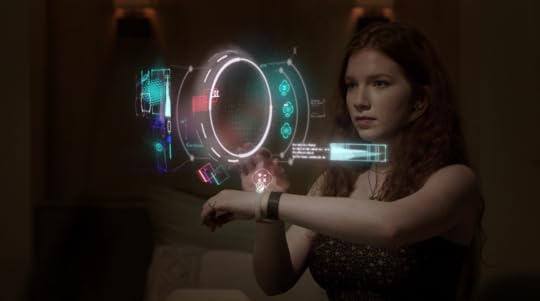
The Electric Dreams episode „Safe and Sound“ takes the basic premise of Dick’s story - a company that creates the need for its own products by way of creating a fearful environment for the consumers - and modernizes the ingredients. Instead of bomb shelters we get a high tech bracelet that functions as a kind of personal assistant, but is mainly a monitoring technology to ensure the safety of the collective. Cold War anxiety is replaced by fear of terrorism.
The showmakers add another layer to the story with the question of security vs. privacy, which PKD could have explored with his short story, but for some reason didn’t. Even though the surveillance state has always been one of his favorite themes.
The TV episode tells its story in a more nuanced way and with an actual line of suspense, which the source material completely lacked. It looks great, is enthralling and has a likable main actor in Annalise Basso. It also gets to the topic of privacy in a technologically advanced world, at a time when we are already surrounded by convenient products that happen to be pretty convenient for spying on us, too.
Great fun and more than a little scary. My favorite episode so far.
The PKD short story: 2.5/5
The Electric Dreams episode: 9/10
His stance makes his son Mike an outsider, though. He’s not allowed to use the school’s bomb shelter in case of emergency and he gets lampooned by the other kids, because his dad is not in line with social conventions.
Peer-pressure is also getting to Bob’s wife, since the whole neighborhood owns bomb shelters and the Fosters don’t.
Ultimately Bob has to give in, because he wants his family to feel safe.
“You know, this game has one real advantage over selling people cars and TV sets. With something like this we have to buy. It isn’t a luxury, something big and flashy to impress the neighbours, something we could do without. If we don’t buy this we die. They always said the way to sell something was create anxiety in people. Create a sense of insecurity – tell them they smell bad or look funny. But this makes a joke out of deodorant and hair oil. You can’t escape this. If you don’t buy, they’ll kill you. The perfect sales-pitch. Buy or die – new slogan.“
By buying the newest model he now puts pressure onto his neighbors to upgrade. But it won’t be enough for any of them. Because subsequently new weapons are developed and sold, which in turn creates the need for another upgrade of the bomb shelters. When does it ever stop?
“They're always improving weapons, Bob. Last week it was those grain-impregnation flakes. This week it's bore-pellets. You don't expect them to stop the wheels of progress because you finally broke down and bought a shelter, do you?”
And so it goes.
Unfortunately, the story was a little too straightforward, its messages too much on the nose for me to really get much enjoyment out of it.
It had me thinking, though, about uncontrolled consumerism vs. the need for technological advancements. But without ever challenging me as a reader while I was actually reading it.
So, even though this was devoid of surprises and ultimately felt somewhat flat in its execution, I still got something out of it and it wasn’t like reading it was painful or something. No, it was fairly easy, in fact. That’s a 2.5 for me.
The Electric Dreams episode „Safe and Sound“ takes the basic premise of Dick’s story - a company that creates the need for its own products by way of creating a fearful environment for the consumers - and modernizes the ingredients. Instead of bomb shelters we get a high tech bracelet that functions as a kind of personal assistant, but is mainly a monitoring technology to ensure the safety of the collective. Cold War anxiety is replaced by fear of terrorism.
The showmakers add another layer to the story with the question of security vs. privacy, which PKD could have explored with his short story, but for some reason didn’t. Even though the surveillance state has always been one of his favorite themes.
The TV episode tells its story in a more nuanced way and with an actual line of suspense, which the source material completely lacked. It looks great, is enthralling and has a likable main actor in Annalise Basso. It also gets to the topic of privacy in a technologically advanced world, at a time when we are already surrounded by convenient products that happen to be pretty convenient for spying on us, too.
Great fun and more than a little scary. My favorite episode so far.
The PKD short story: 2.5/5
The Electric Dreams episode: 9/10
March 7, 2019
Rally Around the Preparedness Flag!
Set in the Cold War Era, PKD’s short story Foster, You’re Dead, published in 1955, tells us about schoolboy Mike Foster, who suffers from anxiety and from peer group pressure at school because his father refuses to buy a bomb shelter for home use and to contribute to his community’s defense expenses. Unlike lots of Dick’s other short stories, this one here does not really outline a suspenseful plot with a twist in the ending, but it revolves around a couple of ideas that will probably haunt readers after they have finished the story for quite a while.
We largely see events through Mike Foster’s eyes, participating in his anguish and shame when he repeatedly fails at school activities with which pupils are to be prepared for survival after a nuclear strike. Apparently, the whole of society has succumbed to mass hysteria with regard to the threat of war, which – as we will see later – is not without its reasons. In addition to his lack of survival skills, which he will hopefully never have to use, Mike is looked askance at by his school-fellows and his teachers because his father is a so-called “anti-P”, i.e. somebody who refuses to buy the equipment that is recommended as a safeguard against the Bomb as well as to financially contribute to the public’s payments for defense measures. This latter decision, for instance, bars Foster’s son from the right to use the school’s bomb shelter whenever there will be a bombing raid.
Bob Foster, who is a very old-fashioned man, and whom his wife, in a fit of rage, eventually calls “a relic – a curiosity”, has very good reasons for not falling in with the crowd when it comes to spending money on bomb shelters and the like. His first good reason is that he does not really have the money ready, which, by the by, is no reason for lots of people, and governments, to spend this money anyway. His second reason testifies to his critical mind and his ability to see through things: He sees a perfidious marketing strategy at work behind all these efforts to make people prepare for the war in that it makes them ready to spend their money by appealing to basic instincts like fear:
He has seen through the war hysteria as a way of making money out of people, of hiding all sorts of gadget-mongering behind scare-mongering. In the end, however, he gives in to the social pressure that has been building up around him – not for his own sake, since he seems one of the few people that are immune to considerations as to what idiots might say or think about them, but for the sake of his wife and his son who most obviously suffer from being different from the others. Between the lines, this kind of scare-mongering is identified not only as a tool of boosting sales, of intensified consumerism but also as a political strategy of fragmentizing people (by making them individual consumers) and of making them fragments who are all subjected by a sense of conformity and the urge to avoid peer pressure. Now, with their own state-of-the-art bomb shelter – unfortunately, thanks to planned product obsolescence, not for long – his wife can finally look her neighbours in the face. And since his fathers pays contributions for a defense that will probably never be needed, Mike feels part of the school community.
At the same time, this kind of consumerism also fragmentizes people, as I have already mentioned, throws them back onto themselves and shows them a void that can only be filled with the products that are being advertised. This can be seen, for instance, when Mike again and again withdraws into the bowels of the bomb shelter where he is surrounded by everything he needs – food, books, vidtapes, games – and feels comfortable and at home. Is modern society not a bit like this, people sitting in their private shelters and surrounded by the things they consider needful?
What makes me very sad about this story is that even though he is not taken in by the strategies employed on him, Bob Foster finally has to play the game because otherwise he would have accepted his wife and his son being miserable. What’ more, in his effort to prevent their misery, he finally deepens it for his son, who sees that his father is unable to keep up with the Joneses. It always makes me sad to see children’s or young people’s minds poisoned or paralyzed with exaggerated fears because this bilks them out of the opportunity to enjoy their carefree years and to hone faculties and potentials that might one day be useful for them. The fears that govern our society may have changed, and what renders these fears so successful as means of governing people and making them part with their money readily is that they are often not wholly unfounded. Still, it is how to interpret the extent of a threat or the measures that must be taken to prevent it or attenuate its effects that offers a lot of leeway for governments and interest groups to make people accept eco-taxes, buy special products, feel guilty for all sorts of things they do or others have done, and therefore become pliable, and vote and live in a particular way. Another good thing is that if a scare fails to become reality, this can and often will be seen as proof that the measures taken and the policy adopted were the right thing. Plus, you can now tell from the things a person is afraid of or neglects to be afraid of whether it is a good or a bad person.
Basically, this short story is not only applicable to the U.S. in the 1950s but also to Germany in the year 2019.
Set in the Cold War Era, PKD’s short story Foster, You’re Dead, published in 1955, tells us about schoolboy Mike Foster, who suffers from anxiety and from peer group pressure at school because his father refuses to buy a bomb shelter for home use and to contribute to his community’s defense expenses. Unlike lots of Dick’s other short stories, this one here does not really outline a suspenseful plot with a twist in the ending, but it revolves around a couple of ideas that will probably haunt readers after they have finished the story for quite a while.
We largely see events through Mike Foster’s eyes, participating in his anguish and shame when he repeatedly fails at school activities with which pupils are to be prepared for survival after a nuclear strike. Apparently, the whole of society has succumbed to mass hysteria with regard to the threat of war, which – as we will see later – is not without its reasons. In addition to his lack of survival skills, which he will hopefully never have to use, Mike is looked askance at by his school-fellows and his teachers because his father is a so-called “anti-P”, i.e. somebody who refuses to buy the equipment that is recommended as a safeguard against the Bomb as well as to financially contribute to the public’s payments for defense measures. This latter decision, for instance, bars Foster’s son from the right to use the school’s bomb shelter whenever there will be a bombing raid.
Bob Foster, who is a very old-fashioned man, and whom his wife, in a fit of rage, eventually calls “a relic – a curiosity”, has very good reasons for not falling in with the crowd when it comes to spending money on bomb shelters and the like. His first good reason is that he does not really have the money ready, which, by the by, is no reason for lots of people, and governments, to spend this money anyway. His second reason testifies to his critical mind and his ability to see through things: He sees a perfidious marketing strategy at work behind all these efforts to make people prepare for the war in that it makes them ready to spend their money by appealing to basic instincts like fear:
”’You know, this game has one real advantage over selling people cars and TV sets. With something like this we have to buy. It isn’t a luxury, something big and flashy to impress the neighbours, something we could do without. If we don’t buy this we die. They always said the way to sell something was create anxiety in people. Create a sense of insecurity – tell them they smell bad or look funny. But this makes a joke out of deodorant and hair oil. You can’t escape this. If you don’t buy , they’ll kill you. The perfect sales-pitch. Buy or die – new slogan. […]’”
He has seen through the war hysteria as a way of making money out of people, of hiding all sorts of gadget-mongering behind scare-mongering. In the end, however, he gives in to the social pressure that has been building up around him – not for his own sake, since he seems one of the few people that are immune to considerations as to what idiots might say or think about them, but for the sake of his wife and his son who most obviously suffer from being different from the others. Between the lines, this kind of scare-mongering is identified not only as a tool of boosting sales, of intensified consumerism but also as a political strategy of fragmentizing people (by making them individual consumers) and of making them fragments who are all subjected by a sense of conformity and the urge to avoid peer pressure. Now, with their own state-of-the-art bomb shelter – unfortunately, thanks to planned product obsolescence, not for long – his wife can finally look her neighbours in the face. And since his fathers pays contributions for a defense that will probably never be needed, Mike feels part of the school community.
At the same time, this kind of consumerism also fragmentizes people, as I have already mentioned, throws them back onto themselves and shows them a void that can only be filled with the products that are being advertised. This can be seen, for instance, when Mike again and again withdraws into the bowels of the bomb shelter where he is surrounded by everything he needs – food, books, vidtapes, games – and feels comfortable and at home. Is modern society not a bit like this, people sitting in their private shelters and surrounded by the things they consider needful?
What makes me very sad about this story is that even though he is not taken in by the strategies employed on him, Bob Foster finally has to play the game because otherwise he would have accepted his wife and his son being miserable. What’ more, in his effort to prevent their misery, he finally deepens it for his son, who sees that his father is unable to keep up with the Joneses. It always makes me sad to see children’s or young people’s minds poisoned or paralyzed with exaggerated fears because this bilks them out of the opportunity to enjoy their carefree years and to hone faculties and potentials that might one day be useful for them. The fears that govern our society may have changed, and what renders these fears so successful as means of governing people and making them part with their money readily is that they are often not wholly unfounded. Still, it is how to interpret the extent of a threat or the measures that must be taken to prevent it or attenuate its effects that offers a lot of leeway for governments and interest groups to make people accept eco-taxes, buy special products, feel guilty for all sorts of things they do or others have done, and therefore become pliable, and vote and live in a particular way. Another good thing is that if a scare fails to become reality, this can and often will be seen as proof that the measures taken and the policy adopted were the right thing. Plus, you can now tell from the things a person is afraid of or neglects to be afraid of whether it is a good or a bad person.
Basically, this short story is not only applicable to the U.S. in the 1950s but also to Germany in the year 2019.
![Profile Image for [ J o ].](https://i.gr-assets.com/images/S/compressed.photo.goodreads.com/users/1673171874i/4639825._UY200_CR4,0,200,200_.jpg)
May 7, 2018
A nice quickie with that lovely dystopian end-of-the-world vibe. It's a nice contrast between two people who just don't know: the boy who wants to be safe and the father who wants cold, hard facts. It has so many little threads of thought to follow, yet it never develops them all within the story itself. How do you protect your family but keep your own morals and beliefs? How do you know when people are telling the truth? What to do, how to do it. Peer pressure, the gap between generations.
Reactionary to the threat of the cold war at the time of writing, yet foreseeing the ridiculous obsession people have of buying shit they don't need.
Either way, you're gonna look stupid.
Reactionary to the threat of the cold war at the time of writing, yet foreseeing the ridiculous obsession people have of buying shit they don't need.
Either way, you're gonna look stupid.


January 22, 2018
Rating: 3* of five, 2.5 for the story and 4 for the episode
This story wasn't that great. Mike is a flat, annoying git of a character, one note all the way through; dad's not a lot better; the central principle of the tale, consumerism is bad, is so ham-fistedly bitch-slappingly shoved on us that the truth and reality of its 60-year-old message is drowned out by the reader's cries of "ow! Ow! Stop hitting me!"
The episode, called "Safe and Sound," that Philip K. Dick's Electric Dreams made from it, is more nuanced. It sets the tale in a terrorism-obsessed security surveillance state, only lightly exaggerated from the one we live in. Foster is now a socially anxious teenaged girl, no more likeable than Mike was in the story but more understandable because she is manipulated by more subtle means than Mike ever was. In fact the means of manipulation is devilishly clever. I think it's going on today, in fact *glowers in Apple's general direction* and is probably already as disgusting as the show makes it.
The visuals are, as always, stunning. The surface gloss and the brilliance of the color palette is perfection. The meanings aren't subtle, but the effect is generally well handled and affects the viewer's perception of the characters without becoming distractingly obvious.
Until the ending, of course. When teenaged Foster's social apotheosis is achieved, it's signaled by painfully obvious and a bit over the top recolorization. It's a minor enough flaw that I can't really bear down on it, but it's one that's consistent in the entire series: Characters whose status changes in these tales are re-colored. As tropes go it's an effective one. It can be done well, eg "Human Is" and even "Real Life," but when it becomes noticeable to the casual viewer it might be time to dial back a notch or two for future episodes.
And there will be future episodes. Black Mirror has had the SFnal anthology series niche to itself long enough, and PKD's paranoid anti-consumerism anti-surveillance ouevre is RIPE for today's audiences to consume.
This story wasn't that great. Mike is a flat, annoying git of a character, one note all the way through; dad's not a lot better; the central principle of the tale, consumerism is bad, is so ham-fistedly bitch-slappingly shoved on us that the truth and reality of its 60-year-old message is drowned out by the reader's cries of "ow! Ow! Stop hitting me!"
The episode, called "Safe and Sound," that Philip K. Dick's Electric Dreams made from it, is more nuanced. It sets the tale in a terrorism-obsessed security surveillance state, only lightly exaggerated from the one we live in. Foster is now a socially anxious teenaged girl, no more likeable than Mike was in the story but more understandable because she is manipulated by more subtle means than Mike ever was. In fact the means of manipulation is devilishly clever. I think it's going on today, in fact *glowers in Apple's general direction* and is probably already as disgusting as the show makes it.
The visuals are, as always, stunning. The surface gloss and the brilliance of the color palette is perfection. The meanings aren't subtle, but the effect is generally well handled and affects the viewer's perception of the characters without becoming distractingly obvious.
Until the ending, of course. When teenaged Foster's social apotheosis is achieved, it's signaled by painfully obvious and a bit over the top recolorization. It's a minor enough flaw that I can't really bear down on it, but it's one that's consistent in the entire series: Characters whose status changes in these tales are re-colored. As tropes go it's an effective one. It can be done well, eg "Human Is" and even "Real Life," but when it becomes noticeable to the casual viewer it might be time to dial back a notch or two for future episodes.
And there will be future episodes. Black Mirror has had the SFnal anthology series niche to itself long enough, and PKD's paranoid anti-consumerism anti-surveillance ouevre is RIPE for today's audiences to consume.

June 8, 2014
My favourite PKD. Written at the time of the cold war and first published around 1956 I can't help thinking it would have had a profound impact on society if science fiction were better appreciated as a genre. I grew up in the shadow of the A bomb and could relate so much to the main character. This story contains so much social commentary on consumerism but nothing is pushed down our throats.
It isn't movie material so you'll have to pick up a copy to read it.
It isn't movie material so you'll have to pick up a copy to read it.
March 18, 2025
"They're trying to scare people into buying things they don't need... Factories can keep turning out guns and gas masks forever, and as long as people are afraid they'll keep paying for them because they think if they don't they might get killed... but he's never going to stop buying shelters to protect his children... That's what they want--they want you to keep buying."
"We should have been a country, a whole nation, one hundred and seventy million people working together to defend ourselves. And instead, we're a lot of separate little towns, little walled forts. Sliding and slipping back to the Middle Ages. Raising our separate armies--"
"He was blank, his mind empty and dead. He walked automatically, without consciousness or feeling. A huge sign, bright and colorful. PEACE ON EARTH GOOD WILL TO MEN. PUBLIC SHELTER ADMISSION 50¢"
Excerpt on Philip K. Dick - "The questions that drove him concerned the very core of life itself: What is human? What is real? ... Testing the limits of humanity and reality over and over again, seeing where they broke and where they held together."
"The story first struck us as a clever, cynical study of corporate entities exploiting youthful anxiety for profit. But tucked just under the surface... There was a very real father and a very real son, each with believable and achingly true reactions to an unfair world, whose relationship was being torn apart because their subjective points of view were irreconcilable... Safety is more than mere survival... Tribal instincts can trump blood relations... Cultural fears involving foreign invaders, personal security, perceived loss of cultural status, ideological gaps between generations... And though external circumstances are constantly shifting, these fundamental human attributes remain terrifyingly, beautifully stagnant."
"Only once the story is over, and we take another look at the world around us, do we realize: It's all completely true."
"We should have been a country, a whole nation, one hundred and seventy million people working together to defend ourselves. And instead, we're a lot of separate little towns, little walled forts. Sliding and slipping back to the Middle Ages. Raising our separate armies--"
"He was blank, his mind empty and dead. He walked automatically, without consciousness or feeling. A huge sign, bright and colorful. PEACE ON EARTH GOOD WILL TO MEN. PUBLIC SHELTER ADMISSION 50¢"
Excerpt on Philip K. Dick - "The questions that drove him concerned the very core of life itself: What is human? What is real? ... Testing the limits of humanity and reality over and over again, seeing where they broke and where they held together."
"The story first struck us as a clever, cynical study of corporate entities exploiting youthful anxiety for profit. But tucked just under the surface... There was a very real father and a very real son, each with believable and achingly true reactions to an unfair world, whose relationship was being torn apart because their subjective points of view were irreconcilable... Safety is more than mere survival... Tribal instincts can trump blood relations... Cultural fears involving foreign invaders, personal security, perceived loss of cultural status, ideological gaps between generations... And though external circumstances are constantly shifting, these fundamental human attributes remain terrifyingly, beautifully stagnant."
"Only once the story is over, and we take another look at the world around us, do we realize: It's all completely true."
July 25, 2026
I appeared on a podcast about this wonderful Dick satire of American commercialism, defense spending, and jingoism: https://sciencefictionruminations.com...
My written review: https://sciencefictionruminations.com...
My written review: https://sciencefictionruminations.com...

May 27, 2025
Маленький, если не первый, то один из первых рассказов Дика. Идеальный сюжет для серии Чёрного Зеркала в эстетике предФоллаута: те же гротескные 50е, ядерная лихорадка и реклама-реклама-реклама.
October 27, 2025
In a capitalist world are people being scammed by war. Mr foster is vehemently against the scam of bomb shelters and anti terrorist taxes and products. With zero conviction , one day he changes his mind because his wife and son are mad and buys a top of the line bomb shelter but as new weapons are invented he can’t afford the shelter.
Feels like he thinks he’s being smart at Christmas and none of the characters are likable
Feels like he thinks he’s being smart at Christmas and none of the characters are likable
January 15, 2026
Sheesh, mega zynische dystopie. bomb shelter admission 50¢

March 26, 2017
Satire on consumerism and fear of nuclear war.

October 26, 2014
Terrific satire of consumerism and cold war paranoia. One of PKD's best.

February 20, 2020
"One day I saw a newspaper headline reporting that the President suggested that if Americans had to buy their bomb shelters, rather than being provided with them by the government, they'd take better care of them, an idea which made me furious."
Эти слова Филиппа Дика как никогда актуальны в условиях активного и в значительной степени неудержимого развития технологий. Сегодня рекомендует не Президент (который вовсе необязательно пишется с заглавной), но - Сосед (а тот, благодаря истории философии Другого - непременно с заглавной); в роли Соседа может выступать кто угодно - блогер, популяризатор науки, экономист, литератор, спортсмен, духовный учитель, старушка в очереди, кассир, библиотекарь, контролёр, судья, служащий правоохранительных органов, попрошайка у входа в церковь и даже обыкновенный городской голубь самого непритязательного серого, бетонно-грозового цвета, если вдруг ему доведётся как-либо привлечь Ваше рассеянное внимание к небольшому буклектику своевременно оставленному благоразумным потребителем на лавочке.
В благодарность птицу можно накормить и может даже сопроводить в ближайшее ветеринарное отделение.
Что касается вышеозначенной цитаты: мы покупаем не убежища, но, например, виртуальные диски для того, чтобы сохранить в недоступности (частично и для нас самих) важную информацию, определённые записи, фотоснимки, голос родного человека, Вашу собственную мелодию или очередной литературный оборот, сочинённый под впечатлением от небольшого рассказика почившего с миром полвека назад фантаста и чашечки свежего зелёного чая; покупаем, не задаваясь вопросом, каким образом даже самым неформальным (инди) разработчикам может быть выгодна безопасность данных, потенциальная ценность которых им в принципе может представляться смехотворной; а обращаемся к инди-софту лишь за тем, что на пробные продукты и для первых пользователей (или при соблюдении каких-либо других, откровенно игровых условий) цена будет снижена.
Мы сохраняем собственное здоровье для того, чтобы можно было постоянно обновлять наши базы данных, информацию, содержащуюся в них, соответственно, своевременно вносить необходимую плату, которая является показателем нашего психологического здоровья, в том числе, для работодателя.
Мы покупаем и приобретаем за "кровные", таким образом будто проводя иллюзорное разграничение финансов на "свои" и "чужие", "заработанные" и "дармовые", говоря, что деньги равно "пахнут" и "не пахнут" до тех пор, пока трата их соблюдается нашими целями, принципами и намерениями, что опять же касается непосредственно способности своевременно оплачивать счета. По сути, мы покупаем деньги, с которыми в мгновение 108-мегапиксельного ока должны расставаться, дабы не терять возможности получить ещё одну долю, более статусную, нежели количественную, и не терять способности с нею расстаться - что есть одним из столпов цивилизации; расставание с объектом, отпускание объекта внимания из поля зрения и угасание интереса, который культурно призван к угасанию, наблюдение за всеобщим разложением и принятие оборонительной позиции, которая выступает ни более чем пограничным столбом для картографии характерного разложения, называемого (самовозобновляющимся, вечно перерождающимся, по Ницше) национальным достоянием.
Мы покупаем труды определённого мыслителя, того же Ницше - и обращаем их в большее посмешище, нежели они являлись сами по себе, истолковывая многажды истолкованное до состояния, требующего обратного движения - к переоценке всех возможных толкований как равноценных, вне зависимости от социальных рисков, и к необходимости внедрения определённого табу на толкование вообще, сроком на добрую сотню лет; и табу это необходимо, потому что повсюду за нами следует Президент, обернувшийся Соседом, когда-то в далёком оцифрованном и отсканированном прошлом притворявшийся Президентом. Это продукт гуманизации - Сосед, требующий толерантности, но не имеющий понятий о том, каким образом можно стать толерантным самому.И каждый из нас - чей-то Сосед.
Другое дело, что, по крайней мере, убежища ещё остаются на уровне разработок годов 80ых, а вся популярная технология действует по принципу адаптеров - это дань чувству жалости, которое испытывает технократ при виде "развивающихся республик".
"We’re all going to be little brown gophers. We’ll all have to learn to dig down in the rubble and find the good things, because that’s where they’ll be."
И мы будем маленькими коричневыми сусликами, будем рыться в хламе нашей маленькой личной истории, истории болезни, CV, аутодафе/эро/биографии в поисках вещей достойных нашего животного внимания, нашего неразделённого коллективного одиночества, нашей мнительности - материалов, что были бы достаточно ценны, достаточно популярны и маргинальны, чтобы сохранить нашу красоту и здоровье, а прежде всего дать возможность оплатить каждый из полагающихся счетов. Впрочем, к чему излишняя драматизация, если ощущение собственной информативной животности по мере укрепления позиций в общественном сознании, по мере развития и устроения "гегелевского духа" - постепенно растает, ассимилируется в среде непрерывной удовлетворённости жизнью, сохраняющей, благодаря усиленным научным изысканиям, статус чуда?
Эти слова Филиппа Дика как никогда актуальны в условиях активного и в значительной степени неудержимого развития технологий. Сегодня рекомендует не Президент (который вовсе необязательно пишется с заглавной), но - Сосед (а тот, благодаря истории философии Другого - непременно с заглавной); в роли Соседа может выступать кто угодно - блогер, популяризатор науки, экономист, литератор, спортсмен, духовный учитель, старушка в очереди, кассир, библиотекарь, контролёр, судья, служащий правоохранительных органов, попрошайка у входа в церковь и даже обыкновенный городской голубь самого непритязательного серого, бетонно-грозового цвета, если вдруг ему доведётся как-либо привлечь Ваше рассеянное внимание к небольшому буклектику своевременно оставленному благоразумным потребителем на лавочке.
В благодарность птицу можно накормить и может даже сопроводить в ближайшее ветеринарное отделение.
Что касается вышеозначенной цитаты: мы покупаем не убежища, но, например, виртуальные диски для того, чтобы сохранить в недоступности (частично и для нас самих) важную информацию, определённые записи, фотоснимки, голос родного человека, Вашу собственную мелодию или очередной литературный оборот, сочинённый под впечатлением от небольшого рассказика почившего с миром полвека назад фантаста и чашечки свежего зелёного чая; покупаем, не задаваясь вопросом, каким образом даже самым неформальным (инди) разработчикам может быть выгодна безопасность данных, потенциальная ценность которых им в принципе может представляться смехотворной; а обращаемся к инди-софту лишь за тем, что на пробные продукты и для первых пользователей (или при соблюдении каких-либо других, откровенно игровых условий) цена будет снижена.
Мы сохраняем собственное здоровье для того, чтобы можно было постоянно обновлять наши базы данных, информацию, содержащуюся в них, соответственно, своевременно вносить необходимую плату, которая является показателем нашего психологического здоровья, в том числе, для работодателя.
Мы покупаем и приобретаем за "кровные", таким образом будто проводя иллюзорное разграничение финансов на "свои" и "чужие", "заработанные" и "дармовые", говоря, что деньги равно "пахнут" и "не пахнут" до тех пор, пока трата их соблюдается нашими целями, принципами и намерениями, что опять же касается непосредственно способности своевременно оплачивать счета. По сути, мы покупаем деньги, с которыми в мгновение 108-мегапиксельного ока должны расставаться, дабы не терять возможности получить ещё одну долю, более статусную, нежели количественную, и не терять способности с нею расстаться - что есть одним из столпов цивилизации; расставание с объектом, отпускание объекта внимания из поля зрения и угасание интереса, который культурно призван к угасанию, наблюдение за всеобщим разложением и принятие оборонительной позиции, которая выступает ни более чем пограничным столбом для картографии характерного разложения, называемого (самовозобновляющимся, вечно перерождающимся, по Ницше) национальным достоянием.
Мы покупаем труды определённого мыслителя, того же Ницше - и обращаем их в большее посмешище, нежели они являлись сами по себе, истолковывая многажды истолкованное до состояния, требующего обратного движения - к переоценке всех возможных толкований как равноценных, вне зависимости от социальных рисков, и к необходимости внедрения определённого табу на толкование вообще, сроком на добрую сотню лет; и табу это необходимо, потому что повсюду за нами следует Президент, обернувшийся Соседом, когда-то в далёком оцифрованном и отсканированном прошлом притворявшийся Президентом. Это продукт гуманизации - Сосед, требующий толерантности, но не имеющий понятий о том, каким образом можно стать толерантным самому.И каждый из нас - чей-то Сосед.
Другое дело, что, по крайней мере, убежища ещё остаются на уровне разработок годов 80ых, а вся популярная технология действует по принципу адаптеров - это дань чувству жалости, которое испытывает технократ при виде "развивающихся республик".
"We’re all going to be little brown gophers. We’ll all have to learn to dig down in the rubble and find the good things, because that’s where they’ll be."
И мы будем маленькими коричневыми сусликами, будем рыться в хламе нашей маленькой личной истории, истории болезни, CV, аутодафе/эро/биографии в поисках вещей достойных нашего животного внимания, нашего неразделённого коллективного одиночества, нашей мнительности - материалов, что были бы достаточно ценны, достаточно популярны и маргинальны, чтобы сохранить нашу красоту и здоровье, а прежде всего дать возможность оплатить каждый из полагающихся счетов. Впрочем, к чему излишняя драматизация, если ощущение собственной информативной животности по мере укрепления позиций в общественном сознании, по мере развития и устроения "гегелевского духа" - постепенно растает, ассимилируется в среде непрерывной удовлетворённости жизнью, сохраняющей, благодаря усиленным научным изысканиям, статус чуда?

November 24, 2021
genial, cel mai bun exemplu de manufactured consent pe care puteam să îl citesc.
January 31, 2024
"Foster, You're Dead" by Philip K. Dick offers a poignant and melancholic portrayal of the societal pressures and pitfalls of American consumerism. The story serves as a stark commentary on the relentless pursuit of material success, embodied by the pervasive cultural narrative of "keeping up with the Joneses."
Dick's narrative skillfully exposes the dark underbelly of capitalism and commercialism, where scare tactics are employed to fuel a constant cycle of consumption. The story's poignancy lies in its portrayal of how society convinces individuals that they need things they truly don't, creating a facade of necessity.
Amidst this backdrop, the narrative explores the facades of caring and camaraderie that permeate society. The illusion of genuine concern for one another is shattered, revealing a deeper truth about the lack of meaningful connection in a world driven by material pursuits.
The story adeptly delves into the clash between those who perceive the game being played and those who willingly participate. The resulting struggles and conflicts between these perspectives serve as a microcosm of the societal tensions born from a culture of consumerism.
"Foster, You're Dead" leaves readers with a somber reflection on the consequences of a society driven by materialistic ideals, underscoring the inherent disconnect between individuals and the struggles that arise when conflicting worldviews collide.
Dick's narrative skillfully exposes the dark underbelly of capitalism and commercialism, where scare tactics are employed to fuel a constant cycle of consumption. The story's poignancy lies in its portrayal of how society convinces individuals that they need things they truly don't, creating a facade of necessity.
Amidst this backdrop, the narrative explores the facades of caring and camaraderie that permeate society. The illusion of genuine concern for one another is shattered, revealing a deeper truth about the lack of meaningful connection in a world driven by material pursuits.
The story adeptly delves into the clash between those who perceive the game being played and those who willingly participate. The resulting struggles and conflicts between these perspectives serve as a microcosm of the societal tensions born from a culture of consumerism.
"Foster, You're Dead" leaves readers with a somber reflection on the consequences of a society driven by materialistic ideals, underscoring the inherent disconnect between individuals and the struggles that arise when conflicting worldviews collide.
November 21, 2024
Dick can always be counted on for a novel idea but there are some fun bits of prose in here too. Stuff that's direct and simple but creative. "a small, hunched-over figure, hair scraggly and
gray, shoulder blades like broken wings" "slipping into a routine he had worked out and petrified over the years". His gumshoe type characters (not always exactly detectives but still that mid century skeptic type, desperate and down on their luck) and their typical surrounding cast (e.g. docile but neurotic housewives) haven't always held up, but the writing style really has in my opinion.
gray, shoulder blades like broken wings" "slipping into a routine he had worked out and petrified over the years". His gumshoe type characters (not always exactly detectives but still that mid century skeptic type, desperate and down on their luck) and their typical surrounding cast (e.g. docile but neurotic housewives) haven't always held up, but the writing style really has in my opinion.

January 20, 2017
Great short story.
I can certainly appreciate the social comments on peer pressure from our overall society. I can appreciate the commentary on the constant pressures of perpetual consumerism. I can also sympathize with the efforts of a father to do the right thing for his family, but ultimately collapsing under the social pressures.
I can certainly appreciate the social comments on peer pressure from our overall society. I can appreciate the commentary on the constant pressures of perpetual consumerism. I can also sympathize with the efforts of a father to do the right thing for his family, but ultimately collapsing under the social pressures.

March 15, 2018
This is a pretty low-key entry from PKD. Set against the backdrop of the looming Cold War, it understandably positions Russia and the US as opponents. But notably, its anti-consumerism and peer pressure themes come through more strongly. and in this it is quite cleverly done. The characters, however, are more apathetic than compelling.

July 17, 2026
"They always said the way to sell something was create anxiety in people. Create a sense of insecurity— tell them they smell bad or look funny. But this makes a joke out of deodorant and hair oil. You can't escape this. If you don't buy, they'll kill you. The perfect sales-pitch."
Short Story of the Day 7-16-26
Short Story of the Day 7-16-26
April 5, 2020
This story , written in the 1950's , is set in the far future year of 1917. I t centers around a future world that is preoccupied by the potential for an imminent war. PKD is not no subtly attacking the underlying consumerism associated with purchasing safety, such as a bomb shelter.

May 9, 2020
Interesting and very realistic story! Amazing. Maybe it was so well predicted that it's already happening; how we value economics and money over 'human' values like emotional availability and support.

April 17, 2026
Dang. For a sci-fi story written in the 1950s about the cold war, this hasn't aged a minute. The leveraging of fear to drive consumerism and the economy, the indoctrination of children at school, the gnawing existential anxiety. . .Well done, Philip K. Dick.

April 4, 2018
Slice of life tragedy done in a way only PKD can do!

February 12, 2019
Brilliant, as expected.

August 28, 2020
Uno piensa que el cuento está narrado desde la perspectiva adulta pero no, y eso se aprecia únicamente al final

March 23, 2024
Capitalism makes conspicuous consumption into necessary consumption.

May 10, 2024
I on the nose satire about consumerism.
Displaying 1 - 30 of 46 reviews