

What do you think?

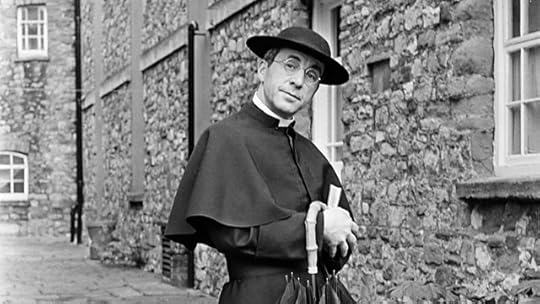
Father Brown
The Blue Cross: A Father Brown Mystery
This Father Brown mystery is one of twelve from the first collection of short stories about the diminutive priest, "The Innocence of Father Brown."
The complete text of G.K. Chesterton's "The Blue Cross" is reprinted unabridged. In addition, study materials appropriate for grades 7-12 are included, featuring word study, comprehension questions, and writing prompts.
We meet Father Brown, Inspector Valentin, and the notorious criminal Flambeau for the first time. Valentin, head of the Paris Police, has tracked Flambeau across Europe and now, to the vicinity of London. It's only a matter of time but Flambeau is illusive. His only distinguishing feature? He's well over 6 foot tall.
Librarian's note: this entry is for the story, "The Blue Cross." Collections of short stories by the author can be found elsewhere.
The complete text of G.K. Chesterton's "The Blue Cross" is reprinted unabridged. In addition, study materials appropriate for grades 7-12 are included, featuring word study, comprehension questions, and writing prompts.
We meet Father Brown, Inspector Valentin, and the notorious criminal Flambeau for the first time. Valentin, head of the Paris Police, has tracked Flambeau across Europe and now, to the vicinity of London. It's only a matter of time but Flambeau is illusive. His only distinguishing feature? He's well over 6 foot tall.
Librarian's note: this entry is for the story, "The Blue Cross." Collections of short stories by the author can be found elsewhere.
2 pages, Audio Cassette
First published January 1, 1910
About the author
G.K. Chesterton
4,171 books6,050 followersGilbert Keith Chesterton was an English writer, philosopher, lay theologian, and literary and art critic.
He was educated at St. Paul’s, and went to art school at University College London. In 1900, he was asked to contribute a few magazine articles on art criticism, and went on to become one of the most prolific writers of all time. He wrote a hundred books, contributions to 200 more, hundreds of poems, including the epic Ballad of the White Horse, five plays, five novels, and some two hundred short stories, including a popular series featuring the priest-detective, Father Brown. In spite of his literary accomplishments, he considered himself primarily a journalist. He wrote over 4000 newspaper essays, including 30 years worth of weekly columns for the Illustrated London News, and 13 years of weekly columns for the Daily News. He also edited his own newspaper, G.K.’s Weekly.
Chesterton was equally at ease with literary and social criticism, history, politics, economics, philosophy, and theology.
He was educated at St. Paul’s, and went to art school at University College London. In 1900, he was asked to contribute a few magazine articles on art criticism, and went on to become one of the most prolific writers of all time. He wrote a hundred books, contributions to 200 more, hundreds of poems, including the epic Ballad of the White Horse, five plays, five novels, and some two hundred short stories, including a popular series featuring the priest-detective, Father Brown. In spite of his literary accomplishments, he considered himself primarily a journalist. He wrote over 4000 newspaper essays, including 30 years worth of weekly columns for the Illustrated London News, and 13 years of weekly columns for the Daily News. He also edited his own newspaper, G.K.’s Weekly.
Chesterton was equally at ease with literary and social criticism, history, politics, economics, philosophy, and theology.
Ratings & Reviews
Friends & Following
Create a free account to discover what your friends think of this book!
Community Reviews
Displaying 1 - 30 of 147 reviews

April 15, 2021
Kurzweilige Unterhaltung mit angenehmen Sprechern, denen ich gerne gelauscht habe. Die Musikuntermalung hat mir auch gut gefallen. Etwas schade fand ich, dass die Geschichte in die moderne Zeit geholt wurde; da geht viel vom Charme der Pater Brown- Geschichten verloren.

June 24, 2017
I remember reading a couple of Chesterton's Father Brown books in my youth. Was searching for something to listen to while on a short trip and ran across this, thinking it would be nice to discover the beginning of this classic series, selected it and was not disappointed. A really short story but well read to keep my attention. If I can find more of Father Brown I will give them a go.
November 29, 2020
3 Stars. Our introduction to the diminutive Father Brown, Chesterton's long-lived Catholic priest. It's not much of a first appearance, but it does leave the reader looking for more. The author describes Brown in the most bland fashion: "A face as round and dull as a Norfolk dumpling; he had eyes as empty as the North Sea." Obviously written before oil rigs and wind turbines! The 1910 story, just 16 pages, first showed up in "The Saturday Evening Post." Mine came from "The Complete Father Brown Stories" of 2013. There are 53 of them! The BBC series with Mark Williams has rightly revived interest in the series written between 1910 and 1935. The first person we meet is the famous Paris detective, Inspector Aristide Valentin, who is hot on the trail of Flambeau, also famous, but as a thief and a man with many disguises. Valentin thinks he may be travelling to London to reconnoitre a religious congress. On the train Valentin encounters an innocuous little priest carrying numerous bundles including one, a silver cross with blue stones. Will that cross be Flambeau's target? The ingenuity of Father Brown comes to the fore. Here's a story for you to enjoy. (November 2020)

October 4, 2025
Meh.
Not worth reviewing.
For the moment at least.
It’s public domain. You can find it HERE.
-----------------------------------------------
PERSONAL NOTE :
[1920] [15p] [Fiction] [1.5] [Not Recommendable]
-----------------------------------------------
Meh.
No vale la pena reseñarlo.
Al menos por ahora.
Es dominio público, lo pueden encontrar ACA.
-----------------------------------------------
NOTA PERSONAL :
[1920] [15p] [Ficción] [1.5] [No Recomendable]
-----------------------------------------------
Not worth reviewing.
For the moment at least.
It’s public domain. You can find it HERE.
-----------------------------------------------
PERSONAL NOTE :
[1920] [15p] [Fiction] [1.5] [Not Recommendable]
-----------------------------------------------
Meh.
No vale la pena reseñarlo.
Al menos por ahora.
Es dominio público, lo pueden encontrar ACA.
-----------------------------------------------
NOTA PERSONAL :
[1920] [15p] [Ficción] [1.5] [No Recomendable]
-----------------------------------------------

November 4, 2021
Absolutely loved it. While nothing comes close to a Sherlock Holmes mystery, I found myself enjoying this almost as much as one. The criminals are followed by a detective and some extremely weird events that I knew would play into the story, but for the life of me couldn't figure out how. I love mysteries and I love trying to figure out the clues and mystery on my own. This kept me captured the whole time. I had never heard of Chesterton before but I'll be looking of more of his stories. Highly recommended if you're looking for a captivating short mystery!

October 1, 2017
This was my first experience with G.K. Chesterton and The Father Brown Series. I had no idea what I was in for in this book. To my surprise, it was awesome! Assuming the other books in the series are as good as this short story, I've just got to read the rest of the series. More on this later...

June 13, 2019
GK Chesterton's debut mystery introduces French antagonist Flambeau and treats the reader to Father Brown's unique humour and skills at solving mysteries.
The French Inspector travelling to England to expose and re-capture the nefarious Flambeau follows the trail of Father Brown to a surprise conclusion .
The French Inspector travelling to England to expose and re-capture the nefarious Flambeau follows the trail of Father Brown to a surprise conclusion .

July 21, 2018
Zanimljive i lijepo napisane kriminalističke novele.


January 1, 2023
An odd little story with a satisfying ending.

October 4, 2022
This story is a memorable piece of cozy writing, full of quirky humour and wit. Apart from that, and a double game of cat & mouse, there really isn't anything mysterious.
Nevertheless, beautiful stuff to pass time.
Nevertheless, beautiful stuff to pass time.

November 4, 2020
I'[ve been meaning to start this series for years. As the Alec Guiness film version popped up and I viewed it and loved it, I made a more concerted effort to get this started.
This first tale by Chesterton has me hooked. Love the backing into the character approach. The film does something similar but in a very different and successful way. This version is a trail of small mysteries that leads to a nifty conclusion.
The only real character focus is the detective Valentin, which makes it all uncertain where the tale is going. Having seen the film version, I had a pretty good idea, but I'm writing, as I try to, objectively.
The settings are critical and well done. Especially in a tale that is a methodical chase. The approach keep the tale moving.
Bottom line: I recommend this book. 10 out of 10 points.
This first tale by Chesterton has me hooked. Love the backing into the character approach. The film does something similar but in a very different and successful way. This version is a trail of small mysteries that leads to a nifty conclusion.
The only real character focus is the detective Valentin, which makes it all uncertain where the tale is going. Having seen the film version, I had a pretty good idea, but I'm writing, as I try to, objectively.
The settings are critical and well done. Especially in a tale that is a methodical chase. The approach keep the tale moving.
Bottom line: I recommend this book. 10 out of 10 points.

May 26, 2020
I love an English cozy mystery!

December 6, 2025
بداية قراءة هذه السلسلة من ادب الجريمة الكلاسيكي
وكانت بداية موفقة وان شاء الله استمر فى تكملتها او على الاقل استكمال المجموعة الاولى منها وهى نقاء الاب براون
وهى المكونة من 12 قصة ان شاء الله
وكانت بداية موفقة وان شاء الله استمر فى تكملتها او على الاقل استكمال المجموعة الاولى منها وهى نقاء الاب براون
وهى المكونة من 12 قصة ان شاء الله

August 29, 2020
لم يكنْ منطقيًّا أنْ يسمعَ المجرمُ الشهيرُ «فلامبو» عن الصليبِ الفضِّيِّ المُطعَّمِ بالياقوتِ الأزرقِ الذي بحوزةِ «الأبِ براون» دونَ أن يسعى سعيًا حثيثًا للاستيلاءِ عليه، مستعينًا بعبقريتِه الفريدةِ من نوعِها، التي جعلَتْ منه واحدًا من أشهرِ عُتاةِ الإجرامِ في العالَم؛ تلك العبقريةِ التي لم تَتجلَّ في التخطيطِ لجرائمِه فحسب، بل أيضًا في قُدْرتِه الفائقةِ على التنكُّر؛ ما جعلَ اقتفاءَ أثرِه مُعْضلةً كبرى بالنسبةِ إلى كلِّ أجهزةِ الشرطةِ في العالَم، وحتى بالنسبةِ إلى المحقِّقِ الفرنسيِّ البارع «فالانتين» القادمِ خصوصًا من فرنسا بهدفِ إلقاءِ القبضِ عليه. ولكنْ أمامَ المنطقِ السليم، تسقطْ كلُّ عبقريةٍ مهما كانَ تفرُّدُها. فكيفَ أسهَمَ «الأبُ براون» في الإيقاعِ بهذا المجرمِ الخطير؟ وكيفَ استطاعَ إنقاذَ «فالانتين» من براثنِه؟ سنتعرَّفُ على تلك التفاصيلِ المثيرةِ في هذه القصةِ المُشوِّقة.

August 23, 2020
Aristride Valentin, head of the Paris police, follows the curious trail of Flambeau, a notorious French criminal and master of disguise, across London and onto Hampstead Heath. Here we are introduced to Father Brown, though the main protagonist in this adventure is really the French detective Valentin. Valentin along with two policemen follow two strange men dressed as priests but Valentin wonders if it all some crazy goose chase that he may have dragged the policemen on an errand "no saner than seeking figs on the thistles" of Hampstead Heath. G K Chesterton can certainly tell a fascinating tale.

May 6, 2019
I love reading big guy Gilbert Chestertone, his stile is so withy and charming, his characters are so interesting and complex, his stories are intriguing. Blue Cross is his first book about detective priest father Brown and it delivers greatly and you will want more after this.

September 19, 2019
“You attacked reason. [That’s] bad theology”
This is the best father brown story I’ve read so far. I love that he’s able to use confessions to deduce crime. I thought that was clever, and the mystery this time actually kept me hanging on.
This is the best father brown story I’ve read so far. I love that he’s able to use confessions to deduce crime. I thought that was clever, and the mystery this time actually kept me hanging on.

May 27, 2020
A delightful little mystery with a brilliant and charismatic detective, a unique and fascinating villain, and a surprising little priest. I loved the uniqueness and charm of the story, as well as the surprisingly brilliant ending.

October 18, 2009
Available at ThoughtAudio.

August 15, 2013
Quite a funny and intelligent read the best Father Brown I've read so far.

December 7, 2019
Maybe my expectations were too high, or maybe my childhood of Agatha Christie books made this book so disappointing for me. I really wanted to like this book, but I couldn't.

May 13, 2020
Really rather adorable and fun to follow along with the chase. It’s fun and without the modern tech and science. It’s a fast and fun read much like the shows. Nothing serious but certainly fun.

July 16, 2020
A funny short mystery.

August 22, 2020
this was nice. i look forward to reading more father brown
November 24, 2020
Comfort read at its best!

March 9, 2022
I listened several times and am still 😕 confused with the characters. I began watching the series and thoroughly enjoyed it! Now, I can no longer find it. Perhaps reading it would help.

July 8, 2022
It's a very small story, but we get to glimpse Father Brown humor 🙂
(At least the Father Brown humor I know from the tv series...)
(At least the Father Brown humor I know from the tv series...)

September 29, 2025
Father Brown, the Blue Cross by G.K. Chesterton
Another version of this note and thoughts on other books are available at:
- https://www.youtube.com/playlist?list...
This is the first in a series of stories.
I am not sure how it will work out, given that the first impression is favorable but not over enthusiastic.
Father Brown is clever, creative, brave, engaging, funny and intrepid.
- But do I really want to follow him for thirteen- one version has over fifty – episodes??????!!!?
- I am not sure
At the start, Father Brown seems to be a simpleton.
The police force dispatched to catch a dangerous and intrepid criminal is sure that the catholic priest is not bright.
He has a valuable cross- the Blue Cross from the title- that he has to transport with him and he appears very vulnerable.
Apart from an inspector and his subordinate, we have an official from France that is following the infamous Flambeau.
He says:
- I am a chef, but in French that does not mean a cook, but a boss
- He is the prefect of police
Notwithstanding, the police force misses the train for London.
They telegraph- no mobile phones back then- to a police station in the capital to withhold Flambeau until they arrive.
The description- tall man dressed as a sailor- is not enough to eliminate any number of suspects, so they find all the sailors waiting for them.
This is because the clever criminal is dressed as a catholic priest now and engaged in trying to obtain the valuable Blue Cross.
Once in London, the French and British officers get their tea and coffee at a place near the train station.
The salt is mixed with the sugar.
We learn later on why.
The same goes for the soup which was thrown on the walls by the shorter of the priests that came to this café.
An itinerary is traced by unusual events, all involving a pair of clergymen, whom we generally expect to behave in a restrained manner.
The short priest has managed to upset a seller at a market, where he has thrown all his apples to the ground.
After this, he paid a bus driver for…a window that he would smash:
- What is this money for…it is much more than the fare!!
- It is for the window that I am about to break!!
Finally, there is a whole map drawn by the Father Brown, with a cross indicating where he police would find them.
For this is not just your regular priest, but a man with a knack for detective work and an unlimited imagination.
There is humor and a creative mind at work, that does not fear a challenge and somehow tests the pretended Catholic on…reason
- How will it all end?
- It is for you to find out, if you read the narrative
Another version of this note and thoughts on other books are available at:
- https://www.youtube.com/playlist?list...
This is the first in a series of stories.
I am not sure how it will work out, given that the first impression is favorable but not over enthusiastic.
Father Brown is clever, creative, brave, engaging, funny and intrepid.
- But do I really want to follow him for thirteen- one version has over fifty – episodes??????!!!?
- I am not sure
At the start, Father Brown seems to be a simpleton.
The police force dispatched to catch a dangerous and intrepid criminal is sure that the catholic priest is not bright.
He has a valuable cross- the Blue Cross from the title- that he has to transport with him and he appears very vulnerable.
Apart from an inspector and his subordinate, we have an official from France that is following the infamous Flambeau.
He says:
- I am a chef, but in French that does not mean a cook, but a boss
- He is the prefect of police
Notwithstanding, the police force misses the train for London.
They telegraph- no mobile phones back then- to a police station in the capital to withhold Flambeau until they arrive.
The description- tall man dressed as a sailor- is not enough to eliminate any number of suspects, so they find all the sailors waiting for them.
This is because the clever criminal is dressed as a catholic priest now and engaged in trying to obtain the valuable Blue Cross.
Once in London, the French and British officers get their tea and coffee at a place near the train station.
The salt is mixed with the sugar.
We learn later on why.
The same goes for the soup which was thrown on the walls by the shorter of the priests that came to this café.
An itinerary is traced by unusual events, all involving a pair of clergymen, whom we generally expect to behave in a restrained manner.
The short priest has managed to upset a seller at a market, where he has thrown all his apples to the ground.
After this, he paid a bus driver for…a window that he would smash:
- What is this money for…it is much more than the fare!!
- It is for the window that I am about to break!!
Finally, there is a whole map drawn by the Father Brown, with a cross indicating where he police would find them.
For this is not just your regular priest, but a man with a knack for detective work and an unlimited imagination.
There is humor and a creative mind at work, that does not fear a challenge and somehow tests the pretended Catholic on…reason
- How will it all end?
- It is for you to find out, if you read the narrative

June 3, 2025
Siendo amable podría decir que es una historia que hubiera disfrutado a los 5 años, cuando era una lectora muy muy muy chiquita e inexperta en las novelas de detectives. Un par de décadas después no puedo evitar sentirme un poco decepcionada con el relato.
El criminal, Flambeau, tuvo algunas buenas ideas, como la de la compañía de leche o la de hacerse pasar por sacerdote pero se me hizo un poco cómico con sus actos de violencia física y su "hazaña" de repintar las señales de las calles solo para confundir a alguien. Los crímenes que mencionan no me llevan a considerarlo como el mayor villano de Europa, ni siquiera como alguien memorable, salvo que la historia transcurra en un universo paralelo de fantasía donde no existan mayores problemas delictivos que una estafa láctea.
Con el detective, Valentín, de nuevo siento que lo que se dice no es coherente con lo que se muestra. ¿Es el mejor detective del mundo usando métodos totalmente aleatorios ayudado por la buena suerte? No me convence. Salvo el fragmento en el que explica a los policías ingleses el método que está siguiendo durante el resto del tiempo no me pareció un detective sino un personaje cualquiera que va por ahí llevado de la mano por el poder del guion.
Sobre el padre Brown tengo solo un par de cosas que decir, empezaré por lo que me gustó: Su astucia al hacer el cambio del paquete y su discurso sobre la teología, así como su manera de probar al criminal cambiando el azúcar por la sal y alterando la cuenta. Lo que no me gustó es que usara ese método tan aleatorio para "atraer a la policía" llevando a cabo acciones llamativas y absurdas ya que en ningún momento me dan una razón para creer que el padre conocía el método que estaba siguiendo Valentín. Por otro lado, si al final lo que quería era salvar el alma del criminal y evitar que la policía lo arrestara ¿para qué los atrajo en primer lugar? Finalmente me quedaron algunos cabos sueltos respecto a "la primera vez que vio a Flambeau" a la que alude en su explicación final y también en cómo hizo el cambio de azúcar y sal en el restaurante.
El final tampoco me cerró del todo; cuando pasé la página y vi que seguía otro relato me sentí decepcionada.
El criminal, Flambeau, tuvo algunas buenas ideas, como la de la compañía de leche o la de hacerse pasar por sacerdote pero se me hizo un poco cómico con sus actos de violencia física y su "hazaña" de repintar las señales de las calles solo para confundir a alguien. Los crímenes que mencionan no me llevan a considerarlo como el mayor villano de Europa, ni siquiera como alguien memorable, salvo que la historia transcurra en un universo paralelo de fantasía donde no existan mayores problemas delictivos que una estafa láctea.
Con el detective, Valentín, de nuevo siento que lo que se dice no es coherente con lo que se muestra. ¿Es el mejor detective del mundo usando métodos totalmente aleatorios ayudado por la buena suerte? No me convence. Salvo el fragmento en el que explica a los policías ingleses el método que está siguiendo durante el resto del tiempo no me pareció un detective sino un personaje cualquiera que va por ahí llevado de la mano por el poder del guion.
Sobre el padre Brown tengo solo un par de cosas que decir, empezaré por lo que me gustó: Su astucia al hacer el cambio del paquete y su discurso sobre la teología, así como su manera de probar al criminal cambiando el azúcar por la sal y alterando la cuenta. Lo que no me gustó es que usara ese método tan aleatorio para "atraer a la policía" llevando a cabo acciones llamativas y absurdas ya que en ningún momento me dan una razón para creer que el padre conocía el método que estaba siguiendo Valentín. Por otro lado, si al final lo que quería era salvar el alma del criminal y evitar que la policía lo arrestara ¿para qué los atrajo en primer lugar? Finalmente me quedaron algunos cabos sueltos respecto a "la primera vez que vio a Flambeau" a la que alude en su explicación final y también en cómo hizo el cambio de azúcar y sal en el restaurante.
El final tampoco me cerró del todo; cuando pasé la página y vi que seguía otro relato me sentí decepcionada.
This entire review has been hidden because of spoilers.
Displaying 1 - 30 of 147 reviews