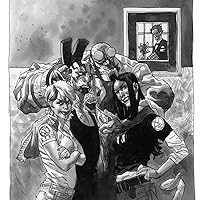
Once upon a time, the world's greatest heroine was reimagined by a comic book legend.
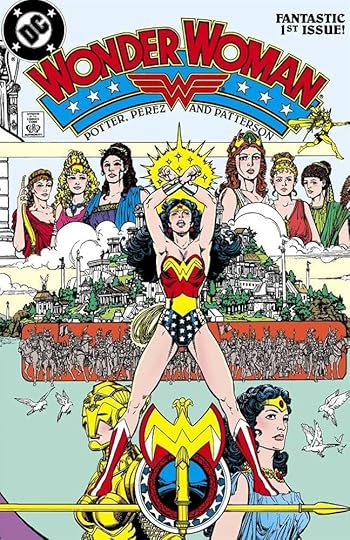
More than forty years after debuting in ALL STAR COMICS #8, the Wonder Woman was reshaped by the legendary George Pérez and returned to the public eye in 1986. She was met with such acclaim that Pérez's original commitment of six months was extended, and extended, until almost five years had passed. In collaboration with co-writer Len Wein and inker Bruce Patterson, Pérez spearheaded Wonder Woman's adventures for years, leading her to an unprecedented level of success.
Now these groundbreaking tales are available in the first of a series of trade paperbacks, collecting WONDER WOMAN #1-14 with bonus material including a Who's Who of Wonder Woman's world and an art gallery.
George Pérez (June 9, 1954 – May 6, 2022) was an American comic books artist and writer, known for his work on various titles, including Avengers, Teen Titans and Wonder Woman.
The portrayal of women in many comic books is still somewhat deplorable---huge-chested, scantily-clad, dimwitted---but things are changing gradually. Comic titles such as Jessica Jones, Captain Marvel, Ms. Marvel, Saga (just to name a few) are injecting a much-needed feminism in the comics industry and depicting real women dealing with real-world issues affecting women.
Besides fighting the obligatory supervillain, these women must also deal with rape (Jessica Jones), sexual harassment in the military (Captain Marvel), being a teenage Muslim girl growing up in the U.S. (Ms. Marvel), and raising a child (Saga).
The superheroines of today, of course, owe a huge debt to one pioneering superheroine of yesteryear. Created by William Moulton Marston and premiering in All-Star Comics #8 in 1941, Wonder Woman revolutionized comic books and broadened a market that was thought to be dominated solely by young boys. As it turned out, girls loved comic books, too, and the introduction of Wonder Woman created a flood of new comic book heroines.
Marston, a controversial figure for many reasons, was a feminist who believed that women had suffered enough under the oppressiveness of patriarchy and that it was about time for a female uprising. He was also a polygamist.
Sadly, over the years, Wonder Woman began to slip into mediocrity, as new male writers who didn’t share Marston’s feminist views took over the title. (In later years, Wonder Woman simply became a glorified secretary for her male counterparts, fetching coffee and allowing Superman to smack her ass every once in a while. Embarrassing.) By the early 1980s, Wonder Woman was a failing title in the DC Comics line-up.
Then, in 1986, legendary comics writer and artist George Perez had the opportunity to reinvigorate the title with a reboot of her origin story. Perez was signed on to do the first six issues. Five years later he was scripting and inking one of the most popular titles in the DC line-up.
Perez is a legend for many reasons. His artwork alone is worthy of mention---the attention to detail, the cinematic flourishes, the bright use of color---but coupled with his incredibly intelligent story-telling, Perez stands alone as one of the best comic book writers in the industry.
Perez infuses his epic Wonder Woman series with Greek mythology, Lovecraftian horror, and a subtle tongue-in-cheek humor. He takes Marston’s well-known origin story and expands it gloriously.
If you don’t know the story, here it is in a nutshell: Wonder Woman is the daughter of Queen Hippolyte of the Amazons, a race of powerful women created by the goddesses Artemis, Athena, Aphrodite, Demeter, and Hestia. The male leaders of Greece became jealous (and lustful) of the Amazons, waging war with them. The demigod Heracles leads his men to the Amazonian city of Themyscira, but Heracles is bested by Hippolyte. Pretending to be allies now, Heracles and his men trick the Amazons and take the city, enslaving, torturing, and raping the Amazons.
The Amazons eventually rose up and waged a vicious war against their captors. The goddesses who created them were disappointed in the Amazons, as they seemed to take pleasure in bloody battle and were no better than the men that had mistreated them. As punishment, the goddesses banished the Amazons to Paradise Island, where they would live forever, away from the world of man.
Hippolyte found herself pregnant, and while never mentioned, it is hinted that it is the product of Heracles raping her. She gives birth to a girl that she names Diana, who grows up to be extremely powerful.
When a USAF jet pilot named Steve Trevor crashes his plane over Paradise Island, Diana rescues him and nurses him back to life. She decides to take him back to the world of man, against the wishes of her mother.
In the original comic books, the setting is World War II. In Perez’s reboot, the setting is during the height of the Cold War of the ‘80s.
In Perez’ reboot, the God of War Ares has been playing both sides---the U.S. and the Soviet Union---against each other, strategically placing hawkish hardliners in positions of power in both countries. Ares longs for thermonuclear war so that he can rule the post-apocalyptic wasteland.
Wonder Woman, with her trusty golden lasso (a gift from the gods), manages to stop Ares before launching a nuclear war, convincing him that a post-nuclear world would leave nobody and nothing to rule. In a vision, Ares sees himself alone in the galaxy with nobody to wage war against, a potential future too frightening for him to contemplate.
After saving the world, she must then deal with Zeus, who basically wants to have sex with her. When Diana rebuffs his moves, Zeus becomes angry and wants to destroy her. Hera steps in, thankfully, and instead offers a challenge for Wonder Woman, one that will involve her going to Hades.
This volume includes the first 14 issues of the Wonder Woman comic series starting in 1986. It is a must-have for any fan of comic books, and especially for Wonder Woman fans.
After watching Batman versus Superman, my nephew turned to me and said, "Why can't DC comics get it right?" Now, at the risk of over-simplifying, I told him that the whole idea of infinite earths was used to give writers an escape from continuity. The problem, I explained, is that after 75 years of Wonder Woman stories, her history becomes unwieldy and unmanageable to a new writer and so if s/he can write stories not necessarily tied to continuity, then they could write whatever they want without consequence, but if there's no consequence, then why (as a reader of Wonder Woman) should I care?
Now, this was a much longer conversation involving Crisis on Infinite Earths which was designed to correct the problem. With Wonder Woman it did and George Perez's run on Wonder Woman was the reboot. Now, I'm 56. The idea of a reboot pisses me off, because it essentially wipes out years of a followed continuity. Everything that I cared about is changed. . . However, if I had a chance to go at it again, wouldn't I?
George Perez is a fantastic artist, and after decades of drawing comic books, he had become extremely adept at telling stories, not just via sequential art, but via the written word. The stories covered here are the Post Crisis Wonder Woman Issues #1 - 14. Len Wein did the scripting (may he rest in piece as well as Perez) and Bruce Patterson does most of the inking. Gorgeous art work. Well-plotted continuity. I give this my highest recommendation.
This was so good omg! It took me forever to read but its so worth it!
So the story is of Diana and her rebooted origins and I like how this volume focuses on WW and Amazons and their origins and it changes the origin of Steve crashing into the island a bit and it connects really well later on. We see Diana leave paradise to journey the world of Men and meet people there especially Julia Kapetalis and her daughter Vanessa and then battling a wide array of threats like Decay and ultimately Phobos and Deimos and that was so well told before the eventual arrival of Ares and its an epic battle and I freaking loved that ending!
And then the judgement of the gods and Diana returning to Paradise but then the challenge of the gods sort of as Diana has to cross Doom's doorway and in turn battle various monsters like Coctus and Echidna and meanwhile we see the maternal instincts of Hippolyta and her own journey and the deceiveous nature of "Pan" or is her and how it all culminates in one final big battle and whatever will be the fate of Diana and how is hercules involved and the new status of the Amazons in the DCU?
Plus a big twist with Steve and his mother and her connection to WW and its so beautifully told and really made me love Diana even more!
So yeah a definite recommend from me! One of the best WW comics easily! ;)
Wonder Woman by George Pérez Volume 1 begins collecting the superstar creator’s landmark run with the world’s foremost female superhero.
The climax of Crisis on Infinite Earths in 1986 had essentially removed Wonder Woman from the DC Universe. With a clean slate, Pérez re-launched the Amazon warrior, serving as plotter and penciler for a long stretch. Working with co-writers Len Wein and Greg Potter, Pérez stripped the Wonder Woman concept down to its essentials.
Gone were the invisible plane, the secret identity, the purple healing ray and the idea of Wonder Woman as just another costumed adventurer. Under Pérez, Wonder Woman was more akin to Thor. Her recast origin tied her closely to the pantheon of Greek gods and her adventures were deeply rooted in classical mythology.
The first arc centered around a plot by war god Ares to ignite a nuclear war between the Americans and Soviets. Diana, princess of the Amazons, went through the traditional contest to become her people’s emissary to the outside world. Old standbys like Steve Trevor and Etta Candy were on hand. But in a twist, Steve became romantically linked to Etta, while he and Diana were more like brother and sister.
After the Ares affair, Pérez showed Diana navigating the modern world. In a nice nod to realism, Diana had to learn English. And instead of acting as a typical superhero, she was presented more as an ambassador and peace activist. New characters included Julia Kapatelis, a Harvard professor, and her teenaged daughter, Vanessa, who became Diana’s surrogate family in “Man’s World.” PR shark Myndi Mayer maneuvered her way into Diana’s circle. Pérez presented a fascinating new take on Cheetah, Wonder Woman’s principal foe, that steeped the villain in African lore.
Volume 1 concludes with the “Challenge of the Gods” saga. After a misunderstanding with a wrathful Zeus, the Olympians sent Diana on a harrowing gauntlet through the demonic pit beneath Paradise Island. She encountered one mythological threat after another, eventually discovering her true destiny.
The renovation executed by Pérez and his co-writers gave Wonder Woman badly needed relevance. The character had been adrift for years before Crisis and attempts to send her in new directions had fallen short. Grounding her in mythology and recasting her mission injected vitality and distinction into the series. The folklore concepts that Pérez used to drive the action were compelling and unlike what was going on in the rest of DC’s line at the time. He and Wein did an especially good job with Diana’s characterization, bringing out the nobility and strength. But also showing how Diana could be very naïve and at times overwhelmed by the new world she’d entered. The book also worked feminist concepts into the story in a way that felt organic and not like a forced program.
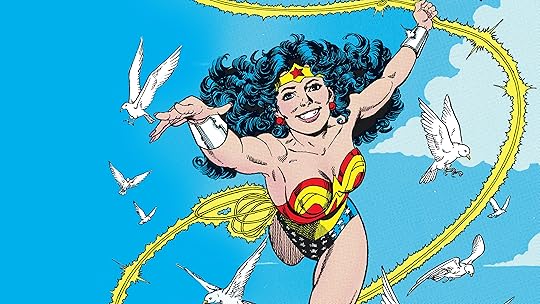
But more than anything, it was the dazzling visuals that Pérez crafted that made Wonder Woman a must-read at the time. Working primarily with inker Bruce Patterson and colorists Tatjana Wood and Carl Gafford, the series was bursting with ideas and energy.
Pérez mixed traditional layouts that moved the action along with some innovative page designs and truly stunning splash pages. His depictions of the physics-defying architecture of Olympus and the sun-kissed beauty of Paradise Island were especially memorable. Whether Diana was on the streets of Boston or in a demonic underworld, Pérez and company made the images come alive. It was the perfect marriage of traditional fantasy and superhero action and stands among the artist’s most notable work.
Wonder Woman has aged rather well. While the dialogue and narrative boxes bear the marks of their time, the grounding in mythology gives the stories a more timeless feel. Some of the then-contemporary fashions can look dated, but aren’t prominent. Those familiar with the Boston area might scratch their heads at the depictions of some neighborhoods of the city, or roll their eyes at the idea that a Boston resident would maintain a “summer house” in a suburb a half-hour north of the city. But those are minor quibbles and don’t weigh down the stories.
Wonder Woman by George Pérez Volume 1 is a no-brainer for fans of either the artist or the character. These are great stories that have set the course for the character ever since. And DC has made this edition comparatively affordable. Highly recommended.
Meticulously crafted, it is world-building at its near best. Rich with characterisation, Diana is wonderfully depicted by Perez, with this iteration serving as a great gateway into the world of Wonder Woman. A truly immersive experience, the dated dialogue holds it back from perfection, but the patience it takes to read is well worth it.
Este tomo contiene el principio de la etapa de George Pérez en Wonder Woman... esto que es tan sencillo de decir en realidad significa mucho. Pérez tomó como punto de partida un personaje muy maltratado hasta entonces (era poco más que una versión femenina de superman) y le dotó de un origen, una historia, unos valores y un mundo propio basado en la mitología griega con una riqueza inusual en los cómics de superhéroes.
Hay que entender que estos cómics son productos de su época, y esto quiere decir que la densidad de los textos es bastante alta, siempre hay lugar para el virtuosismo de un dibujante de la talla de George Pérez, y de hecho visualmente es impresionante, pero hay que tener en cuenta que en cada uno de los episodios nos encontraremos con una gran cantidad de información... en el primer número por ejemplo se nos explica la creación de las amazonas, su razón de ser, la construcción de Themyscira, el conflicto con Herakles, el viaje a isla paraiso, el nacimiento de la princesa Diana.... vamos, que hoy en día daría para una miniserie de 6 u 8 números y aquí se cuenta en unas 32 páginas... todo lo contrario al decompressive storytelling actual... a mi me encanta, pero creo que es algo a tener en cuenta porque a cierto público le puede echar para atrás. En todo caso, mi opinión es que si alguien quiere conocer el personaje de Wonder Woman y comenzar a leer sus aventuras, este es el mejor lugar para empezar, aquí tenemos reflejado su origen y su personalidad mejor que en ningún otro sitio.
En este tomo tenemos 2 arcos principales separados por un episodio con muchísisma densidad de texto en el que se nos explica la influencia de la llegada de Wonder Woman al mundo de los hombres. En el primer arco se nos explica el origen de las amazonas y de Wonder woman, su llegada al mundo de los hombres y su lucha contra la ofensiva Ares, un plan que puede llevar a la guerra nuclear. En el segundo "el desafío de los dioses" Diana tendrá que superar una serie de pruebas para conseguir la libertad para su pueblo, para alejar su destino del capricho de los dioses.
Por último comentar el apartado gráfico, George Pérez tiene aquí uno de sus mejores trabajos, lo cual es decir mucho, este cómic es excepcional en su apartado visual, tanto a nivel narrativo, como en composición de páginas, como en atractivo visual... el trabajo de Pérez es genial.
George Perez's 1987 relaunch of Wonder Woman, encompassing its initial 14 issues, is a truly monumental reintroduction to the Amazonian princess. Also, she's a badass!
This run masterfully redefines Diana for a new era, earning a solid 4.5 out of 5 from me, which I'm happily bumping up to a 5 out of 5 for Goodreads. I absolutely loved how Wonder Woman was portrayed here. She's incredibly strong and hopeful, but always willing to fight when needed.
This first 14 issues really focus on Diana as a character, giving us a deep dive into her personality and convictions. Half of it is done in our world, and that's actually my favorite part of it. Watching Diana interact with our world and trying to bring peace and happiness, while also being somewhat of a celebrity, is such a cool plot point. We see this right from the start when Steve Trevor crashes on Themyscira, leading to Diana's victory in the Amazonian contest and her subsequent arrival in "man's world" as Wonder Woman, ambassador of peace.
The supporting cast, from Ares to Steve, is all wonderful, and I even love Vanessa and Julia. This is easily my favorite part of the entire book. Their interactions really ground Diana's journey in the modern world. Plus, the art is fucking fantastic! Perez's detailed and dynamic visuals make every page a treat. In other words, the art is fucking fantastic.
It's not to say the god part of it isn't interesting, but it's a lot of old language, and sometimes it's overdone and spelled out for you, which is just a product of its time. Sometimes it can be long-winded, giving too much explanation to something that you're seeing on the page. While it introduces major threats like Ares, the God of War, actively manipulating global conflicts to bring about World War III, and later introduces Barbara Ann Minerva as the Cheetah through a ritual gone wrong, the divine exposition could occasionally feel a bit heavy.
Honestly, Diana is wonderful, and this is one of the best intros to the character that you can read. It's a powerful and heartfelt beginning that cements her place as a truly iconic hero, seamlessly blending her mythological roots—like the Amazons' reimagined origins as souls of women reborn by the goddesses—with her mission in the modern world.
Hermoso tomo que da inicio a la etapa más emblemática del personaje. Yendo a contracorriente de la época, Geroge Pérez y Len Wein construyen un primer arco de 14 revistas que ponen todas las piezas para establecer el status quo del personaje. Sin embargo, a diferencia de los comics de hoy, acá pasan muchas cosas y se enfrenta a varios rivales distintos.
Los autores trabajan muy bien la mitología griega y la conexión entre el mundo de los dioses y el mundo humano, e inscriben a Diana como figura entre ellos; esto se hace en forma orgánica, sin necesidad de panfletarismos berretas como se acostumbra hoy en día.
Para finalizar, un par de comentarios del dibujo, icónico si los hay. Pérez genera un trazo fino de líneas claras bien clásico y representativo de la idiosincracia del personaje y de la época (se puede relacionar con la imagen heroica del Superman de Byrne).
Este tomo es la primera parte de una trilogía sobre WonderWomen escrita y dibujada por G. Pérez. En él se cuenta la historia de los inicios de la princesa Diana y de las amazonas en general, así como de la isla de Themyscira, por tanto, si quieres empezar con las historias de la princesa, opino que esta es una de las mejores formas de empezar.
George Pérez crea un nuevo origen para las amazonas, mujeres creadas gracias al poder de las principales diosas del Olimpo (y Hermes, el único dios masculino que no es un animal) como una raza superior a los humanos. Para creearlas, infunden vida a las almas que en la antigüedad fueron asesinadas, víctimas de la violencia machsita y que ahora vagan tristes en la matriz de Gea. Una vez creadas las amazonas y la isla, a éstas se les da el propósito de mejorar a los humanos y de intentar evitar la violencia y abogar por la Paz y el diálogo. No obstante el mundo del hombre no está preparado para que las mujeres sean sus iguales y mucho menos las salvadoras, así que después de sucumbir a la violencia de Herácles, hijo de Zeus, las amazonas son trasladadas a Themyscira, una isla oculta a los hombres, donde al fin podrán vivir en paz. Es ahí dónde nacerá la princesa Diana (no quiero dar más detalles sobre su origen porque me pareció una idea sublime e imagino que lo queréis descubrir por vosotros mismos).
El tomo está divido aproximadamente en tres partes, en la primera se cuenta el origen de WonderWoman, las amazonas, Themyscira y su relación con los dioses del Olimpo, así como la primera misión de WonderWoman en el mundo del hombre tratando de socavar los planes de Ares, el dios de la guerra. Fue en esta parte en la que se basaron (sólo en parte) para realizar la película que se estrenó el pasado año.
La segunda parte es más bien de transición entre la primera historia y el final, es la más corta y está compuesta por una serie de viñetas sin diálogos acompañadas por textos en los laterales escritos por varios personajes del tomo, de forma epistolar o mediante relatos de un diario. Aunque me pareció una forma muy original de contar qué había pasado con la princesa sin tener que colocar todas las grapas que quizá no fueron del todo importantes para la trama, la otra mitad de la segunda parte me gustó menos. En ella WonderWoman lucha contra Cheeta, una especie de doctora que gracias a un dios planta es capaz de convertirse en tigre y que quiere a toda costa el lazo que Gea le otorgó a WonderWoman, y aunque la mayoría de escenas fueron divertidas, no le encontré mucha relevancia para la trama y no creo que aporten mucho a la historia de WonderWoman. Esta es la única pega que puedo poner al tomo y es por lo que le he terminado bajando un poco la puntuación.
Finalmente, para mi la mejor parte fue la última. En ella conocemos al fin el propósito de los dioses para la princesa diana y cuál es el origen de su traje y demás misterios que hasta ahora no habían sido resueltos. Es la parte más interesante y la que creo que tiene un dibujo más impresionante, además de la mayor parte de carga mitológica.
Otra de las cosas que me gustaría señalar de este tomo es el gran tinte feminista de la obra, el cual me ha enamorado por completo y el que creo que era bastante necesario en un mundillo donde es difícil de ver.
En líneas generales el tomo me ha gustado bastante y seguramente lea los otros dos de la colección de grandes autores guionizados y dibujados por G. Pérez antes de lanzarme con los números del reboot de DC. Lo recomiendo encarecidamente a todos aquellos que queráis saber más sobre los orígenes de la amazona o a aquellos que os haya gustado su historia en la película y queráis ampliar un poco. Sin duda es una gran elección.
Wonder Woman has always been a problem for me. Because I don't dislike the character, but...I haven't read a lot of Wonder Woman comics that I loved. I like her a lot in some ensemble books, like Kingdom Come and some JLA. But solo. Well, lets talk about why.
1. Her rogues' gallery sucks The bad guys in Wonder Woman are kinda shitty. Look at Batman. That shit runs deep. Even your third-tier characters, your Mr. Freezes, have some solid moments. Solomon Grundy? Seems dumb, but Long Halloween has a great Grundy. That sounds like an exclamation: "Great Grundy!" Spider-Man? Probably the best rogues' gallery. Enough bad guys that he has a Sinister Six! His own team of bad guys. Wonder Woman? I mean, Cheetah? So like a slower Flash lady in tacky tights? Yawn. On the flipside, we have someone like Ares or Zeus, but in the comics, it's not like they're fistfighting Wonder Woman. They do that godly, set things up in a bizarre plan sort of thing. And gods, as characters, aren't usually 3-dimensional, interesting characters. Nobody I can hang my hat on.
2. Her powers are extremely flexible Can Wonder Woman fly? Well, it depends. Golden Age? No. In this book? Yes. 10 years later? Maybe. In the movie? No. Is she harmed by bullets or would she need to deflect them with her bracelets? This happens with all heroes, for sure. Spider-Man can sometimes hold up a building, sometimes would have a hard time lifting a car over his head. BUT, Spider-Man isn't bulletproof on some days. And homeboy can't fly. I'm good with any level of a power, like if someone is super strong, eh, that can be malleable. With Wonder Woman, it feels a little like her powers change based on the story someone wants to tell. What keeps characters more interesting to me is when new stories come up but the characters are still within the same limitations.
3. The gods and heroes thing doesn't work for me This book was an exception. It bridged the gap between old mythology and modern day really well. This had some, ahem, objectionable results re: Heracles, but we'll talk about that last, at the end, for anyone who's interested and okay with a spoiler. But most times, I feel like Wonder Woman (along with Thor) makes the whole universe weird because of the connection to gods and such. My personal theory, this works in the movies because they can carefully decide where it begins and ends. It's not like an 80-year continuous story the way it is in the comics.
I recommend this volume. It lines up the origin in a way that makes sense, the plot is big without seeming totally ridiculous. Like...you can see why it's important, but it also seems like Wonder Woman can rise to the occasion and solve the problem. It makes sense in a comic book kind of way.
You can read this one without having read any Wonder Woman comics before, and this is probably the one that had the biggest influence on the movie.
The whole rape thing with spoilers:
I'm about to ride a line here of sounding like some sort of rape apologist, perhaps. Which I'm not. What I want to say is complicated, and I just want to take this opportunity to remind everyone that this is a fictional rape that happened to a fictional character that was in no way real. It's my belief that fiction does not have to play by the rules of real life, and I feel like the discussion of a fictional rape is open to discussion in a way that a real rape is not. That's the perspective of the person you're about to read, so if that sort of thing is a huge issue for you, I think we should just part ways here. Just click away to something else. @benbencatcat is one of the best cats on Instagram, and it would serve anyone better to scroll through that feed than to read this.
So the book opens in a very mythological style with Heracles leading a band of men to the Amazons, then raping and pillaging. Not graphically, but there are no bones that this happened, including Heracles forcing himself on Wonder Woman's mom (though Heracles is not Wonder Woman's father). This is also tied up in a lot of that mythology stuff with gods indirectly influencing and blah blah blah.
Heracles ends up imprisoned in classic mythological style, which is the realm of prisons where a dude has his eyes eaten by birds every day and shit like that for like a thousand years. Wonder Woman's mom rescues him from his imprisonment, and at the end of the story, Heracles has not only been forgiven, there is a small spark of possible love between Heracles and Wonder Mom. They kiss.
Obviously I wouldn't argue that I don't see the problem here. What I want to say is this:
Wonder Woman lives in the world of mythology, and we're talking about a mythology where Zeus basically had one of those wheels that makes the animal noises, the ones for little kids? And he'd pull the ripcord, see which animal it landed on, and that's either what he'd turn himself into or have sex with. "The swan says: #MeToo." So I know that's a problem for some readers, but for me, it was thematically aligned with the whole gods and monsters thing. Mythology is weird with sex stuff, so I think that it's distasteful, and at the same time it fits. It doesn't HAVE to be there, I'm good with a different version of mythology, but...
Let me put it like this: one of those Expendables movies is all about human trafficking or something? The aging action stars are attempting to stop a truly heinous crime, and...it's like, not for THIS movie! Have the bad guys steal a weird bomb or something. A bizarre plot with space satellites. Not sex trafficking! An Expendables movies should be wacky and fun, and that's just a complete wrong turn. It's not on-theme. When Van Damme throws a knife in the air and kicks it into Thor's brother's chest, that's not a movie where I think we should be getting into this shit.
In this version of Wonder Woman, this rape and pillage thing is distasteful, but it's on-theme within the context of ancient mythology where this stuff was happening all the time, and that mythology is pretty heavy throughout. So while I don't require it for verisimilitude, it doesn't feel totally out of place. We're not chugging along in a fun, sexless, victimless world and this comes out of nowhere.
Now let's talk about the forgiveness aspect.
I think its inclusion is complicated.
We could view it as just lazy, thoughtless and a complete misread of the character, and that's where most interpretations go. I think Perez did a pretty good job over 400 pages of comics here, writing quite a few strong female characters, so it begs the question, What if it's not? If we can be so bold to ask the question, we have to look for a different answer.
Here's mine.
I think characters are always more compelling when they make bad choices. It's my opinion that Wonder Mom is making a bad choice. It's an extreme, god-proportion version of a woman going back to the arms of her abuser. Which is a thing that happens.
It's totally reasonable to not like the inclusion of forgiveness in this fashion, and I think it's also reasonable to read this as a case where someone wrote a character making the wrong choice.
I think one of the primary issues with this is that it takes what would otherwise be an empowering piece for women and turns it into something that's not so empowering.
Perfect women are women for people to look up to, especially young people. Kids don't really make bad decisions so much as they're manipulated by adults. I mean, sure, kids do dumb shit, but we're not talking about a treehouse of questionable construction here.
I'm of the opinion that this is an adult-oriented book, and having characters that are problematic is appropriate for an adult book. Bad decisions belong in an adult book because adults make bad decisions. And we have to learn to reconcile with people who've made bad choices that we would never make. On a big scale.
So.
It's a weird thing to think about, and I'm still not totally sure how I feel about the whole thing. For me, the question was "Why didn't this bother me?" and I wanted to explore the answer in writing. I hope this exploration has been helpful or interesting to someone else. But if not, again, @benbencatcat.
300+ pages of story, an entire year's worth of issues brought together in a lovely and affordable volume, and a character-defining story that reintroduced Wonder Woman to the world in the 1980s. This is my favorite era of comics, but I didn't read much Wonder Woman back then. I'm glad I can read these issues now. The stories still hold up today. And what stories! Filled with exposition, drama, emotion, and delight, you really feel like you get your money's worth and each page is packed. George Perez is a touchstone in comic book art. And he creates Princess Diana's world before she ever appears in it. I have to admit, the focus on the gods and goddesses gets a little too "Clash of the Titans" after awhile, as Wonder Woman is more interesting to me in a modern world setting, bouncing bullets off of her bracelets and flying an invisible jet (which doesn't exist here - instead she uses winged sandals to fly). I like her as an ambassador of peace, not a gladiator, and here we get a mix of both. But this book is still serious fun and pure class! The volume has a nice epilogue so you aren't left hanging, only wanting more, and I can't wait to see what adventures are next for Wonder Woman, as told by the magnificent George Perez. Bring on Cheetah!
Terminada mi segunda lectura del personaje: una muy buena introducción para los que no conocemos el universo de Diana y en general el universo de DC Comics.
Lo supongo, pero desconozco si se trata de un "reboot". El tomo te introduce en el universo de la superheroína, habla sobre los orígenes de las amazonas y de su isla-paraíso Themiscyra, además de otras aventuras, pero siempre con un tono "fundacional", de sentar las bases del personaje (por ejemplo cuando justifica su vestimenta con la bandera americana).
Lo que uno espera de un comicbook, una lectura muy amena con aventuras, luchas y personajes interesantes, y un personaje que hace valer su feminidad en todo momento. Además, para mí, las historias con el panteón de los dioses griegos siempre tienen su encanto. Sin duda también tiene que ver con el buen hacer de George Pérez en un guion y dibujo excelentes.
Voy a seguir leyendo la colección "grandes autores de DC". Ya tengo reservado el siguiente volumen de Wonder Woman en la biblio.
For a lifetime, I have been ambivalent, if not dismissive (and annoyed) towards the comic amazon. 70s tv show with catchy theme song? Eh. Blockbuster, much-lauded movie? Meh.
Revamping the character in the 1980s?
SOLD. Apparently.
If you're interested in seeing what makes Diana so endearing, I would say start here. Perez's run on the book is stellar. Diana is all too human: sweet, understanding, in way over her head, and has some serious self-doubt. She doesn't think of herself as being this empowering symbol of feminism (as subsequent artists/writers have made her), but as someone who has a very important message and mission. I've read enough comics to know that nothing is ever set in stone, and since Perez's run on the character, her backstory has changed (once again), her personality has changed (yup), but this was the book that made it all click. Will I seek out Wonder Woman comics now? Probably not. Would I recommend this run to people? Yes.
je comprends que c'est un run essentiel pour le personnage, et c'était vraiment cool par moments mais ça m'a pas mal ennuyé dans l'ensemble. c'était un peu redondant et underwhelming lowk
ENG 150. Been waiting for this!!!!! I have a lot of criticisms for this. Middle part with Cheetah was weird, her origin story is lowkey anti-feminist, and WW is overly sexualized at every possible moment. But I’m willing to forgive all of this because she’s so awesome and the art is sick.
Earlier this year, I journeyed into the first volume of the Wolfman/Perez run of Teen Titans. I'd heard all the great things about it, I knew it was a classic run going in, yet I was still pleasantly surprised with how much I enjoyed it. Fast forward a few months, I find this volume by half the Titans' creative team, and learn that it too carries the title of "classic." And, once again, I'm pleasantly surprised.
I guess I should say beforehand that this is a very traditionally written comic book. Dialogue is more overt and specific, leaving little room for subtext. This may be a turnoff for some people, but I got used to the dialogue quickly and didn't have an issue.
This volume has so much going for it. Diana is a compelling protagonist, optimistic and at times naive but never foolish. The first issue has a great pace, delivering thousands of years of exposition in a way that never feels boring. Perez fleshes out both Themyscira and the modern world (cerca 1987) with equal care, hilighting the best and worst parts of both. Diana slowly realizing the complexities of Earth as she stays at the home of Julia Kapatelis is fascinating, and you really feel for her when the world lets her down. I also really liked the portrayal of Olympus and the role it plays in the "Trial of the Gods" storyline. Ares is a terrifying antagonist driving the first storyline, consistently ramping up the stakes and posing a genuine threat. Going into the first story's conclusion, I had no idea how Wonder Woman was going to beat him, and was worried about a hasty conclusion. Fortunately, the conclusion Petez opts for is both unexpected and satisfying.
On an art standpoint, what do you expect? George Perez is one of the industry's all-time greats, of course the book looks good (thanks also to Patterson and Smith's inks and Wood and Gafford's colors). More than anything else, I think the measure of a great book are the moments that stick with you, the parts of a story that are so well-executed that you think about them long after the book is over. I'm pleased to say this book has several of those.
Going into negatives, the book sometimes leans on common tropes of the 80's in its characterizations, especially in the case of Vanessa Kapatelis. At times things will just happen for no other reason than the plot needs them to. Towards the end of "Trial of the Gods," there's a huge twist that got me really excited, only for the payoff of that twist to take place in the DC comics event Millennium, which is not collected in the volume. For the sake of readers like myself, I would've liked at least the issues of Millenium with relevance to Wonder Woman to have been collected here. Finally, certain characters are forgiven a little too quickly in the final issue. I understand the book is about love, compassion, and forgiveness (integral parts of Diana's character), but certain wrongdoings naturally need more time to forgive, especially in the case of [REDACTED].
Despite my minor gripes, I loved this book. Perez's WW fully deserves its classic status. What are you doing reading my review? Go check it out.
George Perez's Wonder Woman came on the heels of the DCU-altering Crisis on Infinite Earths. In it, the Silver and Bronze Age Wonder Woman was disintegrated by the Anti-Monitor, and her protoplasmic remnants were de-aged. It was a weird scene, but it helped set the stage for a reboot of DC's premier female character. And let's face it, Wonder Woman's comic for years was rather substandard. Poor writing and mediocre artists and sent the book into bi-monthly (six times a year) publishing status for a long time, and even when comics legends Roy Thomas and Gene Colan took over a few years before this event, it still didn't strike a huge chord with fans.
What was wrong? It's hard to say, other than the previously mentioned poor stories. I think a lot of it had to do with the constant revisions to Wonder Woman's character and supporting cast. Steve Trevor was killed and brought back to life a few times, Wonder Woman herself changed jobs frequently, and she never really showed what a bad ass she could be, like Superman and Batman at least were theoretically capable of being. (These problems afflicted Supergirl, too). And although her "mod" Diana Prince phase, where she was no longer immortal and had no powers, was full of rather cool stories and concepts, it suffered from a lack of consistency of the basic underlying premise of Wonder Woman's feminism.
Perez, who was the artist but also the plotter (scripts are by Greg Potter and Len Wein), changed all that when Wonder Woman #1 hit the stands. Basically filling out the traditional Wonder Woman origin story with tons and tons of Greek mythology, Perez brought a sense of grandeur to the book, something Wonder Woman never had before. Her world and, yes, mythology, were as full as anything of Superman and Batman, and best of all, she had a sense of purpose, of why she was called to go into the outer world.
This collection is fourteen issues, and although the book takes place as the DC events Legends and Millennium, Perez keeps Wonder Woman's interactions with the rest of the DCU at a base minimum. This allowed him time to explore Wonder Woman and make her into a strong heroine of her own, without relying on Superman and the Justice League, for example, to prop her up and steal some of her shine. This book is all about Wonder Woman/Princess Diana, her mother and the other Amazons, Steve Trevor, new characters Julia Kapakelis and her daughter Vanessa, and how all of them get wrapped up into the great mythological battles between Ares and Mt Olympus, and the lecherous meanderings of Zeus and the god Pan. It's cinematic in scope, and the characterizations, albeit a tad melodramatic thirty years later, is spot on and give us a side of Steve Trevor in particular, that we never had before.
This book was a major deal when it first came out. I'm glad to have a chance to re-read this after all these years and see that it stills stands up as an entertaining and modern take on a classic character.
Amazing! After the events of "Crisis On Infinite Earths" in 1985, DC Comics completed its first major reboot of its major characters. In "The Man of Steel," John Byrne completely reinvented Superman. Gone were Supergirl and Krypto, Kal-El was once again the last son of Krypton. Fortunately for us, Wonder Woman also received the same treatment and was placed in the capable hands of the comic book legend, George Perez. His is the definitive Wonder Woman. Perez completely reimagines Wonder Woman as a hero worthy of the gods. To be clear, the Greek pantheon of gods are major characters in these stories. In fact, Perez leans heavily on Greek Mythology in his storytelling, and I'm here for it. This version of Wonder Woman is iconic, besting Heracles, Perseus and all other greek heroes. When we're not on Paradise Island or Mount Olympus, we are treated to a "fish out of water" story as Diana tries to understand the world of man. Here she meets and interacts with familiar characters such as Steve Trevor and Etta Candy. Fortunately, this version of Diana does not "pine" for Steve as earlier incarnations did. (See what I did there?) No, she's too busy being a boss and trying to Stop Ares from destroying the world. In addition, we also get a great introduction of Barbara Minerva and her alter-ego "The Cheetah," and the entertaining "Challenge of the Gods," story arc which is effectively the Twelve Labours of Wonder Woman. Simply Amazing! Kudos to George Perez for this outstanding first installment. 5-Stars.
After all my complaining about the other Wonder Woman comics I've been reading, I just want to say that I enjoyed all of this. Thank god. Diana's written as a real, fully imagined character here, among a cast of other real, fully imagined characters, both male and female. She's kind of weird and foreign, as you'd imagine a semi-mythical creature trapped on a phantom island might be, and generally sort of naive and uncynical. Her love and respect for the people around her is palpable, too--my favorite part was her disappointment at her publicist for throwing her under the bus: "How could one woman *do* that to another?" How indeed, girl!
Other great things: although the art looks kind of dated by virtue of the fact that it is dated, it's also crazily dynamic and beautiful and there are tons of different body types represented. All of the character designs are so great, from Etta Candy (a soldier, not a sorority sister!) to the various myth-tinged monsters and villains. Diana manages to look both strong and gorgeous, and gets banged up in a fight without it turning into battle-cheesecake. At no point did it seem like characters were posing for the sake of posing, which was soooo refreshing.
It just generally seemed like the writer put a ton of effort into imagining the world behind the comic, and that the story wasn't even fully told--like there's plenty of other lore that Perez came up with and didn't even get to include in this volume.
i wasn’t going to write a long review for this. i seemed to have lost my motivation to do so and i was enjoying it so much in the beginning, that i didn’t really see a need to opinionate too much. however, so much of what made this comic great in its beginning was almost tainted by that frankly insulting couple of last pages.
i’ll start with the positives. i loved diana. i thought this was a wonderful characterization and i loved her interactions with the other characters, especially the old lady and her daughter (julia and vanessa i believe but i don’t quite remember sorry). i thought that was cute. i liked all the marketing stuff. very fish out of water, i enjoyed. i liked steve trevor and etta candy being paired together. far better than diana and steve together, that’s for sure. i liked at the greek god stuff. very cool and epic.
first off. the racism hello? 😭 that couldn’t have been okay even in the 80s. secondly the way heracles’ redemption was treated was disgusting to me idc. i don’t think i can be faulted for not enjoying seeing a rapist get forgiven by his victims and then they’re like “you’re welcome here 😊😊 come whenever” and then hippolyte’s little “i’m still a woman after all haha” ewwww yeah no that is weird writing idc. i don’t think he should’ve been forgiven at all but if he had to that certainly wasn’t the right way to go about it
This entire review has been hidden because of spoilers.
Este tomo recopila los primeros catorce números del volumen que en 1985 arrancara George Perez al mando. En aquel entonces WW era un personaje menor muy estereotipado para los cánones patriarcales radicales que por suerte se fueron ablandando en tiempos actuales. Por la misma época también era común en los cómics sobrecargar todo de texto y los dibujantes aún no lograban despegarse del todo de las estructuras de cuadraditos carceleros. Por eso esta nueva serie traía mucha vanguardia que sigue sorprendiendo hoy día. Lo mejor es la recreación de la mitología griega con muchos de sus personajes en particular de los menos conocidos aparte de los clásicos dioses y semidioses. El arte de Perez encaja a la perfección en el estilo y por entonces con este título junto al de los New Teen Titans vivió su década dorada. Excelente punto de comienzo para adentrarse en el mundo de WW.
I was enjoying this a lot. It’s (mostly) a nice and interesting story, heavy on Greek mythology. George Pérez’s art is amazing and I loved Wonder Woman’s heavy armour design. My issues with this volume started with Chuma’s (Cheetah’s helper) design, as he reminded me more of a monkey than a human. Still, it was pretty solid overall.
However, my main issue was how Heracles was not only forgiven, but revered at the end of the book. I understand forgiveness is the way of the Amazons, but that doesn’t mean they have to embrace their offenders as their own. To make it worse, Hippolyta is then shown in a romantic relationship with him. To say I’m disgusted is an understatement.
This entire review has been hidden because of spoilers.
There is definitely a reason this book is a classic. The story telling is fantastic, and the art has that Geoge Perez charm.
I had read that parts of the story didn’t age well, and that’s definitely true. Some writing of women is very clearly done by a man, and not sensitively. Arguably worse is the racism, which is why I’m not giving this book a star rating. Cheetah’s henchman is so bad, you could only call it “dated” if this were a golden age comic. In 1987, there’s absolutely no excuse for a depiction this bad.
I didn't think I cared for this anthology at first. The drawing style is dated, for one thing, with most women coming off as almost ugly. And the emotional level of the story is off the charts. There is no build up. It goes from zero to 60 immediately, and stays there. What I wouldn't give for some pacing. If I never again see Ares screaming something like "Acknowledge me as the greatest of all gods, or die in unimaginable agony!", it'll be too soon. But the book grew on me. There's a lot here that I haven't seen before, like Diana's introduction to 'man's world' (it's a little like Crocodile Dundee in New York), her 'promotion' as a superhero by a professional businesswoman, and her testing by the U.S. military. It's not a little offensive that, after deflecting the bullets of three machine guns and crushing the guns with her hands, the Major overseeing the testing was only "starting to be impressed". It took Diana stopping a fighter jet and lifting and toppling a tank for him to "grow to respect her". It's a vast improvement from the complete lack of respect given the original Wonder Woman, but it still has a long way to go.
I recently reviewed the other first volume of Perez' run, which covered the first 8 issues, which this covers the next story arc. The whole is quite good, with Perez distinctive artistic style. Len Wein does a creditable job for the dialogue, but Perez clearly picked up Wolfman's style of spreading out story beats (perhaps a bit too much) while Wein's style doesn't quite fit that.
Still, the only complaint about the volume is the nature of pointless tie ins - the Legends story where WW works with the nascent JLI and then turns down membership is handled in an aside, but the enxt summers crossover of Millennium is shoehorned into the plot and feels deeply contrived and incomplete. It's a shame really, but it's was the nature of the growing summer crossover beast.