For lovers of words and seekers of wisdom, a lively history of aphorisms―the shortest and oldest written art form―and the intriguing people who have penned them, from the Buddha to Emily Dickinson. Starting with the ancient Chinese and ending with contemporary Europeans and Americans, The World in a Phrase tells the story of the aphorism through spirited and amusing biographies of some of its greatest Americans like Ambrose Bierce, Emily Dickinson, and Mark Twain and Dorothy Parker; great French aphorists like Montaigne, La Rochefoucauld, and Chamfort; philosophers like Schopenhauer, Nietzsche, and Wittgenstein; as well as prophets and sages like the Buddha, Lao Tzu, and Jesus. Though it's an ancient art form, the aphorism is as spritely and as apposite as ever. Challenging and subversive, aphorisms deliver the short, sharp shocks of old forgotten truths. They are literature's hand they're light and compact, you can take them anywhere, and they contain everything you need to get through a rough day at the office or a dark night of the soul. But more than just a literary history, The World in a Phrase is a personal memoir of how aphorisms changed Geary's life―and how, if not for an aphorism by W.H. Auden, he might never have met his wife. In our modern age of drive-through culture, pre-digested soundbites, and manufactured sentiment, The World in a Phrase explores how aphorisms still retain the power to instigate and inspire, enlighten and enrage, entertain and edify.
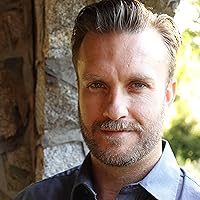
James Geary is the author of the New York Times bestseller The World in a Phrase: A Brief History of the Aphorism (second edition), Wit's End: What Wit Is, How It Works, and Why We Need It, I Is an Other: The Secret Life of Metaphor and How It Shapes the Way We See the World, Geary's Guide to the World's Great Aphorists, and The Body Electric: An Anatomy of The New Bionic Senses. He is an adjunct lecturer in public policy at the Harvard Kennedy School, the former deputy curator of the Nieman Foundation for Journalism at Harvard, where he edited Nieman Reports, and the former editor of the European edition of Time magazine.
I thoroughly enjoyed “The World in a Phrase” as I have every other book that I have read by James Geary. Geary provides not only an historical overview of aphorisms, but a plethora of his own pithy insights expressed with style. Geary cites Dr. Samuel Johnson as speculating that that humankind would grow weary of all the arts by which big books are made—preparation, connection, and illustration, but Geary’s own book shows this literary prophecy to be unfulfilled.
Would you like to drink deep from the wisdom of Seneca, Buddha, Emerson, Thoreau, and Twain? Buy a Bartlett's, or better yet go straight to the primary sources. Want to read a literary analysis rich in historical detail? That's not here either. Want to experience great minds as filtered through a second-rate one? Yeah, me neither. It was all I could do to finish this mediocre handling of a promising subject.
I enjoyed the book, picked up at a library sale, because I love aphorisms. But I thought the author's mix of personal details with the history of aphorisms was annoying. Recently, it seems one can't escape the personalization of every subject. Most of the tie in with the author's life and with his subject matter feels contrived. But, overall, I enjoyed the history of the pithy saying.
It is regrettably brief, both as a history and even more so as an anthology of aphorisms. Geary is a companionable writer, chatty, witty, and knowledgeable. His interleaving of personal history with the general history of the aphorism is entertaining but wisely and considerately limited to the start and end of the book. He defines aphorism narrowly, excluding proverbs, witticisms, and other short, excerpted quotes, however pithy, wise, or amusing. (The 5 laws of aphorism are it must be brief, definitive, personal, come with a twist, and be philosophical.) Geary includes everyone from Lao-Tzu to Jennie Holder, organizing chapters by chronological themes. The narrative leaves you wanting a little more; the anthology leaves you wanting a lot more. Some favorites from Stanislaw Jerzy Lec as an illustration, one of four or five contributors I’d never heard of before: “The mob shouts with one big mouth and eats with a thousand little ones.” “The window on the world can be covered by a newspaper.” “No snowflake in an avalanche ever feels responsible.” A 20th century Polish dissident, Lec’s aphorisms bite with the wisdom of experience drawn in a world where totalitarian atrocities are abetted by the rest of us. These three are among six of Lec’s that appear in the book. One is convinced there are many more.
This is one of the wittiest and most charming books I have ever read. Geary has an unparalleled infatuation with the art form. His prose is equally as clever, acerbic, wise, and shocking as the aphorisms he shares from his lifetime spent gathering them. He ranges from the ancient sages like Lao-tzu, Jesus, and the Zen masters to more contemporary aphorists like Dr. Suess, and Barbara Kruger.
The World in a Phrase makes for a great coffee table book, or next to the toilette as a long bathroom reader.
The diversity of people included in this book is great. The descriptions by James Geary sometimes left me wanting, but good enough to give a vague idea of what the person was like. It's really the quotes, the 'aphorisms', that speaks for itself.
What I got most out of this book is a desire to learn more about those that inspired me the most. :)
Sometimes easy and sometimes hard to read. A very interesting look into many writers lives and how their aphorisms came about. It was not what I expected but ok nevertheless.
This book is like an inside joke with myself that I have carried around, mostly unread, since high school. We learned the term "aphorism" in class and realized it was the primary form of expression for my very dear and very clever friend, whom I desperately wanted to impress. And Geary opens with some memorable stories about his kind of dumb coed stunt dispersing aphorisms out of a plastic globe, which led him to meet his wife, and later getting an actual San Francisco fortune cookie factory to make cookies with the fortunes he wrote. Geary’s sunny, witty prose are charming, but this reads a bit like a 200-page magazine piece. The aphorists of bygone days are decently interesting, but for the most part it's the usual suspects (dead white guys, mostly miserable) and nothing in their biographies that you couldn't find elsewhere.
But imagine researching a history of this very particular genre, "aphorism," when almost no one who wrote them ever called them by that name. They are called "koans" (Zen Buddhism), "pensées" (Joubert), "throwaway lines” and "splinters" (Kraus), "voices" (Porchia), "fraszki" (translated "trifles," Lee), or “random scraps of paper in boxes discovered after your death” (Chamfort). I can’t help it—I’m not sixteen but I still love a pithy phrase and the people who spout them. And to add context to these standalone phrases, so memorable that most of us have not a clue where they came from, is occasionally rewarding. It might be worth knowing that the person who first quipped, “No snowflake in an avalanche ever feels responsible” was a thoroughly disillusioned communist writing under censorship. Several of these characters put a truly amazing amount of effort into distilling the wisdom of their age into something that would fit in your memory. This is all you get.
One of the most densely packed books with unadulturated wisdom. Re-read this short book almost after a decade and came out, hopefully, wiser but not as much as I would be re-reading it in another decade.
No está mal como primera toma de contacto con el aforismo. Es divulgativo. Aunque básicamente aprovecha la cuestión del aforismo para hacer una exposición filosófica muy superficial y poco rigurosa de sus pensadores favoritos. Es un ensayo muy personal, al fin y al cabo como el aforismo.
prolix and trite wade through the treacle to find a rare gem your time would be better spent with a dictionary of quotations and a dictionary of biography
This is embarrassing. I bought the first hard cover edition of this book when it came out in 2005. I never got around to reading it. Geary issued a second paperback updated edition in fall 2025.I saw it at the Beacon Hill Bookstore and Cafe several months ago and I finally got around to reading it.
This is not a collection of Aphorisms. It is a history of aphorisms. Geary starts with Buddha, Confucius and Jesus and works his way up to Lawrence Lemaoana, a contemporary South African artist who produces "kanga", which are rectangle embroidered cotton versions of his aphorisms.
He has a useful description of aphorisms. They are brief, definitive, personal, philosophical statements with a twist. They "aren't meant to make you feel good about yourself". "They definitely do not cheer you up.". "They make you question everything you think and do.". "This kind of knowledge is unsystematic, consists of psychological rather than empirical facts."
He gives a short biography and appreciation for each aphorist along with a sample of their work. He tracks the gradual changes and development in aphorisms over the centuries. In general, they become less philosophical and more personal.
Some of my favorites.
Friedrich Von Schlegal - "One can only become a philosopher, not be one. As soon as one thinks one is a philosopher, one stops becoming one."
Mohammed - "Trust in God, but tie your camel."
Rochefoucauld- "Old people are fond of giving good advice; it consoles them for no longer capable of setting a bad example."
Marie Von Ebner-Eschenbach - "An intelligent woman has millions of born enemies. All of the stupid men."
Georg Lichtenberg - "The fly that does not want to be swatted, is safest if it sits on the fly swat."
Paul Valery - "Optimists write badly."
Mark Twain - "Irreverence is the champion of liberty and its only sure defense."
Nicolas Davila - "To think like our contemporaries is a recipe for prosperity and stupidity."
A rare non-audiobook, ebook version. Great survey piece and a great jumping off point into one or more of the many wonderful authors profiled within. Recommended.
I bought this at the New Agey bookshop in London that Alain de Botton has some kind of connection to, and by page 2 was well and truly hooked. Engaging, erudite, profound, expressing something I’ve felt deeply and often about the power of brief, surprising segments of talk to engrave themselves in your brain: p.7: “(A)phorisms (are) just the right size to hold the swift insights and fresh observations that are the raw data of the wisdom of the ages. Aphorisms are literature’s hand luggage. Light and compact, they fit easily into the overhead compartment of your rain and contain everything you need to get through a rough day at the office or a dark night of the soul.” By halfway through I was weary of it and skipping parts to get to the ones I knew I’d enjoy – Ambrose Bierce, Mark Twain – and there turned out to be people I’d never have heard of with very good aphoristic talents. It became a combination of off the cuff biography, word play and amateur philosophy with James Geary’s personal preferences and history always at the forefront. OK as far as that goes but he is no Alain de Botton (and I’ve read some A de B in the Observer and made into blog posts for the School of Life, and he’s not always any A de B either).
OK fun fly-weight volume about aphorisms, which are defined as sayings that are brief, direct, personal, philosophical, and contain an unexpected twist.
Come to think of it, the book matches its subject, but Geary frankly doesn't do that good of a job with the history part. There seems to be a flatness about his writing, which, added to his stated and obvious predilection for Eastern religion, makes the book just OK when it could have been better in the hands of a better writer.
There may be a time when I go back and read this book from cover to cover. However, the content of book was not what I was interested in. I was interested in reading and collecting new aphorisms. While this book showed aphorisms written by various authors and aphorists, they were a very scarce list and most of them were not entertaining or interesting. That being said, this book serves as an excellent introduction to aphorisms and their history for the novice.
Eric gave me this book for Christmas. Not only does it contain witty aphorisms, but it also categorizes them in an interesting way. The author begins by defining what an aphorism is. Teachers can use this book to get their students to think or write in their journals. These aphorisms can also be used for discussion.
This book is a fascinating history of the aphorism, but you have to be in the mood for it. While I was reading it, I emailed James Geary about his inclusions, and we got into a lively discussion about the book. He's a fine writer/thinker. Nice man.
I love learning where phrases come from and how our language has developed over time. It's fun to read this and something on current slang at the same time.
There is much to say in defense of aphorism, though it best not be long. Geary culls juicy examples with wit and concision: e.g., "the difference between a rut and a grave is depth."