

What do you think?

The Metropolitan Museum of Art Guide
In the words of this book's introduction, the Metropolitan Museum of Art is a "living encyclopedia of world art," with collections including art from almost every known culture and almost every known period. While no guidebook can reasonably cover all of the museum's major works, this reference does a fine job of skimming the surface in 470 tightly packed pages. From musical instruments to ancient ruins, each cornerstone of the collection is represented in color with a caption headed by the work's title, artist, medium, and dimensions. (The date of the piece is unfortunately buried in the caption's text.) General information and floor plans are included at the beginning of the book, making this the perfect introduction to the museum and an ideal aid to planning an artistic excursion.
470 pages, Paperback
First published January 1, 1983
About the author
Metropolitan Museum of Art
1,402 books54 followersThe Metropolitan Museum of Art in New York, (colloquially, the “Met”) is the largest art museum in the United States.
It was founded on April 13, 1870, "to be located in the City of New York, for the purpose of establishing and maintaining in said city a Museum and library of art, of encouraging and developing the study of the fine arts, and the application of arts to manufacture and practical life, of advancing the general knowledge of kindred subjects, and, to that end, of furnishing popular instruction."
It was founded on April 13, 1870, "to be located in the City of New York, for the purpose of establishing and maintaining in said city a Museum and library of art, of encouraging and developing the study of the fine arts, and the application of arts to manufacture and practical life, of advancing the general knowledge of kindred subjects, and, to that end, of furnishing popular instruction."
Ratings & Reviews
Friends & Following
Create a free account to discover what your friends think of this book!
Community Reviews
Displaying 1 - 8 of 8 reviews

December 10, 2018
Memories to cherish forever!
Like the Louvre in Paris, the Metropolitan Museum is a fabulously wealthy storehouse of incalculable value, "a living encyclopedia of world art. Every culture from every part of the world - from Florence to Thebes to Papua New Guinea - from the earliest times to the present and in every medium", "frequently at the highest levels of quality and invention", is represented. Also like the Louvre, its holdings are immense - "more than three million works of art, of which several hundred thousand are on view."
The guide, organized in the same fashion as the museum, suffers only by its inability to represent the museum completely. Choices had to be made. How incredible is it that the museum holds thirty paintings by Monet and the editors of the guide were forced to choose only four? How many museums in the world could lay claim to having five paintings by an artist as illustrious as Vermeer and yet be limited to including only three in their guide?
Having been fortunate enough to indulge in a recent visit to the museum, I can tell you that all five works by Vermeer and all thirty by Monet were as magnificent as one might imagine. The guide (a wonderful way to prepare in advance for any upcoming visit) will serve as a memorable souvenir and the descriptive text written by the curatorial staff of the museum will serve to elucidate the history and context of the individual pieces of art that were chosen to best represent the museum as a whole.
Highly recommended as a way of enjoying the world's art even if you think you will never be in a position to enjoy the visit in person.
Paul Weiss
Like the Louvre in Paris, the Metropolitan Museum is a fabulously wealthy storehouse of incalculable value, "a living encyclopedia of world art. Every culture from every part of the world - from Florence to Thebes to Papua New Guinea - from the earliest times to the present and in every medium", "frequently at the highest levels of quality and invention", is represented. Also like the Louvre, its holdings are immense - "more than three million works of art, of which several hundred thousand are on view."
The guide, organized in the same fashion as the museum, suffers only by its inability to represent the museum completely. Choices had to be made. How incredible is it that the museum holds thirty paintings by Monet and the editors of the guide were forced to choose only four? How many museums in the world could lay claim to having five paintings by an artist as illustrious as Vermeer and yet be limited to including only three in their guide?
Having been fortunate enough to indulge in a recent visit to the museum, I can tell you that all five works by Vermeer and all thirty by Monet were as magnificent as one might imagine. The guide (a wonderful way to prepare in advance for any upcoming visit) will serve as a memorable souvenir and the descriptive text written by the curatorial staff of the museum will serve to elucidate the history and context of the individual pieces of art that were chosen to best represent the museum as a whole.
Highly recommended as a way of enjoying the world's art even if you think you will never be in a position to enjoy the visit in person.
Paul Weiss

December 1, 2021
ΠΡΟΣΟΧΗ ΠΕΡΙΕΧΕΙ ΣΠΟΪΛΕΡ:
ΔΟΛΟΦΟΝΟΣ ΕΙΝΑΙ Ο ΜΠΑΤΛΕΡ
Δυστυχώς δεν είχε σήκουελ για να εκμεταλλευτεί την αριστουργηματική του πλοκή. Μάλλον θα πάω να διαβάσω για το Βρετανικό Μουσείο (άλλωστε είναι οι πρώτοι διδάξαντες στις απαλλοτριώσεις ξένων έργων τέχνης)
ΔΟΛΟΦΟΝΟΣ ΕΙΝΑΙ Ο ΜΠΑΤΛΕΡ
Δυστυχώς δεν είχε σήκουελ για να εκμεταλλευτεί την αριστουργηματική του πλοκή. Μάλλον θα πάω να διαβάσω για το Βρετανικό Μουσείο (άλλωστε είναι οι πρώτοι διδάξαντες στις απαλλοτριώσεις ξένων έργων τέχνης)
November 30, 2020

With the Christmas season approaching, I’m reviewing a book that makes for a perfect gift or an easy stocking stuffer!
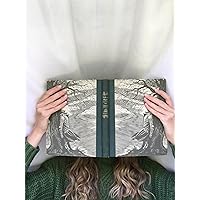
I picked this book up over the summer at a mini library of free books and was immediately drawn to the clean cover. I love art but I’m far from being the most knowledgeable, so the guide seemed like a perfect introduction.
I have never been to New York, and have only really heard of the Met because of the fundraising gala. Other than a vague idea that it’s an art museum, I didn’t actually know what the Met’s collections looked like or what they specialized in. While this introduction is from 2006, it was an awesome look into the museum’s collections.
The guide presents the collections of sculptures, paintings, historical artifacts, and photography. Each piece is accompanied by a short paragraph, giving enough of a description to understand the piece and possibly learn more later. The set-up of the book can serve on different levels. It’s perfect if you just want to look at some pictures and rest your brain, or if you’re feeling like looking at German art from the sixteenth century, they’ve also got you covered.
The only thing I wish that this guide included was an acknowledgement of how the museum received most of its collection. If an item from a non-European country said it was acquired in the late-nineteenth century or the early-nineteenth century, that item was likely stolen during this imperial period. Then again, this book was published in 2006, so newer additions possibly cover the issue.
Rating 4/5: This was a really great introduction that I would recommend to anyone who likes art. There’s something in the guide for everyone, and it definitely makes me want to visit the museum.

October 12, 2021
So much beauty in one small book!!

February 5, 2013
I think that this book was amazing and I really enjoyed reading this book. The Metropolitan Museum of Art was about beautiful sculptures and paintings done by famous artists and were put in the Metropolitan Museum of Art. This book had a lot of useful facts and information about artists and their work. It also talked about the artist's lives and how hard they had to work to get their fantastic art in the museum. One of the most famous and one of my favorite artists who got her art put in the Metropolitan Museum of Art was Jan Van Eyck with one of her best paintings The Last Judgment. I extremely enjoyed reading this book and thought that it was incredibly interesting.

April 26, 2010
I found this a useful guide to the Metropolitan Museum of Art. Of course their acquisitions and exhibits change, and frankly the binding sucks and it's the kind of book you can expect to soon fall apart--which is why I'm docking a star. But it's still given the maps a good way to make your way through the museum, and that's especially useful if like me you're a New York City resident. And if you're not, and you only visited, it's like taking a nice little album of your visit home with you.
Read
August 4, 2011No better and no worse than museum shop guides to other American art museums. The writing is pointedly dull. The pictures are too small for detailed examination. The bindng is next to useless for actually using while in the museum. And of course, the usual gripe with all these museum guides... they never have the artworks in them that you want in them.... those same artworks that surprisingly don't have postcards in the gift shop either. Sigh.

January 26, 2012
There was no Korean art in the "China, Japan, Korea" section. And the recommended donation for adults in 1983 was $4. It is now $25. Sigh. But otherwise a good summary. I wonder how much of it is no longer there...
Displaying 1 - 8 of 8 reviews