Once upon a time, in a world ancient and dark, there lived a legendary musician named Orpheus whose music was so heartbreakingly beautiful it could make the very stones weep. When his beautiful bride, Eurydice, was cruelly stolen by death and dragged down into the silent, shadow-choked depths of the underworld, Orpheus did the unthinkable: he walked straight into the jaws of hell to get her back. Armed only with the silvery strings of his lute, he charmed the monsters of the deep and begged the king of the dead for her release, winning her freedom on one strict, terrifying condition—he must march back to the land of the living and never look back to check if she was behind him. But near the very exit, consumed by an agony of doubt, he turned his head, only to watch her vanish into the mist forever as a weeping phantom, leaving him to wander the earth in eternal, broken-hearted isolation.
It is a sweeping, grand tragedy of cosmic proportions, an immortal monument to pure romantic suffering—which is precisely why Danilo Kiš takes this pristine classical myth, drags it up six flights of rickety wooden stairs, and violently shoves it face-first into a cramped Belgrade garret teeming with scurrying cockroaches, rat poison, and urine-soaked straw. The legendary underworld is instantly obliterated, replaced by a chaotic, fever-dream landscape where the ceiling molds itself into the thighs of Venus, where a Renaissance lute is casually stuffed with dirty rags to stop its agonizing sighs, and where our self-proclaimed Orpheus breaks down into pathetic sobbing next to a railway embankment because he is secretly terrified of trains and stray dogs eating wild autumn plums.
Welcome to a hallucinated theater of the mind, a reality where the narrative boundaries do not just blur—they actively dissolve into absolute, avant-garde disorder. Kiš constructs a multi-layered hall of mirrors where the narrator is simultaneously living his bohemian crisis, aggressively fictionalizing it in real-time under the same title, and swapping out identities with the erratic, telescope-wielding Igor, alias Billy Wiseass. Nothing in this text is anchored to solid ground; the pristine ideal of Eurydice collapses into a grotesque, shape-shifting degradation, dissolving into the reality of Marija and her literal striptease alter-ego, "Unforgettable Pussy" performing to the Persian March at a local festival. She becomes a phantom born entirely from the narrator's toxic egocentrism, communicating through cryptic notes scrawled in an illegible Sanskrit-like script that might just be a total figment of his feverish imagination. The book functions as a meta-fictional trap where the characters are acutely aware that they are trapped in a text, openly debating how many months along a pregnancy is not out of human concern, but out of absolute panic that an impending birth will accidentally force a "new character" onto the page and ruin the purity of the novel's form.
To navigate this text is to wade through a cluttered, experimental museum of the bizarre, a manic inventory of weird objects and absurd philosophical posturing that deliberately alienates the rational reader. Kiš packs his attic with a hyperdescriptive hoard of intellectual artifacts, locking irreplaceable works by Spinoza, Rimbaud, and Stendhal under a glass bell jar weighted down with a rock to protect them from ravenous rats.
The characters don’t just live; they aggressively perform their intellect, clawing Latin and Greek maxims into the damp walls with their bare fingernails until the blood spurts, using ancient wisdom like a desperate prayer of purification. When the claustrophobia of the garret becomes too heavy, the narrative spills out into a coastal dreamscape where the menu at the "Two Desperados" taverna reads like a surrealist manifesto—offering imported wines labeled "Eyes of Eurydice" and seafood dishes of "Dragonfly in Mayonnaise" right alongside a terrifying, house-specialty weapon called "The Desperados’ Pistol". It is an environment of calculated madness, where characters solemnly debate whether it is better to commit suicide or compromise with a flawed world, all while an eccentric old waiter insists that he can see literal moonshine dripping through a harpist's fingers.
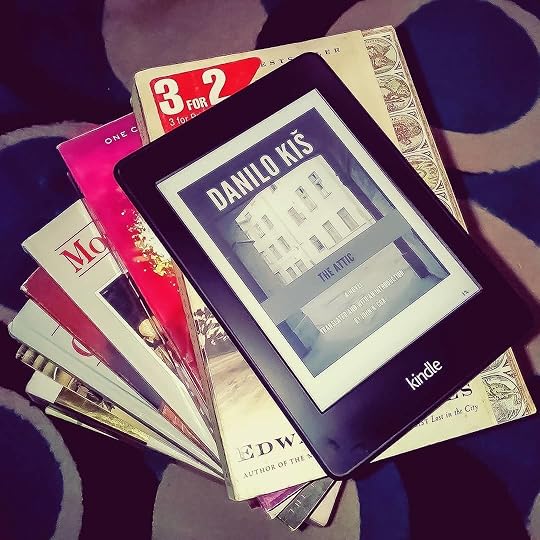
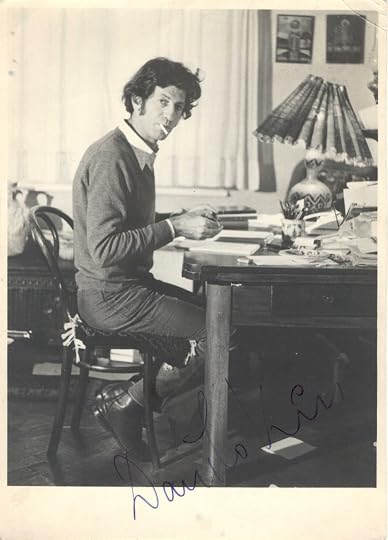
This dizzying explosion of styles highlights the true essence of The Attic (Mansarda) : it is a fearless, highly audacious debut critique of the artistic process itself. Here we see a twenty-something Kiš throwing absolutely every literary technique at the wall to see what sticks, utilizing his "rigorous ethic of detail" to construct a frantic laboratory of form. He boldly borrows substantial chunks of text from Thomas Mann’s The Magic Mountain, blending heavy high-modernist pastiche with dirty Balkan realism, ironic humor, and listing games. It is raw, brash, and deliberately fragmented—the sound of a brilliant young writer weaponizing wordplay and meta-narration to hammer out his own artistic credo. By forcing the narrator to step outside his own head and confront the tragic, real-world misery of his neighbors downstairs—like the silent, slow self-destruction of Uncle Alek or the child suffering from whooping cough—Kiš uses the text to intentionally break his own toys. He forces his young artist to grow up, mapping out a profound transition from self-absorbed intellectual isolation to a deeply felt, universal human connectedness.
Ultimately, this relentless dismantling of the narrator’s egoism culminates in a fierce, satirical execution of the romanticized myth of the "suffering bohemian artist". Kiš takes that exhausting, cliché archetype—the tragic, brooding genius who cradles his instrument in a freezing room, wallowing in the glamorous romance of his own isolation—and completely sets it on fire. There is no nobility to be found in this squalor, only the rancid taste of goat’s blood, the sting of a beer bottle shattered over a head in a quayside bar fight, and a desperate protagonist practicing jujitsu and boxing just to knock some sense into his own skull. The grand quest for the ideal muse ends not with a tragic glance at the gates of hell, but with the sickening realization that the high-art ideal and the low-life street reality are the exact same entity—the idealized Eurydice ultimately unmasked in a trashy fifteen-minute routine called "Unforgettable Pussy" at a local fashion exhibition. By the time our battered hero stumbles out of his alcohol-scalded delirium, he has no choice but to throw his idealistic clamshell of a lute onto the flea market pile and "dismount from this planet". In a final, glorious middle finger to artistic pretension, Kiš drags his sleepwalking aesthetician down from the stars and forces him to look at the peeling paint of real life, abandoning the safe, sterile vacuum of bohemian vanity to face the beautifully messy and unvarnished world as it actually is.
A buddy read with the brilliant Yalla: read neither in a shabby attic nor under the infatuating moonlight, but through lit-up screens and the misshapen, stainless-steel comfort of modern life.