

What do you think?

The Queen's Cross
A Biographical Romance of Queen Isabella of Spain
In Queen Isabella of Spain, Lawrence Schoonover has found his perfect heroine. Known as Isabella the Catholic. she was in many ways the Spanish Joan of Arc, and was unquestionably one of the great queens in all European history. A passionate and beautiful woman - a devoted wife who forgave even when she could not forget - a loving mother - Isabella was at the same time a strong administrator and a military genius.
Lawrence Schoonover brings Isabella to life in all her glory, with a host of intriguing people in her retinue including the handsome, brave, but philandering Ferdinand, whose weakness Isabella nobly tried to hide from the world by giving him credit where none was due; the scheming, unscrupulous Queen Juana, who attempted to palm off her bastard child as the Infanta, in spite of her husband's nickname - Henry the Impotent; Torquemada, Isabella;s early tutor and later Spain's Grand Inquisitor, the man who aroused her interest in a world wider than Europe, a world which one day might be circled by men in ships; the sickly heir apparent, Alfonso, whose death affected Spain's future far more than his own life, for it left the way open for Isabella's accession to the crown.
Here is the pulse-quickening flavor of the ancient Spanish cities - Barcelona, Seville, Granada, Santa Fe. Here is color and pageantry, violence and intrigue, passion and brutality. But above all, here is Isabella - a great queen who subordinated her personal sorrows and disappointments to a greater cause - the woman who wrested Granada from the Moorish hold of seven centuries and thereby filled out the map of modern Spain - the woman who grasped the significance of Columbus' ambitious project after most of the courts of Europe had turned him down - the woman who became a queen to capture the imagination of all the Western world.
In Queen Isabella of Spain, Lawrence Schoonover has found his perfect heroine. Known as Isabella the Catholic. she was in many ways the Spanish Joan of Arc, and was unquestionably one of the great queens in all European history. A passionate and beautiful woman - a devoted wife who forgave even when she could not forget - a loving mother - Isabella was at the same time a strong administrator and a military genius.
Lawrence Schoonover brings Isabella to life in all her glory, with a host of intriguing people in her retinue including the handsome, brave, but philandering Ferdinand, whose weakness Isabella nobly tried to hide from the world by giving him credit where none was due; the scheming, unscrupulous Queen Juana, who attempted to palm off her bastard child as the Infanta, in spite of her husband's nickname - Henry the Impotent; Torquemada, Isabella;s early tutor and later Spain's Grand Inquisitor, the man who aroused her interest in a world wider than Europe, a world which one day might be circled by men in ships; the sickly heir apparent, Alfonso, whose death affected Spain's future far more than his own life, for it left the way open for Isabella's accession to the crown.
Here is the pulse-quickening flavor of the ancient Spanish cities - Barcelona, Seville, Granada, Santa Fe. Here is color and pageantry, violence and intrigue, passion and brutality. But above all, here is Isabella - a great queen who subordinated her personal sorrows and disappointments to a greater cause - the woman who wrested Granada from the Moorish hold of seven centuries and thereby filled out the map of modern Spain - the woman who grasped the significance of Columbus' ambitious project after most of the courts of Europe had turned him down - the woman who became a queen to capture the imagination of all the Western world.
414 pages, Paperback
First published June 1, 1955
About the author
Lawrence Schoonover
22 books16 followersLawrence Schoonover (1906–1980) was an American novelist.
Born in Anamosa, Iowa, Schoonover attended the University of Wisconsin, then worked in advertising before becoming a novelist.
Lawrence Schoonver had four daughters with his wife, Gertrude Hedwig Bonn: Judith Hedwig (1940), Mary Elizabeth (1942), Caroline Grace (1944–2005), and Virginia (1946).
Writing mostly historical fiction, his attention to detail and historical accuracy won him great praise by his contemporaries. Among his many well-known books are The Queen's Cross, The Burnished Blade, Gentle Infidel, The Spider King, and The Prisoner of Tordesillas.
Born in Anamosa, Iowa, Schoonover attended the University of Wisconsin, then worked in advertising before becoming a novelist.
Lawrence Schoonver had four daughters with his wife, Gertrude Hedwig Bonn: Judith Hedwig (1940), Mary Elizabeth (1942), Caroline Grace (1944–2005), and Virginia (1946).
Writing mostly historical fiction, his attention to detail and historical accuracy won him great praise by his contemporaries. Among his many well-known books are The Queen's Cross, The Burnished Blade, Gentle Infidel, The Spider King, and The Prisoner of Tordesillas.
Ratings & Reviews
Friends & Following
Create a free account to discover what your friends think of this book!
Community Reviews
Displaying 1 - 8 of 8 reviews

April 7, 2009
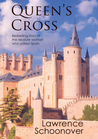 The Schoonover Collection: Queen's Cross by Lawrence Schoonover
The story of Isabella of Castille and her husband Ferdinand of Aragon uniting Spain in the 15th century is a lively tale told by Lawrence Schoonover in Queen's Cross.
For this review, I mainly did a summary of the book, but the story is so interesting I couldn't resist. My precis has omitted a lot of historical and other details, which the book itself can supply. It's a well known story, but Schoonover has enlivened 15th century history, bringing us the amazing life of Isabella of Spain.
Chroniclers in monasteries, penning her astonishing achievements..., did not hesitate to call her a living saint. She was not logical, but her exploits were magnificent." (ch. 17)
At the beginning of the novel, we meet young Isabella and her brother Alfonso, both set to succeed their childless half-brother, the current King Henry. When
Henry later has a daughter but disowns her as not his biological child, and when his second child, a son, is stillborn, Isabella and Alfonso once again assume the title of Infantes, successors to the throne.
To avoid being forced into an arranged marriage, Isabella schemes to marry Ferdinand of Aragon. Her brother Alfonso dies before he can become king, and Isabella is crowned queen of Castille on the death of King Henry.
"Isabella and her consort Ferdinand emerged from the celebrated Cortes of 1480 as absolute monarchs. She began to spend her great revenues in ways that at first he judged foolish.... No one had ever done that before, at least no one since Caesar." (ch. 23)
The landing of the Turks in Sicily, on parts of King Ferdinand's lands, prompts Isabella to begin the building of a fleet of ships, an armada. The Moorish war continues, and so does the spread of the Spanish Inquisition. Granada falls and becomes part of Spain. With the lands under Christian control "from Granada to the Pyrenees," Spain is united, and Ferdinand reluctantly agrees with Isabella that Christopher Columbus can begin his celebrated voyages.
"Oh very well, senora mia," he agreed grudgingly. "I suppose we can afford him now, and you seem to feel strongly about him. Sail him way, for all I care, out of this world. At least he'll quit pestering me."
"How do we know,: Isabella smiled, "that he won't bring back another?" (ch. 31)
Those who like historical fiction and 15th century Spain will enjoy reading Queen's Cross, one of several historical novels written by Schoonover.
March 15, 2009
this is an old book. published in the 40's i think. i have passed it on to my friend so i can't verify the date.
its a story of isabella's life. the queen of spain and king ferdinand.
her childhood, how much in turmoil it was. how she got ferdinand as husband, not the traditional marriage for the country.
i really enjoyed it. its full of history and the things they did with their lives as king and queen of spain. it stops about the time that columbus comes on the scene.
i wish it had kept going. i really enjoyed it.
its a story of isabella's life. the queen of spain and king ferdinand.
her childhood, how much in turmoil it was. how she got ferdinand as husband, not the traditional marriage for the country.
i really enjoyed it. its full of history and the things they did with their lives as king and queen of spain. it stops about the time that columbus comes on the scene.
i wish it had kept going. i really enjoyed it.
May 22, 2018
A surprisingly well-written and engaging 'biographical romance' (designated in the title) of Queen Isabel of Spain and her husband--the famous Catholic royal couple of the 'Reconqvista' who expel the Moors from Spain, are awarded half the known world by the Pope in the 1494 Treaty of Tordesillas, and financed Christopher Columbus' voyages (although the book ends circa 1492). It was first published in 1955 but was popular and used copies can be found online and in some libraries.
I confess I don't usually read fiction, but was attracted by the book's good reviews while searching for more information about late 15th century Spain and there are times (when one just wants a quick overview) when it's easier to absorb historical information through a well-written novel than an academic tome. I was not disappointed and would recommend this volume to anyone interested in this period as a very useful (and historically accurate) introduction, together with another 'historical factition' tale--Tariq Ali's Shadows of the Pomegranate Tree.
I confess I don't usually read fiction, but was attracted by the book's good reviews while searching for more information about late 15th century Spain and there are times (when one just wants a quick overview) when it's easier to absorb historical information through a well-written novel than an academic tome. I was not disappointed and would recommend this volume to anyone interested in this period as a very useful (and historically accurate) introduction, together with another 'historical factition' tale--Tariq Ali's Shadows of the Pomegranate Tree.
November 22, 2022
Could not connect with any of the characters

September 20, 2014
Overall I really enjoyed this relatively obscure historical novel about the great Catholic monarchs, Ferdinand and Isabella of Spain. It's a shame that I couldn't give it a better rating, but I'll get into that in a minute.
Ferdinand and Isabella are two of the most significant figures in the history of Reformation era Europe, although many people are not aware of their history. When Ferdinand came to the throne in Aragon and Isabella came to the throne in Castile, the Iberian peninsula was divided into the three independent and hostile kingdoms of Aragon, Castile and Portugal. The Islamic kingdom of Granada thrived at the southern end of the peninsula, and the kings of France had succeeded in keeping the security of the Christian nations of the peninsula in a state of instability. Not only the Ferdinand and Isabella unite the kingdoms of Aragon and Castile into a single kingdom of Spain, but they managed to nullify the French and Portuguese menace on the borders, drive the Moors from Spain after 700 years of war, and they even managed to liberate the island of Sicily from Turkish invaders and destroy the Turkish fleet in Africa before they could mount an invasion of Malta. The two literally turned two of the weakest nations of Europe into one of the greatest Christian powers in history. And, if that were not enough, they also funded Christopher Columbus's voyage to America, opening up a new age of exploration in the New World.
Schoonover is one of the best historical novelists I have read who dealt with Spain's golden age. He actually understood the times of these two great monarchs, including the threat of the Moors and the challenge posed by the prosperous and influential Jewish population of Spain. British writers who deal with Spain tend to treat the Spaniards as religious fanatics who loved to murder Jews. Schoonover, who is American, does not show that tendency. If anything, he is too apologetic of the Spain of the time. He describes the origins of the Inquisition but makes light of it. He glosses over cruelty that Ferdinand and Isabella displayed, turning a nation with a large non-Christian population into a nation that was almost completely Christian. They didn't do that by being kind - they expelled the Jews and Muslims from Spain and confiscated their property. They also placed great demands on the people in the form of taxes and military conscription to support their continuous wars.
Schoonover's worst sin in this novel is his lack of lively prose. His characters all sound the same in their dialogue; they all use this flowery language and act the same. The characters are shallow. Although Schoonover does a good job of portraying Ferdinand and Isabella themselves, the other characters really don't have personalities. There aren't really bad guys in this novel, other than political or military rivals that the reader doesn't really get to know. All of this makes for a tedious novel.
Overall, this is a good novel, and I would recommend it for someone who is interested in the Spain of Ferdinand and Isabella and who is willing to slog through the tediousness.
Ferdinand and Isabella are two of the most significant figures in the history of Reformation era Europe, although many people are not aware of their history. When Ferdinand came to the throne in Aragon and Isabella came to the throne in Castile, the Iberian peninsula was divided into the three independent and hostile kingdoms of Aragon, Castile and Portugal. The Islamic kingdom of Granada thrived at the southern end of the peninsula, and the kings of France had succeeded in keeping the security of the Christian nations of the peninsula in a state of instability. Not only the Ferdinand and Isabella unite the kingdoms of Aragon and Castile into a single kingdom of Spain, but they managed to nullify the French and Portuguese menace on the borders, drive the Moors from Spain after 700 years of war, and they even managed to liberate the island of Sicily from Turkish invaders and destroy the Turkish fleet in Africa before they could mount an invasion of Malta. The two literally turned two of the weakest nations of Europe into one of the greatest Christian powers in history. And, if that were not enough, they also funded Christopher Columbus's voyage to America, opening up a new age of exploration in the New World.
Schoonover is one of the best historical novelists I have read who dealt with Spain's golden age. He actually understood the times of these two great monarchs, including the threat of the Moors and the challenge posed by the prosperous and influential Jewish population of Spain. British writers who deal with Spain tend to treat the Spaniards as religious fanatics who loved to murder Jews. Schoonover, who is American, does not show that tendency. If anything, he is too apologetic of the Spain of the time. He describes the origins of the Inquisition but makes light of it. He glosses over cruelty that Ferdinand and Isabella displayed, turning a nation with a large non-Christian population into a nation that was almost completely Christian. They didn't do that by being kind - they expelled the Jews and Muslims from Spain and confiscated their property. They also placed great demands on the people in the form of taxes and military conscription to support their continuous wars.
Schoonover's worst sin in this novel is his lack of lively prose. His characters all sound the same in their dialogue; they all use this flowery language and act the same. The characters are shallow. Although Schoonover does a good job of portraying Ferdinand and Isabella themselves, the other characters really don't have personalities. There aren't really bad guys in this novel, other than political or military rivals that the reader doesn't really get to know. All of this makes for a tedious novel.
Overall, this is a good novel, and I would recommend it for someone who is interested in the Spain of Ferdinand and Isabella and who is willing to slog through the tediousness.

March 13, 2009
This is one of the books which led to my lifelong interest in history.
Schoonover's work is often compared to Michener, though one of the differences is that Schoonover usually writes biographical fiction based on actual important figures and events from history.
This one is about the younger sister of a 3rd in line heir to the throne of a fractious country, beset by poor governance and civil unrest.
Her name was Isabella, and despite several attempts by her uncle to marry her off and even murder her and her older brother (got him), she defied corrupt power and married a handsome and powerful rival. Together they did what no one had done in a thousand years.
The united Spain under one rule, and drove out an occupying nation.
Excerpt:
A Figure of Intrigue
ISABELLA now found herself a figure of international importance. The memory of Joan of Arc was still fresh in the minds of the older generation of statesmen. Grave gray heads turned thoughtful in many a European chancellery at the prospect of another girl of equal piety, greater beauty and amazing personal magnetism placing herself at the head of an army, uniting a nation. Dispatches were torn open with impatient hands, and candles burned far into the night as sharp intellects scrutinized the latest news from Spain. And many statesmen, especially Louis of France, whose life work was foreign chaos, concluded that she must be murdered, married or warred against if she did in Castile what Joan of Arc had done in France. Meanwhile they watched and waited.
I have a prejudice to this author, as he is my great-uncle, and I am publishing new editions of his books, out of print for three or more decades.
The first two (Queen's Cross and Gentle Infidel) are available through major bookstores and online dealers.
Schoonover's work is often compared to Michener, though one of the differences is that Schoonover usually writes biographical fiction based on actual important figures and events from history.
This one is about the younger sister of a 3rd in line heir to the throne of a fractious country, beset by poor governance and civil unrest.
Her name was Isabella, and despite several attempts by her uncle to marry her off and even murder her and her older brother (got him), she defied corrupt power and married a handsome and powerful rival. Together they did what no one had done in a thousand years.
The united Spain under one rule, and drove out an occupying nation.
Excerpt:
A Figure of Intrigue
ISABELLA now found herself a figure of international importance. The memory of Joan of Arc was still fresh in the minds of the older generation of statesmen. Grave gray heads turned thoughtful in many a European chancellery at the prospect of another girl of equal piety, greater beauty and amazing personal magnetism placing herself at the head of an army, uniting a nation. Dispatches were torn open with impatient hands, and candles burned far into the night as sharp intellects scrutinized the latest news from Spain. And many statesmen, especially Louis of France, whose life work was foreign chaos, concluded that she must be murdered, married or warred against if she did in Castile what Joan of Arc had done in France. Meanwhile they watched and waited.
I have a prejudice to this author, as he is my great-uncle, and I am publishing new editions of his books, out of print for three or more decades.
The first two (Queen's Cross and Gentle Infidel) are available through major bookstores and online dealers.

August 31, 2010
Historical fiction about Queen Isabella.

Read
August 27, 2016Another snoring bore. I thought it would be really interesting but it just didn't do it for me. I kept falling asleep.
Displaying 1 - 8 of 8 reviews