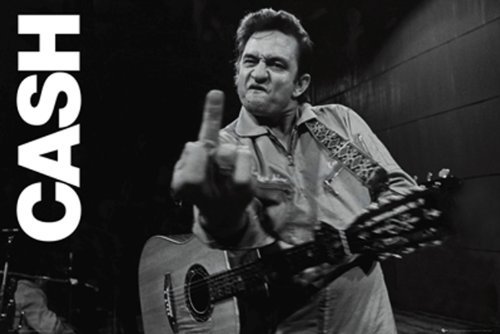
Reinhard Kleist è forse il più originale autore di biografie a fumetti d'Europa. La sua storia di Johnny Cash, leggenda del country americano, è da quasi un decennio il testo di riferimento per capire il tormento dell'anima di uno dei più controversi artisti della musica del Ventesimo secolo. Questa nuova edizione BAO, riveduta e corretta, comprende un'appendice a colori con illustrazioni di Kleist ed è il modo perfetto per avvicinarsi alla figura dell'autore di Folsom Prison Blues.
After school he had an internship at printing and publishing Landpress in Weilerswist Studium at the College of Visual Arts in Münster. There the albums "Lovecraft", "Dorian" and "adventure of a switchman" were created.
After graduation in 1996 he moved to Berlin. where he worked in a studio. For some years he did workshops, lectures and exhibitions in countries like Mexico, Brazil, China, Indonesia, Vietnam, Jordan, Algeria, Spain, Canada and others, at the invitation of the Goethe Institute or my foreign publishers.
In December 2013, as part of a project for ARTE, he was in a refugee camp in northern Iraq where he I did interviews with Syrian refugees. He did a lot of sketches, and did two workshops with children. The results and photos from the workshop can be seen at ARTE Refugees
In 2011 his comic strip "The Boxer" was published in the Frankfurter Allgemeine Zeitung, which was published in May 2012 in a revised version as a book by Carlsen Verlag.
In 2015, "The Dream of Olympia", the story of Samia Yusuf Omar, was published by Carlsen Verlag and in 2016 was awarded the "Annual Lynx" and the Catholic Children and Youth Book Prize.
One of the best GN I have ever read - art is reminisant of German Expressionism - story flows between the shores of nightmares and sweet dreams. As I have grown older I find myself drawn more and more to the music of JC. Hope to see more GN like this in the future from Reinhard Kleist - highest recommendation.
Who would have thought a German storyteller could write and illustrate a damn good biography of an American icon? Kleist does do some cherry picking as this isn't quite as in-depth as a traditional prose biography, but he portrays Cash worts and all. He does some interesting things such as illustrate Cash's songs as he performs them, putting the lyrics to images. I think my favorite part of the book was when Johnny went to Folsom state prison. That's just such a damn cool story. So put on some Johnny Cash and get to reading.
Whenever I hear Johnny Cash's Ring of Fire it brings to mind a particular family road trip. My eldest son introduced me to Cash's music and I had heard something of his life before deciding to read this book. When it arrived on hold for me at the Library and I saw it was black and white I wondered if the lack of color would reduce my enjoyment.
However, I needn't have worried, I quickly became absorbed in the story and could hardly put it down! The story is compelling and the artwork is wonderful! I love the gallery of full page pictures of Johnny at the back also.
I See a Darkness is an honest, but incomplete illustrated biography of Johnny Cash, where we see him not only in his most glorious days, but also in his most vulnerable ones. The artwork in the book is phenomenal and perfectly portrays some of the most iconic moments of Cash's life.
Halfway into Reinhard Kleist's excellent graphic novel, he has Glen Sherley, the Folsom Prison inmate who wrote "Greystone Chapel" for Johnny Cash, telling another convict that he reads all the stories on Cash he can find. Sherley is trying "to get an idea of the man, get to know him."
"Now and then," Sherley says, "you gotta read 'tween the lines to get the real story. In the end it's the stories that remain, not the facts. An' stories have gotta be told."
Not that Kleist is inaccurate, but his biography does put these words in Sherley's mouth as a sort of manifesto. 'I See a Darkness' is more the story, or even the myth, than the facts. And it's a myth from the dark side, the Johnny Cash known from the spare Rick Rubin-produced recordings of Kleist's eponymic title, or 'Hurt' or 'Thirteen.'
It's a good noir myth and one made for the superior way comics can deal with noir style. Kleist definitely has that style down and his book is strongest when he focuses on the pill-popping, room-wrecking Johnny Cash, and the craggy lines of the older man as he looks back on his life with a sense of accomplishment tinged with regret.
Kleist makes use of some clever segues, employing Sherley's story and the lyrics to a number of Cash's songs, notably 'Ghost Riders in the Sky.' The cartoonist even sees a darkness in 'A Boy Named Sue,' and the reader gets to see the narrator of 'Folsom Prison Blues' shoot that man in Reno just to watch him die. Oddly enough, the bleak and stark 'Ira Hayes' gets a rather more insipid presentation.
Much more satisfying than the movie, and 'Johnny Cash: I See a Darkness' got me listening again to all my favorite 'American Recordings' songs.
I can't say that I really enjoyed reading this. I was very excited to read this book but I was disappointed by it. The story is very choppy. It goes from one thing to another, often times leaving the reader not knowing how it went into the next story. There's a part where it shows Johnny and Bob Dylan talking about "A Boy Named Sue" but I was confused how Bob Dylan suddenly appeared into the story arc and then just as suddenly that arc is over and it's onto another story. I'm not even sure why it was included.
The artwork was not my cup of tea for the most part. I hate when you can't distinguish between characters and for the fact that the book was about Johnny Cash, Johnny did not look like Johnny in way too many panels. The Cash Gallery at the end of the book however was beautiful. There was some great artwork of Johnny in there.
The font was also way too small. I had to strain to read it. I was also sometimes confused by what was dialogue and what were lyrics.
Overall, I didn't feel like I got a full story on the man. Something seemed to be lacking and chunks of story seemed to be missing. I did enjoy reading about the Folsom Prison live recording session and how the last song he sang was a song that one of the prisoners, Glen Sherley, wrote. Glen wrote "Graystone Chapel" and was hoping Johnny would sing it. Johnny listened to it and thought it was the perfect song to end the show with. He stayed up all night learning it and then surprised Glen at the end of the show.
I think I would try another book to really get to know Johnny's story.
Kleist is German, and Cash is this icon of American culture, so I was skeptical an "outsider" could do this well, for some reason, but he does a fine job in this multiple-award-winning book, which doesn't clean up Cash's multiple early career drug and alcohol and infidelity problems, that's in fact the focus of the book, and one central event every Cash fan knows about: the visit to Folsom Prison, which was important in Cash's life and career, and Kleist highlights it as so. There are some notable aspects of the book that make it better than good: 1) the black and white drawing of "the man in black"; 2) the story is told in part through the lens of a guy who was imprisoned at Folsom when Cash came there who sent Cash one of his songs, and 3) the way the songs are woven through the narrative. June Carter and his family's and his faith's roles in rescuing Cash are here, the rest sketchy, with cameos by people like Dylan appearing throughout. I liked it better than I thought I would, and, well, I listened to some of his music when I was reading it. Recommended, especially for fans!
Komiks, ktorý zhltne milovník príbehov o vášnivých ľuďoch/umelcoch prakticky na jedno posedenie. Voči kresbe som bol sprvu skeptický, ale rytmus rozprávania ma veľmi rýchlo vtiahol a napokon mi ten čiernobiely, akoby rýchlymi ťahmi robený štýl celkom sadol. Oproti filmu I walk the Line je tu niekoľko pridaných scén, ale ak poznáte Johnnyho životopis, veľa nového sa nedozviete. O to však ani nejde - ide o turbulentné rozprávanie o živote vnútorne rozorvaného TOP muzikanta, ktorý hudbu ozaj vnútorne cítil, čo je dnes už dosť cenná vec (najmä v popovej scéne).
POZN.: Vyšlo v češtine, v pevnej väzbe, dostupné za menej ako 15 eur - čo je v porovnaní s niektorými predraženými zošitovkami o superhrdinoch úplne smiešna cena.
Narrative: *** I'm a bit over 100 pages in with zero sympathy for him- especially his loneliness, whined about despite having a family home with an increasingly neglected wife and three children, that he chooses to ignore in favor of his ever more aggressive musical tour. So far, it's brutally obvious that his need to live a life of adventure, be heard/perform and gain fame were the causes of his mental miseries and poor emotional state from living within a vicious psychological cycle that his ambitions had no intention of abandoning for his own well-being! Through the finish now, I noticed that he never changed towards avoidance of aforementioned cyclical behavior while still young, Cash simply adapted better towards his need to be bombastic instead of seeking peace, keenly aware of his innate sharkishness, firmly believing that he cannot stop moving or all will surely fail...
Kleist did well telling the biography but, being a lifetime avoider of country music, I got confused whenever songs got played out through Cash's imagination but, as one who was dependent on substance abuse for his way of life, I understood well how he dealt with staging those psychological demons. Then, what was Rein trying to say through contrast, or was it about the wide appreciation Cash maintained, by ending it in a remote recording cabin with Rick Rubin?
Visual: *** I find it a bit "stringy" and lacking but his art for this fits well.
Comics sind eigentlich nichts für mich, zu wenig Text und keine Geduld zum für die Bilder. Aber die Kombination zwischen Liedtexten und Lebensstationen von Johnny Cash hat mit überzeugt. Alles wichtige zum Hintergrund fand ich im Vorwort von Franz Dobler The Beast in Me. Johnny Cash ...und die seltsame und schöne Welt der Countrymusik
A well-written biography of Cash starting with his childhood and ending with him in a studio in the woods recording his last album. Concentrates on the Folsom Prison concert as the pinnacle of the realisation of his dreams and tells a side story of Glen Sherley the man in Folsom who sent a song to Johnny. The book tells the story we're all pretty familiar with since the movie with Joaquin Phoenix but Cash's character is examined from various viewpoints including both his wives and various performers he worked with who both agreed and disagreed with his worldviews such as Carl Perkins and Bob Dylan. The art is in black and white and appropriately stark. The characters all look enough like who they are supposed to, to be recognisable but I was more keen on June Carter's depiction than Johnny's. A cool device I liked was every so often one of Johnny's songs would be told graphically with Johnny as the lead character. This really showed how much of a storyteller Cash was and why his songs are so mesmerising. I really enjoyed the book. Cash was treated with respect while examining all aspects of his life: the drugs, addictions, affairs, recovery, and deep Christian faith. Even though he had a dark life and was a troubled man, the book manages to have you singing along when it features his songs. Well worth reading if you are a fan of Johnny Cash.
Hlas Johnnyho Casha je ako ozvena, ktorá k vám dolieha z hlbokej a temnej studne, doudieraná, plná štrku a špiny, čo nazbierala cestou hore a napriek tomu v nej cítiť priezračnosť vody, ktorá tam niekde dolu pokojne žblnká. Každopádne je to jedna z najkrajších vecí, aké som kedy v živote počula (hneď po "ty si schudla?!" a "tak ja vám slečna tú skúšku dám, ale už sa tu neukazujte!")
Ale v tejto knihe som z toho nenašla nič. Príbeh sám o sebe je vyrozprávaný mdlo a pomerne nezáživne, také to že narodil sa, rád spieval, založil si skupinu a potom úspech, drogy, boh a smrť a hoci tá čiernobiela kresba mu určite sluší, nemám pocit, že by samotné výtvarné spracovanie prinieslo nejakú pridanú hodnotu.
Oproti Nickovi Caveovi menej fantaskné, pri ďalšom čítaní bude menej na objavovanie. Mohlo byť rozvinuté, prečo bol Cash fascinovaný temnotou, alebo som len nejaké políčka nepochopil? Vtipný easter egg s Colombom prezradený v úvode (inak, s June účinkovali aj v Doktorke Quinnovej, odporúčam pozrieť!), rozkreslená Ballad of Ira Hayes (nepoznal som, vypočujem si) a dojemný klip k Hurt; tam bolo asi najviac detailov, zaujala ma fotka jeho prvej ženy pripnutá na stene (dáva to zmysel aj v kontexte tej skladby.) Prečítal by som si aj nejaký "vážny" životopis. Keby som robil fan art (lebo mám pocit, že ten príbeh má potenciál, ktorý v knihe nebol naplnený), pridal by som tam aj Personal Jesus a fiktívne stretnutie s Depeche Mode, s Caveom, vo všeobecnosti s autormi originálov z American Recordings
I'm not entirely sure which audience Kleist aims for in his Johnny Cash, but it seems to bounce all over the place. At one moment, it's mainstream (even kiddie)-friendly (a la 'Walk the Line' -- the book even begins at Folsom prison) and the next it's delving into Cash's disturbing song psyche. It makes the book uneven. The song illustrations are amazing, though, putting Cash's face to most of the song characters' faces, so when a man gets shot in Reno, it's Cash doin' the shootin'.
Reinhard Kleist'ın çizgilerini, anlatısını, yazdıklarını, ele aldığı hayatları onun zihninden görmeyi seviyorum. Bir kez daha yanıltmadı ve bir ilahın, müzik dehasının, Cash'in hayatına düşmeme, onunla yaşlanmama neden oldu. Şu aralar baskısı bulunamıyor, zor bela, peşine düşüp dostlar sayesinde alabildim. İyi ki de almışım.
Ick, ick ick. I read this for a reading game that allows graphic novels. First of all, I did not like the art, not even a little bit. Sure, Johnny Cash had a life that had a lot of darkness in it, including but not limited to his struggles with addiction, but that doesn't mean I need this kind of drawing where everyone looks unattractive.
Then there was the dialogue, which I didn't think was the strongest it could be. It was imitating a form of graphic book or comic book style that I have never cared for, I guess.
There is nothing good I can say about this other than that at least it ended. I have evidently been a glutton for punishment this week since this is the third 1 star book. I need a reading brain cleanse, it think.
Daha önce de Nakavt! kitabını okumuştum. Kleist'in, biyografik kişiliğin duygu durumlarını/dönüşümlerini/karakterini şekillendiren atmosferi/anlarını; gerçeklerden uzaklaşmadan denge içinde ve özgün/başarılı çizgilerle aktarabildiğini düşünüyorum.
Recommended for readers who enjoy graphic novels, especially GN's based on true stories, or music fans. The black-and-white art style definitely added a layer of depth and meaning to the work. I especially liked the panels that were based on actual photos from Johnny Cash's life.
PT Este livro foi uma verdadeira surpresa para mim.
Sabia muito pouco sobre Johnny Cash além de algumas das suas músicas mais famosas, mas fiquei profundamente impressionado com a forma como Kleist conseguiu retratar a vida de Cash ao longo dos anos. A história dá-nos a conhecer o homem por detrás da lenda. No final, parece que caminhámos nos seus passos, vivenciando tanto os seus triunfos como os seus momentos mais difíceis.
A narrativa é tão envolvente que nos deixa a querer mais. O último capítulo foca-se em 1968 e, embora haja um salto breve até 2003 no final, parece que ainda há muito por explorar, especialmente considerando a vida rica de Cash até ao seu falecimento em 2003.
Johnny Cash revela-se uma figura profundamente fascinante, e as suas batalhas com os seus demónios são surpreendentemente relacionáveis.
Altamente recomendado para quem se interessa por este tema tão cativante!
--
EN This book was an unexpected gem for me.
I knew very little about Johnny Cash beyond a handful of his most famous songs, but I was thoroughly impressed by how masterfully Kleist portrayed Cash's life over the years. The story allows us to glimpse the man behind the legend. By the end, it feels as though we've walked in his shoes, experiencing both his triumphs and struggles firsthand.
The narrative feels so immersive that it leaves you wanting more. The final chapter focuses on 1968, and while there’s a brief leap to 2003 at the end, it feels like there’s so much more to explore, especially considering Cash’s rich life until his passing in 2003.
Johnny Cash proves to be a deeply fascinating figure, and his battles with personal demons are strikingly relatable.
Highly recommended for anyone intrigued by this compelling subject!
I'm gonna level with you, before reading this graphic novel I knew nothing about Johnny Cash's life story. I'd casually listened to his music but that was about it. I almost wish I hadn't read this, because Johnny Cash was just the worst. He's got almost no redeeming qualities. I'm meant to feel sorry for this guy but he treats everyone around him like crap. And they are all supposed to forgive him because he's talented? No. Just no.
Overall, the art was well done but the story was lackluster. I can't tell if that's because Johnny Cash was just a total asshat or the story itself had flaws. I don't feel like wasting more of my time finding out. From now on, I'm just going to casually listen to his music and blissfully pretend I don't know anything about his life.
Great biography in graphic novel format. Loved reading this. The author focuses on a part of the Cash story, and does a good job of it. It's not as detailed as a traditional "written" biography would be. But, this is a good, quick, overview of his life and some of his struggles. I'd recommend readers check out the song list in the back before reading the book. Make a Spotify or iTunes playlist of the songs and be a little familiar with them. They are featured in the book, one way or another.
The star review is all for the gorgeous, imaginative black & white art, which is great both when illustrating scenes from Cash's life and, especially, the dreamlike sequences that illustrate some of Cash's great songs.
The writing is relatively pedestrian, although honestly, Johnny Cash's life was interesting enough that it's engaging all on its own.
I know nothing about Johnny Cash except a few of his songs so when I saw this graphic novel at the library I thought I would pick it up. I learned a great deal about Johnny or J.R. as he was known as a young child and it wasn’t dry reading. When I finished reading this graphic novel, I had to wonder what kind of life Johnny could have lived, had he not lead such a dangerous lifestyle? I guess we see this a lot with famous individuals who decide to take the path with drugs and alcohol but reading this novel, it was as if Johnny lost temporary control of his life. Johnny was caught up in the moment, he was living his dream, he was high on life and he didn’t want to come down until one day it finally caught up to him and then it hit him, right in the face.
Told in hues of black and white, this was Johnny, he was the Man in Black. The graphic novel begins when he was young child working in the cotton fields with his family, his family in their new house part of Roosevelt’s New Deal Plan. The whole family was singing gospel, spiritual and hillbilly songs in the fields. J.R. wanted nothing more to be singer on the radio while his favorite brother, Jack wanted to be a preacher, like their grandfather. The frames tell the story of the family, the love, the hardships and the loss that they suffered. J.R. dreams big and nothing in this small town is big enough for him so he moves on and joins the service. Marriage, kids, a job, his life is moving fast and he wants it all and he wants it fast. He seizes every opportunity coming his way, putting together a band, pushing everyone to go…go…go. Then comes the drugs and the alcohol, there’s no slowing him down now. His wife and kids are cast by the wayside but the money is coming in and Johnny’s name is getting big and I think Johnny is getting too big for his britches. The drugs and alcohol, they can’t keep up with Johnny. I knew somewhere among these pages, something was going to crash. It’s amazing how far and how brutal people become. They push and they push, the illustrations showing the destruction but his determination to succeed and to keep moving forward flow through the words on the pages. He’s hit a wall, he sees it, Jonny is all black now. I highly recommend this graphic novel, even if you are not a Johnny Cash fan, I thought the graphics were great and the story behind this man was powerful.
Zu diesem Buch gibt es anlässlich des 20. Todestags von Johnny Cash eine hochwertige Neuauflage mit der ISBN 9783551760005.
Es ist erstaunlich, wie sehr sich so manche Musiker-Karrieren gleichen. Johnny Cash wird als eines von sieben Kindern in ärmlichen Verhältnissen geboren. Seine Familie kommt gerade so über die Runden und die Kinder sieht es bei Gelegenheit in die weite Welt hinaus. Dann folgen die ersten zaghaften Erfolge als Musiker, während er anderweitig Geld verdient oder aber beim Militär eingesetzt wird. Dann gehts es steil bergauf und mit der Karriere kommen die Drogen, Eheprobleme und der ewige Tourstress.
Reinhard Kleist gibt diesem Musiker mit seiner durchwachsenen Karriere ein besonderes Gesicht. Er beschreibt das Leben des Musikers in all seinen Facetten mit allen Höhen und Tiefen und vermutlich mit so mancher künstlerischen Freiheit, wenn Daten zum tatsächlichen Leben fehlten. Kleist zeichnet aber nicht nur das Leben, sondern auch dessen Lieder, was ich recht witzig und passend fand. Wie sonst bekommt man einen Song in eine Graphic Novel?
Ich habe während des Lesens ein paar der Songs und Konzerte gehört und gesehen und muss gestehen, dass es ein wenig wie bei Elvis ist. Nur wenige Songs sagen mir zu. Soll heißen, dass man kein Fan von Johnny Cash und seiner Musik sein muss, um Gefallen an dieser Umsetzung von Reinhard Kleist zu finden. Dieser zeigt in gewohnter Art und Weise mit seiner markanten Strichführung das Leben des Musikers. Ein Zeichenstil, den man mögen muss.
Fazit Ich lese sehr gerne Graphic-Novel-Biografien, auch wenn mir die Werke der Künstler immer gefallen. Oder vielleicht gerade deshalb. Den Zeichenstil von Reinhard Kleist muss man natürlich im Guten gegenüberstehen, damit die Biografie mit ihrem kreativen Erzählstil beim Leser positiv wahrgenommen wird. Bei mir hat er das.
Johnnyho Cashe jsem doteď vlastně neznal. Jasně, některé jeho písničky jsem znal, ale nevěděl jsem, že jsou jeho. Až letos jsem narazil na jeho cover písně ”Hurt” a řekl jsem si, že je to vlastně škoda, že jsem si jej nikdy ani neposlechl. A nyní, vlastně náhodou, přišla řada i na komiks "I see a darkness", který jsou koupil v "covidovém blindboxu".
Musím říct, že jsem si ten komiks neskutečně užil. Kromě toho, že je úžasně nakreslený, tak má i parádní scénář, který vás pohltí. Komiks Reinharda Kleista se zaměřuje na Cashe více jako na člověka, než jako na hvězdu. S Johnnym jsem prožíval jeho začátky a vzestup, stejně tak jako jeho pád na dno. Během koncertu ve Folsomské věznici jsem skoro nedýchal. Užíval jsem si každou jeho písničku, když na ni v komiksu došlo - prostě jsem si je během čtení všechny pouštěl na YouTube. I teď, když píšu tohle hodnocení, tak poslouchám výběr “Man In Black: The Best of Johnny Cash”.
Myslím že se Kleistovi v tom komiksu podařilo poodhalit duši Johnnyho Cashe. Až si příště pustím jeho cover Hurt, tak to budu vnímat úplně jinak, než předtím. Nečekal jsem od toho komiksu nic a dostal jsem hrozně moc.
Johnny Cash’s life has featured in prose biographies, a Hollywood biopic...and now in a graphic novel. JOHNNY CASH: I SEE A DARKNESS is by writer/artist Reinhard Kleist and was originally published in Germany in 2006 (I’m reviewing a 2009 English language version.). You might ask if there’s anything new to say about the Man in the Black, but sometimes, it’s all in the way you say it. Comics is, after all, a unique art form that comes with its own language.
It’s a language that Kleist proves adept at speaking. I love his art here, with characters who seem to be simultaneous caricatures and amazing likenesses of real people. If you know your music history, then you’ll easily recognize Johnny, June Carter Cash, Elvis Presley and producers Sam Phillips and Rick Rubin, among others. Yet, Kleist draws them cartoonishly enough to make their faces and bodies especially expressive. Kleist’s art also appears in stark black and white, and Kleist utilizes light and shadow to great effect. He’s very good at conveying mood, in other words, and his illustrations often nicely underscore the darkness and emotion in his story.
That story, of course, concerns the life of Johnny Cash, but it’s a bit more focused than that. Kleist essentially covers everything up to Cash’s legendary Folsom Prison concert in 1968, with an epilogue, of sorts, set in Cash’s twilight years. The Folsom concert is in some ways the story’s center, and Kleist gives special attention to inmate Glen Sherley, whom Cash had championed at the time. Kleist presents Sherley as something of a Cash superfan and uses him to deliver some of the book’s themes. “In the end, it’s the stories that’ll remain,” says Sherley, “An’ stories have gotta be told.” “That may be,” Sherley’s fellow inmate replies, “But why Cash’s stories?” Sherley explains that he “hears the truth in every word that Johnny sings.” Of course, he speaks not necessarily of a literal truth, but rather, an emotional, spiritual, personal, or perhaps even mythological truth.
To underscore the importance of the stories that Cash told in his songs, Kleist tells them again, as comic art vignettes interspersed in the main narrative. Often, he casts Cash himself as the main character, driving to Reno and shooting a man “just to watch him die” (as in “Folsom Prison Blues”); encountering his father as “the Boy Named Sue”; doing cocaine and “shooting his woman down” (as in “Cocaine Blues”), or pining for June Carter as the narrator of “Big River.” I suspect that it would have been more difficult to make such scenes work effectively in a live action production, but here, we see Kleist making fine use of the comics medium.
I read this comic shortly after finishing JOHNNY CASH: THE LIFE, a prose biography by Robert Hilburn. As such, the facts of Cash’s life remained present in my mind. Some Cash diehards might be disappointed that JOHNNY CASH: I SEE A DARKNESS is more interested in those “emotional, spiritual, personal or perhaps even mythological” truths than in literal accuracy. For those seeking accuracy, I recommend the aforementioned Hilburn biography. Kleist instead gives us a story - or, perhaps several stories, along with a reflection on the power of those stories. It’s not just the stories in the songs that matter, after all. Cash created a mythology in several ways.
The book isn’t completely without flaws. There are, for example, a few instances of the sort of awkward, “historically aware” dialogue that you often find in period pieces (In one scene, for example, there’s an almost throw away line referencing Buddy Holly’s death.). It seemed odd to me that Kleist would include such moments, and make a point to introduce key historical figures - and then not properly identify producer Rick Rubin toward the end. Of course, Cash fans and 1990s music enthusiasts will instantly recognize Rubin, but that does leave more casual readers out of the loop.
If those are my only quibbles, though - and really, they are - then I can’t complain. Ultimately, I found JOHNNY CASH: I SEE A DARKNESS to be quite excellent and would especially recommend it to any Johnny Cash aficionado.
Originally published about a year after the Oscar-winning biopic "Walk the Line," Reinhard Kleist's "I See A Darkness" presents a beautifully illustrated (if mediocrely written) version of Johnny Cash's tortured and turbulent life. Kleist's narrative often feels hurried; but the reader will tend to forgive this simply because Cash is such a captivating figure and Kleist brings him vividly to life with ink drawings that are at once hard-edged and fluid, a perfect fit for a divided soul and The Man In Black.
In reading ""I See A Darkness," it is all but impossible to distance oneself from the film, which can make it extremely difficult not to make comparisons. I am of the opinion that the work of art should stand alone, and so I won't be evaluating or analyzing it in relation to the film. However, I do understand that this could be of interest to potential readers, and so I will get some very quick thoughts on the relationship between the two knocked out right away: Where "Walk The Line" presents Cash as a man obsessed with receiving his father's approval, ripped apart by his inability to do so, and carried through his life (and often driven mad) by his love for and pursuit of June Carter, "I See A Darkness" does away almost entirely with Cash's Daddy Issues. In fact, the father presented here is a gentle and supportive figure. In the film, the loss of Cash's brother left him with a sense of guilt and the idea that the wrong brother or the good brother was taken. Here, the loss is central to the story, but Cash's view of his brother's death changes. The guilt is replaced with longing and loneliness, and the brother becomes a sort of spiritual guide for the very lost Johnny. Finally, June Carter and her persistent unavailability is the central narrative of the film; but in Kleist's story, she receives far less attention, and their relationship is less defined by the torture of being kept apart than by the constant friendship June gives Johnny.
For me, the illustrations completely make this graphic novel. They are phenomenal, and Kleist does an excellent job of slightly altering the style of the illustrations to set the tone of different scenes. In the straight narrative, Cash, the other characters, and the scenery are all rendered with a realistic pen (or brush, I'm not sure which). We have dream sequences in which the images more closely resemble those of gritty comic books or graphic novels like Frank Miller's work with Batman. But it is in the music scenes where we see Kleist's concept of Cash defined. Where everything in Cash's life outside of music is jagged and hard-edged, his world, and the way we see it through the illustrations, changes completely when he is transported by music. Things soften and curve. The images flow. They are smoother, more comfortable, more comforting. And so we see that, for Kleist, Cash's story is not about his relationships with his father, his brother, or his future wife but rather the relationship he had with his music and the way it served as a lifelong escape from his personal torment, a haven free of worry.
I would stress just how lovely the illustration work in "I See A Darkness" is. Kleist even includes a series of Cash portraits in a sort of epilogue. Each is worthy of being framed and put on a wall.
The "graphic" aspect of this graphic novel is essentially flawless; however, Kleist's work as a storyteller does leave something to be desired. While Cash's relationship with music is expertly rendered in writing and ink, his other relationships are pretty two dimensional and the other characters in the novel are flat, leaving the reader wondering just how much went unexplored. To see June moved so far to the back is odd. Cash's bandmates are indistinguishable. Even the larger than life personalities that surrounded Cash (Presley, Lewis, etc.) are hovered over. The end result is an oversimplification of the relationships that leaves them unsatisfying. Cash's relationship with his deceased brother is very one-note and overly sentimental. His relationship with June focuses on one thing.
For Kleist, it really is all about the music. Whether or not this leaves the reader with a fully satisfying story will be a question of taste. For me, the answer is no. While I absolutely loved the illustrations and very many of the scenes in the book, it ultimately fell flat. The story is hurried along in a way that leaves important moments feeling glossed over. While Kleist's illustrations are beautiful, they don't convey as much emotion and meaning in a single panel as those of a graphic novelist like Jason. Kleist's writing also lacks the subtlety and depth that separate the books I love from the books I like. There are places where the dialogue is overly sentimental, even corny. In writer-speak, Kleist often tells instead of shows, which is an interesting flaw given the medium.
Cash's relationship with music and the role it played in his life and psyche are well rendered and lovingly conveyed, but they can't quite support the weight of the biography or the narrative as it is constructed here. "I See A Darkness" suffers for its lack of nuanced secondary characters and uncomplicated relationships beyond the one to music. In the end, this would certainly be a must read for Cash fans, and I would recommend it to fans of graphic novels because Kleist is such a gifted artist and his illustrations capture something essential about Johnny Cash.
Masterfully told story! I always loved Cash's music and this graphic novel had managed to reveal the full depths of it. I have never doubted that Johnny Cash lived an eventful life and had a crazy career, but this story tells you so much more... the depresion, the ambition, the lonelines, the resignation, the stubbornness, the mission, the ressurection... And full of emotions. I liked how his songs are incorporated into the novel as "comic book" cutscenes usually staring Cash in roles of the song protagonist/antagonist.