First published in 1927, this legendary French novel intensely recounts a story of both love and heartbreak between the heroine and her beloved. A famous poet whose presence in her life she had intuited since childhood, and with God, who had long seemed to her the substitute—or the antecedent—for this future romantic love.
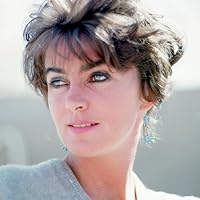
Catherine Pozzi was born in an aristocratic and bourgeois environment at the end of the 19th century, to Samuel Pozzi, surgeon and gynecologist, and Thérèse Loth-Cazalis. Her well-educated family was friends with artists and writers, including José-Maria de Heredia and Paul Bourget. From a young age she was interested in music, and at age 11 started keeping a journal. She studied for a year in Oxford.
At the age of 19, she read the published diary of Marie Bashkirtseff, and it had a profound effect upon her, spurring her to write intensely in her own journal.
At age 25, she married the popular dramatist Édouard Bourdet. In 1909 their son Claude (later a member of the French Resistance) was born.
Around 1910, she began to exhibit symptoms of tuberculosis, from which she suffered until her death.
She began studying history, philosophy and religion, math and sciences as the student of Marie Jaëll. In 1918, at the age of 37, she passed her baccalaureate. In that year, her father was assassinated by one of his former patients who was suffering from a paranoid delusion.
Friends of hers included Rainer Maria Rilke, Anna de Noailles, Jean Paulhan (editor of La Nouvelle Revue française), Colette, Henri de Régnier, Pierre Jean Jouve.
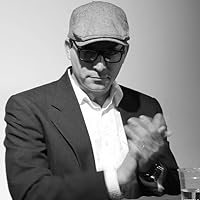
She began in 1920 a tumultuous relationship with Paul Valéry, which lasted eight years and gave rise to important correspondence. The rift between them distanced her from the Paris salons and caused her to have a terrible feeling of isolation.
She died in Paris on 3 December 1934, after illness with tuberculosis as well as morphine and laudanum use.
"Tengo la impresión de vislumbrar débilmente una especie de justificación de la ortodoxia: el movimiento de mi vida ocupa por completo el espacio de mi pensamiento, hace falta un acontecimiento ajeno a ella para librarme de ella. Sólo Dios sin historia no será suficiente, pues ya ves que se te parece, y sigue siendo mi deseo. Sólo puedo alejarme de mí por un Dios que me incomode, que yo no haya inventado, que yo no pueda comprender en absoluto, y cuyos actos sean más interesantes que los míos. Sólo hay que salir de ahí."
voy a volver a él porque creo que hay partes que no logré interiorizar por incapacidad mía, pero hay algo muy claro: el inicio y el final del libro son fabulosos. cuánta maestría