Yasutaka Tsutsui (筒井康隆) is a Japanese novelist, science fiction author, and actor. Along with Shinichi Hoshi and Sakyo Komatsu, he is one of the most famous science fiction writers in Japan. His Yume no Kizaka Bunkiten won the Tanizaki Prize in 1987. He has also won the 1981 Izumi Kyoka award, the 1989 Kawabata Yasunari award, and the 1992 Nihon SF Taisho Award. In 1997, he was decorated as a Chevalier Ordre des Arts et des Lettres by the French government.
His work is known for its dark humour and satirical content. He has often satirized Japanese taboos such as disabilities and the Tenno system, and has been victim to much criticism as a result. From 1993 to 1996, he went on a writing-strike to protest the excessive, self-imposed restraint of Japanese publishers.
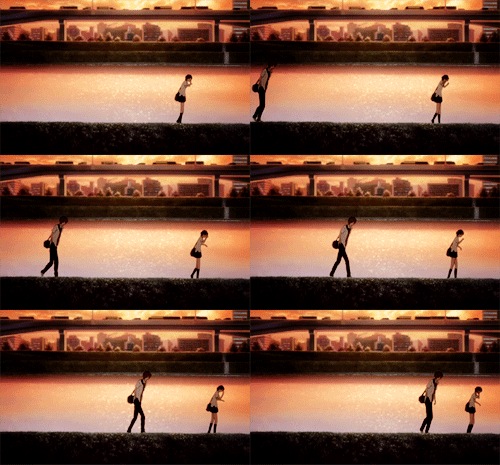
One of his first novels, Toki o Kakeru Shōjo (1967), has been adapted into numerous media including film, television and manga. Another novel, Paprika (1993), was adapted into an animated film by the director Satoshi Kon in 2006.
I watched the anime film The Girl Who Leapt Through Time and found out that it was based on a book by Yasutaka Tsutsui. I looked everywhere to find this book but resulted to no avail. Fortunately, my friend gave me a copy. Thank you :)
If you're an anime, manga or Japanese drama enthusiast, you would agree with me that the story is a typical one. It's one of the stories with magic or supernatural things occur plus the erasing of memories with a hint of love story. What I love is the idea of how the future will look like & it makes the readers cherish the present.
The story was about a girl named Kazuko who acquired a power of teleportation through time leap. She went to past and prevented accidents from happening but it caused more disastrous results to other people. She wanted to lose her power and learn about it. So she went back to past and meet someone who concocted it. To her surprise, it was someone she knew.
It has an extra story titled, "The Stuff that Nightmares are made of". It's like omake in mangas. :) It's about Masako facing her unusual phobia, finding out how it originate & how to overcome it.
The anime film was a sequel of this book but I still want to: compare the book with the anime film Beware: spoilers will pop once in a while
There are several adaptations but I think the anime film was the most popular one. Bucket of tears I've shed, it became one of my favorites. Time waits for no one
I can't believe I'm going to say this but I really love how the movie did not become faithful to the book. Makoto experienced what her aunt went through (which this book was all about). They both had the same situation, two guy friends, acquisition of unexpected power & bittersweet endings but the anime film delve deeper in terms of responsibilty of the acquired power as Makoto used to time leap several times. The anime was more heart breaking because their memories weren't erased & Chiaki left her a promise.
And she said, "I’ll come running". But you know it will be impossible as Chiaki's from decades of future. :'(
Chiaki [anime] & Kazuo [book version] both wanted the slower & peaceful pace of the present life. However, Chiaki really wanted to stay & he can't do anything about it while Kazuo have to go back to his research as he said it was his main purpose in life.
The language of this book is so bland and lifeless, the characters so one-dimensional, that I'm actually left wondering if there isn't something I should know... like, were both stories originally created as anime or manga? Or are they specially dumbed down for, I don't know, people who don't usually read books? Or is it simply the matter of bad translation? I know the author's name from somewhere. He seems to be pretty famous. What's the matter? Me very confused. The cover looks great but doesn't fit the book at all.
(Read the Sinhala translation of this book - "කාලය අභිබවා ගිය යුවතිය")
What did i just read? Even if it's not that complex, I fell in love with this story. And this is the first book i read about time traveling. So maybe that's also a reason. But this story is simple and beautiful. And i loved the friendship between the trio ; Kazuko Yoshiyama, Kazuo Fukamachi & Goro Asakura 🤍
I just found out that there's an anime version of this book ,so gonna watch that also.
Ovo je za mene bio prvi roman japanskog pisca. Veliki sam ljubitelj filmova, animiranih filmova i naravno anima.
Dok sam čitao ovaj kratak roman, zaista sam imao taj osećaj koji imam dok gledam anime. Stil pisca nije poetičan, ni specijalan. Možda je original drugačiji, jer je ovde prevod radjen sa engleskog. Svakako, solidno je i ovako. Moja pažnja bila je usmerena na devojčicu Kazuko, njena dva prijatelja i sve što im se dogodilo. Autor je savršeno uklapao i mešao prošlost, sadašnjost i budućnost. Nema opisa japanske kulture i okoline, ali autor to nadoknadjuje radnjom. Kazuko je petnaestogodišnja učenica koja iznenada shvata da može da skače kroz vreme. U početku zbunjena, ne shvata o čemu se radi. Da li je prethodni dan bio samo san? Kako je moguće da se sve ponovi, potpuno isto? Kazuko se bori da shvati šta se dešava i kako je dobila novu sposobnost. Dok traga za mističnom osobom koja joj je podarila tu sposobnost, Kazuko mora da preispita šta je zapravo realnost, a šta su snovi. Kraj je emotivan i tužan, zbog ljubavne priče koju tada otkrivamo, a za koju je u ovom vremenu kasno. Može se reći da roman teži i YA žanru, ali mi to nije predstavljalo problem.
📚 Knjiga sadrži i novelu "Tvar od koje su noćne more sačinjene". Ova kratka novela uči nas o strahovima i kako da ih savladamo. Svaki strah koji imamo, svaka noćna mora... sve je tu sa razlogom. Možda smo zaboravili? Možda ne želimo da se setimo? Autor nas uči da se suočimo sa strahom i pomognemo drugima da se suoče sa sopstvenim strahovima. Ova novela ostavila je slabiji utisak od prve, ali sam svakako zadovoljan knjigom kao celinom.
Za kraj, ostavljam vam svoju preporuku za knjigu. Verujem da se nećete pokajati. Osećate li miris lavande u vazduhu? Vidite li senku u sobi gde ste trenutno? 🌠
Picked up in the Kindle sale, somewhat at random -- mostly because of the cover, which caught my attention. I knew something about this book being adapted into a manga or an anime or something, so I thought it might be fun. It turned out to actually be two quite short and unconnected stories. They're very simple, and the translation seems rather stilted -- it comes out sounding like a book written for children to read.
The first story is rather sweet, even if it is very simplistic and hand-wavey in its explanations. I liked the last part quite a lot, actually; it made me smile. The second story actually manages to be a little creepy here and there, and then immediately dispels it with an extremely rational explanation.
Not something I'd particularly recommend, I have to say, though I might give it to a child.
Better in concept than execution (and not helped by flat, functional translation), and far outdone by its anime adaptation.
There's a unmentioned second (unrelated) story that's nearly half the book. Sketchy move not reflecting that in the title or description. It's ok, but it's also obviously here to be filler.
My rating reflects both stories of course and I'm rounding down to 2 instead of up to 3 for the issues mentioned, but let me mention that the ideas themselves are quite good.
This is a light novel for middle-schoolers written more than fifty years ago. And as such it is quite nice. Tsutsui is great at directing scenes, creating tension and make a lot of things happen in the limited space of the light novel. The format doesn't leave room for character development though. My language exchange Japanese friend was all excited and natsukashii when I told her I was reading it, so I guess if you read it in the right age, it will leave a mark on you. If not, it is still a good quick read and great first book for beginner learners of Japanese. The English translation leaves much to be desired. It feels clunky and sloppy and the translator took many creative liberties, moving around sentences, omitting whole pages and substituting their meaning with his own sentence. He also omitted almost all instances of the writing where it got more lyrical and metaphorical. The Japanese Tsubasa Bunko edition, includes 3 short stories that I'm not sure if they are the same as in the English edition "The Time Goddess", "Siblings" and "Fox". They were so short, like photographs, and weird and cute and happy and sad at the same time, I enjoyed all of them, especially the "Siblings" one where one sibling suddenly transforms into a cow and stays a cow.
For learners of Japanese, here is the floflo page for the book (where you can SRS vocab)
Groundhog Day was a groundbreaking film of the nineties. It popularised the concept of time loop in the west and inspired many films to adapt this fictional tool in the coming years. But elsewhere, the Japanese had used time loop already in the eighties. It was an anime series based on this book of Yasutaka Tsutsui. Tsutsui wrote this book way earlier, in 1965. It was one of the earliest examples of fiction featuring time loop which has become a common term in the movie world nowadays. Although there had been multiple adaptation of this book, Momaru Hosada's 2006 animated feature film is the most popular one. It's kind of funny that I had watched Hosada's movie version way back in 2011 or 2012. But I didn't know it was adapted from Tsutsui's book until yesterday when I was rewatching the movie. The movie is modernised, that's why I love it. But I can not say the same for the book. The concept was way ahead of it's time but it lacked proper execution. A little complexity could push the book in the right direction. Writing is easy breezy, nothing special, but justified for the young audience.
2015 reading challenge: a book that was originally written in a different language (43/50)
Today I woke up. I brushed my teeth. Then I went to eat breakfast. I put cat food in my cats' bowls. I put dog food in my dogs' bowls. I used my cellphone. I helped to make lunch. I pet my pets. I love my pets.
Oh, I'm sorry, you were expecting an actual review? So was I expecting an actual book, but instead got a "book" with a writing style similar to the very boring and very telling paragraph I just wrote.
That's right, this book is all tell and no show, which is like breaking rule #1 of storytelling!!! I'm a fanfic writer and I always used to search for all kinds of tips of writing better, so everywhere I searched I knew that the most important tip was: SHOW, DON'T TELL.
Which I admit: it's difficult, when you're getting started. Sometimes it's even difficult when you've been doing it for a long while! But if you want to sell a book and/or if you're a famous writer, I expect you to KNOW what the fuck you're doing. I try to be more patient with authors that are just starting (we all need to get experience in our first jobs), but I'm not fucking tolerant to people who have been around for a long time already and still fuck up majorly.
Then again, maybe this is well written in japanese. BUT THE ENGLISH TRANSLATION IS GOD-AWFUL, SO EVEN IF THE FAULT ISN'T TSUTSUI'S, ALL THAT I SAID IS STILL RELEVANT TO THE TRANSLATOR.
And the shitty writing isn't even the ONLY problem with the story. The characters are lifeless, unbelievable. Regardless of culture (which by the way, I LOVE the japanese culture) or setting or timeline, you're SUPPOSED to relate to at least one character in a story!!! But all of the characters in this story are just... lifeless puppets. One of them (the teacher) exists only to infodump the students!!!!
The plot is so thin and underdeveloped that it's like the author had writer's block and then quickly signed into Livejournal in hopes of finding a writing prompt that sparked an idea in him. Except that when he did find the prompt and did want to write, he didn't go further in the story!!! He wrote what the prompt asked and then when the "rest" of the story should take place, he was like WELP.
Actually, EVERYTHING in this story is underwhelming. The writing, the characters, the plot, the romance. I'm not even gonna get into the romance in this review because it's the same old story: they have no reason to love each other, their love is unexplainable and came out of nowhere and it was pretty much written because the author thought that it was necessary to make the story more "appealing".
The animated movie was so much better. Mind you: it isn't one of my favourite animations (I didn't like the ending >( ), BUT it is definitely better than the book. For starters, the characters are actually believable.
Quyển này thuộc thể loại khoa học viễn tưởng, gồm 3 câu chuyện. Tình tiết sống động và thú vị phết, rất hợp làm manga / anime / chuyển thể phim ngắn 😀. Văn chương thì hơi thường (so với thể loại truyện / tiểu thuyết), mà được cái bình dị, dễ chịu, dễ đọc.
This edition also featured an unrelated short story called "The Stuff That Nightmares Are Made Of". I quite liked both of them. I also can't believe that they were written in the 1960s, they feel so recent.
Terminé ♥ ♥ et pourtant c'était prévu que ma première lecture de la littérature japonaise sera Kafka mais j'ai trouvé ce petit roman de 70 pages assez joli et pas compliqué, et tellement l'histoire est courte je suis peu déçue...je crois que le film ANIME* qui arrive à laisser une trace et je suis émue en le regardant encore :( :( Bref j'ai aimé ce passage de Kazuko dans ce livre ^^ : ((...un jour quelqu'un entrera dans ma vie. Qui s-tu? Je te reconnaîtrai...Quand? je t t'attendrai....Où? Peu importe puisque je sais que tu viendras. Un jour, quelqu'un...))La Traversée du temps Par Yasutaka Tsutsui.
Ummm... Ova knjiga je prevedena sa engleskog prevoda što je samo po sebi loše. Mnogo toga se gubi i prevodu sa jezika na kom je delo originalno napisano. Nisam sigurna da li je prevod loš ili je samo loše napisana. Stil je i više nego jednostavan, likovi su jednodimenzionalni, jedino što mi se dopalo u ovoj knjizi jeste zaplet mada da budem iskrena ni on nije najbolje razrađen.
Knjiga takođe sadrži i novelu 'Tvar od koje su noćne more sačinjene' i ista je stvar kao i u prethodnom slučaju.
1. Prva, titularna priča namenjena je mlađoj publici (moj utisak). Nesreća u školskoj laboratoriji donosi devojci moć teleportacije i temporalnog izmeštavanja. Prestravljena time da bude drugačija od svojih vršnjaka, ona ih se očajnički želi osloboditi. Antiklimaktična u svakom pogledu. 2/5
2. Tvar od koje su noćne more sačinjene – fantastična, čak i 10.000 puta bolja od titularne priče. Prava horor-priča koja prodire duboko u uzroke fobija svojih junaka. 5/5
Tanpa ingin terdengar seperti otaku, menurut saya kartun Jepang (anime) merupakan hiburan terbaik sejagat raya, setara dengan nongkrong di warkop bareng kawan-kawan atau maen game Football Manager di kamar. Levelnya jauh di atas buku, komik, musik, film, maupun perasaan gebetan—yang terakhir ini memang belum bisa dikategorikan sebagai hiburan, tapi ya . . .
Berbekal keyakinan tersebut, makanya jarang saya mengonsumsi segala macam medium yang diadaptasi oleh/dari anime. Seperti kata pepatah orang alay: "Buat apa mencari yang lain, jika kita sudah punya yang terbaik?" Tapi ada beberapa pengecualian sih. Kayak minggu lalu pas saya nonton Gintama Live-action di bioskop, saking penasarannya. Ha ha ha.
Basa-basi cukup. Kemarin saya baca The Girl Who Leapt Through Time karangan Yasutaka Tsutsui, orang sama yang menulis Paprika—penikmat anime pasti familier sama dua judul ini.
Jujur, penasaran banget sih enggak, tapi berhubung novela ini cukup tipis (100 hlm), gak ada ruginya saya jajal. Kebetulan saya juga kangen baca genre Sci-Fi, khususnya yang bertemakan mesin waktu kayak The Accidental Time Machine
Mungkin karena rilisnya agak jadul (1965), konsep yang ditawarkan buku ini udah tergolong kuno, saya rasa. Efek psikologis yang dialami si tokoh utama masih berkutat di pertanyaan lama: "Kenapa bisa begini? Apa yang terjadi? Kenapa aku bisa balik lagi ke masa lalu? Kenapa orang-orang pada gak inget?" dsb.
Versi anime jelas lebih superior. Ditambah dengan adanya tokoh Chiaki Mamiya, si bad boy yang keren abis. Untung deh sutradaranya enggak make karakter bawaan buku. Mau tau kayak apa Chiaki (atau Kazuo) di buku? Kayak gini: Ilmuwan, jenius, kutu buku, pendiem.
Před deseti lety (teď si připadám dost staře, když to píšu) sbíral anime film, který byl natočen dle této knihy, jednu cenu za druhou. S nadšením jsem si Toki o Kakeru Shōjo pustila a pamatuji si akorát to, že tam poskakovala holčička časem a že mi to až tak super nepřišlo. Teď, když jsme poskočili o deset let, kamarádka navrhla, že knihu přečteme v rámci našeho mini čtecího kroužku.
I s mými velice nedokonalými anglickými schopnostmi mi knížka přišla napsaná dost stupidně. Těžko říct, zda obviňovat překladatele či Tsutsuiho. Stylem to dost připomínalo jeho Peklo (které mi jazykově přišlo lepší) v tom, že Tsutsui akorát háže nápady a - čtenáři, dělej si s tím co chceš. Ne však tím fascinujícím způsobem, kde jste rádi, že má váš mozek prostor se na příběhu podílet, ale tím frustrujícím způsobem, kdy se sami sebe ptáte - "Jak moc nesnáší Tsutsui své pero?" PERO ne péro. Haha (aneb vše bylo řečeno, čas na trapné vtípky).
Vše však řečeno nebylo! Následovala povídka "The Stuff That Nightmares Are Made Of", kterou bych přejmenovala na "Přečetl jsem si psychologický článek, zakomponuji to v rámci nové povídky a všechny vás oblažím svými novými vědomostmi." Masako chodí a odhaluje psychické problémy svého bratra v temných zákoutích jeho podvědomí. Velká nuda. Kdybych ji chtěla v celkovém hodnocení také započítat, uberu ještě jednu hvězdičku.
Závěr - Tsutsui by se neměl číst, měl by se natáčet a upravovat.
This is hard for me to really rate. This book has an incredibly popular and well-rated anime based on it, and as such I had really high hopes for the book. I've read that Tsutsui is an amazing writer and has won so many awards for his innovative and at times sarcastic prose.
I was disappointed. However, as I've read nothing else from this author, I'm going to chalk it up to the translation. Many Japanese authors have a very straightforward approach to writing that doesn't use much description or flowery language. This book fell into that category, but I'm not faulting it for that. What I'm faulting it for is the choppy language and abrupt sentences that make it very difficult and uncomfortable to read. I don't think the translator accurately captured the tone and Tsutsui's voice, based on what I read about his other books.
Overall, the plot was interesting, but the translation was not well done and caused issues for me actually enjoying the book.
In a world of books that nourish the soul, this is a Flintstone vitamin. This was serialized in 1967 as part of a magazine for adolescents for 12-year-olds and it shows. It is not only very innocent but the two stories within are a little silly. I know that this was made into a very successful anime, and several live-action films were based on it; I can see how it would be attractive visually - I have seen enough Miyazaki to know the magic of Japanese anime - but as reading material... well, it just wasn't very interesting. Not horrible but a little silly, to be honest. I'm not sure how well it would go over with the 12-year-olds of today, who are a lot more sophisticated and worldly, but I can see it for 10-year-olds, for example - but not for adults.
La primera "the girl who leapt thourgh time" es sobre una chica que de repente puede viajar por el tiempo-espacio. Esta interesante como lo descubre y como como va intentando descubrir porque puede hacer eso, aunque la explicación como que a mí no me gusto. Pero está bien contada. 3.8 stars
La segunda "the stuff that nightmares are made off" es sobre una chica y su hermano, y sobre las cosas a las que les tienen miedo y como van descubriendo porque eso les da miedo y s buscan superar esos miedos. esta bueno y sobre todo lo de Masako tiene buen chisme. 4.4 stars
Very easy, quick read. This is, in fact, two stories. "The Girl Who Leapt Through Time" and "The Stuff that Nightmares are Made Of". They felt like they were aimed at children. The dialogue was clunky and characterisation poor. I doubt I will remember them for very long.
I just finished this book, but it was so dull, I've frankly already forgotten it. The characters in both short stories are so lifeless that I didn't care what happened to them. I'm not sure whether it was the translation, but the writing itself was so stilted I felt like a child being lectured. A rare creation that made a better film than book.
Let me start off by saying that I watched the anime movie first before reading this.
Unpopular opinion (Regarding book to movie adaptation): The movie was better than the book.
Just wanted to put that out there.
But let me briefly explain the storyline:
The Girl Who Leapt Through Time is about a girl who got into an incident in the school science laboratory which made it possible for her to travel through time and teleport to a different place.
(Possible spoilers below.)
The book represents a character named Kazuko Yoshiyawa, who has the ability to travel through time. She and her friends, Kazuo Fukamachi and Goro Asakura tries to figure out how this happened with a little help from their teacher, Mr. Fukushima.
In the movie though, the main protagonist is Makoto Konno who has the said ability. It also showed her Aunt, Kazuko Yoshiyawa (the main protagonist in the book), which also helped her in the story. She has two friends, namely, Kousuke Tsuda and Chiaki Mamiya.
~
Movie Rating: 4.5 Stars.
(POSSIBLE SPOILERS BELOW.)
The movie has it's highlights, and it was surprisingly entertaining and funny. I was surprised with the comedy and light side of the story. I thought it would all be drama and science fiction. And to be honest, it made me tear up.
But.. My expectations got the best of me. I was really hoping for a much more tragic accident to happen. And it never came! Even though it hurts so much, I'm a sucker for tragic stories. I thought it would leave me sad and heartbroken but it DIDN'T. (The confession part made me gasp, though.)
But still, it did have more depth into it compared to the book..
Book Rating: 3.5 Stars.
Okay... So the book was actually divided into two novellas. The Girl Who Leapt Through Time and The Stuff Nightmares Are Made Of.
The book was honestly a lot like the movie. Like, really, it's just way too similar. Which is why I still prefer the film. The scenes were the same and basically, the whole plot. It didn't come as a huge blow at the end, too. The first part I was so reeled into it but it's all just alike, the incidents, the secrets. Just different people portraying them.
The movie gave me the feels. The book, eh, not so much.
The second novella, The Stuff Nightmares Are Made Of, is a different story though. It's about fears, phobias and a bit psychological. (Which is quite interesting since I'm taking up Psychology). Different characters and a whole different story. It was interesting and amusing to read about it.
All in all, it was very enjoyable watching and reading the same story. (Plus another short story).
Let me reminisce a little. It was more than four years ago had passed since I watched the film entitled The Girl Who Leapt Through Time. Its a beautiful animated film about a girl who accidentally acquired the power to time travel. Its funny and heart-warming. To me, its an unforgettable movie. I knew then before (After researching it on the net) that the story in the movie was based from a novel with the same name. That time I was eager to read about it. But some circumstances shake me away. My interest fade in time for different reasons - thesis, organizational activities, college meetings, midterms, papers, graduation rites, etc. Its just now that I was able to read this.
So how does it feel like reading after waiting for almost five years?
Its more than okay but I'm not close to actually liking it. Let me clarify things first, the story isn't like what's been told in the movie. These book has different characters but there's a connection between the two. That is the character of Kazuko Yoshiyama (of the book) and Makoto Konno ( of the movie); the two are actually blood related. In the movie, it wasn't actually stated or revealed that Kazuko had actually time travel before but then she possess a considerable knowledge about time travel itself and explain it to Makoto in the movie. Okay, that's enough comparison.
The book contains two short stories by Yasutaka Tsutsui btw. The first, I mentioned it above. And the second one is entitled The Stuff that Nightmares Are Made Of. This one is very short and revolves around the subject matter of phobias, trauma and what constitute human fears. Its somewhat very informative. I like how the author wrote something dealing with psychological/behavioral theme.
Overall, it was okay. I do know that the book is not based on the 2006 anime film but I guess I'm looking for more. Or this was still too short for me to read. I wanted the first story to be melodramatic like in the movie but it wasn't. Nevertheless, the ending was still heart-warming.
Two novellas for the price of one, so to speak. Having seen the movie-length anime film of the same name, I prefer the text. We've all wanted a "do-over" at some point, if we could just go back in time and do this, or not do what we did...but when watching the anime film I grew very impatient with the heroine. I mean, seriously--time-leaping because your sister ate your pudding? (And besides which--what's the deal with the importance of pudding in Anime?)
I have no idea which came first, but I found the structure of the written text much more...what? "Believable" is a strange word to use. Easy to follow? Whatever. Certainly less "shojou-sentimental." Both the title story and the second novella, The Stuff That Nightmares Are Made Of are the classic grist of anime and manga: adolescents coming to terms with the adult world and its problems, trying to work out their own salvation, so to speak. The second story perpetuates the old Hollywood/pop psychology myth (and it is a myth!) that if you understand why you're afraid of what you're afraid of, your phobia will automatically vanish. Not so, apparently, for the boy who's afraid of spiders (or indeed, my own phobias. I understand where they came from, and why, and surprise, surprise--they're still there).
As a professional translator myself, I recognised what I call "five-page syndrome". It takes five or six pages to really pick up the original author's cadence, tone and voice. I was lucky, in that I had a bilingual proofreader with wide cross-cultural knowledge who helped me scrap those first five pages and rework them, every time. Not so the translator of these tales. Someone really needs to tell him that "But" is a conjunction, and as such is terribly clunky to start sentences with...particularly 3 sentences in the same paragraph. In many ways the published novellas read like a first draft of the translation, which does a terrible disservice to the author of the original.
Having said that, I see the author has another book entitled "Salmonella Men on Planet Porno," so what do I know?
در حقیقت کتاب شامل دو داستان بلند است. اولین داستان " دختری که در زمان پرید" نام دارد. من چندین سال پیش انیمیشناش را دیده بودم. عاشقانهترین انیمیشن ژاپنی که دیدهام. خب طبیعی بود که وقتی کتاب را دیدم کلی ذوقزده شدم. داستان در مورد دختریست به نام کازوکو که در یک روز معمولی یک اتفاق نامعمول برایش میافتد. با دوستش کنار خطوط راهآهن ایستاده بود و یک کامیون نزدیک است با آنها تصادف کند از شدت شوک نمیتواند حرکتی انجام و فقط به رختخوابش در خانه فکر میکند و همه چیز تاریک میشود وقتی چشم باز میکند میبیند که در اتاقش است. بعد از آن حادثه پشت حادثه پیش میآید و متوجه میشود که میتواند در زمان حرکت کند و به چند روز قبل برگردد. در این میان جریان محو عاشقانهای هم اتفاق میافتد که البته در کتاب آن را خیلی ناقص دیدم و اصلا تاثیرگذار نبود در حالی که در انیمیشن یکی از نقاط قوتش بود و بسیار مجذوبکننده.
اسم داستان دوم " چیزهایی که کابوسها از آن ساخته شدهاند" است. ماجرای کوتاه آشنایی دختری با نام ماساکوست. ماساکو متوجه میشود از چیزهایی می ترسد که افراد کمی از آنها میترسند. بنابراین تلاش میکند ریشهی ترسهایش را پیدا کند. در طول داستان به ترسهای برادر کوچک ترش نگاه میکند کابوسهایی که باعث میشوند او شبها نتواند به دستشویی برود متوجه میشود خیلی از آنها به خاطر حرفهاییست که والدینشان زدهاند. بدون اینکه قصد ترساندن آنها را داشته باشند؛ حرفهایی میزدند که در ذهن کودکانهی برادرش شکل واقعی پیدا میکردند و مثلا تبدیل میشدند به سرِ بریدهای که در راهرو افتاده است. نویسنده داستان را خیلی خوب روایت کرد و به خاطر اینکه داستانها از روانشناسی استفاده میکنند قطعا برای بچه ها خیلی جذابیت دارد. کتاب برای نوجوانان طراحی شده است. اما چه کسی اینها را مشخص می کند؟ مخاطب داستانهای عجیب و غریب دنیا همهی افراد با هر سنی هستند