New York Times bestselling author Philip Caputo tells the story of a Franciscan priest struggling to walk a moral path through the shifting and fatal realities of an isolated Mexican village
The Mexican village of San Patricio is being menaced by a bizarre, cultish drug cartel infamous for its brutality. As the townspeople try to defend themselves by forming a vigilante group, the Mexican army and police have their own ways of fighting back. Into this volatile mix of forces for good and evil (and sometimes both) steps an unlikely broker for peace: Timothy Riordan, an American missionary priest who must decide whether to betray his vows to stop the unspeakable violence and help the people he has pledged to protect.
Riordan's fellow expatriate Lisette Moreno serves the region in a different way, as a doctor who makes house calls to impoverished settlements, advocating modern medicine to a traditional society wary of outsiders. To gain acceptance, she must keep secret her rocky love affair with artist Pamela Childress, whose troubled emotions lead Moreno to question their relationship.
Together, Lisette and Riordan tend to their community. But when Riordan oversteps the bounds of his position, his personal crisis echoes the impossible choices facing a nation beset by instability and bloodshed.
Based on actual events, propelled by moral conflict, and animated by a keen and discerning sensibility, Some Rise by Sin demonstrates yet again Philip Caputo's generous and insightful gifts as a storyteller.
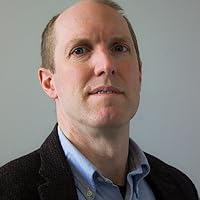
Author and journalist Philip Caputo died on May 7, 2026, from cancer at his home in Norwalk, Connecticut. He was 84. Best known for his Vietnam War memoir "A Rumor of War", he also shared a Pulitzer Prize for investigative reporting during his tenure at the Chicago Tribune.
He served as a U.S. Marine Corps lieutenant and was among the first American combat troops deployed to Vietnam. His experiences there, shifting from patriotic idealism to deep disillusionment, were the basis for his memoir.
Following his military service, Caputo transitioned to a career in journalism. Working as a foreign correspondent and investigative reporter for the Chicago Tribune, he covered conflicts globally, survived being held hostage by Palestinian militants, and was shot in Beirut. He later covered the fall of Saigon in 1975 before retiring from daily reporting to write 19 books, including the acclaimed novel "Horn of Africa". Caputo is survived by his wife, Leslie Ware, his sons, Geoffrey and Marc, and three granddaughters.
So speaks Escalus, a character in Shakespeare’s Measure for Measure, a play that tackles the subjects of justice and mercy, yet also addressees the abuse of power by those tasked with protecting the public. So, it should be no surprise that Philip Caputo’s first novel in eight years borrows more than just its title from the bard.
Set in the fictional north Mexico town of San Patricio trapped in a war between narco-traffickers and the Mexican army and federal police, Some Rise by Sin has a diverse cast of characters. American priest Timothy Reardon is torn by a classic dilemma, to abide by his promise to the church and maintain the sanctity of the confessional or tell what he knows and possibly end a reign of bloodshed that has beset his parish. Expatriate Lisette Moreno’s goal of making a difference by serving as the only doctor in San Patricio and the surrounding indigenous mountain villages is challenged by a stormy relationship with her artist lover Pamela Childress. Capitán Alberto Valencia is an elite paratrooper with an Ahab-like obsession as malignant as the criminals he pursues and an unsettling dislike of the church. Working with Valencia is the mysterious Professor, who has worked with everyone from the DEA to the cartels, often at the same times.
Some reviewers have found this story too violent. It is a violent story but, sadly, it is pretty mild compared to what actually happens in areas caught between warring cartels and where the police, in most cases, have had to choose between plata o plomo (silver or lead). Even so, Caputo has done a marvelous job of describing life in Mexico, a 'beautiful, sorrowful, blood-spotted country’ where no one is neutral.
Bottom line: It has been a long time since I have read one of Philip Caputo’s books but I quickly remembered why I enjoyed them so much. He has a marvelous ability to suck you in and make you believe that you are in San Patricio and the sense of danger is closing in. I highly recommend this book.
*Quotations are cited from an advanced reading copy and may not be the same as appears in the final published edition. The review was based on an advanced reading copy obtained at no cost from the publisher in exchange for an unbiased review. While this does take any ‘not worth what I paid for it’ statements out of my review, it otherwise has no impact on the content of my review.
FYI: On a 5-point scale I assign stars based on my assessment of what the book needs in the way of improvements: *5 Stars – Nothing at all. If it ain’t broke, don’t fix it. *4 Stars – It could stand for a few tweaks here and there but it’s pretty good as it is. *3 Stars – A solid C grade. Some serious rewriting would be needed in order for this book to be considered great or memorable. *2 Stars – This book needs a lot of work. A good start would be to change the plot, the character development, the writing style and the ending. *1 Star – The only thing that would improve this book is a good bonfire.
Philip Caputo's 2017 novel "Some Rise by Sin" examines in the context of questions of good and evil and religious faith a contemporary poor, rural Mexican community dominated by drug cartels. It is a broad-themed novel with many insights both about Mexico and about the religious life.
The story is set in the Mexican village of San Patricio. Following the destruction of one large drug ring, a new cartel has arisen which goes by many names, most simply the Brotherhood. The Brotherhood is cruel and violent with a macabre religious streak. It terrorizes the town and its environs. The residents consist mostly of poor farmers and villagers struggling in the best of times to get by. The Brotherhood dominates the drug trade in the vicinity but it has mysterious, smaller rivals. A unit of the Mexican army has been sent to combat the drug trade but it fights as well with a group of militiamen in the town whom it has tried to disarm. The book is full of characters with shifting, uncertain loyalties always ready for the double-cross and for advancing their own self-interest.
The central character in the novel is a middle-aged American Franciscan priest, Timothy Riordan who has served in the old village church of San Patricio for four years. A one-time college boxer and student of art history, Riordan rides a flashy but old Harley that the townspeople have named Negra Modelo after a Mexican beer. It is one of many suggestive nicknames for people and places in the book. A thoughtful, philosophical individual who has struggled with his vows and his faith, Riordan at the outset of the novel is gazing at the stars and reflecting on the relationship between the religious and scientific views of nature -- reminding me of the philosopher Immanuel Kant's wonder at "the starry heavens above, the moral law within." Riordan has been presiding over the funerals of many townspeople killed by the drug trade, including at the outset of the story, two young men who have been killed by apparently errant bullets from the army. Before his tenure in Mexico, Riordan had struggled with his vows by having an affair with a woman and by his efforts to protect a fellow Franciscan accused of sexual abuse of a minor. He continues to struggle with his personal faith in Mexico. Riordan also is deeply moved by the squalor of his parishioners' lives and by the sheer extent and viciousness of the drug trade. In many scenes of the book, Riordan reflects on the problem of evil. He worries deeply about how a good, loving, powerful God may permit the barbarity and the suffering he sees around him in Mexico. Among other sources for his thoughts, Riordan is a student of the Roman emperor and Stoic philosopher Marcus Aurelius.
The second major character in the story is an American physician, Lizette. She was raised in a poor Appalachian community and struggled to earn her MD at age 45. Lizette has wanted her life to have some significance; thus she devotes her medical practice to operating a clinic serving the poor of San Patricio. Lizette is romantically involved with another woman, Pamela, an artist and an academic born to a wealthy Philadelphia family who has come to stay with Lizette in Mexico to see where their relationship leads.
Caputo gives a convincing portrayal of Mexico as caught in the drug trade while evidencing deep sympathy for the land and its poor. Caputo also has a strong sense for ambiguity and for the difficulties of sorting out good from evil in extreme situations. (I thought of Herman Melville and his short novel "Benito Cereno" as another instance of this ambiguity). Caputo describes a world replete with corruption, violence, and uncertainty.
Even with his journalist's eye for the facts of the drug trade, Caputo still is at his best in this book in portraying the inner life of Riordan, in particular among the book's many characters, and of Riordan's religious faith. Much of the story turns on Riordan serving as a "snitch" -- providing information to the Army and its highly suspect leaders -- in an effort to bring down the Brotherhood. Although he undoubtedly means well, Riordan's actions are morally and religiously highly suspect. In addition to issues of his own heart and conduct, Riordan also struggles mightily with the philosophical problem of evil in scenes that are well-done and compelling. Riordan's ambiguities and the broader ambiguities of the religious life are at the heart of this book. I found him a sympathetic figure. The book's portrayal of Lizette's medical practice and her conviction that it forms her life work also is convincing and, in her work and her relation to Riordan, adds a great deal to the book.
The problem with the book is that it is ponderous and in places badly organized. The many characters and scenes add to the realism of the story but at the same time slow it down. The book becomes tedious. The affair between Lizette and Pamela while well-handled in itself, seems to me over-emphasized, out of place, and distracting from the book's main themes.
I think this book will work best for readers interested in religious questions, which are poignantly and reflectively presented. The depiction of the drug cartel and of the poor in Mexico is well and faithfully done but weakened by the novel's slow pace and writing style.
San Patricio is a small Mexican town besieged by drug cartels, corrupt police and poverty. Two Americans, one by choice the other by church decree are there to make a difference. Lisette Moreno is a doctor who could easily have a practice stateside but chooses to bring medical care to those least likely to receive it – the poor and rural areas of San Patricio. Father Timothy Riordan has been sent to San Patricio because of his actions involving a church matter back in the states. Along with the local clergy, he finds a never-ending stream of parishioners victimized by sex, family, lack of opportunity, poverty, gangs, police and cartels. He sees little chance to meaningfully console them or to improve their lives.
As bad as things are in San Patricio, they soon become worse with the escalation of violence stoked by La Mariposa, the cartel leader and a vengeful police force. With both sides seeking retribution the stakes get higher for Moreno, who administers to whoever is in need and Riordan, through his position as confessor. Riordan is also haunted by a past moral failing that propels him to be both reckless and cautious in his relationships with all sides. Moreno’s life is further complicated because not only is she a woman doctor in a paternalistic world, but she is also in a relationship with an enigmatic woman, an American artist.
Caputo takes this village and pries the lid off so the dark underside is revealed. Characters must make choices from several options that do not have any good outcomes….only seemingly lesser evils. This is a book about seeking justice, wanting to do right, and putting others first – but not without a terrible inward struggle. It is for the reader to discover what courage may accomplish or if faith can achieve a moment of grace. Highly recommended.
I have enjoyed Caputo's books for years. The first war he wrote of was my war and so Indian Country and A Rumor of War are part of the canon. Some of Caputo's other books deal with warfare in Africa and the Middle East. I see now he's written another a new one, Ten Thousand Days of Thunder, about Vietnam which I now have on reserve at the library. One of my favorites of his is The Lions of Tsavo about African lions without the huge mane. Interesting non-fiction.
Some Rise By Sin is about the drug war in Mexico and a priest's war with his religion. Enjoy.
I wanted to like Philip Caputo's Some Rise by Sin a lot more than I did. It contains many of the elements that make for an exciting story, and it takes place in Sonora, a part of Mexico adjacent to Arizona, where I live for much of the year.
Caputo himself spends his winters in Patagonia, Arizona, south and east of Tucson. He knows the region and he has written extensively on border issues between Mexico and the United States. This novel profits from the research he did in writing his previous fictional work, Crossers.
Timothy Riordan, an American Franciscan, is the missionary priest of the parish in San Patricio de las Colinas. Some Rise by Sin is the story of his struggle over the sanctity of the confessional and the role he plays protecting his congregants in the war between Mexican authorities and proponents of the drug trade. Dr. Lisette Moreno, also an American, runs the town's free clinic. Her story parallels Riordan's as she brings health services to the town and surrounding countryside, while handling a troubled amorous relationship with Pamela Childress, a manic-depressive painter, who joins her in San Patricio after losing a teaching position at University of Arizona.
Caputo is an excellent reporter. He imparts a lot of information about law enforcement in Mexico, distinguishing the federal police from the military, and their rankings and overlapping area of responsibility in drug enforcement, as well as about two organizations involved in the drug trade: the Brotherhood (La Fraternidad), a quasi-religious cult that pledges allegiance to an icon, La Santa Muerte, and the Cartel, whose titular head is in hiding. He is knowledgeable about Catholicism and its rites as practiced in the United States and in Mexico, where the native cultures reinterpret the ceremonies surrounding Christmas and Easter.
Two events set the story in motion. First, a demonstration staged by a local militia, the autodefensa, is interrupted when army officers shoot into the crowd and kill two young bystanders. Second, when Riordan goes to the military installation to see if he can get Captain Valencia to make amends to the townspeople, the captain, together with a federal agent, Gregorio Bonham, seek Riordan's help in discovering which locals are complicit in the Brotherhood's smuggling operation.
None of the major characters is without a thorny past, least of all Riordan who regrets having compromising his vows in the States and while in Rome. Now, he is being asked to break the sanctity of the confessional.
Caputo can tell a good tale and manages the action in a couple key scenes brilliantly: an aborted attempt at capturing ringleaders at a birthday celebration, and Moreno's operation to remove a bullet under duress. Also, he does a good job mixing English and Spanish vernacular, though he doesn't come close to the finesse of description and dialogue in Cormac McCarthy's Blood Meridian and The Crossing.
Caputo is more reporter than novelist. His writing here is uneven. He is not a stylist. And he simply takes on too much. If this is primarily the story of a man's fall from grace, I should have felt more sympathy for Riordan's dilemma.
The print was tiny - I mean tiny - not standard type at all. The subject matter was dark, very dark, no rating for this because I didn't even try to finish
"...I damned myself by cooperating, and now I wish to make up for it and save my soul." "If I were you, I'd be thinking about saving my fucking life, not my soul."
Father Riordan, a Franciscan priest, has been sent to the Sonoran Desert in Mexico where he has learned that things can always get worse. The police chief of his parish, San Patricio, has been assassinated and the village is caught in the war between a corrupt police department and a drug cartel gang hiding in the Sierra Madre mountains.
The age-old question has always been: If God is good, why is there suffering and evil? 60,000 murders in six years have brought Riordan past doubt; he is losing his faith altogether.
As a young priest in Guatemala, Riordan preached liberation theology. He had faced guns in the hands of corrupt authorities before. Now a Mexican Federal agent insists he cooperates as an informer, sharing what he hears in the confessional booth to identify drug gang members.
Riordan must decide if breaking his vows is justified, even to identify rapists and murderers. It would mean being defrocked. And if he still believes, committing his eternal soul to damnation. Can doing the wrong thing for the right reason help his people? How best can he provide safety for his sheep?
Some Rise By Sin by Philip Caputo made me very thoughtful. His portrait of Mexico, a beautiful country that has become a "moral wilderness" is vivid.
In Caputo's Mexico NAFTA has ruined small orchard owners. Migrants heading north are kidnapped, then executed if the ransoms are unpaid. Young people get sucked into the drug mafia for easy money and luxuries, unable to ever get out--alive.
"Love does a lot, money everything. Making it is like eating nachos. Once you start, you can't stop until the bowl is empty. And then you order more."
The novel begins slow paced, focused on Riordan's internal life and thoughts, but rises to an action climax worthy of a thriller. The resolution comes suddenly and may leave readers unsatisfied. I found it profound, but then I am coming from a background familiar with theology and faith issues, and the symbolism of Riordan's choice resonates with me.
I received a free ebook from the publisher through NetGalley in exchange for a fair and unbiased review.
San Patricio is a borderline 3rd world Mexican village struggling to free itself from some powerful evil forces, mainly drug trafficking and corruption in law enforcement. Father Tim Riordan, a priest in semi-exile from the U.S. has been assigned to San Patricio. He struggles with those same forces, plus a few others that put him in the crosshairs of the brutally deranged drug cartel el jefe' (The Butterfly), the district police commander (the Professor), and the federale' army capitan (Valencia). In his effort to do good, Tim is joined at times by the village doctor Lisette Moreno, a fellow norte' americana, who struggles to bring 21st century medical practices to the area while keeping parts of her love life secret from the community. The attitudes about gay relationships are still a bit “conservative.” But Father Tim’s problems really begin when the team of the Professor and Valencia “convince” him to share information gained in the church confessional, a violation of his sacred priestly vows. He is torn, but sick and disgusted with the violence and disregard for the lives of the folks in San Patricio. Should he cooperate with the authorities; does he even have a choice? Will this help bring peace and justice to San Patricio? Does that make it ok? Are the law enforcers as corrupt as the criminals? Some Rise By Sin is an excellent novel populated with real, complicated characters dealing with very tough issues.
This very interesting novel centers on Father Timothy Riordan, an American Fransiscan friar with a Harley, and the challenges he faces while living in San Patricio, Mexico. One of these challenges is dealing with a vigilante group in the town, as well as staving off and dealing with the effects of a ruthless drug lord. Both factions go to war, with Riordan in the middle.
Lisette Moreno is another American expat who works in the town as a doctor, brining much-needed medical care to the poor. She faces her own challenges.
This is a story of good vs evil, and one man's spiritual challenges in the face of many physical ones. It's also a story of the challenges of sometimes not being able to distinguish between good and evil, and also learning how and when to fight. Riordan finds himself caught between the two factions, and the frightening challenges of trying to protect the town from both sides.
The characters are well-drawn, with dilemmas and storylines that interesting and realistic.
Thank you to the author and publisher for a review copy.
There are echoes here of Graham Greene's The Power and the Glory: a gringo priest struggling with a crisis of faith and conscience in a dangerous Latin-American setting. But Some Rise By Sin tells its own story.
Tim Riordan is a middle-aged American Franciscan priest who has come to share the responsibilities of a small village parish in Mexico. There is continual tension due to the power of the local drug gangs; the one currently holding sway over the area is known as The Brotherhood, led by a mysterious figure who runs his operation much like a religious cult. Determined to track down the The Brotherhood's leadership and destroy it, the army and federal police have established a strong presence. Riordan sees his calling as doing what he must to protect his sheep from the ruthless wolves who can be found on both sides.
But if he had illusions of somehow remaining completely virtuous and unstained in his mediation, they are quickly shattered when the military/federales pressure him into become their informant and pawn.
The characters in Some Rise By Sin are well-drawn, and the storyline and moral dilemmas compelling. I was eager each time I picked up the book to see how things developed.
I just have a couple of quibbles. A subplot involves a gringa doctor who runs the only medical clinic in town. She is in a same-sex relationship with a younger artist, also American, who has mental health issues, and they use her occasional visits to sort out what the future of their relationship might be. But while the doctor herself proves integral to the plot, the time spent on the relationship between the two really doesn't contribute much at all. At times, they enjoy each other's company, at others they feel at odds. Well, so does everyone in everyone in every relationship. When the artist meets Fr. Riordan and learns some paintings in the church in need retouching, she offers her skills. But that ends up not amounting to anything either. No relationship of any substance is established between him and her. It almost feels like the author originally had plans to develop a more intricate plot line involving the artist, but for whatever reason decided to cut it back, and it just fizzles.
Secondly, as a former member of the clergy myself I can be very critical of clerical portrayals in literature. Overall, Fr. Riordan is portrayed very authentically and very well. He seems like a real priest. But I have to say he seems pretty naive for his age in the spiritual dilemmas he is wrestling with. From his experiences, I would have expected him to have had been familiar with such dilemmas--though, of course, he may not have completely figured them our--at an earlier age (maybe a decade earlier). Furthermore, a Franciscan owning a chrome-accented Harley? I wonder how he got that past the head of his order.
This novel is a compelling read and Mr. Caputo is indeed a tremendous storyteller. The central characters bring important flaws from their checkered pasts that place them in San Patricio, a remote Mexican village town that finds itself in the crossfire of the present day narcotics trade. Father Timothy Riordan is an American Missionary Priest is full of complexity who goes from presiding over Catholic Mass as he ministers to his flock to riding his Harley Davidson motorcycle to meet with law enforcement and military officials while keeping up strong ties to the leader of a local militia. With violence from the state as well as the the drug traffickers, he seeks to walk a fragile line in the name of protecting those who seek his counsel inside and outside of the Church. His friend and fellow American Lisette is a divorced doctor who pours herself into her work running a clinic to serve a population of rural Mexican citizens with limited access to healthcare. Lisette's love interest Pamela, an artist who teaches at a college in Arizona, is a relationship that must stay out of sight in their rural Mexican community. These two key contributors to the community, combined with Federal Policeman Grigorio Bonham who admits he moonlighted for the Sonora Cartel for years, in a setting where security forces face legitimacy challenges, find themselves in a world of moral compromise. While this novel may be open to criticism with two protagonists as foreigners from America utilized to tell the story of suffering of the people in a rural Mexican village caught up in the horrific violence of the drug war, I still think he succeeds in telling a powerful story and that to me is the mark of a good novel.
Henry Holt and Co and NetGalley provided me with an electronic copy of Some Rise by Sin. I was under no obligation to review this book and my opinion is freely given.
Tim Riordan, an American missionary priest, has come to serve a void in the Mexican village of San Patricio. As the townspeople fight the drug cartels on one front, and the Mexican army and police on the other, Father Tim tries to broker a peace with those who should protect and serve. Along with fellow expatriate Lisette Moreno, a clinic doctor whose desire to help the impoverished citizens is matched by Father Tim, will the community of San Patricio be able to weather the instability and survive intact?
Some Rise by Sin is the whole package: a compelling story, a well developed set of characters, and a setting that is so complete that readers are instantly transported there. As the plot builds and Father Tim's role in the community becomes more defined, but also blurred, the author is able to convey his thoughts and feelings in a very realistic manner. I found it easy to become engrossed in the story, with few exceptions. I could not see a reason for Pamela and her issues to be a part of Some Rise by Sin, as it needlessly took focus away from Lisette. The realism in this book was on point and gave attention to issues that many countries face in today's world. I definitely recommend Some Rise by Sin to other readers.
I am a fan of Mr Caputo's work and was anticipating a good read in Some Rise by Sin. Although I did like the book, I did not like it as much as some of his other novels. I began the book not realizing that it partially continues the storyline from an earlier novel about Mexico and its woes, Crossers, a book that I'd really enjoyed. Some Rise mainly focusses on three "gringos" in a remote mountain area troubled by narco activity: a priest, a physician, and a DEA agent. The novel struggles with maintaining a coherent balance between these three characters. The physician is suitably heroic and admirable, the agent a study in moral ambiguity, but the priest is really the linchpin to the plot and i found it very difficult to really care about him as he oscillated between piety, doubt, and sheer naïveté . I don't like to include spoilers, so I won't get into the conclusion other than to say that it was unsatisfying for me. Perhaps my upbringing as a Roman Catholic that left the church nearly 50 years ago because of its hypocrisy and evil deeds is the reason that I soured on the book and the "moral" dilemmas that the priest felt. All in all, I was disappointed with the novel. On the other hand, I start Mr Caputo's non-fiction The Ghosts of Tsavo tonight.
The story of a Franciscan priest in a small town in Mexico caught up in the doings of a Mexican drug cartel held all the elements of a captivating tale for me. I was hoping it would be a good literary read, with heavily wrought man vs. self conflict, deep character studies, and colorful descriptions of the land and culture. While the story had some of this, I found it a little too formulaic: just enough sex for the casual reader, a bit of machismo with the motorcycle, and modern elements that gave it the taste of a contemporary thriller. After being so struck in high school by Caputo's classic Vietnam memoir, A Rumor of War, I was hoping to be gripped by his prose as I had back then. While it was a good read with an interesting backdrop and plot line, this title didn't quite live up to what I thought it would be.
I really appreciated this story. The author weaves together the horrific drug-fueled cartels and their violence in Mexico, along with the federal, local police and army - corruption tainting any simplistic notion of clear right or wrong.
Then there are the citizens with little neutral ground allowed. The influences, both direct and indirect of that wealthy, indifferent neighbor to the north - equally angry and destructive with benevolence and concern. And finally the Catholic institution - priests, the faithful, the edicts, the rules - all bent in response to the violence overtaking that society.
As a narrative grounded in reality, this story has no clear winners, no triumphant rights, and certainly no complete conclusion.
San Patricio is a small Mexican village so typical of the situation in that country today. It is menaced by a cultish drug cartel, & as the people try to defend themselves, the Mexican army appears becoming another problem for them. Tim Riordan is an American priest who loves the people but life is not easy for him. He must decide whose side he'll be on. Lisette Moreno is a doctor with a free clinic making house calls to impoverished areas around the town. This novel is based on actual events & will take the reader into a world that is hard to imagine from our easy lives here. Caputo's characters all have find out who they are. Journey along side them.
The premise was interesting but I found myself struggling to maintain focus when reading the book - I dunno if it was keeping track of the characters or just the relative lack of action (which seems funny to say given the drug war stakes). I suppose Father Timothy Riordan is meant to be a tragic figure but it was hard to have a ton of sympathy for him. Perhaps that's the point - that he's a dumb gringo? Lisette Moreno's character is savvier and ultimately more true to her principles as a doctor, serving as an interesting contrast, but her story somewhat fizzles. Her relationship was not healthy and it doesn't seem like a sacrifice when she abandons it.
A very solid novel about violence and redemption in a rural narcotics infested Mexican village. Caputo is a very solid novelist and his depiction of a village under siege from drug dealers, corrupt policeman and a brutal military reads true to me and that makes it pretty horrifying. Two American expatriates a troubled Catholic priest and a female doctor(who happens to be a lesbian) struggle to bring some level of relief to the residents of a small Mexican village. Somewhat by the numbers but the book still worked for me.
I really like this novel. Caputo treats a brutal, sometimes crazy and many times tragic situation with the seriousness it deserves, without succumbing to overwroughtness. I do believe the painter's presence is excessive and weakens the book. I love that there's just a tad of past; it is the present which demands action, decision, choices. Two critical quotes-"He wasn't worthy of it, but his faith taught that it was the unworthy to whom grace was granted," and "Grace is given to the undeserving, he thought. But once it is, your actions have to show that you've received it."
The premise of the book was intriguing--an American priest, his relationship with his small town parish in northern Mexico, and the involvement of the narcotraficantes, the federal police, and the army. It's a complicated and interesting topic, and it kept me reading. Much of the description of the village seemed true to life. However, the numerous mistakes in the Spanish phrases began to drive me crazy. Using some Spanish is a great idea to make the interactions seem more realistic, but couldn't his editor hire a native speaker or a competent non-native to proofread?
Father Timothy Riordan was between a rock and a hard place literally in this book. The savagery that is life in parts of Mexico is on full display in this book. Being made to inform on the parishioners that confess to you is terrible. I thought that I was going to find out that he was a spy or something of that sort. Lisette was a Doctor in Mexico with an interesting back story and relationship issues. Cesar Diaz could have been guilty of an egregious crime. I understand that this is a work of fiction. It reflects the reality of live in Mexico for many citizens.
I won this book from Goodreads I wanted to really like this book, at best it’s just okay. While it has some suspenseful moments, the best moments are between the two main characters Padre Tim and Doctor Lisette. The book does a great job showing how these two feel connected to the community they serve. The situations they find themselves in are bad at best. My only issue with the ending is we don’t get to find out what happened to Lisette other than a mention. At least the book ended in a way that’s realistic.
This entire review has been hidden because of spoilers.
This was an excellent fast paced novel. A Franciscan priest who lives and works in a poor Mexican village is torn by his responsibility to his religion versus the drug cartels and the Mexican army tactics. The other major character is a female American doctor who is dedicated to the poor people in the area regardless of the risk. A novel that reveals the violence related to the drug trade in Mexico.
This is another interesting book from a giveaway by Goodreads. Philip Caputo based his novel on a true story in Mexico. The people of the town are trying to fight a brutal drug cartel. A Franciscan priest, Timothy Riordan, and a doctor, Lisette Moreno, are both fighting their own battles along with the fight against the cartel. It is almost too much for each of them to handle. I thought this was an interesting book and will be on the lookout for Caputo's next book.
I would give this book 5 stars for shedding light on the causes of systemic corruption and the role of both the U.S. and Mexico in the drug epidemic. Caputo, a former journalist, is a skilled writer tackling a difficult subject. His knowledge of the issues and players involved in the drug trade runs deep. He shows respect for everyday Mexican people while condemning those in power who choose profit over principles.
Depressing but compelling story of life in narco-infested Mexican town. If you wonder why evil takes hold in society, and is so hard to eliminate, read this. The book suffers from an over-reliance on American characters to tell a Mexican story. They're well drawn and interesting, though. Worth reading.
I really liked the premise of this. The politics of cartel run areas of Mexico came to life in this. Is this story completely plausible? Maybe not, but it was a very interesting read. The characters were developed well, all had a interesting background. Never read anything by Mr Caputo, but I might because of this.
I found very interesting to see the priest's point of view of be a priest in Mexico and dealing with the drug lords. It reminded me a little bit of the movie Romero of a priest who was killed I think will preaching on a Sunday or afterwards. I was surprised at the ending and was not expecting it but then, I could understand how the priest felt.
A well-written morality play. Father Tim and his friend Dr. Lisette live and work in a remote Mexican village torn in the middle of government corruption and the drug trade. Looking at the lives of small town folks living a nightmare made this tale riveting.
Caputo presents moral dilemmas, mid-life crises, and the tragedy of crime and corruption against the backdrop of a Mexican village where a drug cartel rules everyone. A priest, a doctor, and two implacable law enforcement officers provide most of the action, which is skillfully arranged.