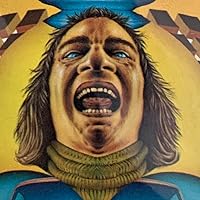
Mack Reynolds has always been admired for his ability to portray the world of the future in its varied aspects - social, political, scientific and economic. Now, he presents his readers with an imaginative and action-packed look into the everyday life of a twenty-first century policeman.
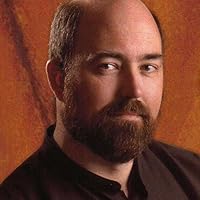
Dallas McCord "Mack" Reynolds was an American science fiction writer. His pen names included Clark Collins, Mark Mallory, Guy McCord, Dallas Ross and Maxine Reynolds. Many of his stories were published in "Galaxy Magazine" and "Worlds of If Magazine". He was quite popular in the 1960s, but most of his work subsequently went out of print.
He was an active supporter of the Socialist Labor Party; his father, Verne Reynolds, was twice the SLP's Presidential candidate, in 1928 and 1932. Many of MR's stories use SLP jargon such as 'Industrial Feudalism' and most deal with economic issues in some way
Many of Reynolds' stories took place in Utopian societies, and many of which fulfilled L. L. Zamenhof's dream of Esperanto used worldwide as a universal second language. His novels predicted much that has come to pass, including pocket computers and a world-wide computer network with information available at one's fingertips.
Many of his novels were written within the context of a highly mobile society in which few people maintained a fixed residence, leading to "mobile voting" laws which allowed someone living out of the equivalent of a motor home to vote when and where they chose.
This is an episodic fix-up novel that collects four police procedurals, two short stories from Analog (Romp from 1966 and Extortion, Inc. from 1969) and two novelettes from Galaxy (Criminal in Utopia from 1968 and Cry Wolf! from 1974). It's set in his vision of the year 2000, as were so very many of his works, with the usual hits and misses of prognostication; the computers are quite primitive, but they have flying cars. It follows the adventures of officers Tad Boleslaw and Jim Kelly through a typical day of future crime investigation. Reynolds had sharply defined theories about economics and politics, but the stories here are pretty well told.
Ah, yes, good old 2000AD. I remember back when the cops had flying cars and we lived in an all automated society...oh well, not every book about the future can get it right.
Interesting look at a future that reminds me a bit of Asimov's future Earth. Has the feel of a pitch for a TV show that never got picked up.
Nothing wonderful, just a decent way to waste an hour or two.
This book was an interesting attempt at a near-future police procedural when it was written. Now that it takes place in our past, it's an enjoyable exercise to see what he got right and what he got wrong about his then-future. Like many writers, he didn't do a good job of predicting the way computers would work. In fact, some of his computer descriptions were outdated even he was writing. On the other hand, his ideas of a mostly-cashless society, with what amounted to debit cards being ubiquitous, was interesting and close to our reality. His communication devices were pretty close to smart phones, too. Overall the stories were good. They were originally written as a series of short stories, here converted to a novel. One didn't really fit as well as the other three, but the others were good police procedurals. Not great, but good.
I keep reading Reynolds even though his books are mildly bad because of his apparently socialist politics and so I was interested in seeing how he’d handle the police as a subject matter. It seems the modern leftist understanding of policing had yet to emerge so we get a fairly inert and episodic procedural that does, admittedly, have its moments.
An odd book... It reminded me of some of the early sci-fi I read in college, predicting the way-off future of the 21st century. At the time, it was an extension of the expected things to come--cell phones, debit cards, online retail, etc. that ultimately looks quaint in hindsight. This one walks a fine line between the optimism of the gee-whiz SF of the '50s and '60s and the dystopian, post-apocalyptic visions of today.
A chilling look into the future that didn´t happen. This is a poorly written and disjointed book, with things like thieves who break into government building to change the punch cards which control the paperless economy.
I liked this book. It had the feel of a 80s Action pack police drama but it is set in a pretty nice future. A future with flying cars, instant Amazon and almost Star Trek vibe. Would read another book by the author.
"Wasn’t everybody in America a foreigner, except the Indians? For that matter, offhand he couldn’t think of a country in the world where the present inhabitants hadn’t displaced earlier peoples, usually by force."
"Rosy Porras had decided long ago in his career that that times would come when a complete abandonment of all luggage and belongings would be necessary. To the extent that you could divorce yourself from such impediments, you were better off."
"Originally, money was usually gold or silver. But even gold is too heavy and awkward to carry around easily in any large amounts, so governments started issuing paper money backed by gold or silver. Any time you wanted to you could take your money to a bank and redeem it. But after a few king-size wars and depressions, and all-out spending for defense, and the space program, the government of the United States in particular began running up big deficits in spending, what with the national budget being over 300 billion a year. So they printed up more money than they had backing for. After a while they’d printed up over fifty billion dollars, with practically no gold to back it. So they discontinued paying off at all. It was galloping inflation and the country was facing total collapse.
They had to find new backing for their money, so the government had the top 200 corporations of the country pay ten percent of their taxes in the form of their common stock. They amalgamated this into what amounted to a gigantic mutual fund called United States Basic Common and put it on every stock exchange in the world to seek its level. And then they announced that anybody who wanted to redeem their dollars would be paid off in this stock. Obviously it was valuable stuff and paid good dividends.
It worked fine, Our money was backed by a trillion dollar a year economy. So next year the government did it again. Meanwhile, relief, pensions, and so forth were in a mess and getting worse, what with the unemployment growing with automation and computerization. So the government began issuing what they called Inalienable Basic in the way of old age pensions, relief for the unemployable and so forth. Recipients got their dividends from this, but couldn’t sell the stock and it reverted to the government upon death. As time went by, more and more people became eligible and finally the government decided to end poverty once and for all by issuing everyone ten shares.
At the same time, computer data banks had been growing geometrically and finally they were merged into the National Data Banks. And at the same time the use of credit cards was growing fabulously. And at the same time crime was growing like crazy. They solved, or nearly solved, all three problems by creating the Universal Credit Card and the pseudo-dollar and the old paper money was slowly redeemed.
Well, as the amount of United States Basic Common stock increased, more and more of it was bought by investors. This could be bought and sold by those who could afford it, so it came to be known as Variable Basic. And that’s where we are now. Poverty has been done away with, inflation eliminated, and crime is largely impractical since there is no money to steal. We’ve still got the old stock markets and so forth but it’s getting to the point where so much of the country’s stock is in the government’s hands that they’re beginning to call it People’s Capitalism."