The most comprehensive book yet published on the Canadian color-photography pioneer Fred Herzog is best known for his unusual use of color photography in the 1950s and 1960s, a time when art photography was almost exclusively associated with black-and-white imagery. In this respect, his photographs can be seen as prefiguring the New Color photographers of the 1970s. The Canadian photographer worked largely with Kodachrome slide film for over 50 years, and only in the past decade has technology allowed him to make archival pigment prints that match the exceptional color and intensity of the Kodachrome slide, making this an excellent time to reevaluate and reexamine his work.
This book brings together over 230 images, many never before reproduced, and features essays by acclaimed authors David Campany, Hans-Michael Koetzle and artist Jeff Wall. Fred Herzog is the most comprehensive publication on this important photographer to date.
I enjoyed seeing Herzog's work. As a photographer myself I found studying his images very informative and inspiring in regard to color and composition.The photos and color are lovely. He spent years recording a side of Vancouver B.C. I suspect, like so many other large cities, is largely gone so there is a certain appeal that falls into nostalgia.
Personally I found the essays by David Campany, Hans-Michael Koetzle and artist Jeff Wall. less interesting.
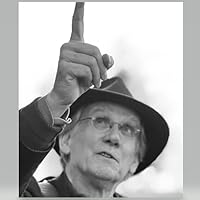
Stunning photographs. Herzog's self-portrait (1659) doesn't seem to be one of those widely circulated, but it shows how talented he already was as a 29 year old. There are a few that easily stand out from the rest of the collection, like Jackpot, Man in Bandage, etc., and Jeff Wall's suggestion that Herzog's aesthetics owed much to the beauty of the old Vancouver in the 1950 and 60s that was already there seems fair.
Who reviews a book, even a book on a renowned photographer, without actually reading the text? Obviously some who have 'reviewed' this book here on Goodreads. They only reviewed the photos without the insight of the three essays by David Campany, Michael Koetzle, and Jeff Wall. Yes, as one reviewer (who actually read the text) said, one of the essays does spend too much time examining one image. But that can be forgiven by what a person learns from the rest of the text in this book.
With that out of the way, I'm so glad I picked this up at the library because now I actually want a copy of my own.
I learned quite a bit about Herzog including why he photographed what he did and why he wasn't attempting to be 'artful' or capturing the 'decisive moment' or going for posterity. Quite a humble person in terms of his photography -- the photographs in this book and other well-known images of his were taken purely as Herzog the amateur photographer (when he was off work) and not as a professional. The ironic thing is that his profession was as a medical photographer and it wasn't until decades later that his personal photography (that which we all see now) began to be seen, quite by accident.
Herzog's photography is of historical and social interest for his adopted city of Vancouver. I found it quite interesting in this book to learn about details of his use of colour film and especially why so many of his images have points of red within. But anyone not reading the text will never learn about all the interesting particulars.
One thing that I found interesting to learn from one of the essays is why he chose the cameras that he did but also that nearly every photo he took with people in it was shot from the hip, and he never asked permission.
Even though the photos in this book are by an amateur, there are certainly aspects to be learned from examining the images, particularly after reading the accompanying essays in the book.
This quote by Canadian Fred Herzog defines the personal photographs he took which have now become iconic:
I love Fred Herzog's photography, but at the same time, I wouldn't say he's among my favorite photographers. There's a certain artlessness to his pictures that doesn't quite transcend itself, in the way that, say, a William Christenberry snapshot does. Herzog's images all tell pretty much the same story, and honestly? They're a bit predictable, but listen: there's no denying he had a great eye, and there's little doubt that he had a great TIME strolling his beloved Vancouver, taking all these pictures. That's one of my favorite aspects of his work -- the residual good vibes of walking through the city, taking it all in. I feel like you could be forgiven for calling Herzog the greatest amateur photographer of all time, if you could do so without it sounding derisive.
Finally got through this. The various introductions were mostly interesting, but way too long. There's got to be a term for an overly-wordy analysis of a piece of art. One one hand, it kind of teaches you what to look for in a piece of art, on the other had, it can feel like it blows things out of proportion.
There are some amazing photos in this book along with some that seem pretty mundane. But something that was mundane 60 years ago is still something. They even touched on that in one of the introductions: "...photographs often acquire a degree of authority in posterity that they never quite had when they were contemporary."
But then there are some more modern photos (from the 90s and 2000s) that feel out of place. The several black white photos also feel out of place given the significance given in both the title of the book and the lengthy description of the emergence of color photography as a form of art in one of the introductions. I think they could have limited this to just his Kodachrome photos and it would have been a more cohesive collection.
All that being said, if you're a student of the art photography, you should definitely give this book a look.
An unknown photographer to me until I was steered in his direction. German born, though spent his life in Vancouver, Canada - 70 years worth. Known for his color photos of the city (and other cities around the world he visited) - second-hand shops, vacant lots, neon signage, people. No one knew much of him until he was in his mid-70s. There's no hint of an overbearing ego in his work, or someone aggressively presently his view of the world - simply complex shots of still moments with a sharp eye for color, composition and an endless curiosity for his adopted city.
As a photographer, I find myself repeatedly turning to this volume of Herzog's work. The work is beautifully executed, the detail and color are lush. I'm amazed at his ability to evoke sentiment through strategic composition. he also does well capturing the human spirit. I highly recommend this one.
It's easy to see why Fred Herzog is so highly regarded. His use of slide film makes me want to finally shoot some Ektachrome... There are a lot of tremendous photographs in this book, with lots of street shots, landscape photography, and pictures of Coca-Cola advertisements (my man!), but I believe Jackpot, Magazine Man, Fishseller, and Room with Television are my favorites of the bunch!
One of the best photography books I’ve read in a long time. The essays are mostly lovely to read and the formatting of the images is very strong. Herzog is the poster boy of Kodachrome’s beauty, and I find the humble trajectory of his life as an artist both affirming and fascinating. Dude just loved taking photos
lots of great photographs; not a lot of variation. many similar shots. a little strange to jumble time periods that the photos were taken, but interesting how little difference there is between shots taken in 1959 or 1980.
A comprehensive collection from a relatively known master of color photography. The print is good, too bad for the images that spread on two pages, a design choice that I never like. The essays are good and provide a deeper knowledge of Herzog's life and influences.
Der in Deutschland geborene, aber seit über 60 Jahren in Kanada lebende Fotograf Fred Herzog ist bemerkenswert.
Es startet mit einem Selbstportrait 1959. Dann folgen Texte zunächst in Englisch, gemischt mit einigen Fotos. Schließlich viele Fotos. Es sind Alltagsfotos in Kanada die dominieren und sie haben ihre ganz eigene, hohe Qualität, obwohl sie natürlich nicht dramatisch sind.
Ein paar Fotos zeigen auch eine andere Welt, z.B. Guatemala, Mexiko oder San Francisco. Von Deutschland sieht man nur ein Foto mit einer Lokomotive, also ein Abschied.
Die Texte sind informativ, aber nicht gerade inspirierend. Das gelingt dem Fotografen durch sein Werk schon alleine. Vancouver in Kanada ist eine Stadt, die ich auch einmal besucht habe und die ich sehr schätze. Fred Herzogs Fotos sind weder kritisch verurteilend noch verherrlichend. Seine Fotos liegen ganz auf meiner Linie. Der überwiegende Teil sind in Farbe. Ist doch mal ein schwarzweiß-Foto dabei, dann passt es motivisch aber auch so.
Zwar sind die Fotos teilweise wirklich alt, aber das mindert sie nicht und teilweise ist es eine Zeitreise.
Fein, dass man Fred Herzog durch dieses Buch noch zu seinen Lebzeiten (er ist 88) entdecken kann.