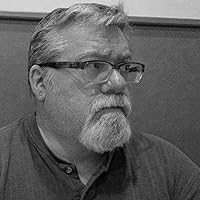
ANDREW HUDGINS is the author of seven books of poems, including Saints and Strangers, The Glass Hammer, and most recently Ecstatic in the Poison. A finalist for the National Book Award and the Pulitzer Prize, he is a recipient of Guggenheim and National Endowment for the Arts fellowships as well as the Harper Lee Award. He currently teaches in the Department of English at Ohio State University.
This one took me a long time to read, partly because I’m that way but partly because I tend to get hypoxic when nearly every poem in a collection is a big long pillar of iambic pentameter. I’m not complaining—I don’t think—because these poems are elegant and imaginative, and draw from familiar classical and Biblical material: speakers from Jonathan Edwards to Holofernes to King Solomon’s concubine to Ashpenaz (eunuch in Nebuchadnezzar’s court) pace out their orderly and complex inner monologues with enough modern anxiety to feel fresh, while the final section, which gives the collection its name, is a series written from the perspective of a holy roller’s daughter. As the title warns, Christianity permeates, mostly to raise intelligent doubts, and my favorite poem in this vein is "Prayer"—a profound and moving poem for people like me who are panning a religious past for gold.
It’s a good collection, though by the end I started to feel the number of animals being killed was a bit gratuitous, and the number of female speakers had begun to rankle (because not very convincingly written IMO). All in all a ponderously cerebral collection, with the exception of my absolute favorite poem of the book, “In the Night Garden,” a personal poem with a more aerated layout, short lines, sensual images, and a clear, physical familiarity with its subject: gardening in the summer, a marriage burning out. Want to read more like that!
This book has haunted me since I first read it some fifteen years ago. A friend lent it to me then, and I returned it only reluctantly. I was excited to find a copy recently in a box of books that a colleague was giving away as he retired. It turns out, this is the same copy I first read, lent to my colleague by the same friend. So I read it again and, with renewed reluctance, will return it later this week.
What you'll find here: a narrative poetry full of personal stories and adopted personae; accomplished work in four- and five-foot blank verse; as much sin as sainthood—passion, turpitude, violence, beauty, history, a smattering of Southern gothic, a refusal of sentimentality.
Much is made of this book and perhaps it means more to those who profess Christianity but I wasn't moved much. Hudgins' poems often slip into an alternate persona which can be interesting. One of Hudgins' Sidney Lanier poems is within this volume. Hudgins later wrote an entire book, "After the Lost War", in that voice, again to much acclaim. Yes, I like some of the poems, some of the images, but I was never personally engaged with this work.
I bought this book in 1985, in Cincinnati, at New World Bookshop on Ludlow, where Polly Burnell introduced me to Hudgins at a wine-and-cheese reception. "Ron's a wonderful poet," Polly said, by way of introduction (I wasn't). It was my first meeting with a "real" poet. I remember he disparaged Marge Piercy's work quite nastily (I was a huge fan at that time of her poems, and she'd recently been a poet-in-rez at UC). I bought the book anyway, and I still love the poem "Zelda Sayre in Montgomery."