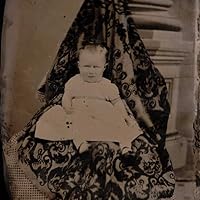
A biography of Henry VIII of England's fifth wife, beheaded for playing Henry at his own game - adultery. At seven o'clock on the morning of 13th February 1542, Catherine Howard stepped out into the cold of the great courtyard of the Tower of London. Slowly she was escorted across the yard and carefully helped up the steps of the wooden scaffold. Only a small group of sightseers had gathered to watch the death of a queen; there was no weeping, no remorse, only chilly curiosity. The ax rose and fell, a life ceased, an episode came to an end. The life and death of Catherine was truly a Tudor tragedy. A mere teenager, the vivacious and flirty Catherine Howard was an unsuitable bride for the elderly and fat Henry VIII. Like most of Henry's wives she had come to his attention at court whilst lady-in-waiting to his fourth wife of only a few months, Anne of Cleves. Henry was soon besotted and came to adore Catherine, his 'very jewel of womanhood'. His head already turned by the 19 year old, Henry never consummated his marriage to Anne, he divorced her and married for the fifth time on 28th July 1540.Lacey Baldwin Smith, one of the finest historians of the Tudor age, narrates the rise and fall of the most tragic of Henry's queens, the woman who dared to cuckold the king of England.
Lacey Baldwin Smith was an historian and author specializing in 16th century England. He was the author of Henry VIII: The Mask of Royalty and Catherine Howard: A Tudor Tragedy, among other books.
Born in Princeton, New Jersey, Smith taught at Princeton University, the Massachusetts Institute of Technology and Northwestern University. He received two Fulbright awards, two National Endowment for the Humanities fellowships, a Guggenheim Fellowship, and other awards.He was considered one of the “big name” historians, yet his writing was considered to be as entertaining as it was erudite. He lived in Vermont during his retirement, dying at Greensboro at the age of 90.
He was elected a Fellow of the Royal Society of Literature in 1972.
Okay. This book really frustrated me. I picked it up because I thought it might be a sympathetic view of Catherine-- I thought the author was a woman, based on the name, and I thought a woman might be more understanding. Nope, it's a dude, and he is judgy as all fuck. It was also published in 1961, so, you know, twice as judgy. He calls her things like a silly slut and a frivolous idiot, and I just. Oh my god. She was a child, you asshole. She was no more than nineteen when she died. She may have been as young as twelve when her music teacher abused her. She was a child and she was thrown headfirst into a world she had no ability to understand thanks to her near-total lack of education. Do not complain about what you think are her personal failings when, in fact, she was still so young and so uneducated. We will never know what she could have become, and we will never know the woman she could have been. Don't you dare dismiss her as an idiot when she was only a child.
Ahem. That said. Smith really does have a talent for a good turn of phrase, which is why I kept reading. He also painted a really good picture of Tudor London, but there are other books that do that as well (Liza Picard, anyone?). Maybe read this if you really want to read 1960s Tudor scholarship, but otherwise, I really don't think it's worth anyone's time.
A good, if curiously unsympathetic, book on Catherine Howard. I am disposed to have more sympathy with the fifth wife of Henry VIII than this author. Repeated references to Catherine as "silly", "petty" and "vain" get rather tiresome. Perhaps Catherine was young and foolish, but I see as more of a victim of politics she had no defence against, than a "silly" girl.
After reading Ives' "Life and Death of Anne Boleyn", where small comparisons are made between Anne's and Catherine's downfalls, i realized that I didn't know very much about this young woman, fifth wife of Henry the eight. I had this book so I decided to read it and learn more about her. Catherine was very young when she married the king, pushed by her family in the arms of a man that was now old, fat, and ill. It couldn't have been easy for a twenty years old girl to find herself married to such a man, to love him, respect him and be faithfull to him. She played her cards well in the beginning, making Henry believe to have married a caste, pure and sinless girl. She fooled him well, but eventually she loosed the grip on her behavior, making coarse mistakes. Problem is, she surely was young, naive, and flirtatious, but first of all she was unprepared to be queen. Where Anne had politics ideas, religious ideals, a vivid intelligence and strong ambitions, Catherine lacked all this. Anne was able to be loved by people who surrounded her, Catherine wasn't. That was perhaps her greatest lack. Smith follow the events that bring her to her death, putting us in the middle of sixteenth century politics, alliances, deceptions and court life. I must admit I felt very sorry for her while reaching the end. Sure, she should have thought about what she was doing, especially since she must have known how easily Henry got rid of people who disappointed him, or lacked him respect, so I can't say she was blameless, nor very smart, yet she didn't deserved what she got. Smith also gives us a portray of the Howard family, and he show us how they abandoned Catherine while she was falling in disgrace. What a family! I've found the last lines of the book very sad, and hard to digest, making me feel very sorry for this young woman, despite her faults. "There is a certain inevitability in the tragedy that occurred, but somehow one feels that the shallow motives, the juvenile desires, and petty and vain considerations of the Queen had little to do with the final calamity the end would have been the same, history would have been unchanged, had she never lived or died. Possibly no worse verdict can be passed upon a human life. Here in a twisted, obscure sort of way lies the essential failure of Catherine Howard's life: although she was caught up in the game of politics and was never a free agent, the Queen never brought happiness or love, security or respect, into the world in which she lived."
This book was originally published in 1961 under the title of A Tudor Tragedy: The Life and Times of Catherine Howard, big emphasis on "times" indeed because this book focuses more on Henry VIII's court and the role that Howards played on it, rather than focusing on Katherine. I'm curious as to why Lacey Baldwin Smith decided to write a book on Katherine Howard since he seems to really despise her, going as far as to call her "a junevile deliquent" at one point. He doesn't seem to think there was anything positive about her, painting a rather misogynistic caricature of her, which has influenced the way she's been characterized in non-fiction books and in fiction. I will say that Smith has a way with words, and I particularly enjoyed this quote: "Comet-like, brilliant yet transitory, Catherine Howard blazed across the Tudor sky. The light that so fiercely illuminated the dark places of history lasted only eighteen months, but the harsh flame of her passing silhouetted and exposed the monstrous realities of her age – the cruelty and violence of London, the predatory morality of the court, the dazzling magnificence of the Crown, and the complex character of the man she married, the King himself."
Do I recommend this book? No, not really. You can skip this one unless you're researching her historiography, but if you just want to know more about Katherine, then you don't have to read this.
Catherine Howard is probably one of the most misunderstood figures from history, her name blackened from day one when she was accused of adultery. At the time, every accusation was thrown at her - mostly false - and many legends grew up with this reputation. However, in these more enlightened times, this young woman's tarnished reputation has been lightened somewhat by more sympathetic minds. She was probably a lot younger than history supposes - she was described as "A very small girl" by some witnesses, and this seems to bear a ring of truth. This author is not so enlightened by more recent thinking, and writes here as many had thought when Catherine was alive, which is a shame really since we don't see the real girl. There are plenty of questions that remain unanswered and surely the young queen should not be held responsible for what she might have done. Irrapairable damage was done when she was just a child - Mannox the music master was the chief cause here, yet seems to have escaped his crimes; her grandmother ran a lax ship here and this was another main reason for her relative's later problems. Baldwin-Smith has written a sound biography here, but it lacks any sympathy for Catherine. She deserves better.
This biography of Katheryn Howard, under its original title of A Tudor Tragedy, was the first I ever read. Daughter of a younger son the Duke of Norfolk, Katheryn was a first cousin to Anne Boleyn. Katheryn's ascendancy occurred in less than ten months of coming to court. But she fell less than two years later. Why?
First published in the 1960s, Baldwin Smith's account is both rigorous and unsympathetic. To this end, some of Baldwin Smith's language can appear judgemental, almost reactionary. Here Katheryn is inconsequential, with the characteristics of a juvenile delinquent. Baldwin Smith doesn't paint the abused, tragic girl we have seen recently. How correct this account can be cannot be answered - Katheryn left no real historical footprint.
Baldwin Smith was a fantastic historian and his account of Henry VIII is brilliant. This biography is for those with interest in the subject. It does act as a counterbalance to more recent accounts.
This book was very interesting. I love to learn new things about the Tudor monarchy and I was very interested in reading more about Henry VIII fifth wife. I feel that her brief reign as queen is often a mere footnote in a lot of biographies. This book goes over a lot of background, exploring possible reasons for the tragedy of Catherine Howard's life. While I enjoyed the background information I also wished there had been a little more substance. The lack if details concerning Katherine are not due to the author's neglect, but the lack of historical evidence. All together I would recommend this book to anyone who is interested in Tudor history, but do not expect the romantic version of the story.
There’s very little to be said about Catherine Howard. Her date of birth wasn’t recorded, her portraits are all speculative, and the one letter preserved in her hand is badly composed as it is reckless. Lacey Baldwin-Smith didn’t have much to add about Catherine herself that I hadn’t read in other sources, but he did contextualize her life and the Tudor mindset in a way that made her rise to power and alarmingly rapid downfall fathomable. His take on her was pragmatic—it was nice to read a biography of one of the wives that didn’t fall into maudlin romanticism—and at the end I felt exactly what he claimed speculators must have felt at her beheading: only a “chilly curiosity.”
Enjoyed it. This is the first "real" biography I've read of Catherine...i.e. one that is entirely fact based and not bordering on historical fiction. And what was really fascinating was learning how little is actually known about her or her short time as Queen of England. To fill in the gaps, Smith supplements by talking about Catherine's family and giving context to the court and country in which she grew up. But even with the added details, it is still quite a short and quick but informative and worthwhile read.
ive never really read a historical book before but ive always been really interested in that sort of time period and Henry the 8th and his wives. of all his wifes Catherine Howard was the one i knew least about and i found this book really interesting. it was written in shortish chapters which made it quicker to get through. alll in all i really enjoyed it and it took me less than a day to finish it :)
I read this book first as a teenager a few decades ago, and have kept it on my bookshelf ever since. It's not only a wonderful, careful, thoughtful interpretation of poor Katherine Howard but is a great look at her entire power-brokering family of the Howards, who so carelessly exhibited her as a seductive tidbit to King Henry VIII, and so hastily denied her entirely once her mistakes came to (fatal) light. Even now, the best book on this period after roughly 50 years.
The title of the book is a little misleading - this is less a biography of Catherine Howard then it is an examination of the society and situations she passed through on her way to becoming queen.
With that in mind, I'd recommend this book to those already familiar with Catherine Howard. It's a fascinating insight into society and familial obligations in the Tudor times, but don't expect too much information about the lady herself.
I only know about Catherine Howard through fictional accounts, so I wanted to learn a little more about her short life. This was an interesting, relatively unbiased look at her life and times. The author spends a fair amount of time on her trial and English law at the time; I thought he added just enough background and analysis.
If you're interested in Tudor history, I'd recommend checking this out. It's very readable and just the right length.
Although this book is dated (written in the 1960s), I still enjoyed reading it. As not that much is known about Katherine herself, the book was filled with good information on the Howard family and also court life. I like the fact that at the end of each chapter, there are the notes on sources rather than all crammed in at the end of the book. This is definitely worth a read in my opinion.
The chapter entitled "The Howard Dynasty" was a bit of dry reading in some parts but overall the book provided an accurate study of the politics & intrigues of the times. And considering how little written history there was of Catherine Howard, it depicted an interesting portrait of the young girl that had been the wife of Henry VIII
Reissued by me at Amberley Publishing, the paperback is due out in March in the UK and about June (I think) in the US. Alison Weir described the book as 'brilliant, compelling... essential reading for anyone interested in Tudor history.’
Lacey Baldwin Smith is a good historian and this is the second book of his I have read. He does n't fill up with conjecture the gaps in the knowledge available. Really feel like I can taste the Tudor period as he presents it. Two more books on my shelf by him to read and plenty that he has written.
I love reading about Englands history more than the next person, clearly, but this book was misleading. It claimed to be a biography of Catherine Howard’s life but it was more so a background of England / London / Henry Viii in the time Catherine was around not much about her.
I have never read a book that was less about the title character than this one. If a third of the book was actually about Catherine that would be a lot.
Very much enjoyed this. Unlike some historians, Lacey Baldwin Smith has a way with words, causing me to chuckle or nod on several occasions. His death last September at the age of 90 is a sad loss.