

What do you think?

All Day: A Year of Love and Survival Teaching Incarcerated Kids at Rikers Island
ALL DAY is a behind-the-bars, personal glimpse into the issue of mass incarceration via an unpredictable, insightful and ultimately hopeful reflection on teaching teens while they await sentencing.
Told with equal parts raw honesty and unbridled compassion, ALL DAY recounts a year in Liza Jessie Peterson's classroom at Island Academy, the high school for inmates detained at New York City's Rikers Island. A poet and actress who had done occasional workshops at the correctional facility, Peterson was ill-prepared for a full-time stint teaching in the GED program for the incarcerated youths. For the first time faced with full days teaching the rambunctious, hyper, and fragile adolescent inmates, "Ms. P" comes to understand the essence of her predominantly Black and Latino students as she attempts not only to educate them, but to instill them with a sense of self-worth long stripped from their lives.
"I have quite a spirited group of drama kings, court jesters, flyboy gangsters, tricksters, and wannabe pimps all in my charge, all up in my face, to educate," Peterson discovers. "Corralling this motley crew of bad-news bears to do any lesson is like running boot camp for hyperactive gremlins. I have to be consistent, alert, firm, witty, fearless, and demanding, and most important, I have to have strong command of the subject I'm teaching." Discipline is always a challenge, with the students spouting street-infused backtalk and often bouncing off the walls with pent-up testosterone. Peterson learns quickly that she must keep the upper hand--set the rules and enforce them with rigor, even when her sympathetic heart starts to waver.
Despite their relentless bravura and antics--and in part because of it--Peterson becomes a fierce advocate for her students. She works to instill the young men, mostly black, with a sense of pride about their history and culture: from their African roots to Langston Hughes and Malcolm X. She encourages them to explore and express their true feelings by writing their own poems and essays. When the boys push her buttons (on an almost daily basis) she pushes back, demanding that they meet not only her expectations or the standards of the curriculum, but set expectations for themselves--something most of them have never before been asked to do. She witnesses some amazing successes as some of the boys come into their own under her tutelage.
Peterson vividly captures the prison milieu and the exuberance of the kids who have been handed a raw deal by society and have become lost within the system. Her time in the classroom teaches her something, too--that these boys want to be rescued. They want normalcy and love and opportunity.
Told with equal parts raw honesty and unbridled compassion, ALL DAY recounts a year in Liza Jessie Peterson's classroom at Island Academy, the high school for inmates detained at New York City's Rikers Island. A poet and actress who had done occasional workshops at the correctional facility, Peterson was ill-prepared for a full-time stint teaching in the GED program for the incarcerated youths. For the first time faced with full days teaching the rambunctious, hyper, and fragile adolescent inmates, "Ms. P" comes to understand the essence of her predominantly Black and Latino students as she attempts not only to educate them, but to instill them with a sense of self-worth long stripped from their lives.
"I have quite a spirited group of drama kings, court jesters, flyboy gangsters, tricksters, and wannabe pimps all in my charge, all up in my face, to educate," Peterson discovers. "Corralling this motley crew of bad-news bears to do any lesson is like running boot camp for hyperactive gremlins. I have to be consistent, alert, firm, witty, fearless, and demanding, and most important, I have to have strong command of the subject I'm teaching." Discipline is always a challenge, with the students spouting street-infused backtalk and often bouncing off the walls with pent-up testosterone. Peterson learns quickly that she must keep the upper hand--set the rules and enforce them with rigor, even when her sympathetic heart starts to waver.
Despite their relentless bravura and antics--and in part because of it--Peterson becomes a fierce advocate for her students. She works to instill the young men, mostly black, with a sense of pride about their history and culture: from their African roots to Langston Hughes and Malcolm X. She encourages them to explore and express their true feelings by writing their own poems and essays. When the boys push her buttons (on an almost daily basis) she pushes back, demanding that they meet not only her expectations or the standards of the curriculum, but set expectations for themselves--something most of them have never before been asked to do. She witnesses some amazing successes as some of the boys come into their own under her tutelage.
Peterson vividly captures the prison milieu and the exuberance of the kids who have been handed a raw deal by society and have become lost within the system. Her time in the classroom teaches her something, too--that these boys want to be rescued. They want normalcy and love and opportunity.
256 pages, Hardcover
Published April 18, 2017
About the author
Liza Jessie Peterson
4 books31 followersLiza Jessie Peterson is a renowned actress, poet, playwright, educator and advocate. Liza has taught theater and poetry to urban and incarcerated youth for more than 15 years and counting.
Her book, ALL DAY, is a behind-the-bars, personal glimpse into the issue of mass incarceration via an unpredictable, insightful and ultimately hopeful reflection on teaching teens while they await sentencing.
Her book, ALL DAY, is a behind-the-bars, personal glimpse into the issue of mass incarceration via an unpredictable, insightful and ultimately hopeful reflection on teaching teens while they await sentencing.
Ratings & Reviews
Friends & Following
Create a free account to discover what your friends think of this book!
Community Reviews
Displaying 1 - 30 of 55 reviews

February 4, 2017
5★
“Thought for the Day: African people introduced civilization to the planet. We were scientists, astronomers, philosophers, master masons, kings and queens, a mighty people long before we became slaves in America. Know thyself. If we did it once, we can do it again. Remember the ancestors. —Ms. P”
Peterson’s account is a unique contribution to how to deal with the dilemma of what to do with, for, and about all the boys who are locked up in prison with little help or hope for a future life outside the system.
She’s an artist, a poet, a performer. She’s been a catwalk model. She’s an Amazon with a forceful presence, a quick wit and a bucketload of compassion for these ignorant, neglected kids.
“Thought for the Day: If the mountain was smooth, you wouldn’t be able to climb it. Challenges and obstacles are meant to build character and strength. —Ms. P”
She’s the Nubian Queen, the Black Sista, the Thug Mama. She tells terrific stories about these boys, and you can see them prancing and rapping or slouching and chastened or mesmerised and fascinated by what she tells them. You can hear them and smell them. She has captured their language and their manner and works with them so they understand her. She is formidable!
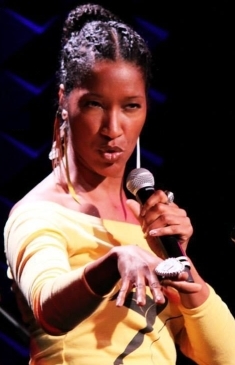
PHOTO of Liza Jessie Peterson
Nubian Queen, Black Sister, Thug Mama
She had given some poetry workshops at the prison on Rikers Island (NY) when she was asked to take over the last three weeks teaching a group of high school boys. Pressed for money (to put it mildly), she agreed. It meant 4:30 am starts (yawn) to get there, and it meant dealing with a roomful of older teenaged boys, all black with an occasional exception.
“It was supposed to be temporary, but a funny thing happened when passion met purpose, and so it’s been eighteen years and counting that I’ve been working in multiple capacities with incarcerated youth.”
Peterson has a lot to say about the system and some of the good people working in it. She has even more to say about why she thinks this is happening to black kids. I will let her tell it.
“Slavery is the rotten root, foundation, and engine of America.
. . .
It’s important that my boys are informed of their history. It amazes me how much they don’t know, how much they haven’t been taught, how disconnected they are from the truth
. . .
“I know I have to find a way to connect them back to their humanity. I have to get them to see their value and understand they come from a powerful, meaningful, worthy people. They matter. We need them. They have to know that. They have to know how valuable they are so death won’t be a goal and murder won’t come so easily. They aren’t disposable.”
She begins by introducing them to Malcolm X, and then initiating a Thought for the Day, writing it on the blackboard, quoting someone (sometimes herself – Ms P). Early on, one boy protests that they aren’t there to work (study).
“Miss, this jail! We criminals!’ the pimply-face kid shoots back.
‘Malcolm X said "To have once been a criminal is no disgrace. To remain a criminal is the disgrace." Elevate your mind, Black man. And as long as I’m here teaching, that’s what we’re going to do . . . elevate.’
‘Tell it, sister girl! yells Xavier, a tall, slim diesel kid with deep mahogany skin, chiselled features and high cheekbones. His face is a gorgeous African mask. And he is clearly the drama king and alpha male in class.
Xavier slaps his chest and reckons he’s an X too, while the class laughs with him because his name does start with an X. It helps that he likes Ms P. She engages them in a lengthy conversation about Malcolm X's five names (government name, street name, jail name, Malcolm X, and later his Muslim name). They start comparing their names and realising that jail doesn’t have to be the end of the line for them.
She tells them:
“’Malcolm didn’t know he was being called for greatness. He didn’t know part of his destiny was going to prison to become a great man; just like you’re sitting right here and in my class for a reason. Your life is still unfolding brothas. Who you are now is not who you are going to always be.’
. . .
‘That’s deep, Ms. P,’ he [Tyquan] says, nodding his head. I like how you put that. I’m feeling that. Word. I’mma be a great man . . .
part of me be wilding out but another part of me know I’mma do great things one day; it’s like I’m caught between the devil and god,’ Tyquan exclaims.
The boys call Tyquan “Africa” because he’s so dark. Racism isn’t limited to Caucasians.
“Over time, we internalized the lie and now tell it to ourselves. Dark skin. Ugly. Nappy hair. Bad. Broad nose. Curse. Thick lips. Undesirable. We’ve been infected from centuries ago and are still sick with self-hate. There is so much to deprogram and teach the babies.”
She is sorely tested by some of the kids, but mostly manages to keep it all together using music, poetry, creative writing and pride in their ancestry to keep them engaged. The boys are divided by gang, by age, by hierarchy, and she learns quickly how to negotiate through those minefields.
But when she is challenged to breaking point, out comes Thug Mama.
“I swing around in slow motion, a Neo-in-The-Matrix, full-body whirl, with my neck being the last thing to snap into alignment. It is a knee-jerk reflex that flings my thug mama genie out the lamp into a full-octave, West Philly, all-up-in-your-face, carazaay woman verbal fury. I am full throttle: extremely loud, intense, and temporarily unhinged.”
She goes into a rant about respect and ends with:
“'Get him out of there now!’ As I am screaming like a wild banshee, standing over him like a giant possessed mother, he cowers in his seat, stunned by my beast. He’s the incredible shrinking thug.”
She keeps a tight lid on Thug Mama's genie bottle. One boy who pushes the boundaries usually escapes.
“Maybe it’s because when I yell at him to do work, he smiles at me sheepishly and responds with, ”Yes, my Black queen sister…I’mma do my work, my Nubian queen,’ forcing a smile from me. He’s such a swindler and I fall for it every time.”
Peterson is appalled with how society has failed generations of kids.
“The prison system is a racket and the current public education system is its partner in crime. Kids have to be anomalies and teachers have to be renegade third-eye warriors to counter this Matrix.
. . .
Mass incarceration is big business and works hand in hand with having communities of uneducated, underemployed, uninspired people; both feed the appetite of a caste system designed to keep the superwealthy in power and in control.”
You can see the kind of presence she brings to the stage or the classroom In this video of her speaking about the book. http://www.salon.com/2017/06/06/watch...
This is a terrific, thought-provoking read and I hope it makes some really big waves! Thanks so much to NetGalley and FaithWords for the preview copy from which I’ve so extensively quoted, so quotes may have changed. And thanks so much to author/teacher/leader Liza Jessie Peterson for her fantastic work, both here and with the kids.
“Thought for the Day: African people introduced civilization to the planet. We were scientists, astronomers, philosophers, master masons, kings and queens, a mighty people long before we became slaves in America. Know thyself. If we did it once, we can do it again. Remember the ancestors. —Ms. P”
Peterson’s account is a unique contribution to how to deal with the dilemma of what to do with, for, and about all the boys who are locked up in prison with little help or hope for a future life outside the system.
She’s an artist, a poet, a performer. She’s been a catwalk model. She’s an Amazon with a forceful presence, a quick wit and a bucketload of compassion for these ignorant, neglected kids.
“Thought for the Day: If the mountain was smooth, you wouldn’t be able to climb it. Challenges and obstacles are meant to build character and strength. —Ms. P”
She’s the Nubian Queen, the Black Sista, the Thug Mama. She tells terrific stories about these boys, and you can see them prancing and rapping or slouching and chastened or mesmerised and fascinated by what she tells them. You can hear them and smell them. She has captured their language and their manner and works with them so they understand her. She is formidable!

PHOTO of Liza Jessie Peterson
Nubian Queen, Black Sister, Thug Mama
She had given some poetry workshops at the prison on Rikers Island (NY) when she was asked to take over the last three weeks teaching a group of high school boys. Pressed for money (to put it mildly), she agreed. It meant 4:30 am starts (yawn) to get there, and it meant dealing with a roomful of older teenaged boys, all black with an occasional exception.
“It was supposed to be temporary, but a funny thing happened when passion met purpose, and so it’s been eighteen years and counting that I’ve been working in multiple capacities with incarcerated youth.”
Peterson has a lot to say about the system and some of the good people working in it. She has even more to say about why she thinks this is happening to black kids. I will let her tell it.
“Slavery is the rotten root, foundation, and engine of America.
. . .
It’s important that my boys are informed of their history. It amazes me how much they don’t know, how much they haven’t been taught, how disconnected they are from the truth
. . .
“I know I have to find a way to connect them back to their humanity. I have to get them to see their value and understand they come from a powerful, meaningful, worthy people. They matter. We need them. They have to know that. They have to know how valuable they are so death won’t be a goal and murder won’t come so easily. They aren’t disposable.”
She begins by introducing them to Malcolm X, and then initiating a Thought for the Day, writing it on the blackboard, quoting someone (sometimes herself – Ms P). Early on, one boy protests that they aren’t there to work (study).
“Miss, this jail! We criminals!’ the pimply-face kid shoots back.
‘Malcolm X said "To have once been a criminal is no disgrace. To remain a criminal is the disgrace." Elevate your mind, Black man. And as long as I’m here teaching, that’s what we’re going to do . . . elevate.’
‘Tell it, sister girl! yells Xavier, a tall, slim diesel kid with deep mahogany skin, chiselled features and high cheekbones. His face is a gorgeous African mask. And he is clearly the drama king and alpha male in class.
Xavier slaps his chest and reckons he’s an X too, while the class laughs with him because his name does start with an X. It helps that he likes Ms P. She engages them in a lengthy conversation about Malcolm X's five names (government name, street name, jail name, Malcolm X, and later his Muslim name). They start comparing their names and realising that jail doesn’t have to be the end of the line for them.
She tells them:
“’Malcolm didn’t know he was being called for greatness. He didn’t know part of his destiny was going to prison to become a great man; just like you’re sitting right here and in my class for a reason. Your life is still unfolding brothas. Who you are now is not who you are going to always be.’
. . .
‘That’s deep, Ms. P,’ he [Tyquan] says, nodding his head. I like how you put that. I’m feeling that. Word. I’mma be a great man . . .
part of me be wilding out but another part of me know I’mma do great things one day; it’s like I’m caught between the devil and god,’ Tyquan exclaims.
The boys call Tyquan “Africa” because he’s so dark. Racism isn’t limited to Caucasians.
“Over time, we internalized the lie and now tell it to ourselves. Dark skin. Ugly. Nappy hair. Bad. Broad nose. Curse. Thick lips. Undesirable. We’ve been infected from centuries ago and are still sick with self-hate. There is so much to deprogram and teach the babies.”
She is sorely tested by some of the kids, but mostly manages to keep it all together using music, poetry, creative writing and pride in their ancestry to keep them engaged. The boys are divided by gang, by age, by hierarchy, and she learns quickly how to negotiate through those minefields.
But when she is challenged to breaking point, out comes Thug Mama.
“I swing around in slow motion, a Neo-in-The-Matrix, full-body whirl, with my neck being the last thing to snap into alignment. It is a knee-jerk reflex that flings my thug mama genie out the lamp into a full-octave, West Philly, all-up-in-your-face, carazaay woman verbal fury. I am full throttle: extremely loud, intense, and temporarily unhinged.”
She goes into a rant about respect and ends with:
“'Get him out of there now!’ As I am screaming like a wild banshee, standing over him like a giant possessed mother, he cowers in his seat, stunned by my beast. He’s the incredible shrinking thug.”
She keeps a tight lid on Thug Mama's genie bottle. One boy who pushes the boundaries usually escapes.
“Maybe it’s because when I yell at him to do work, he smiles at me sheepishly and responds with, ”Yes, my Black queen sister…I’mma do my work, my Nubian queen,’ forcing a smile from me. He’s such a swindler and I fall for it every time.”
Peterson is appalled with how society has failed generations of kids.
“The prison system is a racket and the current public education system is its partner in crime. Kids have to be anomalies and teachers have to be renegade third-eye warriors to counter this Matrix.
. . .
Mass incarceration is big business and works hand in hand with having communities of uneducated, underemployed, uninspired people; both feed the appetite of a caste system designed to keep the superwealthy in power and in control.”
You can see the kind of presence she brings to the stage or the classroom In this video of her speaking about the book. http://www.salon.com/2017/06/06/watch...
This is a terrific, thought-provoking read and I hope it makes some really big waves! Thanks so much to NetGalley and FaithWords for the preview copy from which I’ve so extensively quoted, so quotes may have changed. And thanks so much to author/teacher/leader Liza Jessie Peterson for her fantastic work, both here and with the kids.

May 11, 2017
Yet another perfect book – yet another review overdue.
I have been sitting with this one for maybe a half a year, no kidding. It's just hard to write a review for a book that moved me SO much... But I'm going to try.
5 Reasons To Read All Day: A Year of Love and Survival Teaching Incarcerated Kids at Rikers Island - you can read the full review with formatting on my blog here.
First of all, this is real. This is not fiction. And this is a topic that needs to be talked about. A young artist tries to find a temporary job teaching, to make ends meet. And ends up working one of the most meaningful jobs in her life. Which is teaching incarcerated kids – some of them with no future, trapped by a past that wasn't really their doing. The book explores the problems with our society such as racism, the inherent lack of love towards those less fortunate and our complete inability to bring up members of society in a rational way – planning for numbers of jail cells to be taken, rather than school desks and exam papers.
Reason #1. This Is A Topic Nobody Wants To Talk About
And indeed it should be talked about all the more. Now, I don't even live in the US! In fact, there are barely any black people in my country historically. Yet, racism is very relevant to me. How relevant should it be to you then, if you live in the US? This book broke my heart – from the media or movies, one could never guess how deeply ingrained racism is in some parts of America. If you still don't know – read this. Read this and find out how people are divided into two groups, and I don't just mean black and white – I mostly mean "poor" and "worth attention". Because if you come from humble backgrounds, you will be treated so very differently than everyone else. The American Dream isn't for everyone. It's only for the right kind of Americans. I don't want to talk about this in detail, as I've read this a while ago, but Liza Jessie Peterson has enough facts and they're all reasonable. It's painful to think a black kid can land in jail by merely shouting at someone. Teenagers shout, okay? They do that. All of them do that. It's scary to think that would land someone in jail!
Reason #2. You Will Cry

Crying at fiction is alright. But crying at reality facts is more than alright – it's right. Because it's better to know than to remain ignorant. I felt very deeply for the fates of some of the people talked about in this book, some of those children. Granted, some of them were at fault. But some were not. Some will never be given a second chance.
Reason #3. It's Measured And Honest And Doesn't Hate On Anyone
If you think that this book blindly defends people of color against whites, then you're wrong. Liza Jessie Peterson writes very soberly, and she never sugarcoats anything. She will give you the truth, at least how she saw it. A lot of the kids she talks about did misbehave, and she will give you her honest opinion about them being little ****ers, and that it's their own fault. This is the magic of this book. It does not label. It just gives you the story, the way it was.
Reason #4. This Woman's Got Soul!

I've never met an archetypal strong black woman in my life (that's basically cause I haven't met a single black woman! xD), but I know now that that's the way I'll imagine one, for the rest of my life, probably. Since this is a memoir, we get to see and learn a lot about Liza's character – and you just can't help falling in love with her personality! She is soulful and strong, she's got this immense love for her culture and roots, she won't let anyone step on her, and yet she is loving towards these teens in the way they will need the most – hard love. Strong love that doesn't let them get what they want. It gives them what they need. This book has inspired the biggest kind of respect for the author in my heart. I believe you will feel the same.
Reason #5. Despite The Hardship, The Book Is Very Inspiring
I run out of words to explain. Can you just take my word on this? This book was so good, and it's worth much more than just 5 stars. It's definitely worth your time and attention. I'll even go this far. It could serve as a nonfiction companion to these greatly appreciated fiction books:


I thank Center Street and Liza Jessie Peterson for giving me a copy of the book in exchange to my honest opinion.
Read Post On My Blog | My Bookstagram | Bookish Twitter
5 Reasons To Read All Day: A Year of Love and Survival Teaching Incarcerated Kids at Rikers Island - you can read the full review with formatting on my blog here.
First of all, this is real. This is not fiction. And this is a topic that needs to be talked about. A young artist tries to find a temporary job teaching, to make ends meet. And ends up working one of the most meaningful jobs in her life. Which is teaching incarcerated kids – some of them with no future, trapped by a past that wasn't really their doing. The book explores the problems with our society such as racism, the inherent lack of love towards those less fortunate and our complete inability to bring up members of society in a rational way – planning for numbers of jail cells to be taken, rather than school desks and exam papers.
Reason #1. This Is A Topic Nobody Wants To Talk About
And indeed it should be talked about all the more. Now, I don't even live in the US! In fact, there are barely any black people in my country historically. Yet, racism is very relevant to me. How relevant should it be to you then, if you live in the US? This book broke my heart – from the media or movies, one could never guess how deeply ingrained racism is in some parts of America. If you still don't know – read this. Read this and find out how people are divided into two groups, and I don't just mean black and white – I mostly mean "poor" and "worth attention". Because if you come from humble backgrounds, you will be treated so very differently than everyone else. The American Dream isn't for everyone. It's only for the right kind of Americans. I don't want to talk about this in detail, as I've read this a while ago, but Liza Jessie Peterson has enough facts and they're all reasonable. It's painful to think a black kid can land in jail by merely shouting at someone. Teenagers shout, okay? They do that. All of them do that. It's scary to think that would land someone in jail!
Reason #2. You Will Cry
Crying at fiction is alright. But crying at reality facts is more than alright – it's right. Because it's better to know than to remain ignorant. I felt very deeply for the fates of some of the people talked about in this book, some of those children. Granted, some of them were at fault. But some were not. Some will never be given a second chance.
Reason #3. It's Measured And Honest And Doesn't Hate On Anyone
If you think that this book blindly defends people of color against whites, then you're wrong. Liza Jessie Peterson writes very soberly, and she never sugarcoats anything. She will give you the truth, at least how she saw it. A lot of the kids she talks about did misbehave, and she will give you her honest opinion about them being little ****ers, and that it's their own fault. This is the magic of this book. It does not label. It just gives you the story, the way it was.
Reason #4. This Woman's Got Soul!
I've never met an archetypal strong black woman in my life (that's basically cause I haven't met a single black woman! xD), but I know now that that's the way I'll imagine one, for the rest of my life, probably. Since this is a memoir, we get to see and learn a lot about Liza's character – and you just can't help falling in love with her personality! She is soulful and strong, she's got this immense love for her culture and roots, she won't let anyone step on her, and yet she is loving towards these teens in the way they will need the most – hard love. Strong love that doesn't let them get what they want. It gives them what they need. This book has inspired the biggest kind of respect for the author in my heart. I believe you will feel the same.
Reason #5. Despite The Hardship, The Book Is Very Inspiring
I run out of words to explain. Can you just take my word on this? This book was so good, and it's worth much more than just 5 stars. It's definitely worth your time and attention. I'll even go this far. It could serve as a nonfiction companion to these greatly appreciated fiction books:
I thank Center Street and Liza Jessie Peterson for giving me a copy of the book in exchange to my honest opinion.
Read Post On My Blog | My Bookstagram | Bookish Twitter

January 11, 2017
Bravo, Liza Jessie Peterson! All Day: A Year of Love and Survival Teaching Incarcerated Kids at Rikers Island, New York's Most Notorious Jail was a poetic, spiritual and powerful read. The author took me on a draining and emotional ride as she expressed her personal frustration trying to financially support herself without losing her ever present dedication to her creativity, art, poetry and performance all the while never giving up her unyielding desperation to teach...to inspire the kids at Rikers to learn where they came from and to know that they matter.
In some ways, the author, Liza is no different than some of the incarcerated kids; her rage makes her feel as if she is drowning, she is losing traction and feels depressed and sad and recognizes that sleep is an escape. At times her rage bubbles up and gets released to whoever is there and she even acknowledges that a "split second of misdirected fury" could put her on the undesirable side of the bars.
Her beautiful prose is chock full of meaning and flows so naturally, I can picture her telling her story in person as her words evoke the emotion of a live conversation. Even her students appreciate her poetic phrasing as they observe how her anger fuels the creativity and beauty of her words. The boys in her class were her family and the rapport they developed was of mutual respect. Her knowledge of black history, poetry, music, life and survival as well as her theatrical and expressive performance skills are all put to good use at Rikers and I admire this strong, authentic, multitalented author/artist/teacher who has made a difference and surely continues to do so. This book is five stars for me, and so is Liza Jessie Peterson...beautiful, articulate and inspiring.
In some ways, the author, Liza is no different than some of the incarcerated kids; her rage makes her feel as if she is drowning, she is losing traction and feels depressed and sad and recognizes that sleep is an escape. At times her rage bubbles up and gets released to whoever is there and she even acknowledges that a "split second of misdirected fury" could put her on the undesirable side of the bars.
Her beautiful prose is chock full of meaning and flows so naturally, I can picture her telling her story in person as her words evoke the emotion of a live conversation. Even her students appreciate her poetic phrasing as they observe how her anger fuels the creativity and beauty of her words. The boys in her class were her family and the rapport they developed was of mutual respect. Her knowledge of black history, poetry, music, life and survival as well as her theatrical and expressive performance skills are all put to good use at Rikers and I admire this strong, authentic, multitalented author/artist/teacher who has made a difference and surely continues to do so. This book is five stars for me, and so is Liza Jessie Peterson...beautiful, articulate and inspiring.

September 17, 2018
I had high hopes for this book. I wanted to hear more about Tyquan, Danny Gunz, Leaky, and the other young men Liza brought to light. I wanted to see how young men of color are educationally and "culturally malnourished."….I didn’t get that. We are talking boys 15-18 year olds in Rikers! The book trailed off into another place, it became very self-centered. Also educators are among the most underrated professionals and Liza only taught for 3 months not a year. My opinion is she bailed out on those boys. I don’t know….I recommend reading Pushout: The Criminalization of Black Girls in Schools by Monique W. Morris I got more out of that book than this one.

January 8, 2017
This is an incredible story! As an educator, this book was inspiring in ways that I didn’t expect, and eye opening in ways that I was hoping for. Liza Jessie Peterson chronicles her time as a teacher at the Rikers Island institution. Her struggles were struggles that a lot of teachers face: the unusual hours and stressful environment, the policy and leadership changes, the random curriculum changes and documentation requirements. She also faces things that no typical teacher could imagine, like de-escalating gang fights, teaching with guards in the room and just outside the hallway.
What I absolutely loved about this book is that Liza Jessie Peterson brought the humanity of the incarcerated teens to the forefront. At no point did she talk about the “big scary jail” or her “awful scary students.” Her voice is so real and honest, and her love for her students was evident. Her anecdotes of conversations made me laugh and frown and shake my head in solidarity. It is amazing what can be done when you teach students self worth and high expectations. Liza taught the young men African American history, and led them in discussions about the presidential election of 2008 with Barack Obama, and used rap music as a foundation for debates. At the same time, she also admits her defeats, her self-doubts, her fears. I felt like I could relate to her - her love and desperation for success along with her acceptance that some things are bigger than one person. There’s no savior complex in her despite the incredible amount that she has accomplished and influenced, and that humility in the face of success is so refreshing for books like this.
It was a pleasure to read this book. I felt hopeful, and I felt inspired to continue speaking out against racially profiling and statistically evident disparities in incarceration. This is a book that I would recommend to anyone, especially educators, especially those working in low income and disadvantaged areas.
I received a copy of this ebook through NetGalley in exchange for an honest opinion.
What I absolutely loved about this book is that Liza Jessie Peterson brought the humanity of the incarcerated teens to the forefront. At no point did she talk about the “big scary jail” or her “awful scary students.” Her voice is so real and honest, and her love for her students was evident. Her anecdotes of conversations made me laugh and frown and shake my head in solidarity. It is amazing what can be done when you teach students self worth and high expectations. Liza taught the young men African American history, and led them in discussions about the presidential election of 2008 with Barack Obama, and used rap music as a foundation for debates. At the same time, she also admits her defeats, her self-doubts, her fears. I felt like I could relate to her - her love and desperation for success along with her acceptance that some things are bigger than one person. There’s no savior complex in her despite the incredible amount that she has accomplished and influenced, and that humility in the face of success is so refreshing for books like this.
It was a pleasure to read this book. I felt hopeful, and I felt inspired to continue speaking out against racially profiling and statistically evident disparities in incarceration. This is a book that I would recommend to anyone, especially educators, especially those working in low income and disadvantaged areas.
I received a copy of this ebook through NetGalley in exchange for an honest opinion.

June 22, 2017
Urged by my public library to "read outside my comfort zone" in a Reading Without Walls Challenge, I picked this up and was blown away! The author is a black woman who worked as a fashion model before becoming a poet and teaching artist, and here she writes of taking a job teaching a pre-GED class for 16-18 year old boys being held at Riker's Island while awaiting trial or sentencing. What an astonishing eye-opener. Part poet, part preacher exhorting her "rug rats" to find pride in their heritage and hope (however slim) for a better future, she is absolutely inspirational. She lectures US, the reader, that "the psychological effects of unacknowledged and untreated traumas don't disappear but show up in behavior that is directly connected to their teenage act-outs and the inability to regulate their emotions." She also lectures compellingly on the "racially biased, profit-driven prison system that was designed to entrap them before they were even born": this might be a worthy companion to Michelle Alexander's 2012 book "The New Jim Crow: mass incarceration in the age of color blindness." It is also a vivid, colorful and even occasionally joyful look at a teen culture absolutely foreign to those of us who live in middle class white suburbia.

June 27, 2017
I've been drawn to black stories this summer, and they have all been amazing. This is the story of an artist who decided to teach incarcerated kids on Rikers Island. It's a tough job but she instills feelings of black pride and confidence in the kids, and I feel she has touched the lives of many young people.

March 17, 2017
An overall enjoyable read but mainly due to the subject matter. Unfortunately the writing style wasn't great.
Hopefully once this has been properly edited the finished product will flow a little better.
Some parts go on forever and then you seem to jump into a new part on the same page with no paragraph break never mind a new chapter.
***An ARC from Netgalley***
Hopefully once this has been properly edited the finished product will flow a little better.
Some parts go on forever and then you seem to jump into a new part on the same page with no paragraph break never mind a new chapter.
***An ARC from Netgalley***

September 18, 2018
I had a lot of problems with this book. The writing and content were not good. The author centers herself and diminishes the kids around her. Her personal politics are problematic and her overall tone is off putting. The book needed a ton more editing. It focused on the author and not enough on the boys. Skip this book. Way better stuff on incarceration out there.

January 11, 2018
First published on Booking in Heels.
I really, quite intensely, disliked this book. Firstly, Liza Peterson managed three months in full-time teaching before she before she quit. I’m not sure where the ‘year’ part of the title came from. The author is very unlikeable, the book distinctly does not have the ring of truth and it ends up being more about the glory of art, and racial issues, than about incarcerated youths. It’s not about the criminal justice system – it’s about Liza Peterson.
Her persona as an artist is a constant theme of this book. People walk up to her on several occasions and say things like, ‘”Even if I didn’t already know you were an artist, I would have guessed it just by the way you decorated your room,”‘ and ‘”We artists have difficulty in adjusting to the energy here.”‘ It’s okay that teaching incarcerated adolescents isn’t her first love, of course it is, but she acts like she’s resentfully dragging this huge burden around with her. And so, naturally, people apparently come up to her magically recognising that she has an artistic spirit and feeling the need to tell her so, constantly.
That’s my main issue with this book, and I know it’s a very offensive line for me to take. I don’t mean it to be a personal attack on the author, as she was there and I wasn’t, but I can’t get over how false this book feels. ‘Embroidered,’ at the very least. She’s delivering heart-wrenching soliloquies on her first day that leave her class speechless. She instantly quells any classroom disturbance with her razor-sharp wit, and comes out tops in any disagreement. She has in-depth discussions with coworkers on the bus about racial injustice, also on her first day. Could I teach incarcerated adolescents? Is that in my skill set? No, absolutely not. Do I doubt that Liza Peterson pulled it off quite this well? Yes. Yes, I do.
Passionately I’m pointing and perspiring as I walk back and forth in front of the class like a preacher delivering the sermon. The kids are leaning forward with laser-focused attention. Their body language encourages me. I start to feel lightheaded and am suddenly aware of energy moving quickly through my body. It’s an electric sensation. I am catching the spirit. One kid is leaning so far on the edge of the seat, it’s a wonder he doesn’t slip onto the floor. He has tears in his eyes as he embraces my words, shaking his head affirmatively as I speak. I am in a zone and he is riding the wave with me.
It’d be a lot more impressive if it didn’t happen every other day.
I know that there are a huge amount of problems with racial discrimination in the criminal justice system, and also with how adolescents are dealt with generally. Combine the two, and the teenagers in Ms Peterson’s classes face a raw deal. Unfortunately, I don’t think this book helps. She throws out some statistics every so often but doesn’t state where they came from, and doesn’t provide references or a bibliography. She also, problematically, states as fact that the government decides when children are seven whether they will go to prison based on their reading age, and then twists the system to make sure they get there because they have a quota to fill. She states this as fact, and does not provide references.
On a personal note, I struggled to connect with the religious and spiritual references. The author firmly believes in past lives and spirits, which is fine by me. But she uses this as a reason to haaaaaate a fellow teacher with the casual reason that she must have done something heinous in a previous life.
She makes the hairs on the back of my neck stand up, my spidey-senses tingle; my intuition says she’s a dangerous and treacherous woman. I don’t know why and I have no rational explanation for it. The woman has triggered some genetic memory in me. I once got a vision of her that dropped into my spirit. I saw a lady of gallantry, a white heifer in the post-Reconstruction South who lusted after black men and would cry rape if they rejected her advances or if she got caught with her bustle up. Then she’d fan herself while sipping a mint julep as her Black buck was being lynched in front of a bloodthirsty cheering mob of savages for sport
…
My protective spirit for the boys is on high alert and my aversion toward her is so palpable that every time I see her I get a momentous rage to slap her fucking face. This definitely has to be some past-life shit for real, because on face value it makes absolutely no sense why I despise this woman, who has done nothing to me. And it’s not because she’s white.
Wow. That’s a lot to dump on a fellow teacher you don’t know. You know what the woman ends up doing to the author? Nothing. She’s forgotten about, other that casual references to Little Miss Muffet.
Aside from my issues with the author and the content, I also wasn’t a fan of the writing. The author jumps from amusing anecdote to lengthy, angry rants without any warning, which can be very jarring. A lot of the same phrases and comments are repeated again and again, which I suppose makes sense considering she was only there three months. She refers to herself as ‘thug mama’ constantly and uses incongruous slang even in the prose sections. I found it really difficult to get on board with it. She does provide a glossary at the end of the words that the teenagers use, which is helpful, but I’d prefer that those were used solely within the dialogue.
I’m disappointed because I was very much interested in the subject matter, and it wasn’t really discussed. I wanted to know how the system works – are teenagers required to access schooling in prison? Are they separated by age or ability? Is there a curriculum and, if so, is it the same as in regular schools? She just doesn’t say. Instead, we get an ego-stroking, barely researched tribute to Liza Jessie Peterson and the place where she worked for three whole months.
I really, quite intensely, disliked this book. Firstly, Liza Peterson managed three months in full-time teaching before she before she quit. I’m not sure where the ‘year’ part of the title came from. The author is very unlikeable, the book distinctly does not have the ring of truth and it ends up being more about the glory of art, and racial issues, than about incarcerated youths. It’s not about the criminal justice system – it’s about Liza Peterson.
Her persona as an artist is a constant theme of this book. People walk up to her on several occasions and say things like, ‘”Even if I didn’t already know you were an artist, I would have guessed it just by the way you decorated your room,”‘ and ‘”We artists have difficulty in adjusting to the energy here.”‘ It’s okay that teaching incarcerated adolescents isn’t her first love, of course it is, but she acts like she’s resentfully dragging this huge burden around with her. And so, naturally, people apparently come up to her magically recognising that she has an artistic spirit and feeling the need to tell her so, constantly.
That’s my main issue with this book, and I know it’s a very offensive line for me to take. I don’t mean it to be a personal attack on the author, as she was there and I wasn’t, but I can’t get over how false this book feels. ‘Embroidered,’ at the very least. She’s delivering heart-wrenching soliloquies on her first day that leave her class speechless. She instantly quells any classroom disturbance with her razor-sharp wit, and comes out tops in any disagreement. She has in-depth discussions with coworkers on the bus about racial injustice, also on her first day. Could I teach incarcerated adolescents? Is that in my skill set? No, absolutely not. Do I doubt that Liza Peterson pulled it off quite this well? Yes. Yes, I do.
Passionately I’m pointing and perspiring as I walk back and forth in front of the class like a preacher delivering the sermon. The kids are leaning forward with laser-focused attention. Their body language encourages me. I start to feel lightheaded and am suddenly aware of energy moving quickly through my body. It’s an electric sensation. I am catching the spirit. One kid is leaning so far on the edge of the seat, it’s a wonder he doesn’t slip onto the floor. He has tears in his eyes as he embraces my words, shaking his head affirmatively as I speak. I am in a zone and he is riding the wave with me.
It’d be a lot more impressive if it didn’t happen every other day.
I know that there are a huge amount of problems with racial discrimination in the criminal justice system, and also with how adolescents are dealt with generally. Combine the two, and the teenagers in Ms Peterson’s classes face a raw deal. Unfortunately, I don’t think this book helps. She throws out some statistics every so often but doesn’t state where they came from, and doesn’t provide references or a bibliography. She also, problematically, states as fact that the government decides when children are seven whether they will go to prison based on their reading age, and then twists the system to make sure they get there because they have a quota to fill. She states this as fact, and does not provide references.
On a personal note, I struggled to connect with the religious and spiritual references. The author firmly believes in past lives and spirits, which is fine by me. But she uses this as a reason to haaaaaate a fellow teacher with the casual reason that she must have done something heinous in a previous life.
She makes the hairs on the back of my neck stand up, my spidey-senses tingle; my intuition says she’s a dangerous and treacherous woman. I don’t know why and I have no rational explanation for it. The woman has triggered some genetic memory in me. I once got a vision of her that dropped into my spirit. I saw a lady of gallantry, a white heifer in the post-Reconstruction South who lusted after black men and would cry rape if they rejected her advances or if she got caught with her bustle up. Then she’d fan herself while sipping a mint julep as her Black buck was being lynched in front of a bloodthirsty cheering mob of savages for sport
…
My protective spirit for the boys is on high alert and my aversion toward her is so palpable that every time I see her I get a momentous rage to slap her fucking face. This definitely has to be some past-life shit for real, because on face value it makes absolutely no sense why I despise this woman, who has done nothing to me. And it’s not because she’s white.
Wow. That’s a lot to dump on a fellow teacher you don’t know. You know what the woman ends up doing to the author? Nothing. She’s forgotten about, other that casual references to Little Miss Muffet.
Aside from my issues with the author and the content, I also wasn’t a fan of the writing. The author jumps from amusing anecdote to lengthy, angry rants without any warning, which can be very jarring. A lot of the same phrases and comments are repeated again and again, which I suppose makes sense considering she was only there three months. She refers to herself as ‘thug mama’ constantly and uses incongruous slang even in the prose sections. I found it really difficult to get on board with it. She does provide a glossary at the end of the words that the teenagers use, which is helpful, but I’d prefer that those were used solely within the dialogue.
I’m disappointed because I was very much interested in the subject matter, and it wasn’t really discussed. I wanted to know how the system works – are teenagers required to access schooling in prison? Are they separated by age or ability? Is there a curriculum and, if so, is it the same as in regular schools? She just doesn’t say. Instead, we get an ego-stroking, barely researched tribute to Liza Jessie Peterson and the place where she worked for three whole months.

April 18, 2020
4.5 out of 5
All Day is incredibly inspiring and enlightening in regards to materialism and the prison industrial complex, particularly how they are detrimental to people of color. The author, Liza Jessie Peterson, is clearly a caring and intelligent person from whom we can learn a lot. This book is for sure a recommendation to anyone and everyone.
Note: I detracted half a star because I felt like there were a couple instances when the author might have addressed homophobia or sexism, but she did not do so. That is NOT to say that this book is misogynistic or homophobic by any means.
All Day is incredibly inspiring and enlightening in regards to materialism and the prison industrial complex, particularly how they are detrimental to people of color. The author, Liza Jessie Peterson, is clearly a caring and intelligent person from whom we can learn a lot. This book is for sure a recommendation to anyone and everyone.
Note: I detracted half a star because I felt like there were a couple instances when the author might have addressed homophobia or sexism, but she did not do so. That is NOT to say that this book is misogynistic or homophobic by any means.
April 23, 2023
Excellent first person narrative of the challenges and joys of working with youth who are incarcerated and the hope and redemption that are so needed.

Read
March 11, 2025So much I learnt from this. The journey continues. Thank you. 🙏🏽

May 30, 2017
Poets and educators are among the most underrated professionals of my time. I've seen firsthand what a poet educator can do for a group of teenagers eager to expand their conscious and their place as children of color in our public school system.
"There must be a better way to raise our youth among us who have gone astray than to warehouse them in penal institutions throughout the land" (Peterson).
Liza Jessie Peterson doesn't mince words or play subtle when it comes to her testimony on teaching incarcerated boys in All Day: A Year of Love and Survival Teaching Incarcerated Kids at Rikers Island.
Her activism is at the heart of her novel. We meet boys like Tyquan, Danny Gunz, Leaky, and others as she brings to light how young men of color are educationally and "culturally malnourished." Peterson argues that the curriculum is not relevant, antiquated, and stale.
I, along with the boys, learned that Malcolm X had five names. It was a history lesson for me and well-timed with date night. My husband purchased tickets for us to view a documentary on Malcolm X. I felt like the kids did in the classroom discovering new histories. It couldn't have been timed better.
While Peterson's novel begins like the beginning of a conversation with a stranger - clean, repetitive, and lighthearted - she quickly moves into conversational writing. Peterson's use of curse words and "jail talk" make the novel rich in tone. It adds a depth that would not otherwise be felt if she had kept her tone clean and safe.
She sings to my heart when she states the truth:
"People who are paralyzed by poverty, racism, and lack of access to adequate educational resources and employment opportunities, and are depressed, are much easier to control and exploit in order to maintain a permanent underclass" (Peterson).
And we must do better by our children.
Sometimes we need someone to encourage our dreams. This is where the boys' "Nubian Queen, Ms.P" comes into their lives allowing them to dream outside of the bars where society has placed them.
I recommend this book if you're comfortable with language which makes you uncomfortable. I challenge any educator or librarian to pick up this book and learn what it is "to show up, daily and consistently, for something greater than" yourself.
I gave it three stars out of five because I wanted to hear more stories about the boys and I feel the book trailed off into another story in the end. I would purchase this book for my poet friends.
"There must be a better way to raise our youth among us who have gone astray than to warehouse them in penal institutions throughout the land" (Peterson).
Liza Jessie Peterson doesn't mince words or play subtle when it comes to her testimony on teaching incarcerated boys in All Day: A Year of Love and Survival Teaching Incarcerated Kids at Rikers Island.
Her activism is at the heart of her novel. We meet boys like Tyquan, Danny Gunz, Leaky, and others as she brings to light how young men of color are educationally and "culturally malnourished." Peterson argues that the curriculum is not relevant, antiquated, and stale.
I, along with the boys, learned that Malcolm X had five names. It was a history lesson for me and well-timed with date night. My husband purchased tickets for us to view a documentary on Malcolm X. I felt like the kids did in the classroom discovering new histories. It couldn't have been timed better.
While Peterson's novel begins like the beginning of a conversation with a stranger - clean, repetitive, and lighthearted - she quickly moves into conversational writing. Peterson's use of curse words and "jail talk" make the novel rich in tone. It adds a depth that would not otherwise be felt if she had kept her tone clean and safe.
She sings to my heart when she states the truth:
"People who are paralyzed by poverty, racism, and lack of access to adequate educational resources and employment opportunities, and are depressed, are much easier to control and exploit in order to maintain a permanent underclass" (Peterson).
And we must do better by our children.
Sometimes we need someone to encourage our dreams. This is where the boys' "Nubian Queen, Ms.P" comes into their lives allowing them to dream outside of the bars where society has placed them.
I recommend this book if you're comfortable with language which makes you uncomfortable. I challenge any educator or librarian to pick up this book and learn what it is "to show up, daily and consistently, for something greater than" yourself.
I gave it three stars out of five because I wanted to hear more stories about the boys and I feel the book trailed off into another story in the end. I would purchase this book for my poet friends.
June 29, 2017
This is not your typical teacher turned savior of at-risk youth. Peterson's narrative is not self-aggrandizing. Instead it is a no-nonsense tale that shows the good, the bad, and the ugly of prison life and education. A worthwhile read.

June 26, 2018
This book took me back to my days of teaching in the inner city and some of the daily battles I faced. There was so much to like about the book but at times it was very repetitive and I wanted to hear more about the stories of the students than about the writer. I also was confused about the title because 3 months does not equal a year.

May 16, 2020
Being sheltered and middle classed, raised in the west village of manhattan, i envy ms. peterson in that she was able to get through such a challenging situation. the fellas, as she calls them, would have made mince meat out of me after 15 minutes, so i have no right to condemn her adventure at rikers, where i have volunteered in the suicide prevention program. however, i abhor her continuous usage of 'Black and Hispanic', when whom she is really talking about, in all probability, are African Americans and Puerto Rican folk, or perhaps a few Dominicans and other groups as well. Nigerians are in attendance at ivy league colleges right on par with Asians and Jews. Would a Miami Cuban's attorney's son suffer the same sort of oppression as a Puerto Rican from the Mott Haven section of the Bronx, on the whole? What about West Indians and Haitians and how they shun governmental assistance programs like the plague. This term that she keeps parroting has been created as one of convenience to get the most folk possible involved in a fight of 'whiteys'. What she also ignores and seems to take for granted and/or is unphased by is the utterly profound and exaggerated masculinity of the fellas, sort of like a bunch of mafia kids hangin' out of cross bay boulevard in howard beach, queens. an albeit efficient older CO whom everybody calls 'Grandma' who has to use a four letter word in each sentence is a shame if not a disgrace, even if she is refreshing and unique. I may be taken as an obnoxious pedant, but I am an active member of the WRITEAPRIONER.com and have a cabin in Cap Haitien, Haiti, as well. Conclusively, this was a supreme book and I urge Ms. Peterson to keep on writing even though I dislike some of her stylistic poses. I couldn't help thinking about how different her experiences and possible attitude, if not her interpretation of such a class would be when and if she were suddenly transplanted to Miami's Dade County.

February 15, 2017
The cover caught my eye, the young woman is flaming red and with her chin held up high. In this case the cover gives you some insight into the book. Liza Jessie Peterson is foremost an artist but she had to face reality and get a steady paying job to keep on living.
Her best opportunity was teaching at Riker's Island a prison that included young imprisoned youth, mostly 16 to 18 years old. She accepted and subjected herself to a deadening schedule of getting up at 4:30 a.m just to get to the prison. When she got there, she had face unusual stress. With guards standing by in the hallway, and a group of students who were ready to challenge the teacher on the first day, she had to be tough and draw her boundaries first and later she concentrated on what a lot of people in prisons do not get. She had to win their trust, both she and they were angry but she was determined.
She had to teach them to to use the inspiration of Obama becoming president that year for anything is possible, to get them started on getting committed to some part of education, to recognize the tremendous amount sorrow, abuse or violence that they had already received as young individuals.
Also to realize that they can still contribute to society, it is not too late. She inspired them with music, poetry,posters, history of black leaders, especially those who had been in prison and made a contribution to society.
For the details of how she did this, you need to read the book. The jail language is different and she provides "Rikers Rug Rats Slang" in the front of the book. It is a bit gritty but this book will teach you a lot about people.
I received this Advanced Reading Copy by making a selection from Amazon Vine books but that in no way influenced my thoughts or feelings in this review. I also posted this review only on sites meant for reading not for selling.
Her best opportunity was teaching at Riker's Island a prison that included young imprisoned youth, mostly 16 to 18 years old. She accepted and subjected herself to a deadening schedule of getting up at 4:30 a.m just to get to the prison. When she got there, she had face unusual stress. With guards standing by in the hallway, and a group of students who were ready to challenge the teacher on the first day, she had to be tough and draw her boundaries first and later she concentrated on what a lot of people in prisons do not get. She had to win their trust, both she and they were angry but she was determined.
She had to teach them to to use the inspiration of Obama becoming president that year for anything is possible, to get them started on getting committed to some part of education, to recognize the tremendous amount sorrow, abuse or violence that they had already received as young individuals.
Also to realize that they can still contribute to society, it is not too late. She inspired them with music, poetry,posters, history of black leaders, especially those who had been in prison and made a contribution to society.
For the details of how she did this, you need to read the book. The jail language is different and she provides "Rikers Rug Rats Slang" in the front of the book. It is a bit gritty but this book will teach you a lot about people.
I received this Advanced Reading Copy by making a selection from Amazon Vine books but that in no way influenced my thoughts or feelings in this review. I also posted this review only on sites meant for reading not for selling.

June 20, 2017
Liza Jessie's memoir is stunning, compelling honest, and real. Her love for these incarcerated youth on Riker's Island is passionate, unflinching, and loud. The youth's lives are heartbreaking but Liza roots for each and every inmate & pushes them to be their best self despite the insurmountable odds. She urges Black & Latino youth need to know more about their true history in America and the world. The reader is plunged into the prison, the inmates, and how things (their lives) work. Liza's artistic side (acting & theatre) really helps her connect (reach/reach out) with kids many want to forget. I read this for June nonfiction twitter chat Thursday 6/29 at 8PM with #yearofya JOIN US with any YA nonfiction titles you want to share.

July 14, 2018
Initially, I did not like this book very much, but I had a feeling it would get better as I kept reading; and it did. The reason I hated it at first was because the author kept going on and on about she didn’t want to get a real job because she was an ~artist~ and she just wanted to make ~art.~ It was obnoxious. But I really did love the main part of the book: the stories she told about teaching the incarcerated boys. But the book jacket is a little misleading: it says it’s a book about her first year as a full-time GED teacher at Rikers, when in reality she only did that for about five months (if I understood correctly). SPOILER: it was really disappointing and sad that she left her teaching post in the middle of the school year. I thought teachers only did that if there was some kind of emergency. She may have had some kind of extenuating circumstances going on that made it necessary for her to quit when she did, but if that was the case, she didn’t say so in the book. Literally, the reason she gave for quitting just a little while into the spring semester was that she was an ~artist~ and she needed to be free to do her ~art.~ And then she kept talking about how much she cared about her former students and how she wondered if they were doing well. But she obviously didn’t care about them enough to finish out the school year with them.
Also, she seemed to have quite a bit of internalized misogyny. She spoke really harshly about women and used some pretty degrading terms to describe them. That was disappointing to see.
And she used the term “alpha male” a lot. As we have recently discovered from the scientist who introduced the concept of the alpha male to our society, it’s actually not a real thing. And even if it is a real thing in the animal kingdom, there is no scientific evidence to support the existence of alpha males among humans. In the book, if a student was being defiant or disrespectful, she would excuse it as “alpha” behavior. And then she would praise speakers who came to her class and taught her boys well by calling them alpha males. She was extremely passionate about and gifted in dismantling racial oppression, but unfortunately she was totally uninterested in dismantling the patriarchy or engaging with gender issues in any way. It seemed that she refused to see that racial oppression and gendered oppression are intersecting realities; they are inextricably linked, and one would do well to tackle them simultaneously. We cannot conquer one without also conquering the other.
All in all, I enjoyed reading about the young men that she taught. And I believe that her message about the system of modern day slavery known as the American prison system was very well articulated. It was very clear that the young inmates at Rikers Island are deserving of so much more than they have been given and can contribute so much good to the world. So that was very enjoyable to read about. But the book did have several very disappointing flaws.
Also, she seemed to have quite a bit of internalized misogyny. She spoke really harshly about women and used some pretty degrading terms to describe them. That was disappointing to see.
And she used the term “alpha male” a lot. As we have recently discovered from the scientist who introduced the concept of the alpha male to our society, it’s actually not a real thing. And even if it is a real thing in the animal kingdom, there is no scientific evidence to support the existence of alpha males among humans. In the book, if a student was being defiant or disrespectful, she would excuse it as “alpha” behavior. And then she would praise speakers who came to her class and taught her boys well by calling them alpha males. She was extremely passionate about and gifted in dismantling racial oppression, but unfortunately she was totally uninterested in dismantling the patriarchy or engaging with gender issues in any way. It seemed that she refused to see that racial oppression and gendered oppression are intersecting realities; they are inextricably linked, and one would do well to tackle them simultaneously. We cannot conquer one without also conquering the other.
All in all, I enjoyed reading about the young men that she taught. And I believe that her message about the system of modern day slavery known as the American prison system was very well articulated. It was very clear that the young inmates at Rikers Island are deserving of so much more than they have been given and can contribute so much good to the world. So that was very enjoyable to read about. But the book did have several very disappointing flaws.
This entire review has been hidden because of spoilers.

June 3, 2017
All Day is a book about the author and her time teaching young men at Riker’s Island prison in New York We were sent a review copy of the book so that we could write an honest review of the book.
This is an important story that needs to be told. The author is in a unique position to tell the story as only an insider could tell it.
All Day tells us of all the injustices in the alleged criminal justice system and how minorities often get a raw deal. We also learn that if these young men lived anywhere else in the country, they might not enter into the criminal justice system as they are often failed by the system that is supposed to support and nurture them.
The book is informative and enlightening.
However, the book All Day is full of foul words and takes God’s name in vain 6 different times. One of these times is really baffling as it is used in the very next sentence after the author writes a prayer. Our readership is primarily Fundamental and/or Charismatic Christian and they want to know whenever God’s Holy name is used in vain.
It is also particularly odd that the author calls her students foul-mouthed and potty-mouthed several times in the book. Once, when handing out a writing assignment to her students, one of her “Rug Rats” as she calls them, asked if they could use profane words. She tells him that profanity should only be used as an exclamation to underscore a point. However throughout the book, when quoting herself, she uses many foul words. We point this out as an inconsistency in her message.
We feel that this is an important story that needs to be told. When the author quotes her students, including the profane words, she is setting the scene and letting her readers see a little of what it is like to be in the prison with these students.
We do, however, feel that it is very inconsistent for her to call her students foul-mouthed and potty-mouthed while at the same time quoting herself as using the same words.
Again, this is an important story that needs to be told. Unless those in power understand how the system doesn’t work now, they will not be able to fix it, if in fact, they wish to do so.
This is an important story that needs to be told. The author is in a unique position to tell the story as only an insider could tell it.
All Day tells us of all the injustices in the alleged criminal justice system and how minorities often get a raw deal. We also learn that if these young men lived anywhere else in the country, they might not enter into the criminal justice system as they are often failed by the system that is supposed to support and nurture them.
The book is informative and enlightening.
However, the book All Day is full of foul words and takes God’s name in vain 6 different times. One of these times is really baffling as it is used in the very next sentence after the author writes a prayer. Our readership is primarily Fundamental and/or Charismatic Christian and they want to know whenever God’s Holy name is used in vain.
It is also particularly odd that the author calls her students foul-mouthed and potty-mouthed several times in the book. Once, when handing out a writing assignment to her students, one of her “Rug Rats” as she calls them, asked if they could use profane words. She tells him that profanity should only be used as an exclamation to underscore a point. However throughout the book, when quoting herself, she uses many foul words. We point this out as an inconsistency in her message.
We feel that this is an important story that needs to be told. When the author quotes her students, including the profane words, she is setting the scene and letting her readers see a little of what it is like to be in the prison with these students.
We do, however, feel that it is very inconsistent for her to call her students foul-mouthed and potty-mouthed while at the same time quoting herself as using the same words.
Again, this is an important story that needs to be told. Unless those in power understand how the system doesn’t work now, they will not be able to fix it, if in fact, they wish to do so.

June 15, 2017
A poet shows up for her incarcerated brothers.
Peterson had worked with young offenders before, in an arts program, but nothing prepared her for teaching full-time at Rikers' Island. Struggling to pay the bills was getting a little old, so when the offer came along, Peterson took it, not knowing that the seeds she planted there would take root and grow, not just for the boys, but for her own career.
Determined to set her students on a different path, Peterson plastered her classroom walls with posters with the superstars of black history and set out to instill a sense of Black pride via tough love, the teachings of Malcolm X and other revolutionaries, and assignments that veered far left of the established GED curriculum. She's fluent in "woke," but for the uninitiated there's a glossary of terms in the back that will make a lot of prison slang and other concepts clearer.
It's not easy breaking down learned self-hatred, and Peterson has to lay down the law (pun intended) more than once with her charges, who barely got time to be boys and have no idea how to be men. Training them out of the n-word, for example, is an ongoing challenge that starts up again each time she gets new students (which is frequently, as the inmate population turns over). The job takes its toll on Peterson, rubbing her raw, draining her of time and energy she used to spend on creative projects, and causing her to wonder if she'll ever get to be an artist again. An unexpected twist of fortune boots Peterson to the next stage of her life and career, leaving behind a group of boys who know their history a little better, and a lifetime of creative projects yet to be realized. Recommended for all library collections as a great example of contemporary black femme memoir.
Peterson had worked with young offenders before, in an arts program, but nothing prepared her for teaching full-time at Rikers' Island. Struggling to pay the bills was getting a little old, so when the offer came along, Peterson took it, not knowing that the seeds she planted there would take root and grow, not just for the boys, but for her own career.
Determined to set her students on a different path, Peterson plastered her classroom walls with posters with the superstars of black history and set out to instill a sense of Black pride via tough love, the teachings of Malcolm X and other revolutionaries, and assignments that veered far left of the established GED curriculum. She's fluent in "woke," but for the uninitiated there's a glossary of terms in the back that will make a lot of prison slang and other concepts clearer.
It's not easy breaking down learned self-hatred, and Peterson has to lay down the law (pun intended) more than once with her charges, who barely got time to be boys and have no idea how to be men. Training them out of the n-word, for example, is an ongoing challenge that starts up again each time she gets new students (which is frequently, as the inmate population turns over). The job takes its toll on Peterson, rubbing her raw, draining her of time and energy she used to spend on creative projects, and causing her to wonder if she'll ever get to be an artist again. An unexpected twist of fortune boots Peterson to the next stage of her life and career, leaving behind a group of boys who know their history a little better, and a lifetime of creative projects yet to be realized. Recommended for all library collections as a great example of contemporary black femme memoir.
September 14, 2022
I read this book initially because my favorite professor recommended it, but after the first 2 pages I was hooked. Being in the mental health field and being an advocate for children, this book spoke volumes to me. We already know the systematic racism and the alarming rates at which BIPOC boys are arrested and locked up compared to their counter parts. However this book highlighted it more in an intimate way. Liza Peterson broke down what it was like as an artist subbing at Rikers Island then taking on the job full time teaching the GED program. She spoke about the boys trumped up charges and how they were treated. How she nurtured them, gave them structure, hope and let them know they are somebody. Liza used her raw honesty and compassion and developed a bond. She instilled in them a sense of self-worth that was stolen from their lives. Peterson reminded me a lot of myself. I too,love the kids, and are always teaching them about our rich history and culture (my boys could tell you a bunch). I encourage everyone to explore and exotess their true feelings and how valid your feelings are. Peterson vividly depicts the prison climate and the energy of the boys who have been handed a raw deal by society which who have become pawns in the system, meant to destroy them. Whew.......Now that I have read this book, I recommended it to anyone who has troubled youth and highschoolers. Just because they got derailed doesn't mean they are bad. One bad mistake doesn't define you, what you do with another chance says a bunch. I beg off everyone, don't count them out. They still want to be rescued, they want normalcy, love, and opportunity.Be there for them, they'll never stop needed you, guidance and structure until we leave these borrowed vessels. #Book31of2022 #Bookworm #Whatsnext
This entire review has been hidden because of spoilers.

August 6, 2017
Poet, actress, and performance artist Liza Jessie Peterson never thought that she would end up THERE, at Rikers Island, punching a clock for a paycheck. But due to financial circumstances in 2008, that’s where she found herself after agreeing to substitute teach for three weeks at Island Academy, the school program preparing incarcerated teen boys for their GED. What started as a three-week-stint turned into an offer of full-time teaching employment and the promise of a steady income, eventually culminating in more changes than anyone could have imagined.
Liza’s year of working with overwhelmingly Black and Latino young men is heart-achingly detailed as she teaches them grammar, writing, literature, vocabulary, and science from a self-created curriculum in “honoring our ancestors.” From the beginning to the end of her chronicle, she empowers these young men by teaching them the history of the giants who came before them, from ancient Africa to Malcolm X. Her students come to love and respect her as she showers them with tough love and high standards. Ultimately, however, Liza must decide if her art and passion or her love for these boys will take precedence in her life.
I highly enjoyed this book, with some conditions. First, it reminded me of my first career choice working with adolescent boys in a residential treatment center. Though I was a case manager and not a teacher at that time, my job entailed everything from crowd control to running groups on hygiene to modeling coping skills to making doctor’s appointments and talking frequently with judges and juvenile officers. The boys I worked with were often on their last chance before jail, but as we worked with them, it was easy to come to love them even as you wanted to shake them for things they would do and say. Working there is what showed me that kids are kids are KIDS. And that kids who make mistakes are in need of intervention and deserve to take that opportunity instead of being carted off to jail.
Secondly, Liza effortlessly works in key details and reminders about the unapologetic racial inequalities present in today’s judicial system, such as the school-to-prison pipeline and much harsher sentencing for youth of color. She gives example after example of wealth and status determining whether or not a teen’s life and learning will be interrupted; for example, a Black child whose family cannot afford a private attorney may sit in prison for months to years as his sentencing continues to be delayed over a marijuana offense. She draws attention to the fact that many marginalized youth would rather falsely admit guilt by taking a plea deal than try their luck at trial because at least a plea deal is a shorter punishment than waiting around for your public defender to, well, defend you. Over and over again, Liza pulls the reader into the lives of these children, some of whom’s offenses were nothing more than traffic ticket warrants, some whose offenses included murder. She is not hesitant to point out that in a full year of teaching, only two white kids came through her class and were bailed out within days.
Also, Liza very much speaks to the burnout that so many professionals experience in the fields of teaching, social services, and mental health. The reason I ended the summary with “she must choose between her art and her love for these boys” was quite intentional: lots of people might assume that makes her selfish beyond words. But I’m here to say IT’S NOT SELFISH AT ALL. For one, she has continued to work with kids in the prison system, just not in a full-time teacher capacity. For another, holy cow, “the system” is HARD work. Hard, hard, hard. Back-breaking. Exhausting. Emotionally and mentally crippling at times. Liza is not shy about describing the anxiety attacks, the stress, the fatigue. Watching COs that enjoy slapping kids around. Teen inmates being murdered in their cells. Teachers being forced into using curriculum resources and lesson plan templates that do not resonate with learners. Waking up at 4:30 in the morning, arriving home after dark, living life IN THE DARK of a prison system that sees Black and Latino youth as disposable criminals, and barely hanging onto optimism. Liza does a fabulous job as a teacher, and I often found myself cheering her on as I read, wishing desperately for more teachers like her to be working with our kids–
But ultimately, if one’s mental health is suffering, one cannot be at the best for others. So I fully support her decision to leave Rikers Island, and I applaud her for now working in the justice system for over 18 years. I appreciate that she is using her art and performance and writing to draw attention to the plight of our Black and Brown youth. To the plight of the poor. To the continued strength and power and resilience our children display. To the need for lightworkers to illuminate these injustices and bring down the walls of shame, prejudice, intolerance, fear, and hatred.
I do feel that she could have focused more on her own adjustments over the course of her year. For example, she talks about having panic attacks, but she doesn’t ever really describe being scared in the classroom (other than, “I can’t teach science!”). She describes herself as partly “thug genie mama” and details explosive moments in class in which she verbally lays in to the kids, but never describes any self-reflection–leaving out these self-reflective pieces seems that she’s writing from a place of “Man, I’m an awesome teacher! I’m not scared, so go me! I can get angry, too, and humiliate these kids if they deserve it! My only problems are with THE SYSTEM, not with myself!”
Now, I highly doubt that’s what she was going for, but the tone was definitely there. And it’s a distinct possibility that I’m reading too much of myself into it based on my own experiences of being scared in the classroom but remaining confident and calm; or losing it on my kids and immediately feeling like a pretty awful human being and apologizing to them for not being the adult in the room–and I’ve been working with teens since I was one, and professionally since 2005. Self-reflection is hugely important, especially in working with kids, and I just didn’t see much of that in this narrative.
However, this still ranks as one of the most important books I’ve read so far this year, and I would recommend it for older teens and all adults. I hope this becomes required reading in sociology courses, cause it’s that flagrantly and unapologetically in-your-face about what needs to change in our justice system. You can order a copy of All Day through Center Street Books!
Liza’s year of working with overwhelmingly Black and Latino young men is heart-achingly detailed as she teaches them grammar, writing, literature, vocabulary, and science from a self-created curriculum in “honoring our ancestors.” From the beginning to the end of her chronicle, she empowers these young men by teaching them the history of the giants who came before them, from ancient Africa to Malcolm X. Her students come to love and respect her as she showers them with tough love and high standards. Ultimately, however, Liza must decide if her art and passion or her love for these boys will take precedence in her life.
I highly enjoyed this book, with some conditions. First, it reminded me of my first career choice working with adolescent boys in a residential treatment center. Though I was a case manager and not a teacher at that time, my job entailed everything from crowd control to running groups on hygiene to modeling coping skills to making doctor’s appointments and talking frequently with judges and juvenile officers. The boys I worked with were often on their last chance before jail, but as we worked with them, it was easy to come to love them even as you wanted to shake them for things they would do and say. Working there is what showed me that kids are kids are KIDS. And that kids who make mistakes are in need of intervention and deserve to take that opportunity instead of being carted off to jail.
Secondly, Liza effortlessly works in key details and reminders about the unapologetic racial inequalities present in today’s judicial system, such as the school-to-prison pipeline and much harsher sentencing for youth of color. She gives example after example of wealth and status determining whether or not a teen’s life and learning will be interrupted; for example, a Black child whose family cannot afford a private attorney may sit in prison for months to years as his sentencing continues to be delayed over a marijuana offense. She draws attention to the fact that many marginalized youth would rather falsely admit guilt by taking a plea deal than try their luck at trial because at least a plea deal is a shorter punishment than waiting around for your public defender to, well, defend you. Over and over again, Liza pulls the reader into the lives of these children, some of whom’s offenses were nothing more than traffic ticket warrants, some whose offenses included murder. She is not hesitant to point out that in a full year of teaching, only two white kids came through her class and were bailed out within days.
Also, Liza very much speaks to the burnout that so many professionals experience in the fields of teaching, social services, and mental health. The reason I ended the summary with “she must choose between her art and her love for these boys” was quite intentional: lots of people might assume that makes her selfish beyond words. But I’m here to say IT’S NOT SELFISH AT ALL. For one, she has continued to work with kids in the prison system, just not in a full-time teacher capacity. For another, holy cow, “the system” is HARD work. Hard, hard, hard. Back-breaking. Exhausting. Emotionally and mentally crippling at times. Liza is not shy about describing the anxiety attacks, the stress, the fatigue. Watching COs that enjoy slapping kids around. Teen inmates being murdered in their cells. Teachers being forced into using curriculum resources and lesson plan templates that do not resonate with learners. Waking up at 4:30 in the morning, arriving home after dark, living life IN THE DARK of a prison system that sees Black and Latino youth as disposable criminals, and barely hanging onto optimism. Liza does a fabulous job as a teacher, and I often found myself cheering her on as I read, wishing desperately for more teachers like her to be working with our kids–
But ultimately, if one’s mental health is suffering, one cannot be at the best for others. So I fully support her decision to leave Rikers Island, and I applaud her for now working in the justice system for over 18 years. I appreciate that she is using her art and performance and writing to draw attention to the plight of our Black and Brown youth. To the plight of the poor. To the continued strength and power and resilience our children display. To the need for lightworkers to illuminate these injustices and bring down the walls of shame, prejudice, intolerance, fear, and hatred.
I do feel that she could have focused more on her own adjustments over the course of her year. For example, she talks about having panic attacks, but she doesn’t ever really describe being scared in the classroom (other than, “I can’t teach science!”). She describes herself as partly “thug genie mama” and details explosive moments in class in which she verbally lays in to the kids, but never describes any self-reflection–leaving out these self-reflective pieces seems that she’s writing from a place of “Man, I’m an awesome teacher! I’m not scared, so go me! I can get angry, too, and humiliate these kids if they deserve it! My only problems are with THE SYSTEM, not with myself!”
Now, I highly doubt that’s what she was going for, but the tone was definitely there. And it’s a distinct possibility that I’m reading too much of myself into it based on my own experiences of being scared in the classroom but remaining confident and calm; or losing it on my kids and immediately feeling like a pretty awful human being and apologizing to them for not being the adult in the room–and I’ve been working with teens since I was one, and professionally since 2005. Self-reflection is hugely important, especially in working with kids, and I just didn’t see much of that in this narrative.
However, this still ranks as one of the most important books I’ve read so far this year, and I would recommend it for older teens and all adults. I hope this becomes required reading in sociology courses, cause it’s that flagrantly and unapologetically in-your-face about what needs to change in our justice system. You can order a copy of All Day through Center Street Books!

May 6, 2017
I found myself relating to so many of Ms. P's thoughts and experiences, in this jewel. She sees her students for the boys they are and the men they can become. I've heard so many people describe similar students as being burdens on teachers and the education system. Ms. P sees the kindness, quick wit and resilience these same "burdensome" students, possess. Her humor, creativity, passion and street smarts all come together to create a powerful memoir from a powerful woman.
My only issue with the memoir is that sometimes the story gets lost in the stream of consciousness that she writes in. I often found myself backtracking in my reading to discover that Peterson had in fact jumped tracks in her story without warning or signal to the reader, and has started a new story mid page. Overall I found the writing style to be engaging, interesting and real. I always appreciative the real, and this memoir is about as real as it gets.
My only issue with the memoir is that sometimes the story gets lost in the stream of consciousness that she writes in. I often found myself backtracking in my reading to discover that Peterson had in fact jumped tracks in her story without warning or signal to the reader, and has started a new story mid page. Overall I found the writing style to be engaging, interesting and real. I always appreciative the real, and this memoir is about as real as it gets.

May 19, 2021
This book is a memoir and the author uses her creativity, love, and her culture to touch the lives of incarcerated young men on Rikers Island. It has given me pause as I teach and how I can handle a difficult situation.
“While they are with me, I try to plant seeds of hope, encouragement, and knowledge of self into their fertile minds. I’m an optimist, a dreamer. I’m able to see more for them than they see for themselves... Like the kids say, “Real recognize real.” - Liza Jesse Peterson
“I’ve come to a frightening conclusion that I am the decisive element in the classroom. It’s my personal approach that creates the climate. It’s my daily mood that makes the weather. As a teacher, I possess a tremendous power to make a child’s life miserable or joyous. I can be a tool of torture or an instrument of inspiration. I can humiliate or heal. In all situations, it is my response that decides whether a crisis will be escalated or de-escalated and a child humanized or dehumanized.”
Haim Ginott
“While they are with me, I try to plant seeds of hope, encouragement, and knowledge of self into their fertile minds. I’m an optimist, a dreamer. I’m able to see more for them than they see for themselves... Like the kids say, “Real recognize real.” - Liza Jesse Peterson
“I’ve come to a frightening conclusion that I am the decisive element in the classroom. It’s my personal approach that creates the climate. It’s my daily mood that makes the weather. As a teacher, I possess a tremendous power to make a child’s life miserable or joyous. I can be a tool of torture or an instrument of inspiration. I can humiliate or heal. In all situations, it is my response that decides whether a crisis will be escalated or de-escalated and a child humanized or dehumanized.”
Haim Ginott

June 4, 2017
What a refreshing read. The author teaches incarcerated kids at Rikers. Anyone that knows anything about Rikers, knows this is no easy place to be. Ms. Peterson begins as a substitute teacher and begins a path that brought me to experience many different emotions. Her writing is straight forward and beautiful (the poet in her shines)!!!What I thought was going to be insight on what it is like to teach in a prison instead was lessons on kindness, faith and devotion. Both the teenagers and the author grew from their experience together. Thank you Ms Peterson for giving these young men something to hold onto which is yes, they did something wrong, but they have a chance to grow from boys to men. I salute you Queen. Thank you for writing this book. Thanks to NetGalley, the author and the publisher for allowing me to read the advanced copy of this book in return for my honest review.

October 16, 2017
95. All day: A Year of Love and Survival teaching Incarcerated Kids at Rikers Island by Liza Jessie Peterson
This memoir by a poet and author of her experiences teaching young men who are either awaiting trial or too young to be sent to an adult facility. She teaches them by using various black heroes, bribing them with rap music, and getting them involved with their education. The kids are gotten up at four a.m. and have the choice between breakfast or sleep, so they often come to school hungry. Peterson was one of the interviewees in the movie “Thirteen” and she is articulate and caring. Her portraits of her students are brilliant and the reader hopes for the best for all these kids. This was a book recommended by the Iowa School of Writing, and I am glad that I have been introduced to so many new authors!
This memoir by a poet and author of her experiences teaching young men who are either awaiting trial or too young to be sent to an adult facility. She teaches them by using various black heroes, bribing them with rap music, and getting them involved with their education. The kids are gotten up at four a.m. and have the choice between breakfast or sleep, so they often come to school hungry. Peterson was one of the interviewees in the movie “Thirteen” and she is articulate and caring. Her portraits of her students are brilliant and the reader hopes for the best for all these kids. This was a book recommended by the Iowa School of Writing, and I am glad that I have been introduced to so many new authors!

Read
December 31, 2020Cross-posted from my blog where there's more information on where I got my copy and links and everything.
This was really interesting. I don’t have a ton to say about this one, and I’m probably not going to rate it on goodreads because I just don’t feel like I know enough about the subject matter to really have any clue what I’m talking about and I’m just going to come off ignorant and out of my lane, because I would be.
I will say there was some fatmisia from the author (using “oversized” and “obese” to describe the bodies of others), and that irked me. I enjoyed her voice a lot, and it was a very easy book to read, and very approachable. Oh, also, can we talk about how gorgeous this cover is?
This was really interesting. I don’t have a ton to say about this one, and I’m probably not going to rate it on goodreads because I just don’t feel like I know enough about the subject matter to really have any clue what I’m talking about and I’m just going to come off ignorant and out of my lane, because I would be.
I will say there was some fatmisia from the author (using “oversized” and “obese” to describe the bodies of others), and that irked me. I enjoyed her voice a lot, and it was a very easy book to read, and very approachable. Oh, also, can we talk about how gorgeous this cover is?
February 24, 2017
Received this book from Netgalley for my honest review.
I 100% didn't care for this book and I struggled through it. I had a lot to say about this book but after I re-read what I wrote I decided to delete it and just state that I didn't care for it. I want others to have an open mind and come to their own conclusions and do some research on their own based on some of the information found in this book. The one thing that I truly wish would have been in the book is what happened to these kids that she cared for so much but that was lacking.
I appreciate Ms. Peterson on putting out there how she feels and what she believes. Takes a lot of courage to do that.
I 100% didn't care for this book and I struggled through it. I had a lot to say about this book but after I re-read what I wrote I decided to delete it and just state that I didn't care for it. I want others to have an open mind and come to their own conclusions and do some research on their own based on some of the information found in this book. The one thing that I truly wish would have been in the book is what happened to these kids that she cared for so much but that was lacking.
I appreciate Ms. Peterson on putting out there how she feels and what she believes. Takes a lot of courage to do that.
Displaying 1 - 30 of 55 reviews