WINNER OF THE YEHUDA AMICHAI PRIZE . "KAFKA'S HEIR, PERHAPS." . "If I had a nomination vote for the nobel prize he'd be in the running." Klaus Gerken, Ygdrasil editor..
Keys to Tetouan is the novel of the Benzimra family and its infinite branches expanded all over the world. They are born in the city of Tetouan, Morocco and emigrate to Madrid, New York, Paris, the Amazons, Jerusalem, Greece, and wherever the wind takes them. But they keep longing for the city and keep returning in search of a bride or of an answer to their never ending encompassing of the world.
Since 1492, when Spain chases the Jews, this small community settles less than a 100 miles from the frontier with Spain, waiting for things to change and come back, a comeback that instead of happening brings Spain into their city in 1860, creating new ties and new problems with their old motherland.
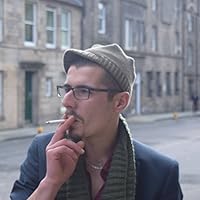
Mois Benarroch is one of the most enigmatic figures in today's world literature. Born in Morocco, his writings are rooted in the country's landscapes and history; as a Sephardi Jew he travels the world of Jewish literature; and as in Israeli living in Jerusalem he incorporates the day to day life and politics of his country. A prolific novelist and poet who writes in three languages he never sets for one secure path and is always exploring new ways to make his literature a fresh one with a long time vision. His poetry is one of compassion, social-political fight, and human. Multicultural by force, where others take multiculturalism as an idea, his life is forced to live within cultures. His novels take us from literary travel, to science-fiction, time travel back and forth, and a view that encompasses the past and the future, the relationships between Jews and Muslims, the life within cultures and the tragic fate of Christian-Jewish relations, always living a place for hope a belief in better days to come.
Known mainly as a poet in the English language world, thanks to a massive support from independent writers many of his novels are seeing light in English. Gates to Tangier, The Cathedral, Muriel, the Nobel Prize, Lucena, Raque Says (Something Entirely Unexpected), have been published in 2015 and many more are on their way in the next year.
A best-selling novelist in Spain, an award winning poet in Israel, and often featured in the bestselling list of poetry books sold in amazon, now is the time to discover this old new writer with more than 30 books to his name.
Mois Benarroch was born in 1959, and has been awarded with the prestigious Amichay poetry prize in 2012.
"GATES TO TANGIER/EN LAS PUERTAS DE TÁNGER is not primarily a critique of the marginalization of the Sephardim in Israel, but rather an exploration of the Moroccan component of Sephardic identity. The Benzimra's pilgrimage to Tangiers, however is not suggesting that this Moroccan component is the essence of Sephardic identity. Benarroch follows Khatibi's bilingual paradigm in suggesting that identity is expressed in the intersection of languages. At one point in the novel, Alberto reflects on the significance of his own bilingual écriture... Unlike Bendahan, who translates Sephardic identity as ultimately European, the Sephardic communities are after all "embajadas españolas" Benarroch explores the Moroccaness of Sephardic identity as it is rearticulated, deferred, by Spanish and Hebrew... The search for the missing brother represents the promise of a stable identity, a mirage that in EN EN LAS PUERTAS DE TÁNGER is constantly metamorphosing. Toward the end of the novel, we find out Yusuf was injured during his circumcision and the doctors decided to treat him with hormones transforming him into Zohra Elbaz. While in Tangiers, Zohra runs into Fortu/Messod and they spend the night together at fortu-Messod's hotel. Benarroch has Zohra run into not one, not two, but three Benzimra men." Adolfo Campoy-Cubillo. Memories of the Maghreb: Transnational Identities in Spanish Cultural Production,
Mois Benarroch nació en Tetuán, Marruecos en 1959. A los trece años emigra con sus padres a Israel y desde entonces vive en Jerusalén. Empieza a escribir poesía a los quince años, en inglés, después en hebreo, y finalmente en su lengua materna, el castellano. Publica sus primeros poemas en 1979. En los años 80 forma parte de varios grupos de vanguardia y edita la revista Marot. Su primer libro en hebreo aparece en 1994, titulado "Coplas del inmigrante". Publica también dos libros de cuentos, varios libros de poemas en Hebreo , Inglés y Español, y cuatro novelas. En el 2008 es galardonado con el premio del primer ministro en Israel. En España ha publicado el poemario "Esquina en Tetuán" (Esquío, 2000) y en 2005 la novela "Lucena" (Lf ediciones). En el 2008 la editorial Destino publica la novela "En Las Puertas De Tánger"que llegó al TOP5 en Kindle Espa
(The review is originally published in OnlineBookClub.org)
I am sitting patiently in a remote corner at Glasgow airport, waiting. I am more than halfway through Mois Benarroch’s novel, Keys to Tetouan. The story follows the Benzimra family tree and its branches stretching to different parts of the world, ever since 1860. It traces the family’s lineage down to their very roots, to the city of Tetouan, to their Jewish origins.
I try to focus on the book’s ending as much as I can, though all I can really think about right now is my own life. I am going home. For years I have been trekking the foreign lands of the world. I am aware that after all those years, besides my mother who is eagerly anticipating my return, there is no one waiting for me on the other side, home. The people from my past have either deserted, just like me, or are long dead. And while I’m waiting for my plane, I sense a familiar feeling slowly overwhelming me, the same feeling of anxiety I felt when I first left home, the same feeling of estrangement and ‘otherness’ most of the characters in the novel experience on departing from Tetouan.
The year is 1492. King Ferdinand of Spain issues a decree requiring all Jews to either convert to Catholicism or leave. Most of them convert, others leave. While many of them scatter around the world, a small group crosses the Strait of Gibraltar and settles down in Morocco.
We call this place Tetouan after the late Mois Benzimra that settled in this Mediterranean island exactly fifty years ago. He took fifty women that gave birth to four hundred and fifty children, and they in turn brought new women and men here and gave birth to five thousand descendants.
This we learn from one of the many narrators in Keys to Tetouan. I have no idea which one. I tell myself that, most probably, it’s not that important knowing the ‘who’, but the ‘what’ in this novel. But, now, as I am reaching the end, I find it extremely hard to connect the pieces of all those mini-narratives; those short, highly-personal, piquant vignettes related by different members of the Benzimra family, which constantly waver between the first- and third-person in search for their lost identity. And while I believe that this type of narrative best conforms to the overall fabric of the novel than any other, I am still cutting my hands on these shards of fragmented information, desperately trying to glue them together. Maybe they are just not meant to be glued. As far as I am familiar with Benarroch’s poetics from reading some of his other works (The Expelled, Gates to Tangier, The Immigrant’s Lament), he is often too fixed on analysing Jewish history and ethnicity to worry about the kind of trivia concerning structure and plot. Keys to Tetouan seems no exception.
"Read on," I urge myself. I am already on the plane and halfway home.
A few pages later, I read about these two brothers and their new scanner which can project any object’s past. The younger brother says to the older, Why should I care about your key, what will we watch with it, things that happened five hundred years ago, why would we be interested in that, I want to watch my life, my life. This obviously triggers some empathy on my side as I mentally visualise the Tetouanese Jewish diaspora. I recall the novel’s characters, their eternal motion, displaced forever, not belonging anywhere. Eventually, both brothers get hooked up and start now crying, now laughing at the past imparted by the key, the past of the Benzimra family of which they are also a part, the past that sums up the book itself.
As my plane starts descending, it is met by a worrying turbulence. Meanwhile, I am growing increasingly agitated and vexed not only by it, but also by the poor grammar, numberless syntactical incoherencies, and over page-long sentences, permeating Benarroch’s text ("on 1860," "anyplace," "merci," among many). It still seems more of a draft to me than a published book, and I wonder if there had been a professional editor at all assigned to review this work. A shame, really, because the content hides truly great potential. Then I read the penultimate page:
A man sits and writes, he uses an old computer.
Prologue (and a response to all of my critics): this book is ethnic … this book is Moroccan … this book is post-post-modern … this book is a book of protest, because it has a lot of butter in it … this book has a lot of grammar mistakes … this book is for Middle Eastern readers … this book is completely different from the next book.
And as I exit the airport I look around at the once familiar, though now exceedingly strange to me place I used to call home, and am once again entrapped in Benarroch’s notions of otherness. This feeling of relatedness at once consoles me and cheers me up, bringing a slight smile to my face. A well-deserved 2 out of 4.
Mois Benarroch who wrote the book,"Keys to Tetouan," wanted to explore the fragmented identity of the Sephardic Jews diaspora from Spain in 1492. Even though the story is ficitional, the narrative is based upon the memories of the past and present of his family. The author moved from Morocco to Israel as a young boy.The story is his attempt to keep his family's story from wading away into oblivion. His desire is to keep these memories for all generations.
The story is part of his Tetouan triology. This is the second book in the series. Even though the book is part of a triology, they are stand alone books. This is due to the fact of the non-linear style of writing of the author. The stories are not a straight narrative but go back and forth in time. The books are connected by their themes and memories of the Benzimra family. The series is comparable to James Michener's epic sagas.
The Benzimra family's story is of epic proportions. They are a Shephardic Jewish Clan. Their multi-generational history is the focus of this novel. The author begins the story with the family being expelled from Spain in 1492 during the Spanish Inquisition. This forces the family to emigrate to Tetouan, Morocco. Once the family settled in Morocco, the family began to disperse to other locations in the world,i.e.Jerusalem, Madrid, Paris, New York, and the Amazon.
The book should be at the top of your list of books to read if you have not done so yet. The story tellig in the book brings to life history and world events affect a family's own history. The story is relevant for today because it deals with the trials and tribulations of the immigrants dilemma. There is an universality the author achieves in this story. The story is told through flashbacks of different family members remembering the past. The story will catch your attention from the very being to the very end. This book richly deserves a five star rating.