

What do you think?

Considering the Horse: Tales of Problems Solved and Lessons Learned
Mark Rashid’s entertaining stories will introduce you to quiet solutions for resolving training problems from the horse’s point of view. Topics include ground manners, picking up feet, headshyness, trailer loading, mounting problems, balking, and head tossing. If you are about to buy a horse and definitely if you are about to sell your horse because of problems, or even if you only wish you owned a horse, this book will give you a whole new perspective into the horse’s point of view.
212 pages, Paperback
First published January 1, 1993
About the author
Mark Rashid
46 books140 followersMark Rashid (pronounced RASH-id) is an internationally acclaimed horse trainer known for his ability to understand the horse’s point of view and solve difficult problems with communication rather than force. He began working with horses at age ten, when he met the “old man,” who taught him to work with horses, not against them, and to listen to what the horse is trying to say. Mark’s clinics center on one-on-one work with horse and rider and are immensely popular with people around the world.
When Mark decided to study the martial art of aikido as a way to improve his horsemanship, he brought the same quiet determination to it that he exhibits in his work with horses. After years of practice, he has earned a second degree black belt in Yoshinkan aikido and now teaches the “way of harmony” in the local dojo.
Mark worked full time on ranches for many years gathering herds, managing stock, and training horses. When time permits, he still enjoys working on ranches near his home in Estes Park, Colorado.
Mark has been a guest on NPR’s The Horse Show and was featured on the Nature series on PBS. He is the author of nine books - Considering the Horse, A Good Horse is Never a Bad Color; Horses Never Lie; Life Lessons from a Ranch Horse; Horsemanship Through Life; Big Horses, Good Dogs, & Straight Fences; A Life With Horses; Whole Heart, Whole Horse; and his latest, a novel, Out of the Wild. He also has a solo music CD Song of the Prairie and enjoys singing and playing guitar with a local band The Elktones.
When Mark decided to study the martial art of aikido as a way to improve his horsemanship, he brought the same quiet determination to it that he exhibits in his work with horses. After years of practice, he has earned a second degree black belt in Yoshinkan aikido and now teaches the “way of harmony” in the local dojo.
Mark worked full time on ranches for many years gathering herds, managing stock, and training horses. When time permits, he still enjoys working on ranches near his home in Estes Park, Colorado.
Mark has been a guest on NPR’s The Horse Show and was featured on the Nature series on PBS. He is the author of nine books - Considering the Horse, A Good Horse is Never a Bad Color; Horses Never Lie; Life Lessons from a Ranch Horse; Horsemanship Through Life; Big Horses, Good Dogs, & Straight Fences; A Life With Horses; Whole Heart, Whole Horse; and his latest, a novel, Out of the Wild. He also has a solo music CD Song of the Prairie and enjoys singing and playing guitar with a local band The Elktones.
Ratings & Reviews
Friends & Following
Create a free account to discover what your friends think of this book!
Community Reviews
Displaying 1 - 30 of 44 reviews

March 5, 2015
Considering the Horse is by one of my favorite literate horsemen,
Mark Rashid
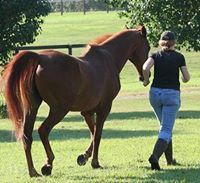
. I have a bunch of his books that I loan to young riders to get an awesome education about horse behavioral issues that frequently occur and methods to overcome them. I got this book back last weekend, and read it while I was watching a young lady do dressage bareback without saddle or bridle.
She was wearing a helmet though.
Each time I read his books, I find something that I have known for a long time, but forget to tell the young riders I work with until after the issue comes into a discussion.
His books should be in every horse lover’s libraries. Tricks he tells in his stories let you see into the horse’s point of view.
Another great book from Mark.
She was wearing a helmet though.
Each time I read his books, I find something that I have known for a long time, but forget to tell the young riders I work with until after the issue comes into a discussion.
His books should be in every horse lover’s libraries. Tricks he tells in his stories let you see into the horse’s point of view.
Another great book from Mark.

June 9, 2025
Przez całą książkę myślałam, że to będzie znakomite 10/10, ale ostatni rozdział, który rozdarł mi serce na pół dwa razy w ciągu paru stron, pokazał mi, to czego podobnie jak autor przed Johnem nie dostrzegał, w moim przypadku było to to, że od początku ta książka była 11/10 i na zawsze pozostanie dla mnie jedną z najważniejszych książek
ps: nigdy bym nie przypuszczała, że spłaczę się jak bóbr na takiej książce
ps: nigdy bym nie przypuszczała, że spłaczę się jak bóbr na takiej książce

July 19, 2007
I love this guy. His books are great. He tells stories about his life as a horseman and things he's learned from horses. He tries to see each situation from the horses point of view. This simple fact makes him an excellent trainer. he tells the stories in an entertaining and colorful way. I would like to re-read all of his books, I bet will learn new things each time.

February 9, 2025
I love the insights Rashid gives, and how we should consider the viewpoint of the horse in our training and handling of them.

January 17, 2021
This was another excellent book on horses and horsemanship by Mark Rashid.
I actually liked this one more than I liked the Passive Leadership one or the No Good Horse is a Bad Color. I thought the overall message was better than the other two as well. The message of this particular book was to consider the horse that you are working with, to think deeply about what the horse is trying to communicate rather than the problem that needs solving. I thought this was excellent, and something that can be applied to other situations. What is my conversation partner trying to communicate? What are the underlying issues are leading to the symptoms that I perceive to be a problem? I thought it was quite applicable and something that might prove useful to our society if we all did it. On the other hand, I thought it illustrated another point that Rashid did not make, but that Sowell did in his book, you can't consider the issue from the viewpoint of the other person until you really have a broad understanding of that person's way of thinking, environment, and history. Rashid didn't make that point, but it still holds true, he wasn't able to consider the horses until he had built up a sufficient amount of background knowledge about horses in general. He had to become an expert in horses before he could really begin to understand what kind of underlying issues led to undesirable symptoms and how to work them out. He needed to gather a library of techniques from other, more knowledgeable people in order to mimic them, and from less knowledgeable people in order to avoid them. He had to put the work in first in order to be able to apply it to each individual horse.
I thought that was a good lesson. There are broad aspects of human and animal nature that everyone can learn pretty easily, but you need to spend the time putting the work in to get to really understand humans and why they do what they do. You have to consider each as an individual in order to tease apart the issues that lead to the symptoms, and you can't really diagnose things broadly. Take head tossing. You can say 'this horse tosses his head and that's a problem'. But you haven't actually diagnosed anything. You've described the problem, but you don't know why the problem exists or how to go about fixing it. It's kind of like saying 'There is too much violence against women in this nation.' You still haven't actually diagnosed anything, you've only stated the problem. You don't know why it exists or how to go about fixing it. It's just sad because most people stop at the stating the problem phase, both with horses and with people, but that's only the beginning. You have to study and keep learning, gathering techniques and information, so that you can find the one that will address one of the underlying issues and then work out the solution in little increments.
It takes a lot of patience, I think that's why so few people even attempt it.
I actually liked this one more than I liked the Passive Leadership one or the No Good Horse is a Bad Color. I thought the overall message was better than the other two as well. The message of this particular book was to consider the horse that you are working with, to think deeply about what the horse is trying to communicate rather than the problem that needs solving. I thought this was excellent, and something that can be applied to other situations. What is my conversation partner trying to communicate? What are the underlying issues are leading to the symptoms that I perceive to be a problem? I thought it was quite applicable and something that might prove useful to our society if we all did it. On the other hand, I thought it illustrated another point that Rashid did not make, but that Sowell did in his book, you can't consider the issue from the viewpoint of the other person until you really have a broad understanding of that person's way of thinking, environment, and history. Rashid didn't make that point, but it still holds true, he wasn't able to consider the horses until he had built up a sufficient amount of background knowledge about horses in general. He had to become an expert in horses before he could really begin to understand what kind of underlying issues led to undesirable symptoms and how to work them out. He needed to gather a library of techniques from other, more knowledgeable people in order to mimic them, and from less knowledgeable people in order to avoid them. He had to put the work in first in order to be able to apply it to each individual horse.
I thought that was a good lesson. There are broad aspects of human and animal nature that everyone can learn pretty easily, but you need to spend the time putting the work in to get to really understand humans and why they do what they do. You have to consider each as an individual in order to tease apart the issues that lead to the symptoms, and you can't really diagnose things broadly. Take head tossing. You can say 'this horse tosses his head and that's a problem'. But you haven't actually diagnosed anything. You've described the problem, but you don't know why the problem exists or how to go about fixing it. It's kind of like saying 'There is too much violence against women in this nation.' You still haven't actually diagnosed anything, you've only stated the problem. You don't know why it exists or how to go about fixing it. It's just sad because most people stop at the stating the problem phase, both with horses and with people, but that's only the beginning. You have to study and keep learning, gathering techniques and information, so that you can find the one that will address one of the underlying issues and then work out the solution in little increments.
It takes a lot of patience, I think that's why so few people even attempt it.

October 22, 2015
This is primarily a book about techniques and problems regarding horse training. I am known as a horse nut. I have had horses all my life until recently and I grew up on a cattle/horse ranch. So needless to say I am very interested in the topic of the book.
Rashid discusses the most serious problems horses face that of the human attitude and temper. The author uses logical explanations and personal stories to explore and explain the root behavioral and training problems. The author tries to look at a situation from the viewpoint of the horse and proceed from there. Rashid attempts to explain why horses react in certain way and what you can do to counter it. The author adds a note of humor to his writing so it makes the book entertaining while the reader learns something. The book is well written. If you are a horse lover you will enjoy the book. I read this as an audiobook downloaded from Audible. Kevin Young does a good job narrating the book.
Rashid discusses the most serious problems horses face that of the human attitude and temper. The author uses logical explanations and personal stories to explore and explain the root behavioral and training problems. The author tries to look at a situation from the viewpoint of the horse and proceed from there. Rashid attempts to explain why horses react in certain way and what you can do to counter it. The author adds a note of humor to his writing so it makes the book entertaining while the reader learns something. The book is well written. If you are a horse lover you will enjoy the book. I read this as an audiobook downloaded from Audible. Kevin Young does a good job narrating the book.

August 27, 2017
An entertaining and insightful read about problems that horse trainer Mark Rashid encountered in his career, and the solutions he found for fixing them. Good ideas and insight in horse behaviour, with the encompassing approach of going from "why is the horse not behaving?" to "why is the horse doing this?" and "how can I help?". Since I read a newer version of this book, it contained annotations from the author who read his initial book twenty years later, and cleared up some of the techniques used, or just declared them outdated.

December 20, 2017
Probably my favorite Rashid, and I'm a little obsessed for the time being (having owned my horse for just a few months). I very much hope to develop into the rider my horse deserves, and his warnings and common sense approach feel reassuring. I will never ruin her with a trailer, for example. Thank you, Mark.
February 5, 2018
A wealth of insight and information.
I absolutely could not stop reading this book. It had wonderful and helpful information yet very entertaining.
Loved his writing style. Great story telling.
I absolutely could not stop reading this book. It had wonderful and helpful information yet very entertaining.
Loved his writing style. Great story telling.
September 28, 2020
I'd highly recommend any and all of Mark Rashid's books to anyone who loves horses and wants to learn sensitive and common sense inspired methods of human to horse interaction. I have been a fan for decades

May 12, 2021
Easy to read, but hits the spot
Mark writes in such fluent way that I had feeling I am there with him and old men. Impressed by his way of describing profound true...
Mark writes in such fluent way that I had feeling I am there with him and old men. Impressed by his way of describing profound true...

May 31, 2021
I love all Mark's stories and remedies for all sorts of problems he tells about in his books.
January 30, 2022
Absolutely loved this book so much! ❤️
August 8, 2022
I love Mark Rashid's books. They really make you think in the horse's perspective. Considering the Horse is a great way to start the whole series. Would definitely recommend all of the books.
July 6, 2023
It’s like reading James Harriot’s books but set in Colorado and all about horses. I enjoyed reading about his experiences.

January 31, 2025
Useful book, especially for those weekend riders.

March 22, 2025
i don't read nonfiction like ever but this one was actually interesting educational and easy to follow!! last chapter made me cry tho 😭😭

May 26, 2026
4.5 ⭐️s
August 1, 2026
Een geweldig boek dat je als amazone/ruiter zeker moet gelezen hebben.
December 31, 2021
Full of horse stories
I’m a new horse owner and I found this to be an extremely helpful introduction to the variety of issues that can arise, always with a compassionate solution.
I’m a new horse owner and I found this to be an extremely helpful introduction to the variety of issues that can arise, always with a compassionate solution.

May 15, 2008
In this book, Mark Rashid presents a variety of common issues horse owners deal with and ways he has handled them. He is a terrific story teller and follows a theory of non-confrontational horse handling. He presents things from the animal's point of view, and instead of bullying a horse into compliance, he creates an atmosphere of "conversation", where the horse knows he or she has been heard and understood.

October 3, 2013
Wonderful down to earth advice from the author who has spent his life learning to work with horses effectively by looking at motivation from the perspective of the horse. (That is a packed sentence because there are so many horse books out there that are too vague and talk about "feel" rather than practical methods and there are also so many horse people that still think dominating horses with tactics that amount to abuse, cruelty, or fear is the way to train them.)

November 30, 2020
Even more than the individual stories, the most important thing about this book is the tone and philosophy toward horses. Work slowly. Be patient. Listen to the horse. The horse is not "acting up," it's trying to tell you something. The horse is not the problem--humans are the problems, whether that's people who had the horse before you or something you yourself are doing.
And patience, patience, patience.
Also, Mark Rashid is a very good storyteller. That helps, too.
And patience, patience, patience.
Also, Mark Rashid is a very good storyteller. That helps, too.

January 31, 2021
Again, Mark Rashid does not disappoint. Just like with the last book, the feeling I have about this book is that I wish I had written the dog equivalent. This is a book all about solving horses’ “behavior problems” (almost all of which are caused by human expectations of a non-human animal), and this guy certainly has a wealth of experience for everyone else to learn from. This is another treasure trove of life experience that the rest of us are fortunate to have available to us.

October 20, 2009
Great stories and examples. I liked the new edition where he tells at the end of each chapter what he does differently now, from the first edition 18 years later. Should be a "must read" for anyone who has horses in their life. He is more than a horse trainer, more of a facilitator-- rescuing and rehabilitating horses, and training people.

July 10, 2010
Another great book from Rashid. Told in such an engaging, storytelling fashion. I love this guy's philosophy about training too. Never force. Look for the try. He truly cares about horses. Not quite as good as Horses Never Lie, but Considering the Horse is still a worthwhile addition to my horse training book collection.
February 12, 2011
This was a great book and a perfect reminder that horses perceive the world differently than we do and therefore should be considered when we are working with them. He touches on fixes to many common horse problems and I really enjoyed reading the stories of the various horses he has worked with.
June 9, 2014
This highly entertaining book is written in such a way that you learn from Mark Rashid's mistakes and successes. The stories will never leave you as they are funny, humbling and teach you something about horses. This book taught me alot about horse's minds and psychology, but it also taught me to open my mind to other possibilities behind a horse's behavior.

July 30, 2015
Another second edition from audible.com, so the reader/listener gets the bonus notes at the end of the chapters, of Mr. Rashid's twenty years of reflection and experience in helping horse and human communicate towards a successful partnership. Can't wait to get more of his fine works.
Ride on, and write on Mr. Rashid.
Ride on, and write on Mr. Rashid.
Displaying 1 - 30 of 44 reviews