

What do you think?

Masterpieces of Mystery and Suspense
Forty mystery stories include works by Edgar Allan Poe, Agatha Christie, Arthur Conan Doyle, Ellery Queen, Ross Macdonald, John MacDonald, Ruth Rendell, Dick Francis, P.D. James, Bill Pronzini, Donald Westlake, and Lawrence Block
651 pages, Hardcover
First published November 1, 1988
About the author
Martin H. Greenberg
920 books170 followersMartin Harry Greenberg was an American academic and speculative fiction anthologist. In all, he compiled 1,298 anthologies and commissioned over 8,200 original short stories. He founded Tekno Books, a packager of more than 2000 published books. In addition, he was a co-founder of the Sci-Fi Channel.
For the 1950s anthologist and publisher of Gnome Press, see Martin Greenberg.
For the 1950s anthologist and publisher of Gnome Press, see Martin Greenberg.
Ratings & Reviews
Friends & Following
Create a free account to discover what your friends think of this book!
Community Reviews
Displaying 1 - 18 of 18 reviews

September 5, 2018
This is a book that one reads over time since it is an anthology of 40 mystery/thriller short stories and is one of those "side" reads which you have when reading a more serious work. There is something here for anyone who is a mystery fan......from the legendary detectives (Sherlock Holmes, Lord Peter Wimsey, Nero Wolfe, et al) to the works of famous/not so famous authors which are not necessarily part of a series. As with any anthology, there are great stories, good stories, and fair stories but overall it is worth having it beside your bed for a late night read.

April 10, 2026
The struggle was real to get through this collection, which is a shame, given the abundance of famous names that are littered throughout. The problem is that those stories have been published elsewhere, and the ones from lesser known authors are nowhere near their class. I struggled through this tome for two months not because of its length, but because of the crushing disappointment I felt as I either whiteknuckled through drek, or skipped the stories I'd already read.
There are better anthologies out there, and you'd be well served to choose one of them instead of this 40-story monstrosity. The ones that stood out for me (not including re-reads from Holmes, Chesterton, Sayers, King, etc) are the following:
Help Wanted, Male - Rex Stout (Nero Wolfe short)
Twenty-one Good Men and True - Dick Francis
The Homesick Buick - John D. MacDonald
The Splintered Monday - Charlotte Armstrong
The Theft of the Four Spades - Edward D. Hoch (Nick Velvet short)
Lucky Penny - Linda Barnes (Carlotta Carlyle short)
Never Shake a Family Tree - Donald E. Westlake
A Thousand Dollars a Word - Lawrence Block
There are better anthologies out there, and you'd be well served to choose one of them instead of this 40-story monstrosity. The ones that stood out for me (not including re-reads from Holmes, Chesterton, Sayers, King, etc) are the following:
Help Wanted, Male - Rex Stout (Nero Wolfe short)
Twenty-one Good Men and True - Dick Francis
The Homesick Buick - John D. MacDonald
The Splintered Monday - Charlotte Armstrong
The Theft of the Four Spades - Edward D. Hoch (Nick Velvet short)
Lucky Penny - Linda Barnes (Carlotta Carlyle short)
Never Shake a Family Tree - Donald E. Westlake
A Thousand Dollars a Word - Lawrence Block

Currently Reading
February 17, 2025The Copper Beeches - 5 stars
The Blue Cross - 3 stars
The Submarine Plans - 3 stars
Necklace of Pearls - 4 stars
Death on the Air - 3 stars
Help wanted, male - 2 stars
Midnight Blue - 4 stars
Abraham Lincoln's Clue - 4 stars
The Fever Tree - 4 stars
Twenty-one good men and true - 2 stars
The Victim - 4 stars
Little Terror - 4 stars
The Dream is Better - 4 stars
The Homesick Buick - DNF
Danger out of the past - 2 stars
The Case of the Emerald Sky - 2 stars
Strictly Diplomatic - 3 stars
The African Tree-beavers - 2 stars
There are no snakes in Ireland - 4 stars
The Splintered Monday - 3 stars
The Dancing Detective - 3 stars
And so died Riabouchinska - 4 stars
Quitters, Inc - 3 stars
The 9-to-5 man - 4 stars
The man who collected poe- 5 stars
The Nuggy bar - 5 stars
The theft of the four of spades - 4 stars
The Parker Shotgun - 3 stars
Lucky Penny - 4 stars
Never Shake a Family Tree - 3 stars
The Marked Man - 4 stars
Have a nice death - 3 stars
The stolen white elephant - 2 stars
The cross of Lorraine -
The worst crime known to man - 4/5 stars
The honest blackmailer - 3 stars
Cat's-paw -
A nice place to stay -
Milady Bigamy -
One thousand dollars a word -
The Blue Cross - 3 stars
The Submarine Plans - 3 stars
Necklace of Pearls - 4 stars
Death on the Air - 3 stars
Help wanted, male - 2 stars
Midnight Blue - 4 stars
Abraham Lincoln's Clue - 4 stars
The Fever Tree - 4 stars
Twenty-one good men and true - 2 stars
The Victim - 4 stars
Little Terror - 4 stars
The Dream is Better - 4 stars
The Homesick Buick - DNF
Danger out of the past - 2 stars
The Case of the Emerald Sky - 2 stars
Strictly Diplomatic - 3 stars
The African Tree-beavers - 2 stars
There are no snakes in Ireland - 4 stars
The Splintered Monday - 3 stars
The Dancing Detective - 3 stars
And so died Riabouchinska - 4 stars
Quitters, Inc - 3 stars
The 9-to-5 man - 4 stars
The man who collected poe- 5 stars
The Nuggy bar - 5 stars
The theft of the four of spades - 4 stars
The Parker Shotgun - 3 stars
Lucky Penny - 4 stars
Never Shake a Family Tree - 3 stars
The Marked Man - 4 stars
Have a nice death - 3 stars
The stolen white elephant - 2 stars
The cross of Lorraine -
The worst crime known to man - 4/5 stars
The honest blackmailer - 3 stars
Cat's-paw -
A nice place to stay -
Milady Bigamy -
One thousand dollars a word -

July 14, 2017
A great mix of all the best mystery and suspense writers over the decades. I admit there were a few I didn't read all the way through, and a few that were unmemorable, but I didn't hit any of those until it got into the section of more recent authors. Out of all the numerous stories in this collection, I might've not finished a half-dozen, but they just weren't my tastes. Your mileage may vary. Still, I think you probably can't go wrong if you get your hands on a copy of this book. A very enjoyable way to pass the time. (And for mystery/suspense writers like me, a valuable source of research, too.)

October 10, 2011
Well I read 2 short stories out of it called the Honest Blackmailer and the Splintered Monday. They are pretty sad and confusing stories. They both have death in the stories. They are pretty difficult to read.
August 29, 2024
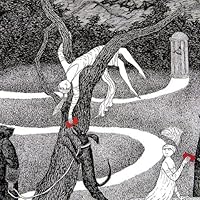
I always fall for the Edward Gorey illustrations, and this book is no exception. Unfortunately the contents inside are routine and seem to be picked not for literary merit but on the basis of the author's popularity among mystery fans. A long string of duds.

January 16, 2021
I read a LOT of mystery anthologies, and I like most of them. I've read over 200 such books in recent years, including many that proclaim to be the best stories of the century, of the decade, of certain kinds, etc. That's a lot of really good fiction. This book is one of the very, very best. Top 5 in best mystery anthologies there are. There are some really fine stories here. (Admittedly, having read all those other "best of" anthologies, I had already read about half of these stories.) There are no bad stories here, although there are a few whose topics I don't enjoy.
If you read mystery short stories, YOU NEED TO READ THIS ONE!
If you read mystery short stories, YOU NEED TO READ THIS ONE!
May 27, 2026
This book made me realize how hard it is to write a mystery short story. The solution to the mystery cannot be too obvious, but cannot be too convoluted. At the end of some of these stories my
reaction was HUH??
I sometimes think that in anthologies, the authors best work is passed aside for a lesser perhaps more unknown piece.
reaction was HUH??
I sometimes think that in anthologies, the authors best work is passed aside for a lesser perhaps more unknown piece.

August 11, 2020
A brilliant collections of short stories. Almost all the stories in this collection are good. The collection also can introduce a reader to all the masters of mystery , suspense and crime writers of the last 100 years.

June 5, 2021
Most of the stories were excellent; and I was familiar with most of the authors.

January 14, 2023
Often collections of short stories contain a few gems and the rest constitutes filler. Not THIS book. Every story was well chosen and a gem. Well worth the read!

August 14, 2014
It’s the late 1950s, Ginger works in a dime-a-dance joint in a rundown part of town, and someone is killing taxi dancers.
When two police detectives show up at the dance hall one night, Ginger falls for the taller one. “…if I’d had any dreams left, he coulda moved right into them.”
The cops only know the killer’s favorite song, the kind of ring he has on one finger and the bizarre way he leaves the dancers’ bodies. With nothing more to go on, they try a stake out. Luckily, Ginger is one sharp cookie and a step ahead of the police. Question is, will she be a step ahead of the serial killer?
This carefully crafted tale, The Dancing Detective, is classic noir by Cornell Woolrich and it’s one of 40 short stories in Masterpieces of Mystery and Suspense, a must for the library of every mystery and short story lover. The stories are short--10-20 pages--and not quite short enough to qualify as flash fiction. But they clearly demonstrate how a skilled mystery/suspense writer can weave a tale, create characters with depth and have you guessing right up to the end--all in a tiny package.
Woolrich’s story is a good example, combing rich characters and dialog with a snappy plot. Aspiring mystery writers: read this story. See how Woolrich creates a thick, gloomy atmosphere and tells us so much about his characters through the way they talk in addition to what they talk about. Woolrich, like many of the authors in the anthology, were or are known as much for novels as well as short stories. And again, like other authors, many of Woolrich’s stories became movies. One of his most famous was Hitchcock’s 1954 Rear Window.
I discovered this collection of gems in a used book store. It can be found easily online. See the note at the end of this review.
Writers from Poe to Sue Grafton and Lawrence Block are represented here. Stories of suspense, mystery and those featuring hard boiled detectives fill the pages. The collection’s anthologist, Martin Greenberg, introduces each story with a brief biographical sketch of the author and a few words about the selection.
The usual suspects are all here: Dorothy Sayers, Earl Stanley Gardner, Agatha Christie, Ngaio Marsh, P.D. James, Ross Macdonald, Ellery Queen, Dick Francis and John Dickson Carr. A few writers not known for mysteries also provide fascinating stories. Greenberg included Mark Twain, Ray Bradbury and Stephen King in the collection.
King’s Quitters, Inc. has Dick Morrison run into an old friend in an airport lounge, back when you could smoke in an airport. The friend has quit the habit for good, he tells Morrison, with the help of an organization that guarantees its results. In this suspenseful story, the method is the mystery and Morrison’s trials trying to stay off cigarettes can be most appreciated by ex-smokers.
In Arthur Conan Doyle’s The Copper Beeches, Holmes and Watson are approached by a governess who lives in a country house and works for an eccentric gentleman. She becomes fearful when her employers ask her to pose for them in certain ways.
Frederick Forsyth’s contribution is, There Are No Snakes In Ireland, a creepy tale of revenge set in Ireland and India.
Rex Stout offers, Help Wanted, Male. One of the longest entries in the collection, the story begins with a man who has received an anonymous letter saying he is about to die. He goes to Nero Wolfe for help. Archie Goodwin figures the man would need to look elsewhere:
"In the years I had been living in Nero Wolfe’s house…I had heard him tell at least fifty scared people, of all conditions and ages, that if someone had determined to kill them and was going to be stubborn about it, he would probably succeed."
The next day, of course, the man is killed and the police want to know what Wolfe and Goodwin know about it.
If you’re looking for a collection of new crime and detection stories, obviously this isn’t it. The book is 25 years old and many of the stories are decades older than that. If, however, you want to be challenged and entertained by some of the best mystery and suspense writers who ever pounded a typewriter, this is the collection for you, if you can find it.
Note on availability: The book is out of print, but used copies are available from many online sellers. I purchased my hardbound copy (International Collectors Library edition, listed above) from our local library’s used book store. A check of listings for the book at Amazon and other online stores yielded the names of three other publishers and page lengths. Most common was an edition from St. Martin’s Press at 672 pages. Minotaur and Doubleday are also listed as the publisher on some sites. Most available copies are paperback going for $1 or less; shipping charges vary.
When two police detectives show up at the dance hall one night, Ginger falls for the taller one. “…if I’d had any dreams left, he coulda moved right into them.”
The cops only know the killer’s favorite song, the kind of ring he has on one finger and the bizarre way he leaves the dancers’ bodies. With nothing more to go on, they try a stake out. Luckily, Ginger is one sharp cookie and a step ahead of the police. Question is, will she be a step ahead of the serial killer?
This carefully crafted tale, The Dancing Detective, is classic noir by Cornell Woolrich and it’s one of 40 short stories in Masterpieces of Mystery and Suspense, a must for the library of every mystery and short story lover. The stories are short--10-20 pages--and not quite short enough to qualify as flash fiction. But they clearly demonstrate how a skilled mystery/suspense writer can weave a tale, create characters with depth and have you guessing right up to the end--all in a tiny package.
Woolrich’s story is a good example, combing rich characters and dialog with a snappy plot. Aspiring mystery writers: read this story. See how Woolrich creates a thick, gloomy atmosphere and tells us so much about his characters through the way they talk in addition to what they talk about. Woolrich, like many of the authors in the anthology, were or are known as much for novels as well as short stories. And again, like other authors, many of Woolrich’s stories became movies. One of his most famous was Hitchcock’s 1954 Rear Window.
I discovered this collection of gems in a used book store. It can be found easily online. See the note at the end of this review.
Writers from Poe to Sue Grafton and Lawrence Block are represented here. Stories of suspense, mystery and those featuring hard boiled detectives fill the pages. The collection’s anthologist, Martin Greenberg, introduces each story with a brief biographical sketch of the author and a few words about the selection.
The usual suspects are all here: Dorothy Sayers, Earl Stanley Gardner, Agatha Christie, Ngaio Marsh, P.D. James, Ross Macdonald, Ellery Queen, Dick Francis and John Dickson Carr. A few writers not known for mysteries also provide fascinating stories. Greenberg included Mark Twain, Ray Bradbury and Stephen King in the collection.
King’s Quitters, Inc. has Dick Morrison run into an old friend in an airport lounge, back when you could smoke in an airport. The friend has quit the habit for good, he tells Morrison, with the help of an organization that guarantees its results. In this suspenseful story, the method is the mystery and Morrison’s trials trying to stay off cigarettes can be most appreciated by ex-smokers.
In Arthur Conan Doyle’s The Copper Beeches, Holmes and Watson are approached by a governess who lives in a country house and works for an eccentric gentleman. She becomes fearful when her employers ask her to pose for them in certain ways.
Frederick Forsyth’s contribution is, There Are No Snakes In Ireland, a creepy tale of revenge set in Ireland and India.
Rex Stout offers, Help Wanted, Male. One of the longest entries in the collection, the story begins with a man who has received an anonymous letter saying he is about to die. He goes to Nero Wolfe for help. Archie Goodwin figures the man would need to look elsewhere:
"In the years I had been living in Nero Wolfe’s house…I had heard him tell at least fifty scared people, of all conditions and ages, that if someone had determined to kill them and was going to be stubborn about it, he would probably succeed."
The next day, of course, the man is killed and the police want to know what Wolfe and Goodwin know about it.
If you’re looking for a collection of new crime and detection stories, obviously this isn’t it. The book is 25 years old and many of the stories are decades older than that. If, however, you want to be challenged and entertained by some of the best mystery and suspense writers who ever pounded a typewriter, this is the collection for you, if you can find it.
Note on availability: The book is out of print, but used copies are available from many online sellers. I purchased my hardbound copy (International Collectors Library edition, listed above) from our local library’s used book store. A check of listings for the book at Amazon and other online stores yielded the names of three other publishers and page lengths. Most common was an edition from St. Martin’s Press at 672 pages. Minotaur and Doubleday are also listed as the publisher on some sites. Most available copies are paperback going for $1 or less; shipping charges vary.

October 10, 2019
"The Copper Beeches," by Arthur Conan Doyle (1892): 7
- So, my first Sherlock Holmes story, which isn’t that strange, not being into mysteries and all. And that not-ness proves justified here, if this indeed be the end-all be-all of it all, for the story, while not all that bad, reads much like what it is, a fin-de-siecle genre story, not distinguished so much from many others, save for its enduring impact, somehow. In fact, there seems little actually timeless about this, as it, more than anything, underscores the elasticity of contemporary notions of social logic in the first place. For example, Holmes goes on a tedious exposition about why the countryside is a more terrifying place than the city, for rural living is decidedly more spacious than the city, where there is “no lane so vile that the scream of a tortured child … does not beget sympathy and indignation among the neighbors, and then the whole machinery of justice is ever so close that a word of complaint can set it going, and there is but a step between the crime and the dock.” The “logic” on display here is precisely the negative logic of a half-century later, in which the predominant post-Kitty-Genovese murder narrative foretold of an urban uncompassion precisely on account of the alienation (and assumed responsiveness) of a big-city environment in the first place. And all this, even, is to say nothing of the recent debunking of this account, which leaves us, hmm, where now exactly? Nonetheless, there’s some stuff to recommend it here: the economy of action [not of explication, that is], and I’m here thinking of the literally two paragraphs in which Holmes and Watson arrive at the house, enter the empty room, confront the father, and hear the attack by the dog--a sequence of events that a different author might’ve labored over for 8 pages. Here, quite compactly, Doyle moves the action along at the pace it’s going in his readers’ heads--something other genre writers seem to forget. At the same time, it shows his intuition that the action isn’t necessarily the “point” here. That lies elsewhere, whether in the Logic Displays or even the report between the principals. In that sense, then, what you do have to hand it to these kinds of authors for is exactly that, knowing precisely the story they’re writing, precisely the beats they’re hitting (or should be hitting), and precisely the appeals they’re playing towards--and this is often much more than could be said for even formulaic SFF writers, especially those, as we’ve seen here, who are clearly writing on commission for an anthology with only the theme or title in mind. In those cases, the dross just drivels out.
- So, my first Sherlock Holmes story, which isn’t that strange, not being into mysteries and all. And that not-ness proves justified here, if this indeed be the end-all be-all of it all, for the story, while not all that bad, reads much like what it is, a fin-de-siecle genre story, not distinguished so much from many others, save for its enduring impact, somehow. In fact, there seems little actually timeless about this, as it, more than anything, underscores the elasticity of contemporary notions of social logic in the first place. For example, Holmes goes on a tedious exposition about why the countryside is a more terrifying place than the city, for rural living is decidedly more spacious than the city, where there is “no lane so vile that the scream of a tortured child … does not beget sympathy and indignation among the neighbors, and then the whole machinery of justice is ever so close that a word of complaint can set it going, and there is but a step between the crime and the dock.” The “logic” on display here is precisely the negative logic of a half-century later, in which the predominant post-Kitty-Genovese murder narrative foretold of an urban uncompassion precisely on account of the alienation (and assumed responsiveness) of a big-city environment in the first place. And all this, even, is to say nothing of the recent debunking of this account, which leaves us, hmm, where now exactly? Nonetheless, there’s some stuff to recommend it here: the economy of action [not of explication, that is], and I’m here thinking of the literally two paragraphs in which Holmes and Watson arrive at the house, enter the empty room, confront the father, and hear the attack by the dog--a sequence of events that a different author might’ve labored over for 8 pages. Here, quite compactly, Doyle moves the action along at the pace it’s going in his readers’ heads--something other genre writers seem to forget. At the same time, it shows his intuition that the action isn’t necessarily the “point” here. That lies elsewhere, whether in the Logic Displays or even the report between the principals. In that sense, then, what you do have to hand it to these kinds of authors for is exactly that, knowing precisely the story they’re writing, precisely the beats they’re hitting (or should be hitting), and precisely the appeals they’re playing towards--and this is often much more than could be said for even formulaic SFF writers, especially those, as we’ve seen here, who are clearly writing on commission for an anthology with only the theme or title in mind. In those cases, the dross just drivels out.
![Profile Image for [on hiatus, probably forever] The rockabilly werewolf from Mars.](https://i.gr-assets.com/images/S/compressed.photo.goodreads.com/users/1592110608p8/94590224._SX200_SY200_.jpg)
June 2, 2019
Although neither mystery nor suspense are my primary reading genre (that would be horror), I don't object to reading them from time to time, and if there's one thing I can't resist it's an Edward Gorey cover. Honestly, I would buy a geology textbook if Gorey did the art for it. As for the contents, there were 3 stories that I had already read, specifically the King, Bradbury, and Doyle stories; and one that I had been wanting to read (The Man Who Collected Poe by Robert Bloch).
April 23, 2010
This is a great anthology of Mystery stories; it has a representative story from almost all of the great authors I teach. It's only flaw is that it is out of print and all but unobtainable.
June 6, 2011
Great. Loved the stories; great variety

February 14, 2012
A wonderful collection of murder mysteries told by some of the greatest, including Agatha Christy, Stephen King, Issac Asamov, Sir Arthur Conan Doyle, and more. Each one was interesting and fun.

June 22, 2013
Excellent collection of mysteries and suspense short stories, both contemporary and by deceased writers. I only read a select few, but they were great.
Displaying 1 - 18 of 18 reviews