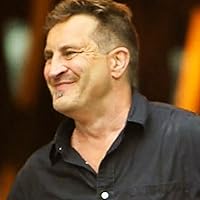
Philip Levine (b. January 10, 1928, Detroit, Michigan. d. February 14, 2015, Fresno, California) was a Pulitzer Prize-winning American poet best known for his poems about working-class Detroit.
He taught for over thirty years at the English Department of California State University, Fresno and held teaching positions at other universities as well. He is appointed to serve as the Poet Laureate of the United States for 2011–2012.
Philip Levine grew up in industrial Detroit, the second of three sons and the first of identical twins of Jewish immigrant parents. His father, Harry Levine owned a used auto parts business, his mother Esther Priscol (Prisckulnick) Levine was a bookseller. When Levine was five years old, his father died. Growing up, he faced the anti-Semitism embodied by the pro-Hitler radio priest Father Coughlin.
Levine started to work in car manufacturing plants at the age of 14. He graduated from Detroit Central High School in 1946 and went to college at Wayne University (now Wayne State University) in Detroit, where he began to write poetry, encouraged by his mother, to whom he later dedicated the book of poems The Mercy. Levine got his A.B. in 1950 and went to work for Chevrolet and Cadillac in what he calls "stupid jobs". He married his first wife Patty Kanterman in 1951. The marriage lasted until 1953. In 1953 he went to the University of Iowa without registering, studying among others with poets Robert Lowell and John Berryman, the latter of which Levine called his "one great mentor". In 1954 he graduated with a mail-order masters degree with a thesis on John Keats' "Ode to Indolence", and married actress Frances J. Artley. He returned to the University of Iowa teaching technical writing, completing his Master of Fine Arts degree in 1957. The same year, he was awarded the Jones Fellowship in Poetry at Stanford University. In 1958 he joined the English Department at California State University in Fresno, where he taught until his retirement in 1992. He has also taught at many other universities, among them New York University as Distinguished Writer-in-Residence, at Columbia, Princeton, Brown, Tufts, and the University of California at Berkeley.
Really strong selection of poems by the late Philip Levine, who has sort of a working class, middle American vibe and, often, subject matter that makes him considerably more approachable than, say, someone like James Merrill can often be (no knock on Merrill by the way-- he was a genius!); despite his having a foot in the everyday and mundane, though, Levine never becomes the sort of bore that Bukowski can often be (IMO of course), and he retains an inherent kind-heartedness that makes engaging with his poems feel good; "sincere" is often a loaded epithet when it comes to describing poetry, but if Levine touches the bad side of sincerity it is VERY occasionally and, the trade-off is that we get an absolute wealth of deeply affecting verse that ranges from nostalgic and loving to righteous indignation on behalf of the downtrodden, from mournful lamentations for lost loved ones to touching odes to an aging wife. I wish there was a full collected edition of Levine's poetry, because I'd snap it up in a second. As it stands, this is an excellent introduction to a poet well worth the time of anyone looking for something that keeps a foot in the real world without trading away the actual, you know, poetry in the process!
The best. That's my Motowner's assessment of Levine. When I went to college I had no idea what poetry was; at best, it was a bunch of bullshit about flowers and blue skies. When I read Levine, though, a new world opened to me. He wrote of those down on their luck seeking to scratch some dignity from their existence, auto factories, eccentric relatives, boxers, etc. My parents were bar owners, and these were the people I knew. Poetry came alive for me. Read this moving collection, and poetry will come alive for you too. No sentimentality, no bullshit, just the truth as one man has seen and lived it.
Levine's dark sanity can be both amplified and undercut by his near-wooden simplicity: only rarely do you come across a striking or beautiful passage that you'd want to memorize and keep with you. Although poetry is never really fictive, many of these feel like his recounting a mundane nightmare or addled midnight vision.
Here's a relevant passage from "To My God in His Sickness":
I wake and it's not a dream I see the long coast of the continent writhing in sleep this America we thought we dreamed falling away flake by flake into the sea and the sea blackening and burning
Listened to a podcast on Levine (The Poetry Radio Project) from poetryfoundation.org last night at our Poetry Book Discussion that was pretty darn great -- Ed Hirsch explicating They Feed They Lion and What Work Is to Kai Ryssdal, with Philip Levine reading each. Ryssdal tells of asking Levine to read each poem twice, in case there were any stumbles or gaffes, so they could cut together a clean version, and Levine responds "F@#$ no!" and then delivers masterful readings of each.
I bought this to sort of dip into Levine again after a long break, but about halfway through it, I gave up. Some of the early formal poems are quite strong, but after he settles into his dominant mode in the late '60s, most of it just becomes a series of continual prosy vignettes about his childhood, or a manual labor job, or his family--all of it sort of acceptingly bitter and, before too long, tedious.
Philip Levine is a master. His poems are grounded while at the same time ethereal and sometimes even elusive. I loved this book of selected poems and plan on reading more of him in the near future.