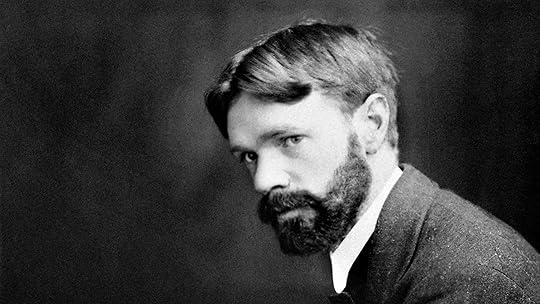
A portrait of one of the twentieth century's most radical and misunderstood writers follows Lawrence from his awkward youth in Nottinghamshire, through his turbulent relationship with Frieda and the years of exile abroad, to his premature death at the age of 44.
Quoting extensively from rarely seen letters and drawing on a wealth of original research, John Worthen tells Lawrence's story from the inside for the first following him from his awkward and intense youth in a Midlands colliery town; through his troubled and turbulent relationship with Frieda and his equally fiery friendships with figures such as Katherine Mansfield, Ottoline Morrell and Aldous through the years of exile abroad in Europe and New Mexico during which he produced his most vital and provocative writing; down to his premature death from tuberculosis in the South of France at the age of 44.
This biography offers a bold reappraisal of the man who, throughout his life, considered himself to be an outsider and whose place within literary and social history has remained challenging and changeable long after his death. What emerges is an intimate and absolutely compelling study of an individual in angry revolt against his class, culture and country, and engaged in a passionate struggle to live in accordance with his beliefs.
His home town is 30 minutes away from here and I often pass the house where he met his wife, it’s a ten minute walk away. His father was a miner, mine was a pit-top engineer. His mother came from Sneinton in Nottingham, so did I. After all that, the similarities are not so striking…
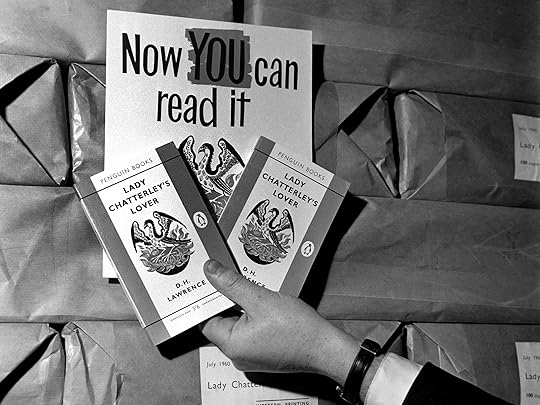
Lawrence’s reputation has been a roller coaster ride. He was an obscure novelist writing for a tiny elite all the way until Lady Chatterley’s Lover, written two years before he died. That one made a bundle. He knew it wouldn’t get published by a normal company, not with all those rude words in it, so he self published and the word of mouth made him a nice tidy sum, for the first time ever.
Thirty years later :
After he died some critics decided he was a genius after all and his reputation grew & grew and he was regularly considered to be one of the greats of English literature until 1970 when Kate Millett’s book Sexual Politics put the boot into DHL so comprehensively that by 2005 John Worthen is writing :
“Something of a national joke” was how one leading British journal recently referred to him, and many university departments of English literature in Britain and the USA have stopped teaching him….The reasons are simple. A contemporary American writer has declared : “He was a sexist and a racist, is there any argument?” And to that we can add the regularly repeated charges that he was a misogynist, a fascist and a colonialist.
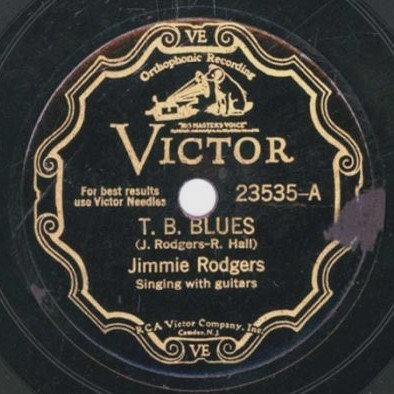
And I don’t think his reputation has really recovered. I was hoping that this biography would talk about all of that, and exactly what DHL’s philosophy was that enraged people, but Professor Worthen gets overwhelmed by the sheer raging energy of Lawrence, all that writing writing writing and travelling travelling travelling - Lawrence just didn’t stop until TB put a stop to him aged 44. As Jimmie Rodgers sang one year after DHL died
I've been fightin' like a lion, looks like I'm going to lose Cause there ain't nobody ever whipped the TB blues
And it was true, Jimmie died two years after that. (My father’s first wife died of TB too.) DHL wouldn’t have bought Jimmie’s record though, he insisted he just had a bit of bronchitis.
Lawrence is famous for 4 novels, Sons and Lovers, The Rainbore, Women in Love and the said Lady Chatterley’s Lover. He wrote a fistful more but he didn’t stop there, no, no, he wrote every day of his life, plays, short stories, novellas, essays, letters, poems, travel books, books about psychoanalysis and ancient sculpture, just give us all a break DH. We can’t keep up.
Frieda von Richtofen (yes, those von Richtofens), the German wife of a professor, left her marriage within weeks of meeting Lawrence. At that point she had three children, aged 12, 10 and 8. She missed them every day, she frantically and pathetically tried to see them, but her husband totally cut her off in a you-are-dead-to-us kind of way, the divorce settlement actually forbade any contact, and Lawrence himself would go into a rage if she ever mentioned them. Ah, the good old days.
DH and Frieda had the kind of marriage where they constantly argued and fought and insulted each other in front of friends and embarrassed everybody. They lived beyond all notions of embarrassment.
After they skedaddled from England, they travelled to Germany, Italy, France, Sardinia, Sicily, Ceylon, Australia, New Mexico, Mexico and back to France. He couldn’t keep still.
The most unattractive aspect of DH Lawrence was his tiresome and constant hatred of anything and everything with the sole exception of nature which he loved. Mostly he is like an early version of a Youtube or Instagram ranter who tells you that England Is Finished. Or he is a version of those amusing guys from the 20th century who walked around wearing sandwich boards which said THE END OF THE WORLD IS NIGH. He sounds like a pain in the neck, but on the other hand, many people really liked him. He did have a sense of fun, always willing to caper about and act the giddy goat.
He once asked me if I had heard the night noises of a tropical jungle, and then instantly emitted a frightening series of yells, squawks, trills, howls and animal “help-murder” shrieks
Then again, many people loathed him. He didn’t care. He was like a coelacanth with an urgent message for the world. He was one of a kind.
It's sad to say, but D.H. Lawrence, who along with Virginia Woolf, Doris Lessing, and Jeanette Winterson, is the most significant English novelist of the twentieth century, isn't getting read all that much anymore. Professor Worthen's arguments - with which I agree - indicate that the reason why this is so is because DHL has been done in since roughly 1970 by various members of theoretical schools that see his work as anti-feminist, sexist, and, in some cases, fascist.
The labeling of DHL, however, comes from an essential misreading of his work. As Professor Worthen rightly points out, DHL deserves to be read as a philosopher and Romantic - as a very introspective novelist who tries to work out his own problems and those of society in literature (DHL was extremely prolific and wrote compelling novels, short stories, plays, poems, letters, essays, nonfiction books, travel literature, etc.). One has to read all of DHL to understand fully the breadth and scope of his achievement and the way in which he knowingly creates cognitive dissonance in the minds of his readers. In other words, DHL writes to make you uncomfortable. Writers of transgressive literature - "outsiders" - tend to do that.
Professor Worthen's brilliant thesis is that DHL is now the outsider that he once was when he was still alive and publishing books such as The Rainbow, Women in Love, and Lady Chatterley's Lover. These three novels and many of DHL's other works demonstrate that he was an experimenter on the level of Joyce and Woolf, but because his prose was so accessible in its experimental qualities (he's a greater and more poetic Hemingway), it was easier for the authorities to ban and, in the case of The Rainbow, burn his work.
After experiencing a revival of interest that peaked in the 1960s, well after his death from tuberculosis and the 1928 original publication of Chatterley, due to the publication of the unexpurgated edition of Chatterley, DHL has gone into decline - largely because of Kate Millett's wrongful attack and misreading of his work in 1970.
Millett read DHL as a didactic and sexist writer and completely missed the point that most of his works make no claim for an ARRIVAL AT THE TRUTH. Rather, his books strive to be dialogic - that is, he writes them to make his readers think about sexual, gender, class, political, and other issues. It's DHL's faith in his readers' abilities to think through problems - to read novels, as he says in his novel, Kangaroo - as "thought adventures." His "thought adventure" philosophy of the novel should remind the reader of Plato and his Republic.
In addition to his knowing attempt to create cognitive dissonance, DHL is an extremely poetic writer. He thinks in images, so that his body of work reads in a similar way to Whitman's Leaves of Grass. All his writings - from The White Peacock to Apocalypse - show the development of a living, breathing human being who engages in the process of living. Now, we all know that this process, as Whitman taught us, entails the exploration of the contradictions - all the loveliness and ugliness - that dominate human consciousness. DHL is so radically experimental because he attempts to find a poetic language in which to convey the emergence of consciousness - that is, what it's like to be alive and grow in the world. Whitman, Kerouac, and Thomas Wolfe are the only other writers of whom I can think who work in a similar vein, and they, with the definite exception of Whitman, are outsiders now, still not accepted by the theory jocks and members of the academy who wrongly dismiss their achievement.
And what was DHL's achievement? What did he do that no one in the English novel had done before and, with the exception of Winterson, done since? He, as Professor Worthen correctly argues, tries to create a language in which he can write the life of the body. He begins to do this with The Rainbow - his first truly experimental novel, which got banned and burned in England in 1915.
Please read The Rainbow and its companion piece Women in Love, if you haven't already done so. You'll find work as risky as Joyce's and Woolf's best novels - and just as experimental. You'll also be blown away by DHL's brilliant use of poetic imagery, repetition, and rhythms to attempt the impossible - the re-creation of the life of the body in language. When you read these two books, you'll also notice that DHL is a very religious and spiritual writer, one who, in effect, tries to write new Old and New Testaments for the modern age. How bold, gutsy, and courageous can a writer get?
Professor Worthen's book, in closing, is a wonderful and accessible way to get you started with DHL and to understand DHL's importance as a prophetic writer, who really is the Blake of the previous century. Of course, it pales in comparison to the three-volume Cambridge biography, which was co-authored by Worthen himself, Kinkead-Weekes, and Ellis, but it's a good place to start.
Worthen’s biography is the perfect complement to reading Lawrence. I just finished The Rainbow and Women in Love having read Sons and Lovers a few months back and loved all three. Lawrence lives in and through his novels. He tries to resolve his deeply conflicted life by writing. Lawrence is always at odds with everyone around him, society and his own fate. Near the end of Worthen’s biography, we experience Lawrence’s final struggle movingly in his poem, “Ship of Death”. The poem and the book really capped off the Lawrence experience for me.
When I decided to read another D. H. Lawrence biography after so many years I chose that of John Worthen for a couple of reasons: as far as I can figure it's the most recent, it's by a dedicated Lawrence scholar who teaches Lawrence Studies at the University of Nottingham near Lawrence's birthplace, and its condensed format into a single volume from Worthen's earlier 3-volume biography made it a manageable and affordable read. I chose well. This is comprehensive biography, informative on the events of Lawrence's life and deeply analytical of everything he wrote. It's also thoroughly engaging; there's not a moment of this book that bored me or made me want to hurry on past it. Instead, I was inclined to read slower and slower, fearful of missing something. And what I especially liked was Worthen's generosity toward everyone around Lawrence. None of those people, especially not Lawrence, were perfect, yet Worthen writes about their sins, foibles, and lapses of character with understanding, acceptance, and even forgiveness where needed.
Lawrence thought of himself as an outsider. Once he recognized himself in that way he deliberately wrote material he knew would challenge conventions of taste in order to help maintain his outsider status. Part of it was, I suppose, his sensitive artistic nature out of tune with his origins in the coal fields around Eastwood and Nottingham in the English Midlands. Part of it was his insistence on always testing the boundaries of what was publishable at the time of his early novels. He's rightly famous today for Sone and Lovers, The Rainbow, and Women in Love, but in his day they were risky and difficult to publish. And he also fell outside British society during WWI when he and his German wife Frieda were living along the Cornish coast. The locals were unreasonably suspicious of the couple. They were suspected of being German spies, of sending signals to German boats lurking offshore. The nagging accusations brought government investigations down on them. Feeling hounded, they retreated to London and after the war left Britain, never to live there again.
As outsiders they traveled. Lawrence is well-known as a peripatetic, too. Early on he wanted to live in the U. S.. He was more easily published there, and he instinctively knew he could write there. Following stays of varying length in Italy and Sicily, in Ceylon, and Australia, he found agreeable company, climate, and landscape on a ranch a few miles north of Taos, New Mexico. That was the place where he wanted to live and work, and he returned to it a couple of times. But the regulations of the U. S. visa system combined with the onset of his active tuberculosis prevented his making it a permanent home. His 2d 6-month visa at an end, he left knowing the immigration authorities would never allow him with his tuberculosis to return. Lawrence's tragedy, aside from the disease itself, was his loss of America.
When I was reading Lady Chatterley's Lover in my late teens I suspect I may have angled my nose in the proper priggish position as I declared defensively, "Well, it's really about class, you know." It's an argument I probably repeated across all those years when I insisted on seeing every filmed adaptation of the novel. Lawrence wrote Lady Chatterley's Lover in Italy following his leaving Taos, and Worthen discusses it at length through 2 chapters. The attention is warranted the only really successful novel Lawrence ever wrote, the one which earned him more money than all his other works combined. It's Worthen's judgment that the novel's evolution through its 3 versions moved from its beginnings as a novel of class differences to the love story of Constance and Mellors. He makes a wonderful story out of its composition and publication. I'd not known before that its 1st edition was a private one paid for by Lawrence and sold by subscription. Parts of how it came to print involved Maria and Aldous Huxley helping to type the manuscript and ended with printing and distribution handled by a bookstore owner in Florence named Guiseppe Orioli.
The entire biography is a well-told story. It's worth spending time on. Even if you have no particular interest in Lawrence but just like biography, this is a good one. If you love Lawrence's writing, what Worthen has to say about his sources and inspirations will interest you. All of his work was autobiographical in some way. Friends who were in Lawrence's orbit came to expect he would write about them, and he did. One of his strengths is that he was able to capture all of us in the end.
Worthen painstakingly relays the professional details of Lawrence's life, accumulating details about his working processes for dozens of works as well as the chronology of his travels and interactions with other writers, socialites, and friends. However, the depiction of these friends often appears biased and unsubstantiated; Worthen often discredits Lawrence's associates when they voice negative opinions about him or his wife, Frieda, without providing any specific explanation as to why. Worthen also tends to assume too much about how Lawrence and friends "must have" thought or behaved in particular situations when he should really leave such matters open-ended; the reader can accept that there are just some things we will never know about the details of one's personal life. Apart from these missteps, however, one can see that Worthen has thoroughly researched Lawrence's life, and can account for virtually every month between his birth in 1885 and death in 1930 - an undeniably impressive accomplishment.
Although I've never really taken to his novels I've felt an involvement with DH Lawrence ever since - forty years ago - I was involved in making sure the small corner shop which is his birthplace and the surrounding miners' housing were kept for posterity and not demolished. I've been back to Eastwood twice recently to walk around the area - what he called those 'unpopular' squares of housing, built about 150 years ago, now only partially preserved as half had been demolished before I was involved.
Worthen's book keeps Eastwood as a reference point - as Lawrence did - right until his premature death, even though in the second half of his life he only went back there two or three times. It's a fascinating account, by probably the Lawrence expert, which not only seems to capture Lawrence's spirit but shows clearly how his writing emerged and developed. It gave me a new respect for Lawrence as a man, in spite of (or perhaps because of)his complexities and contradictions.
The life and works of one of Britain’s most complex literary geniuses dealt with sympathetically yet fairly. Lawrence - and his more often than not torrid relationships with family and peers (and the way that they influenced his writing), make for a fascinating biography.
An excellent biography of Lawrence, showing his 'outsider' status, yet also his need for human connection. The book shows how Lawrence's life goes into his work, and how his ideas change over time. This, and Frances Wilson's book, should be read by anyone interested in Lawrence.
Helpful book, I thought, putting forward a neat nutshell view of DHL. I've never read a complete biography of him, and for the first time I got a fuller picture of the vicissitudes of this combative personality. He did not come across as specially engaging - certainly, I'd be on my guard were I to meet him: sharp-tongued, curmudgeonly, strident - I wouldn't want to risk any of that, in fact I'm probably exactly the sort of mild middle-class bloke DHL would not take to.
Be that as it may, I did struggle with the early years up to the point he met Frieda, largely because Worthen gave me a distinct impression of the claustrophobic nature of Lawrence's life and its tortured and tortuous frustrations with the pettinesses of England and, among others, its attitudes to sex. I found DHL's pre-Frieda life dispiriting. But then, that was largely Worthen's point, and it explains something of the ungoverned wildness of DHL's behaviour after his marriage and his preference for foreign climes (as does his TB and the search for a climate where he could breathe easily, physically as well as morally). Worthen's chapters about the wanderings of Mr and Mrs Lawrence were much more invigorating, and I could not but admire Frieda's capacity to move and move again with her permanently dissatisfied and temperamental husband. Living unattached is not, I think, for me, so I am in awe of the Lawrences' ability to move from friends to hotel to ocean liner, from one country to another, managing visas and uncertain finances, and then being able to write, edit, type up, dispatch manuscripts, deal with publishers and agents, and, apparently, not to flag.
Indeed, what Worthen had to say about Frieda was as interesting as what he had to say about DHL. She must have been a formidable woman - her photographs have always given me that impression, anyway - and the understanding she and Lawrence had about extra-marital relations seems to me impressive. They were committed to each other by something more important than sex. I like that. And Ernest Weekley and his mother were clearly so beastly to her, protecting her children from the moral corruption of their mother, and releasing in her all the misery and anger of frustrated maternal love. How cruel! - but of the times. It gave me a sense of what she gave up for Lawrence, and explains something of why 'The Virgin and the Gypsy' is such a compelling story.
And I liked the way Worthen explained for me why I prefer the later novels to the earlier ones. I've always felt I should admire 'The Rainbow' and 'Women in Love' more than 'Kangaroo' and 'The Plumed Serpent' and 'St Mawr'. If I have it right, Worthen suggests that Lawrence in America no longer felt the need to talk about how men and women should relate to each other, and became more interested in the way that humanity relates to the 'circumambient universe'. Not that I'm not interested in relations between men and women, but I am more interested in the way men and women relate to nature. I don't think it's necessarily more important, but I do think it's more important than we usually give it time for. I've always adored the last third of 'St Mawr', and have always found Rico insufferably prissy in his attachment to genteel civilisation, so I really enjoyed reading about DHL's time in Taos and at Kiowa and Del Monte.
I actually cried as I finished this one last night; I knew ol' DHL died of tuberculosis, but I had no idea how gruesome and desperately sad his final months were.
Lawrence is one of my favorite writers; his anthropomorphic descriptions and beautiful language are peerless. I have always admired his writing and the fact that he stuck to his philosophies about sexuality and the body despite his novels constantly being banned or suppressed on the grounds of "vulgarity" or "indecency." John Worthen's account is lyrical, balanced, and swiftly-paced. Often, biographers have a tendency to reduce their subjects merely to dates and facts. Worthen, however, makes Lawrence come alive to the point that you really feel as though you know him. I was so impressed with this book that I now intend to read not only more Lawrence, but also to tackle the three-volume biography of Lawrence, to which Worthen contributed the first volume. Lawrence was a brilliant man who also happened to be about 50 years ahead of his time. Worthen's title Life of an Outsider captures the way Lawrence felt throughout his life--and career.
On another note, I think Aldous Huxley must have been a great guy, having devoted so much time, energy, tenderness, and money to taking care of DHL in his final days. H.G. Welles, on the other hand, was King Jackass: four days before Lawrence died--while he was in a sanatorium, throwing up blood, unable to keep any weight on his body, in constant pain, and his body skeletal from the severe weight loss due to his condition--Welles had the audacity to tell him the pain was all in his head. What an pathetic loser! I was furious when I read about it last night, despite the event happening over 80 years ago. I suppose my anger speaks to Worthen's gifts as both a storyteller and a researcher.
If you are even mildly curious about Lawrence, read this book. If you just enjoy reading about Modernism, English culture, or even just the 1920s, read this book. Worthen has devoted much of his life to studying Lawrence, and his enthusiasm and breadth of knowledge certainly shine through. Excellent read.
Een van de beste biografieen die ik misschien wel ooit gelezen. Hoogleraar ' D.H. Lawrence studies' uit Nottingham heeft zijn hele leven gewijd aan de schrijver en kruipt diep onder zijn huid. Zelden zo'n inleveningsvermogen aangetroffen in een biografie. Wie geinteresseerd is in Lawrence, het strijd die begin van de twintigste eeuw nog gevochten moest worden tussen klassen en vooral ook voor de artistieke vrijheid (want Lawrence slechtte vele vooral seksuele taboes waardoor hij tijdens zijn levens altijd een paria is gebleven), en ondertussen een liefdes- en avonturenroman kan waarderen, lees dit boek over de mijnwerkerszoon die een van de belangsrijkste engelse auteurs van de 20e eeuw werd!
An interesting life the irascible DHL lead, adroitly if not excitingly told. Lawrence's trajectory from collier's son to enfant terrible of the inter-war literary culture, via New Mexico, Italy and points in between, struggling with poverty, unrequited passion and a quite awful wife, is the stuff of one of his novels. He was always trying to "write a new self into existence" , as he said "my great religion is a belief in the blood, the flesh, as being wiser than the intellect". he could also be amusing, talking about English cuisine he cites "inexcusable puddings", and beautifully lyrical; " It is the moon that turns the tides, The beaches can do nothing about it"