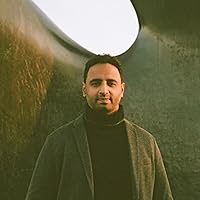
Psychologist and Jungian analyst Bud Harris, PhD, shares the best of his popular lectures and seminars in a concise guide that will lead you toward an authentic, satisfying life.
Harris demystifies Carl Jung’s classic principles regarding individuation, complexes, psychic structures, and consciousness, giving you the keys to self-knowledge and fulfillment.
With thought-provoking questions and engaging exercises from his lectures and seminars, Harris helps you to clarify your understanding of your greater Self and what you seek. Drawing on examples from his own life, he explains Jungian concepts and demonstrates how you can use your own struggles to heal your soul, develop a greater sense of satisfaction, and transform your life.
As Harris walks you through the process of becoming whole, he gives you the tools you need to awaken to your own potential, strengthen your personality, and become fully engaged and consciously alive. The ultimate goal is a creative transformation that energizes and empowers your life.
“Bud Harris is a lantern on the path—clear-eyed, big-hearted, and illuminating.” – Julia Cameron, author of The Artist’s Way
Bud Harris, PhD, is one of the most prolific Jungian authors of our time. He's authored and co-authored 15 books, and has been in the field of Jungian psychology for 30 years. At 82 years old, he has a long-standing practice in Asheville, North Carolina, which is still thriving.
Bud Harris defines himself as a husband, a father, grandfather, psychologist and Jungian analyst. Early in his life he earned a bachelor’s degree in management from Georgia Tech in Atlanta Georgia. After Tech, Bud became a businessman and then owned his own business which he operated successfully. However, in spite of his achievements, he found his life in the cul-de-sac that he explains in his book Sacred Selfishness.
Following a period of dissatisfaction and searching, he returned to school to change careers and eventually earned his Ph.D. in psychology.
After becoming a psychotherapist and psychologist, he experienced the call to further his growth by becoming a Jungian analyst. Bud moved to Zürich, Switzerland where he trained for over five years until he became a diplomate Jungian analyst. Bud explains that “In many ways my educational odyssey has been a reflection of the transformational pattern of my life.” Bud notes that writing Sacred Selfishness (his fourth book) was a labor of love. He says, “Jungian work becomes the path of a authentic life, a life that is fulfilling, passionate and full of love. And this journey is fueled by self-knowledge and awareness. This is the path that healed and transformed my life.”
“I also wanted to write the book I wish someone had written when I was struggling in my early thirties or at midlife. By this I mean a book for everyone that isn’t loaded with professional jargon. While I love the books by Jung and other depth psychologists, I found them difficult until I became schooled in the field.”
What a wonderful book! And when I read it - four years ago - it was going for a budget-friendly price. Harris most affably deals with some dynamite dreamwork, his own personal life (in incredible detail) and his patients' analysis.
Well, What's it about?
Simply put, about breaking through our own psychological barriers to a new personal freedom OUTSIDE OF THE BOX.
You see, that's what the great psychologist Carl Jung called the Process of INDIVIDUATION.
Nowadays, though, we're individuating the wrong way. Our lives are boxes, and we want OUT NOW. In fact we are seeking, day by day, a way out.
That's grabbing the stick by the wrong end! The Right End is the way IN. By going within, Jung says, we FIND out real Selves.
We will finish the job sobered and at peace. What's more, he says, you will know at last who you really ARE.
Only by going within do we find how to act - spontaneously yet honestly - In the World. No more box! Only a very personal freedom.
But that freedom will shake you to the core, as he describes his own journey within in his epochal The Red Book, followed by the incredible Aion. It'll scare you witless.
And it can BREAK you if you lie down and let it.
Gotta keep it moving, as Dick van Dyke says in his hilarious book on aging well.
Old age is not for sissies - best to be prepared.
Just read Jung's Memories, Dreams and Reflections: it brought him to the Brink of the Void.
And the LAST obstacle he killed was his SHADOW.
You know the Shadow - as Chogyam Trungpa says, it's your "24 hour Watcher" - your Resident Schoolmistress. It's what W.B. Yeats termed "no country for Old men." Yet Jung insists it CAN be killed.
IF, that is, you wanna avoid the Senior's Scylla and Charybdis - Homer's wandering rocks of either Dementia or Downright Dazed Mediocrity!
Individuation is a path of awakening, not a final stage or an idealized state. People transform from shedding their old skins. They undergo a continual metamorphosis or they decline in their refusal of dealing with realities. In individuation, one is conscious of living fully, aware of the unique patterns that run through their lives.
They grow from dealing with their personal struggles: illnesses, death, an underlying restlessness, emptiness. Something from within is calling for a change.
They will question themselves and their parents, teachers, friends, priests, and role models. Accepted wisdom doesn’t seem so wise anymore. They will be critical of their values, asking what love is, what violence is, what is true and false, whether the values that they’ve been taught are consistent, moral, or merely an illusion. They will dig at the turmoil of their existences, at what is meaningful, at what gives them a higher purpose.
Educational systems generally teach students to accumulate facts and ideas and the “right” types of belief. Students trained to build a body of knowledge, to test well, to question only what is acceptable to question.
Individuation isn’t about gathering more knowledge, but about letting go of old prejudices. It’s about cultivating wisdom through engaging in life fully, reflecting on experiences, and bringing what is learned into a new stage of living.
When people give up their roles as victims, when they can learn from and appreciate what is different rather than feel hostile toward outsiders, when they can “create an inner culture of questioning and seeking,” they’re living fully with their consciousness.
To do this, there first needs to be an acknowledgement of pain, suffering, illness, death, alienation, and so on. Rather than hiding or avoiding these aspects of life, in themselves and in others, they must be present to these realities.
It is hard to confront these ideas. People are often taught to function in acceptable ways and to shun what is deemed as wrong, from their families, cultures, and societies. Or they rebel from what they’ve been traditionally conditioned to accept and react negatively to what challenges them. What is perceived as unacceptable, what people refuse to identify with, is pushed into the shadow of their personalities.
It takes determination for a person to confront their complexes. People will usually resist what they consider to be taboo, unfavorable, or strange. Even though a complex can be a vessel for transformation, it’s easy to judge and complain and hide from unwanted feelings of anger, fear, guilt, and shame.
People refuse to see the same faults in themselves that they see in their enemies.
Negative complexes are painful to acknowledge. They can sidetrack one’s progress, embarrass or shame them, add to a present neurosis, or lead to physical troubles, if not worked on. Too much anger or fear, exaggerated feelings of self-righteousness, a judgmental attitude, are often signs of a complex.
Journaling, self-reflection, dream analysis, and mindful engagement, among other techniques, are daily practices that can help people to learn about their complexes.
Complexes can be big or small. To confront them directly is to reorient one’s consciousness. In order to transform as a human being, one must be willing to let go of past and present systems of belief. One must accept the death of their current values, ideals, goals, dreams, and attachments, in order to move on.
One can relate to a complex in a few ways. They can be unconscious of it, identify with it, avoid it, project it onto others, or confront it. If one is brave enough to confront their own complexes, they must accept its existence first. That doesn’t mean they should fall into fatalism or act from an urge of what they’re feeling.
Opening up to its existence, allowing themselves to experience its dimensions, will strengthen their character. Rather than attacking a complex (like the war on poverty, war on drugs), one should be compassionate toward themselves, embracing their feelings and thoughts. They can write an uncensored report of what they’re going through, reflecting on its history, without giving that report to anyone.
Journaling is helpful to bring a complex into a more objective light. One can remove its undefined form from within and then express it in external form. This can aid in psychological distance for self-reflection.
To accept a complex means to admit its “existence, power, and emotions” but that doesn’t mean to welcome or enable it. Many people, however, are afraid of what they’ve rejected from their identities, what they’ve suppressed for so long. They fear death and change. They’re resistant to growing up, finding independence from others, whether in the form of their parents or lovers, communities or cultures.
They don’t know how to be alone with themselves.
To discover the shadows within and integrate them, to discover that “inner relationships are the foundations for our outer ones,” to find courage through self-sacrifice, over and over, again and again, is a liberation from the past. A transformation of the old into the new.
The book is good for people who want to understand Jung's concepts but do not have a background in psychology, however, the explanation of the concept of individuation is weak.
I’m very interested in the Jungian idea if individuation so a whole book on just this aspect of Jungian theory seemed ideal. However I never felt that the concept was fully explained. Throughout the book the author talks about the importance of becoming conscious of, and working with, complexes. This is the crux of the book. But at no point did I feel it was explained quite how to do this, in fact I would say the message of the book is that you need to find a Jungian therapist with whom to do this. Some steps are outlined to do this yourself, but without a detailed example, I.e. the nuts and bolts, of how to go about this - what a complex might look like, how to identify it - and without this it is impossible to follow the steps.
Fast and easy read. However, to really understand it’s impact and wisdom the principles need to be implemented and lived by. The book is a guide for people to start uncovering how past events in their childhood shape the present and why we have the emotional unconscious reactions we do. Definitely a great book to uncover the self but I would strongly advise to reread.
essential reading for anyone who is searching for purpose
Clear signposts along the path to those seeking to understand themselves and aspects of their behaviour owned or disowned it will challenge your thinking on previous ideas about growth and self actualising highly recommend
Bud Harris explains in step by step action steps how to go deep into individuation, simple examples, and excellent contest for the difficult process. I highly recommend Becoming Whole for anyone searching more meaning in their life.
I am officially aboard the Jungian train, and loving the ride! I devoured this book. So resonate, so insightful, so easy to read. It also was hard to read in the sense that I can tell it is stirring up some work that needs to be done within me. Can’t recommend this highly enough!
I have found this book to be an ideal starting point for the Individuation journey. Bud Harris explains Jung's work in an accessible and practical way and gives one the exercises to practice. This book is invaluable!!
Bud Harris simplifies the concepts Jungian psychology . he easily connects the words and text to the individual . I experienced relatable insights to my own Life, past and present.