Course Lecture Titles 1. Let the Controversy Begin 2. The Kid's Got Talent! 3. Lady Macbeth 4. Resurrection 5. The Great Patriotic War 6. Repression and Depression 7. The Thaw 8. Illness and Inspiration
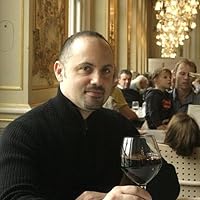
Robert M. Greenberg is an American composer, pianist and musicologist. He has composed more than 50 works for a variety of instruments and voices, and has recorded a number of lecture series on music history and music appreciation for The Teaching Company.
Greenberg earned a B.A. in music, magna cum laude, from Princeton University and received a Ph.D. in music composition from the University of California, Berkeley. He has served on the faculties of UC Berkeley, Californiz State University, East Bay, and the San Franciso Conservatory of Music, where he was chairman of the Department of Music History and Literature as well as Director of the Adult Extension Division. Dr. Greenberg is currently Music Historian-in-residence with San Francisco Performances.
Dmitri Dmitrijewitsch Shostakovitch was born in St. Petersburg on 12 September 1906. His familiy originated from Siberia. Both his parents lived in St. Petersburg as exiles.
As the story of composers go, Shostakovich was a late bloomer as he only showed some musical talent after beginning piano lessons aged 9 (his mother was his teacher). However, he certainly made up for "lost" time. For example, he often displayed a remarkable ability to remember what his mother had played during the previous lesson and would get "caught" playing the previous lesson's music while pretending to read different sheet music placed in front of him. As early as 1918, when Shostakovich was only 12 years old, he wrote a funeral march in memory of two leaders of the Kadet party murdered by Bolshevik sailors. One year later, he was admitted to the Petrograd Conservatory where he found a mentor who kept pushing him and ensured he'd receive the scholarships he needed. At the conservatory, he studied piano composition, counterpoint and fugue, as well as music history. In 1925, he enrolled in conducting classes and thus eventually conducted the conservatory orchestra in a private performance of Beethoven's First Symphony. That same year, his own music was played in Moscow for the first time but the reactions were ... cool. The breakthrough came with Shostakovich's First Symphony, which he had written for his own graduation later that year (FYI: he was 19). The performance was in 1926 and the audience was enthusiastic, even demandening an encore.
After graduating, Shostakovich worked as both a concert pianist and composer, but his dry keyboard style was often criticized. He nevertheless maintained a heavy performance schedule until 1930. Three years afterwards, he performed only his own compositions. In 1927, he traveled to Berlin after a competition, where he met the conductor Bruno Walter, who loved his First Symphony so much that he conducted the first performance outside of Russia later in the same year. A year after that, it was also played in the US. That year, Shostakovich wrote the Second Symphony, which is said to be a deeply patriotic piece. Simultaneously, he started writing his first opera, which was NOT well liked when first performed in 1929/1930. In the late 1920s and early 1930s, Shostakovich worked at a proletarian youth theatre. Although he actually did little work there, it shielded him from ideological attack. He spent much of this period writing his opera Lady Macbeth of Mtsensk, which was first performed in 1934. At first, it was successful, then considered too frisky and scandalous. In 1936, none other than Stalin himself came to a performance of the opera. Stalin and his entourage left without a word and a few days later, a Russian newspaper attacked the opera openly. They seem to have had it in for Shostakovich because the Pravda (the name of the newspaper) positively campaigned against him, belittling and attacking several of his works. So much so that it caused Shostakovich's commissions, concert appearances, and performances of his music to decline remarkably. His monthly earnings dropped from an average of as much as 12,000 rubles to as little as 2,000. 1936 also marked the beginning of the Great Terror, in which many of Shostakovich's friends and relatives were imprisoned or killed. This was the time his oldest kid, a daughter, was born. His second child, a son, was born in 1938. While the Pravda campaign was still on-going, the Fourth Symphony was published. However, he withdrew it (it premiered only in 1961) and only published his Fifth Symphony in 1937. This Fifth Symphony saw him return into everyone's good graces as it was more "conservative" in style (he had been heavily influenced by Mahler, changing his usual style for the Fourth). The premiere was in November 1937 in Leningrad and was a phenomenal success. At this time, he composed his first string quartet.
After originally cozying up to one another, Germany eventually invaded Russia and war broke out. Shostakovich wanted to join up but his bad eyesight and his favor with the higher-ups (him being considered a cultural treasure) meant he was denied service. Interestingly, a piece had been commissioned by the Party Secretary of Leningrad. Due to Winter War, it was never performed - until 2001. To compensate, he became a volunteer for the Leningrad Conservatory's firefighter brigade and delivered a radio broadcast to the Soviet people. The photograph for which he posed was published in newspapers throughout the country. Shostakovich's most famous wartime contribution was the Seventh Symphony. He wrote the first three movements in Leningrad while it was under siege and completed it in Kuybyshev (now Samara), where he and his family had been evacuated to. The Seventh Symphony was performed in Leningrad while the city was still under siege. The city's remaining orchestra only had 14 musicians left, which led the conductor to reinforce it by recruiting anyone who could play an instrument.
In Spring of 1943, Shostakovich and his family moved to Moscow where the Red Army was on the offensive. As a result, Soviet authorities and the international public were puzzled by the tragic tone of the Eighth Symphony, which in the Western press had briefly acquired the nickname "Stalingrad Symphony". In 1943, Shostakovich told his students that he was working on the Ninth Symphony but he stopped this capping stone of his "war symphonies" and it was actually lost until it was rediscovered in 2003! In 1947, Shostakovich was made a deputy to the Supreme Soviet of the RSFSR. In 1948, Shostakovich and many other composers were again denounced for formalism (he was accused of writing inappropriate and formalist music in a bid to rid Russia of "Western influences"). Shostakovich and the other accused were summoned to make public apologies in front of the committee following which their music was banned. Any privileges he or his family had were withdrawn. Shostakovich was among those dismissed from the Conservatory altogether. For him, the loss of money was perhaps the heaviest blow. In addition to that, there was the constant suspicion and surveillance. During the next few years, Shostakovich composed three categories of work: film music to pay the rent, official works aimed at securing official rehabilitation, and serious works "for the desk drawer". The last included the Violin Concerto No. 1 and the song cycle "From Jewish Folk Poetry" (Jews were state enemies by then). In 1949, Stalin decided that Russian artists needed to travel to the US as representatives of the state. He asked Shostakovich himself but was told by the composer "how can I represent Russia when almost all my work is banned?!" - he lifted the ban and then sent him. *lol* The trip was a nightmare culminating in a speech where he stuttered and sweated until a pre-recording was played and it was painfully obvious that he wasn#t allowed to speak freely. A stark contributor to Shostakovich's public humiliation was the writer Nabokov.
In 1953, Stalin finally died. This also marked the biggest opportunity for Shostakovich to get rehabilitated, which he furthered by publishing his Tenth Symphony. That same year, he also published several of the "desk drawer" compositions. In 1954, Shostakovich's first wife died. Since they had had an open marriage, Shostakovich was having affairs with two of his pupils at the time. He proposed to one of them after the death of his wife but was rejected. He re-married in 1956 but got divorced only 5 years later. The year his wife died, he wrote the Festive Overture, opus 96 which was used as the theme music for the 1980 Summer Olympics. (His "Theme from the film Pirogov, Opus 76a: Finale" was played as the cauldron was lit at the 2004 Summer Olympics in Athens, Greece.) In 1960, Shostakovich joined the Communist Party. The government wanted to appoint him Chairman of the RSFSR Union of Composers, but to hold that position he was required to obtain a party membership. So I don't believe he was asked or it was important if he actually WANTED to join at all. This event has variously been interpreted as a show of commitment, a mark of cowardice, the result of political pressure, and his free decision. However, he apparently told his third wife (whom he married in 1962) later that the event had reduced him to tears and that he had been blackmailed. It was around this time that Shostakovich became suicidal (coincidence? I think not). From 1962 on, he had further appointments within the party and was writing the homage to Lenin which he had been putting off for so long. It is now known as his Twelfth Symphony. Shostakovich's musical response to these personal crises was the Eighth String Quartet which he composed in only three days and subtitled "To the victims of fascism and war". The same year, Shostakovich turned to the subject of anti-semitism again when he wrote his Thirteenth Symphony (subtitled "Babi Yar", which is a ravine in Kyiv where a Nazis massacre took place). In 1965, Shostakovich actually protested a number of government decisions.
Late(r) in life, Shostakovich suffered a number of chronic illnesses - though he still refused to give up cigarettes and vodka. Apparently, Shostakovich suffered from ALS or a similar neurological illness as of 1950. Eventually, his right hand became unusable. After suffering a heart attack 1966, he was forced to finally quit smoking (which he had sone since his childhood!). It's therefore no surprise that his later works (such as the later quartets and the Fourteenth Symphony which was published in 1969) are his way of coming to terms with his own mortality. Especially considering that he had another heart attack in 1970, followed by another one in 1971. And he fell several times resulting in him breaking both his legs. In 1973, he was diagnosed with lung cancer. He died on 9 August 1975. To this day, we don't know if he died of heart failure or the lung cancer. A civic funeral was held and he was interred in Novodevichy cemetery in Moscow.
So was he pro Russia or critical of it? Well, I think he was pro Russia as a country, but never pro-government. However, we also all know Lenin and Russia then and now so openly criticizing the regime would have had him killed. I mean, as careful as he was, he was almost executed TWICE! According to credible sources, he was also a nervous wreck and getting more and more neuroses the older he got. Fear was a constant companion for him. Would a rabod follower of the government have reason to feel that way? Doubtful. But the regime was more than happy to use him for their propaganda (not for the first nor the last time).
I loved this lecture. I mean, I loved all of Greenberg's lectures so far, but this one was special in that it had even more historical and political background (very important here), an even more-extensive-than-usual bibliography, as well as a very poignant comment on potential political critics. That, combined with Greenberg's signature style and this really cool audio production of the lecture made for a wonderful reading experience.
Personally, I hadn't known Shostakovich actively. I knew the melodies used in the two aforementioned Olympics and apparently John Williams paid tribute to this composer in Star Wars' main theme, but it wasn't until I started playing cello and talked to my teacher about a concert I was gonna go to (where Sol Gabetta was playing one of the cello sonatas) that I heard the composer's name for the first time. Weird, huh?
Well, consider me thoroughly informed now. And trust me, I'm the richer for it. :)
I was pleased to discover, after booking airline tickets for a flight to Malta, that I had a 20-hour layover in Vienna. No one usually enjoys a particularly long layover, but in Vienna? And at no extra cost? Wunderbar! And of course while in Vienna one has to visit the Wiener Staatsoper, the Viennese opera. The performance that happened to coincide with my visit was Dmitri Shostakovich's "Lady Macbeth of the Mtsensk District". I was initially disappointed, especially because a Mozart opera would be performed the previous night and a Wagner one the following night ... but Shostakovich??
Bad luck. Or so I thought.
Shostakovich's "Lady Macbeth" is extraordinary but it's the story behind the opera that really amazes. Initially a huge success in Shostakovich's Soviet Union, the fortunes of "Lady Macbeth" (and Shostakovich himself) plummeted after Stalin attended a performance at Moscow's Bolshoi Theater. Not known as a particular kind or affable fellow, Stalin hated the performance and - right on cue - the Communist Party's propaganda newspaper, "Pravda" (which, quite ironically, translates as "Truth") published a scathing review, saying, among other hogwash, that the opera was "muddle instead of music" and went so far as to cast into doubt Shostakovich's future health. Such words were tantamount to a death sentence in Stalin's Russia and Shostakovich was, understandably, scared shitless.
Robert Greenberg, my very favorite Great Courses Professor, goes into detail on this and many other events in Shostakovich's fascinating life, along with plays pieces of "Lady Macbeth" and Shostakovich's various orchestral works. All in eight fascinating lectures.
If you're interested in music, Stalin's Russia, or the life of a musical genius under immense pressure, then I cannot recommend this enough. It is, simply put, fantastic!
And I have a Viennese layover to thank for it all.
A fascinating overview on Shostakovich which his life also reflected the tumultuous modern history of the Soviet Union. Some of his most notable works were discussed. As usual, Professor Robert Greenberg delivered another quality lecture that helped me to understand the composer's works better. The accompanying reading material helps to secure the information which I like to read after listening to each chapter.
Those who know me know that I’m are Shostakovich nut, and I admit to having a fair few seasons of Dimitri-obsession. He was such an extraordinary, humane, and deeply dignified man. Add a time when this could be said of very few of his contemporary compatriots in power. He found that the first 30 years of his adult career (having been something of a child prodigy) directly coincided with Stalin‘s rule.
Of course, there are big questions about how he navigated the shark-patrolled waters of Soviet rule and he did in the end buckle under pressure to join the Communist party. But I don’t think many of us, if any, are in a position to judge or condemn and what is clear is that his humanity was preserved through his compositions and his Extraordinary capacity for friendship.
Greenburg does a good job of leading us through the key moments. But it is necessarily brief and cursory and his music deserves a course double or triple in length. But, if his music is a mystery or you know little about his life then this is a perfect way in
Shostakovich will forever be the most important composer in my life. I studied composition at the Manhattan School of music under the tutelage of some incredible composers. But when I got to know the music of Dimitri Shostakovich, I discovered that studying his scores were lessons, unto themselves, on how to compose. Each symphony and each string quartet, an island of emotional torment wrapped in music
When I first discovered Shostakovich I was amazed by the depth at which the music brought me to. Then, as I explored his life, to try to understand more about him, I learned of the many tragedies that fell upon him decade after decade. His music began to mean even more to me.
I read his memoirs titled Testimony many years ago and recently decided that I, again, wanted more. I saw this audio course and I immediately downloaded it. I am so happy that I did. It is absolutely fantastic... I am not a great reader and listening to this lecture filled in some of the blanks for me that I could not recall from his memoirs.
After listening to this course, it is confirmed that Shostakovich remains my favorite composer of all time. He is not only the Mozart of our age but he is a beacon of hope, of survival. He is the lighthouse in the dark that shines when no other lighthouse will.
For anyone who is just discovering Shostakovich, please listen to symphony number 5, symphony number 10 (My personal favorite) and string quartet number 8, 10 and 15. You should also include Baba Yar (his 13th symphony).
Shostakovich felt so deeply and he was able to communicate that depth so clearly and without any ambiguity through his composition.
The world should never be allowed to forget Dimitri Shostakovich.
Rack another success up for Professor Greenberg. This is an excellent Great Course on Shostakovich.
I am not much on 20th century music, and while there are pieces here and there of Shostakovich, I have never liked much of his work. While I am still not going to purchase the famous string quartets of Shostakovich, I have gained a HUGE appreciation for his life and work.
His life mirrors the "life" of communism in Russia. He grew up free, so to speak, stepped out into a fascinating world of musical creativity in the early 1920's only to experience the Stalin purges and the death of many of his friends and colleagues as well as the crushing of creativity that did not mirror the Communist Stalin way. Born in 1906, he died in 1975. It is miraculous that he survived. Maxime, his son, later reflected that every day his father went out he took a bit of soap and a toothbrush. You never knew when you'd be whisked away to torture and exile, or torture and death.
What I found fascinating are the "public words" that Shostakovich "said" as part of his public duties, and how the West even now cannot understand that what "public words" were said did not reflect what Shostakovich actually believed. When Shostakovich was given a speech to read in New York at a musical event, the words the translator read had been scripted exactly by Stalin. The scripted speech attacked Stravinsky, who by that time was living in the United States, having escaped Communist Russia. When Stravinsky was questioned later as to whether he had comments about the things Shostakovich said about him, he exploded to the reporter. "Do you think he is free? There is no discussion, no comments with someone who is not free. He wrote what was given to him. The translator read what was given to him. None of them are free." (I'm paraphrasing)
A recent biography of Shostakovich, "Testimony" (by Solomon Volkov) was published after Shostakovich's death. The words were from interviews DIRECTLY WITH Shostakovich. He signed the transcribed chapters as they were done. Some passages within the chapters he signed as well. All this to let the world know what he really felt and meant. And at its publication in 1979, the West rejected it! It seems the Communist lies were so effective that they could not believe Shostakovich felt anything different about the prepared speeches he was given, and the forced agreement to dogma he despised.
This has spurred me to find "Testimony" and read it.
I found this course excellent and would recommend it highly.
At the end of the course, the prof said something to the effect that it was a world we could not imagine today. Well, yes, not only I could imagine it, I lived in it in Vietnam, right after the fall of Saigon in 1975! Just finished the last of the 7 courses (that I have) on Great Masters by Prof Greenberg: I'm sad. His courses are *that* good. He has the gift of teaching things in such a captivating way. These Great Masters courses have just the right mix of music and biographical details for me.
My god, what a lecture. Greenberg went over and above by showing Shostakovich in his time and place.
From the very start, Shostakovich is beset by some of the most horrible times in Soviet history, right out of the famines of Lenin, the atrocities of Stalin, and always, the hounding pressures of the politburo. We know, after the fact, that Shostakovich never felt in tune with the live and death finality of political necessity. He had a gun to his head, saying all the right things, attending all the right meetings, but he was rebellious.
Oh, he was REBELLIOUS. He was constantly in trouble -- and it was all because of the MUSIC, ITSELF. He made destructive commentaries, using very controversial stories, material, poetry, even making Stalin sound like a little roaring mouse, and Shostakovich came SO close to getting a bag over his head SO many times.
Amazing. Utterly amazing.
This little, nervous, shy man is a true wonder and an inspiration. And on top of all that, he wrote some REAL BANGERS. I always liked his symphonies when growing up, but now, I'm just filled with awe.
I really enjoy Robert Greenberg's courses on classical music. This is the third one I have listened to so far, and they've all been great. His enthusiasm for classical music is infectious, and as soon as I hear his voice I know I'm in good hands (to mix some metaphors as well as cliches).
I love the music of Dmitri Shostakovich, and his life is a fascinating mystery because his public statements (made for the purpose of not being shot as well as being allowed to continue composing music) are so frequently at odds with what he said in private. The Soviet system forced artists (as well as all intelligent people) to split their personalities into a public persona and a private one. Greenberg does a great job of showing the two faces of Dmitri Shostakovich as well as highlighting some of the the most important works in his oeuvre and explaining why they are important. He also plays excerpts of the music in question, which is great.
While I generally liked this course (as others by Greenberg), I also felt a little disappointed. It seems that the author focuses much more on politics that I would prefer and much less on the Shostakovich’s' music itself, or maybe I just expected it to be much more about music, than about life. There are many strong words and sentiments in the course that are rather dubious, like fully supporting Volkov's Testimony (it is highly contested, especially the notion that Shostakovich himself said most of the cited words). Or the unfortunate use of Radzinski’s works as a historic source (he is a publicist, not a scholar, and most prone to wild speculations). For those interested in a fictionalized account of Shostakovich's life I would recommend Julian Barnes "Noise of time". That said, when Greenberg starts talking about music itself, the course becomes much more enjoyable.
What it says in the title: the life and music of Shostakovich. In addition to covering the important musical compositions by Shostakovich and various professional aspects of his life, the lectures do a good job explaining the cultural and political situation. Yes, Greenberg draws on the controversial post-death memoir Testimony, which some people don't want to believe; Greenberg makes a good case that it was based on what Shostakovich actually said. It does help to have the details of various purges of the time of Stalin and even post-Stalin Soviet Union. It is interesting to consider the juxtaposition of Shostakovich's official pronouncements to kowtow to the commisars versus the messages his music actually conveyed.
Overall very good. My one criticism: the series spent a little too much time recounting details of Soviet history. A lot of it was necessary to give the context for Shostakovich's compositions and life and his private (and not-so-private) rebellions. But I think some of it could have been pared down.
Otherwise a fantastic overview of the life and music of a composer I knew very little about. Another great lecture series from Robert Greenberg.
I don't like Greenberg and think he is too accessible (if not unscholarly), and this biography was far too credulous about the Volkov book (relied on it, without a sustained argument in favor of its credibility). And was maybe tediously anti-Soviet, although perhaps that is exactly what the evil regime deserves. But I was glad for a lengthy treatment on the topic; I still don't know very much....
A very engaging set of lectures on Shastakovich’s life and music. I couldn’t help but contrast this real life with the fictional life “In A Gentleman in Moscow.” Real life was so much more challenging.
(Audiobook) Good biographical and musical overview of this composer’s life. A bit short on some bio details, but a good mix nevertheless. A nice starter/intro course to the man and his music.
Excellent, energetic, engaging lecture series on the life and works of Dimitri Shostakovich. The perfect combination of biography details, historical context, and musical analysis.
I knew very little about Igor Stravinsky. I think the only piece of his music I had heard was bits of.The Rite of Spring. I have listened to and enjoyed many other of Dr. Greenberg’s lectures, including his studies of Mozart, Verdi, Tchaikovsky, Bach amd Beethoven, so I decided to give this one a listen.
I was astounded by Stravinsky’s incredible diversity of musical expression, something Dr. Greenberg pointed out in his first lecture.
Some of them baffled or put me on edge, even with Dr, Greenberg explaining what Stravinsky was trying to do, but I did like many of them. I enjoyed the abstractness of Stravinsky’s consideration of music as a matter of order, and his enjoyment of smacking the listener in the ear by not proceeding where the listener expected to go.
I have never taken a class on music and cannot read or play it, but I’ve always enjoyed it and Dr. Greenberg’s lectures have made me enjoy it more.
Professor Greenberg points out a number of times in his lectures that the music he is telling you about is attainable these days with almost no effort or expenditure. He invites you to enrich your existence by attaining it and enjoying it fully. That extends to almost all information these days. You can read, hear, absorb almost anything at the local library. Can you afford to not know about the life and times of the great Maestro, Igor Stravinsky? At 80, fellow got to drunk at a White house dinner and had to leave. Bored by Kennedy?!? Went home to play records. Loved cowboy movies. Hung out with Aldous Huxley. And bothered folks with his music until the last. Did his own thing. Infinitely cool guy.
Teaching Company’s “Great Masters: Stravinsky his Life and Music” course lectures by Robert Greenberg was released in 2000. The course has 8 lectures that profile Stravinsky’s major compositions based on his Russian heritage, neoclassical perspectives, and spiritual values. Greenberg’s lectures focus on Stravinsky’s life events; and the lectures highlight how Stravinsky revolutionized musical composition and dominated musical innovation during the first half of the 20th century. Greenberg’s insights and teaching techniques are exceptional. After finishing the course, I followed Greenberg’s advise and purchased a full collection of Stravinsky’s music. (P)
I listened to this in preparation for reading Europe Central, which I've already heard on MP3. This lecture series features a lot of biography and history along with Shostakovich's music, because the two are hopelessly intertwined. I felt he gave some very good insight into Shostakovich, who is presented as a tragic figure. The lecturer can sometimes be a bit clownish, but he keeps things rolling right along to the end.
Two of Stravinsky's compositions are on my all time favorites list. However I have never known that much about his life or the rest of his music. Therefore I enjoyed learning more about him and his music. Greenberg again did a good job.
(I’m stingy with stars. For me 2 stars means a good book. 3 = Very good; 4 = Outstanding; 5 = All time favorites.)