

What do you think?

The Country Without a Post Office
"Translucent elegies 'for the city that is leaving forever' (Srinagar) from one of its sons, who also happens to be one of America's finest younger poets."―John Ashbery
Amidst rain and fire and ruin, in a land of ‘doomed addresses’, a poet evokes the tragedy of his birthplace. The Country Without a Post Office is a haunted and haunting volume that established Agha Shahid Ali as a seminal voice writing in English. In it are stunning poems of extraordinary formal precision and virtuosity, intensely musical, steeped in history, myth and politics, all merging into Agha Shahid Ali’s finest mode, that of longing.
Amidst rain and fire and ruin, in a land of ‘doomed addresses’, a poet evokes the tragedy of his birthplace. The Country Without a Post Office is a haunted and haunting volume that established Agha Shahid Ali as a seminal voice writing in English. In it are stunning poems of extraordinary formal precision and virtuosity, intensely musical, steeped in history, myth and politics, all merging into Agha Shahid Ali’s finest mode, that of longing.
98 pages, Paperback
First published January 1, 1997
About the author
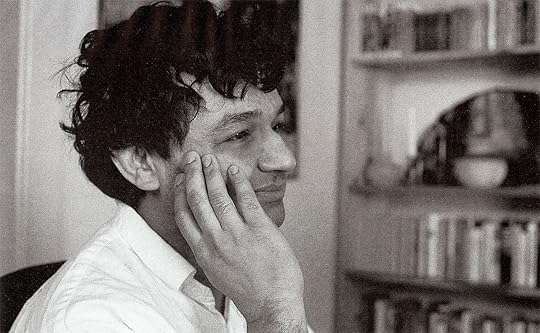
Agha Shahid Ali
26 books218 followersAgha Shahid Ali (आगा शाहीद अली) was an American poet of Kashmiri ancestry and upbringing.
His poetry collections include A Walk Through the Yellow Pages, The Half-Inch Himalayas, A Nostalgist's Map of America, The Country Without a Post Office, Rooms Are Never Finished (finalist for the National Book Award, 2001). His last book was Call Me Ishmael Tonight, a collection of English ghazals. His poems are featured in American Alphabets: 25 Contemporary Poets (2006) and many other anthologies.
Ali was also a translator of Faiz Ahmed Faiz (The Rebel's Silhouette; Selected Poems) and editor (Ravishing DisUnities: Real Ghazals in English). He was widely credited for helping to popularize the ghazal form in America.
Ali taught at the MFA Program for Poets & Writers at University of Massachusetts, Amherst, as well as creative writing programs at University of Utah, Warren Wilson College and New York University. He died peacefully, in his sleep, of brain cancer in December, 2001. He was laid to rest in Northampton, Massachusetts.
His poetry collections include A Walk Through the Yellow Pages, The Half-Inch Himalayas, A Nostalgist's Map of America, The Country Without a Post Office, Rooms Are Never Finished (finalist for the National Book Award, 2001). His last book was Call Me Ishmael Tonight, a collection of English ghazals. His poems are featured in American Alphabets: 25 Contemporary Poets (2006) and many other anthologies.
Ali was also a translator of Faiz Ahmed Faiz (The Rebel's Silhouette; Selected Poems) and editor (Ravishing DisUnities: Real Ghazals in English). He was widely credited for helping to popularize the ghazal form in America.
Ali taught at the MFA Program for Poets & Writers at University of Massachusetts, Amherst, as well as creative writing programs at University of Utah, Warren Wilson College and New York University. He died peacefully, in his sleep, of brain cancer in December, 2001. He was laid to rest in Northampton, Massachusetts.
Ratings & Reviews
Friends & Following
Create a free account to discover what your friends think of this book!
Community Reviews
Displaying 1 - 30 of 144 reviews

December 25, 2019
This collection is a mourning and a rejoicing voice symmetrically established by the poet. He draws a realistic picture of the streets, lakes, roads and ice with his words. He also tries to attract the readers' attention to the problems that lie on the land as well as in the minds of people of Kashmir. However, he misses the mass genocide of 1990 +- 2 years is a shame and at the same time a surprise!
January 9, 2021
Farewell
At a certain point I lost track of you.
They make a desolation and call it peace.,
When you left even the stones were buried:
The defenceless would have no weapons.
Who is the guardian tonight of the Gates of Paradise?
My memory is again in the way of your history.
At a certain point I lost track of you.
You needed me. You needed to perfect me:
In your absence you polished me into the Enemy.
Your history gets in the way of my memory.
I am everything you lost. You can’t forgive me.
I am everything you lost. Your perfect enemy.
Your memory gets in the way of my memory:
My memory keeps getting in the way of your history.
There is nothing to forgive. You won’t forgive me.
I hid my pain even from myself; I revealed my pain only to myself.
There is everything to forgive. You can’t forgive me.
If only somehow you could have been mine,
what would not have been possible in the world?
YouTube link for recitation of this complete poem:
https://www.youtube.com/watch?v=AjM6v...
--------------------
The Last Saffron
I will die, in autumn, in Kashmir,
Yes, I remember it, the day I’ll die,
I broadcast the crimson,
so long ago of that sky, its spread air,
its rushing dyes, and a piece of earth
On everyone's lips was news
Of my death but only that beloved couplet,
broken, on this :
" If there is a paradise on earth,
It is this, it is this, it is this. "
----------------
The Country without a Post Office
Again I’ve returned to this country
where a minaret has been entombed.
It’s raining as I write this. I have no prayer.
Then be pitiless you whom I could not save—
Send your cries to me, if only in this way:
I’ve found a prisoner’s letters to a lover—
One begins: “These words may never reach you.”
Another ends: “The skin dissolves in dew
without your touch.” And I want to answer:
I want to live forever. What else can I say?
It rains as I write this. Mad heart, be brave.
-------------
A Pastoral
We shall meet again, in Srinagar,
by the gates of the Villa of Peace,
our hands blossoming into fists
till the soldiers return the keys
and disappear. Again we’ll enter
our last world, the first that vanished
in our absence from the broken city.
----------
Ghazal
Where are you now? Who lies beneath your spell tonight
before you agonize him in farewell tonight?
Pale hands that once loved me beside the Shalimar:
Whom else from rapture’s road will you expel tonight?
Lord,, cried out the idols, Don’t let us be broken,;
Only we can convert the infidel tonight,.
God, limit these punishments, there’s still Judgment Day—
I’m a mere sinner, I’m no infidel tonight.
My rivals for your love—you’ve invited them all? This is mere insult, this is no farewell tonight.
And I, Shahid, only am escaped to tell thee—
God sobs in my arms. Call me Ishmael tonight.
------------
The Blessed Word : A Prologue
We shall meet again, in Petersburg
- OSIP MANDELSTAM
Let me cry out in that void, say it as I can. I write on that void: Kashmir, Kaschmir, Cashmere, Qashmir, Cashmir, Cashmire, Kashmere, Cachemire,Cushmeer, Cachmiere, Cašmir. Or Cauchemar, in a sea of stories? Or: Kacmir, Kaschemir, Kasmere, Kachmire, Kasmir. Kerseymere?
He reinvents Petersburg (I, Srinagar), an imaginary homeland, filling it, closing it, shutting himself (myself) in it. For there is the blesséd word with no meaning, there are flowers that will never die, roses that will never fall, a night in which Mandelstam is not afraid and needs no pass. The blesséd women are still singing.
Agha Shahid Ali
At a certain point I lost track of you.
They make a desolation and call it peace.,
When you left even the stones were buried:
The defenceless would have no weapons.
Who is the guardian tonight of the Gates of Paradise?
My memory is again in the way of your history.
At a certain point I lost track of you.
You needed me. You needed to perfect me:
In your absence you polished me into the Enemy.
Your history gets in the way of my memory.
I am everything you lost. You can’t forgive me.
I am everything you lost. Your perfect enemy.
Your memory gets in the way of my memory:
My memory keeps getting in the way of your history.
There is nothing to forgive. You won’t forgive me.
I hid my pain even from myself; I revealed my pain only to myself.
There is everything to forgive. You can’t forgive me.
If only somehow you could have been mine,
what would not have been possible in the world?
YouTube link for recitation of this complete poem:
https://www.youtube.com/watch?v=AjM6v...
--------------------
The Last Saffron
I will die, in autumn, in Kashmir,
Yes, I remember it, the day I’ll die,
I broadcast the crimson,
so long ago of that sky, its spread air,
its rushing dyes, and a piece of earth
On everyone's lips was news
Of my death but only that beloved couplet,
broken, on this :
" If there is a paradise on earth,
It is this, it is this, it is this. "
----------------
The Country without a Post Office
Again I’ve returned to this country
where a minaret has been entombed.
It’s raining as I write this. I have no prayer.
Then be pitiless you whom I could not save—
Send your cries to me, if only in this way:
I’ve found a prisoner’s letters to a lover—
One begins: “These words may never reach you.”
Another ends: “The skin dissolves in dew
without your touch.” And I want to answer:
I want to live forever. What else can I say?
It rains as I write this. Mad heart, be brave.
-------------
A Pastoral
We shall meet again, in Srinagar,
by the gates of the Villa of Peace,
our hands blossoming into fists
till the soldiers return the keys
and disappear. Again we’ll enter
our last world, the first that vanished
in our absence from the broken city.
----------
Ghazal
Where are you now? Who lies beneath your spell tonight
before you agonize him in farewell tonight?
Pale hands that once loved me beside the Shalimar:
Whom else from rapture’s road will you expel tonight?
Lord,, cried out the idols, Don’t let us be broken,;
Only we can convert the infidel tonight,.
God, limit these punishments, there’s still Judgment Day—
I’m a mere sinner, I’m no infidel tonight.
My rivals for your love—you’ve invited them all? This is mere insult, this is no farewell tonight.
And I, Shahid, only am escaped to tell thee—
God sobs in my arms. Call me Ishmael tonight.
------------
The Blessed Word : A Prologue
We shall meet again, in Petersburg
- OSIP MANDELSTAM
Let me cry out in that void, say it as I can. I write on that void: Kashmir, Kaschmir, Cashmere, Qashmir, Cashmir, Cashmire, Kashmere, Cachemire,Cushmeer, Cachmiere, Cašmir. Or Cauchemar, in a sea of stories? Or: Kacmir, Kaschemir, Kasmere, Kachmire, Kasmir. Kerseymere?
He reinvents Petersburg (I, Srinagar), an imaginary homeland, filling it, closing it, shutting himself (myself) in it. For there is the blesséd word with no meaning, there are flowers that will never die, roses that will never fall, a night in which Mandelstam is not afraid and needs no pass. The blesséd women are still singing.
Agha Shahid Ali

April 1, 2014
I had heard a lot about Agha Shahid Ali's poetry but never got a chance to read it until recently when I came across this book in a bookshop in Islamabad. The book is mainly set in Kashmir, a place with historical depth and rich cultural heritage, currently torn apart by occupation. Agha Shahid's poetry is about resistance, loss, nostalgia, hope and longing. His imagery is powerful and vivid and the repertoire of words and metaphors expansive. At certain points, he alludes to historical events that over time have shaped the consciousness of the Kashmiris as a people and a nation and have created memories that both haunt and console them. My favourite one is 'I see Kashmir from New Delhi at Midnight', which I found deeply moving. Anyone from the sub-continent who has some degree of familiarity with Kashmir as a region, can easily relate to the themes and happenings featuring in Agha Shahid's poetry. His poetry is a reminder that there are places on earth where people are brutalized and dehumanized and simply cannot exercise their right to self-determination. No matter what your nationality or ethnicity is, you need to read this book; it surely will make you more empathetic.

February 1, 2008
"My history gets in the way of your memory"

June 11, 2014
Poignant is the word for this. I'm pretty sure if one stares too long at the words it feels as if they're written in blood, not ink.
Beautiful.
Beautiful.

March 5, 2008
Among the grave subjects traveled through in this collection of Mr. Ali’s poems, which all stem from the political wars in his homeland of Kashmir, the most disturbing and affecting one for me is his inability to speak of his love and desire for other men. It’s ironic that, in his poems, Mr. Ali criticizes the government of his country for silencing the letters and voices of its people, examines the chasm between history and memory and repeatedly asks what is learned from the past, yet in his more personal poems (“Ghazal,” 40; “First Day of Spring,” 77; “After the August Wedding, in Lahore, Pakistan,” 89-91), can barely speak of the gender of his desired lovers, distorts the memory of intimate moments with dark imagery (as if desire for a man will lead him to every “door” and “street in Hell,” 40, 77), and never learns to let go of the beliefs which cause these feelings in him to be like a glass “filled/with pain” (89).
From a technical standpoint, Mr. Ali is superb. His use of progressive end rhyme schemes, so smoothly executed they are almost undetectable, is admirable. Throughout the book, his repetition of images and metaphors reinforces his themes beautifully. Although the language is dense and difficult at times, the poems are affecting enough that I found myself reading many of them twice, which to me is a good indicator of a strong poem.
From a technical standpoint, Mr. Ali is superb. His use of progressive end rhyme schemes, so smoothly executed they are almost undetectable, is admirable. Throughout the book, his repetition of images and metaphors reinforces his themes beautifully. Although the language is dense and difficult at times, the poems are affecting enough that I found myself reading many of them twice, which to me is a good indicator of a strong poem.

July 13, 2016
This is a collection of 27 poems about life in conflict-riddled Kashmir. Kashmir is a territory in the Himalayas that’s governed by India, but claimed by both India and Pakistan—and, it should be noted, has a significant population of residents that want to be part of neither country. In other words, there are some who’d like to see an independent Kashmir. However, at the moment Kashmir is one portion of one of India’s 29 states, Jammu and Kashmir—a state which is, itself, tripartite (Hindu Jammu, Muslim Kashmir, and Buddhist Ladakh.)
It’s a telling quote from Tacitus with which the author begins the collection. “Solitudinum faciunt et pacem appellant.” I won’t claim that I didn’t have to look this up, but it means: “They make a desert, and call it peace.” The first poem echoes variations on that quote.
There are a range of poetry styles within this collection, including: rhyming verse, free verse, poetic prose, and ghazal. A ghazal is a Middle Eastern style of lyric poem which has a pattern of rhyme and is metered to be set to music; there are several in this collection. Some of the poems are sparse and some are wordy, and variety is the order of the day.
The 27 poems of this collection are divided among five parts. The book is brief (under 100 pages), and it contains only a prologue and notes (some of which are interesting) with respect to ancillary matter.
This collection paints a portrait of war and life in a war-torn locale. It’s as much the latter as the former, The title poem, “The Country With No Post Office,” suggests the sapping nature of life where the institutions of governance and civil society have broken down.
I’d recommend this collection for those who enjoy poetry, but also for those interested in the conflict in Kashmir.
It’s a telling quote from Tacitus with which the author begins the collection. “Solitudinum faciunt et pacem appellant.” I won’t claim that I didn’t have to look this up, but it means: “They make a desert, and call it peace.” The first poem echoes variations on that quote.
There are a range of poetry styles within this collection, including: rhyming verse, free verse, poetic prose, and ghazal. A ghazal is a Middle Eastern style of lyric poem which has a pattern of rhyme and is metered to be set to music; there are several in this collection. Some of the poems are sparse and some are wordy, and variety is the order of the day.
The 27 poems of this collection are divided among five parts. The book is brief (under 100 pages), and it contains only a prologue and notes (some of which are interesting) with respect to ancillary matter.
This collection paints a portrait of war and life in a war-torn locale. It’s as much the latter as the former, The title poem, “The Country With No Post Office,” suggests the sapping nature of life where the institutions of governance and civil society have broken down.
I’d recommend this collection for those who enjoy poetry, but also for those interested in the conflict in Kashmir.

October 20, 2021
Not my cup of tea.
I liked the personification of Srinagar and Kashmir, but the abstract prose went above my head leaving no impression behind :|
Its me, not the book.
I liked the personification of Srinagar and Kashmir, but the abstract prose went above my head leaving no impression behind :|
Its me, not the book.

April 4, 2020
'Break their hands.' Will ours return with / guns, or a bouquet?Shahid's poetry blooms from a soil of sorrow and blood; an evocative hymn and lyrical balm for the wounds that Kashmir sustains.
My memory is again in the way of your history/ Your history gets in the way of my memory/ Your memory gets in the way of my memoryWhile the fruit of The Country Without A Post Office is its beautiful imagery and use of motifs, the flower it grows of lies in the heart of history. Written in the early 1990s, the poems in this collection are shaped by the conflict, bloodshed and occupation in and of Kashmir, as well as in the Balkans, thematically resound also with the diasporic experience and pain felt as if in the phantom of a severed limb.
The result is a poignant masterpiece reflecting the structural skill of a true-blooded poet, full of mournful allusions to culture and history, perhaps difficult to understand for those unfamiliar, but of the same evocative power and consistency as blood.

February 11, 2020
The sheer longing, grief and and love in here would have been enough on their own, but the lyrical verses and vivid imagery make this truly exceptional.
The Country Without a Post Office, City of Daughters and I See Kashmir from New Delhi at Midnight are a few I remember that stood out to me, though there were definitely more. Farewell ("My history gets in the way of your memory", oof) will stay with me for a long time.
Purely on form: I think this is the first time I saw Ghazals in English. Not yet sure how I feel about that, but they were pretty good as poems.
The Country Without a Post Office, City of Daughters and I See Kashmir from New Delhi at Midnight are a few I remember that stood out to me, though there were definitely more. Farewell ("My history gets in the way of your memory", oof) will stay with me for a long time.
Purely on form: I think this is the first time I saw Ghazals in English. Not yet sure how I feel about that, but they were pretty good as poems.

May 24, 2019
"My history gets in the way of your memory."
"Your history gets in the way of my memory."
"My memory keeps getting in the way of your history."
It feels like this book is written in blood.
"Your history gets in the way of my memory."
"My memory keeps getting in the way of your history."
It feels like this book is written in blood.

January 11, 2024
If only somehow you could have been mine,
what wouldn’t have happened in this world?
I’m everything you lost. You won’t forgive me.
My memory keeps getting in the way of your history. There is nothing to forgive. You won’t forgive me.
I hid my pain even from myself; I revealed my pain only to myself.
There is everything to forgive. You can’t forgive me.
If only somehow you could have been mine,
what would not have been possible in the world?
3/5★★★☆☆
This was a collection of beautiful, beautiful, heartbreaking, agonizing poems by the great Agha Shahid Ali and I loved, loved , loved it!
The style of his writing takes some getting used to but that's true for most of the great artists.
The poems I loved -I absolutely adored.
Ones I didn't? I have a feeling I didn't fully understand.
A re-read a few years later might raise the current rating.
what wouldn’t have happened in this world?
I’m everything you lost. You won’t forgive me.
My memory keeps getting in the way of your history. There is nothing to forgive. You won’t forgive me.
I hid my pain even from myself; I revealed my pain only to myself.
There is everything to forgive. You can’t forgive me.
If only somehow you could have been mine,
what would not have been possible in the world?
3/5★★★☆☆
This was a collection of beautiful, beautiful, heartbreaking, agonizing poems by the great Agha Shahid Ali and I loved, loved , loved it!
The style of his writing takes some getting used to but that's true for most of the great artists.
The poems I loved -I absolutely adored.
Ones I didn't? I have a feeling I didn't fully understand.
A re-read a few years later might raise the current rating.

December 11, 2020
In the lake the arms of temples and mosques are locked in each other’s reflections.
Have you soaked saffron to pour on them when they are found like this
centuries later in this country
I have stitched to your shadow?
in this country we step out with doors in our arms.
Children run out with windows in their arms.
You drag it behind you in lit corridors.
If the switch is pulled you will be torn from everything.
At a certain point I lost track of you.
You needed me. You needed to perfect me:
In your absence you polished me into the Enemy.
Your history gets in the way of my memory.
I am everything you lost. You can’t forgive me.
I am everything you lost. Your perfect enemy.
Your memory gets in the way of my memory:
I am being rowed through Paradise on a river of Hell:
Exquisite ghost, it is night.
Have you soaked saffron to pour on them when they are found like this
centuries later in this country
I have stitched to your shadow?
in this country we step out with doors in our arms.
Children run out with windows in their arms.
You drag it behind you in lit corridors.
If the switch is pulled you will be torn from everything.
At a certain point I lost track of you.
You needed me. You needed to perfect me:
In your absence you polished me into the Enemy.
Your history gets in the way of my memory.
I am everything you lost. You can’t forgive me.
I am everything you lost. Your perfect enemy.
Your memory gets in the way of my memory:
I am being rowed through Paradise on a river of Hell:
Exquisite ghost, it is night.

August 19, 2019
I don't understand poetry y'all. So the rating is nothing to do with the writing itself, but to do with my experience.

December 31, 2023
Agha Shahid Ali seems to have had a resurgence in popularity this last year. A biography came out (A Map of Longings) and web portals were bringing out his poetry again. I also saw bookstores in Delhi re-stocking his works.
I came across his work two years ago when one of the aforementioned web portals re-posted arguably his most famous ghazal- 'Tonight'. From there I went through a collection of his ghazals- 'Call me Ishmael Tonight' which I found quite agreeable. This collection too was not disappointing.
I bought this with my first pay cheque from one of the aforementioned bookstores in Delhi. The ghazal 'Tonight' (still my favourite of his works) also appears in this.
This book is what Mir, the Delhi poet, would have called 'Shahr-a-Ashob' ie. the lament of a city. It was the lament of Kashmir. For Shahid the 'Country' without a post office is Kashmir. According to the aforementioned biography of which I read excerpts- Shahid Ali was born in Kashmir and later migrated to America where he lived out his days. In America he was widely celebrated as a poet of longing, signifying a displacement which as I have come to understand (from migrating friends) is a prominent marker of the 'american experience'.
Here too he laments the situation of Kashmir and his displacement from it. While I may not agree with Shahid's politics and the stance on the issue, his skill as a poet is undeniable. The melancholy in his voice is deep. I believe in this collection he truly is one of the great poets of longing. Unsurprisingly however I felt distanced from his lived experience in a manner which was oddly predictable. I have not lived in Kashmir, I have no immigrant experience either. I still live within marathon distance to all the places I have ever lived.
But in addition to that, I have also not had the culturally privileged upbringing that Shahid has had- Bilkis Bano the legendary singer of shows up, and Faiz is known to have been a close friend to his family.
Maybe it was this distancefrom his altitude in the social ladder that I felt detached from his poetry in some parts. Maybe this is common to all his readers- for a poet lamenting a supposed loss of a syncretism spanning a millennia, detachment is as good a meter as any. Whatever the reason, one understands why Shahid Ali's Poetry is referred with the epithet of 'the Translated verse'
But despite it all he is a powerful poet and credited with introducing the Ghazal format to the english language. As many of his readers have claimed, I too was moved to write poetry upon reading Shahid Ali. (If I may warrant a guess, this happens because when anglophonic Indians come across his English Ghazals, they find themselves armed with a tool (the english language) which they are comfortable with being made capable of expressing a very Indian palette of emotions and feelings)
Good read. Good Poet. Harrowing and beautiful. Would definitely read more of him.
Happy New Year to All
I came across his work two years ago when one of the aforementioned web portals re-posted arguably his most famous ghazal- 'Tonight'. From there I went through a collection of his ghazals- 'Call me Ishmael Tonight' which I found quite agreeable. This collection too was not disappointing.
I bought this with my first pay cheque from one of the aforementioned bookstores in Delhi. The ghazal 'Tonight' (still my favourite of his works) also appears in this.
This book is what Mir, the Delhi poet, would have called 'Shahr-a-Ashob' ie. the lament of a city. It was the lament of Kashmir. For Shahid the 'Country' without a post office is Kashmir. According to the aforementioned biography of which I read excerpts- Shahid Ali was born in Kashmir and later migrated to America where he lived out his days. In America he was widely celebrated as a poet of longing, signifying a displacement which as I have come to understand (from migrating friends) is a prominent marker of the 'american experience'.
Here too he laments the situation of Kashmir and his displacement from it. While I may not agree with Shahid's politics and the stance on the issue, his skill as a poet is undeniable. The melancholy in his voice is deep. I believe in this collection he truly is one of the great poets of longing. Unsurprisingly however I felt distanced from his lived experience in a manner which was oddly predictable. I have not lived in Kashmir, I have no immigrant experience either. I still live within marathon distance to all the places I have ever lived.
But in addition to that, I have also not had the culturally privileged upbringing that Shahid has had- Bilkis Bano the legendary singer of shows up, and Faiz is known to have been a close friend to his family.
Maybe it was this distancefrom his altitude in the social ladder that I felt detached from his poetry in some parts. Maybe this is common to all his readers- for a poet lamenting a supposed loss of a syncretism spanning a millennia, detachment is as good a meter as any. Whatever the reason, one understands why Shahid Ali's Poetry is referred with the epithet of 'the Translated verse'
But despite it all he is a powerful poet and credited with introducing the Ghazal format to the english language. As many of his readers have claimed, I too was moved to write poetry upon reading Shahid Ali. (If I may warrant a guess, this happens because when anglophonic Indians come across his English Ghazals, they find themselves armed with a tool (the english language) which they are comfortable with being made capable of expressing a very Indian palette of emotions and feelings)
Good read. Good Poet. Harrowing and beautiful. Would definitely read more of him.
Happy New Year to All

July 12, 2021
our pursuit for aesthetics is getting in the way of Kashmir’s history.

December 18, 2020
This was increasingly really tough for me to read, to quote another reviewer, because Agha Shahid Ali writes in blood and not in ink.
It is an exceptional collection of his poetry, one that I foresee I will revisit several times. Notable ones that stood out for me - Farewell ("My memory is again in the way of your history/ Your history gets in the way of my memory") , I See Kashmir from New Delhi at Midnight, The Pastoral ("Is history deaf there, across the oceans?") and The Country Without a Post Office.
Another thing quite remarkable about Ali is that he purely writes Urdu in English and I am strangely so here for it?
It is an exceptional collection of his poetry, one that I foresee I will revisit several times. Notable ones that stood out for me - Farewell ("My memory is again in the way of your history/ Your history gets in the way of my memory") , I See Kashmir from New Delhi at Midnight, The Pastoral ("Is history deaf there, across the oceans?") and The Country Without a Post Office.
Another thing quite remarkable about Ali is that he purely writes Urdu in English and I am strangely so here for it?

June 18, 2023
The lines, the lines, chico. They never lie.
Most like Rilke this dude was. "We are the children of laments.... We were once rich" echoes through so much of it, in style if not in meaning.
And all the other poets he quotes. Just brilliant. "The hour draws nigh, and the moon is rent asunder"("asundar").
To the first of many readings.
Most like Rilke this dude was. "We are the children of laments.... We were once rich" echoes through so much of it, in style if not in meaning.
And all the other poets he quotes. Just brilliant. "The hour draws nigh, and the moon is rent asunder"("asundar").
To the first of many readings.

October 10, 2023
Beautifully haunting are the words that stand on the tip of my tongue when I talk about Agha Shahid Ali's poetry.
The abstraction, the very thing thing that makes Shahid's poetry elusive to so many people, is what draws me towards his works. If poetry is an art in levels, you'll have to wait decades before you hear the "plop" of your comprehension at the bottom of the understanding well.
His poems are not the touch-and-go kind. They are the ones that stay with you long after you turn the page. They're the subject of night-long discussions.
Painted against the backdrop of political unrest in Kashmir, The Country Without a Post Office is seminal, eternal poetry, that will outlive you and me. It's one of the few important pieces of literature that will survive long after we're gone.
Poems from this volume that stayed with me : The Floating Post Office, Return to Harmony 3
Some memorable lines from the collection:
1. Farewell
My memory is again in the way of your history.
In the lake the arms of temples and mosques are locked in each other’s reflections. Have you soaked saffron to pour on them when they are found like this centuries later in this country
I have stitched to your shadow?
Your memory gets in the way of my memory:
If only somehow you could have been mine, what wouldn’t have happened in this world?
2. I See Kashmir From New Delhi at Midnight
By that dazzling light
we see men removing statues from temples.
We beg them, ‘Who will protect us if you leave?’
They don’t answer, they just disappear
on the road to the plains, clutching the gods.
3. Some Vision of the World Cashmere
And I’m
holding her hand in that sun which is shining on all the summers
of my childhood, shining on a teardrop in which windows
are opening,
4. Dear Shahid
Everyone carries his address in his
pocket so that at least his body will reach home.
5. A Pastoral
Is history deaf there, across the oceans?
6. The Floating Post Office
Tense
with autumn, the leaves, drenched olive,
fell on graveyards, crying ‘O live!’
The abstraction, the very thing thing that makes Shahid's poetry elusive to so many people, is what draws me towards his works. If poetry is an art in levels, you'll have to wait decades before you hear the "plop" of your comprehension at the bottom of the understanding well.
His poems are not the touch-and-go kind. They are the ones that stay with you long after you turn the page. They're the subject of night-long discussions.
Painted against the backdrop of political unrest in Kashmir, The Country Without a Post Office is seminal, eternal poetry, that will outlive you and me. It's one of the few important pieces of literature that will survive long after we're gone.
Poems from this volume that stayed with me : The Floating Post Office, Return to Harmony 3
Some memorable lines from the collection:
1. Farewell
My memory is again in the way of your history.
In the lake the arms of temples and mosques are locked in each other’s reflections. Have you soaked saffron to pour on them when they are found like this centuries later in this country
I have stitched to your shadow?
Your memory gets in the way of my memory:
If only somehow you could have been mine, what wouldn’t have happened in this world?
2. I See Kashmir From New Delhi at Midnight
By that dazzling light
we see men removing statues from temples.
We beg them, ‘Who will protect us if you leave?’
They don’t answer, they just disappear
on the road to the plains, clutching the gods.
3. Some Vision of the World Cashmere
And I’m
holding her hand in that sun which is shining on all the summers
of my childhood, shining on a teardrop in which windows
are opening,
4. Dear Shahid
Everyone carries his address in his
pocket so that at least his body will reach home.
5. A Pastoral
Is history deaf there, across the oceans?
6. The Floating Post Office
Tense
with autumn, the leaves, drenched olive,
fell on graveyards, crying ‘O live!’

May 9, 2025
They ask me to tell them what Shahid means-Listen: it means “beloved” in Persian, “witness” in Arabic.
June 21, 2015
This hymn to Kashmir captured me and held me tightly in Agha Shahid Ali's exile. Like Rooms Are Never Finished: Poems, The Country Without a Post Office is a collection of distinct, beautiful lyrics that holds together with a sort of emotional gel into a cohesive, elegant whole. Each poem is at once extremely personal, and a reflection on the universal exile experience--Shahid (as he calls himself in his Ghazals) realizes that he is not the only exile and that everyone who is missing from his home is hurting even as he sings of Kashmir and the specific pain that accompanies the violence that surrounds that area of the world.
Every poem was beautiful and Agha Shahid Ali displays remarkable technical virtuosity and attention to sound; this book has lots of shining examples of fixed forms. As always, the ghazals are gorgeous, impressively mournful collections of essentially unrelated thoughts, but other forms also star in this book. "Return to Harmony 3" is everything a prose poem should be, "The Floating Post Office" is one of my very favorite poems and a perfectly executed sestina, "A Fate's Brief Memoir" is a narrative of the decisions of existence in terza rima, "Muharram in Srinagar, 1992" is a flowing and smooth pantoum, and "After the August Wedding in Lahore, Pakistan," is an unusual form, not unlike a sestina, that he also uses in "Lenox Hill" from Rooms Are Never Finished (If anyone could tell me what this form is called I would be greatly appreciative). The Country Without A Post Office is an insistent reminder that traditional and fixed forms still have a vital and vibrant place in contemporary poetry, even as Agha Shahid Ali reveals the incredible effectiveness of good free verse in poems like the title poem (possibly my favorite in the book), "A Footnote to History", and "Son et Lumiere at Shalimar Garden" that sing with as much music as any strictly metrical work. A marvelous book, one that will receive its place in my personal literary bible.
I leave you with a brief excerpt of "Son et Lumiere at Shalimar Garden": Brhama's voice is torn water:
It runs down
the slopes of Zabarvan
and Kashmir is a lake
Every poem was beautiful and Agha Shahid Ali displays remarkable technical virtuosity and attention to sound; this book has lots of shining examples of fixed forms. As always, the ghazals are gorgeous, impressively mournful collections of essentially unrelated thoughts, but other forms also star in this book. "Return to Harmony 3" is everything a prose poem should be, "The Floating Post Office" is one of my very favorite poems and a perfectly executed sestina, "A Fate's Brief Memoir" is a narrative of the decisions of existence in terza rima, "Muharram in Srinagar, 1992" is a flowing and smooth pantoum, and "After the August Wedding in Lahore, Pakistan," is an unusual form, not unlike a sestina, that he also uses in "Lenox Hill" from Rooms Are Never Finished (If anyone could tell me what this form is called I would be greatly appreciative). The Country Without A Post Office is an insistent reminder that traditional and fixed forms still have a vital and vibrant place in contemporary poetry, even as Agha Shahid Ali reveals the incredible effectiveness of good free verse in poems like the title poem (possibly my favorite in the book), "A Footnote to History", and "Son et Lumiere at Shalimar Garden" that sing with as much music as any strictly metrical work. A marvelous book, one that will receive its place in my personal literary bible.
I leave you with a brief excerpt of "Son et Lumiere at Shalimar Garden": Brhama's voice is torn water:
It runs down
the slopes of Zabarvan
and Kashmir is a lake

April 26, 2021
When I look at my reading timeline for this book, I see that I’ve taken more than a year to complete it. Even after finishing the poetry collection, it doesn’t feel like I’ve completed it. Because deep down, I know that I will go back to it time and again and read randomly and each of these times, I know that the meaning or the impact of the poem will hit differently. I wish I had the talent or understanding to analyse each poem, I wish I could write detailed thoughts and essays and delve deep into the meaning and history which transpired it. But alas, all I’m left is with emotions that cannot be described.
“We shall meet again, in Srinagar,
by the gates of the Villa of Peace,
our hands blossoming into fists
till the soldiers return the keys
and disappear.” — this was one of the lines which first pulled me towards the collection. The Country Without A Post Office is an ode to the poet’s love for Kashmir, for what he wishes to see and what he has seen. In his laments, he dreams of a home which is far different from present.
“Only silence can now trace my letters to him.
Or in a dead office dark panes.” — throughout the collection, Shahid talks about contacting or conversing with people who aren’t there to hear him anymore.
“They make a desolation and call it peace.
Who is the guardian tonight of the Gates of Paradise?” — When he’s not yearning, he highlights the misery and pain and loss. He speaks of a forced reality, that in the end is another form of cruelty.
“They ask me to tell them what Shahid means—
Listen: It means ‘The Beloved’ in Persian, ‘witness’ in Arabic.” — true to these lines, despite the sense of vagueness, Shahid has immortalised the experience of what it is to be alive in the valley.
With context, this poetry collection will break your heart, without context it’ll leave you with emotions that will push you towards understanding it better, and with all of these, it also tells you of love, of relationships transcending through death and most of all to hope and not let go of it.
“We shall meet again, in Srinagar,
by the gates of the Villa of Peace,
our hands blossoming into fists
till the soldiers return the keys
and disappear.” — this was one of the lines which first pulled me towards the collection. The Country Without A Post Office is an ode to the poet’s love for Kashmir, for what he wishes to see and what he has seen. In his laments, he dreams of a home which is far different from present.
“Only silence can now trace my letters to him.
Or in a dead office dark panes.” — throughout the collection, Shahid talks about contacting or conversing with people who aren’t there to hear him anymore.
“They make a desolation and call it peace.
Who is the guardian tonight of the Gates of Paradise?” — When he’s not yearning, he highlights the misery and pain and loss. He speaks of a forced reality, that in the end is another form of cruelty.
“They ask me to tell them what Shahid means—
Listen: It means ‘The Beloved’ in Persian, ‘witness’ in Arabic.” — true to these lines, despite the sense of vagueness, Shahid has immortalised the experience of what it is to be alive in the valley.
With context, this poetry collection will break your heart, without context it’ll leave you with emotions that will push you towards understanding it better, and with all of these, it also tells you of love, of relationships transcending through death and most of all to hope and not let go of it.

October 9, 2012
He is not my favorite poet. I think, despite most of the imagery and wording being very interesting and beautiful, that I would enjoy it a lot more if I had been raised in Kashmir the same time he was. I think a lot of his poetry requires background knowledge that I simply don't have. That alone decreases my enjoyment of the book, as I constantly felt like there was a meaning just barely beyond my grasp. I didn't really understand any of the poems, what he was talking about. That frustrated me. Like I said, I always felt like I would get it if I understood the allusions. Another thing is that he uses repetition a lot. Of phrases, of words, etc. This is interesting the first few times, but not at a near constant basis.
I do really think his use of wording and imagery is wonderful. The poems sound simply exquisite. He uses a lot of question, unorthodox line and stanza breaks, and while at times this gets tiresome, it's more often simply wonderful poetry that I really wish I could enjoy and understand.
Overall, not as wonderful as I expected or hoped, but not terrible either. It wasn't a wholly unenjoyable read, but I probably won't be searching out his books anytime soon.
I do really think his use of wording and imagery is wonderful. The poems sound simply exquisite. He uses a lot of question, unorthodox line and stanza breaks, and while at times this gets tiresome, it's more often simply wonderful poetry that I really wish I could enjoy and understand.
Overall, not as wonderful as I expected or hoped, but not terrible either. It wasn't a wholly unenjoyable read, but I probably won't be searching out his books anytime soon.
February 28, 2023
I'm in awe.
This is the first book of poetry that I read completely even though the language was very challenging for me but I enjoyed it.
"The Country Without a Post Office" is a powerful and evocative collection of poems, The book explores complex subjects like political and cultural history of Kashmir, lost sense of love and belonging, war, exile etc. Agha Shahid Ali reflects on the experiences of the Kashmiri people (regardless of religion). The poems are intense and very personal at times.
"The Country Without a Post Office" is a beautiful but also haunting collection of poems. This is kind of a book one has to re-read several times for it's almost impossible to comprehend all the meanings and insights at once, at least for me.
This is the first book of poetry that I read completely even though the language was very challenging for me but I enjoyed it.
"The Country Without a Post Office" is a powerful and evocative collection of poems, The book explores complex subjects like political and cultural history of Kashmir, lost sense of love and belonging, war, exile etc. Agha Shahid Ali reflects on the experiences of the Kashmiri people (regardless of religion). The poems are intense and very personal at times.
"The Country Without a Post Office" is a beautiful but also haunting collection of poems. This is kind of a book one has to re-read several times for it's almost impossible to comprehend all the meanings and insights at once, at least for me.

August 21, 2011
The 4 stars is probably my fault. I'm thick, and some of the later poems I just did not connect with. Ali is a brilliant poet, and these poems of diaspora, of longing and rage over what is unjustly lost--his home in Kashmir--resonate with an exquisitely wrought pain. Certain stanzas nearly brought me to my knees, and I read them over and over. These poems bring to mind Darwish's UNFORTUNATELY IT WAS PARADISE--and he does tip his cap to Darwish in his poems--but with more of an edge, more of a trembling. Ali was lost too soon. Too soon.

November 14, 2020
I’ve been finding it increasingly tough to read anything on Kashmir. My mouth runs dry & my blood runs cold but for me to review the words of Shahid, would be a huge slander of his poetry. All I’d say is, I hope to revisit his poetry once, at a more patient hour.

April 25, 2019
I felt a little cheated by the average reviews I've had about this anthology but then, I suppose poetry as an art is beyond the comprehension of most these days, be it people who claim to be literature lovers or the wannabe poets that flood the world today.
One of the most ridiculous arguments I've heard against this anthology, therefore, is "Perhaps because I am not Kashmiri, I didn't understand much of it." Stuff and nonsense of course!
I didn't have to survive a concentration camp or the Blitz to enjoy Anne Frank. I didn't have belong to the génération perdue to relate to their feelings of dismay about having had their past, present and future gambled away by their seniors for a few acres of land. You don't have to walk around the War torn Europe to enjoy Eliot's The Waste Land or go through the horrors of Sarajevo and the aftermath of Bashir's assassination to enjoy movies like Welcome to Sarajevo, Where do we go now? and Waltz with Bashir.
So, I'll be damned if you need to be Kashmiri to understand that this exactly what Agha Shahid Ali is doing here, with this anthology!
The best part about this, much like the aforementioned Eliot poem, is the layers it has. The purpose of these layers is not to say that you're going to understand nothing if you don't know Urdu ghazals or poetry of Bahadur Shah Zafar, but rather to make the same point Eliot also tries to make in The Waste Land with the intermittent peppering of Shakespeare with Greek mythology and words right out of several Upnishads in What the Thunder Said.
And the point is this:The fragments of poetry, of accidental transmissions of Rafi songs on the All India Radio, the dialogues from Shakespearean plays don't mean anything. They are not metaphors for anything at all. At least not all the time. What's significant is all the fragments make sense in the bigger picture. Each fragment may have had an individual voice or story but it is essentially the part of the same tale: the tale of fragmented culture and memory in an insurgency torn erstwhile rich state.
Shahid Ali's poetry reflects the socio-political chaos of Kashmir, the fear, the fragmentation of culture due to the
instability and terrorism and AFSPA and the true meaning of art in a place where everything else -history, material memory, culture, even people of different faiths and communities- lies fragmented.
That his allusions and references are clever or unfathomable, that there must be a hidden meaning behind all he says is like separating a single strand of thread from a silk scarf.
So, if you're reading this review and have read this anthology already, time to read it again with a fresh perspective. Ideally, also keep by a copy of The Waste Land and you'll see what a clever thing it was to base it all on similar lines in a similar situation. Agha Shahid Ali is easily the most well read poet of his times and he's one up on Eliot because of just how marvellously lyrical he is in comparison.
As for my wonderful little Brother, who gave this to me, it's now time I gave you the one thing I keep comparing this to. So, wait for it and don't rush and buy it yourself!
One of the most ridiculous arguments I've heard against this anthology, therefore, is "Perhaps because I am not Kashmiri, I didn't understand much of it." Stuff and nonsense of course!
I didn't have to survive a concentration camp or the Blitz to enjoy Anne Frank. I didn't have belong to the génération perdue to relate to their feelings of dismay about having had their past, present and future gambled away by their seniors for a few acres of land. You don't have to walk around the War torn Europe to enjoy Eliot's The Waste Land or go through the horrors of Sarajevo and the aftermath of Bashir's assassination to enjoy movies like Welcome to Sarajevo, Where do we go now? and Waltz with Bashir.
So, I'll be damned if you need to be Kashmiri to understand that this exactly what Agha Shahid Ali is doing here, with this anthology!
The best part about this, much like the aforementioned Eliot poem, is the layers it has. The purpose of these layers is not to say that you're going to understand nothing if you don't know Urdu ghazals or poetry of Bahadur Shah Zafar, but rather to make the same point Eliot also tries to make in The Waste Land with the intermittent peppering of Shakespeare with Greek mythology and words right out of several Upnishads in What the Thunder Said.
And the point is this:The fragments of poetry, of accidental transmissions of Rafi songs on the All India Radio, the dialogues from Shakespearean plays don't mean anything. They are not metaphors for anything at all. At least not all the time. What's significant is all the fragments make sense in the bigger picture. Each fragment may have had an individual voice or story but it is essentially the part of the same tale: the tale of fragmented culture and memory in an insurgency torn erstwhile rich state.
Shahid Ali's poetry reflects the socio-political chaos of Kashmir, the fear, the fragmentation of culture due to the
instability and terrorism and AFSPA and the true meaning of art in a place where everything else -history, material memory, culture, even people of different faiths and communities- lies fragmented.
That his allusions and references are clever or unfathomable, that there must be a hidden meaning behind all he says is like separating a single strand of thread from a silk scarf.
So, if you're reading this review and have read this anthology already, time to read it again with a fresh perspective. Ideally, also keep by a copy of The Waste Land and you'll see what a clever thing it was to base it all on similar lines in a similar situation. Agha Shahid Ali is easily the most well read poet of his times and he's one up on Eliot because of just how marvellously lyrical he is in comparison.
As for my wonderful little Brother, who gave this to me, it's now time I gave you the one thing I keep comparing this to. So, wait for it and don't rush and buy it yourself!
July 20, 2020
"My history gets in the way of your memory.
Your history gets in the way of my memory.
My memory keeps getting in the way of your history.”
I had heard a lot about Agha Shahid Ali but never picked up a book solely because I thought poetry reading was not my forte until I picked this book. I regret not choosing this book sooner but then better late than never.
This anthology of poems talks about the violence and bloodshed, and how the government eventually collapsed in Kashmir and the ignorance of the people which led to affecting so many people’ live. My heart still cries just thinking about all the pain and ethos of Kashmir’s beauty and history marred by violence and divisive forces.
It tells about the aftermath of the war while still living under the military. We all have been aware of the incident but chose to ignore when they needed us the most. I can’t even describe the helplessness, the longing he must have felt at that time.
Read this book to know and understand all the hardships, horrors Kashmir had to go through.
“Where are you now? Who lies beneath your spell tonight, before you agonise him in farewell tonight?”
Your history gets in the way of my memory.
My memory keeps getting in the way of your history.”
I had heard a lot about Agha Shahid Ali but never picked up a book solely because I thought poetry reading was not my forte until I picked this book. I regret not choosing this book sooner but then better late than never.
This anthology of poems talks about the violence and bloodshed, and how the government eventually collapsed in Kashmir and the ignorance of the people which led to affecting so many people’ live. My heart still cries just thinking about all the pain and ethos of Kashmir’s beauty and history marred by violence and divisive forces.
It tells about the aftermath of the war while still living under the military. We all have been aware of the incident but chose to ignore when they needed us the most. I can’t even describe the helplessness, the longing he must have felt at that time.
Read this book to know and understand all the hardships, horrors Kashmir had to go through.
“Where are you now? Who lies beneath your spell tonight, before you agonise him in farewell tonight?”

May 1, 2020
It is so beautiful and heartbreaking that I can't even...

Read
November 5, 2021I guess I'm just not someone who appreciates poetry. Not leaving a rating because I think it would be unfair.
Displaying 1 - 30 of 144 reviews