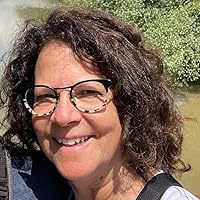
The author of Black, White, Other describes the pilgrimages she took with her father to rural Georgia in the aftermath of his diagnosis with terminal cancer, journeys during which she came to realize the hardships he endured during the Jim Crow era as well as his enduring love for the region and its people. 35,000 first printing.
I'm a writer based in Philadelphia. I've written for many national magazines and newspapers, and my latest book is called "Pig Candy: Taking My Father South, Taking My Father Home." It's a memoir/social history about race, filial duty, mortality, and barbecue."
This is the story of a mixed-race daughter getting to know her black father after his diagnosis of terminal prostate cancer. Her father is a head-strong man with deeply rooted southern traditions, hence the title Pig Candy, which refers to a recipe they made when roasting a pig. Part of the book is devoted to her relationship with her father and the relationships they have with family and the people in a small rural Southern town. The other half of the book deals with her taking care of her father in his last days. Very interesting story!
We had to read this as part of our summer reading before Freshman year started at Drexel (2012). Freshman year at college was beyond my wildest dreams, but this book was quite the opposite. Honestly, don't know why and how I remembered this book, but please save your time and do not read this book. Read something better. I fell asleep reading this on 3 different occasions. You're welcome!
I’ve had this book for a long time but never got around to reading it because nowadays I usually read on my iPad. But we are sitting vigil with my terminally ill mother, so I’ve been reading some paper books. I didn’t even realize when I picked up Pig Candy how relevant it would be. I was moved by the book in a number of ways, some of them very personal, some less so.
Pig Candy is more of a chronicle than a memoir per se. Funderburg brings her journalistic eye to the work, and, while it is an honest-feeling story about the last couple of years of her father’s life, there’s not all that much interiority. I didn’t really mind that, as the tone is in keeping with her objective eye for detail. In many ways, this is an incredibly clear, nonjudgmental view of a small town in Georgia and the web of relationships in the community, both supportive and subject to historical and personal conflict. It’s a portrait of both Funderburg’s once admirably successful but also irascible father and the small town he long ago left but has bought a farm near in his elder years. As Funderburg begins to accompany him back on trips to Georgia, she becomes aware of the challenges her father faced as a light-skinned black man, stories of racism past and present, and occasional moments that are more hopeful. As daughter of a black man and a white woman, as well as spouse of a white man, she tries to sort through all the family and non-family relationships and why her father and many of his black friends who left years ago still value this place. She does a beautiful, subtle, understated job of this, and comments on many phenomena I have also observed in the small northwest Tennessee town my mom is from and to which we have always returned from time to time (and where my mom will be buried), though none of us have lived there in more than sixty years.
Another aspect I have to mention as we go through the hell of tightened-belt and inadequately staffed hospice with my mother, I was also acutely aware reading this book of how much money, resources, and people are shown to be necessary to provide Funderburg’s father with the “good death” she ultimately reports. Her father becomes somewhat profligate and whimsical about buying livestock, new vehicles (that he can no longer drive), and so on, as well as doing things like paying “nineteen thousand dollars” to get brush cleared and the family renting an RV to transport him on a final trip to Georgia from Philly. They have all kinds of staff on the payroll at the farm as well as an expensive retirement community in Philly. I don’t begrudge any of it, but it’s daunting. Few people have those extensive resources and most people’s families and friends these days are scattered across the country and globe and can’t take long periods to travel away from work and other responsibilities. It’s worth thinking about. The elderly should be well cared for, perhaps even indulged, in their final time, but we don’t have a system that contributes to that. Hospice is now a shell of what it once was—what started as a non-profit source of comfort and care has now become a source of mass profit-making in the health-don’t-care industry.
This is a quiet, detail-oriented look at an elderly man’s decline and death. There’s nothing flashy about it. It’s very valuable if the aging and care of a parent is something you’re going through.
One of the back cover reviews says, "Funderberg has achieved something very remarkable in contemporary memoir: a personal narrative that is crisply intelligent rather than cleverly self-satisfied, deeply and meaningfully emotional rather than soppily sentimental." Yeah, but something was lost in that move...the balance of analyzing the context and providing personal insights is off. For me, there was too much time spent on the minutiae of the father's health decline and too little info on larger issues of race and family relations. In an effort to avoid "sentimentality" we get more of a journalistic exploration, in my view, than a compelling memoir.
It’s taken me a very long time to get through this book. It’s hard to say this about a lovingly written memoir, however I kept being pulled to other books that held more interest. There was lots of detail on her father’s medical condition, I didn’t leave the book feeling like I knew much about what made the characters tick - other than the grandfather, their story all seemed a little distant. Perhaps if I had read the book without pause I would have felt differently. It’s a very personal book and the inclusion of family pics throughout was touching.
Lise Funderburg does a great job conveying the often challenging relationship she & her sisters had with their exacting, difficult, exasperating and extraordinary dying father. I loved her prose with evocative descriptions of the South in both the earlier part of the 20th century and now.
“This is the thing about my father. He’s a study in fractions. He is various parts sharp and funny and kind and generous and playful. And he’s cruel, baiting and grudge-holding and bitter and broken, broken, broken. I love parts of him. I hate parts of him. I forgive much of him, who he and what he’s done. And no matter how hard I try, I can’t get past wanting him to turn on me a gaze of absolute, unfettered love.” – Lise Funderburg in Pig Candy.
Every little girl wants to be daddy’s little girl. But the father/daughter relationship, like any relationship, can be complicated; and none seems more complex than the one Lise Funderburg shared with her father. A relationship she explores in her latest book, Pig Candy.
George Newton Funderburg was a light-skinned African-American man from rural Georgia who married a white woman in 1940’s Philadelphia. He was a strict man who prided himself on being a good provider, starting out as a door-to-door salesman and eventually becoming a real estate magnate. He also carried on a17-year very open affair with his office manager, finally leaving his wife and three teenage daughters to marry his mistress.
Funderburg – a well-known freelance journalist and author of the 2002 book Black, White, Other – writes that as much as she and her older two sisters loved their father, it wasn’t until after he left that they felt they could laugh out loud, openly express emotions, and finally breathe. Then in 2004 her father’s cancer, which had been in a 15-year remission, comes back and while chemotherapy is prescribed, it’s evident to everyone that the prognosis isn’t good. And it is that this point that the Funderburg, now in her forties, has the chance to enter the life of the father whom she loved and respected, but never felt she’d really known.
Perhaps out of a sense of nostalgia, her father had purchased a 126-acre farm in Monticello, GA – his hometown – in 1985, though he seldom visited the property and left its management to a pair of boyhood friends. But now, knowing his time is limited, he desires to spend more time at the farm, and Funderburg volunteers to accompany him and his wife Lois. It’s her hope that by spending time with him in the environment that shaped him, she can finally understand him.
That one trip turns into a series of trips back and forth from Monticello to Philadelphia; the trips back up north necessitated by the need for the superior medical treatment available, the trips south by his need to spend his last months in the land that he fled so many years so many years before because of Jim Crow.
Before making his initial trip her decidedly eccentric father purchases a Cuban-American roasting box called ‘La Caja China,’ that he read about in a magazine article – the purpose of the metal-lined box is to roast a pig that comes out so sweet, succulent and crisp that it called Pig Candy. No one in Monticello has ever heard of such a thing, and dozens of people from the rural community gather to watch the roasting and taste the result.
Another time he decides to use the box to roast a lamb, and then informs Funderburg that since he can’t find anyone to slaughter the animal, they’ll have to do it themselves; an experience she is thankfully spared after someone steps in at the last minute.
But though the trips South may be good for her father’s soul, it seems to do little to improve his disposition. He’s cantankerous, and sometimes downright mean to Funderburg, who becomes his primary caretaker while in Georgia, though she is sometimes joined by her sisters, and even her mother – with whom her father has maintained a friendly relationship.
After almost every trip back up north, Lise vows not to return to Georgia with her father, but each time he makes the plea that he must go back she eventually relents. And little by little –she begins to see what makes her father tick, and how the frustrated boy born into segregation became the steadfast man who decided he would live his life on his own terms; despite how it affected others around him.
Funderburg’s account of her father’s last months of life is sometimes funny, sometimes heartbreaking, but always touching and thoroughly engrossing. It’s decidedly difficult for the reader to like George Newton Funderburg, but it’s almost impossible for the reader not to care about him. We find ourselves experiencing the same conflicted emotions as the author; and, like her, wondering why.
The author does an excellent job making scenes vivid -- and there are many scenes, and much detail, in this book. What seemed lacking to me, however, were two things: interesting characters and psychological insight. After 300 pages, I knew next-to-nothing about the author herself, other than her desire to be a good daughter and assist in taking care of her father in his declining years. Her sisters -- names only. The father is the only character shown in detail; and he is somewhat interesting because of his strong personality. But his daughter seems to shy away from probing more deeply into his nature, as well as from confessing much of her own. Maybe she is too polite, too well-bred, or too protective. The father comes through as a bullying narcissist, which she doesn't try to hide (nor could she); he does have a narcissist's charming side, too. He also seems to have been quite successful in real estate, although there are few details provided, leaving that aspect sketchy. The only truly interesting character in the book is the author's grandfather, a black man who couldn't quite manage Columbia University's medical school, but did put himself through a smaller school and became a small-town doctor in rural Georgia in the first decades of the 20th century. There is, unfortunately, too little on him -- just the sense of insecurity his achievements seemed to inflict on his son, who she remembers insulting him even more bluntly than his usual. The racial aspect of the story comes down chiefly to the family's "high-yellow" coloring and the curious role that sometimes played. Overall, it reads as a well-crafted book, page by page; it just seems to be missing something at the core. There is probably more detail about a pig roast than about either of her father's two wives, which suggests a sharper focus would have helped.
For anyone who has an ongoing, difficult relationship with their parents.
Lise loves her dad. She loves learning all about him. She loves his love of life and the quirky way he grasps a new idea and runs with it. She also hates her dad. The rules, the stoicism, the way he can cut her down and belittle her in an instant.
Her dad is in the final stage of his life. His cancer has advanced to the point that he will chemo until he dies. The thing that keeps him going is the farm he owns in GA even tho he lives in a retirement community in Philly.
Lise and her 2 sisters spend the last 3 yrs of his life trying to make him comfortbale and happy. They also try to get him down to the farm in GA as often as physically possible. He spends his time dreaming up another pig roast, talking about what it was like to grow up high yellow in the south, and informing his daughters that theya re not living up to his expectations.
Lise goes thru all the emotions you have while taking care of a dying parent. And I feel that her complicated relationship with her dad is fully explained in words that only someone with a complicated relationship with their parents can understand. It really made me think about when I might have to do these things.
This is an absolutely beautiful book. Lise Funderburg writes a memoir covering the years her father is ill and dying and manages to make every word feel completely real, completely true. It's incredibly moving and not one bit manipulative.
Her family history is so interesting, so historical due to their race and the fact that her father grew up Georgia, and at the same time so unique because of the personality of her father. I'm a little embarrassed to admit that reading her descriptions of the Jim Crow environment her father grew up in (and her grandfather practiced medicine in) was educational for me. I just didn't realize what that was like, or how pervasive it was.
At it's heart though, this is a story about Lise Funderburg and her relationship with her father, who was an extremely difficult person, to put it mildly. But despite all his overbearing and unfair ways I grew to love him through her book. I think it will help me with my own difficult relatives.
I really recommend this book; I hope everyone reads it. I'm excited to read her other books.
Pig Candy: Taking My Father South, Taking My Father Home--A Memoir by Lise Funderburg (Free Press 2008) (Biography) is a beautiful story that appeals on many emotional levels. The author - the daughter of a black father and a white mother who divorced when the author was a child - writes of the last few years of her father's life as she becomes increasingly involved in his life, his care, and his journey to death. Lise Funderburg was raised in the northeastern U.S. by her mother in a large extended family. The book is about her coming to terms with her father on a series of trips to rural Georgia to a farm her father purchased just before he was diagnosed with terminal cancer. Her father had fled the rural south for the relative safety of the north in the "second migration." The book is also about the author's learning to appreciate and even love her rich Southern heritage. I love the author's use of language. I believe her to be brilliant; based on this single volume, Lise Funderburg is now one of my favorite authors. My rating: 8/10, finished 2/10/14.
I really enjoyed this book. It was a touching and realistic portrait of a daughter-father relationship and the challenges we all face at the end of life. It is set in Philadelphia an rural Georgia. In the telling of her father's life, she also give a history of growing up in the South in the early 20th century and making the movement north as part of the Great Migration. Anyone that has helped care for a loved one who is dying will understand the way it changes your relationship with this person and the trials and small triumphs they experience.
This is a really awful book. The author swithces from past to present in a way that is confusing and you need to reread the chapters over and over again. There were too many characters I couldnt keep them straight. There is no emotional attatchment to her father either which is confusing because its about her dealing with his death. On top of all of the technically problems the subject was boring and drawn out.
This was an amazing book by a daughter about her father. When he is diagnosed with terminal cancer, Lise Funderburg takes her father on a series of trips to his home in rural Georgia. In the process, she learns more about him than she ever knew before. It is so well written and she is able to communicate her conflicting emotions about her dad with great honesty and humor.
I'm torn on this book. It's very difficult to write about the struggles and torment of a dying parent, especially a parent with whom you have a complicated relationship. I'm still not sure if I understand how she feels about her father. I know she loves him but did she like him? A memoir filled with ambivalence leaving more questions than answers.
Funderburg's written a moving tale about father-daughter love. It's the everydayness of the Mixed experience with big personalities enjoying big fun in the face of a father's final days. I read this in one sitting. See page 159 for the most moving passage EVER about parental loss and grieving.
For some reason, I had a hard time getting started on this book, but after the first 20 pages, I couldn't put it down. It is a beautiful and precise memoir of race in America, fathers and daughters, and dying.
This is a great memoir that is made more appealing by the in depth descriptions and details of life in rural Georgia. The father-daughter relationship, with all its hills and valleys, has made it hard to put the book down.
Affecting, enjoyable, moving. The author does not sentimentalize her past or her father but documents in clear prose the ups and downs of their relationship and his last few years.
It was hard for me because of personal experience but it was a poignant memoir not only about race in america, but also about being a caregiver for a dying parent.
Pig Candy is a wonderful memoir about a father-daughter relationship. It's moving, saddening, funny - everything all at once. I warmly recommend this book.