

What do you think?

Apocalypse Later
Tomorrow Land
Peyton Anderson will never forget the day she was forced to make a choice--between her family--and Chris Parker, the boy she'd given her heart. Now four years later, as she steps out from the fallout shelter and into a zombie-infested world, he's the only thing on her mind. Thanks to her father Peyton is now built to with razor tipped nails, ocular implants and cybernetics that make her stronger, faster, and able to protect herself in a world filled with monsters. Yet all the weapons in the world can't protect her heart when she runs into Chris again. The once sweet boy of her childhood has now grown into a tortured man--still furious at her for breaking his heart and never telling him why. Now the two of them find themselves on the run, forced to fight their way down the monster strewn east coast to reach the last human outpost on Walt Disney World. Can they find a way to let go of old hurts and regain the love they lost--all while attempting to save what's left of the human race?
358 pages, Kindle Edition
First published August 26, 2008
About the author
Mari Mancusi
60 books2,342 followersMari Mancusi grew up where the north wind meets the sea (otherwise known as Massachusetts), but has since made her home in the great state of Texas, mostly due to her love of summer. (And tacos.) A former Emmy Award winning TV news producer, today she is the author of more than two-dozen books for kids, teens, and adults, mostly of the sci-fi/fantasy variety. In addition to writing, Mari loves traveling, video games, and cosplaying. She is also Mom to an eight year old Frozen superfan who, when recently asked by her teacher to describe her hero answered: “My Mom!” (Okay, fine, she said Kristin Bell.)
You can find Mari online at www.marimancusi.com. She knows several Samanthas.
You can find Mari online at www.marimancusi.com. She knows several Samanthas.
Ratings & Reviews
Friends & Following
Create a free account to discover what your friends think of this book!
Community Reviews
Displaying 1 - 30 of 213 reviews

March 11, 2012
Actual rating is zero stars.
Note: This review may contain some small spoilers. However I don't believe that they will in any way harm your reading experience of Tomorrow Land if you still choose to read it after you have read this review.
This is the worst book that I have ever read. No Joke. I mean worse than Carrier of the Mark. I hope that this will be a short review as I feel that I have already wasted enough of my life on Tomorrow Land. There was only one thing in the book that I found to be at all engaging. This was Chase/Chris's addiction which was portrayed somewhat realistically. Although this peaked my interest one or two times it did not follow through enough to be a redeeming quality against the rest of the book.
The cover sums up a lot of what is wrong with this book. On the cover Peyton has lights coming out of her fingers. In the book she has razors instead. Tomorrow Land is littered with inconsistencies. They are all over the place. Here, let me list just a few:
* Peyton's best friends name. It is constantly switching between Avery and Erin. Chris, his brother and their friends names all change but that is because they have given each other nick names in their post apocalyptic lives. Avery/Erin is just an accident in the writing.
* Peyton's razors are four inches in one part and four centimeters in another.
* The characters personalities are very inconsistent. mari Mancusi switches them up whenever it would benefit the story. one example of this is how Peyton wants nothing to do with the children on one page and then says that she loves them and they're like family to her on the next. This happens with all the characters all the time.
* Chase/Chris has silky smooth hair even though there is no running water in this zombie filled post apocalyptic life. How? How is that?
* Peyton muses about how she has very little experience with kissing while she is making out with Chase/Chris (which is a gross scene by the way) and then thinks back to how she used to make out with her exboyfriend all the time a couple chapters later.
* Peyton tells us that all the stores were closing due to running out of stock from people stocking up and rioting yet Chase/Chris and his group live in a fully stocked Wal-Mart. Really?
*In one part of the book, Chase/Chris comes across a group of people that are "savages dressed in Armani" yet just minutes before we are given a description of one of the men from this group who is filthy in torn up dirty jeans and a grungy, filthy shirt.
Keep in mind that these are only the ones that bugged me the most but there are a ton more throughout the book.
I don't think that this book was ever proof read let alone saw an editor. There were so many typos and parts that made no sense at all. Tomorrow Land could have really benefited from being checked and edited.
The dialog was often super cheesy and unrealistic. It just didn't flow. The entire book didn't flow. There were far too many things going on at once which could have made the book exciting but unfortunately was done in a way which just made it feel cramped and confused.
I could not stand the characters. Not a single one of them was likable. They were all pretty obnoxious and stereotypical, not to mention extremely one dimensional.
There are a ton of references to things from our time. Everything from the Kardashians reality show to Mad Max and the Thunderdome are mentioned. This book is set in the future. All of these references are meant to pull the reader in yet being as there are very little pop culture references from their own time adds to the feeling of the story being contrived and unrealistic. It just didn't work!
At one part where life before the apocalypse is being remembered Chase/chris recalls the time that he met Peyton's dad for the first time, immediately after playing basketball with Peyton. He tells her dad that he stinks and then proceeds to sniff his armpit and make a face in front of him. Seriously? Who does that? I am sure as hell not going to sniff my armpit and talk about how much I smell in front of the person that I am in love with's dad. especially while I am trying to impress this person that I'm in love with being as it is the first time i am hanging out with them as well! God, that part pissed me off!
The whole story is too convenient. The first person that Peyton sees after leaving the shelter is-guess who?- Chase/chris. She sees him right away, when almost the entire world is dead or transformed into zombies and Chase/Chris had left town to live in the woods. But lo and behold he is within a mile of her when she gets out of her bunker and she stumbles right into him. The same thing happens with her dad at the end. He is just there. no problems finding him, no zombies or other people in the way. He is just *poof* there. Hooray!
It had become apparent that this was not going to be a new favorite of mine pretty quickly, however I was hoping that the action sequences would be a little bit of a saving grace. I mean fighting with zombies has got to be kick ass, right? Wrong. The action was weak. I was left very unsatisfied after every zombie run in.
This entire book was absolute crap. I wouldn't recommend it to my worst enemy. If you choose to give it a go, don't come crying to me because I will only say I told you so.
An ebook was given by the publishers via netgalley.
All quotes and references to Tomorrow Land were checked against a published copy.
Note: This review may contain some small spoilers. However I don't believe that they will in any way harm your reading experience of Tomorrow Land if you still choose to read it after you have read this review.
This is the worst book that I have ever read. No Joke. I mean worse than Carrier of the Mark. I hope that this will be a short review as I feel that I have already wasted enough of my life on Tomorrow Land. There was only one thing in the book that I found to be at all engaging. This was Chase/Chris's addiction which was portrayed somewhat realistically. Although this peaked my interest one or two times it did not follow through enough to be a redeeming quality against the rest of the book.
The cover sums up a lot of what is wrong with this book. On the cover Peyton has lights coming out of her fingers. In the book she has razors instead. Tomorrow Land is littered with inconsistencies. They are all over the place. Here, let me list just a few:
* Peyton's best friends name. It is constantly switching between Avery and Erin. Chris, his brother and their friends names all change but that is because they have given each other nick names in their post apocalyptic lives. Avery/Erin is just an accident in the writing.
* Peyton's razors are four inches in one part and four centimeters in another.
* The characters personalities are very inconsistent. mari Mancusi switches them up whenever it would benefit the story. one example of this is how Peyton wants nothing to do with the children on one page and then says that she loves them and they're like family to her on the next. This happens with all the characters all the time.
* Chase/Chris has silky smooth hair even though there is no running water in this zombie filled post apocalyptic life. How? How is that?
* Peyton muses about how she has very little experience with kissing while she is making out with Chase/Chris (which is a gross scene by the way) and then thinks back to how she used to make out with her exboyfriend all the time a couple chapters later.
* Peyton tells us that all the stores were closing due to running out of stock from people stocking up and rioting yet Chase/Chris and his group live in a fully stocked Wal-Mart. Really?
*In one part of the book, Chase/Chris comes across a group of people that are "savages dressed in Armani" yet just minutes before we are given a description of one of the men from this group who is filthy in torn up dirty jeans and a grungy, filthy shirt.
Keep in mind that these are only the ones that bugged me the most but there are a ton more throughout the book.
I don't think that this book was ever proof read let alone saw an editor. There were so many typos and parts that made no sense at all. Tomorrow Land could have really benefited from being checked and edited.
The dialog was often super cheesy and unrealistic. It just didn't flow. The entire book didn't flow. There were far too many things going on at once which could have made the book exciting but unfortunately was done in a way which just made it feel cramped and confused.
I could not stand the characters. Not a single one of them was likable. They were all pretty obnoxious and stereotypical, not to mention extremely one dimensional.
There are a ton of references to things from our time. Everything from the Kardashians reality show to Mad Max and the Thunderdome are mentioned. This book is set in the future. All of these references are meant to pull the reader in yet being as there are very little pop culture references from their own time adds to the feeling of the story being contrived and unrealistic. It just didn't work!
At one part where life before the apocalypse is being remembered Chase/chris recalls the time that he met Peyton's dad for the first time, immediately after playing basketball with Peyton. He tells her dad that he stinks and then proceeds to sniff his armpit and make a face in front of him. Seriously? Who does that? I am sure as hell not going to sniff my armpit and talk about how much I smell in front of the person that I am in love with's dad. especially while I am trying to impress this person that I'm in love with being as it is the first time i am hanging out with them as well! God, that part pissed me off!
The whole story is too convenient. The first person that Peyton sees after leaving the shelter is-guess who?- Chase/chris. She sees him right away, when almost the entire world is dead or transformed into zombies and Chase/Chris had left town to live in the woods. But lo and behold he is within a mile of her when she gets out of her bunker and she stumbles right into him. The same thing happens with her dad at the end. He is just there. no problems finding him, no zombies or other people in the way. He is just *poof* there. Hooray!
It had become apparent that this was not going to be a new favorite of mine pretty quickly, however I was hoping that the action sequences would be a little bit of a saving grace. I mean fighting with zombies has got to be kick ass, right? Wrong. The action was weak. I was left very unsatisfied after every zombie run in.
This entire book was absolute crap. I wouldn't recommend it to my worst enemy. If you choose to give it a go, don't come crying to me because I will only say I told you so.
An ebook was given by the publishers via netgalley.
All quotes and references to Tomorrow Land were checked against a published copy.

lts
October 13, 2014Free on Amazon today!
UK - http://www.amazon.co.uk/dp/B007IKOK9W...
US - http://www.amazon.com/Tomorrow-Land-A...
UK - http://www.amazon.co.uk/dp/B007IKOK9W...
US - http://www.amazon.com/Tomorrow-Land-A...

April 27, 2012
This review is also available on my blog, Qwerty
This e-ARC was provided to me by NetGalley and NLA Digital Liaison Platform LLC.
This was how the story went for me;

Yup, the first 1/3 of the book was quite annoying but unexpectedly, the story picked up its pace after that and I was quite entertained by the progression. But then, it ended worse than it started. For the last hundred pages, I actually didn't care anymore whether the two protagonists, Chase and Peyton would survived the zombie apocalypse.
Truth be told, I'm currently majoring in Microbiology and I was fairly impressed by the author's knowledge about the possible properties of epidemic plaque. The zombies in this book were depicted as having originally caused by mutated HIV vaccine and the trigger was the infectious super-Flu. Factually, HIV does mutate at a high frequency and flu is indeed very infectious without prior immunity. So, kudos to the author for getting her facts right :)
Okay, here comes the actual review.
I must say that the cover literally represents the story itself in one glance. Here we got our Razor Girl, Peyton Anderson with super-enhanced cybernetics courtesy of her father. She was on a mission to search for his dad after four years being trapped in her basement. Again, due to her father orders. After her mom decided to commit suicide, she went for her journey but unexpectedly, she encountered her ex-boyfriend, Chase and the story built up from there.
It was kind of confusing because we got two parallel stories set at different time, one in the past, once in the present narrated in alternating chapters and this trend actually persisted until the end of the book! I swallowed my pride to say this (because I don't really like Everneath), but Everneath is a prime example of how a book with parallel stories should be written. It's interesting to have a flashback going on but it should only lasted for about half of the book, then the two stories should converge, otherwise we got two disjointed plotlines which actually left me detached with what's going on in the present because the knowledge I need i.e. what happened in the past was told right at the end of the book!
I had several rolling eyes moments at the start of the book when the author started to refer to popular culture (hate to use the word culture here) such as Twilight, the Kardashians and the Knight of the Living Dead etc. Dear author, I'm sorry but I didn't find those as cool. And seriously, there's no need to name every high tech device with the 'i' at the front, e.g. iComm. cough *apple* cough. Seriously, the author could be more creative than that. The author also depicted the old Chase/Chris obsession over Peyton as quite sexual in my opinion. Some reviewers think that this Chris guy is cute or whatever, but I think he was just plain creepy stalkerish type of guy. So, when towards the end, Chase and Peyton did declare their love, I found it hard to appreciate the love as well...love and not lust.
Moving on to the middle part of the book, I actually thought I was lucky I didn't drop this book quarter-way because this part was quite well-written. Peyton and Chase became increasingly likable and inspiring characters and was very convincing and very likely considering the world that they lived in. Sadly, there were some minor illogical stuff happened such as when
Now, let's talk about the last 1/3 of the story. , it was the whole Edward-in-New-Moon thing all over again. You guessed it right.
HE FREAKING TRIED TO DISTANT HIMSELF FROM PEYTON WITHOUT RATIONAL EXPLANATION.
Okay, minor yay throughout this last 1/3 of the book was I applaud the way the author justified Peyton's decision to go through the cybernetics implantation procedure. It was believable.
There was also one major inconsistency, Seriously?
Okay, here what really turned me off.
Laughable. Totally laughable.
So, the verdict. Would I still recommend this? Hmm...maybe not. Sorry!
This e-ARC was provided to me by NetGalley and NLA Digital Liaison Platform LLC.
This was how the story went for me;
Yup, the first 1/3 of the book was quite annoying but unexpectedly, the story picked up its pace after that and I was quite entertained by the progression. But then, it ended worse than it started. For the last hundred pages, I actually didn't care anymore whether the two protagonists, Chase and Peyton would survived the zombie apocalypse.
Truth be told, I'm currently majoring in Microbiology and I was fairly impressed by the author's knowledge about the possible properties of epidemic plaque. The zombies in this book were depicted as having originally caused by mutated HIV vaccine and the trigger was the infectious super-Flu. Factually, HIV does mutate at a high frequency and flu is indeed very infectious without prior immunity. So, kudos to the author for getting her facts right :)
Okay, here comes the actual review.
I must say that the cover literally represents the story itself in one glance. Here we got our Razor Girl, Peyton Anderson with super-enhanced cybernetics courtesy of her father. She was on a mission to search for his dad after four years being trapped in her basement. Again, due to her father orders. After her mom decided to commit suicide, she went for her journey but unexpectedly, she encountered her ex-boyfriend, Chase and the story built up from there.
It was kind of confusing because we got two parallel stories set at different time, one in the past, once in the present narrated in alternating chapters and this trend actually persisted until the end of the book! I swallowed my pride to say this (because I don't really like Everneath), but Everneath is a prime example of how a book with parallel stories should be written. It's interesting to have a flashback going on but it should only lasted for about half of the book, then the two stories should converge, otherwise we got two disjointed plotlines which actually left me detached with what's going on in the present because the knowledge I need i.e. what happened in the past was told right at the end of the book!
I had several rolling eyes moments at the start of the book when the author started to refer to popular culture (hate to use the word culture here) such as Twilight, the Kardashians and the Knight of the Living Dead etc. Dear author, I'm sorry but I didn't find those as cool. And seriously, there's no need to name every high tech device with the 'i' at the front, e.g. iComm. cough *apple* cough. Seriously, the author could be more creative than that. The author also depicted the old Chase/Chris obsession over Peyton as quite sexual in my opinion. Some reviewers think that this Chris guy is cute or whatever, but I think he was just plain creepy stalkerish type of guy. So, when towards the end, Chase and Peyton did declare their love, I found it hard to appreciate the love as well...love and not lust.
Moving on to the middle part of the book, I actually thought I was lucky I didn't drop this book quarter-way because this part was quite well-written. Peyton and Chase became increasingly likable and inspiring characters and was very convincing and very likely considering the world that they lived in. Sadly, there were some minor illogical stuff happened such as when
Now, let's talk about the last 1/3 of the story. , it was the whole Edward-in-New-Moon thing all over again. You guessed it right.
HE FREAKING TRIED TO DISTANT HIMSELF FROM PEYTON WITHOUT RATIONAL EXPLANATION.
Okay, minor yay throughout this last 1/3 of the book was I applaud the way the author justified Peyton's decision to go through the cybernetics implantation procedure. It was believable.
There was also one major inconsistency, Seriously?
Okay, here what really turned me off.
Laughable. Totally laughable.
So, the verdict. Would I still recommend this? Hmm...maybe not. Sorry!

March 9, 2012
1.5/5 stars.
I was really disappointed with this one, guys. I was hoping that it would take an innovate approach to the end of the world and romance, but alas, it’s like so many other YA dystopian romance books/dystopian chick lit. Mancusi could have done so much more than what she actually did do with this basic idea of finding one’s true love after the apocalypse has actually happened – and she didn’t. I wish I could recommend this one, guys, but I can’t.
Very technologically advanced society? Check.
Everything goes to hell in a handbasket (fairly) quickly? Check.
Apocalypse or dystopian society or both? Check.
Boy and girl running away/trying to run away with each other to rub it in the face of said society? Check.
Romance? Check.
“True Love”? Check.
It’s almost as if Mancusi was using a checklist here when it comes to what I now call dystopian chick-lit in the YA genre. The first chapters were very slow moving and it was hard to not keep my mind from wandering elsewhere, and I just remembering sighing a whole lot. There were a lot of jokes about “oldies” and talk about the old-fashioned internet, but I felt the world constructed within the first few chapters didn’t feel very stable or original. Virtual reality? Also check. It felt like a lot of older sci-fi tropes all thrown together to try to create a world where an apocalypse felt more likely than not, and I just couldn’t get into it no matter how hard I tried.
I couldn’t finish this one – I’ll openly admit that. I got to page 90 and finally threw up my hands. The pace was far too slow, any arc executions that were there were very muddled and hard to determined and, quite frankly, it badly, badly, badly needed another draft and copy edit because there were mistakes everywhere (even for an ARC).
And then there’s the boy meets girl and then the apocalypse part happens – I’m sorry, that storyline just can’t cut it anymore. Dystopia has flooded the market so much that you really need to do something special to stand out, and Mancusi just didn’t do it this time. I liked her earlier work (“Gamer Girl” was awesome and I really enjoyed it) so I was hoping for something far more than I got. To say I was disappointed was an understatement.
So, guys, I’d skip this one. Read a really awesome YA dystopian book like “Divergent”, “Masque of the Red Death”, “The Hunger Games”, “Legend”, “Matched”, or “Across the Universe” instead. Don’t waste your time here. I wish I could get the few hours I did spend in this sad little world back.
(posted to goodreads, shelfari, and birthofanewwitch.wordpress.com)
I was really disappointed with this one, guys. I was hoping that it would take an innovate approach to the end of the world and romance, but alas, it’s like so many other YA dystopian romance books/dystopian chick lit. Mancusi could have done so much more than what she actually did do with this basic idea of finding one’s true love after the apocalypse has actually happened – and she didn’t. I wish I could recommend this one, guys, but I can’t.
Very technologically advanced society? Check.
Everything goes to hell in a handbasket (fairly) quickly? Check.
Apocalypse or dystopian society or both? Check.
Boy and girl running away/trying to run away with each other to rub it in the face of said society? Check.
Romance? Check.
“True Love”? Check.
It’s almost as if Mancusi was using a checklist here when it comes to what I now call dystopian chick-lit in the YA genre. The first chapters were very slow moving and it was hard to not keep my mind from wandering elsewhere, and I just remembering sighing a whole lot. There were a lot of jokes about “oldies” and talk about the old-fashioned internet, but I felt the world constructed within the first few chapters didn’t feel very stable or original. Virtual reality? Also check. It felt like a lot of older sci-fi tropes all thrown together to try to create a world where an apocalypse felt more likely than not, and I just couldn’t get into it no matter how hard I tried.
I couldn’t finish this one – I’ll openly admit that. I got to page 90 and finally threw up my hands. The pace was far too slow, any arc executions that were there were very muddled and hard to determined and, quite frankly, it badly, badly, badly needed another draft and copy edit because there were mistakes everywhere (even for an ARC).
And then there’s the boy meets girl and then the apocalypse part happens – I’m sorry, that storyline just can’t cut it anymore. Dystopia has flooded the market so much that you really need to do something special to stand out, and Mancusi just didn’t do it this time. I liked her earlier work (“Gamer Girl” was awesome and I really enjoyed it) so I was hoping for something far more than I got. To say I was disappointed was an understatement.
So, guys, I’d skip this one. Read a really awesome YA dystopian book like “Divergent”, “Masque of the Red Death”, “The Hunger Games”, “Legend”, “Matched”, or “Across the Universe” instead. Don’t waste your time here. I wish I could get the few hours I did spend in this sad little world back.
(posted to goodreads, shelfari, and birthofanewwitch.wordpress.com)
May 27, 2012
I'm getting a little tired of dystopian/post-apocalyptic novels. The plot always sounds great, but 9 times out of 10 the author fails to deliver. I can count on one hand the number of books in this genre that were amazing. Yet I continue to read these books. I think I might be a masochist. Certainly, anyone who reads this book has to be.
This book had a lot of potential, but it failed across the board.
-The characters are stereotypical. You can find either one of them in a 2cent romance novel at your local Walmart. They are not dynamic or special in any way.
-The beginning was difficult to get into. Oh sure the first line is actually pretty great, but it's not until later on in the book that it actually starts to get interesting. The problem is how long it takes to get to the good part. I can read a good book in a few hours. It took me a week to get halfway through this book. There were times when I actually dreaded picking it up again, but I did because I wanted to know what happened.
-The tone of writing is off somehow. I can't really put my finger on it, but it's just annoying for some reason. Melodramatic and over the top writing.
-The ending, which I won't spoil, was rushed. It was almost like a deus ex machina. It seemed the author got tired of writing and wanted to tie everything up in a neat little bow without going to the effort of doing the work. And after forcing myself to read through the terrible beginning, I was a little ticked off with the sloppy ending.
-The pacing of the entire book was off. It jumped back and forth so much, I'm surprised I didn't get whiplash.
-If you're going to write a book with zombies, you're going to have to find a way to distinguish them and your book from all the other books out there with zombies. Or at the very least, make it interesting. I felt like it was a rehash of Night of the Living Dead, and not in a good way.
The only thing the author did right, was the plot. It was a good one, and it had so much potential. But she totally killed it. Bottom line, this book is as generic as the zombies she wrote about.
This book had a lot of potential, but it failed across the board.
-The characters are stereotypical. You can find either one of them in a 2cent romance novel at your local Walmart. They are not dynamic or special in any way.
-The beginning was difficult to get into. Oh sure the first line is actually pretty great, but it's not until later on in the book that it actually starts to get interesting. The problem is how long it takes to get to the good part. I can read a good book in a few hours. It took me a week to get halfway through this book. There were times when I actually dreaded picking it up again, but I did because I wanted to know what happened.
-The tone of writing is off somehow. I can't really put my finger on it, but it's just annoying for some reason. Melodramatic and over the top writing.
-The ending, which I won't spoil, was rushed. It was almost like a deus ex machina. It seemed the author got tired of writing and wanted to tie everything up in a neat little bow without going to the effort of doing the work. And after forcing myself to read through the terrible beginning, I was a little ticked off with the sloppy ending.
-The pacing of the entire book was off. It jumped back and forth so much, I'm surprised I didn't get whiplash.
-If you're going to write a book with zombies, you're going to have to find a way to distinguish them and your book from all the other books out there with zombies. Or at the very least, make it interesting. I felt like it was a rehash of Night of the Living Dead, and not in a good way.
The only thing the author did right, was the plot. It was a good one, and it had so much potential. But she totally killed it. Bottom line, this book is as generic as the zombies she wrote about.

Read
June 1, 2021First published ~2008*, before smartphones melted most people's brains, in our real-world zombie dystopia.
*the first iPhone debuted in January 2007. You probably didn't buy your 7-year-old an iPhone until 2011 or later.
YA VERDICT: 2.75 stars.
ADULT VERDICT: 1.7 stars, but probably deserves at least 2.0 because there are FAR worse zombie books out there. I've read some that are close to zero stars.
NOTABLE FOR: A boy-crazy girl who can Let's hope she doesn't pick her nose, or get too hands-on with the human boys.
SAY SOMETHING NICE: Cool cover art. I give the author credit for attempting a 3-way genre mashup: horror + ScifFi + emo teen romance. There was assorted danger and action.
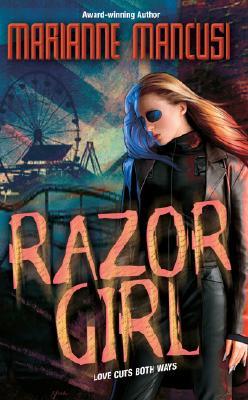
Overall, RAZOR GIRL wasn't bad--but neither was it especially realistic with regards to some of the dialogue/thoughts/responses of the characters. I'd say it was about average for the genre (zombie apocalypse/dystopia + teen romance), so check it out and see for yourself.
PARENTS/PRUDES: There is some sex talk in this YA horror/romance novel... but does that really matter when the hormonal teens are being eaten left and right by the undead? Anyway, you may not want to leave your sugar-addled 10-year old alone with this book--even though it's far safer than their smartphone.
CONSIDER THESE BOOKS:
1. The Reapers are the Angels by Alden Bell
2. The Girl with All the Gifts by M.R. Carey
*the first iPhone debuted in January 2007. You probably didn't buy your 7-year-old an iPhone until 2011 or later.
YA VERDICT: 2.75 stars.
ADULT VERDICT: 1.7 stars, but probably deserves at least 2.0 because there are FAR worse zombie books out there. I've read some that are close to zero stars.
NOTABLE FOR: A boy-crazy girl who can Let's hope she doesn't pick her nose, or get too hands-on with the human boys.
SAY SOMETHING NICE: Cool cover art. I give the author credit for attempting a 3-way genre mashup: horror + ScifFi + emo teen romance. There was assorted danger and action.
Overall, RAZOR GIRL wasn't bad--but neither was it especially realistic with regards to some of the dialogue/thoughts/responses of the characters. I'd say it was about average for the genre (zombie apocalypse/dystopia + teen romance), so check it out and see for yourself.
PARENTS/PRUDES: There is some sex talk in this YA horror/romance novel... but does that really matter when the hormonal teens are being eaten left and right by the undead? Anyway, you may not want to leave your sugar-addled 10-year old alone with this book--even though it's far safer than their smartphone.
CONSIDER THESE BOOKS:
1. The Reapers are the Angels by Alden Bell
2. The Girl with All the Gifts by M.R. Carey

March 6, 2012
Where have I been? This book was originally released in 2008 under the name RAZOR GIRL. I wish I would have known about this book then because it was a really good story. I enjoyed it a lot.
Old Cover:

Lately I seem to really be into anything post-apocalyptic. I love a story where the characters are written so well and I can easily picture them in my head. TOMORROW LAND delivers just that. I liked Peyton a lot. She was a brave person and once she set her mind on something there was no changing it. Although, there were times where I found her to be a bit immature, but it really didn’t bother me as much. I liked how the story is written one chapter in the past, and one in the present. It really helped me understand Peyton’s world and her relationship with Chris. Chris is definitely one of those guys that are super nice, but every girl looks at him like a best friend or brother. I honestly felt a little bad for him in the beginning of the story. He was so in love with Peyton and did anything she asked of him. It was actually sort of pathetic, but when you get inside his head you couldn’t help but feel sorry for him and root for him. It was nice when Peyton and he actually got together.
I also really liked the reason why their world fell apart. It’s sad to say, but I truly believe that can happen to us today. That is what’s so scary about these kinds of books. Whenever the story jumped into the present it had me at the edge of my seat. With every page I was waiting for everything to fall apart.
In the story Peyton’s father is known as a nutcase. He’s always going around talking about the end and how everyone should prepare. Of course he was right and what he does to Peyton was pretty awesome. He turned her into a fighter to help defend herself against what’s to come. The ending was a nice happy ending, but I feel it left room for a book two. I really hope there is one because I would love to find out what happens to their world.
4.5 out of 5 Stars!

Old Cover:
Lately I seem to really be into anything post-apocalyptic. I love a story where the characters are written so well and I can easily picture them in my head. TOMORROW LAND delivers just that. I liked Peyton a lot. She was a brave person and once she set her mind on something there was no changing it. Although, there were times where I found her to be a bit immature, but it really didn’t bother me as much. I liked how the story is written one chapter in the past, and one in the present. It really helped me understand Peyton’s world and her relationship with Chris. Chris is definitely one of those guys that are super nice, but every girl looks at him like a best friend or brother. I honestly felt a little bad for him in the beginning of the story. He was so in love with Peyton and did anything she asked of him. It was actually sort of pathetic, but when you get inside his head you couldn’t help but feel sorry for him and root for him. It was nice when Peyton and he actually got together.
I also really liked the reason why their world fell apart. It’s sad to say, but I truly believe that can happen to us today. That is what’s so scary about these kinds of books. Whenever the story jumped into the present it had me at the edge of my seat. With every page I was waiting for everything to fall apart.
In the story Peyton’s father is known as a nutcase. He’s always going around talking about the end and how everyone should prepare. Of course he was right and what he does to Peyton was pretty awesome. He turned her into a fighter to help defend herself against what’s to come. The ending was a nice happy ending, but I feel it left room for a book two. I really hope there is one because I would love to find out what happens to their world.
4.5 out of 5 Stars!


March 18, 2012
OH. DEAR. What can I say about Mari Mancusi's zombie apocalypse "Tomorrow Land" ?
Basically, that everything about it is either flatter than the Netherlands or comes straight out of a cookie mold: The suspension arcs of the two alternating, generic storylines, the probability of the world-building pieces forced together like a mismatched jigsaw puzzle and most of all: the characters – quite all of them, actually: Scatterbrained, addicted socialite mom, mad, one-track-minded ex-government scientist dad, the slutty, nerdy or sporty, instantly forgettable classmates at school, the Toy Aisle gang at Walmart, the fanatic, post-apocalyptic small-town community with their arena games, the sainty, well-organised, über-equipped underground hive members, moody, helplessly inferiority-complexed and infatuated druggie Chase and last but not least misunderstood, frail-but-strong, between-the-chairs world-saver Peyton.
Yepp, the only curves worth mentioning in this goremance are those of our virginal "sweet teen goddess's' soft boobs and creamy white shoulders. But even those deflate as the story's progress lets the superwoman nanobots in enhanced daddy's girl's blood stream fail (the bots got a best-before-date that's just convenient for the race against time).
Apropos virginal: What does one make of the fact that the kids who had successfully applied for an officially issued LTF (“licence to fuck”) are the first to become either a zombie or zombie fodder? The reasons are given eventually, but I don’t like the resonance of the back-door message, which could have easily been replaced by something else.
Basically, that everything about it is either flatter than the Netherlands or comes straight out of a cookie mold: The suspension arcs of the two alternating, generic storylines, the probability of the world-building pieces forced together like a mismatched jigsaw puzzle and most of all: the characters – quite all of them, actually: Scatterbrained, addicted socialite mom, mad, one-track-minded ex-government scientist dad, the slutty, nerdy or sporty, instantly forgettable classmates at school, the Toy Aisle gang at Walmart, the fanatic, post-apocalyptic small-town community with their arena games, the sainty, well-organised, über-equipped underground hive members, moody, helplessly inferiority-complexed and infatuated druggie Chase and last but not least misunderstood, frail-but-strong, between-the-chairs world-saver Peyton.
Yepp, the only curves worth mentioning in this goremance are those of our virginal "sweet teen goddess's' soft boobs and creamy white shoulders. But even those deflate as the story's progress lets the superwoman nanobots in enhanced daddy's girl's blood stream fail (the bots got a best-before-date that's just convenient for the race against time).
Apropos virginal: What does one make of the fact that the kids who had successfully applied for an officially issued LTF (“licence to fuck”) are the first to become either a zombie or zombie fodder? The reasons are given eventually, but I don’t like the resonance of the back-door message, which could have easily been replaced by something else.

March 21, 2012
What a thought provoking book! From the very first page, I was intrigued by the characters, the plot as well as the motive.
The plot line of the book based on scientist experimenting is real and so scary. I could see this happening in real life. Their are many twist and turns in the book that the reader has no choice but to keep reading. I like with each passing pass the reader get close to seeking the answer we all want to know. How did the virus start?
Another part of the book that really made it stick together are the characters. I loved that the characters faced all kinds of emotions. Love, lost, betrayal and even addiction. I was amazed of how well Ms. Mancusi can weave all of these elements together without confusing the story.
The love interest is one that made me happy. Their relationship has been through it all and I am so happy to be a part of it. I enjoyed their bickering, fighting, and unrelenting love for each other. You can truly tell that their love is one of kind.
The are a few twist in the book that really made me happy. I enjoyed the scientific view to the virus as well as who cause it. It all seem surreal in the end.
Tomorrow Land is an epic engrossing tale with a yearning romance that everyone will fall in love with. The heroine sustains the story with her altered appearance and kick butt moves. Superbly written, Tomorrow Land is an enthralling adventure you don't want to miss.
The plot line of the book based on scientist experimenting is real and so scary. I could see this happening in real life. Their are many twist and turns in the book that the reader has no choice but to keep reading. I like with each passing pass the reader get close to seeking the answer we all want to know. How did the virus start?
Another part of the book that really made it stick together are the characters. I loved that the characters faced all kinds of emotions. Love, lost, betrayal and even addiction. I was amazed of how well Ms. Mancusi can weave all of these elements together without confusing the story.
The love interest is one that made me happy. Their relationship has been through it all and I am so happy to be a part of it. I enjoyed their bickering, fighting, and unrelenting love for each other. You can truly tell that their love is one of kind.
The are a few twist in the book that really made me happy. I enjoyed the scientific view to the virus as well as who cause it. It all seem surreal in the end.
Tomorrow Land is an epic engrossing tale with a yearning romance that everyone will fall in love with. The heroine sustains the story with her altered appearance and kick butt moves. Superbly written, Tomorrow Land is an enthralling adventure you don't want to miss.

February 1, 2013
This is a book about a girl who becomes sort of like a cyborg, courtesy of her father’s nano technology, to ensure her survival during apocalypse.
I didn’t enjoy the Before and After story telling in this novel. It suits some novels, but I didn’t particularly like it in this one.
More importantly, however, I found it hard to like the heroine. Please see my status updates, as I have vented enough there.
The thing was, even though in the end you find out that she didn’t leave Chris high and dry for nothing, it didn’t do anything for me. Part of it had to do with how the author structured her novel, because I found the heroine irritating from the beginning from her lack of answers, the revelation as to why she did what she did, did nothing to lessen the my dislike of her. The other part was that I still didn’t see how the revelation justified her dodging answers from the beginning of the novel.
As for the actual dystopian plotline. I wasn’t too impressed with the setting and the story. It had a lot of potential: a razor girl in a zombie-fied world. But the novel completely fell through for me. Which is why, it took me almost two months to finish reading this book, when I can normally finish a full novel in a day.
I didn’t enjoy the Before and After story telling in this novel. It suits some novels, but I didn’t particularly like it in this one.
More importantly, however, I found it hard to like the heroine. Please see my status updates, as I have vented enough there.
The thing was, even though in the end you find out that she didn’t leave Chris high and dry for nothing, it didn’t do anything for me. Part of it had to do with how the author structured her novel, because I found the heroine irritating from the beginning from her lack of answers, the revelation as to why she did what she did, did nothing to lessen the my dislike of her. The other part was that I still didn’t see how the revelation justified her dodging answers from the beginning of the novel.
As for the actual dystopian plotline. I wasn’t too impressed with the setting and the story. It had a lot of potential: a razor girl in a zombie-fied world. But the novel completely fell through for me. Which is why, it took me almost two months to finish reading this book, when I can normally finish a full novel in a day.

May 9, 2019
4 Stars
I have so many good things to say about this book. I really enjoyed this book a lot. This book has been on my want to read list for awhile now so I thought that I should pick this book up and read this book and I finally did. I loved everything about this book. I have read some books from Mari Mancusi before but it has been forever since I have read a book by her. This book grabs your attention right away and it keeps your attention through out the book. I love Mari Mancusi's writing because her writing is go detailed and it keeps your attention. When I read this book I read this book on a ebook but now I have to go get the actual copy of this book because I need to add this book to my self of books in my room. I would read this book again and again because it is one of those books that will never get old. I would recommend this book to anyone out there that is looking for a really good book to read.
I have so many good things to say about this book. I really enjoyed this book a lot. This book has been on my want to read list for awhile now so I thought that I should pick this book up and read this book and I finally did. I loved everything about this book. I have read some books from Mari Mancusi before but it has been forever since I have read a book by her. This book grabs your attention right away and it keeps your attention through out the book. I love Mari Mancusi's writing because her writing is go detailed and it keeps your attention. When I read this book I read this book on a ebook but now I have to go get the actual copy of this book because I need to add this book to my self of books in my room. I would read this book again and again because it is one of those books that will never get old. I would recommend this book to anyone out there that is looking for a really good book to read.

June 3, 2015
Ok story, writing, world, girl but I didn't like boy so much. For me that is reason enough for give only three stars.

March 9, 2012
*Genre* YA Dystopian
*Rating* 2 1/2
*Review*
Tomorrow Land is a young adult dystopian novel that switches each chapter between the year 2030 and 2034 as well as between characters.
In April of 2030, Peyton Anderson is 15 years old and lives with her mother and end of the world obsessed father who refuses to allow Peyton access to even the most basic of entertainment systems such as Virtual Reality.
It is a world where everyone over the age of 18 is required to be vaccinated against the AIDS virus that has since wiped out the continent of Africa. It is a world where teenagers are required to get their LTF (License to Copulation) before they are legally allowed to have sex. *Not so farfetched with a government that is out of control and wants to control its own citizens*
And, it is a world where Peyton suddenly finds that she is forced into making a dire choice between staying with her family, and running away with Chris Parker, the boy she suddenly finds herself attracted to after brushing him off for so long.
4 years later, 19-year Peyton emerges from her isolation chamber her father built, to a world that has been over-run by “Knights of the Living Dead.” She has been turned into a cybernetic zombie fighting machine by her father, and has implants in her eyes, as well as under her nails. Her mission is simple: find her way to Disney World where her father awaits with the ability to cure the human race before the Nano-technology takes its toll on her body.
The second main character in Tomorrow Land is Chris Parker who had a major crush on Peyton for years before the virus attacked the population and everything went to hell quickly and they found they actually had feelings for each other.
Chris waited with his brother Tank hours for her to show up so that they could flee to the mountains with other survivors from their school. Instead of showing up, Peyton ended up locked up in her isolation chambers with her mother by choice. Chris, Tank and others end up holed up in Wal-Mart the choice of all post-apocalyptic survivors.
Upon reuniting, Chase learns that Peyton has changed to the point where he is also addicted to pain medication and is living with 6 children who appear to be the only survivors of the town they once lived in.
After a devastating loss thanks to the zombies, Chris, Peyton, and the children make their way towards Disney World in Florida where supposedly, Peyton’s father has created a place for the survivors to start over as a New Eden.
*Thoughts*
I liked Peyton’s character and was not surprised by the shocking revelation about the so called Super Flu and who was ultimately responsible for creating it and why. This also had a Thunderdome feel to it like Rot & Ruin where humans are forced into fighting zombies to the death by a society that has obviously gone to hell in a hand basket quickly and needs its own brand of entertainment to get by. My disappointment, however brief, was in the fact that Peyton doesn’t really go all Wonder Woman on the zombies. She relies heavily on Chris for help.
I had a hard time with Chris choice of becoming a pain medicated addict. Yes, I realize things are hard and all, but did his own brother Tank stoop to this low? Nope. Instead, he became the default leader of the group until his untimely death shortly before Peyton is leaving for Florida.
This could also be considered as dystopian romance because it was obvious as the nose on my face, that Peyton and Chris would eventually come to terms with their feelings toward the other.
Mari Mancusi is probably best known for her Young Adult Blood Coven series. For me, it’s interesting to see her step away, however briefly, and write this book, as well as the upcoming Alternity which is kindly provided as a sneak peek at the end of this particular book.
Tomorrow Land was kindly provided to me by NetGalley for NLA Digital
*Rating* 2 1/2
*Review*
Tomorrow Land is a young adult dystopian novel that switches each chapter between the year 2030 and 2034 as well as between characters.
In April of 2030, Peyton Anderson is 15 years old and lives with her mother and end of the world obsessed father who refuses to allow Peyton access to even the most basic of entertainment systems such as Virtual Reality.
It is a world where everyone over the age of 18 is required to be vaccinated against the AIDS virus that has since wiped out the continent of Africa. It is a world where teenagers are required to get their LTF (License to Copulation) before they are legally allowed to have sex. *Not so farfetched with a government that is out of control and wants to control its own citizens*
And, it is a world where Peyton suddenly finds that she is forced into making a dire choice between staying with her family, and running away with Chris Parker, the boy she suddenly finds herself attracted to after brushing him off for so long.
4 years later, 19-year Peyton emerges from her isolation chamber her father built, to a world that has been over-run by “Knights of the Living Dead.” She has been turned into a cybernetic zombie fighting machine by her father, and has implants in her eyes, as well as under her nails. Her mission is simple: find her way to Disney World where her father awaits with the ability to cure the human race before the Nano-technology takes its toll on her body.
The second main character in Tomorrow Land is Chris Parker who had a major crush on Peyton for years before the virus attacked the population and everything went to hell quickly and they found they actually had feelings for each other.
Chris waited with his brother Tank hours for her to show up so that they could flee to the mountains with other survivors from their school. Instead of showing up, Peyton ended up locked up in her isolation chambers with her mother by choice. Chris, Tank and others end up holed up in Wal-Mart the choice of all post-apocalyptic survivors.
Upon reuniting, Chase learns that Peyton has changed to the point where he is also addicted to pain medication and is living with 6 children who appear to be the only survivors of the town they once lived in.
After a devastating loss thanks to the zombies, Chris, Peyton, and the children make their way towards Disney World in Florida where supposedly, Peyton’s father has created a place for the survivors to start over as a New Eden.
*Thoughts*
I liked Peyton’s character and was not surprised by the shocking revelation about the so called Super Flu and who was ultimately responsible for creating it and why. This also had a Thunderdome feel to it like Rot & Ruin where humans are forced into fighting zombies to the death by a society that has obviously gone to hell in a hand basket quickly and needs its own brand of entertainment to get by. My disappointment, however brief, was in the fact that Peyton doesn’t really go all Wonder Woman on the zombies. She relies heavily on Chris for help.
I had a hard time with Chris choice of becoming a pain medicated addict. Yes, I realize things are hard and all, but did his own brother Tank stoop to this low? Nope. Instead, he became the default leader of the group until his untimely death shortly before Peyton is leaving for Florida.
This could also be considered as dystopian romance because it was obvious as the nose on my face, that Peyton and Chris would eventually come to terms with their feelings toward the other.
Mari Mancusi is probably best known for her Young Adult Blood Coven series. For me, it’s interesting to see her step away, however briefly, and write this book, as well as the upcoming Alternity which is kindly provided as a sneak peek at the end of this particular book.
Tomorrow Land was kindly provided to me by NetGalley for NLA Digital

April 2, 2012
*Read full review at www.teenbookguru.com*
Tomorrow Land by Mari Mancusi is a fast-paced, action-packed ride, with a passionate and intense romance. Would I say it's as good as some of the other Dystopian novels of the last few years? Probably not. But it is definitely memorable and a very exciting read. I think that because there have been so many amazing post-apocalyptic novels recently, all the others kind of have to be mind-blowing too, just to measure up to all the great ones. *SPOILER ALERTS*
Peyton Anderson is one of the 'it-girls' in her school. She has the boyfriend, all her popular friends, and of course, the looks. Chris Parker is a big-hearted nerd. A nerd who's in love with Peyton. So, obviously, there is no way they could be together. Ever --- not even if the world ended --- or so that's what they think. Peyton's dad is a scientist - a mad scientist. He's convinced that the end of the world is right around the corner, and that creatures similar to zombies are going to cause it, but no one believes him- not even Peyton.
So when people start to realize that the world is coming to an end, Peyton is prepared.
Chase and Peyton are brought together under strange circumstances - they both happen to be the first people to witness the first step of the end of the world- the infection. They start to grow close to each other, and make plans to run away. But (in typical Romeo and Juliet fashion), there is a last-minute change of plans, and Peyton can't leave with Chris. This leads to a whole lot of sadness and confusion and feelings of betrayal on Chris' part, and just a bunch of sadness on Peyton's side. So imagine their surprise when they meet again after four years - and find that they are both one of the few people in the whole world who are still alive. *SPOILERS OVER*
In Tomorrow Land, there were a lot of flashbacks to when everything was normal and also how the end of the world started, which was nice, because it provided a background to the characters, and made them seem more real. It also made it easier to sympathize with both Peyton and Chris. The best part of the book would have to be the romance, for me personally. Chris was just such a sweet heart *note the past tense*, and it broke my heart to see how easily Peyton used to dismiss him. Of course, when they meet after four years he isn't the same nice, easy guy who Peyton remembered (but, come on, you have to be tough and hard to survive the end of the world!). They got together eventually, but I still felt bad for Chris. It made me wonder - are there any guys out there who are as forgiving and committed as Chris? Probably not.
Peyton was a joy to get to know as well. While I don't normally like the 'queen-bee, rules the school' type of characters, I have to say I really liked Peyton. Not only was she a fierce fighter, and not only could she kick some major zombie ass, but she was also nice and caring -- and most importantly, she loved Chris back and stuck with him through the good and bad. And at the end of the day, what else could you ask for?
Something I didn't really like was the ending. It left so many questions unanswered and really left me hanging, it just seemed a little rushed to me. But there were some really good parts in the book, and I found Tomorrow Land to be a captivating read that left my fingernails bitten to the core, and my heart bursting with hope and happiness at the wonderful romance that Mancusi so wonderfully brought to life.
4 Muffins - Simply Delectable!
Tomorrow Land by Mari Mancusi is a fast-paced, action-packed ride, with a passionate and intense romance. Would I say it's as good as some of the other Dystopian novels of the last few years? Probably not. But it is definitely memorable and a very exciting read. I think that because there have been so many amazing post-apocalyptic novels recently, all the others kind of have to be mind-blowing too, just to measure up to all the great ones. *SPOILER ALERTS*
Peyton Anderson is one of the 'it-girls' in her school. She has the boyfriend, all her popular friends, and of course, the looks. Chris Parker is a big-hearted nerd. A nerd who's in love with Peyton. So, obviously, there is no way they could be together. Ever --- not even if the world ended --- or so that's what they think. Peyton's dad is a scientist - a mad scientist. He's convinced that the end of the world is right around the corner, and that creatures similar to zombies are going to cause it, but no one believes him- not even Peyton.
So when people start to realize that the world is coming to an end, Peyton is prepared.
Chase and Peyton are brought together under strange circumstances - they both happen to be the first people to witness the first step of the end of the world- the infection. They start to grow close to each other, and make plans to run away. But (in typical Romeo and Juliet fashion), there is a last-minute change of plans, and Peyton can't leave with Chris. This leads to a whole lot of sadness and confusion and feelings of betrayal on Chris' part, and just a bunch of sadness on Peyton's side. So imagine their surprise when they meet again after four years - and find that they are both one of the few people in the whole world who are still alive. *SPOILERS OVER*
In Tomorrow Land, there were a lot of flashbacks to when everything was normal and also how the end of the world started, which was nice, because it provided a background to the characters, and made them seem more real. It also made it easier to sympathize with both Peyton and Chris. The best part of the book would have to be the romance, for me personally. Chris was just such a sweet heart *note the past tense*, and it broke my heart to see how easily Peyton used to dismiss him. Of course, when they meet after four years he isn't the same nice, easy guy who Peyton remembered (but, come on, you have to be tough and hard to survive the end of the world!). They got together eventually, but I still felt bad for Chris. It made me wonder - are there any guys out there who are as forgiving and committed as Chris? Probably not.
Peyton was a joy to get to know as well. While I don't normally like the 'queen-bee, rules the school' type of characters, I have to say I really liked Peyton. Not only was she a fierce fighter, and not only could she kick some major zombie ass, but she was also nice and caring -- and most importantly, she loved Chris back and stuck with him through the good and bad. And at the end of the day, what else could you ask for?
Something I didn't really like was the ending. It left so many questions unanswered and really left me hanging, it just seemed a little rushed to me. But there were some really good parts in the book, and I found Tomorrow Land to be a captivating read that left my fingernails bitten to the core, and my heart bursting with hope and happiness at the wonderful romance that Mancusi so wonderfully brought to life.
4 Muffins - Simply Delectable!

March 11, 2012
This review can also be found on my blog: A Match Made in Heaven
I am not sure how I feel about this. Over all I liked it, but there were a few large issues that didnt sit well with me. After writing my review and coming back to the top, I have decided to give this 3.5/5, mostly thanks to Chris.
First of all it was the format. It starts with 15 year old Peyton in 2030, in a virtual reality simulation with her friends, just hanging out. Then the next chapter skips to 4 years later, in a post-apocalyptic world. Then the next chapter goes back, then forward, then back. We have the 2 separate time periods running simultaneously. Each is narrated by both Peyton and Chris, the boy who has been in love with her since they were 6. The narrations are good. I enjoy books that are from alternating POVs. But the timeline was not only confusing and annoying, but it didnt work well for the characters. When we first skipped to the 4 years later, we have no idea how Peyton got there, what she had been through. It made it harder to connect to the characters. And when Peyton runs into Chris again they clearly have a history, but we have no idea what it is. We really didnt get to know the characters until the end of the first timeline caught up with the beginning of the second. I think I would have preferred this book if it had been told in chronological order, even though it would have had two very different halves. It just feels really disjointed as is.
The second thing I didnt like was the negative tone over the whole book. At first I was enjoying the zombie apocalypse. I had never read a book about that before, and the action was fun. But after awhile I realized that the feeling of worry and desperation was not going to go away. The fun of the action soon went away and I felt uneasy for the rest of the book. There was no space to breath and enjoy. That could be a good thing for those who enjoy post-apocalyptic or horror, but not for fans of general YA.
The romance was sweet but not enough to overshadow the rest. Not that the romance wasnt a big factor, it was. Peyton and Chris were almost constantly in each others thoughts, but they had several children and zombies to worry about. They didnt have a lot of time for sweet talk. They also spent way too much time arguing. I really think I enjoyed the 'before' chapters better. Chris hadnt hardened yet and he was utterly adorable. I have always had a soft spot for the sweet and quiet YA boys. His love for Peyton was absolute, unconditional, and all consuming. It is one of the most amazing things I have ever seen. And I really enjoyed seeing them fall in love the first time. When Peyton realized just how amazing and sweet this boy was that she had been passing off for 10 years. And I loved their first kiss. There wasnt a lot of physical love going on in this book. Not that we were told about anyway. And it could have used some more kissing. :P But there was no shortage of love, especially in the 'later' chapters when neither of them could think of much else. So, the characters were great, and the romance, story, and action were good.
I am not sure how I feel about this. Over all I liked it, but there were a few large issues that didnt sit well with me. After writing my review and coming back to the top, I have decided to give this 3.5/5, mostly thanks to Chris.
First of all it was the format. It starts with 15 year old Peyton in 2030, in a virtual reality simulation with her friends, just hanging out. Then the next chapter skips to 4 years later, in a post-apocalyptic world. Then the next chapter goes back, then forward, then back. We have the 2 separate time periods running simultaneously. Each is narrated by both Peyton and Chris, the boy who has been in love with her since they were 6. The narrations are good. I enjoy books that are from alternating POVs. But the timeline was not only confusing and annoying, but it didnt work well for the characters. When we first skipped to the 4 years later, we have no idea how Peyton got there, what she had been through. It made it harder to connect to the characters. And when Peyton runs into Chris again they clearly have a history, but we have no idea what it is. We really didnt get to know the characters until the end of the first timeline caught up with the beginning of the second. I think I would have preferred this book if it had been told in chronological order, even though it would have had two very different halves. It just feels really disjointed as is.
The second thing I didnt like was the negative tone over the whole book. At first I was enjoying the zombie apocalypse. I had never read a book about that before, and the action was fun. But after awhile I realized that the feeling of worry and desperation was not going to go away. The fun of the action soon went away and I felt uneasy for the rest of the book. There was no space to breath and enjoy. That could be a good thing for those who enjoy post-apocalyptic or horror, but not for fans of general YA.
The romance was sweet but not enough to overshadow the rest. Not that the romance wasnt a big factor, it was. Peyton and Chris were almost constantly in each others thoughts, but they had several children and zombies to worry about. They didnt have a lot of time for sweet talk. They also spent way too much time arguing. I really think I enjoyed the 'before' chapters better. Chris hadnt hardened yet and he was utterly adorable. I have always had a soft spot for the sweet and quiet YA boys. His love for Peyton was absolute, unconditional, and all consuming. It is one of the most amazing things I have ever seen. And I really enjoyed seeing them fall in love the first time. When Peyton realized just how amazing and sweet this boy was that she had been passing off for 10 years. And I loved their first kiss. There wasnt a lot of physical love going on in this book. Not that we were told about anyway. And it could have used some more kissing. :P But there was no shortage of love, especially in the 'later' chapters when neither of them could think of much else. So, the characters were great, and the romance, story, and action were good.

March 14, 2012
I was provided a copy of this E-book by Netgalley in exchange for a review. All opinions are my own and I was not compensated in any way for them.
Review:
15 Year Old Peyton Anderson is your typical teenage girl, she focuses on her studies and whether her super hot boyfriend really loves her. Life is pretty much the way it should be except,people are starting to fall ill, her father is spouting nonsense about the end of the world and the only one who seems to understand it all is the boy shes been avoiding for the past six years. Four Years Later after hiding away in an underground bunker, Peyton emerges to a world vastly changed. For one thing her neighbors are trying to eat her and she's been enhanced to be the ultimate fighting machine. Peyton knows she has to find her father, but when she runs into the boy she left behind and his small group of survivors,Peyton is left with the ultimate choice. Should she stay or should she go?
This book is set in a modern world, least that is the what the Author wants you to believe. In all honesty I think the Author tried a bit to hard convincing the reader that this was some cyber fueled world. For one thing everything was either an I app or Smart something both very "techie" terms. I was actually glad once the plague hit and that part of the book was over. Once the characters were placed in the Post Apocalypse surroundings the book started to flow better and not feel so forced.
I really wanted to love this book after waiting so long to read it. Let me clarify, it's not like it was bad it just wasn't anything special. Peyton was a likeable, strong female character. It just took me awhile to warm up to her, in fact I really didn't like her at all until about 10 chapters in. The male lead Character Chris/Chase on the other hand I instantly liked. You could tell he wasn't just going to be thrown into the story to be a love interest. He was smart and quick thinking, I knew he would play an important role in Peyton's story arc from the moment he showed up. I also really liked Tank and the children. While they didn't have a bunch of lines, they certainly brought some great moments to the story.
One thing I didn't like about this book were the flashback chapters. I could pretty much figure out why Peyton went underground within the first few pages. While flashbacks certainly can work (example: Susan Winnacker's The Other Life) I think for this book they were entirely unnecessary. These snippets into the past would of been better served added into the beginning and omitting all the tech talk and world building with characters barely important to the book.
Overall this book was good enough that if the Author decided to ever write a sequel I'd want to read it. Which is why I am rating Tomorrow Land ★★★ Stars. Worth a read, worth your time, just not without some bumps along the way.
Review:
15 Year Old Peyton Anderson is your typical teenage girl, she focuses on her studies and whether her super hot boyfriend really loves her. Life is pretty much the way it should be except,people are starting to fall ill, her father is spouting nonsense about the end of the world and the only one who seems to understand it all is the boy shes been avoiding for the past six years. Four Years Later after hiding away in an underground bunker, Peyton emerges to a world vastly changed. For one thing her neighbors are trying to eat her and she's been enhanced to be the ultimate fighting machine. Peyton knows she has to find her father, but when she runs into the boy she left behind and his small group of survivors,Peyton is left with the ultimate choice. Should she stay or should she go?
This book is set in a modern world, least that is the what the Author wants you to believe. In all honesty I think the Author tried a bit to hard convincing the reader that this was some cyber fueled world. For one thing everything was either an I app or Smart something both very "techie" terms. I was actually glad once the plague hit and that part of the book was over. Once the characters were placed in the Post Apocalypse surroundings the book started to flow better and not feel so forced.
I really wanted to love this book after waiting so long to read it. Let me clarify, it's not like it was bad it just wasn't anything special. Peyton was a likeable, strong female character. It just took me awhile to warm up to her, in fact I really didn't like her at all until about 10 chapters in. The male lead Character Chris/Chase on the other hand I instantly liked. You could tell he wasn't just going to be thrown into the story to be a love interest. He was smart and quick thinking, I knew he would play an important role in Peyton's story arc from the moment he showed up. I also really liked Tank and the children. While they didn't have a bunch of lines, they certainly brought some great moments to the story.
One thing I didn't like about this book were the flashback chapters. I could pretty much figure out why Peyton went underground within the first few pages. While flashbacks certainly can work (example: Susan Winnacker's The Other Life) I think for this book they were entirely unnecessary. These snippets into the past would of been better served added into the beginning and omitting all the tech talk and world building with characters barely important to the book.
Overall this book was good enough that if the Author decided to ever write a sequel I'd want to read it. Which is why I am rating Tomorrow Land ★★★ Stars. Worth a read, worth your time, just not without some bumps along the way.

March 15, 2012
Who would have thought a zombie book could turn out to be cute? I certainly didn’t. That is, until I’ve read Tomorrow Land by Mari Mancusi.
I’ll give you a brief overview of the book: Peyton and Chris are living in 2030 where technology is literally used in people’s everyday lives. Like, for example, there are no more good old-fashioned basketball games, players need only to log in to the virtual world and let their minds do all the playing while they sit back and relax in their homes. It’s not hard to imagine a future like so, given how vast technology is developing.
Anyway, Peyton doesn’t see Chris for anything but a stalker and she doesn’t want to have anything to do with him. Then the apocalypse came and left their world with zombies wiping out the rest of the world’s population. All the survivors, who have earlier went into hiding before the unfortunate event, are struggling to keep themselves alive from hunger and diseases, and not to mention trying not to get bitten and killed by zombies.
Peyton and Chris are few of the survivors. They find themselves crossing paths after a very intriguing event in the past that left Chris hurt and dejected by Peyton while Peyton now longs to be with Chris. Fate doesn’t seem to be on their side...
Tomorrow Land shifts between the point of view of Peyton and Chris/Chase, and each chapter interchanges from past to present. I love the trip back and forth and even though there were hints her e and there about what happened between Peyton and Chris before the apocalypse, you still get that element of surprise and the surge of empathic feeling towards these two love birds. I love the relationship they have. It’s the normal kind [in spite of the circumstances] that makes me feel the “love” that’s truly there. It’s really cute!
I love the actions scenes and the fact that Peyton is no damsel-in-distress needing Chase to be there to protect her. In fact she can handle herself pretty well, if she wasn’t running out of time to get to where she needs to be. Speaking of the place where she’s going to, the Disneyland bit made me chuckle every time it was mentioned, it’s a little out of place considering the scenario but I’ll bite since I like the story.
I relished every page of this book; the ending was a little bit of a downer though. I expected one last fight-to-the-death since the place was practically crawling with zombies and the way it came out uneventful, except for the revelation of Peyton’s purpose, was a bit disappointing. But I guess this was really more of a love story in the end anyway, so I’m just glad these two got their happily ever after.
*Thank you, NLA Digital and Netgalley for the copy of Tomorrow Land.
For more of my reviews, please visit my blog:
The Blair Book Project @ www.theblairbookproject.blogspot.com/
I’ll give you a brief overview of the book: Peyton and Chris are living in 2030 where technology is literally used in people’s everyday lives. Like, for example, there are no more good old-fashioned basketball games, players need only to log in to the virtual world and let their minds do all the playing while they sit back and relax in their homes. It’s not hard to imagine a future like so, given how vast technology is developing.
Anyway, Peyton doesn’t see Chris for anything but a stalker and she doesn’t want to have anything to do with him. Then the apocalypse came and left their world with zombies wiping out the rest of the world’s population. All the survivors, who have earlier went into hiding before the unfortunate event, are struggling to keep themselves alive from hunger and diseases, and not to mention trying not to get bitten and killed by zombies.
Peyton and Chris are few of the survivors. They find themselves crossing paths after a very intriguing event in the past that left Chris hurt and dejected by Peyton while Peyton now longs to be with Chris. Fate doesn’t seem to be on their side...
Tomorrow Land shifts between the point of view of Peyton and Chris/Chase, and each chapter interchanges from past to present. I love the trip back and forth and even though there were hints her e and there about what happened between Peyton and Chris before the apocalypse, you still get that element of surprise and the surge of empathic feeling towards these two love birds. I love the relationship they have. It’s the normal kind [in spite of the circumstances] that makes me feel the “love” that’s truly there. It’s really cute!
I love the actions scenes and the fact that Peyton is no damsel-in-distress needing Chase to be there to protect her. In fact she can handle herself pretty well, if she wasn’t running out of time to get to where she needs to be. Speaking of the place where she’s going to, the Disneyland bit made me chuckle every time it was mentioned, it’s a little out of place considering the scenario but I’ll bite since I like the story.
I relished every page of this book; the ending was a little bit of a downer though. I expected one last fight-to-the-death since the place was practically crawling with zombies and the way it came out uneventful, except for the revelation of Peyton’s purpose, was a bit disappointing. But I guess this was really more of a love story in the end anyway, so I’m just glad these two got their happily ever after.
*Thank you, NLA Digital and Netgalley for the copy of Tomorrow Land.
For more of my reviews, please visit my blog:
The Blair Book Project @ www.theblairbookproject.blogspot.com/

March 9, 2012
The book starts off set in the future, 2030 South Carolina to be exact, at the cusp of an apocalypse. When technology is super advanced, everyone is some what fake and war and contentions are high through the world.
And Peyton's father, considered to be somewhat eccentric has predicted it all. The end of the world, technology being bad, the wars, forbidden secrets, the corrupt government, everything.
Jump forward four years. The apocalypse has happened. The bunker Peyton has been staying in has opened and she is free to finally come out and see what has become of the world.
And the world isn't at all how she imagined it would be. She is on her own and she has to find her father, the man who predicted it all.
What she doesn't know is that she isn't alone. The Others still roam freely some how they have survived the apocalypse, only they aren't the same, they are far worse than they were before.
But then again, Peyton isn't your average teenage girl either. She isn't all human herself. Her father made sure of that. He made sure that she could hold her own and take care of herself. That she wouldn't be left defenseless again the Others.
This book jumps back and forth between Peyton and Chase's POV, which I actually like, it helps to give you an idea of what each one is thinking and really lets you get inside their head and help you understand them a little better.
It also jumps back and forth from the past (2030) to the present (2034). We get to see how it all started between them and I really enjoyed that. I am glad we got to take a look into their lives and relationship before and after.
I have to say, I really liked Peyton. She was a pretty kick butt girl that had to make some pretty hard choices and do some things that weren't fun and she discovers some things along the way that she never thought we possible, about the world, her family, Chase and herself.
She really grows in this story and it is nice to see.
I really liked Chase (Chris) too, there was just something so sweet and innocent about him (from 2030) that still carried over to the “new” him in 2034. He certainly didn't have it easy and for whatever reason I found myself connecting with him more than Peyton. He was a really strong character and he overcame a lot. His past, his demons and I think he grew even more than Peyton did.
I like Mancusi's other YA series so really it shouldn't have been a surprise to me that I would like this one too, in fact I think I liked this one even more. I can't wait to read her other dystopian novel that is suppose to be out later this year.
She truly is a talented writer that has proved she can write a variety of genres and sub-genres.
And Peyton's father, considered to be somewhat eccentric has predicted it all. The end of the world, technology being bad, the wars, forbidden secrets, the corrupt government, everything.
Jump forward four years. The apocalypse has happened. The bunker Peyton has been staying in has opened and she is free to finally come out and see what has become of the world.
And the world isn't at all how she imagined it would be. She is on her own and she has to find her father, the man who predicted it all.
What she doesn't know is that she isn't alone. The Others still roam freely some how they have survived the apocalypse, only they aren't the same, they are far worse than they were before.
But then again, Peyton isn't your average teenage girl either. She isn't all human herself. Her father made sure of that. He made sure that she could hold her own and take care of herself. That she wouldn't be left defenseless again the Others.
This book jumps back and forth between Peyton and Chase's POV, which I actually like, it helps to give you an idea of what each one is thinking and really lets you get inside their head and help you understand them a little better.
It also jumps back and forth from the past (2030) to the present (2034). We get to see how it all started between them and I really enjoyed that. I am glad we got to take a look into their lives and relationship before and after.
I have to say, I really liked Peyton. She was a pretty kick butt girl that had to make some pretty hard choices and do some things that weren't fun and she discovers some things along the way that she never thought we possible, about the world, her family, Chase and herself.
She really grows in this story and it is nice to see.
I really liked Chase (Chris) too, there was just something so sweet and innocent about him (from 2030) that still carried over to the “new” him in 2034. He certainly didn't have it easy and for whatever reason I found myself connecting with him more than Peyton. He was a really strong character and he overcame a lot. His past, his demons and I think he grew even more than Peyton did.
I like Mancusi's other YA series so really it shouldn't have been a surprise to me that I would like this one too, in fact I think I liked this one even more. I can't wait to read her other dystopian novel that is suppose to be out later this year.
She truly is a talented writer that has proved she can write a variety of genres and sub-genres.

March 11, 2012
This was a great book, and it was such a nice change to get to see the ending!! With so many new dystopian series just coming out over the last year, I've been dying to actually see how one turns out! Tomorrow Land is written in both the present and past POV, so in the beginning it was a bit hard to follow (and my kindle referred to Peyton as 'Erin' a few times in the beginning, probably from the first version of the book). Once I got past the confusion of the name game and flopping between the years 2030 and 2034, things started making much more sense and I really got into the story.
When we first meet Peyton in the year 2030, she comes across as a bitchy, self-absorbed teen, and Chris seems like a gangly awkward boy with a major crush on the popular girl. I actually had to double-check to make sure I was reading the right book, because I thought it was really strange that they were playing video games and talking boy gossip and family issues during an apocalypse. Then chapter two comes along, four years down the road, and I realized that had all been in the past. At times it was kind of choppy in the flipping back and forth, but I think it served as a great background for the story. Getting to see what happened to Peyton and her father before the plague, and how she and Chris had grown so close, made the present day story so much more meaningful.
The story behind Tomorrow Land, with the plague, 'zombies', and few survivors, wasn't something I hadn't read before. In fact, I just finished Enclave, and the story is quite similar at parts. But I actually enjoyed the characters in Tomorrow Land more, because they had true feelings and a lot of emotion was put behind them. Chris was such a sad case, so in love and so heartbroken by Peyton over and over again. It pained me to see how much he was hurting, because I really loved his character. I loved that when Peyton sees him again he's stronger, tougher, and more man than boy after all he'd been through. Certainly boosted my opinion of him even more when he turns out to be damned sexy on top of all of his other great qualities! =) And Peyton, she comes out of the bunker this tough x-men worthy fighter with a singular goal of finding her father, but she never expected to find the only person she's ever given her heart to. I knew at that moment I was going to love this story!!
Tomorrow Land has everything that I like in a story; action, exciting twists, believable and pulse-racing romance that is repeatedly challenged but perseveres, creepy dangers at every turn, and characters that pull me in for a great ride. Loved it!
When we first meet Peyton in the year 2030, she comes across as a bitchy, self-absorbed teen, and Chris seems like a gangly awkward boy with a major crush on the popular girl. I actually had to double-check to make sure I was reading the right book, because I thought it was really strange that they were playing video games and talking boy gossip and family issues during an apocalypse. Then chapter two comes along, four years down the road, and I realized that had all been in the past. At times it was kind of choppy in the flipping back and forth, but I think it served as a great background for the story. Getting to see what happened to Peyton and her father before the plague, and how she and Chris had grown so close, made the present day story so much more meaningful.
The story behind Tomorrow Land, with the plague, 'zombies', and few survivors, wasn't something I hadn't read before. In fact, I just finished Enclave, and the story is quite similar at parts. But I actually enjoyed the characters in Tomorrow Land more, because they had true feelings and a lot of emotion was put behind them. Chris was such a sad case, so in love and so heartbroken by Peyton over and over again. It pained me to see how much he was hurting, because I really loved his character. I loved that when Peyton sees him again he's stronger, tougher, and more man than boy after all he'd been through. Certainly boosted my opinion of him even more when he turns out to be damned sexy on top of all of his other great qualities! =) And Peyton, she comes out of the bunker this tough x-men worthy fighter with a singular goal of finding her father, but she never expected to find the only person she's ever given her heart to. I knew at that moment I was going to love this story!!
Tomorrow Land has everything that I like in a story; action, exciting twists, believable and pulse-racing romance that is repeatedly challenged but perseveres, creepy dangers at every turn, and characters that pull me in for a great ride. Loved it!

November 23, 2008
As a teenager, Molly Anderson entered an underground fallout shelter. Six years later her mother is dead, the doors have opened, and Molly starts trekking to Florida to meet up with her father. Her nano-enhancements are faulting, so time is of the essence, but Molly soon gains travel companions in the form of children...and her former boyfriend. But their relationship issues are nothing compared to the big picture: the Others are hungry.
I love Dorchester's now-defunct SHOMI imprint. This book has my favourite cover art of all-time. And the premise is fabulous. William Gibson's Neuromancer couldn't hold my attention, but Razor Girl (an homage to the cyberpunk classic) should've had a much better chance. The narrative certainly grabbed me, as well as the world-building - this is fascinating stuff. But a romance novel can't work if the characters piss off readers, and Molly and...the Griffin guy are bloody annoying.
Chase is not his real name. In high school, he was...Chris Griffin. Family Guy is one of my favourite programmes, so I can't take any Chris Griffin seriously as a romantic hero. Sooner or later TV's Chris Griffin will pop into your head, saying profound things like "we'll be his period" and "now I don't know math". This Family Guy parody of One Tree Hill doesn't feature Chris, but it rather sums up the teen relationships in this novel.
But Chris Griffin's name isn't the most irritating thing here. SPOILERS:
-Chris should be keeping an eye on his sister, but instead he's focused on Molly. The little girl is killed.
-Chase is addicted to Vicodin and Oxycontin, and sneaks away to search for more. This leads him into unnecessary danger.
-Molly's mother was a pill-popper, so the razor girl is effing steamed to learn that Chase endangered himself, and the group, in his selfish quest for drugs. But not long (less than a day) after the death match, they're "lovemaking".
-Chase later pushes Molly away for a reason he should've just been honest about. For feck's sake...
-The "one year later" chapter is so twee.
Molly's implants, the gladiator sport/entertainment, and the Hive's history are riveting stuff, as is the all-too-brief glimpse of Disney World. I just feel let down because this novel has so many awesome ideas, but the characters totally spoil the read.
I love Dorchester's now-defunct SHOMI imprint. This book has my favourite cover art of all-time. And the premise is fabulous. William Gibson's Neuromancer couldn't hold my attention, but Razor Girl (an homage to the cyberpunk classic) should've had a much better chance. The narrative certainly grabbed me, as well as the world-building - this is fascinating stuff. But a romance novel can't work if the characters piss off readers, and Molly and...the Griffin guy are bloody annoying.
Chase is not his real name. In high school, he was...Chris Griffin. Family Guy is one of my favourite programmes, so I can't take any Chris Griffin seriously as a romantic hero. Sooner or later TV's Chris Griffin will pop into your head, saying profound things like "we'll be his period" and "now I don't know math". This Family Guy parody of One Tree Hill doesn't feature Chris, but it rather sums up the teen relationships in this novel.
But Chris Griffin's name isn't the most irritating thing here. SPOILERS:
-Chris should be keeping an eye on his sister, but instead he's focused on Molly. The little girl is killed.
-Chase is addicted to Vicodin and Oxycontin, and sneaks away to search for more. This leads him into unnecessary danger.
-Molly's mother was a pill-popper, so the razor girl is effing steamed to learn that Chase endangered himself, and the group, in his selfish quest for drugs. But not long (less than a day) after the death match, they're "lovemaking".
-Chase later pushes Molly away for a reason he should've just been honest about. For feck's sake...
-The "one year later" chapter is so twee.
Molly's implants, the gladiator sport/entertainment, and the Hive's history are riveting stuff, as is the all-too-brief glimpse of Disney World. I just feel let down because this novel has so many awesome ideas, but the characters totally spoil the read.
This entire review has been hidden because of spoilers.
March 6, 2012
I have severely mixed feelings on Tomorrow Land. I really enjoyed reading it, but when I actually thought about the book, I found a lot of problems that I just couldn’t ignore well enough to say I loved the story.
I thought the way the book is written was distracting. It jumps back and forth between a four year gap throughout the entire book. As we neared the end, I no longer cared about what happened four years ago because I felt at that point we should have already known. It was frustrating, and I gave up caring why Peyton chose to go into the shelter, rather than go meet Chase.
At first I liked the characters. Chase seemed to have developed a shell over the years, as anyone who had endured four years in a post-apocalyptic world would, and Peyton was kick ass. She rarely shows that kick-ass-ness though, and she really didn’t have any other qualities that stood out to me. Chase’s shell quickly dissolves. He forgave Peyton a little too quickly, and didn’t really even demand an explanation. His obsessive feelings for her (you could call it love, but I won’t) was ridiculous, and I repressed the urge to roll my eyes every single time he referred to her as a “goddess”. He quickly turns into the obsessive fifteen year old boy he was before the apocalypse, and he was, in my opinion, incredibly immature. Immature for a nineteen year old, and even more immature for a nineteen year old who had survived four years in a world full of zombies.
It may sound like I hated this, but I really didn’t. There were zombies, after all. On the surface it was actually a pleasant read, and I enjoyed myself. But if there had been more focus on the situation in the world and less focus on the undying love between Chase and Peyton, I would have enjoyed it a lot more.
Favorite lines:
“On the plus side, maybe we’ll get zombies. Usually when this kind of thing happens in the movies, they get zombies.”
“Oh yeah, zombies would be stellar,” Chris agreed.

March 9, 2012
Tomorrow Land by Mari Mancusi is about a post-apocalyptic world where a mutated flu outbreak caused people all over America to be zombie-like. We are presented with a front row seat of an emotional adventure ride with the main character, Peyton Anderson, on the driver’s seat.
The setting is set in the future. It was 2030 before the outbreak started. Peyton was your normal teenager without the luxury of technology that most of her friends had. She was really left out with the current trend of technology but it helped her realize that reality, things that are real, is far more important to live and understand. Her scientist dad always lived every day like it was the last. His paranoia led him to modify his daughter to be ready for that day. He made her stronger and gave her razors that would come out of her fingertips.
The story starts four years later with the bunker door opening. Peyton and her family lived in this bunk to wait out the zombie apocalypse. The story alternates from the present and flashbacks of the outbreak that leads up to her family going underground. Before taking refuge, Peyton’s father set out on a mission to find the cure of the outbreak. The ride goes on full gear as Peyton and her ex-boyfriend, Chase, takes on a quest to locate her father. Her father mentioned that he had stored vital information in Peyton’s brain that would ultimately save the world.
Mancusi’s delicate way of choosing the right words to describe her characters, setting, and story is simply wonderful. She puts intensity in each sentence that the world she created and the characters that lived in it are so real. The construction of how she told the present and flashbacks were steady and vivid. The interactions between characters felt genuine, especially Peyton and Chase’s past love. Mancusi’s tale of human strength in a post-apocalyptic world is marvelously written that is full of action, zombies, adventure, and romance.
The setting is set in the future. It was 2030 before the outbreak started. Peyton was your normal teenager without the luxury of technology that most of her friends had. She was really left out with the current trend of technology but it helped her realize that reality, things that are real, is far more important to live and understand. Her scientist dad always lived every day like it was the last. His paranoia led him to modify his daughter to be ready for that day. He made her stronger and gave her razors that would come out of her fingertips.
The story starts four years later with the bunker door opening. Peyton and her family lived in this bunk to wait out the zombie apocalypse. The story alternates from the present and flashbacks of the outbreak that leads up to her family going underground. Before taking refuge, Peyton’s father set out on a mission to find the cure of the outbreak. The ride goes on full gear as Peyton and her ex-boyfriend, Chase, takes on a quest to locate her father. Her father mentioned that he had stored vital information in Peyton’s brain that would ultimately save the world.
Mancusi’s delicate way of choosing the right words to describe her characters, setting, and story is simply wonderful. She puts intensity in each sentence that the world she created and the characters that lived in it are so real. The construction of how she told the present and flashbacks were steady and vivid. The interactions between characters felt genuine, especially Peyton and Chase’s past love. Mancusi’s tale of human strength in a post-apocalyptic world is marvelously written that is full of action, zombies, adventure, and romance.

April 17, 2012
Review posted at: http://chattygirlbookreviews.wordpres...
Tomorrow Land is one of those books that had a lot of potential but failed to deliver. It was a struggle for me from beginning to end.
The chapter structures were a little off-putting. They switched between the year 2030 and 2034. They also switched between characters. All in all this just confused me.
It all just felt a little too far-fetched. There is a love story, a corrupt government, drug addiction, zombie/monsters, a girl who has been genetically altered to be a cross between Wolverine and the Bionic Woman and a safe haven at Disney Land.
The characters are alright, but they (like everything else) are over the top. It is almost like they are trying too hard to be cool. It is the way they act and the things they say, here is an example:
“Stay back, Pus-head,” she growled. “Unless you want to be sliced and diced.” (This is Peyton, talking to a zombie/monster that has three eyes…and she is being serious.)
I could almost get behind this idea of a ‘Bionic woman/Wolverine’ but she is still kind of weak and relies heavily on Chris (who is a drug addict which seemed a bit unnecessary.) I don’t want to be mean but at times it read like a soap opera.
At the end of the day this book just did nothing for me, I couldn’t get into it and it didn’t hold my interest.
Like I said above, the concept was great and there are moments when that concept hits the mark, but those moments are rare. Another thing I liked was that this book is a stand-alone, the YA market is dominated by series so this made a nice change.
But despite some positives this book just wasn’t for me. There is so much Dystopian YA out there and unfortunately, in my opinion, this just doesn’t hold its own against them.
*The publisher provided me with this book for review, via Netgalley.*
Tomorrow Land is one of those books that had a lot of potential but failed to deliver. It was a struggle for me from beginning to end.
The chapter structures were a little off-putting. They switched between the year 2030 and 2034. They also switched between characters. All in all this just confused me.
It all just felt a little too far-fetched. There is a love story, a corrupt government, drug addiction, zombie/monsters, a girl who has been genetically altered to be a cross between Wolverine and the Bionic Woman and a safe haven at Disney Land.
The characters are alright, but they (like everything else) are over the top. It is almost like they are trying too hard to be cool. It is the way they act and the things they say, here is an example:
“Stay back, Pus-head,” she growled. “Unless you want to be sliced and diced.” (This is Peyton, talking to a zombie/monster that has three eyes…and she is being serious.)
I could almost get behind this idea of a ‘Bionic woman/Wolverine’ but she is still kind of weak and relies heavily on Chris (who is a drug addict which seemed a bit unnecessary.) I don’t want to be mean but at times it read like a soap opera.
At the end of the day this book just did nothing for me, I couldn’t get into it and it didn’t hold my interest.
Like I said above, the concept was great and there are moments when that concept hits the mark, but those moments are rare. Another thing I liked was that this book is a stand-alone, the YA market is dominated by series so this made a nice change.
But despite some positives this book just wasn’t for me. There is so much Dystopian YA out there and unfortunately, in my opinion, this just doesn’t hold its own against them.
*The publisher provided me with this book for review, via Netgalley.*

March 10, 2012
A post apocalyptic joy ride of horror, survival and romance.
I loved the book from the very start the technology in the world has now become amazingly advanced and the world seems all but perfected but Payton’s dad is saying the world is going to come to an end and they all ended to be ready for the worst. Payton’s friends think her dad is out of his mind. No one’s laughing when some kind of illness out brakes and within a short time people are changing turning into zombie like monsters that are attacking anything that moves. The world went from save to deadly in a blink of an eye and I loved reading every second of it.
Over the course of the book each chapter flips from the past when the out brake happened to the future four year in front. Payton comes out of her safe bunker after four years and her mission is simply find her dad and start making their world again but the strangest thing happens she bumps into her long lost love the person she hurt the most before she was locked away in safety.
The book had lots of everything a post apocalyptic them with a great back story, Horror that makes you keep the light on. A touch of love that warmed your heart and some secrets that could change everything. In this new world it’s all about survival.
The author has a great writing style and I love the way she mixed the past and present together. There was a lot in the story and you have no time to get bored with such a fast paced book.
I would recommend this book to other and happily reread the book too.
5 Stars
I loved the book from the very start the technology in the world has now become amazingly advanced and the world seems all but perfected but Payton’s dad is saying the world is going to come to an end and they all ended to be ready for the worst. Payton’s friends think her dad is out of his mind. No one’s laughing when some kind of illness out brakes and within a short time people are changing turning into zombie like monsters that are attacking anything that moves. The world went from save to deadly in a blink of an eye and I loved reading every second of it.
Over the course of the book each chapter flips from the past when the out brake happened to the future four year in front. Payton comes out of her safe bunker after four years and her mission is simply find her dad and start making their world again but the strangest thing happens she bumps into her long lost love the person she hurt the most before she was locked away in safety.
The book had lots of everything a post apocalyptic them with a great back story, Horror that makes you keep the light on. A touch of love that warmed your heart and some secrets that could change everything. In this new world it’s all about survival.
The author has a great writing style and I love the way she mixed the past and present together. There was a lot in the story and you have no time to get bored with such a fast paced book.
I would recommend this book to other and happily reread the book too.
5 Stars

March 13, 2012
The main character had some strength of character and some physical strength, which is always appreciated. However, despite her "nano" advancements, she very rarely actually gets a fight in. One would think that she'd have some wicked battle scenes, but no. Furthermore, her special skills aren't even that useful. Sure, the ocular eyes with infrared and night vision are cool, but her extra long razer fingernails are just kind of lame. She has to get too close to the zombies to kill them, in my opinion, putting her at risk for their retaliation or spurting fluids.
Sometimes it seemed the author was more concerned with building set pieces than logic. This is especially obvious near the close,
Overall, there are many other "end of the world" stories with stronger characters and action. And for a more kick ass zombie tale, try Rot & Ruin.
Sometimes it seemed the author was more concerned with building set pieces than logic. This is especially obvious near the close,
Overall, there are many other "end of the world" stories with stronger characters and action. And for a more kick ass zombie tale, try Rot & Ruin.

March 27, 2012
I was a bit leary going into this book. The description kinda screamed angsty teenage love story, something I really dont have patience for.
However I was pleasantly surprised!
This was a great read, I really loved the story, and the characters. In my opinion it was a different twist on zombies, at least of the zombie books I have read.
At first the back and forth through time put me off, but since it wasnt several different people, it was easy to follow, and I am glad now that we got more of a backstory rather than jumping right into the end of the world shit with no idea how it really came about.
The twist at the end was good. I have no idea why I didnt see that one coming, but I didnt, so it was a nice surprise to not actually guess the ending, LOL.
Overall a good zombie book for all you zombie lovers out there. Thanks Lori for recommending this book!
Will I recommend this book? Yes
Will I read this book again? Maybe
However I was pleasantly surprised!
This was a great read, I really loved the story, and the characters. In my opinion it was a different twist on zombies, at least of the zombie books I have read.
At first the back and forth through time put me off, but since it wasnt several different people, it was easy to follow, and I am glad now that we got more of a backstory rather than jumping right into the end of the world shit with no idea how it really came about.
The twist at the end was good. I have no idea why I didnt see that one coming, but I didnt, so it was a nice surprise to not actually guess the ending, LOL.
Overall a good zombie book for all you zombie lovers out there. Thanks Lori for recommending this book!
Will I recommend this book? Yes
Will I read this book again? Maybe

April 12, 2012
This was both a fast and slow book. The action seemed to rush past while the scenes between Peyton and Chase seemed to drag on repetitively. Every scene between them was full of up and down, love and hate drama. It was very angsty and annoying. I can understand up and down but every other sentence? Just make up your mind already.
The fact that Peyton's destination was Disney Land was both cute and funny. It added a light-hearted element to the story. Because of course, everyone wants to go to Disney Land, even if the world did end.
Getting back to the action, there was not enough of it. The action scenes were quick and exciting, but there was a serious lack of overall action. The story could have supported a lot more. The ending was a letdown, with the lack of action showing through.
Overall, this was an okay read. There was a lot of potential, but the story fell short and got lost in relationship angst.
The fact that Peyton's destination was Disney Land was both cute and funny. It added a light-hearted element to the story. Because of course, everyone wants to go to Disney Land, even if the world did end.
Getting back to the action, there was not enough of it. The action scenes were quick and exciting, but there was a serious lack of overall action. The story could have supported a lot more. The ending was a letdown, with the lack of action showing through.
Overall, this was an okay read. There was a lot of potential, but the story fell short and got lost in relationship angst.

November 11, 2016
Tomorrow Land by Mari Mancusi
Young adult with zombies. Lots of drama and action. Told in two time frames, one from before the "end of days" and one after. Plenty of additional real life issues over and above zombies.
I liked how smart Peyton is throughout. So many different scenarios that she handles either because she has some background experience or she simple deals with it. She is willing and wants to address issues head on unlike other characters. Quite a few times I wanted to shake Chase and yell at him for his decisions. But I guess those made the story real.
Young adult with zombies. Lots of drama and action. Told in two time frames, one from before the "end of days" and one after. Plenty of additional real life issues over and above zombies.
I liked how smart Peyton is throughout. So many different scenarios that she handles either because she has some background experience or she simple deals with it. She is willing and wants to address issues head on unlike other characters. Quite a few times I wanted to shake Chase and yell at him for his decisions. But I guess those made the story real.

April 30, 2015
3.75
Well this was X-Men meets The Walking Dead with some love thrown in lol. I liked the characters enough and it was an interesting take on the ZA. It's also a standalone even though it's part of a series. The entire book completes the story by the end so I'm assuming the next one is just different MC's in another part of the world. I'd never heard of this until I picked it up and yes I'm shallow enough that the cover is what sold me lol.
Well this was X-Men meets The Walking Dead with some love thrown in lol. I liked the characters enough and it was an interesting take on the ZA. It's also a standalone even though it's part of a series. The entire book completes the story by the end so I'm assuming the next one is just different MC's in another part of the world. I'd never heard of this until I picked it up and yes I'm shallow enough that the cover is what sold me lol.

September 30, 2012
A few notes before I begin reviewing this book:
1. I hate it when someone gives a book a bad rating because it is in a genre they do not enjoy. I bring this up because I suspect there are aspects of this book that bothered me which would not bother someone who reads and enjoys romance (particularly category romance) a great deal. I usually don't read romance unless it has historical or fantastical elements, or if it makes me laugh; however, there have been some science fiction romances I read and enjoyed a great deal, such as Eve Kenin's Driven and Hidden, and I even liked Mancusi's own Moongazer, which was also part of the Shomi imprint. So I don't think that's what happening here.
2. This is a zombie apocalypse book. I'm not as into zombies as a lot of people, though I have read zombie apocalypse stories I enjoyed and thought were better than this one, such as The Forest of Hands and Teeth series and Xombies. I had many of the same problems with this novel as with Ann Aguirre's Enclave, although the setting of the latter was more vividly realized and the characters had greater depth. Razor Girl did not feel very original to me, but I also had the book for awhile before reading it, and I don't think zombies were quite as ubiquitous in 2008. So I am trying not to let the fact that zombies feel terribly trite to me now affect how I review the book.
With that out of the way, I really wasn't crazy about this book.
Molly Anderson is a cybernetically enhanced 21-year-old who has just emerged from the bunker in which she and her mother lived for 6 years, advised to do so by her scientist father. When Molly entered the bunker, the world was just starting to crumble around her: people taking ill from a disease that gave them the graving for human flesh. Molly's father gave enhancements to protect her---ocular implants with GPS and life sensors and razors under her fingernails, like a character from the novel Neuromancer--, trained her as a fighter, and instructed her, when the bunker opened, to find her way to Disney World where her father and his scientist colleagues would be waiting to revive civilization. Molly plans to do so, but first she encounters a friend from her past, Chase Griffin, who has been holed up in a Walmart with his friends, brother, and a group of small children. Chase and the children join Molly on her journey, but will they be a help or a hindrance? And when she reaches her destination, what will be waiting for her?
I wanted to like this novel, I really did. I like a kickass heroine, and Molly was, albeit a reluctant one. Which can work; part of what I thought was so appealing about Buffy, for instance, was how her role as Slayer robbed her of having a normal life, and how much she suffered because of it. And Buffy at least looked like a normal person; Molly's ocular implants can't be removed (the cover shows them over her eyes like sunglasses, making me wonder if "implant" is even the right word), so she is going to look like a misfit whether or not she chooses to follow her destiny to Disney World. This would be enough to cause her great distress, to be sure. However, more often than not, we are told about this distress, rather than seeing it where it originates or how it affects her. Molly outright says to her father "I just want to be normal!" and shows some concern over Chase's reaction to her appearance at one point, but it seemed like there were a great many lost opportunities to show how "freaky" Molly thinks she is. If we had more evidence of people reacting badly to how she looks, or if we got to see that the cybernetic enhancements were just the last straw in an already troubled relationship, I think Molly would have been a much more interesting character.
Molly was simply boring; the bulk of my vitriol has to be reserved for the "hero" of this novel, Chase (originally Chris). I suppose it's a good thing that I didn't always dislike him for the same reasons, but all the same, he annoyed me throughout much of the novel. The story alternates between scenes taking place 6 years earlier, when Chris and Molly were teens, and when she emerges from her bunker in the current day. When they were teens, Chris had an unrequited crush on Molly, his "goddess", while she just saw him as an annoying geek. Which, to me, he was; and I like geeks. Chris seemed to constantly thinking: "Why doesn't the hot girl see the real me?" That's an okay place to start the relationship, especially considering they are both 15 at the time, but I never felt that Chris the adolescent or Chris the adult ever saw past Molly's appearance to her personality (though, to be fair, she hardly had one). Chris makes some idiotic choices throughout the novel, some of which seemed like the author was trying to introduce believable flaws, but without giving him any strengths to make up for it. I appreciated the role reversal between the two characters, in that Molly had to rescue him more than the other way around, but not the incompetence that led to his need to be rescued. What bothered me most, however, was the fact that he was either trying to protect Molly or feeling bad that he wasn't able to, and given that she was a superhuman warrior, I lost my patience. I have no great love for macho posturing, and when it's a character without the wherewithal to live up to it, I like it even less.
This novel had potential, I thought. As much as I hate Walmart, I liked the idea of the kids living there, looting for medicine and clothes, and growing food in the gardening section. I like the idea that the conspiracy nut was right, and would have enjoyed seeing more of Molly interacting with her father, rather than just dealing with his reputation at school. And having the destination be Disney World was inspired, if it had been put to better use. This was a novel that kept me interested enough to read up to 30 pages from the end . . . and then go "well, I am not going to stop reading with only 30 pages left" and finish it despite my annoyance. And, with its wasted potential, trite storyline, and shallow characters, there was plenty of annoyance to be had.
1. I hate it when someone gives a book a bad rating because it is in a genre they do not enjoy. I bring this up because I suspect there are aspects of this book that bothered me which would not bother someone who reads and enjoys romance (particularly category romance) a great deal. I usually don't read romance unless it has historical or fantastical elements, or if it makes me laugh; however, there have been some science fiction romances I read and enjoyed a great deal, such as Eve Kenin's Driven and Hidden, and I even liked Mancusi's own Moongazer, which was also part of the Shomi imprint. So I don't think that's what happening here.
2. This is a zombie apocalypse book. I'm not as into zombies as a lot of people, though I have read zombie apocalypse stories I enjoyed and thought were better than this one, such as The Forest of Hands and Teeth series and Xombies. I had many of the same problems with this novel as with Ann Aguirre's Enclave, although the setting of the latter was more vividly realized and the characters had greater depth. Razor Girl did not feel very original to me, but I also had the book for awhile before reading it, and I don't think zombies were quite as ubiquitous in 2008. So I am trying not to let the fact that zombies feel terribly trite to me now affect how I review the book.
With that out of the way, I really wasn't crazy about this book.
Molly Anderson is a cybernetically enhanced 21-year-old who has just emerged from the bunker in which she and her mother lived for 6 years, advised to do so by her scientist father. When Molly entered the bunker, the world was just starting to crumble around her: people taking ill from a disease that gave them the graving for human flesh. Molly's father gave enhancements to protect her---ocular implants with GPS and life sensors and razors under her fingernails, like a character from the novel Neuromancer--, trained her as a fighter, and instructed her, when the bunker opened, to find her way to Disney World where her father and his scientist colleagues would be waiting to revive civilization. Molly plans to do so, but first she encounters a friend from her past, Chase Griffin, who has been holed up in a Walmart with his friends, brother, and a group of small children. Chase and the children join Molly on her journey, but will they be a help or a hindrance? And when she reaches her destination, what will be waiting for her?
I wanted to like this novel, I really did. I like a kickass heroine, and Molly was, albeit a reluctant one. Which can work; part of what I thought was so appealing about Buffy, for instance, was how her role as Slayer robbed her of having a normal life, and how much she suffered because of it. And Buffy at least looked like a normal person; Molly's ocular implants can't be removed (the cover shows them over her eyes like sunglasses, making me wonder if "implant" is even the right word), so she is going to look like a misfit whether or not she chooses to follow her destiny to Disney World. This would be enough to cause her great distress, to be sure. However, more often than not, we are told about this distress, rather than seeing it where it originates or how it affects her. Molly outright says to her father "I just want to be normal!" and shows some concern over Chase's reaction to her appearance at one point, but it seemed like there were a great many lost opportunities to show how "freaky" Molly thinks she is. If we had more evidence of people reacting badly to how she looks, or if we got to see that the cybernetic enhancements were just the last straw in an already troubled relationship, I think Molly would have been a much more interesting character.
Molly was simply boring; the bulk of my vitriol has to be reserved for the "hero" of this novel, Chase (originally Chris). I suppose it's a good thing that I didn't always dislike him for the same reasons, but all the same, he annoyed me throughout much of the novel. The story alternates between scenes taking place 6 years earlier, when Chris and Molly were teens, and when she emerges from her bunker in the current day. When they were teens, Chris had an unrequited crush on Molly, his "goddess", while she just saw him as an annoying geek. Which, to me, he was; and I like geeks. Chris seemed to constantly thinking: "Why doesn't the hot girl see the real me?" That's an okay place to start the relationship, especially considering they are both 15 at the time, but I never felt that Chris the adolescent or Chris the adult ever saw past Molly's appearance to her personality (though, to be fair, she hardly had one). Chris makes some idiotic choices throughout the novel, some of which seemed like the author was trying to introduce believable flaws, but without giving him any strengths to make up for it. I appreciated the role reversal between the two characters, in that Molly had to rescue him more than the other way around, but not the incompetence that led to his need to be rescued. What bothered me most, however, was the fact that he was either trying to protect Molly or feeling bad that he wasn't able to, and given that she was a superhuman warrior, I lost my patience. I have no great love for macho posturing, and when it's a character without the wherewithal to live up to it, I like it even less.
This novel had potential, I thought. As much as I hate Walmart, I liked the idea of the kids living there, looting for medicine and clothes, and growing food in the gardening section. I like the idea that the conspiracy nut was right, and would have enjoyed seeing more of Molly interacting with her father, rather than just dealing with his reputation at school. And having the destination be Disney World was inspired, if it had been put to better use. This was a novel that kept me interested enough to read up to 30 pages from the end . . . and then go "well, I am not going to stop reading with only 30 pages left" and finish it despite my annoyance. And, with its wasted potential, trite storyline, and shallow characters, there was plenty of annoyance to be had.
Displaying 1 - 30 of 213 reviews