

What do you think?

Le Juif errant est arrivé
En 1929, au faîte de sa gloire, Albert Londres décide d'entreprendre une grande enquête sur un sujet qu'il connaît mal : les juifs. Au terme d'un périple qui, de Londres à Prague, en passant par les ghettos de Pologne et de Transylvanie, le conduira jusqu'en Palestine, il rentre avec vingt-sept articles qui formeront la matière de ce livre : Le juif errant est arrivé. Dix-huit ans avant la création de l'État hébreux, Albert Londres se montre optimiste sur le sort des communautés juives de Palestine.
223 pages, Paperback
First published January 1, 1930
About the author
Albert Londres
178 books16 followersAlbert Londres was a French journalist and writer. One of the inventors of investigative journalism, he criticized abuses of colonialism such as forced labour. Albert Londres gave his name to a journalism prize for Francophone journalists.
Ratings & Reviews
Friends & Following
Create a free account to discover what your friends think of this book!
Community Reviews
Displaying 1 - 15 of 15 reviews

June 22, 2024
In 1929 on the Calais-Dover packet, journalist Albert Londres, born in Vichy - his birthplace, (not far from the synagogue itself, built in 1933), almost did not survive the vicissitudes of time - met the Wandering Jew.
Fascinated by an unknown traveller in a black overcoat with a black hat and a long beard and peyot, who carried holy books, his tefilin and a talith, Albert Londres follows him to Whitechapel in London. He manages to get acquainted with him and many more Jewish emigrates from Russia settled in that part of London.
Then, moved by what he hears about the fate of the Jews of Eastern Europe, he embarks on a remarkable journey through places that have changed their names and borders a hundred times in history.
These names live on today in klezmer melodies handed down from generation to generation. Munkacs, Berdichev, Kishinev and so many others are also the names of pogroms, the names of the terror that Londres knows how to describe, soberly but also realistically, reminding us how misfortune and tragedy has often befallen the now disappeared Yiddishland. It is all the more heartbreaking because we know that all these populations were deported to extermination camps under Nazi rule.
In 1929, Albert Londres knew little about the diversity of Jewish communities. Immediately captivated by what he discovered, he digs deeper. His footsteps took him also to Łódź and Warsaw, the European Zion back then, with its colourful streetnames. Ulica Dzika, ulica Miła, ulica Gęsia... The neighbourhood of Nalewki, where he wonderfully described the rabbinic seminary and its students from all parts of the Yiddishland. Góra Kalwaria, ulica Pijarska and its tsadik, the Wunderrabbi.
This book is full of endearing characters - real persons, like Ben, Albert Londres' red-headed multilingual mentor, who said "Je suis un Juif qui se cherche (...) Aucun de nous ne se sent arrivé. Nous sommes encore tous en marche vers un pic inaccessible." Ben delivers a lucid description of the European Jewish world around him: "Savez-vous que les Juifs de ma catégorie sont les plus malheureux? Les religieux attendent le Messie. Les assimilés deviennent lords en Angleterre ou députés en France. Les sionistes marchent vivants dans leur rêve, mais nous les déserteurs du ghetto ? Nous sommes les vrais Juifs errants."
Then, de fil en aiguille, Londres went to Palestine, at that time under British Mandate, where hope was palpable, and here he delivers a comprehensive and realistic account of the concrete realisation - still underway - of the Zionist dream, however confronted with realities.
With its lively writing and a passionate style, this series of articles collected in a small book reminded me of my own steps in Tel Aviv, Bnei Brak and Jerusalem many, many decades later. I felt the same emotion and astonishment as did Albert Londres.
The book awakened not only collective memories, but also my own memories of the first populated neighbourhoods of Neve Tsedek and Neve Shalom, which I once visited, on the steps of the Wandering Jew. I thought back of the synagogue Ichud Shivat Tzion - long called "the synagogue of the Germans" where there were old and slightly worn out Hebrew-German prayer books available to everyone on the shelves in front of the benches, still there since the Yishuv times.
Reading Albert Londres' beautiful pages, I thought back of those who first arrived from the ghettos, the Carpathian mountains, or the impoverished neighbourhoods in Warsaw, the 'Hovevei Tzion, the Lovers of Zion.
"Ils arrivaient le feu à l'âme. Dix mille, vingt mille, cinquante, cent mille. (...) La foi les transportait, non dans le divin, mais dans le terrestre. Ils venaient conquérir le droit d'être ce qu'ils étaient."
Fascinated by an unknown traveller in a black overcoat with a black hat and a long beard and peyot, who carried holy books, his tefilin and a talith, Albert Londres follows him to Whitechapel in London. He manages to get acquainted with him and many more Jewish emigrates from Russia settled in that part of London.
Then, moved by what he hears about the fate of the Jews of Eastern Europe, he embarks on a remarkable journey through places that have changed their names and borders a hundred times in history.
These names live on today in klezmer melodies handed down from generation to generation. Munkacs, Berdichev, Kishinev and so many others are also the names of pogroms, the names of the terror that Londres knows how to describe, soberly but also realistically, reminding us how misfortune and tragedy has often befallen the now disappeared Yiddishland. It is all the more heartbreaking because we know that all these populations were deported to extermination camps under Nazi rule.
In 1929, Albert Londres knew little about the diversity of Jewish communities. Immediately captivated by what he discovered, he digs deeper. His footsteps took him also to Łódź and Warsaw, the European Zion back then, with its colourful streetnames. Ulica Dzika, ulica Miła, ulica Gęsia... The neighbourhood of Nalewki, where he wonderfully described the rabbinic seminary and its students from all parts of the Yiddishland. Góra Kalwaria, ulica Pijarska and its tsadik, the Wunderrabbi.
This book is full of endearing characters - real persons, like Ben, Albert Londres' red-headed multilingual mentor, who said "Je suis un Juif qui se cherche (...) Aucun de nous ne se sent arrivé. Nous sommes encore tous en marche vers un pic inaccessible." Ben delivers a lucid description of the European Jewish world around him: "Savez-vous que les Juifs de ma catégorie sont les plus malheureux? Les religieux attendent le Messie. Les assimilés deviennent lords en Angleterre ou députés en France. Les sionistes marchent vivants dans leur rêve, mais nous les déserteurs du ghetto ? Nous sommes les vrais Juifs errants."
Then, de fil en aiguille, Londres went to Palestine, at that time under British Mandate, where hope was palpable, and here he delivers a comprehensive and realistic account of the concrete realisation - still underway - of the Zionist dream, however confronted with realities.
With its lively writing and a passionate style, this series of articles collected in a small book reminded me of my own steps in Tel Aviv, Bnei Brak and Jerusalem many, many decades later. I felt the same emotion and astonishment as did Albert Londres.
The book awakened not only collective memories, but also my own memories of the first populated neighbourhoods of Neve Tsedek and Neve Shalom, which I once visited, on the steps of the Wandering Jew. I thought back of the synagogue Ichud Shivat Tzion - long called "the synagogue of the Germans" where there were old and slightly worn out Hebrew-German prayer books available to everyone on the shelves in front of the benches, still there since the Yishuv times.
Reading Albert Londres' beautiful pages, I thought back of those who first arrived from the ghettos, the Carpathian mountains, or the impoverished neighbourhoods in Warsaw, the 'Hovevei Tzion, the Lovers of Zion.
"Ils arrivaient le feu à l'âme. Dix mille, vingt mille, cinquante, cent mille. (...) La foi les transportait, non dans le divin, mais dans le terrestre. Ils venaient conquérir le droit d'être ce qu'ils étaient."

Read
January 17, 2018Picked this off the local library shelf. Truly unique and captivating. French journalist looks at European and Middle Eastern Jewry with a curious mind and open eyes in the 1920s.

September 6, 2019
C'est envoûtant et douloureux de lire cette série d'enquêtes d'Albert Londres, qui dépeint la situation des Juifs à l'aube de la Seconde Guerre Mondiale... La plume est lyrique et le propos terriblement prophétique : on y suit différents archétypes de Juifs errant ou courbant l'échine en Europe Orientale, puis de Juifs émigrants vers leur Terre Promise, en Palestine.
Albert Londres montre admirablement comment l'antisémitisme féroce de presque deux millénaires a forgé l'idéologie sioniste des Juifs persécutés. Comment cet antisémitisme systématique, implacable et monstrueux a déployé contre toute attente la ferveur de l'appartenance à l'"âme juive" pour ces millions de souffre-douleurs. En 1929, l'Europe des ghettos et des pogroms est repoussante. Que l'humanité est laide, à s'entretuer, persécuter et tourmenter la différence... De la Pologne aux Carpates, de Londres à Varsovie en passant par Tel Aviv, le journaliste dépeint des scènes pleines de vie et de misère, parfois à la limite du soutenable.
Le journalisme d'Albert Londres est éloquent et ne manque pas de lyrisme, il n'hésite pas à essentialiser l'identité juive et on pourrait le lui reprocher à la lumière d'un travail historique, mais c'est ce qui m'a paradoxalement énormément plu dans cet essai : l'impression de saisir l'identité juive dans toute sa ferveur et son espérance... avec une écriture lyrique qui n'a pas peur de s'exclamer, d'ébaucher des débuts de vérité et de questionner le lecteur. Inutile de dire que Le juif errant est un livre dramatiquement visionnaire sur le pire à venir...
Albert Londres montre admirablement comment l'antisémitisme féroce de presque deux millénaires a forgé l'idéologie sioniste des Juifs persécutés. Comment cet antisémitisme systématique, implacable et monstrueux a déployé contre toute attente la ferveur de l'appartenance à l'"âme juive" pour ces millions de souffre-douleurs. En 1929, l'Europe des ghettos et des pogroms est repoussante. Que l'humanité est laide, à s'entretuer, persécuter et tourmenter la différence... De la Pologne aux Carpates, de Londres à Varsovie en passant par Tel Aviv, le journaliste dépeint des scènes pleines de vie et de misère, parfois à la limite du soutenable.
Le journalisme d'Albert Londres est éloquent et ne manque pas de lyrisme, il n'hésite pas à essentialiser l'identité juive et on pourrait le lui reprocher à la lumière d'un travail historique, mais c'est ce qui m'a paradoxalement énormément plu dans cet essai : l'impression de saisir l'identité juive dans toute sa ferveur et son espérance... avec une écriture lyrique qui n'a pas peur de s'exclamer, d'ébaucher des débuts de vérité et de questionner le lecteur. Inutile de dire que Le juif errant est un livre dramatiquement visionnaire sur le pire à venir...

May 30, 2019
It is very strange and encouraging to read such a loving and admiring book about Jews written by a non-Jew. Londres is able to see beauty and dignity in the midst of horrid poverty and oppression. He finds fine people and great hope in places where others would only notice the smell.
The book provides a valuable history that I have not come across elsewhere in giving a picture of Jewish life in Eastern Europe on the eve of the Holocaust. My image of life in the shtetl was mostly formed from the stories of Isaac Bashevis Singer and Fiddler on the Roof. Sure there was poverty and pogroms, but also a happy close knit community of colorful people living fulfilling lives. Londres gives us a different picture of people ground down to dust and then ground down again for good measure, who still manage against all odds to retain their humanity.
Londres also gave me new insight into Zionism and the founding of Israel -- on the one hand, Israel was a beacon of hope for the oppressed Jews of Eastern Europe, but in other sometimes more meaningful ways, it was not their cup of tea. The Zionists who managed to brave the hardships of immigration were the precursors of the modern Israelis, strong and unbending, ready to fight back against Arab efforts to drive them away. But others went to Israel and didn't stay, finding it easier to return to the oppression of Eastern Europe than to endure the hardships of building a new country in a strange and sometimes uninviting land.
The book provides a valuable history that I have not come across elsewhere in giving a picture of Jewish life in Eastern Europe on the eve of the Holocaust. My image of life in the shtetl was mostly formed from the stories of Isaac Bashevis Singer and Fiddler on the Roof. Sure there was poverty and pogroms, but also a happy close knit community of colorful people living fulfilling lives. Londres gives us a different picture of people ground down to dust and then ground down again for good measure, who still manage against all odds to retain their humanity.
Londres also gave me new insight into Zionism and the founding of Israel -- on the one hand, Israel was a beacon of hope for the oppressed Jews of Eastern Europe, but in other sometimes more meaningful ways, it was not their cup of tea. The Zionists who managed to brave the hardships of immigration were the precursors of the modern Israelis, strong and unbending, ready to fight back against Arab efforts to drive them away. But others went to Israel and didn't stay, finding it easier to return to the oppression of Eastern Europe than to endure the hardships of building a new country in a strange and sometimes uninviting land.

October 6, 2018
This is an amazing little book. To get an actual firsthand account of the Jewish World in 1930 in Eastern Europe and Palestine is fascinating on so many levels. It was both incredibly depressing and hopeless (Eastern Europe) and inspirational (Palestine). It also foreshadowed so much of what was about to happen. Londres is a great writer. I loved it.

January 5, 2026
Such a fascinating book. Londres is curious, sympathetic and generally respectful, and he provides an essential look at the different Jewish communities of Europe (and Palestine) in the years just before the Holocaust. It's sometimes grim and sometimes hopeful, but always interesting, insightful, and witty.

May 11, 2026
To be at the right place at the right time. That’s the challenge of journalist.
Albert Londres, a French journalist and one of the inventors of ‘investigative journalism’, travelled in 1929 across Europe and Palestine to capture Jewish life. From the Jewish quarters of London, Warsaw and Prague, to the far-off shtetls (Jewish villages) of Romania and Poland and ending in Palestine. His travel notes were published in the prominent French newspaper ‘Le Petit Parisien’. In 1930 these articles were published as a book. This book.
Written for the French public Londres didn’t write about the life of assimilated Jews in western Europe, people which everybody knew. France even had a Jewish prime minster and president in the early 1920’s, Alexandre Millerand. His interest laid in what was rather exotic for French newspaper readers of that time: The life of poor Eastern European Jews, living in small shtetls or immigrating to Western Europe to make a living. The way he describes these people is quite astonishing for whoever reads this book nowadays:
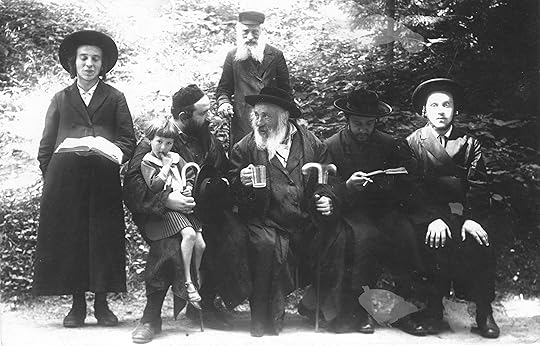
Jews in Truskavets, Ukraine, among them the Hasidic Rebbe Halbershtam from Zhmigrud, 1929 (Wikimedia Commons)
Unconsciously, Londres sees these people in the same dehumanizing and condescending manner as one often reads about encounters of Europeans with people in the jungles of Africa or South America at that time. Obviously he wasn’t aware of the his own latent anti-Semitic remarks:
Londres felt the threat of rising anti-Semitism in Europe. He reported about its disastrous consequences, the pogroms in Eastern Europe:
This book reminded me of Joseph Roth’s 1927 book, Juden auf Wanderschaft, which I read quite a few years ago. Joseph Roth wrote as an insider, emotionally involved in the people he wrote about. Londres writes about his journalistic experiences more as an involved outsider, interested in the big picture. Unlike Joseph Roth Londres visited Palestine too. Londres described groups of people he saw. Often he talked to individuals or even travelled for a while with some of them. His reports, just like those of Joseph Roth, read like stories.
Londres book can be read as an introduction to Jewish culture and history. He certainly knew what he was writing about. He was a journalist who writes like an ethnographer and an anthropologist. His book provides us with fascinating and totally unique insights of European Jewish life of 1929, knowing that it disappeared just a few years later… What haven’t change since his time is the feeling of insecurity among Jews in Europe and in nowadays Israel…
(This book is available in other languages too, among others as The Wandering Jew Has Arrived, Jude wohin? : Ein Reisebericht aus den Ghettos der Welt / Deutsch von Alexander Benzion and ‘'היהודי הנודד הגיע)
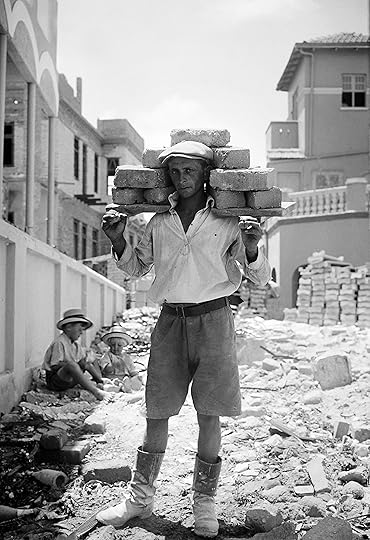
A builder in Tel Aviv, probably 1936 (goodfreephotos.com)
Quotes
Albert Londres, a French journalist and one of the inventors of ‘investigative journalism’, travelled in 1929 across Europe and Palestine to capture Jewish life. From the Jewish quarters of London, Warsaw and Prague, to the far-off shtetls (Jewish villages) of Romania and Poland and ending in Palestine. His travel notes were published in the prominent French newspaper ‘Le Petit Parisien’. In 1930 these articles were published as a book. This book.
Written for the French public Londres didn’t write about the life of assimilated Jews in western Europe, people which everybody knew. France even had a Jewish prime minster and president in the early 1920’s, Alexandre Millerand. His interest laid in what was rather exotic for French newspaper readers of that time: The life of poor Eastern European Jews, living in small shtetls or immigrating to Western Europe to make a living. The way he describes these people is quite astonishing for whoever reads this book nowadays:
'Et les voilà! Voilà les Juifs ! J'ai tout de suite pensé à des personnages extraordinaires descendus ce matin de la planète la moins explorée; mais c'était bien les Juifs. Ils étaient tout noirs sur la neige et leur barbe et leur caftan leur donnaient l'allure d'autant de cyprès. Le vent soulevant barbes et caftans, ces cyprès frémissaient. Eh bien ! et je me l'avouais, transporté d'étonnement je n'avais jamais rien imaginé de pareil. Ah! mon ignorance, toi qui croyais connaître toutes les espèces d'hommes qui tassent la terre à coups de pieds! Et ceux-là vivaient en Europe, à quarante-cinq heures de Paris ?
[...]
J'armai mon appareil photographique et me mis en batterie. Avez-vous jeté une pierre dans un groupe de moineaux? Mes Juifs s'envolèrent.
Peut-être n'en retrouverai-je plus d'aussi beaux ?' p.68-69
Jews in Truskavets, Ukraine, among them the Hasidic Rebbe Halbershtam from Zhmigrud, 1929 (Wikimedia Commons)
Unconsciously, Londres sees these people in the same dehumanizing and condescending manner as one often reads about encounters of Europeans with people in the jungles of Africa or South America at that time. Obviously he wasn’t aware of the his own latent anti-Semitic remarks:
'Le grand-père s'appelait Murgraff. Quand on entra dans le magasin, on vit un homme assis, la tête penchée sur un livre de comptes.Londres was a man of his time. Nevertheless, it is clear that his intentions are honest and good. It seems that he can accept more easily Eastern European Jewish youngsters trying to assimilate and build a modern life in Europe or those youngsters who understood that Europe isn’t the place to be and immigrated to Palestine, to build the new Jewish society.
- Il y a une erreur d'un shilling, cria sa petite-fille, un shilling, c'est considérable!
Le vieux Murgraff sourit. Quarante années d'Angleterre avaient fait du tort à l'orthodoxie de sa barbe, mais la race était sauve.' p.30-31
'L'odeur est spécialement juive - juive orthodoxe. Dans un cinéma, à Cernauti, elle me chassa avant la fin. Cette odeur est un mélange d'essence d'oignon, d'essence de hareng salé et d'essence de fumée de caftan, en admettant qu'un caftan fume comme fume la robe d'un cheval en nage. Individuellement, peut-être, ne dégagez-vous aucune odeur, je le souhaite, mais groupés en lieu clos, vous empoisonnez, Messieurs !' p.172
Londres felt the threat of rising anti-Semitism in Europe. He reported about its disastrous consequences, the pogroms in Eastern Europe:
'Un pogrome est une espèce de rage. Elle n'atteint pas les animaux, mais seulement les hommes et, en particulier, les militaires et les étudiants. Qui la leur communique? On croit, jusqu'à présent, que ce sont les gouvernements. Les gouvernements qui regardent vers l'ouest ne sont pas atteints par ce virus. Ceux qui regardent vers l'est l'ont dans le sang.Continuing his trip, he travelled to Palestine and wrote about the rising tension between Zionists pioneers and Palestinians. He felt the ominous atmosphere.
Les enragés ne mordent pas chacun. Les Juifs, uniquement, leur portent aux dents. La vue du caftan, des barbes et des papillotes les électrise.' p.106
'Rentré en France, j'en étais là de mon récit quand, au début d'un beau soir, un ami poussa ma porte et me jeta:Londres has done what a true journalist does: He returned immediately to Palestine to write about this dramatic development, the ‘1929 Palestine riots': Thousands of Arab rioters attacked Jewish settlers all over the country resulting in hundreds of deaths and injuries, mostly unarmed people.
On tue tes Juifs à Jérusalem !
Je bondis hors de mon encrier.
L'ami me tendit un journal. On les tuait ! On les tuait même quelques mois en avance sur le programme.
Alors j'envoyai promener mon porte-plume. Je pris mon chapeau, le train, puis le bateau.
Je repartis pour la Terre Promise. p.237
'La main-d'œuvre arabe est décidément à bon prix: les assassins n'auront droit qu'à dix cigarettes par tête de Juif !‘Le Petit Parisien’ published the articles Londres wrote under the tragic title of ‘Le Drame de la race juive : des ghettos d'Europe à la Terre promise’. When the book was published a year later it received the rather optimistic title of 'Le Juif errant est arrivé'. At the end of the book Londres asks himself:
Holà, l'Europe! on saigne en Palestine...
Le "home national" devient la boucherie internationale!' p.248
'Le Juif errant est-il arrivé ?There is a certain naivety in his second question...
Pourquoi pas ?' p.285
This book reminded me of Joseph Roth’s 1927 book, Juden auf Wanderschaft, which I read quite a few years ago. Joseph Roth wrote as an insider, emotionally involved in the people he wrote about. Londres writes about his journalistic experiences more as an involved outsider, interested in the big picture. Unlike Joseph Roth Londres visited Palestine too. Londres described groups of people he saw. Often he talked to individuals or even travelled for a while with some of them. His reports, just like those of Joseph Roth, read like stories.
Londres book can be read as an introduction to Jewish culture and history. He certainly knew what he was writing about. He was a journalist who writes like an ethnographer and an anthropologist. His book provides us with fascinating and totally unique insights of European Jewish life of 1929, knowing that it disappeared just a few years later… What haven’t change since his time is the feeling of insecurity among Jews in Europe and in nowadays Israel…
(This book is available in other languages too, among others as The Wandering Jew Has Arrived, Jude wohin? : Ein Reisebericht aus den Ghettos der Welt / Deutsch von Alexander Benzion and ‘'היהודי הנודד הגיע)
A builder in Tel Aviv, probably 1936 (goodfreephotos.com)
Quotes
'La visite achevée, le rabbi gagna le quai de la gare.
Il laissa partir le pullman et prit, dix minutes après, le train des gens raisonnables.
Naturellement, je m'installai en face de lui.
Ma conduite ne m'était pas dictée par un caprice. Cet homme tombait à point dans ma vie. Je partais, cette fois, non pour le tour du monde, mais pour le tour des Juifs, et j'allais d'abord tirer mon chapeau à Whitechapel.' p.13
'Herzl réussissait. Il lança un livre, le Palais Bourbon, qui fit les beaux jours de l'Europe centrale. On jouait ses pièces à Vienne, à Berlin. La Neue Freie Presse le nommait directeur littéraire.
Au bel homme, la vie était belle, quand soudain...
Quand éclata l'affaire Dreyfus.
Il entendit, dans les rues de Paris, le cri de "Mort aux Juifs !"
Jusqu'ici Herzl avait vécu en dilettante. On raconte bien que, dans son jeune âge, il aurait dit au docteur de sa famille: "Il n'y a, pour nous autres Juifs, qu'un moyen de former une nation respectée, c'est de nous en aller en Palestine. - Qui nous y conduira ?" Et qu'il aurait répondu : "Moi ! "' p.50
'J'ai rencontré le Juif errant. Il marchait dans les Carpates, peu après le village de Volchovetz. Ses bottes étant trouées, on voyait que ses chaussettes l'étaient aussi. Un caftan bien pris à la taille l'habillait du cou aux chevilles. Sur sa chevelure noire, un chapeau large et plat d'où s'échappaient deux papillotes soignées achevait la silhouette légendaire. Une étoffe à carreaux formant double besace, dont l'une battait son ventre, l'autre son dos, pendait de son épaule gauche. Il allait à grandes enjambées, marquant son chemin dans la neige.' p.93
'Ce n'était pas la première fois que je touchais cette question de parenté juive par-dessus les frontières. Ma poche contenait des lettres de Juifs anglais pour des cousins de Berlin, de Varsovie et même de Constantinople. En épousant le costume européen, le Juif de l'Est épouse l'Europe et l'Amérique !' p.115
'- Regardez; là, que voyait-on en 1910? Une dune. Et là que voit-on aujourd'hui ? Une immense ville. La ville est à la place de la dune, voilà tout, et c'est Tel-Aviv! Voilà la rue Herzl, l'avenue Rothschild, la rue Max-Nordau, le gymnase, le municipal, le casino, la synagogue, dont on découvre la coupole de la mer, au-dessus de tout! On construit un théâtre qui sera magnifique. Ah! c'est beau chez nous !' p.131
'Nous sommes un peuple polynational, disait Ben le Tchécoslovaque. Un jour, l'Europe sera aussi polynationale. Et polynational ne veut pas dire moins national. Quand l'Europe sera polynationale, la question juive tombera.' p.136
'Savez-vous que les Juifs de ma catégorie sont les plus malheureux? Les religieux attendent le Messie. Les assimilés deviennent lords en Angleterre ou députés en France. Les sionistes marchent vivants dans leur rêve, mais nous, les déserteurs du ghetto? Nous sommes les vrais Juifs errants.' p.210
'Les Juifs nouveaux retournèrent la pièce. Le docteur en droit devint terrassier, l'étudiant, paysan. Ce casseur de pierres vendait des tableaux à Moscou. Ce gardien de vaches était violoniste à Prague. Ce coiffeur de Tel-Aviv plaidait brillamment à Lwow. Cette fermière chantait au Grand Théâtre de Varsovie, et ce Juif, naguère professeur de religion à Vilna et que voici au pied de Nazareth, est berger! Un Juif berger? Jusqu'à ce jour, je n'avais connu que des Juifs banquiers!' p.228-229
'Heureux ? Profondément heureux d'être juifs. Ailleurs, partout dans le reste du monde, quand un Juif commet une mauvaise action, ce n'est plus ni un Français, ni un Allemand, ni un Belge, ni un Anglais, c'est un Juif! Un Juif découvre-t-il une grande chose? fait-il honneur à l'humanité ? Alors, ce n'est plus un Juif, c'est un Allemand, un Belge, un Anglais, un Français. Pour chacun, Einstein est allemand, Bergson est français. Tous ces Juifs d'ici déclarent qu'ils en ont assez de collaborer à l'enrichissement des cultures anglaise, russe, française, allemande ou américaine.' p.274

April 6, 2013
Exceptionnel!

December 23, 2024

 Albert Londres
Finish date: 23.12.2024
Genre: Travelogue
Rating: F
#French
Good News: I finished it!
Bad News: I don't give 1 star reviews lightly
...but I forced myself to read every page in this book.
A. Londres Au bagne
... and I reccommend you read that one and toss this one in the bin!
The writing was repetive and Londres uses
rhetorical questions as "page filling".
After a while I skipped anything ending with a queston mark
and didn't miss a beat!
Personal: Sad to say Albert, you disappointed me this time! This will be my last A. Londres book.
January 14, 2024
Wow. I was not expecting such an engrossing read when I picked this up at Ben-Gurion's Steimatsky's on my way out of Israel.
The author's topic is serious -- the state of European and Palestinian Jewry in 1929, but he writes with wry humor, warmth, and great knowledge (the small factual errors are corrected in brief footnotes). While it's also clear that Londres has some ambivalence about certain groups amongst wider Jewry, overall he is a sympathetic narrator who comes to understand and capture what it means to be a Jew. The section on the pogroms of 1929 was disturbingly reminiscent of current events, but also concludes on a positive note, foreshadowing the intertwined relationship between Jews in the land and those in diaspora.
Well worth the read.
Bonus -- apparently Londres was the inspiration for Herge's Tintin!
The author's topic is serious -- the state of European and Palestinian Jewry in 1929, but he writes with wry humor, warmth, and great knowledge (the small factual errors are corrected in brief footnotes). While it's also clear that Londres has some ambivalence about certain groups amongst wider Jewry, overall he is a sympathetic narrator who comes to understand and capture what it means to be a Jew. The section on the pogroms of 1929 was disturbingly reminiscent of current events, but also concludes on a positive note, foreshadowing the intertwined relationship between Jews in the land and those in diaspora.
Well worth the read.
Bonus -- apparently Londres was the inspiration for Herge's Tintin!
April 17, 2019
A true eye opener. A non-Jewish French journalists travels among Eastern Europeans Jews in the late 1920s. My totally uniformed visions of how these people lived have been shattered and changed forever. My "visions" were mostly based on the portrayal Jewish people in the play Fiddler on the Roof. Poor but well fed, making the most out of their lot in life and in constant communication with God. But the Wandering Jew presents an important reality check. The most glaring image is the abject poverty these people experienced. The are several interesting observations in this book about a people who were within decades of being exterminated.

September 12, 2020
The many pogroms committed upon the Jewish people are horrific and haunting. One such quote: "More than one hundred thousand wounded. More than three hundred thousand wounded. More than one million beaten and pillaged, just in Ukraine and Galicia in 1918-1919. If we study them closely, we see the pogroms present themselves in three forms - non-bloody, bloody, and cruel and sadistic.
July 23, 2020
A unique book that seems to have been written by the perfect author.

December 11, 2020
Excellent read
Well written and a marvelous, prescient work. The book often feels less like reporting as it does a flowing work of poetry.
Well written and a marvelous, prescient work. The book often feels less like reporting as it does a flowing work of poetry.

September 18, 2025
EXCELLENT
Displaying 1 - 15 of 15 reviews