In questi racconti dell'autore di "Follia" e di "Spider", i lettori proveranno il brivido di una discesa nell'universo della narrativa gotica, rivisitata in una nuova chiave postmoderna per accrescere l'inquietudine e renderla più attuale, quasi palpabile. Casi di vampirismo, ossessioni mentali, delitti crudeli e passionali, manie inconfessabili, strane visioni angeliche e notti senza fine: tredici avventure della mente raccontate da uno scrittore che ha fatto del graduale e inesorabile spostamento verso la follia il tratto distintivo delle sue teorie e dei suoi personaggi. Ma con un pizzico di imprevista ironia, per dare sollievo e forse per ricordarci che anche il divertimento può trarre alimento dalle regioni oscure dell'Essere.
Patrick McGrath was born in London and grew up near Broadmoor Hospital where his father was Medical Superintendent. He was educated at Stonyhurst College. He is a British novelist whose work has been categorized as gothic fiction. He is married to actress Maria Aitken and lives in New York City.
I did enjoy the writing in this and the short stories was unique enough to not blend i with each other but I didn't completely loved the collection. A good read though
Blood and Water is the debut collection of stories by Patrick McGrath, author of contemporary Gothic novels which I have recently read and reviewed, Spider and The Grotesque. The stories range from moody and atmospheric to downright hilarious, and among their narrators are not only men and women, but also a fly and a boot.
The best stories in the collection come early. In The Angel, the narrator reminisces about his first meeting with Harry Talboys - an eccentric older man, who claims that he has once met an angel. McGrath uses the classic Gothic device of nesting stories, with the narrator relaying Talboys' story which he has not witnessed himself, but heard told by Talboys. The story is short and memorable because of the central character, whose story has caught me by surprise.
In The Lost Explorer, a young girl named Evelyn discovers a small tent in the garden of her parent's London house. Inside the tent is a lost explorer, feverish and slowly dying from Malaria, constantly fearing an incoming attack of the pygmies. Young Evelyn is delighted by her discovery, and begins to care for the lost explorer right under the oblivious nose of her parents. Evelyn's parents have no idea what their daughter is doing, and seem to not really care. Boundaries between the real and imagine dissolve, and Evelyn is left alone to try to understand the explorer - whose otherness and strangeness reflects her own puberty and approaching maturity. Seen this way, Evelyn and her garden can remind the reader of Lewis Carroll's Alice and her Wonderland.
The Black Hand of the Raj, set in colonial India in 1897, opens with a short reflection on the nature of imperialism and features a young woman, Lucy Hepplewithe, who travels to meet her fiancee - an English colonial officer named Cecil Pym. They are to be married with a wonderful ceremony, but her excitement gives way to surprise as she discovers that he has been afflicted with a strange and upsetting condition: a black hand has literally sprouted from his head. Physicians tell her that the hand is impossible to remove, as it is attached directly to the brain. The eponymous hand can be seen as a double metaphor: a projection of the British imagination of literally holding power over the strange, dark worlds of India and other colonies, and of the very same world taking hold over their own mind, eventually driving them to madness and tragedy - as it happened to colonel Kurtz in Heart of Darkness.
Other stories in the collection continue to be intriguing: The Boot's Tale is the story of a decline of an American family narrated by a boot, set in an underground shelter after the nuclear holocaust has destroyed most of the planet; The E(rot)ic Potato is narrated by a fly named Gilbert, who searches for food along with other flies, including the eponymous potato - which is not what you might think it to be. Hand of a Wanker is an absurdly comedic and bizarre story of an escaped hand belonging to a chronic masturbator, and Marmilion is a reimagining of Poe's Cask of Amontillado, featuring a female photographer on a decaying Louisiana plantation. The complaint which can be made regarding these stories is that they feel more like sketches than actual stories, and are not as fully developed as the opening three.
For fans of strange short fiction Blood and Water should prove a satisfying way to spend an evening or two, but not essential. In this collection the author was still experimenting with finding a voice, which he seems to have done well in his later and more successful novels.
This collection of short stories was impressive. It's hard to define what genre this collection would fall into as you have horror, humor and downright odd. What I liked about it was that it was very well written, and even the odd stories that didn't appeal to me that much were still wildly creative and interesting. If you are looking for something a little different without being TOO weird, this would be a good read.
***Reread October 2018: I randomly came across Patrick McGrath for the first time with this book, Blood and Water and Other Tales just found on a shelf in the horror section of Half Price Books in the late 90s (the one that used to be on Guadalupe, anyone who lived in Austin back then?), and I started buying everything he'd ever written after that. This is his only collection of short fiction, though, and I believe it was his first book. I was about to drop the book from 5 to 4 stars on this recent rereading of it, but decided to keep it five. It's awesome to see the methods that McGrath is a fucking master at here in their fledgling forms. There are the rich people with mysterious pasts, shady histories in exotic places, insanity, and, what McGrath does better than any other writer I can think of living or dead, the unreliable narrator. Also his two favorite settings, rural England and New York City, are already becoming real here.
The collection gets off to a weird start with "The Angel," then just kicks ass after that. "The Angel" is about a dude who, I don't know, it's a little unclear, but there's an old man who is still alive but rotting.
The Lost Explorer: A tent complete with a British explorer from Africa delirious and dying of fever appears in an English garden and is discovered by a little girl.
The Black Hand of the Raj: British soldiers in India getting cursed by a mysterious old man in a loin cloth, resulting in them growing evil hands out the tops of their heads.
Lush Triumphant: An alcoholic painter in New York City painting weird shit.
Ambrose Syme: Horrid murder story brilliantly told about a teacher at a religious school and a child killing.
The Arnold Crombeck Story: Another murder story about a woman interviewing a serial killer in the weeks before his execution without realizing that the entire time he's planning one last murder.
Blood Disease: A tiny village all with some kind of odd blood disease murder people coming through and drink their blood.
The Skewer: My favorite of the bunch, about a guy who keeps seeing 15-inch tall world famous psychiatrists popping up everywhere. There is a great twist ending too.
Marmilion: Another favorite in this book, and a fantastic, pitch-perfect example of the southern gothic genre, with a typically snarky McGrath ending thrown in, hahahaha, laughing about it right now.
Hand of a Wanker: Completely bonkers story about a man who thought he jacked off too much and sliced his hand off, only now the hand is still sentient and wants to keep hanging out in titty bars harassing women using the bathroom. Reminded me a lot of the hand in Evil Dead 2, but with a dirty mind.
The Boot's Tale: This was the one story I kind of remembered after nearly 20 years, a post-apocalyptic black comedy told from the point of a boot.
The E(rot)ic Potato: For sure the weirdest thing in the book, and I think it actually might take place in the same world as "The Boot's Tale," from the point of view of a talking fly, in a world where all the insects can talk, who is lead to a rotting human feast by a sexy dragonfly. What the fuck?
Blood and Water: Title story! Another tale of murder and madness in typical McGrathian style. Of the stories in this book, this one is the most indicative of the kind of stuff he would write later after his Quickening and becoming a literary master.
*** Original review from way the fuck back: Another really really underrated author, I've never met anyone in real life who's even heard of him, but he writes this really deadpan, funny, scary stuff. Highly highly recommended.
This is an entertaining collection of dark, macabre short stories. Like most collections there is some variation in quality, but here that means from the merely good to the very excellent. The thirteen tales all invoke the shadows that lie in the human heart and in the dark spaces of our world. Some are merely surreal while others are more disturbing entering the realm of the grotesque, but in each there is a vein of sardonic humor.
I know that I had read a couple of them before – surely no one else had brought to life such words in such the same way – but I cannot recall in what collection I saw them before. Encountering them was like a warm reassurance that I had not totally missed out on this author before now. As a whole this slim volume makes me eager for more of the same.
The evil, if you will, that the author reveals is embodied in both psychic and physical deformation. Many of his characters believe that they are merely living life as it should and must be done. Whether they are acting out of unnatural impulses or physiological imbalances, all seems right with their world. Whether from the upper or lower classes, Old World or New, Mr. McGrath spins a mighty tale.
If you are excessively squeamish, you might just need to gird your mental loins and take one for good writing. If you like dark comedy along with dark imaginings, then you should be singing the praises of this book very soon indeed. A full "4" and probably a "4.25".
For my full-length review and reviews on the individual stories, please visit Casual Debris. My rating is 7/10... had a hard time translating to 3/5 or 4/5.
Amid its varied approach, the stories in Blood and Water offer tales narrated by both men and women, as well as by other more unusual narrators, such as a boot and a fly. Stories take place in England, India and the US, from Manhattan and Greenwich Village to the Louisiana bayou. We have tales about houses, family histories, vengeance, psychological breakdowns and the post apocalyptic, with the prominent undercurrent of sexual repression and perversion. Consistent throughout is McGrath's elegantly verbose and controlled prose. The writing throughout each of the thirteen stories is a pleasure to read.
While the stories in this collection do include some clear horror tales, they encompass aspects of the darker parts of our inner selves rather than of an exterior threat. Whatever horrors the characters encounter, they are inflicted not by outward malevolent forces, but as a result of human malevolence. Our dark subconscious, our repressed desires and our inability to recognize truths about ourselves and those around us, or to simply deal with them appropriately, are factors lying in abundance here. These stories are unconventional, and many don't have a clear, linear plot, but are presented more as character sketches, people confronted or dealing with unusual circumstances. Most of the stories borrow elements of classic literature, both of classic supernatural tales as well as elements of Victorian and Edwardian prose, Gothic and otherwise.
McGrath is very much a stylist. His prose is flawless, smooth and literate. His sentences are so well constructed that often I read them aloud in order to better appreciate them. The stories also embody elements beyond simple story-telling, as McGrath imbues many of his tales with serious thematic elements. Often he will open a story with a kind of discussion on a topic, such as colonialism in "The Dark Hand of the Raj" and the humourous considerations on priesthood in "Ambrose Syme." He is not being didactic or preachy in any respect, but rather playful.
There is not a bad story in this collection, but a few do suffer in that the plot aspect is lacking in a tale that should be more story than sketch.
This was Patrick McGrath's first book, and I actually recall first seeing his writing in some anthologies or literary magazines back in the 1980s. Here he sets out a mixed bag of tales, a few of which are brilliant, and a few which are merely oddities, but still attention-grabbing ones. At his best, he is a first-rate prose stylist who manipulates playfully the elements of his stories and comes up with stuff that is unique. To call him a literary horror/gothic writer fails to capture the range of his interests. He is literary, but never academic, and there is usually a dry sense of humor at work as well as an examination of things that go bump in the night. We could possibly apply the term post-modern to him as well, since he seems to delight in deploying twisted elements of traditional British fiction such as colonial-era missionaries to Africa and India, English boarding schools, and upper class families in their mansions. For some reason monkeys appear in many of the pieces as well.
My favorites were: "The Angel" in which a drunken, would-be writer in the East Village of New York City befriends an older gentleman who is harboring a truly shocking secret. "Lush Triumphant", set in the same locale, a character sketch of an unapologetically selfish alcoholic artist who runs into some interesting situations. "The Arnold Crombeck Story" set in the 1950s, about a cheerful, Alec Guinness-like psycho killer giving an interview from prison ("Strange bird, the mind," he says). "Marmilion", a gothic piece about the decline into madness and mayhem of a proper Southern family, told by a scholar writing in the present, and featuring the fictional Louisiana spider monkey. "Hand of a Wanker" is also arresting and funny, about a severed hand running amok through the East Village bar scene. All of these belong in any collection of interesting gothic/horror short stories. The title story, although well-written did not strike me as being particularly fascinating, and I wondered why it was chosen for the honor. A few of the others did not particularly move me, but were still weird enough as to merit attention (i.e. the story of a fly, another told by a boot, another about an evil hand growing out of a man's head.)
This was an excellent collection overall but it looses it a bit towards the end as things get a bit silly. The Angel, The Arnold Crombeck Story, and Blood Disease were favorites.
Ich habe hier noch keine deutschsprachige Kritik bei GR gelesen, also hier ein paar Worte zu einer meiner Lieblingskurzgeschichtssammlungen. Fast alle Geschichten haben mich auf irgendeine Weise beeindruckt. Man kann sie wohl alle als Grotesken bezeichnen. Zuweilen sind sie makaber, dann er wieder fantastisch, ganz wie bei Edgar Alan Poe. Aber das Groteske an ihnen, dass sie die Erwartungen des Lesers ins Leere laufen lassen. Sie gehen meistens überraschend aus. Es gefällt nicht jedem, wenn seine Erwartungen unterlaufen werden. Mir hat hat das auch nicht immer bei der Lektüre gefallen. Wenn bei einer Erzählung die als Gespenstergeschichte beginnt, sich am Ende statt eines menschlichen Skeletts eines von einem Affen gefunden wird, und ich mich fragte, was soll das. Aber ich schätze eben auch das Element der Überraschung. Bekannte fantastische Gestalten wie Engel und Vampire erscheinen im neuen Licht. Eine beeindruckend große Bandbreite der grotesken Sinnlosigkeit entfaltet McGrath hier. Insgesamt ist es auch befreiend, denn Bedeutung kann auch Bürde sein. Eine Geschichte muss keinen Sinn oder eine (erwartbare) Botschaft haben, um gut zu sein.
Patrick McGrath is one of those writers who could have been, and almost was, a major presence in contemporary literature, not to mention the new gothic and the weird. Unfortunately, it hasn't quite worked out that way. There have been some lazily misconceived books ('Port Mungo' anyone?), a fascination with New York (never a good thing, even if one is a New Yorker), and a tendency to repetition, usually in a forlorn attempt to recapture the glory days of 'Dr Haggard's Disease' and 'Asylum'. 'DHD' was a superb novel; beautifully evocative, haunting, erotic, moving and ultimately bizarrely horrifying. I didn't like 'Asylum' as much, perhaps because of its relentless gloom, but I had to admire its elegant prose and coolly unpleasant psychiatrists. I don't know what went wrong after 'Asylum', but the other day I found myself re-reading the early collection, 'Blood and Water' and found myself enjoying it a great deal. There is a tendency in these stories to undercut morbidity with humour, as if, in those heady days of postmodern irony (oh, the 1980s), nothing could be trusted or invested in on its own terms. This does weaken some of the stories. However, there are some brilliant moments, notably 'The Angel', a tale in which Quentin Crisp meets Jay Gatsby (sort of) in a hot New York summer (here for once the city's presence is a bonus rather than a distraction or handicap). I also love 'The Black Hand of the Raj', which for all its knowing humour (look at that introductory paragraph!), manages to be memorably weird. Fans of 'Ripping Yarns' will not be disappointed. McGrath certainly has a lot of talent, but he seems caught between doing what he used to do well (here he is dulled by repetition) and being unable to find an alternative to it. His forays into historical fiction have been unsatisfying affairs, and he seems to be drifting from one book to another. It's a shame because there was a time when he was a wonderfully exciting alternative to the mainstream 'literary fiction' which then clogged the shelves.
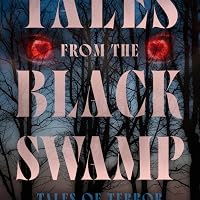
Innanzitutto non capisco come mai abbiano tradotto il titolo invertendo i termini (l'originale è "Blood and Water"). Secondo me sarebbe stato più d'impatto lasciare il sangue come primissima parola che il lettore approccia vedendo il libro. Va dritta al punto, si sposa con la copertina, fa intendere che si sta per leggere qualcosa di crudo e che non risparmia dettagli, sanguinolento appunto.
Il volume raccoglie tredici racconti brevi e si aggira sulle 200 pagine. Essendo passato parecchio tempo da quando l'ho letto, non ricordo tutti i titoli dei testi... Ma le trame sì, per cui posso dirvi che si spazia dal puro horror inquietante al mistero grottesco, dall'ironia simbolica e un po' erotica alla psicologia malata. Le atmosfere sono diverse in ogni racconto (anche perché le storie toccano ambientazioni e luoghi molto differenti) ma la penna di McGrath rimane sempre scorrevole e sublime, tiene incollati alle pagine.
Ricordo che mi colpirono in particolare i primi racconti della raccolta, soprattutto uno che trattava di un uomo anziano elegante e tutto d'un pezzo che raccontava ad un altro uomo di quando da giovane aveva incontrato un angelo. Mi è rimasto impresso perché aveva le vibes del gotico classico, intrigante e misterioso ma inquietante. Ed è una cosa che io adoro.
Alcuni racconti erano meno comprensibili di altri, quindi c'è anche un fattore enigmatico da mettere in conto: certe storie vanno lette per il puro piacere di leggerle, non per comprenderne ogni singolo aspetto e risvolto.
Ultimo appunto da fare: ci sono storie che rientrano appieno nel genere del surreale / bizzarro, narrate da uno stivale o da una mosca, oppure che hanno come protagonisti una mano maniaca o una patata. Insomma, preparatevi a tutto!
Mannerism, dawdling. I read the collection 20 years after reading the "Arnold Crombeck Story" in hopes of a similarly entertaining treat, very soon, though, realizing that not only will my illusions be thoroughly squished, but also that not even "Crombeck" is such a hoot itself. It's a high school reading, that is, foreign language high school reading. And the rest - often risible, often the result of an outlandish idea executed without necessary skill and prowess, thus lacking force. Just curlicued sentences, cut from the cloth of increasing sameness.
Disturbing, vibrant stories. My first time reading McGrath but I was blown away from the first. Has some gothic tinges (Poe-ish in places) and magical realism, although it's plenty creepy and gorgeously crafted even when he's playing it straight.
Era dai tempi in cui mi ostinavo con pubescente caparbietà a leggere gli articoli di Scalfari nell'ultima pagina de L'Espresso che non mi sorbivo qualcosa di cosí programmaticamente ed insensatamente noioso. Nella prima di copertina la "grida" di Clive Barker recita: Tredici racconti dell'orrore scritti con grande stile e magistrale gusto per la perversione. Il frutto di una visione unica. Su due cose sono d'accordo: i racconti sono effettivamente tredici e la visione è indubbiamente unica, solo che è talmente priva di qualsiasi motivo di interesse da far appassire i neuroni come ciclamini al sole. Per carità qualche buona idea c'è e non si può negare che le situazioni, quasi tutte, sono costruite in modo convincente. Ciò che fa maggiormente difetto, ed è imperdonabile in un racconto breve tanto più se dell'orrore, è il modo miserevole in cui viene sciolta nel finale la (scarsa) tensione accumulata fino a quel punto. Al momento della resa dei conti, quando davvero dovrebbe esplodere l'orrore e manifestarsi un qualche gusto per la perversione (anche se non magistrale...), l'impalcatura si disfa in poche righe, frettolosamente, con una noncuranza in odore di sciatteria. Non sono un grande appassionato del genere però ho letto qualcosa di Poe, King, Koontz e Lansdale: il libro di McGrath non ha niente da spartire con nessuno di questi.
Alcuni racconti poi come La mano di un maniaco e La patata ero(t)ica, (sic!) dilagano tragicamente nel trash involontario mentre altri, come La Mano Nera del Ras e Ambrose Syme, sono candidamente inutili. I migliori racconti sono forse i primi due: L'angelo e L'esploratore perduto, quest'ultimo in particolare sviluppa l'originale idea di un esploratore consumato dalla febbre malarica accampato chissà come in una zona remota del giardino di una villa inglese. Prima di rendere l'anima, l'uomo riceverà conforto dalle cure sollecite della bimba che abita nella villa con i genitori, a loro volta gustosamente all'oscuro di tutto.
Un'ultima osservazione sulla traduzione. Il titolo originale della raccolta è Blood and Water (and Other Tales) e coerentemente l'ultimo racconto si intitola Blood and Water. E allora perché mai la traduzione italiana presenta i due termini invertiti? Acqua e sangue è cosí diabolicamente piú intrigante di Sangue e acqua? Mah...orrori dell'editoria...
A parte un paio di racconti che non mi hanno detto niente -ironicamente, uno dei due era proprio l'ultimo, quello che dava il titolo al libro- sono rimasto...folgorato. Sulla carta è un'antologia horror, ma qui voliamo ALTO! Una narrazione che porta gli elementi digustosi e soprannaturali all'interno del tessuto sociale, come se gli eventi in ogni racconto fossero parte di una cronaca del quotidiano, non un intrusione di qualcosa di soprannaturale. Non so neppure se 'horror' sia un'etichetta corretta. E' facile capire quali siano gli elementi mostruosi, ma è il nostro rapporto con essi che qui viene rivisto. E' un po' come se il babau venisse illuminato dai riflettori, solo per scoprire che quasi fa pena. Tra classici tropi e trovate originali, questi racconti non mirano a terrorizzarti, ma a farti riflettere. E considerando che ha 35 anni, è invecchiato BENISSIMO.
This is an unusual book of fantasy and science fiction, all horrific and often tinged with dark humor. I liked all of them, but my favorites are The Black Hand of the Raj, The Arnold Crombeck Story, Blood Disease, Marmilion, and The Boot's Tale. A selection of these would have made a great Amicus horror anthology film. Unfortunately, the only story in this book to make it to film is The Lost Explorer, and good as it is, I think these others are better. McGrath's novel Spider was filmed by David Cronenberg in 2002. That is an excellent film, and I need to find my copy of the novel to read next.
Non l'ho apprezzato, questi racconti erano solo vagamente gotici o dell'orrore. Spesso il finale era prevedibile. L'unico attinente alla descrizione del libro è più gradevole è "La malattia del sangue".
An interesting selection of modern gothic with a twist. McGrath skilfully manipulates the gothic tropes in a series of tales that resonate from firelight stories to Louisiana bayous. Monkeys, ghosts, severed hands and heads, beautiful fading women, infused with decadence
He asked me to write an account of our friendship, I wouldn't otherwise have done it; writing seems futile now. Everything seems futile, for some reason I don't fully understand, and I keep wondering why any of us cling to the raft.
Alcuni racconti mi hanno presa molto, altri purtroppo erano un filo prolissi e noiosi, ma nel complesso è una lettura piacevole che tiene occupati un' paio d'ore.