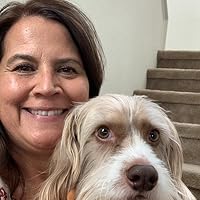
Kelly Bennett and Ronnie Davidson met while enrolled in a children's writing class at Tulsa Community College, in Tulsa, OK. During one class session they dreamed up the same book idea at the same time — a scratch-n-sniff cookbook — and the writing team of Jill Max was born.
The name, “Jill Max” is a combination of Ronnie's daughter's name “Jill” and Kelly's son's name “Max.”
During their 20+ years of collaborating, their work has appeared in more than 50 magazines and newspapers, they have co-authored 5 picture books, a Cambodian survivor story for young adults, and compiled 2 collections of Native American Legends. Though the “Jill Max” team has been separated geographically they continue to collaborate on projects.
A collection of stories from different Native American tribes, concerning various mythological spider figures. My favorite story was the Osage spider story, and I loved Redwing T. Nez’s illustrations. But some tales were better than others. Another good collection (that, I admit, I enjoyed more) is “The Girl Who Helped Thunder” by Joseph Bruhac.
This is one of my favorite collections of Native American stories. This book offers lovely renditions of the tales and each story is accompanied with historical information pertaining to the tribe that contributed the tale. The gorgeous illustrations depict a variety of tribal-inspired art.
I wish this book was more readily available in hardback - kids are rough on paperbacks and this paperback version probably wouldn't have survived my childhood (and this book is one that I would have wanted to keep forever, even as a young child). I recommend tracking down a hardback copy for serious collectors of myths and legends.
This book is a collection of 14 short and simple tales from various Native American groups. Each tail ties into the Spider motif that weaves its way into Native American oral traditions.
The authors and presenters are an aggregate of storytellers and various writers. Even the editor Jill Max is a pseudonym of the team of Ronia K. Davidson and Kelly Bennett.
Each tail is simple and geared toward the young reader of grade two and up. It starts with a few Paragraphs explaining the particular culture the story is being told by and for. These include Kiowa, Tewa, Zuni, Wiyat, Osage, Muskogee, Navaho, Achomawi, Cherokee, Hopi, Cheyenne, and Lakota.
Not being that familiar with the different cultures I cannot vouch for the authenticity of the different color paintings that accompany the stories, however, they add a visual plus for the young reader.