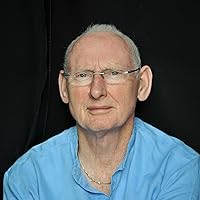
All serious politicians are supposed to possess a hinterland, but not all do. Chris Mullin was one who did. By the time he entered parliament he had reported from the wars in Vietnam, Laos and Cambodia and tracked down the survivors of the CIA operation in Tibet. He was the author of three novels, including the classic A Very British Coup . His successful campaign to free the innocent people convicted of the Birmingham bombings was described as 'one of the greatest feats ever achieved by an investigative reporter'.Elected to parliament, aged 39, he quickly established himself as a fearless inquisitor before going on to become a minister in three departments. His three volumes of diaries have been widely acclaimed as the best account of the Blair years and the rise and fall New Labour. He left parliament in 2010 ('better to go while people are still asking why rather than when'). These are his memoirs.
Chris Mullin is the former MP for Sunderland South, a journalist and author. His books include the first volume of his acclaimed diaries, A View From the Foothills. He also wrote the thriller, A Very British Coup, with the television version winning BAFTA and Emmy awards. He was a minister in three departments, Environment, Transport and Regions, International Development and The Foreign Office.
Regardless of their particular hue, politicians, these days have made themselves one of the least respected professions for a whole raft of reasons, being out of touch, self-serving and how shall I put this, economical with the truth a lot of the time. A sizeable number of them have never worked outside the Westminster bubble either, going straight from a degree from the right university into a policy unit or working for politicians directly. Very rarely these days do you come across one who has a hinterland. In essence, this means someone who has finally become a politician after having experienced the world and workplace and is probably better placed to make a sensible decision.
Mullin was one of those people who did have a life before politics, he had been a journalist reporting from the wars in Vietnam, Laos and Cambodia. Tracked down the survivors of a CIA operation in Tibet, written three novels and successfully campaigned to free those wrongly imprisoned. He was first elected to parliament as a Labour MP at the age of 39 and immediately set about asking the difficult questions to those who had made themselves too comfortable.
Because of this he was not always liked, even by those in his own party, but his persistence and consistency meant that he earned the respect of other MPs in the end. He was asked to be a junior minister under Blair and New Labour and worked for three departments by the end of his time in government. Mullin much preferred being on the Select committees though where he felt he had much more influence that he did as a junior minister.
I picked this it up because his diaries were a brilliant expose of what it was like to be an MP and a junior minister. It is a little different from those though as this is a potted biography of his life before and outside the political arena, though naturally, he does venture in there as it did take a lot of his life up before retirement. He has far more depth than most current shallow politicians and that alone makes this worth reading.
I picked this up because I'd made my way through his political diaries and I suppose one piece of advice I'd offer is that this book is best read as an adjunct to those diaries, rather than as a stand-alone piece. On its own, I think it skips over too much of Mullin's life – and in particular his life in politics, which is after all the reason that people would be interested in reading about him in the first place – but if you've read the diaries and find yourself wondering a little about what their author did before he went into Parliament (he was, after all, nearly 40 when he became an MP, young perhaps by the standards of our current UK political leaders, but old in the context of an era when so many MPs went straight from university, to working as a research assistant, to entering Parliament by the time they were 30.)
I hadn't realised that he had actually had a not insubstantial career as a journalist through the 1970s reporting on the wars in Vietnam and Cambodia, and it is this section of the book that is most interesting – at least to those, like me, who've already read the diaries and found the very potted summary of his career in politics, and indeed, his decision to get out of the game and spend more time tending to his garden, in the later chapters, added little to what was in those diaries. On the other hand, his stories of reporting from Vietnam, and of his becoming disillusioned first with what he saw as the deceptions of the US military and its unwillingness to admit that it was inflicting enormous carnage on the civilian population fighting a war it had no hope of winning, and then, following the peace, with the self-defeating tendencies of the Vietnamese Communist government, and in particular with their habit of deciding who to employ not on the basis of who could do the job, but on the basis of which side they had been on during the war. I wonder if, in a small way, it helped to form Mullin's own political views, which always struck me as being a good deal more suspicious of concepts like ideological purity and unquestioning trust in the 'party line' than many others on the left of the Labour party. He strikes me as someone who would have been an equally awkward and semi-detached Minister in a Corbyn government as in the Blair government in which he served as a Minister for a time (this book being written in 2016, there are a few nods to Corbyn, in contrast with the diaries, where the man barely warranted a mention in more than 1,000 pages, despite the fact that they were at least arguably both from the same part of the Labour party.
So, read the diaries first. And if you like them and are curious to learn more about, quite literally, their author's hinterland, then maybe you might want to read this afterwards.
I was given this by Peter - I'm still unclear why he owned it in the first place.
Maybe there's grade inflation or something - in the past I might have given this 5 stars as I enjoyed it hugely, but maybe you need to like political diaries ...
This is a potted autobiography - his diaries appear somewhere else.
Mullin writes disarmingly - you really feel you like this chap, while at the same time it's clear that he is very clever, vastly experienced and a remarkably hard worker, so beats me on most metrics. I also like it as the central events he describes are things I recall well and thought I knew at least a bit about.
His closing remarks are most unlike a politician. I might go and buy his proper diaries.
This is one of the author's very best books….I read it in one sitting. Firstly because it puts his fascinating and varied life as a journalist, novelist, campaigner and politician into one overarching shape (including gardening, one of my passions!) And the lessons he draws at the end - about life and politics - felt both profound and earned second, the story of his meeting and wooing his wife in vietnam and their subsequent marriage was incredibly moving. And lastly, the lessons he draws for the labour party and its future, by charting his involvement from the 80’s, through the blair years, and on into today’s struggles, were bracingly fair minded and compelling. A wonderful achievement by a writer fast becoming one of our national treasures!
I really enjoyed this book. I thought that it added some much-needed background to the Diaries, to the extent I would like to read them again now knowing more about the context.
This book only contains one or two chapters about the events of the diaries, though - it is overwhelmingly focused, as the name might suggest, on his time before those events, and that is the book's real strong point. With wit and wryness, Mullin takes you through some of the recent past in British politics, which contains a veritable trove for Labour politicians to take note and say "we've been here before". It also shows the horror and desperation of some of the other events of the second half of the last century. I highly recommend for all.
After reading the three volumes of his diaries - as a back bencher & then minister in the Blair governments - it was clear that Mullin was a thoughtful & sensible MP, perhaps surprising given that he was often lumped together with the more ‘looney’ elements of his party. This memoir covers in more detail the other aspects of his life: his travels in Vietnam & Cambodia, his editorship of Tribune, his campaigning (he was vital in the freeing of the Birmingham six) and his early forays as an MP in Sunderland. He’s not a witty or a particularly sparkling writer but it’s a well told story and a fascinating story of a ordinary MP who occasionally did extraordinary things.
The last of his three biographies tells of political life as it is. Highs and lows as a human being strives to make a difference in the politics of our (well, my) life. He may not approve, but the light shines through him, and the darkness cannot and will never put it out.
Chris takes us through various parts of his life; I have not read his other books but I suspect that there is overlap.
If you are interested in politics from the 1970s to the 2000s Chris provides a view from a person who was heavily involved but never with his levers on political power.
A frank and honest account of a persistent and hardworking idealist, his struggles, failures and surprising successes, some notable. Excites sympathy and admiration.
Interesting account of an ex Labour MP's life, before politics, in opposition and government, and in retirement. Only disappointment was the lack of mention of his life as a student at Hull University, where we overlapped.
Good as context for the three volumes of his fascinating diaries. A strong point of the diaries was how Mullins had a direct view of some interesting events; I didn’t find Hinterland a great read in their own right.
The mixed bag of his career. A good piece of era insight from his perspective, on the 4 principal items in his career: life in Vietnam in and after the last phase of the war, then back home: writing the silly lefty TV series A Very British Coup, the fight over reselection for Labour MPs in the 80s, and the inspirational fight to clear the Birmingham 6 - and how it took him to some scary places in Ireland. A bit on his Blair era experience where he felt far more influence as a backbencher chairing the home affairs select committee, than when an unhappy junior minister absurdly expected to feign expertises he did not have. Also good common sense experience from Sunderland on how to retrieve post-industrial communities from underclass disorder by adapting rules to recreate responsibilities, from both councils and private landlords, for the infrastructure there and the neglected houses.
There, he shows that considered intervention is right. But surprisingly for a name remembered of the left, he is not dogmatic for nationalisation, and favours a moderate mixed economy. Thus he was not hard left and is surprisingly critical of their rigid thinking and its effect on holding onto support. It's interesting that following the communist takeover of South Vietnam after 1975 as a journalist helped form this view, he acquired a Vietnamese wife so his knowledge is intimate, and he manages to write cuttingly critically of it while still being against the war. Mandatory reeducation camp terms for folks connected to the old regime often had impractical results upon the economy, created a quite skilled marginalised underclass and led to the boat exodus. Back home he shows how his support for reselection came from practical experience of businessmen manipulating local parties, not from Benn, and was wrongly made into a bogey of extremism because it took string pulling power away from the leadership. That history repeating itself now with the reselection issue used against Corbyn.
On his publishing history as a modest novelist and journalist of justice standards: I have never seen in a published book such open inside story on the warts of how publishing works. Business choices to neglect markets, to publish only small unplugged print runs in some countries, and let the author down by it, or promote a book misleadingly to a readership who its real message does not quite match. All to vindicate your worst fears that the circulation of written thought is erratic, neither rational nor scrupulous, and a lot about luck and circumstance.
Book's down side: he never mentions CND as a cause of Labour's 80s long wilderness, clearly determined not to believe that himself, and without it his view of the wilderness's causes feels contrived and wrong. Too many extraneous bits of local or family nostalgia, partucularly in the early chapters, including maddeningly unnecessary WW2 references that could put you off the book before you ever reach the politics. Skip that, they made me angry for their generational unfairness particularly for coming from a CND supporter. The chapters are arranged by themes, rove them and start in the middle on the career items that interest you.
I'm not normally a fan of autobiographies because I find the "and then I did this" format a little tedious. This book was lent to me by a friend with a warm recommendation and although it started a little slowly once the author started sharing his experiences in SE Asia, a region of the world I know a little about and am fascinated by, and his journalistic work and then his time as MP for my home town of Sunderland I was hooked. This is the story of a patient, committed conscientious man with a passion for justice. His espousal of the cause of the Birmingham Six has been told elsewhere; what I found myself grateful for was his hard work on parliamentary committees on the unsexy issues of transparency in the judiciary and the funding of political parties. Thank goodness someone has the appetite to attend to the sort of issue that is of fundamental importance, but is not newsworthy. I was also warmed by his appreciation of the town of my birth and its people. I hope he's enjoying his well-earned retirement and his garden.
From the baby-booming author of A Very British Coup, this is a humane and acute memoir of a principled parliamentarian who never succumbed to the temptations of being pure or pious. It tells a moving story of how making the world a better place calls for pragmatism as much as principles. It's funny, well written, occasionally rambling, but always an engaging account of an important time in UK/Europe and Asia. Self-effacing Mullin made risky and courageous decisions throughout his life and demonstrates how slender are the threads that our lives and history hang upon. Compulsory reading for anyone prepared to take up the torch for lighting the future.
Chris Mullin's diaries are witty, insightful and full of frank insights about how politics really happens. This book has occasional moments of similar brilliance but generally does not live up to the same standard.
Loved the diaries and fascinating read. Hinterland is a pleasant companion and no disappointment. But not as compelling as the diaries. Still the insights to Vietnam, Tibet and the politics of the period stand out.
Though an enjoyable insight into Mullin's life, it lacks the same kind of pace and drive that his diaries had, which made them so compulsively readable. Worth reading but more as a backdrop to his diaries then the centrepiece of his work.
Heartfelt and truthful, written in a very readable manner, shows how political intrigues are at the centre of everything. As in his diaries, he always has interesting points to make.