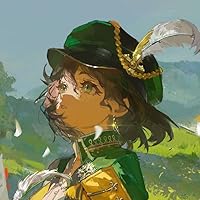
The Land of the Blue Flower was not called by that name until the tall, strong, beautiful King Amor came down from his castle on the mountain crag and began to reign. Before that time it was called King Mordreth's Land, and as the first King Mor-dreth had been a fierce and cruel king this seemed a gloomy name...
Frances Eliza Hodgson Burnett was a British-American novelist and playwright. She is best known for the three children's novels Little Lord Fauntleroy (1886), A Little Princess (1905), and The Secret Garden (1911). Frances Eliza Hodgson was born in Cheetham, Manchester, England. After her father died in 1853, when Frances was 4 years old, the family fell on straitened circumstances and in 1865 emigrated to the United States, settling in New Market, Tennessee. Frances began her writing career there at age 19 to help earn money for the family, publishing stories in magazines. In 1870, her mother died. In Knoxville, Tennessee, in 1873 she married Swan M. Burnett, who became a medical doctor. Their first son Lionel was born a year later. The Burnetts lived for two years in Paris, where their second son Vivian was born, before returning to the United States to live in Washington, D.C. Burnett then began to write novels, the first of which (That Lass o' Lowrie's), was published to good reviews. Little Lord Fauntleroy was published in 1886 and made her a popular writer of children's fiction, although her romantic adult novels written in the 1890s were also popular. She wrote and helped to produce stage versions of Little Lord Fauntleroy and A Little Princess. Beginning in the 1880s, Burnett began to travel to England frequently and in the 1890s bought a home there, where she wrote The Secret Garden. Her elder son, Lionel, died of tuberculosis in 1890, which caused a relapse of the depression she had struggled with for much of her life. She divorced Swan Burnett in 1898, married Stephen Townesend in 1900, and divorced him in 1902. A few years later she settled in Nassau County, New York, where she died in 1924 and is buried in Roslyn Cemetery. In 1936, a memorial sculpture by Bessie Potter Vonnoh was erected in her honor in Central Park's Conservatory Garden. The statue depicts her two famous Secret Garden characters, Mary and Dickon.
A quietly transformative fairy tale! I had no idea that Frances Hodgson Burnett wrote this children's book. But, after reading six of her books the past few years, I could see influences of this book in The Secret Garden. I loved the ephemeral, nature-based quality of the author's descriptive writing. The world she created to pass on an important message of love (instead of hatred) in one's heart is powerful, but not preachy.
This particular edition of the book has gorgeous, full-color illustrations. (I also enjoyed listening to the audio book version, but the supporting cast of voice actors grated a bit on my nerves. The primary narrator was brilliant.)
I hope to read this book again. It's a wonderful addition to my Frances Hodgson Burnett vintage book collection. Recommended for both children and adults, too!
downloaded this because it features prominently in greydon clark's 1994 sci-fi/action trash classique 'dark future'. a king tricks his people into caring for their environment and each other, all their problems disappear in the peace and joy that results. sort of a coincidence i read this right now, but i'm glad.
Ok, it's not really all that good. You should read The Secret Garden instead.
But since I believe that the sort of 'magic' in here is possible, though of course to a much lesser degree, I loved it. That is to say, raising a child up in the fresh air will be much more likely to result in one healthier, taller, stronger than one raised in close rooms heated by fireplaces, etc. And though I would not say it in so many words, it is pretty much true that "There is no time for anger. There is no time for fear."
I do wish that when I was small I had known this story... I do indeed think that it would have worked its magic on me. The Secret Garden helped, but I would have benefited from something as un-subtle as this... that's the kind of child that I was.
(Very short, and in the public domain. The copy I read on openlibrary has only one illustration, the painting used as the cover for the audiobook that I chose to claim as the one I read. But I did read text... I can't speak to quality of narration.)
Short and sweet story that would be a good one for reading to kids at bedtime. . "If you fill your mind with a beautiful thought, there will be no room in it for an ugly one. - King Amor"
This is a small, short book about a good king and how he changed his kingdom. This book was only 92 pages long but had a good feel to it. The author is the same author who wrote "The Secret Garden".
Reminder of the good surrounding us. There is no time for hatred. There is no time for idleness. There is no time for anger. There is no time for unkind thoughts.
I'm focusing on goodness, kindness, and joy this year and take this lesson to heart: planting without seeds.
Not for children! More a fever dream than a story.
Where to start? The story sings praises of the sun, stars, rain, beautiful (tall like a giant, straight, and handsome) people who--if perfectly good--will be seen as gods. As a youth, the king became upset because his horse would not pass by a leopard in a tree, and he beat the horse with his fists. Thus, he discovered anger, and was told it was "a useless thing." There is no mention of apology or becoming friends with his horse again. And it is later said that he never had a dark thought. All while the Ancient One tells him to listen to his "brothers," the stars, etc.
The king finally rides through the town, spouts things about anger being useless, and goes back to the mountain. To solve everyone's problems, he makes a law that all (even babies) must plant the blue flowers from seeds. For some unknown reason, it takes more than an hour each morning and night to water and dig in their gardens to grow the flowers. It takes so much time that they can't argue or get drunk anymore. Yay!
There are many more benefits to growing the flowers, but there are troubling parts of the story. During the king's procession, he is so beautiful (which is mentioned a lot), that while the lovely ladies are throwing flowers in his path, they nearly throw themselves as well. And when the lowliest cripple does something good, he is taken to live on the mountain, where he grows straight and strong. No magic involved--except the king's beauty and perfect goodness.
I'm a complete fan of goodness. I believe in it and live it. But I could not recommend a book where "dark things" are only noticed if you can do something about them. Where nature is glorified, but no compassion is shown to the horse after being beaten. Where a king gives "homework assignments" to his subjects, then goes home for a year to see if everyone is transformed, and the only troubles the people had (whether petty or evil) could be solved with the all-consuming project of growing flowers for one year.
And I can't get behind the concept that being healthy and strong proves goodness, or that looking upward means you have lofty thoughts, but looking down means you're selfish.
The entire theme is too focused on the glossy and perfect, and entirely lacking substance and heart. This book was touted as an equal to the author's other works. I disagree. I found it shallow and condescending. (Definitely not a tale for children.)
https://labibliotecadellibraio.blogsp... L'angolo dei classici nasce dalla voglia di farvi conoscere letture dimenticate nel tempo, nascoste nei cassetti impolverati della memoria. Secondo racconto che leggo di questa autrice, Frances H. Burnett è stata un'importante scrittrice nel campo della letteratura per ragazzi degli anni a cavallo tra la fine dell'800 e l'inizio del '900. Autrice di romanzi come Il piccolo Lord, Il giardino segreto e La piccola principessa. La terra del fiore azzurro è una favola molto bella, di cui consiglio la lettura, è possibile scaricarla da Amazon gratuitamente, non serve necessariamente avere kindle unlimated.
"Quando un uomo le guarda a lungo" disse, "cresce sereno e si dimentica delle piccolezze. Esse rispondono alle sue domande e gli mostrano che il suo mondo è solo uno dei milioni di mondi. Trattenete la vostra anima e guardate spesso verso di loro, e capirete le loro parole. Non dimenticatevi mai delle stelle."
Il piccolo Re Amor rimasto orfano viene affidato alle cure del Vegliardo, un singolare personaggio, molto vecchio, sapiente ed erudito, che porta il bambino in un castello sopra una montagna, dove lo accudisce insegnandoli l'amore, la fedeltà, la bellezza delle cose semplici, ma gli insegna anche cosa vuol dire provare rabbia, paura e odio.
Questa è la prima legge della magia del mondo. Se riempi la tua mente di pensieri meravigliosi non vi sarà mai spazio per quelli oscuri.
Un bellissimo racconto che parla di come le brutture della vita si possono superare con poco, il piccolo Re Amor, una volta adulto dovrà affrontare una nuova realtà, quella del suo regno che vive in uno stato di totale abbandono, dove la separazione tra i ricchi e i poveri è molto evidente, ma lui sarà capace di alleviare il dolore di tutti attraverso un piccolo fiore di colore azzurro... E' un libretto così breve che non voglio mettervi completamente a conoscenza... E' una favola delicata, una storia dolce che vede il bello contrapporsi al brutto, la pace contrapporsi alla guerra, la bellezza della natura contrapporsi al male dell'uomo.
Gak nyangka lumayan bagus... Masih sangat cocok dibaca orang dewasa masa kini, karna pesannya yg gak blak blakan hitam putih seperti buku anak anak biasanya.
Settingnya di dunia fantasi Kerajaan gt, bhs. Inggris tp kalimatnya sederhana gaada kuno kunonya, mungkin udh disesuaikan ya. Nyeritain ttg si Amor Raja kecil yatim piatu yg tumbuh menjadi Raja bijak, karna dia dibesarin di gunung hutan sama temen ibunya, jd pikiran dia gak tercemar akibat lingkungan buruk di Kerajaan, yg aku suka Rajanya ini bener bener baik dan serius nolong rakyat kecilnya, aku hampir terharu pas baca endingnyaa, emg bener bener happily ever after yg ideal tp gak bener bener fantastikal if you know what I mean.
Ini termasuk cerita pendek gak sampe 25 hlm. bisa beli di play books dgn harga sgt ekonomis, reccommended utk yg suka middle grade atau yg pengen baca ringan aja.
Ancora una volta, un po' come in "Nel giardino segreto", Burnett tenta di spiegare l'importanza del benefico rapporto con la natura. In questo racconto ci fa vedere come il contatto con la natura migliora e il singolo e, quindi, tutta la società. E all'epoca in cui è stato scritto chi poteva immaginare che saremmo stati invasi da nocivi centri commerciali? Pertanto non credo sia "scaduto", anzi, ad oggi lettura come questa sono più positive adesso che non cento anni fa. La domenica: piantate un fiore non rinchiudetevi tra cemento e luci al neon!
A young king is set to take over a land of famine and disorder, where everybody pretty much hates everybody. Oh, yes, and all the former kings have been named Mordreth, and they were all fierce and cruel. So the young king, whose name is Amor, gives out seeds which everybody in the kingdom has to plant and tend. When the seeds grow and bloom, they produce gorgeous blue flowers that mend everybody’s spirits. It’s a nice little fable written by Frances Hodgson Burnett, author of The Secret Garden,and it carries the same message. It’s a quick read and leaves you feeling good.
This charming, fairy-tale-like story predates The Secret Garden by a few years but definitely foreshadows it. A young king is raised in touch with nature, growing a miraculous blue flower in his walled garden. The young king later uses the flower to save the kingdom in a very wise way.
This falls in length somewhere between a short story and a novella. Highly recommended for fans of The Secret Garden, fairy tales, or just something sweet and hopeful to read. It's out of copyright, so you can easily find a copy to read for free online.
This story reeks of eastern mysticism. The whole "fill your mind with beautiful things and there will be no room for bad things" is just nonsense. Making all anger or fear bad is terrible too. There is a place and time for anger (ever heard of "righteous anger") and a place and time for fear (life threatening situations). This is trying to make utopia here on earth when we all know the world and people are broken.
First, this is a copy of the story with breathtaking illustrations by Judith Ann Griffith. The story itself is a beautiful fairy tale but has elements that could be twisted to a New Age message. Of course, it would not need to be twisted and read through the lens of a Christ-follower it has much beauty and good lessons. 4.5 stars
“But the earth is full of magic, […] Most men know nothing of it and so comes misery. The first law of the earth's magic is this one. If you fill your mind with a beautiful thought there will be no room in it for an ugly one. […] So I gave my people the Blue Flower to think of and work for. It led them to see beauty and to work happily and filled the land with bloom.”
The story was very powerful and positive. When we think positively of good that is what will survive and grow. A wonderful lesson for our planet and ourselves.