Jump to ratings and reviews
Rate this book

Summer Before the Dark

Rate this book
It's as if they're made for each other. Two men, both falling, but holding each other up for a time.

Ostend, 1936: the Belgian seaside town is playing host to a coterie of artists, intellectuals and madmen, who find themselves in limbo while Europe gazes into an abyss of fascism and war. Among them is Stefan Zweig, a man in crisis: his German publisher has shunned him, his marriage is collapsing, his house in Austria no longer feels like home. Along with his lover Lotte, he seeks refuge in this paradise of promenades and parasols, where he reunites with his estranged friend Joseph Roth. For a moment, they create a fragile haven; but as Europe begins to crumble around them, they find themselves trapped on an uncanny kind of holiday, watching the world burn.

176 pages, Paperback

First published March 8, 2014

66 people are currently reading
1660 people want to read

About the author

Volker Weidermann

21 books35 followers
He studied political science and German language and literature studies. He works as literary critic for the weekly Frankfurter Allgemeine Sonntagszeitung.

Ratings & Reviews

What do you think?
Rate this book

Friends & Following

Create a free account to discover what your friends think of this book!

Community Reviews

5 stars
360 (20%)
4 stars
697 (39%)
3 stars
535 (30%)
2 stars
148 (8%)
1 star
21 (1%)
Displaying 1 - 30 of 241 reviews
Profile Image for Susan.
3,019 reviews570 followers
January 29, 2016
Written in a dispassionate, journalistic style, this novella length book tells the story of a group of émigré writers meeting in the genteel resort of Ostend in 1936. The book revolves around the friendship of the urbane, wealthy and successful Stefan Zweig and the garrulous, alcoholic and truculent Joseph Roth.

Zweig was in Ostend when the Great War unfolded and recalled his excitement at the thought of such world changing events. However, that initial exuberant thrill had eventually changed and now, with another conflict looming, the author feels deep unease. With all of those assembled struggling – not least financially, with many having books burned and banned – the group are ‘refugees in vacationland.’ They talk and plot and plan, but remain exiles; powerless and in retreat. Even those, like Zweig, who have managed to maintain some literary presence in Germany, are looked at askance by the others – Roth in particular seeing it as a kind of betrayal and congratulating the author when he is finally banned.

This is not only an interesting portrait of a historical and literary period, but of the, sometimes difficult, relationship between Zweig and Roth. Roth was from Eastern Europe and, to the assimilated, Western Zweig; those from the East were seen as ‘embarrassing relatives.’ Roth, who looked up to Zweig and relied upon him for financial help and grudgingly accepted his concern, but was unable to curb his drinking. Both men had lovers that summer – Zweig accompanied by his secretary Lotte Altmann, while Roth embarked on a relationship with author Irmgard Keun. However, hanging over them all is the thought of what will happen when the summer ends? This is a thought provoking and interesting read, set around the dark days before war descended over Europe.
Profile Image for Anne .
459 reviews467 followers
December 3, 2020
This very interesting short book tells the story of a group of émigré writers meeting in the Belgian beach resort of Ostend in 1936. It starts with Zweig recalling his stay in Ostend in 1914 before WWI when he was young and unknown. 22 years later he is successful but finds himself in the same state of exile and nostalgia for his home. Now, in 1936, many writers are gathered awaiting news of war, fearing the worst. I found it fascinating to have a first hand account of these emigres and their personalities and I could feel their anxiety as they waited, not knowing when and if their former world will become open to them again or closed, forcing them to live indeterminately in exile.

The main story revolves around the friendship of the wealthy and successful Stefan Zweig and the alcoholic though brilliant writer Joseph Roth. Other important exiled writers include the lively and brilliant Irmgard Keun, Egon Erwin Kisch, Ernst Toller (whom we are told goes nowhere without a rope with a noose at the end of it), Arthur Koestler, and Hermann Kesten. All of these writers are spending a last summer together before they get scattered all over the world. They are in a paradise of a beach resort which they try to enjoy as much as possible. Though they sense that the worst is to come, they want to be happy together, in the sun, at the beach, in the cafes one last time before everything falls apart. They laugh together, reminisce, argue and try to help one another. Each of them is struggling in one way or another, not least financially, with many reading newspaper accounts of their books being burned and banned. Zweig was one of the last to have his books and banned. He had managed to maintain some literary presence in Germany and was looked at askance by the others – Roth in particular seeing it as a kind of betrayal and congratulating Zweig when he is finally banned.

Zweig and Roth, both of them Jewish, had a very close but complicated friendship, as Roth was a heavy drinker. As much as Zweig tried to help his friend emotionally and financially, nothing he does helps. Roth, in the end, became too much of a burden to both Zweig and to Keun who had become Roth's lover in Ostend, both feeling great relief after unburdening themselves of him after their summer together.

At the end of the summer all the exiles go their own way. Zweig, enroute to Spain and then Brazil meets a man on the ship who cannot read. He feels great pity for this man who "cannot transcend his own experience through that of others." Zweig remembers the countless blessings he has received from books, nights of love with books, staying up all night reading as you would with a lover.... Without books the world remains closed."

In Brazil with his young wife Lotte, he is lauded and feels loved. He takes a trip up to the mountains where he briefly lives. He feels that he cannot stay in town with all the demands on him to help poorer refugees; he feels the wretchedness of these people who are poor and they depress him ( he had the same experience when he visited New York City). He resolved early to love this country, ignoring the antisemitism and the restrictive immigration laws. He has a will to see his old world here in the mountains, but it's not there. He tries to believe it is possible to find it. Zweig finished World of Yesterday and writes Chess Story. He then writes his farewell note to the world. He doesn't mention Lotte. Shortly thereafter he kills himself and Lotte follows in his stead.

Keun eventually returns to Germany, living with friends in hiding. The nazis announce her suicide but she lived in German secretly throughout the war. She lived to see her works rediscovered in the '70s and died 1982.

Roth died of his alcoholism in Paris. Toller hung himself in New York. Koestler killed himself in London in a double suicide with his wife.

During the war Ostend was almost completely destroyed.
Profile Image for Argos.
1,262 reviews495 followers
August 13, 2021
1936 yazında bir araya gelen iki Avusturya’lı yazar S. Zweig ve J. Roth’un anıları, dostlukları, çaresizlikleri ayrıntılarıyla anlatılıyor. İlginç bilgiler var, örneğin Zweig’ın Gömülü Şamdan adlı eserine Roth’un büyük katkısı, Avrupa’nın Batı ve Doğu Yahudileri arasındaki çelişkiler vb.

Bu büyük yazarların da başkaları gibi bencil, kırılgan, kompleksli insanlar olabileceğini, onların da zayıf yönlerinin olabileceğini okuyorsunuz. Belgesel niteliğinde kısa bir kitap.
Profile Image for Meike.
Author 1 book4,977 followers
June 23, 2018
English Edition: "Ostend - Stefan Zweig, Joseph Roth, and the Summer Before the Dark"
How does it feel if you have to leave your home country and you are forced to watch it disappear from the exile? For many authors who fled the Nazis, their home had disappeared long before the war started, they saw the spiritual destruction, the moral decline and the rise of barbarity as the end of Germany as they knew it. Many of them later killed themselves or drank themselves to death - because their belief in humanity was shattered, because the fact that their native land had aimed to destroy them and they were outcasts wherever they went was too much to bear. Some, like Thomas Mann, started to agitate against Hitler from their exile - just this week, German President Steinmeier re-opened Mann's home in Los Angeles which was an important meeting place for exiled writers and shall now become a meeting ground again (http://www.dw.com/en/german-president...).

In his book, Weidermann tells the story of exiled writers spending a last summer together at the Belgian coast in 1936 before they get scattered all over the world and Europe starts to burn. The story centers around the friends Stefan Zweig and Joseph Roth, but also features many other important writers like Irmgard Keun, Egon Erwin Kisch, Ernst Toller, Arthur Koestler, and Hermann Kesten. Zweig and Roth, both of them Jewish, had a very close but also complicated friendship, as Roth was a heavy drinker (obviously rooted in depression) and as much as Zweig wanted to help his friend, he could not find a way.

The genius of the book is how Weidermann shows that although - or because? - the writers sense that the worst is still to come, they want to be happy together, in the sun, at the beach, one last time before everything falls apart. Weidermann juxtaposes their fascinating personalities, the dynamics of friendship and the lightness of Ostend with the rise of fascism and how it impacted the writers' situation. At the end, of course, everthing will be lost: Ostend was almost completely destroyed during the war, Zweig killed himself in Brazil, Roth died of his alcoholism in Paris, Toller killed himself in New York, Koestler killed himself in London.

Full disclosure: I picked up the book because I love the Belgian coast and because I wanted to learn more about the writers the story portrays, and although it is written by Weidermann - he is one of the hosts of an important TV show about literature in Germany (https://www.zdf.de/kultur/das-literar...), and I often find him a little boring, tbh. But this book is a great - I did not expect this, Weidermann, shame on me! :-)

So go and read this book, and then drive to Ostend and visit the house of James Ensor!
Profile Image for Steffi.
1,123 reviews270 followers
October 5, 2015
Ich mag die Sachbücher von Weidermann Das Buch der verbrannten Bücher, Lichtjahre) und ich lese gern über Schriftsteller, die vor den Nazis ins Exil flohen. Doch Ostende beginnt erst einmal etwas dröge, was vermutlich daran liegt, dass die Geschichte mit Erinnerungen des eher langweiligen Stefan Zweig beginnt. Das ist natürlich ungerecht und sehr subjektiv, da es eher meinen persönlichen Geschmack widerspiegelt. Um wie viel interessanter wird es, wenn Joseph Roth, der Trinker, Hotelbewohner und stolze Ostjude eingeführt wird. Neugierig machen – wie auch in anderen Darstellungen – die starken Frauen des Exils, die Ehefrauen, Geliebten, Schriftstellerinnen. Roth bietet hier einiges: Die geisteskranke Ehefrau Friedl hat er zurückgelassen, die Geliebte (und Frau eines afrikanischen Prinzen) Manga Bell gerade erst verlassen, um sich nun in eine Affäre mit der wesentlich jüngeren, aber fast genauso trinkfesten Irmgard Keun zu verstricken.
Und dann beschreibt Weidermann hier einen selten thematisierten literarischen Treffpunkt des Exils, an dem sich auch Irmgard Keun, Egon Erwin Kisch, Ernst Toller und viele andere einfinden. Und dabei – ganz wunderbar – boshaft über die gerade nicht anwesenden Exilanten lästern: über Klaus Manns allzu offenen Schlüsselroman Mephisto und Thomas Manns allzu langes Zögern, gegen die Nazis Stellung zu beziehen. Anders als Sanary-sur-mer, hat das Ostende dieser Zeit nicht überlebt. Wie man dem Nachwort entnehmen kann, wurde es im Krieg zerstört und neu gebaut. Schön, dass dieses Buch dem alten Exilort ein Denkmal setzt – auch wenn einige Abschnitte etwas behäbig erzählt werden und nichts Neues liefern. Es handelt sich wohl doch in erster Linie um ein Nebenprodukt des viel lesenswerteren „Buch der verbrannten Bücher“.
Profile Image for Semjon.
766 reviews504 followers
November 10, 2022
Dieser Art der Chronik-Bücher über einen engen Zeitraum der Geschichte sind durchaus unterhaltsam und lehrreich. Volker Weidermanns Buch über die literarischen Exilanten, deren Wege sich im belgischen Seebad 1936 kreuzten, ist da keine Ausnahme für mich.

Im Gegensatz zu Illies' 1913 oder Wittstocks 1933 bleibt aber Weidermann bei seiner Betrachtung nicht so sehr am Zeitraum kleben, sondern erzählt die Biografie von Stefan Zweig, Joseph Roth und Irmgard Keun als zentrales Trio doch sehr weiträumig und hohem Tempo. Insofern hat mich der Buchtitel etwas getäuscht, denn ich hatte mehr eine Verdichtung der Begegnungen in Ostende erwartet und kein generelles Sachbuch über einen Teil der deutschsprachigen Exilliteratur. Dadurch das Weidermann sich stärker von dem chronologischen Geschichtspanorama löst, taumelt der Stil zwischen Roman und Sachbuch, wodurch ich mich viel öfter fragte als bei den beiden genannten Vergleichschroniken, was nun verbürgte Wahrheit und was Weidermannsche Phantasie entspricht. Das solche Art von Büchern keine Quellennachweise haben, kann ich verzeihen, denn sie haben ja auch keinen Anspruch auf eine wissenschaftliche Qualität. Aber insgesamt habe ich am Ende des Buchs eher das Gefühl, einen literarischen Aperitif genossen zu haben, der Hunger nach mehr Informationen über den beschriebenen Personenkreis weckt. Da muss ich mich doch wohl endlich mal Meine Freunde, die Poeten von Hermann Kesten lesen, der seinerzeit auch in Ostende weilte.
Profile Image for Dagio_maya .
1,108 reviews351 followers
September 29, 2024
Caduta libera

Potremmo definire L'estate dell'amicizia una biografia romanzata.

Siamo alla vigilia della grande svolta mondiale.
E’ il 1936 ad Ostenda quando un nutrito gruppo di rifugiati si ritrova non a passare le vacanze e riprendere fiato dall’ostracismo nazista.

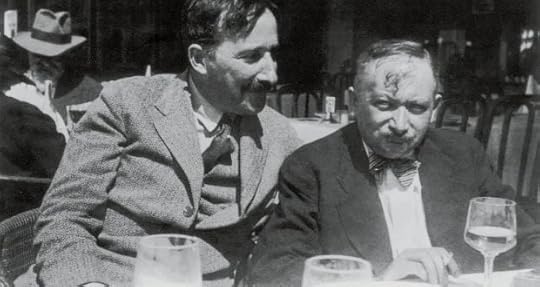
Al centro del racconto questa immagine

description
Stefan Zweig e Josef Roth a Ostenda, Belgio nel 1936.


Una decina d’anni di differenza, due personalità contrapposte ma legati dall’amore per la Letteratura.
L’amicizia tra i due attraversa il tempo e lo spazio. Si ritrovano, per l’appunto ad Ostenda, dove si esplicitano i ruoli.

Entrambi censurati dal governo nazista ma mentre Zweig è uno scrittore di grande successo mondiale, Roth arranca per farsi apprezzare dal pubblico.
Nei giorni di Ostenda il suo alcoolismo è ormai conclamato.
Dividerà la bottiglia con Irmegard Kleun (l’unica ariana della compagnia ma anch’essa censurata) verso un declino palese.

Zweig , assieme alla segretaria ed amante Lotte Altmann lo sostiene economicamente e moralmente.
Ci prova ma Roth:

”È un uomo infelice, perspicace e incattivito. Cerca la propria salvezza nel passato. Nella vecchia Austria e nella monarchia.”.

1936 è anche l’anno in cui scoppia la Guerra civile spagnola.

”Si ritrova di nuovo al Flore, la nostra compagnia in caduta libera, che quest’estate si sforza ancora una volta di sentirsi come una congrega di villeggianti. Si sforza ancora una volta di fingere spensieratezza.
Che cos’è se non una lunga vacanza, quella che stanno vivendo da anni? Lontano dalla patria, in giro con gli amici, a Parigi, Nizza, Sanary-sur-Mer, Amsterdam, Marsiglia, Ostenda. E prima o poi ci sarà il viaggio di ritorno.
Ma quando? Tanto più pressante si fa questa domanda, tanto meno se ne parla. Ogni giorno che si aggiunge a questa vacanza, rende più improbabile il ritorno. Tutti lo sanno. Ma non se ne fa parola. C’è l’obbligo dell’ottimismo. La corda è in valigia, ma non si dice.”


Lettura con ritmo un po' altalenante ma comunque piacevole e stimolante.
Profile Image for Michael Finocchiaro.
Author 3 books6,272 followers
November 20, 2019
This is a short but very interesting reconstruction of the meeting of several ex-patriots from the Nazi regimes in Europe in the late 1930s and their life in Ostend, Belgium. The relationship between the well-known author Stefan Zweig with his less well-known and hardcore alcoholic friend Joseph Roth is touching one, if somewhat inconclusive. The mood of the book is brooding and one feels the 20 degree temperature drop in these castaways as the shadow of the Nazis draws more and more of Europe into the dark. An important book about a period that has echoes for today, but does not provide any set answers and only a glimmer of hope.
Profile Image for Cynnamon.
784 reviews131 followers
June 22, 2021
For English version please scroll down

*******

Zeitgeschichtlich interessant, aber in der Ausführung für mich ungeeignet

Eine Gruppe deutscher Schriftsteller, deren Werke im nationalsozialistischen Deutschland verboten sind trifft sich im Sommer 1936 in Ostende. Der Forkus der Berichterstattung liegt auf Stefan Zweig und Joseph Roth. Wir erfahren gar nicht so viel über diesen Urlaubssommer, sondern vielmehr wird uns anekdotisch die Vorgeschichte der Literaten nahegebracht. Der Autor geht auch noch kurz darauf ein, was nach diesem Sommer mit den Personen passiert. Da das Buch sehr kurz ist, sind die Lebensbeschreibungen der Autoren eher oberflächlich.

Zeitgeschichtlich sicherlich interessant, aber nichts was mich in der Lektüre sonderlich angesprochen hätte.

2 Sterne.

---------------------

Interesting in terms of contemporary history, but unsuitable for me in terms of execution

A group of German writers whose works are banned in National Socialist Germany meets in Ostend in the summer of 1936. The reporting focus is on Stefan Zweig and Joseph Roth. We don't learn that much about this summer vacation, but rather the anecdotal history of the writers. The author also briefly goes into what will happen to the people after this summer. Since the book is very short, the authors' biographies are rather superficial.

Certainly interesting in terms of contemporary history, but nothing that did particularly appeal to me in reading.

2 stars.
Profile Image for Constantinos Capetanakis.
129 reviews51 followers
March 6, 2021
Η Οστάνδη το 1936, μία παρέα μεγάλων ή λιγότερο μεγάλων εξόριστων Εβραίων συγγραφέων, με τους Ναζί να ακούγονται όλο και πιο δυνατά. Αποσπάσματα από επιστολές, ημερολόγια, βιβλία. Γεγονότα πραγματικά, ή λιγότερο, διανθισμένα όλα με την ατμόσφαιρα μιας νωχελικής και απεγνωσμένης ελπίδας που σβήνει. Ποτά, πολλά. Σχέδια, όλα ματαιωμένα. Και ενοχή, είτε φανερή λόγω αδυναμίας ουσιαστικής δράσης ενάντια στον κατήφορο, είτε υποβόσκουσας, με μόνο εμπόδιο την ματαιοδοξία που δεν σβήνει -ποτέ- στον άνθρωπο.

Για όποιον ενδιαφέρεται για την ομάδα αυτή των μελαγχολικών και απελπισμένων εξόριστων συγγραφέων μιας άλλης εποχής αλλά ταυτόχρονα διαχρονικής γοητείας. Για μία φιλία (αυτήν του Τσβάιχ με τον Ροτ) , ο ομφάλιος λώρος της οποίας, όπως γράφει κάπου ο Ροτ, υπάρχει και δεν επιτρέπει καμία απόσταση. Για τον αν γίνεται να υπάρχει «ζωή χωρίς ενοχή». Το ερώτημα είναι ρητορικό – δεν γίνεται.

Για τον Ροτ τα έχουμε πει και γράψει εδώ συχνά. Είναι, για μένα, ένας από τους σπουδαιότερους συγγραφείς (τα καλά του, εννοείται, όχι όσα υπαγόρευε η άδεια τσέπη). Ο χαρακτήρας του, έστω τα τελευταία λίγα χρόνια της ζωής του σκιαγραφείται τόσο παραστατικά που δεν μπορώ να μην σκεφτώ για άλλη μία φορά ότι είναι ίσως ο μόνος από όλους τους συγγραφείς που έχω διαβάσει τον οποίο θα ήθελα να γνωρίσω προσωπικά. “Εκείνη προσπαθεί να του κόψει το ποτό. Αυτός προσπαθεί να της το μάθει. Νομίζω πως αυτός θα βγει νικητής».

Από την άλλη ο σπουδαίος Τσβάιχ, ο λεπτεπίλεπτος, ηθικός, ονειροπόλος, και για ορισμένους άτοπος και άχρωμος Τσβάιχ, για τον οποίο η επιλογή θέσης φάνταζε από μόνη της ως προδοσία του αγαπημένου του κόσμου του Χθες. «’Η πολεμήστε ή σωπάστε» του έγραψε ο Ροτ.

Και δίπλα τους άλλοι, ο Άρθουρ Καίστλερ, ο Χέρμαν Κέστεν, ο Κλάους Μανν, ο Έγκον Κις, η Κόυν. Λογοτεχνικά και δημοσιογραφικά ονόματα λιγότερο ή περισσότερο γνωστά. Κουτσομπολιά, κακίες, αίολα σχέδια δράσης, λογοτεχνικές ιδέες, γράψιμο, μισητοί έρωτες και αγαπημένα μίση. Και πάντα, όλα αυτά, μπροστά από ένα τέλος ορατό, σε όλους τους.

Σύντομο, γοητευτικό, πνευματώδες, πιστό στην ατμόσφαιρα της αυγής του μεγάλου χάους το Β’ΠΠ. Το βρήκα εξαιρετικό.
Profile Image for Alexandra.
101 reviews1 follower
September 28, 2017
Από ένα βιβλίο για δυο προσωπικότητες που αγαπώ και για ένα τέτοιο θέμα περίμενα κάτι περισσότερο. Ο Weidermann κάνει μια πολύ καλή συρραφή κειμένων από ημερολόγια, μαρτυρίες και αποσπάσματα από τα βιβλία του Τσβάιχ και του Ροτ, μα μένει μόνο σ' αυτό. Σκιαγραφεί το κλίμα που επικρατούσε πριν από τον πόλεμο, δίνει ερμηνείες για τις συμπεριφορές σπουδαίων ανδρών, φωτίζει τους κοινούς τόπους που υπάρχουν στα έργα τους, αλλά, κατά τη γνώμη μου, ο τρόπος που επιλέγει να το κάνει στερείται λογοτεχνικότητας.
Profile Image for Chrissie.
2,811 reviews1,421 followers
November 13, 2018
This book goes by several titles. Summer Before the Dark: Stefan Zweig and Joseph Roth, Ostend 1936 gives a reader the best idea of the book’s content. The darkness spoken of refers to the coming war, Joseph Roth’s death in 1939 and Stefan Zweig’s in 1942 by suicide. It is about the summer they spent together in Ostend, Belgium, 1936. Zweig’s earlier time in Ostend in 1914 before the First Word War and the time after the shared summer are briefly covered. Their close relationship is the central focus.

That summer in 1936 they were two of the Austrian and German émigré community gathered in Ostend--authors having fled from the fascist threat they saw to be gaining strength in their native lands. For some, their books had already been banned, their means of support threatened, and war loomed menacingly. Other émigré authors mentioned are Otto Katz, Willi Münzenberg, Arthur Koestler, Egon Erwin Kisch, Hermann Kesten and Ernst Toller. Their writing and political views are covered, but rudimentarily.

Zweig and Roth both had failing marriages. Both had mistresses by their side—Lotte Altmann, Zweig’s secretary and mistress, and author Irmgard Keun, Joseph Roth’s lover and sharer of booze. Roth had a serious drinking problem; it was killing him. The book focuses on the two men’s writing, their friendship and interdependence, their political, financial and marital woes.

There are interesting details about the émigré authors and the build up to the impending war. You get a feel for the threatening atmosphere of the time. Just as there were English speaking authors gathered in Paris, there were German and Austrian authors gathered in Ostend.

What is written here is interesting, but it reads more as an essay than a full book. It is for this reason alone I give it no more than three stars. I like it, but it is short. It gives only a glimpse. Basically, you are looking only at the émigré community and the relationship between Zweig and Roth the summer of 1936 in Ostend.

The audiobook I listened to is clearly read by Dennis Kleinman. Four stars for the narration.
Profile Image for Bettie.
9,977 reviews5 followers
January 29, 2016
BOTW

http://www.bbc.co.uk/programmes/b06ybg7k

Description: Volker Weidermann's account of the charming resort of Ostend, and in 1936 it's a haven for Middle-Europe emigres. Reader Peter Firth. Producer Duncan Minshull.

Episode 1: Stefan Zweig strolls the seafront, visits a cafe, and waits for his friend Joseph Roth to arrive. Also in town are other writers, wives and mistresses, as storm clouds gather over the rest of Europe..

2/5: Joseph Roth will be meeting Stefan Zweig here. But first, some background into their need to escape Austria and its encroaching dangers..

3/5: Joseph Roth is off the train at Ostend, about to meet Stefan Zweig for the hotels and bistro life. But his head will soon be turned by another writer, who's newly arrived herself..

4/5: Joseph Roth is in Ostend to meet his old friend Stafan Zweig. But he's quickly distracted by another writer, Irmgard Keun. Life is short, so they will move to the Hotel Couronne together..

5/5: Swimming, promenading, drinking.The pleasures of Ostend linger in the face of storm clouds gathering over Europe, but even seasoned vacationers know they have to move on..
Profile Image for B. Faye.
270 reviews65 followers
July 1, 2017
Εξαιρετικό ανάγνωσμα κυρίως για αυτούς που έχουν αδυναμία στον Στέφαν Τσβάιχ και τον Γιόζεφ Ροτ. Με πολύ απλό δημοσιογραφικό στυλ φωτίζει πτυχές της ιστορίας αυτών των δύο εκ διαμέτρου αντίθετων ανθρώπων αλλά ταυτόχρονα μας δίνει πληροφορίες και για άλλους έξόριστους συγγραφείς εκείνης της περιόδου όπως ο Κλάους Μαν ο Άρθρουρ Κάιστλερ κλπ
Profile Image for Lyudmila Spasova.
178 reviews59 followers
June 9, 2024
“ Йозеф Рот е на края на силите си. В сравнение с него Стефан Цвайг има незначителни грижи. Книгите на Рот са забранени в Германия веднага след завземането на властта от нацистите. А той и изобщо не желае да бъдат издавани там. “ Адът ни управлява”, е писал тогава на Цвайг. И че не бивало да се правят компромиси по отношение на врага. Който още търгувал, който още поддържал каквито и да било връзки с нацистка Германия, бил чудовище.Рот възприема като предателство факта, че Цвайг е позволил книгите му до последно да се издават в тази страна чрез издателство “ Райхнер”. През май 1936-а, след като става ясно, че и книгите на Цвайг не могат повече да излизат там, зарадван е откликнал; “ Поздравявам Ви за забраната Ви в Германия.”

Една особена симпатия свързва тези двама мъже от много отдавна. Цвайг, с десет години по-възрастен, притежател на дворец, светски човек,автор на бестселъри, и Рот, успешен журналист, файлетонист на Франкфуртер Цайтунг през двайсетте години, автор на не съвсем успешни документални романи, живеещ по хотели, пияница, общителен, щедър, сладкодумен, неизменно заобиколен от приятели, слушатели, почитатели. Когато най-сетне се изявява като романист с “Йов” и “Радецки марш”, които в един нормален свят биха му донесли богатство и слава, книгите му са забранени и изгорени и Рот емигрира.

Той е нещастен човек, прозорлив и озлобен. Търси доброто в миналото. Някогашната Австрия и своята монархия. Своята империя, която го е издигнала толкова нависоко, него израслия толкова далече от голямата бляскава столица, евреина без баща, и му е открила света. Една универсална държава, която е обединявала в себе си, без да прави разлика, много народи, из която е можело да се пътува без паспорт и без каквито и да било документи. Колкото повече остарява, а мракът в света се сгъстява, толкова повече копнее той по онова, което е загубил, толкова по-блажен му се вижда светът, който е загубил.”

Reading Ostende.
Profile Image for Armin.
1,198 reviews35 followers
April 28, 2017
37/100 Eher eine Art Gegenstück zur Gala in Buchform, denn ein literarisches Meisterwerk. Die Schamlosigkeit mit der hier allseits bekannte Anekdoten zu so etwas wie einem Roman montiert werden, erwies als starker Appell an meinem Einsternreflex. Aber wirklich verdammen kann man so ein dünnes Büchlein auch nicht, das wohl in dieselbe Nische wieder der Konjunkturartikel 1913 von Florian Illies stoßen sollte. Und für ein Werk des Feuilletonchefs der FAS findet sich allzeit ein williger Verleger als Vollstrecker.
Als ehemalige Hilfskraft des Herausgebers der großen Roth-Ausgabe und Tutor von etlichen Seminaren zu den Werken des heiligen Trinkers bin ich vielleicht ein bisschen vorbelastet, alle anderen aufgeführten literarischen Größen gehörten auch zu meinem bevorzugten literarischen Umfeld, von daher kam ich mir schon ein wenig so vor, wie ein lesewütiger Austauschschüler, dem seine gutwilligen Gastgeber ein Bilderbuch mit ersten Wörtern wie Ball in die Hand drücken.
Insofern kann Weidermanns Montage für Leute, die allenfalls ein oder zwei Bücher von Stefan Zweig gelesen haben, durchaus eine Einstiegshilfe in die Literatur von ausgehendem Kaiserreich, Weimarer Republik und Emigration darstellen. Beim Erstkontakt mit den Inhalten wären vielleicht sogar drei Sterne drin gewesen, aber die Beschränkung auf die Aneinanderreihung von Anekdoten bei vollkommener Enthaltsamkeit von Gestaltung und Psychologie ist wirklich enttäuschend. Um weitere Veröffentlichungen von Volker Weidermann, die über seinen Hauptarbeitsplatz hinaus gehen, werde ich in Zukunft einen Bogen machen. Selbst wenn es sich um derart leicht verdauliche Häppchen handelt.
Profile Image for Antje.
689 reviews59 followers
June 21, 2021
An Seiten wenig hat dies dünne Büchlein allerhand lesenswerte Schilderungen über die deutschen und österreichischen Exil-SchriftstellerInnen zur Zeit des Dritten Reiches zu bieten. Darin begegnen wir am häufigsten Stefan Zweig und den mit ihm in Freundschaft verbundenen alkoholkranken Autoren-Kollegen Joseph Roth. Diese verbringen in Ostende 1936 mit anderen dort gestrandeten Schriftstellern den Sommer, gefangen in der Furcht, was in den folgenden Jahren weiteres auf sie und ihre Heimatländer zukommen wird. Sie sind heimatlos und auf der Suche; die einen zudem gefangen in finanziellen Nöten und immerfort darauf angewiesen, schnellstmöglich ihre literarischen Werke zu beenden und einen zahlenden Verleger zu finden. Deshalb lebt dieses Buch natürlich zum einen von einem melancholischen Grundton und zum anderen von zahlreichen Zitaten aus Briefen, Tagebucheinträgen und Romanen der SchriftstellerInnen. Diese sind jedoch in einer angenehm kurzweiligen Erzählweise derart miteinander verbunden, dass wir manchmal denken könnten, Zweig, Roth, Keun, Toller, Kisch und all die anderen sind aus der Phantasie entsprungene Romanhelden Volker Weidermanns. Ein wirklich gelungener Einblick der existenziellen Sorgen und Alltagsgepflogenheiten der emigrierten Literaten, gemeinsam verloren in der Fremde.
Profile Image for Margarita Garova.
483 reviews265 followers
May 22, 2019
Всичко, свързано с Цвайг, ме вълнува. Хубава книга.
Profile Image for ΠανωςΚ.
369 reviews70 followers
May 4, 2017
Δεν είναι μόνο ένα βιβλίο για τον Τσβάιχ και τον Ροτ. Μεταξύ πολλών άλλων, είναι και ένα βιβλίο για την Ευρώπη. Είναι ένα βιβλίο γεμάτο ιστορίες, που ξεκινούν από τις σελίδες του αλλά η συνέχειά τους βρίσκεται σε άλλα βιβλία ή ακόμη και στις σελίδες της γουικιπίντια.
Λατρεύω τον Ροτ. Δεν έχω άποψη για τον Τσβάιχ. Κάπου διάβασα ότι θεωρείται από ορισμένους βαρετός (ο Τσβάιχ), ρηχός. Καλός τυπάκος, αλλά μέχρι εκεί. Πράγματι, κρίνοντας από ορισμένες σελίδες του Βάιντερμαν, έτσι μού μοιάζει ο Τσβάιχ. Εκνευριστικά μετριοπαθής. Απ' την άλλη, ο Ροτ πόσο υπέροχα ελαττωματικός!
Κι ιστορίες - ένα κάρο ιστορίες, πραγματικές ή στα όρια του μύθου, ανθρώπων, συγγραφέων, που το καλοκαίρι του 1936, βρέθηκαν (ή και όχι) στα μπιστρό της Οστάνδης να κουτσοπίνουν με τον Ροτ.
Διαβάζεται και ξαναδιαβάζεται - και το ακόμη καλύτερο: οδηγεί και σε ακόμη περισσότερα διαβάσματα.
Profile Image for Martin.
100 reviews40 followers
December 8, 2019
Ein trauriges Buch. Ein gutes Buch. Volker Weidermann jedenfalls kann schreiben. Viel besser als moderieren.
Profile Image for Laura.
7,133 reviews606 followers
January 30, 2016
From BBC Radio 4 - Book of the Week
Volker Weidermann's account of the charming resort of Ostend, and in 1936 it's a haven for Middle-Europe emigres. Abridged in five episodes by Katrin Williams:

Stefan Zweig strolls the seafront, visits a cafe, and waits for his friend Joseph Roth to arrive. Also in town are other writers, wives and mistresses, as storm clouds gather over the rest of Europe..

2/5: Joseph Roth will be meeting Stefan Zweig here. But first, some background into their need to escape Austria and its encroaching dangers..

3/5: Joseph Roth is off the train at Ostend, about to meet Stefan Zweig for the hotels and bistro life. But his head will soon be turned by another writer, who's newly arrived herself..

4/5: Joseph Roth is in Ostend to meet his old friend Stafan Zweig. But he's quickly distracted by another writer, Irmgard Keun. Life is short, so they will move to the Hotel Couronne together..

5/5: Swimming, promenading, drinking.The pleasures of Ostend linger in the face of storm clouds gathering over Europe, but even seasoned vacationers know they have to move on..

Reader Peter Firth

Producer Duncan Minshull.


http://www.bbc.co.uk/programmes/b06ybg7k

Even if the city of Ostend have suffered a major destruction during World War II, it remains as a charming Belgian coasted city.

Profile Image for Diana.
309 reviews80 followers
March 14, 2017
Тази книга не е литературен шедьовър, нито ваканционно, релаксиращо четиво. В сбит журналистически стил (и все пак красиво) Фолкер Вайдерман ни поднася заедно с историята на едно приятелство и онази част от същността на твореца, която е неуловима само от прочита на книгите му.
В предвоенното лято плажът и кръчмите на Остенде събират представители на немскоезичната интелигенция, избягали от там, където горят книги. Бохемс��ите им дни са наситени колкото с ваканционни прегрешения, настроение и алкохол, толкова и с предчувствия за наближаващите опустошения, за собствения край, за самотата сред себеподобните и болката от изгнанието.
Харесвам много и Стефан Цвайг, и Йозеф Рот (който за съжаление не е особено популярен, четен и рекламиран у нас), но преди тази книга не знаех, че са били приятели. Превръщат се в такива от ментор и ученик, напълно различни като произход, социално положение, манталитет, начин на живот. Разумният, улегналият, радващ се на славата си и неразумният, гаснещ в алкохол и безпаричие са свързани здраво от единственото общо между тях - литературата. Взаимно се четат, рецензират, дописват, допълват. След лятото в Остенде, в оставащия им съвсем малко живот нищо вече не е същото. Кризата и разрухата са не само в Европа, но и в приятелството им, в тях самите и в останалите от плажната компания.
Отношенията между двамата са в основата на последната книга на Рот, "Легенда за пияницата светец".
Profile Image for Georgi.
262 reviews101 followers
September 17, 2022
Книгата е доста умел опит за реконструкция на един ключов, преломен момент от житейския път на двамата големи писатели. През лятото на 1936 г. двамата, вече изгнаници от отечеството си, се срещат в белгийския курорт Остенде в един от последните мигове на затишие, преди заплахата от хитлеризма да пропълзи из цяла Европа. Не са сами, сред тях са и други изгнаници – писателите Херман Кестен, Артур Кьостлер и Егон Ервин Киш, журналистът Вили Мюнценберг, комунистът Ернст Толер, младата писателка и сценаристка, единствената с арийски произход в групата, Ирмгард Койн.

Вайдерман обрисува картините на белгийския курорт от онова време, разполагайки героите си в тази обстановка, всеки от тях носещ собствения си „багаж“ от проблематично минало. В началото прави и любопитна препратка към предишно гостуване на Стефан Цвайг в Остенде, през лятото на 1914 г., точно когато избухва Първата световна война. Целият епизод е преразказан от мемоарите на самия Цвайг, както впрочем и голяма част от началото на книгата, включително странният момент с „гостуването“ в къщата на зловещия белгийски художник Джеймс Енсор – епизод, който явно силно е впечатлил Вайдерман, защото къщата на Енсор се появява отново и отново, затваряйки кръга на повествованието.

Цялото ревю тук: https://bibliotekata.wordpress.com/20...
Profile Image for Sharon Barrow Wilfong.
1,135 reviews3,968 followers
September 24, 2020
A flowing narration of the brief lives of two Austrian Jewish authors and their last flash before darkness descended upon Europe.

I think people should read the past. We want comfortable, successful lives. We just want to live in peace. But things, forces, other people have different agendas. Their lust for power makes them indifferent to the suffering and destruction they incur.

This happened and is still happening in Europe, it is happening in Asian and African countries and it's even happening in certain riot-wrecked cities in the U.S.

Do we hope for a higher existence? Or do we commit suicide like Zweig and Roth (through drink)?

This life is short, regardless of how history transpires. I will live the time appointed to me and then eternity. Revelation 21:4
120 reviews53 followers
April 3, 2016
What moved me most about this book was the sense it conveyed of European civilization hurtling towards its doom, as exemplified in the fates of the exiled writers Stefan Zweig, Joseph Roth and Irmgard Keun, as they try to resurrect happier times, at Ostend in the summer of 1936. Roth and Keun spiral deeper into alcoholic self-destruction, while Zweig can no more save himself from self-destruction than he can save his friend Roth.
Profile Image for Emre.
290 reviews41 followers
December 29, 2018
3.5

"Büyük bavullara gerek yok," diye yazar. Ve: "Sadece yaşarız orada." Sf:39

Roth küfrediyor, hiddetleniyor, yanına gelmesi için Zweig'a yalvarıyordu. "Geberiyorum, geberiyorum," diye yazıyordu. Ve 9 Nisan'da, "Sevgili dostum, gelecekseniz hemen gelin," diye yazdı. "Benden geriye kalan, sevinecektir." Sf:43

Zweig'ın deniz kıyısında bir yer seçmesi de iyi olmuştu; bu, Roth'un aklına gelmezdi. Denize girmezdi, sonuçta balıklar da kafeye gitmez, derdi hep. Sf:47

Nihayet beni anlayan bir insan. Böyle düşünür Roth. Böyle düşünür Keun. Birlikte pervasızca içki içilebilen biri, başka türlü dayanılamayacağını bilen biridir; içkiden uzak durmak, uzun vadede hayatı uzatabilir, ama kısa vadede şimdiyi ve bugünü tümüyle imkansız kılar. Ayrıca Roth, Oostende'de vicdanını hep yanında taşımaktadır: onu bütün gücüyle içkiden uzak tutmak isteyen Stefan Zweig'ı. Sf:66
Profile Image for Bevan.
184 reviews6 followers
February 13, 2016
A beautifully written book. I confess to loving almost anything concerning Joseph Roth, and this book fills in many poignant facts about the end of his life, and the beginning of the war in Europe. One would expect something quite grim, but the author magically makes this into a very touching and sympathetic examination of a particular time in the lives of these two men.

It is known from Joseph Roth's letters that he was enduring tremendous hardships, some brought on by his own prickly personality, but mostly from the circumstances in which he lived. It is no wonder then that he became a very heavy drinker, but the author of this book treats this with great care.
Profile Image for Jane.
428 reviews45 followers
July 31, 2022
Once again, what compelled me so greatly in this book, about the summer of 1936 in Ostend and the group of writers and artists who convened there, was Stefan Zweig. I was also glad to meet in brief the writer Irmgard Keun and The painter James Ensor, but the main focus was the friendship of Zweig, the happy man who commits suicide in 1942, and Joseph Roth, the sad man who drinks himself to death in 1939. It puts me in mind of the quotation from Faulkner, that the past never dies, it’s not even past.

« ‘The knowledge of events in the world, the hopelessness, weighed on our mood. The hellish emanations from the war in Spain reached the lakes, the forests, and even the concert halls’.

« …pessimism has been rooted deep and unbudgingly in Zweig’s soul for years. Now as the shadows are falling, he draws strength from what he wrote in his final letter from Ostend… : ‘The very fact that I’m inclined à la longue to pessimism gives me a certain heightened capacity for enjoyment; we should take every good thing with us, for as long as we can enjoy it.’ »

« Zweig writes it all down later, in a text with the title ‘The Book as Entrance to the World’: ‘And I understood that the gift of the blessing of being able to think in a wide-ranging fashion and amid a multiplicity of connections, that this magnificent ability, the only true way to contemplate the world from a multiplicity of vantage points at once, is only granted to the man who transcends his own experience to absorb from books what they can tell of many lands and peoples and times.’ »

Of course, Zweig was, and probably still is, denigrated for his wealth, his ‘privilege’, his failure to become involved. But he writes: « …the more I thought about it the more I realized that our spiritual world is made up of millions of atoms of single impressions, whose minimum number stems solely from what we see and what we experience—while everything else, the existentialist interwoven world, we owe to books, to what is read, transmitted, learned. » Apparently Thomas Mann referred to Zweig as ‘a mediocrity’.

Zweig’s reply to that, indirectly: « To me the enemy that is dogmatism, of whatever kind, is the one and only ideology that wants to destroy all thought. … The word has become weak in the face of brutality… »

Was Zweig on the fence about matters of right and wrong, about the difference between civilization and barbarism? Absolutely not! Was he constitutionally ill-equipped to join the crowd and storm the barricades? Yes, he was. Zweig could not foreshorten thought, learning, conversation to rush to a passionate conclusion. There were others for that, but in my view Zweig’s life and his writings still preserve something of inestimable value, still in danger of destruction.
Displaying 1 - 30 of 241 reviews

Can't find what you're looking for?

Get help and learn more about the design.