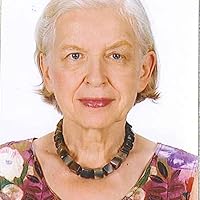
‘Lara Pawson’s This Is the Place to Be is a stark, compassionate and troubling text that summons a fragmentary autobiography, circling experiences from her growing up in England and her time as a reporter covering civil wars in Angola and Ivory Coast. She deals with big questions through an intimate mosaic of lived experiences – the blank, funny, awful, gentle shards that remain in memory years after events have taken place – returning her again and again to the themes of identity, violence, race, class, sexuality and the everyday lives of people across several continents.
An earlier, shorter version of This Is the Place to Be was commissioned as a sound installation for the 2014 London International Festival of Theatre programme After a War. It was directed by Tim Etchells and performed by Cathy Naden.
Lara Pawson lives in London. She is the author of three books.
Spent Light (CB editions, January 2024) is a hybrid work of prose combining fiction, memoir and history. It was shortlisted for the The Goldsmiths Prize 2024 and was a book of the year in the The Guardian, the Times Literary Supplement, Frieze magazine, and New Statesman. It has received rave reviews in The Guardian, the TLS, The Telegraph, the Financial Times, The Irish Times, The Spectator, New Statesman, The Idler, and the Daily Mail. It has been translated into Serbian (Prometej, 2024) and Dutch (Koppernik, 2025), and is soon to be published in the United States with McNally Editions.
This Is the Place to Be (CB editions, 2016) is a fragmentary memoir. In 2017, it was shortlisted for the Gordon Burn Prize, the PEN Ackerley Prize, and the Bread and Roses Award for Radical Publishing. It has been translated into French as Là où tout se passe (Les Éditions de l’Observatoire, 2018) and into Spanish as Este es el lugar (LOM Ediciones, 2021).
In the Name of the People: Angola’s Forgotten Massacre (IB Tauris, 2014) is a work of investigative journalism, memoir and history. It was runner-up for the Royal Africa Society Book of the Year 2015, longlisted for The Orwell Prize 2015, and shortlisted for both the Bread & Roses Award for Radical Publishing 2015 and the Political Book Awards Debut Political Book of the Year 2015. It was translated into Portuguese as Em Nome Do Povo: O massacre que Angola silenciou (Ediçôes Tinta da China, 2014).
Her commentary, essays and reviews have been published in many places and she reviews regularly for The Guardian and the Times Literary Supplement.
Between 1996 and 2007, Lara worked as a journalist, mainly for the BBC World Service. She lived and travelled widely in Angola, Ivory Coast, Mali and Ghana, and also reported from Namibia, Ethiopia, Burkina Faso, Niger and São Tomé & Príncipe. During this period she also wrote for many other publications, including specialist press on Africa, mainstream newspapers, magazines and the wires.
She is represented by Lisa Baker at Aitken Alexander Associates.
I've never read a book that has spoken to me as much. The author talks about her experience as a war correspondent in Angola and how upon returning back to her home country, she sees the world differently. As someone who witnessed conflict myself, this book articulated a lot of my thoughts and frustrations, sometimes forcing me shed tears while at times bursting in laughter (people on the tube enjoyed me doing that while reading the book and they all wanted to read the name).
The book was suggested by one of my colleagues as i kept banging on about how it is difficult to "normalise" with my new environment. The book is just about that, really.
This week I got to hear the British writer Lara Pawson talk about and read from her book "This Is the Place to Be". A former BBC war correspondent, Pawson lived and worked in Angola and the Ivory Coast for years, reporting on civil wars, before expressing disillusionment with "the myth of objectivity" and becoming a writer. "This Is the Place to Be" is a fascinating experiment - a memoir that flickers back and forth between her adolescence, her war years, her difficult readjustment to life back in Britain, her marriage and her relationship to her body. As auto-fiction goes, it's more interesting than most, as Pawson actually has some life experience worth exploring. To me it was an interesting but ultimately unsatisfying read - like reading a writer's private journal, in which she tries to work out what she wants to say and how she wants to say it, without getting to see the "finished product". Pawson's point appears to be that the process IS the product, and that (her) point-of-view is everything. But for me, this isn't quite enough to justify my time and attention as a reader. As intelligent a writer as Pawson is, it felt that she was continually getting in her own way, leaving some interesting conclusions frustrating undrawn.
Getting caught up with reviews, the last book I finished while in Australia. This is an engaging, fragmentary memoir about Pawson's experiences covering war in Africa, especially Angola, for the BBC, along with reflections and moments from her childhood and life back in the UK. For my full review, see: https://roughghosts.com/2017/06/20/wa...
This is a wonderful, wonderfully original piece of writing. Lara has an absolutely unique voice, such a peculiar way of writing.
It's like a picaresque journey though her memories. The book is divided into short snippets of auto biography, linked like a stream of consciousness, with hints at reason, hints at order, but an order which withdraws from itself when you try to grasp it.
Lara is as horribly honest as she can be. And this is to the extent that the reader is left with a good idea of when she is creating a fiction and lying to herself.
The way Lara wrote this, this book is a one off. It seems unlikely that she could produce another piece of work in the same vein; all her source material went into this one.
Powerful, fearless account of the author's years as a BBC foreign correspondent in Angola and elsewhere mixed with paragraphs on her childhood, her relationship with her body and her peers and politics. The narrative is not straightforwardly chronological - instead it drifts from one topic to another but this seems to strengthen it (to me), like someone talking in a pub, albeit extremely articulately. She is often mistaken for a man (and Jamie Lee Curtis) and this leads her to discuss sexuality, gender roles etc. Her fearlessness is not only illustrated by her war experiences but also when she gets back to London and confronts burglars attempting to rob her neighbour. All in all an astonishing read, economically written (p130).
i think this was my favourite book of 2025 so far. i love the blunt honesty of lara’s writing; every admission is vulnerably direct, and i admire the ways she follows up her confessions (for lack of a better word) with a recognition of her cowardice, selfishness, fear, and strange desires, or even a question of certainty in her memory of the experience.
one thing that i loved about this book (and “spent light”, which i read last year) is the feeling that you’re going through lara’s train of thought with her. each paragraph dips through lara’s life in different decades, continents, emotions, and people by way of associated words or memories.
What a powerful book. It actually reads very theatrically -- definitely one that will hook your interest and keep it throughout.
If I have one complaint it's that I would have loved to see the topic of gender teased out more. Pawson touches on it regularly but never with, in my opinion, enough space to feel fully satisfying (and I hesitate at some of the vocabulary she uses). All of this is to say I think there is room for further exploration, especially in relation to the larger themes she presents.
That note aside, so happy I grabbed this one on a whim!
(4.5 and I think I love it so much because of what it means to me in this particular moment)
Brave and nuanced and pushy and raw. Such an honest, knotty portrayal of her time as a war reporter in Angola, mixed with her life back home. SO GOOD. Especially affecting to read far away from home in a country that has some similarities. Would recommend in a heartbeat.
This is a fabulous book - a memoir told in small vignettes, jumping backwards and forwards in time but frequently following themes, in particular of gender and race. It's thought provoking, smart, and often funny, and it bursts with a love of humanity and anger at injustice. Not quite like any other book I've read, it's short and compelling, easily read in one sitting.
fragmented recollection story telling at its best. I feel really inspired yet completely sobered by Lara Pawson’s recounting of her life and experiences. She’s very analytically in a way I hadn’t seen yet. A little touché for the linguists out there, she poses certain questions about why and how we use certain… scratched my itch !
A thorny, intriguing voice that takes on whiteness in Africa, journalism and gender with unusual honesty and insight. The childhood bits dragged a little but overall I found Pawson's sparse, associative style and carefully sculpted anecdotes to be compelling and propulsive.
Absolutely incredible. Unputdownable. Read in three sittings, only stopping because the bath had gone cold about an hour earlier, and I had to go to work.
Fascinating fragments, cleverly compiled. A war correspondent remembers the forgotten wars of Africa, Angola and the Ivory Coast, brutality rendered ordinary.
I really enjoyed this, and the way the stories were presented. My ADHD brain did struggle at times, but ultimately it's what makes the book what it is.
Took me several attempts to settle into the rhythm of this book and though I did eventually, I found it still difficult to connect with the themes and stories.
This would be my choice for Book Of The Year, except I don't buy enough newly-published books for it to mean anything. A superb memoir about life as a correspondent in Angola and west Africa, and also as a western woman, all mixed up together in fragments rather than presented as a straight linear narrative.
It took me three hours to read this book, during which I choked, clenched my fists, or teared up a dozen times. Its scenes are so vivid, its narrative so evocative of the time, the place, and the suffering. The author did not spare herself during the civil war in Angola and she does not spare us. Thankfully, she structured the book in short non-linear and non-chronological segments, thus giving us a chance to pause and take a deep breath after a particularly poignant scene or reflection. My favourite: "Although...the violence of war affects families for generations, I continue to fear the apathy produced by peace." I must meet Lara Pawson one day and shake her hand.